Kuwait is a small country that rewards curiosity far more than most Gulf stopovers suggest: a corniche of futuristic towers, a 200-year-old market where spice sellers still weigh saffron by hand, and an empty desert that turns green for a few fragile weeks each spring. Give it three or four unhurried days and it will surprise you.
Kuwait City's Skyline Icons: Kuwait Towers and Liberation Tower
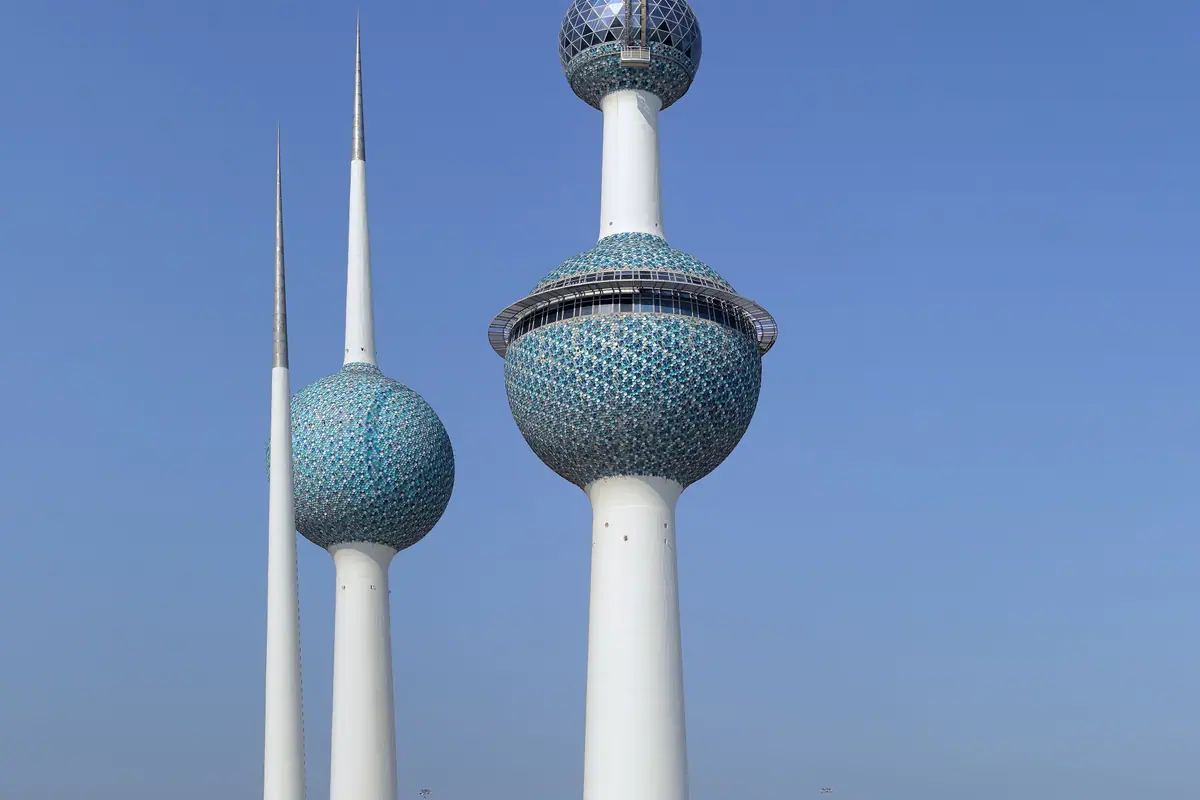
Start at the postcard. The Kuwait Towers, three blue-and-white spires on the Ras Al-Salmiya promontory, were completed in 1979 and remain the country's defining silhouette — the tallest reaches about 187 metres, with a revolving viewing sphere and a lounge high above the water. Go late afternoon so you climb in daylight, watch the sun drop behind the Gulf and stay for the city lighting up underneath you. Book ahead for the observation deck, and note the site is easiest to reach by car or taxi; the corniche in front is a favourite evening promenade for families, joggers and ice-cream vendors.
A short drive inland, the Liberation Tower is one of the tallest telecommunications towers on earth and is crowned with a distinctive lattice crown that glows at night. It is not generally open for casual sightseeing, but it anchors the downtown skyline and is best photographed from the wide avenues around Safat or from the waterfront at dusk. Between the two towers you get the whole story of modern Kuwait in a single afternoon: oil-era ambition, reconstruction after 1991, and a skyline that is still growing.
Pair the towers with Al Shaheed Park, the city's greenest refuge and its largest urban park, spread over roughly 200,000 square metres of lawns, museums, a botanical greenhouse and a lake. It opened in 2015 and became the instant answer to "where do locals go on a cool evening?" Entry is free, paths are lit late, and there are cafés for a mint lemonade when the heat finally breaks.
Old Kuwait: Souq Al-Mubarakiya and the Historic Quarter
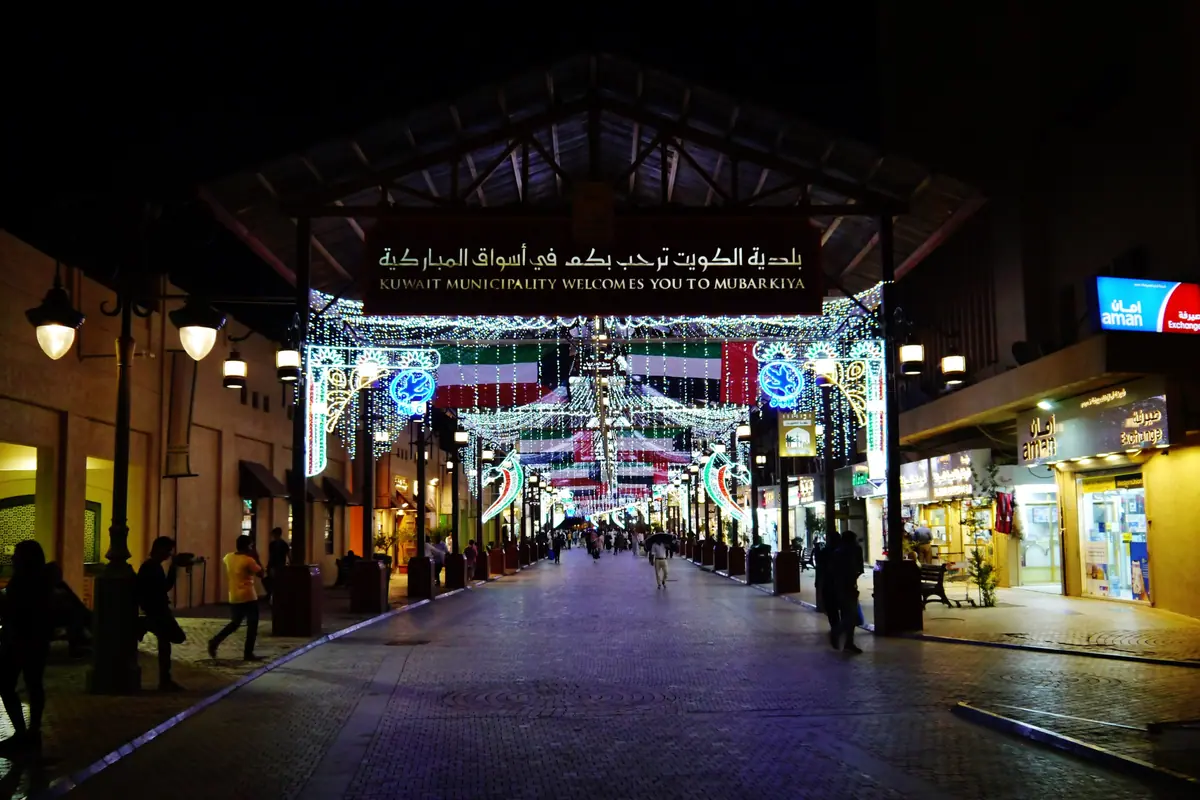
If the towers are Kuwait's future, Souq Al-Mubarakiya is its memory. This sprawling market near the old centre has been trading for around two centuries, and it still works the way markets should: butchers and fishmongers in the morning, sacks of cardamom, dried lime and frankincense in the spice lanes, gold traders behind glass in the covered section, and a courtyard of cheap, excellent eateries that fill with smoke and conversation after dark. Come hungry, come with cash, and come on foot — the lanes are narrow and the pleasure is in wandering without a plan.
Nearby, Bait Al-Othman is one of the finest surviving examples of traditional Kuwaiti domestic architecture, a coral-stone merchant's house with carved wooden doors and a cooling courtyard, now restored as a museum of old Kuwaiti life. A few minutes away, Seif Palace — the seat of the country's leadership — is not open to the public, but its blue-and-gold clock tower and turquoise gates are worth a look from outside, especially in the soft light of early morning.
For a quieter slice of history, head to the Dickson House, the former residence of a British political agent in the early twentieth century, preserved with its original furnishings and a walled garden of bougainvillea in the heart of the city. Together these sites take about half a day at an easy pace, and they are the best answer to the question of what Kuwait looked like before the concrete and glass arrived.
Museums and Art: Tareq Rajab, the Mirror House and Sadu House
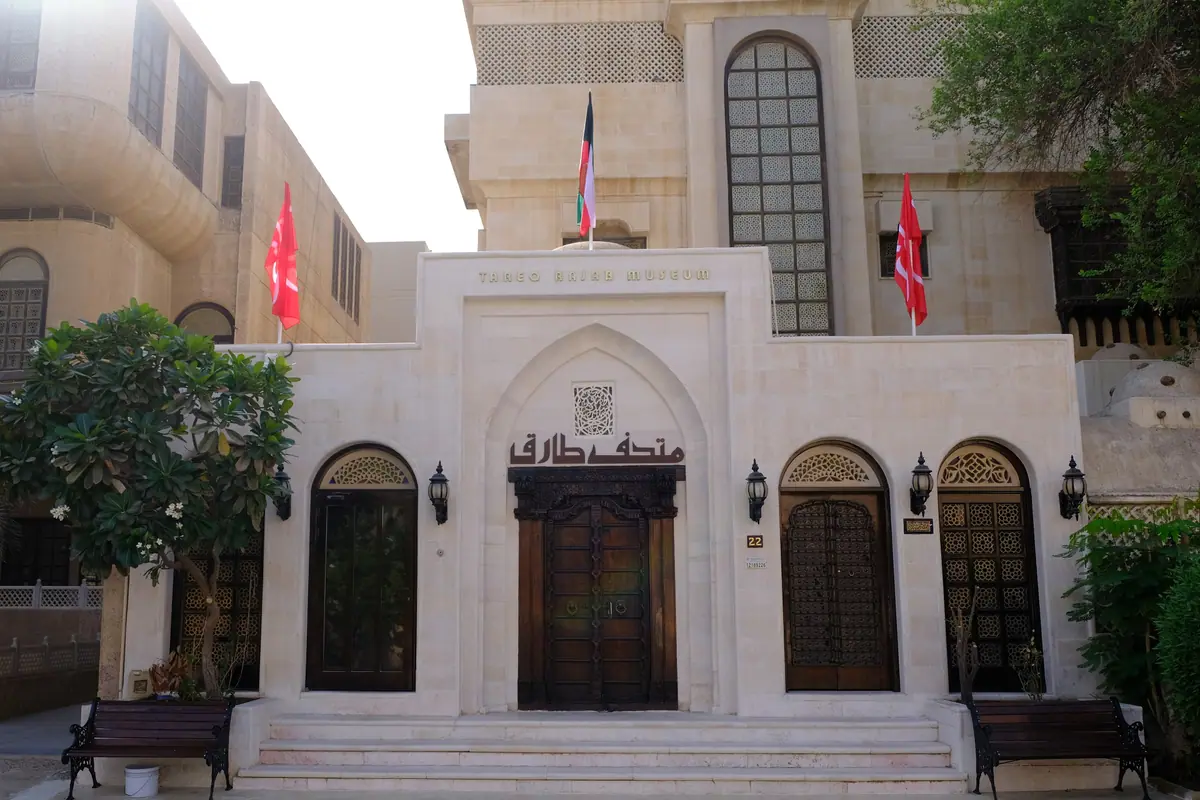
Kuwait's museum scene is small but genuinely rewarding. The Tareq Rajab Museum in Jabriya holds a remarkable private collection of Islamic art — ceramics, metalwork, manuscripts, calligraphy, musical instruments and costumes gathered over decades of travel. It is calm, well labelled and rarely crowded, which makes it a good midday refuge when the sun is at its fiercest. The same family runs a separate calligraphy museum nearby, so art lovers can easily spend a half day in the neighbourhood.
The National Museum in Kuwait City is the place to understand the country's archaeology and pearl-diving past, with finds from Failaka Island and a restored heritage wing. Then there is the Mirror House in Qadsiya, an entire family home covered inside and out in mirrored mosaic by the artist Lidia Al-Qattan — a kaleidoscopic, slightly disorienting and completely unforgettable stop that you must arrange in advance.
Finish with Sadu House on the Gulf Road, devoted to the traditional Bedouin weaving of wool in geometric patterns, which was added to a global list of intangible cultural heritage. You can watch weavers at work, buy a genuinely handmade textile and learn the difference between a genuine sadu pattern and a machine copy — a small, useful skill and a lovely souvenir.
Waterfront, Islands and the Gulf: Green Island and Failaka
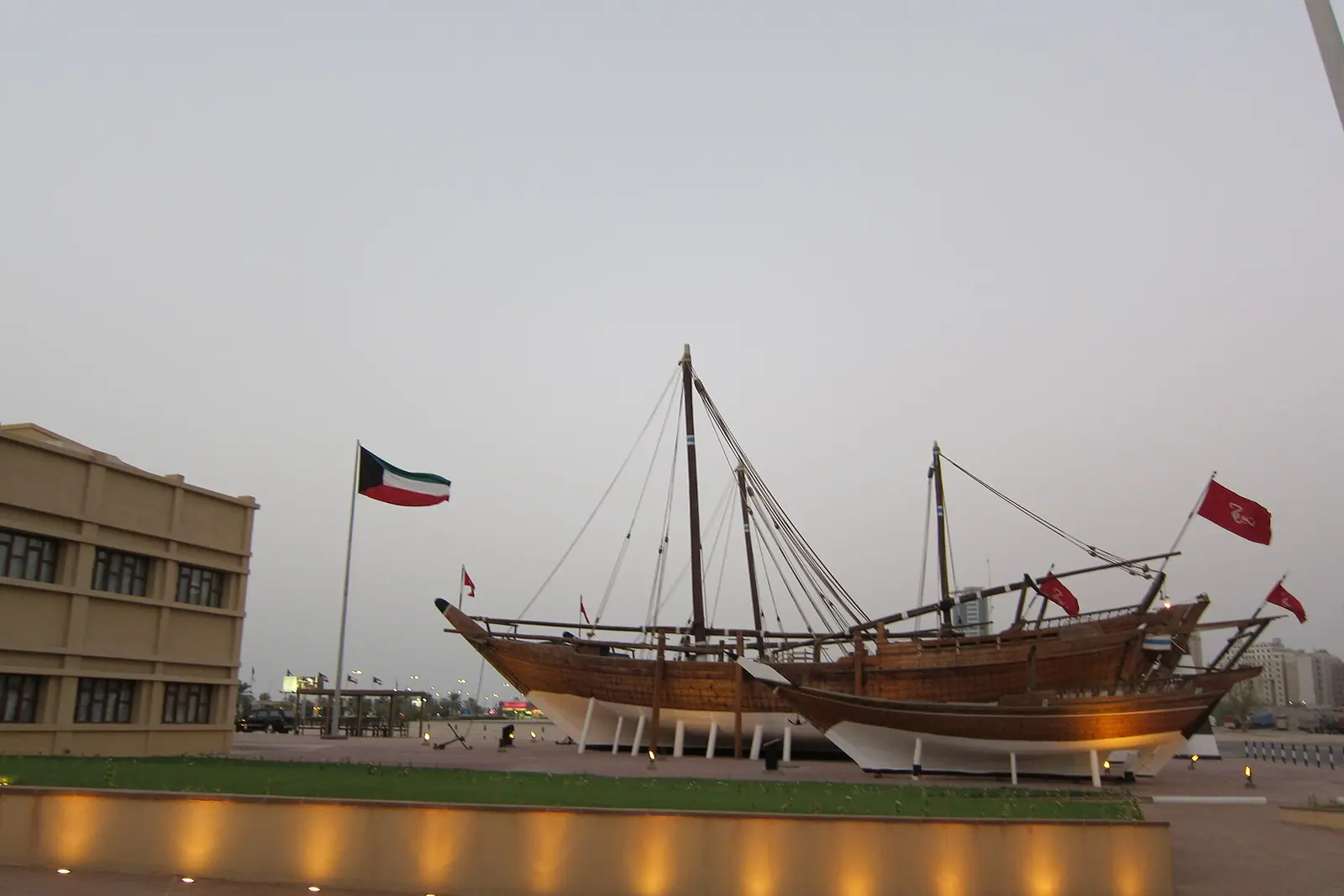
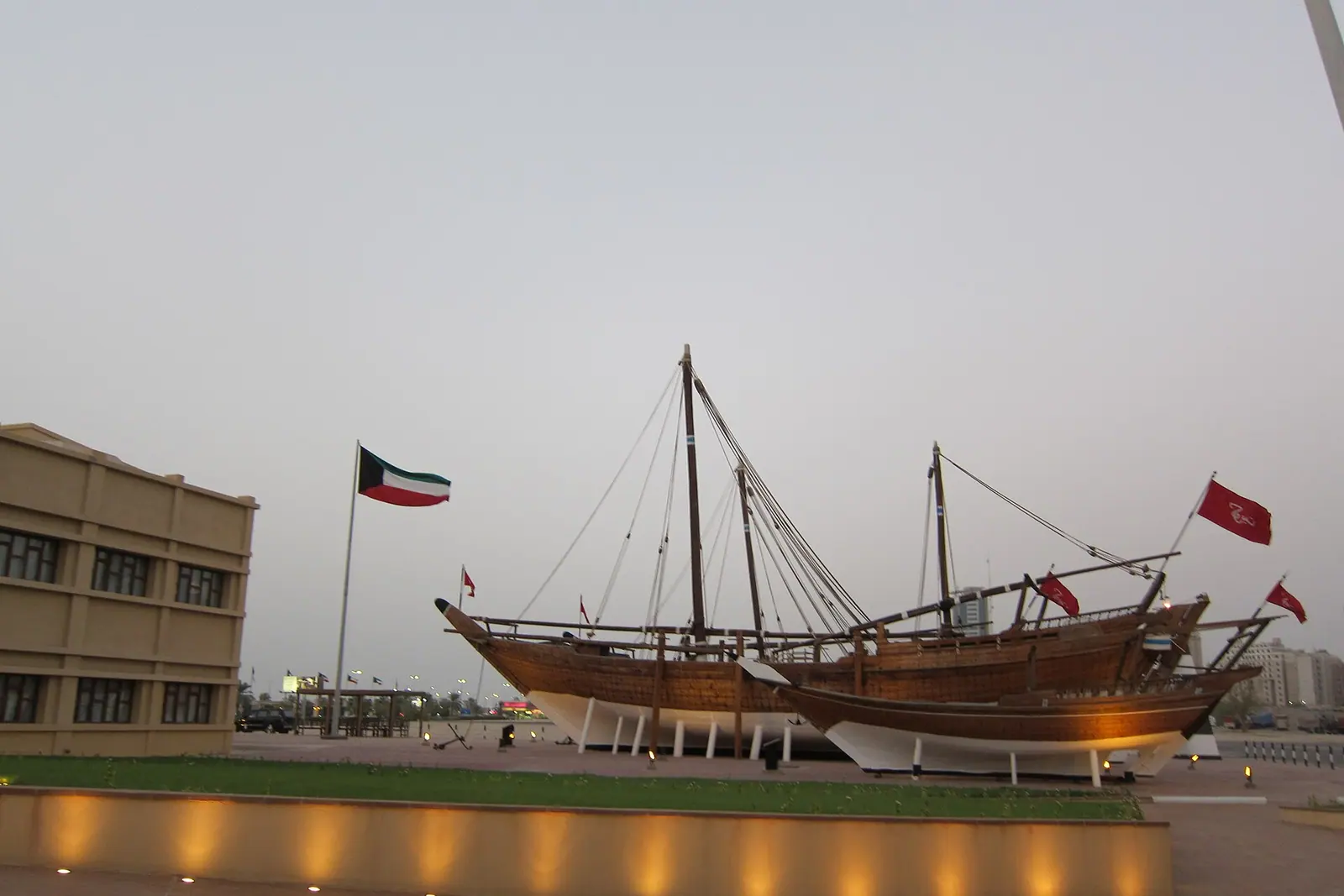
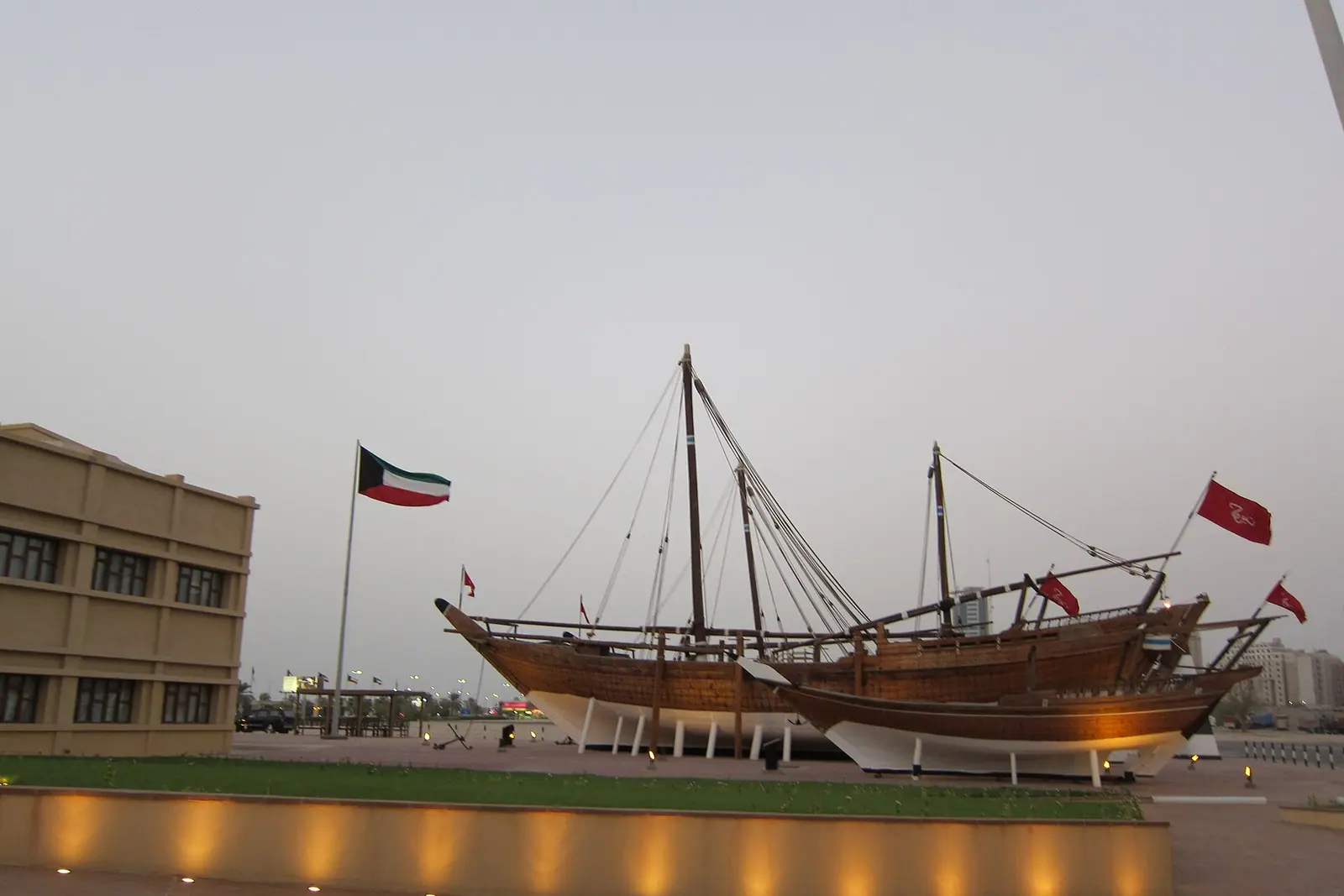
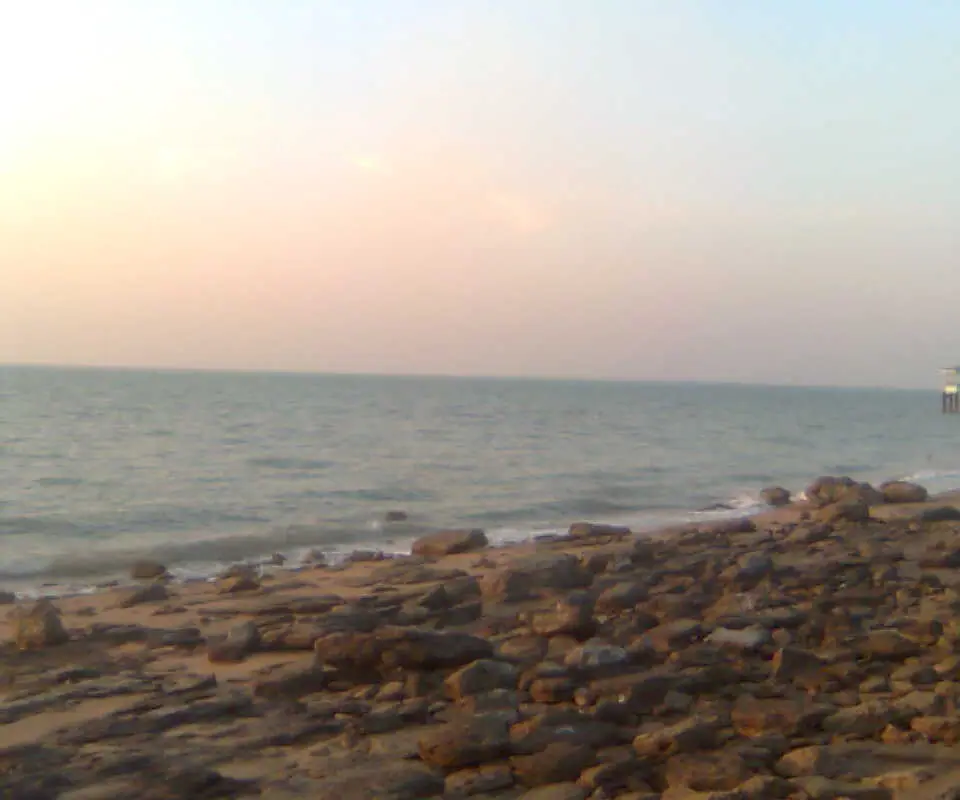
Kuwait's relationship with the sea runs deep: this was a shipbuilding, trading and pearl-diving nation long before it was an oil state. That history is best felt at the Green Island, an artificial peninsula near Shuwaikh with landscaped walkways, a small amphitheatre, a lagoon and views back toward the towers. It is a gentle, family-friendly couple of hours, breezy in the late afternoon and popular for picnics on cooler weekends.
The other essential maritime outing is the ferry to Failaka Island, reached in around 30–40 minutes from Shuwaikh Port. Failaka was settled by the Greeks as Ikaros after Alexander's campaigns, and you can still walk among Hellenistic ruins, a ruined Christian church and the abandoned village left behind after the 1990–91 occupation. Check sailing days before you plan — services are limited and the island's facilities are basic — but for anyone interested in history it is the most atmospheric place in Kuwait.
Back on the mainland, the Scientific Center on the Gulf Road houses a large aquarium, a discovery centre and a cinema, and does a fine job of explaining Gulf marine life to children. Further south, the beaches around Fahaheel and Khiran offer shallow, warm water and a slower pace than the city, with jet-skiing and dhow trips available through local operators in the cooler months.
For diving and snorkelling, the offshore reefs and small islands to the south — including Umm Al Maradim and Qaruh — have surprisingly clear water and coral, though trips need to be arranged privately and are strictly seasonal.
Desert Country: Mutla'a Ridge, Jahra and Winter Camping
Kuwait is not only city. Drive north-west for about 40 minutes and the landscape opens into gravel plain and low ridges, ending at Mutla'a Ridge, the country's most celebrated high ground at roughly 140 metres. It is not a mountain, but it offers a sweeping panorama of the desert, and on clear winter days you can see across the bay toward the city. Bring water, go with someone who knows the area, and avoid it after heavy rain when the tracks turn to glue.
The nearby town of Jahra holds the Red Palace, a nineteenth-century mud-brick fort and residence that played a role in the country's early defence and now serves as a heritage museum. It is a modest but authentic sight, and it pairs naturally with a drive to Jahra Nature Reserve, a wetland on the bay that attracts flamingos, herons and migrating waders between roughly November and March.
Winter is also desert-camping season. From November to February, families pitch tents out past Jahra and around Wafra, and after good rains in February and March the desert briefly blooms with tiny flowers and desert truffles, known locally as faga, which are hunted and sold in the markets. Temperatures in these months sit comfortably between 15°C and 25°C in the day, dipping to single figures at night — bring layers, and never camp alone or without a local contact.
Planning Your Trip: When to Go and How to Get Around
Timing matters more in Kuwait than in almost any Gulf destination. November to March is the sweet spot, with mild days and genuinely cool evenings; December and January can be chilly enough for a jacket and occasional rain. April and October are shoulder months — pleasant mornings, hot afternoons. From May to September, daytime temperatures routinely push past 45°C, so sightseeing shifts to early morning, air-conditioned museums and after-sunset walks along the corniche. Spring also brings dust storms, so keep an eye on visibility if you plan desert drives.
Public transport exists but is limited; realistically you will want a rental car or taxis and ride-hailing apps for everything from the towers to Failaka's ferry port. Roads are wide and signage is bilingual, but driving is assertive, so take it slowly. The weekend falls on Friday and Saturday, which means many shops and sights open late on Friday morning and stay busy on Friday evening — plan museum visits for earlier in the week.
Finally, a few practical notes that catch visitors out: alcohol is illegal, so evenings revolve around cafés, shisha terraces and food rather than bars. Dress modestly in public, and women visiting the Grand Mosque will be offered an abaya at the entrance. During Ramadan, daytime eating and drinking in public is restricted and opening hours shift dramatically, but the evening iftar atmosphere in the market courtyards is one of the best times of year to be in Kuwait.
Frequently asked questions
What is the best time of year to visit Kuwait?
November to March offers the most comfortable weather, with daytime temperatures roughly 15–25°C and cool evenings. December and January can be chilly and occasionally wet. Avoid June to September, when temperatures often exceed 45°C, and be aware that spring can bring dust storms.
How many days do you need in Kuwait?
Three to four days covers the essentials comfortably: one day for Kuwait Towers, Al Shaheed Park and the corniche, one for Souq Al-Mubarakiya, Bait Al-Othman and the museums, one for Failaka Island or a desert and wetlands drive, and a spare half day for the Green Island or the Scientific Center.
Do I need a car in Kuwait?
It helps a lot. Public transport is limited and many attractions, including Mutla'a Ridge and the Failaka ferry port, are awkward without a vehicle. Renting a car or using taxis and ride-hailing services is the most practical approach.
Can you drink alcohol in Kuwait?
No. Alcohol is illegal throughout the country, including in hotels and restaurants. Evenings tend to centre on cafés, restaurants, shisha terraces and late walks along the Gulf Road or around the Kuwait Towers.
Is Failaka Island worth visiting?
Yes, if you have an interest in history. The ferry from Shuwaikh Port takes roughly 30–40 minutes, and the island holds Hellenistic ruins, an old church and an abandoned village from the 1990–91 period. Sailing days are limited and facilities are basic, so check times and bring supplies.
Plan it — experiences in Kuwait
Live search, booked directly with trusted providers.
Sort the rest of your trip
Everything for Kuwait, in one place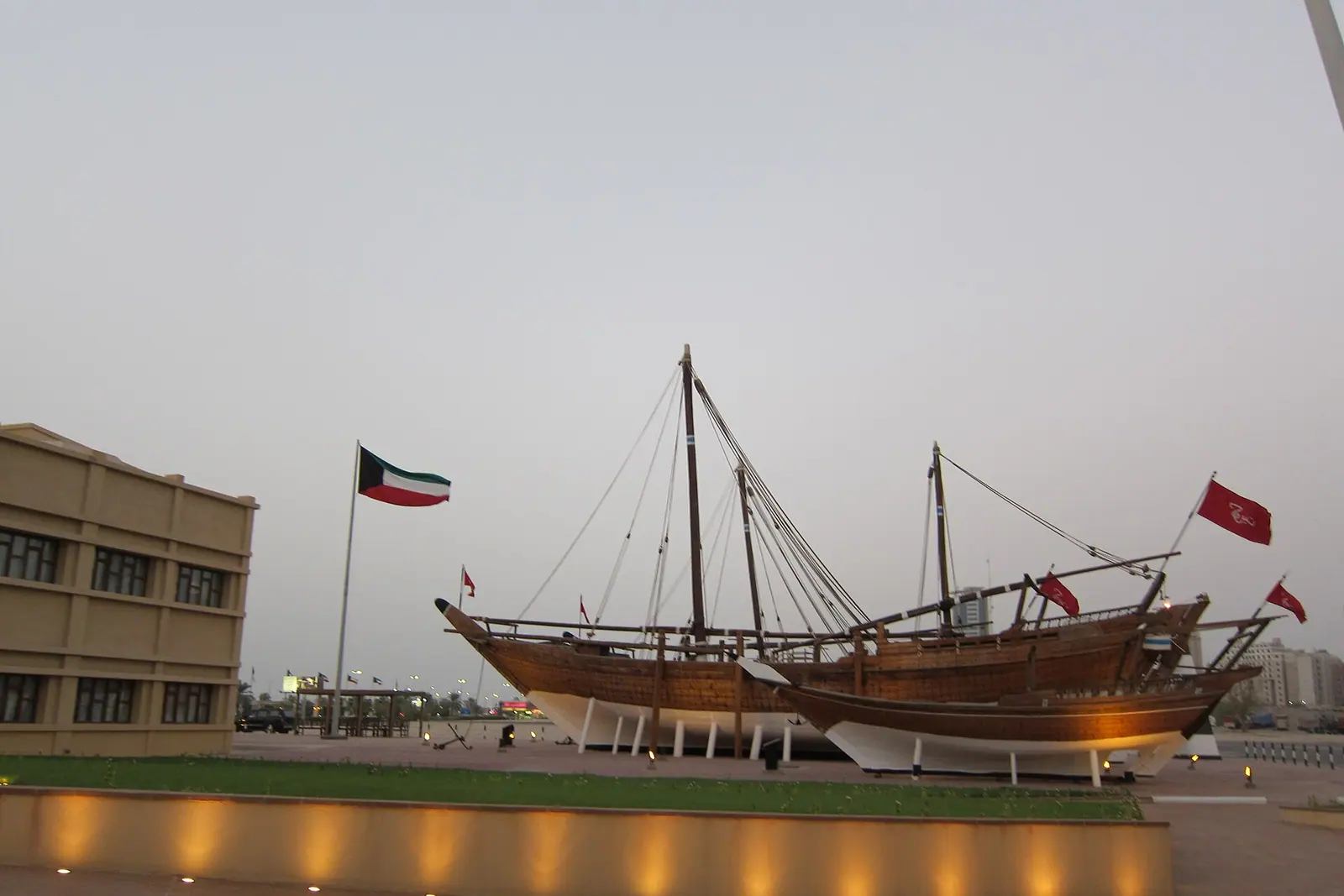
Stay in Kuwait
Hotels, guesthouses and apartments — compared in one search.
Search hotels
Transfer in Kuwait
Private driver waiting on arrival — no queues, no surprises.
Book a transfer
Stay online in Kuwait
Travel eSIM — data the moment you land, no roaming bills.
Get an eSIM