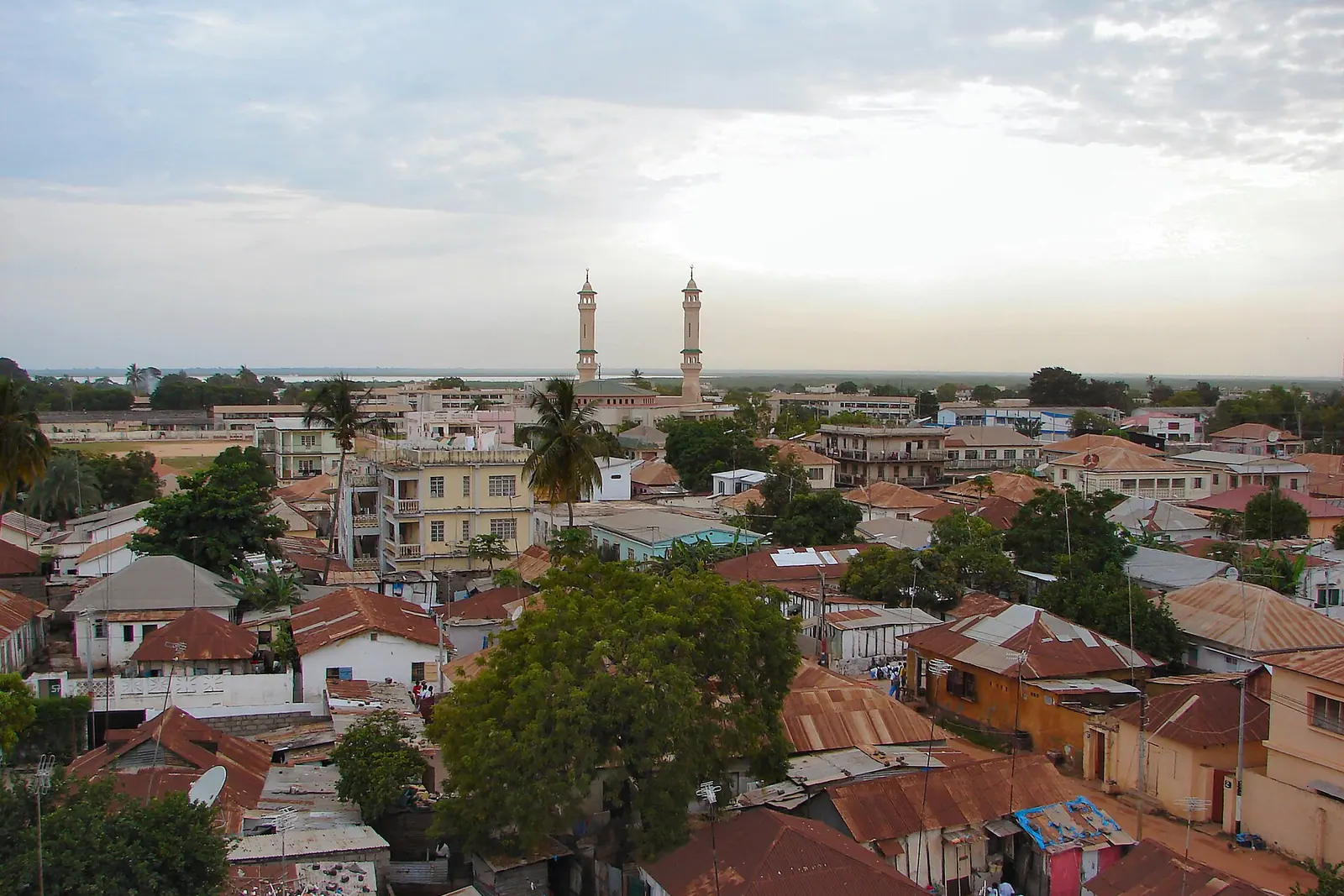
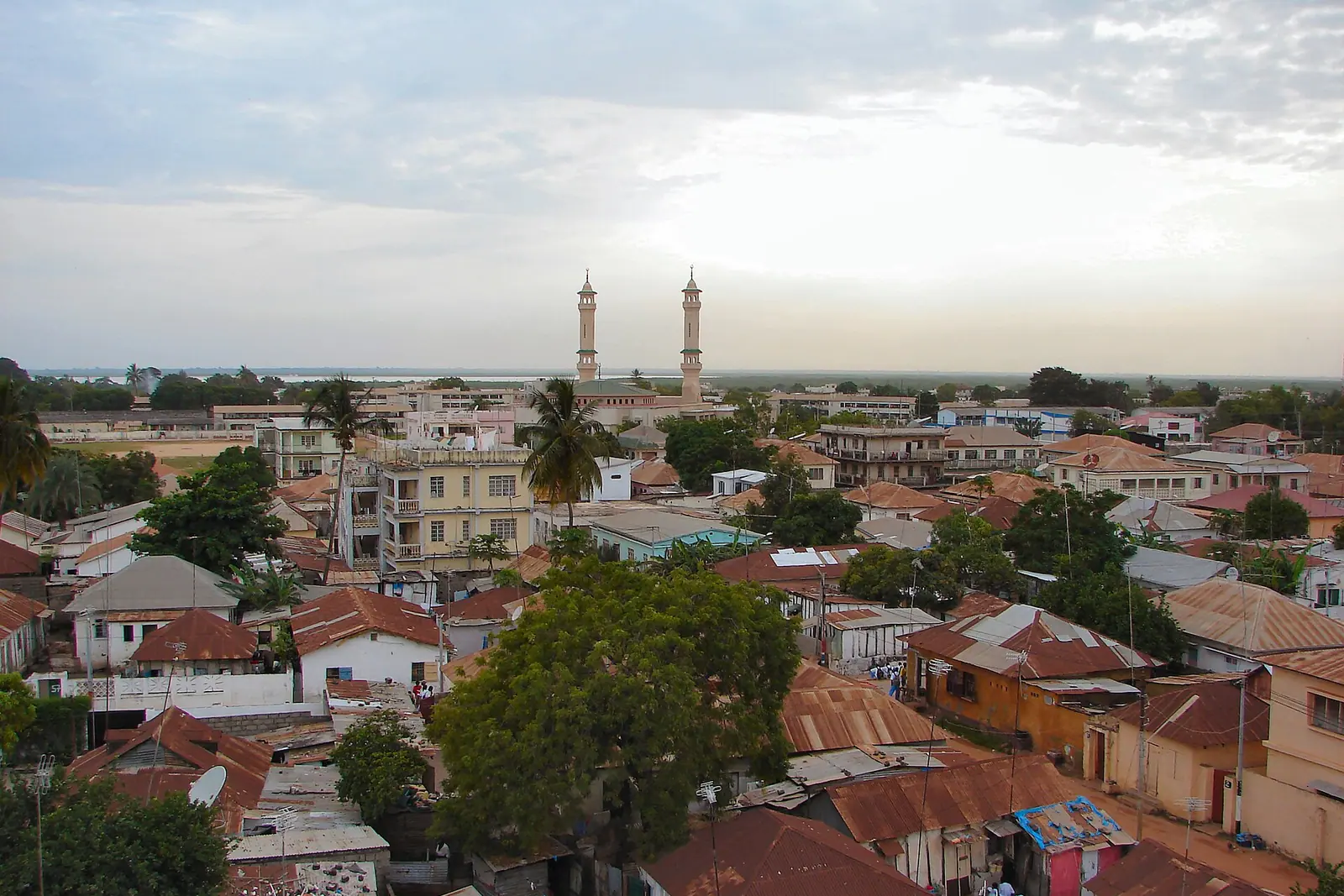
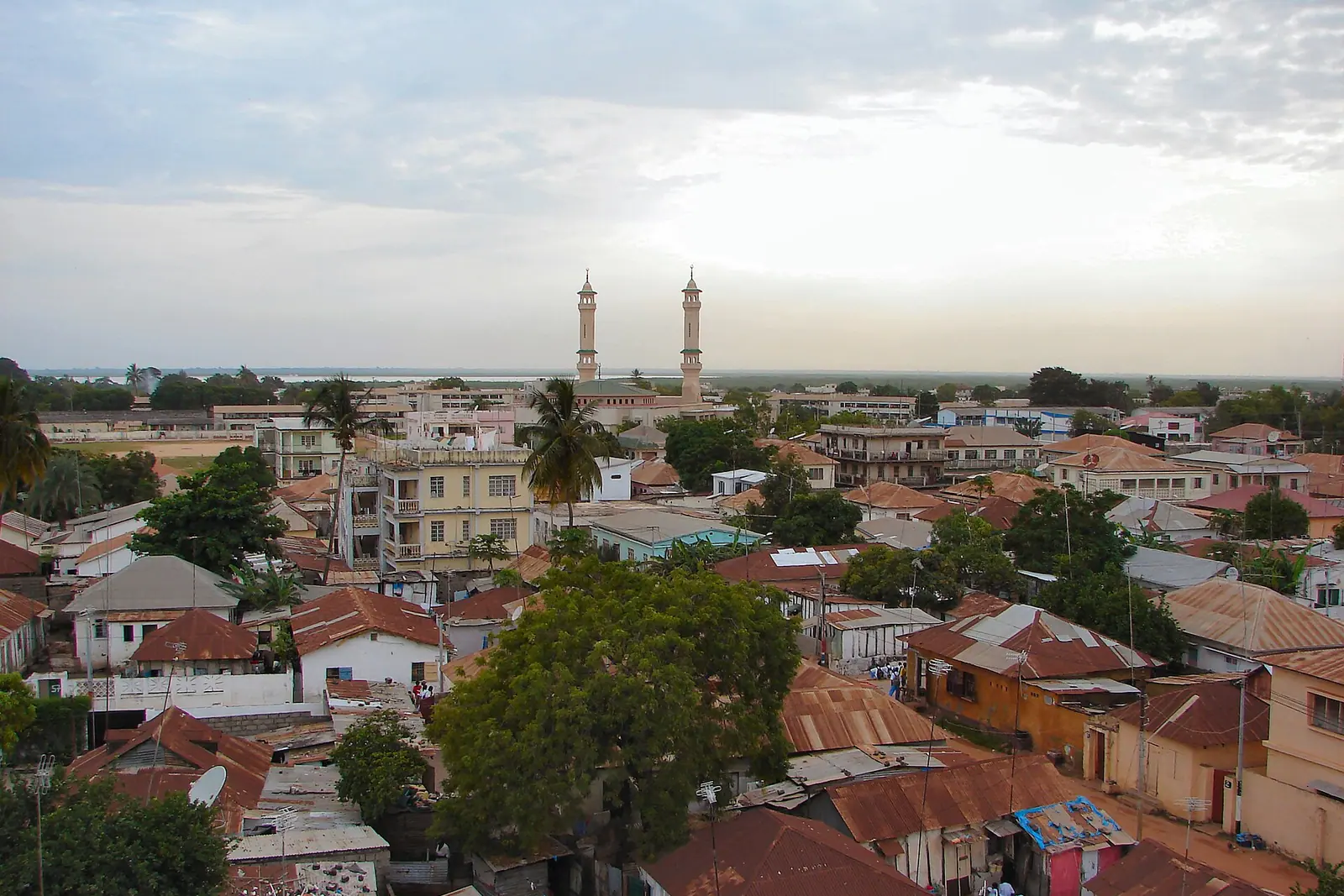
The Gambia is mainland Africa's smallest country, a thin ribbon of land stitched to the banks of the river that gives it its name. In a single week you can watch chimpanzees on a forested island, stand beside a crocodile pool that locals hold sacred, and eat grilled fish on a beach where the Atlantic rolls in warm. Everything sits within a few hours of everything else — which is exactly why this tiny nation rewards slow, curious travel.
Banjul: Arch 22, Albert Market and a Capital on an Island
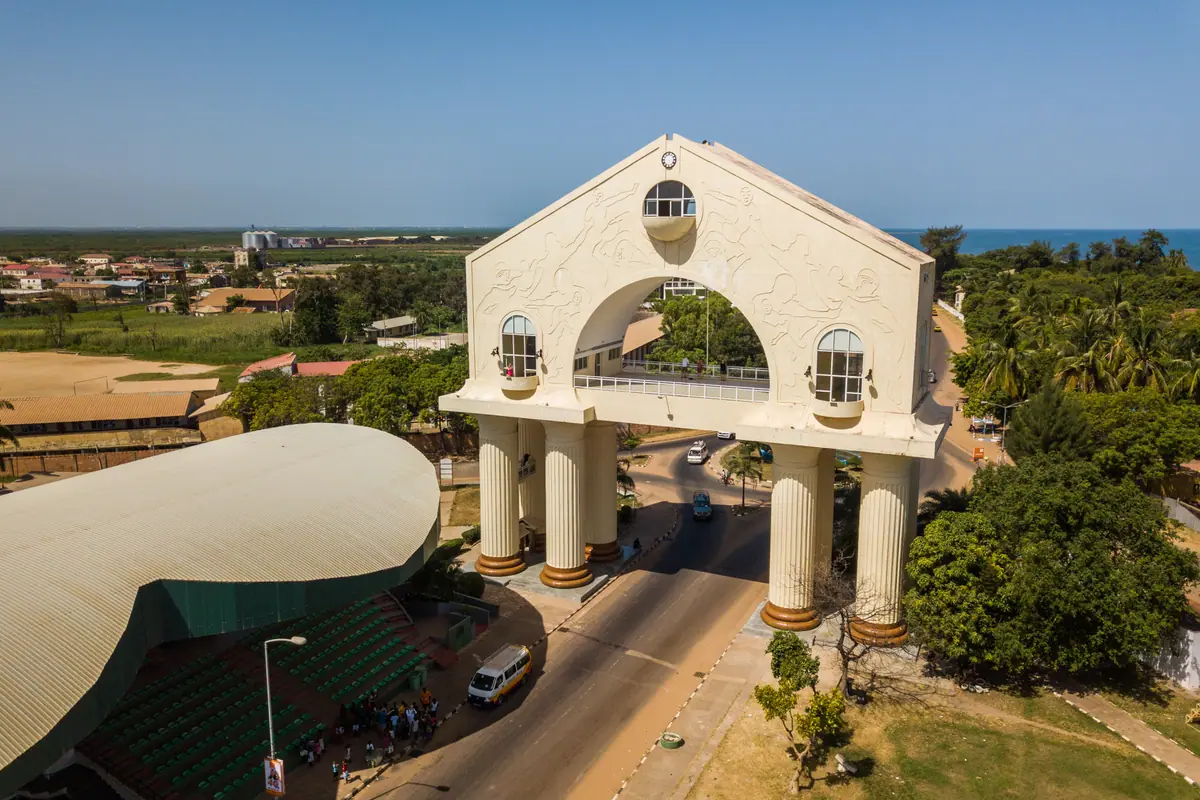
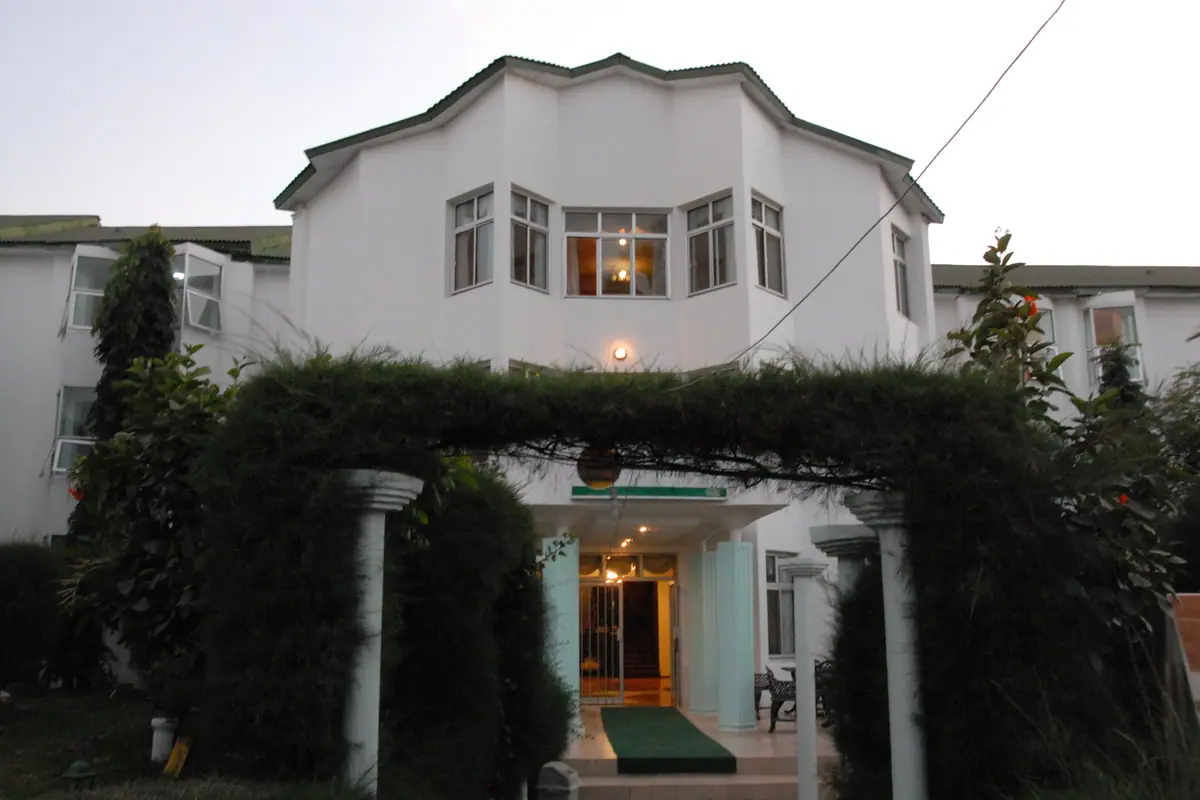
The capital occupies a low island at the mouth of the Gambia River, joined to the mainland by the Denton Bridge. Start at Arch 22, the 35-metre triumphal arch that dominates the skyline; a staircase and a lift climb to a viewing gallery with sweeping views over the rooftops, the ferry terminal and the river mouth. A small museum inside sets out the country's post-independence political history, and the arch is easily the most photographed landmark in The Gambia.
Wander down to Liberation Avenue and the Albert Market, a dense, noisy warren of fabric stalls, spice sellers, tailors, tie-dye and fish. It has been the commercial heart of the city for well over a century, and it is a place to bargain cheerfully and take your time. A short walk away, the National Museum on Independence Drive covers archaeology, music, colonialism and the transatlantic slave trade in a handful of rooms, while MacCarthy Square, the State House and the old colonial quarter nearby make an easy morning's stroll. Most visitors base themselves on the coast and reach Banjul by taxi in 30 to 40 minutes.
Monkeys, Crocodiles and Palm Forest: Wildlife Near the Coast
Abuko Nature Reserve, gazetted in 1968, is the country's oldest protected area and a pocket of gallery forest, bamboo and pools barely half an hour from the hotel strip. A marked trail loops through in about 90 minutes; expect green monkeys, monitor lizards, turacos and kingfishers, plus a small enclosure caring for orphaned primates. Bring binoculars and go early, when the birds are active and the light is soft.
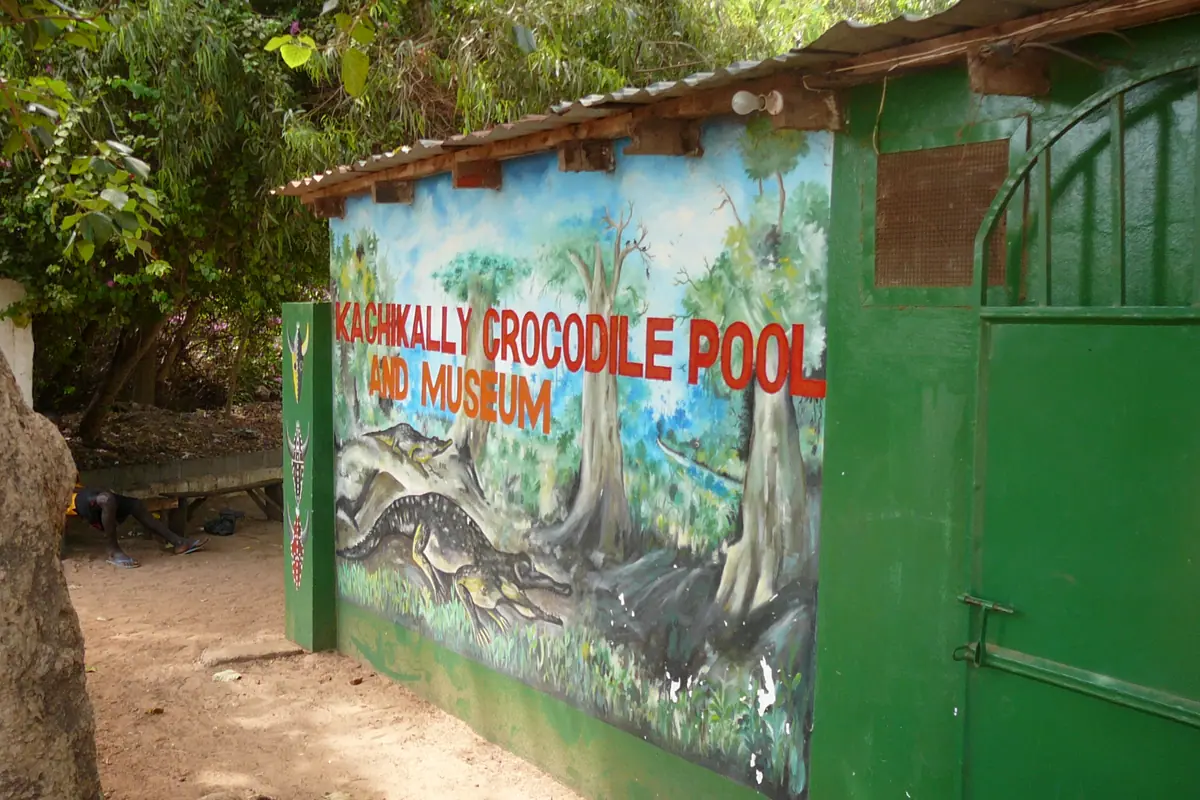
Bijilo Forest Park, known locally as the Monkey Park, is smaller and even easier — a 51-hectare strip of coastal woodland where green monkeys and the shyer red colobus have grown relaxed around visitors. Further along the coast at Bakau, the Kachikally Crocodile Pool holds around 80 Nile crocodiles that are considered sacred, and visitors routinely pose stroking their tails; a small museum explains the pool's role in local ritual. Inland near Mandina, Makasutu Culture Forest offers guided walks through palm and mangrove with a canoe trip on the creek.
Beaches: Kotu, Kololi and the Quieter South Coast
The coast between Bakau and Kololi is the country's holiday heartland: a run of gold-brown sand, palm-lined, with warm water and gentle breakers. Kotu Beach is the easiest introduction — plenty of shade, beach bars, and a creek at its northern end that fills with waders and kingfishers at low tide. Kololi, next door, is busier and louder, with restaurants, live music and a long line of craft stalls and small hotels behind the sand.
Head south for quieter stretches. Sanyang has a broad curve of beach known as Paradise Beach and a handful of low-key lodges, while Gunjur and Kartong are fishing villages where pirogues still land in the late afternoon and you can buy the catch on the spot. Be realistic about the sea: the Atlantic here has a strong undertow and seasonally heavy surf, and lifeguards are rare. Swim near the hotels where locals know the currents, keep children close, and remember the water stays around 24 to 28°C all year.
Kunta Kinteh Island and the Heritage of the River
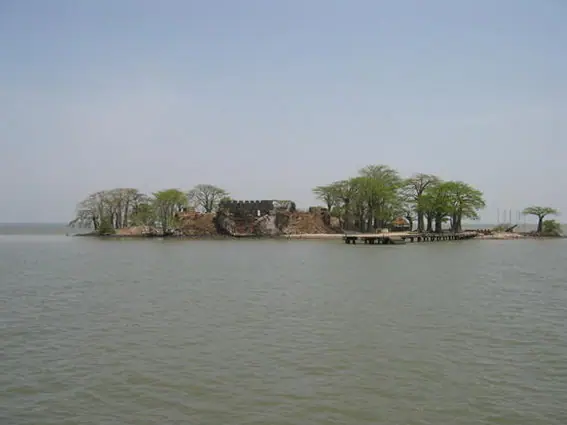
Kunta Kinteh Island — long known as James Island — sits in the middle of the Gambia River near Albreda and Juffureh, and it is the country's most significant historic site. A ruined fort, battered by two centuries of erosion, now occupies barely a fifth of the island's original footprint. Reaching it means a ferry crossing from Banjul to Barra and a drive west along the north bank, then a short pirogue ride; most visitors do it as a long day trip of eight to ten hours, though staying overnight nearby turns it into a far more relaxed experience.
On the mainland, Juffureh and Albreda tell the wider story. The small museum at Juffureh traces the village's links to the transatlantic slave trade and the family history that inspired a celebrated American saga, while the old trading warehouse at Albreda — the Maurel Frères building — has been restored as a heritage museum. Guides here are knowledgeable, and the walk between the two villages takes about 20 minutes. Bring cash for the boat, the museums and a guide, and expect a stop at a craft market on the way back.
Birdwatching: Tanji, Kotu Creek and the Wetlands
More than 500 bird species have been recorded in a country the size of a small English county, and in the dry season the residents are joined by huge numbers of migrants arriving from Europe and the Arctic. Tanji Bird Reserve, an hour south of Kololi, protects a lagoon, mangroves and sandbanks where terns, gulls, waders, herons and ibises gather. The neighbouring fishing village is worth an afternoon in itself, when the boats come in and the beach turns into a market.
Closer to the hotels, Kotu Creek and the rice fields behind it are excellent at first light — pied kingfishers, egrets, hornbills and the occasional crocodile. Serious birders head further out: Kartong, near the southern border, has a community-run reserve and wetland, while Bao Bolong Wetland Reserve on the north bank and Kiang West National Park on the south bank offer mangroves, dry woodland, baobabs and a level of solitude you will not find on the coast. Local guides are worth every dalasi — they know the calls, the roosts and the tracks.
Upcountry: Janjanbureh, Stone Circles and Chimpanzees
The river's middle reaches are the Gambia most visitors never see. Janjanbureh, a small town on an island about five to six hours up the highway, was a colonial trading centre and still has crumbling warehouses, veranda-fronted houses and a ferry that plies between the banks. Just beyond it, the Wassu Stone Circles stand in a quiet field: dozens of carefully raised laterite pillars, some more than two metres tall, erected over a span of centuries and recognised as a World Heritage Site. A small museum explains what little is known about those who built them.
Near Janjanbureh, boats run into the River Gambia National Park to watch chimpanzees on forested islands — animals rescued and released decades ago, now living wild — alongside hippos, baboons and a spectacular range of birds. On the south bank, Tendaba and Kiang West National Park make a comfortable two- or three-day loop from the coast, with boat trips through mangroves and night walks in the bush. Distances here look tiny on a map; road conditions and ferry queues mean you should double whatever you estimate.
Frequently asked questions
When is the best time to visit The Gambia?
November to May is the dry season and the most comfortable window. December to February brings cooler days and the peak of the birdwatching, with migrants crowding every wetland. February to May turns hotter and hazier as harmattan dust drifts in. June to October is the green season: humid, with heavy afternoon downpours, lush landscapes, fewer visitors and lower rates, though some small hotels and upcountry camps close.
How many days do I need?
Five to seven days is enough for the coast — Banjul, the beaches, a couple of nature reserves and a day on the river. Add two or three nights upcountry if you want Janjanbureh, the Wassu Stone Circles and the chimpanzee islands. Kunta Kinteh Island deserves a full day on its own; it is a long, tiring round trip from the hotel strip.
Is Kunta Kinteh Island worth the journey?
If you care about history, yes. The island itself is small and heavily eroded, so the experience is as much about the boat ride, the villages of Juffureh and Albreda and the museums as it is about the ruins. Budget eight to ten hours from the coast including the ferry and the drive, and consider sleeping in the area so you are not rushing.
How do I get around, and what about guides and tipping?
Taxis, shared minibuses and seven-seat bush taxis cover most routes; agree the fare before you set off. Hiring a licensed guide for birdwatching, Makasutu or the heritage sites makes a real difference, and tipping is expected — a small, sincere amount goes a long way. On the beaches, a friendly but firm 'no thank you' is perfectly acceptable.
Any health and safety pointers?
Malaria is present year-round, so take medical advice on prophylaxis before you travel, and check your yellow fever vaccination is up to date. Use repellent at dusk and cover up in the evening. The sea can be rough with strong currents, so swim near the busier hotels and avoid remote stretches unless locals say it is safe. Drink bottled or filtered water and carry small notes for everyday purchases.
Plan it — experiences in Gambia
Live search, booked directly with trusted providers.
Sort the rest of your trip
Everything for Gambia, in one place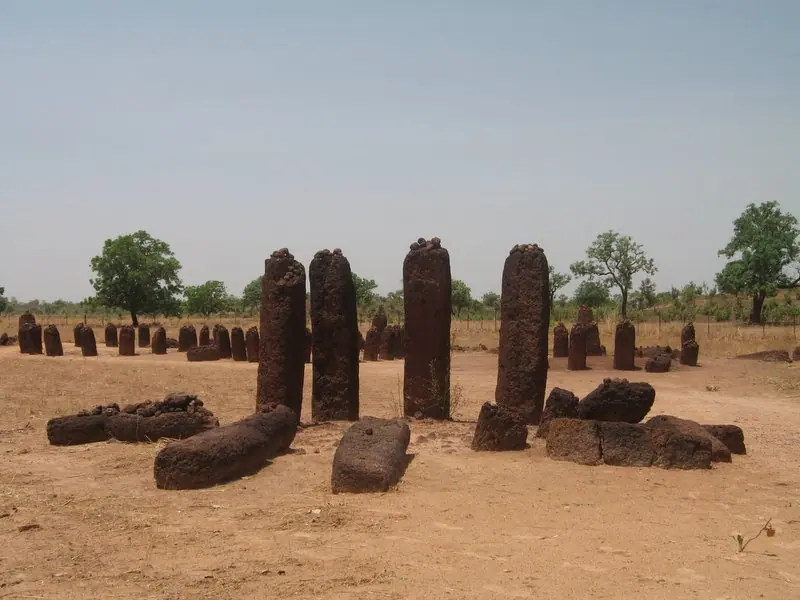
Stay in Gambia
Hotels, guesthouses and apartments — compared in one search.
Search hotels
Transfer in Gambia
Private driver waiting on arrival — no queues, no surprises.
Book a transfer
Stay online in Gambia
Travel eSIM — data the moment you land, no roaming bills.
Get an eSIM