The Gambia is a sliver of a country pinned around a great river, small enough to cross in a day yet layered with Mandinka, Wolof, Fula, Jola and Aku traditions that surface in every shared rice bowl. Travel here is less about ticking off monuments than about slow mornings in a bantaba, three rounds of green tea, and a boat ride to an island that carries the memory of the transatlantic slave trade. This guide maps the food, the music and the landmarks worth building a tour around.
Flavours of the Gambia: Domoda, Benachin and the Art of One Pot
Most Gambian cooking begins with a single large pot and a great deal of patience. Domoda is the national comfort dish — a thick groundnut stew, sometimes with beef, sometimes with fish, spooned over rice and cooked until the peanut oil separates and glistens on top. Benachin (the local ancestor of jollof) cooks rice directly in a tomato-and-palm-oil base with fish, chicken or beef, so every grain takes on the colour. Chicken yassa, borrowed and reworked from across the Senegalese border, arrives sharp with onions, mustard and lime, while supakanja — okra stewed with palm oil and fish — has a texture that divides first-timers and converts them by the third spoonful.
Eating is communal. A bowl is set on a mat or low stool and everyone reaches in with the right hand, forming a small ball of rice. Vegetables and meat are usually pushed to the centre or placed near the eldest person. If you are invited to a family meal, wait to be guided to your spot, eat from the section directly in front of you, and expect to be urged to take more than you can manage.
Breakfast and street snacks are their own pleasure. Tapalapa, a long crusty baguette-like loaf, is split and filled with akara (fried black-eyed pea fritters), omelette or tinned sardines; chura gerte, a groundnut rice porridge, is popular during Ramadan. In markets you will find fried plantain, cassava chips, mangoes in season from May, and, along the coast, oysters harvested by the women of Tanji between roughly November and June. To drink, join the attaya ritual: three small glasses of green tea brewed in a tiny kettle, the first bitter, the second sweet, the third sweetest and lightest. Wonjo (hibiscus), baobab juice and ginger juice are the everyday refreshers, and palm wine is tapped fresh from the oil palms in the villages of the south bank.
Banjul and the Kombo Coast: Markets, Crocodiles and Capital Landmarks
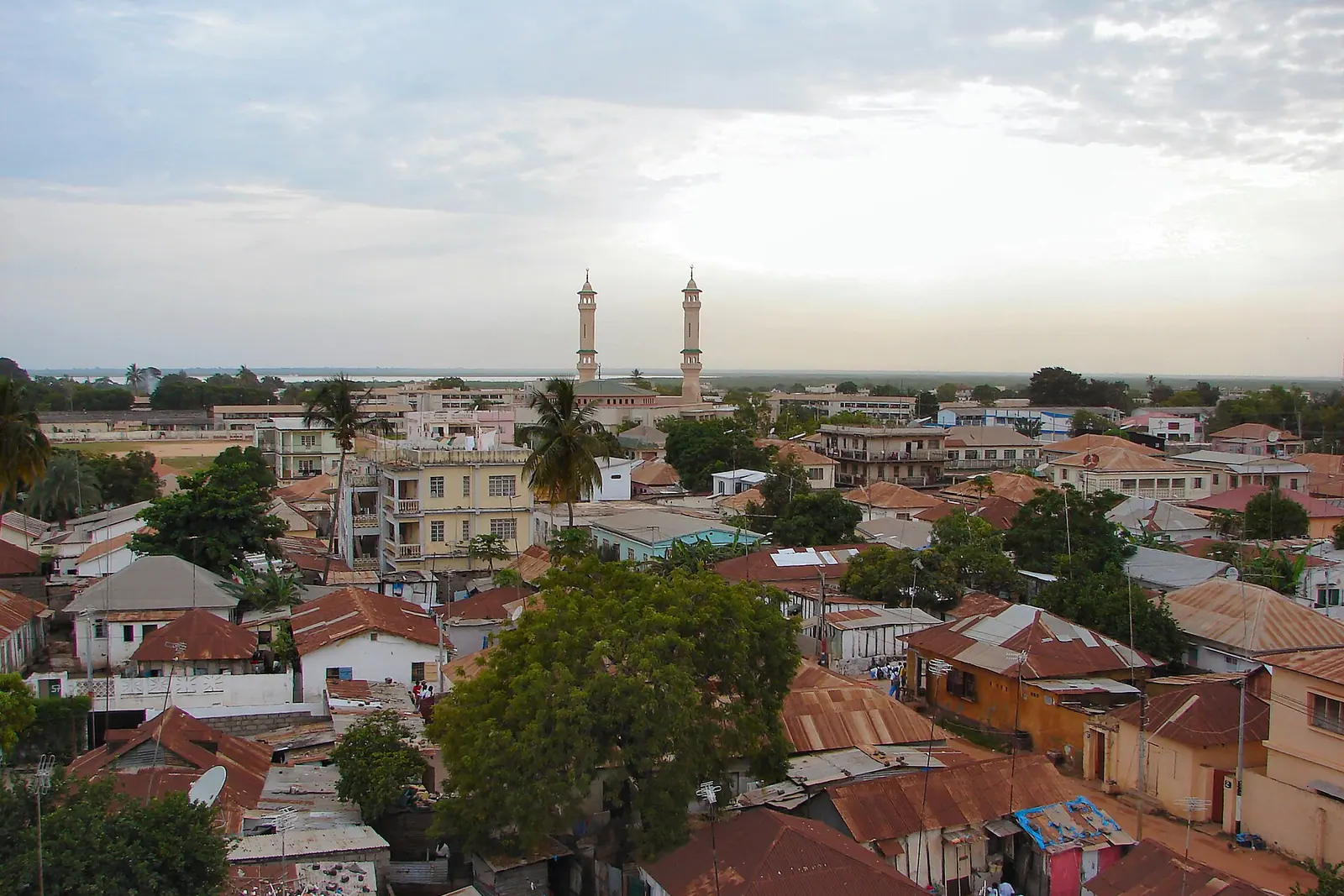
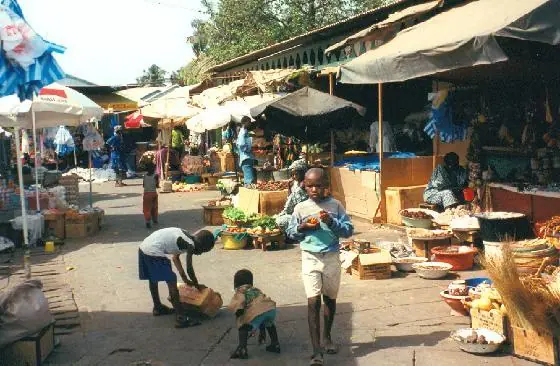
The capital, Banjul, sits on an island at the mouth of the river, and its landmark is impossible to miss — Arch 22, the towering gateway built at the entrance to the city, with a viewing gallery at the top that looks out over the rooftops to the mangroves and the sea. Close by on Independence Drive is the National Museum, a modest but worthwhile collection covering pre-colonial kingdoms, the slave trade and musical instruments, including a fine selection of koras. A short walk away, Albert Market on Liberation Avenue is the capital's beating heart: batik and wax cloth by the yard, kola nuts, smoked fish, dried hibiscus, and tailors who will run up a garment in a day.
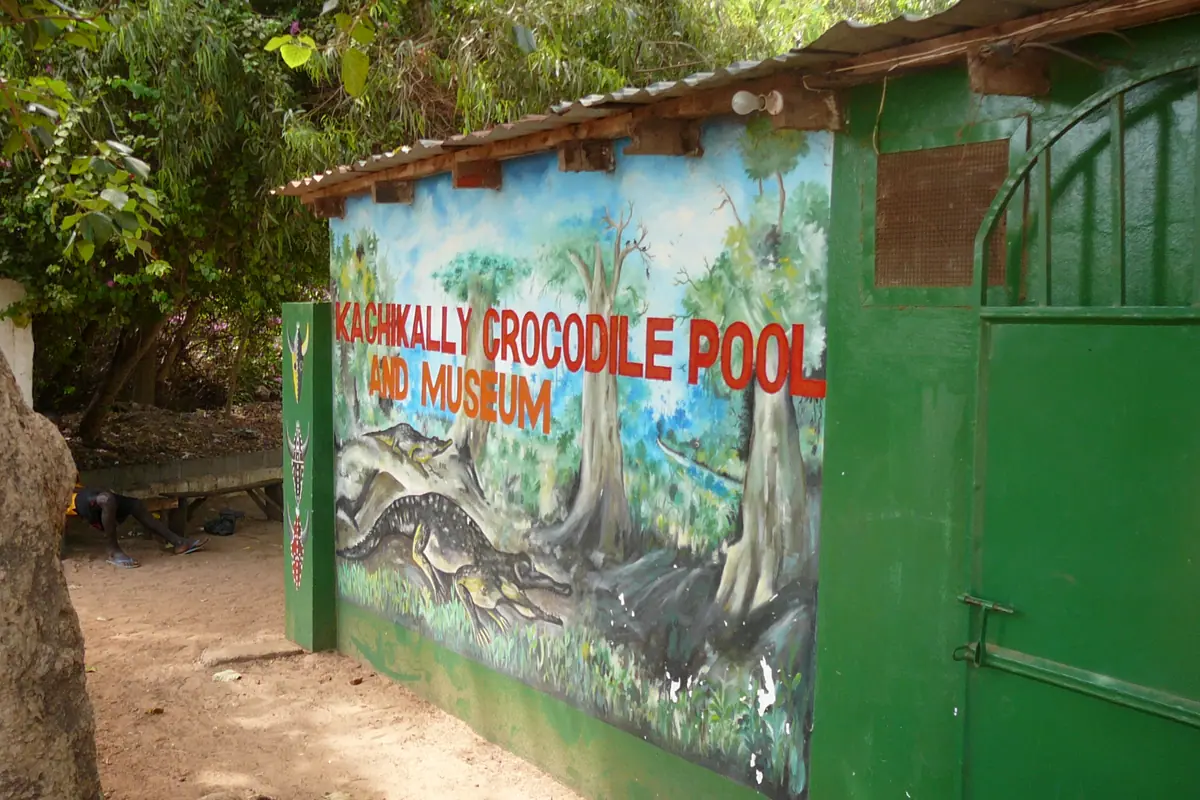
Follow the coast west into Kombo and the landscape turns greener and quieter. In Bakau, the Kachikally Crocodile Pool is a sacred site as much as a wildlife attraction — a natural spring surrounded by a grove where dozens of Nile crocodiles live undisturbed, and where couples still come to seek fertility blessings. Bakau's botanical gardens and craft market are a short stroll away. Further along, Bijilo Forest Park (often simply called the monkey park) protects a strip of coastal forest where green monkeys and red colobus drop out of the trees within metres of the path.
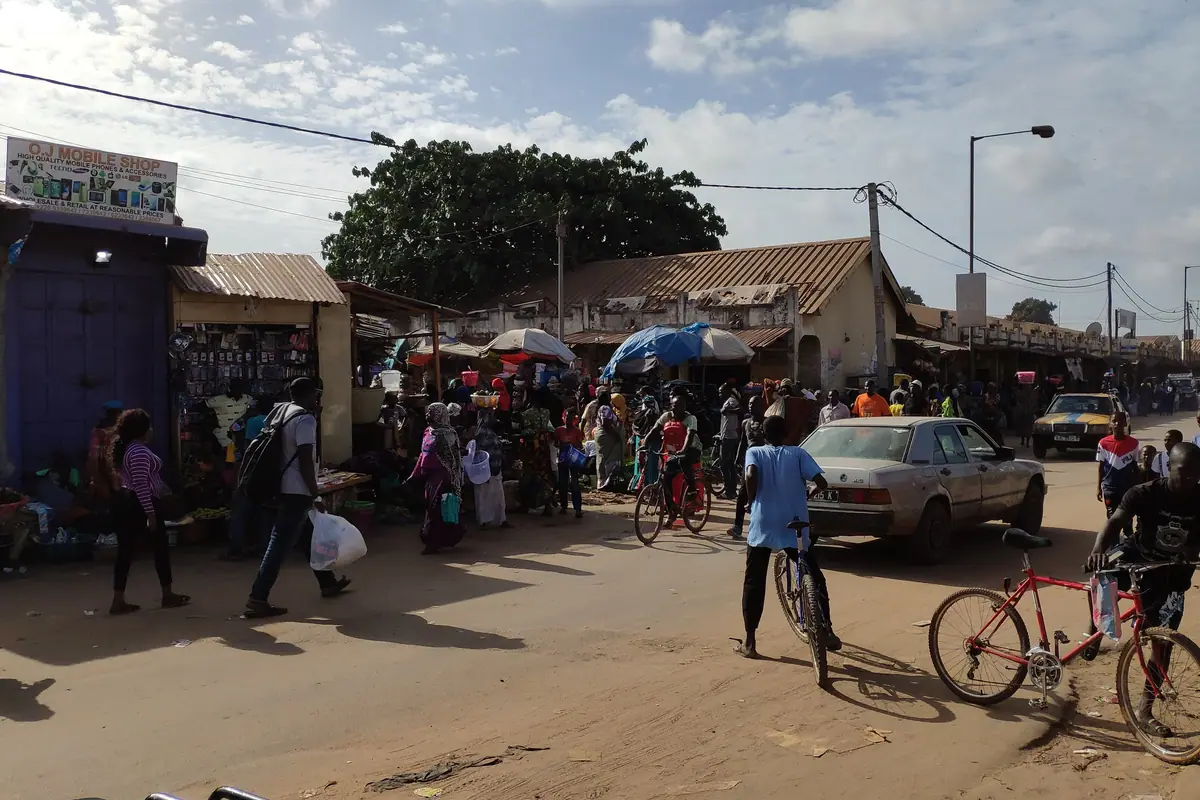
Between them lie the towns that most travellers use as a base: Serekunda, whose market is the largest in the country and worth an hour of aimless wandering; Kololi and the adjoining coastal strip, where live mbalax bands play late into the night; Kotu, with its stream and beach; and Fajara, home to most of the country's craft stalls and galleries. Inland from here, Abuko Nature Reserve is the oldest protected area in the country and the easiest place to see monkeys, crocodiles and vivid birdlife in a single morning.
Sacred Forests and Craft Villages of the South Bank
South of the river, the road to Brikama passes through some of the most rewarding community-run experiences in the country. Makasutu Culture Forest, near Mandinari, packs mangroves, palm groves, savannah and a sacred forest into a compact area: you explore by foot and by carved canoe, with local guides identifying medicinal plants and birds along the way. Brikama itself is the country's woodcarving and craft centre, a good place to watch carvers at work rather than simply buy the finished piece.
Continuing south you reach Tanji, a fishing village whose beach fills with painted wooden boats each afternoon. The Tanji Village Museum gives a lucid introduction to traditional compound life and the tools of fishing and farming, and the fish market next door is a full sensory experience — women smoking, drying and selling bonga fish and barracuda. From here the coast runs down to Gunjur, with its long empty beach, and Kartong, a laid-back border village known for its wetlands and craft workshops.
A little inland lies the Lamin Lodge, built on stilts among the mangroves of the Lamin wetlands — a classic stop for a cold drink and a boat trip through the creeks, where ospreys, kingfishers and herons are almost guaranteed. For birders, the Niumi National Park on the northern bank near the border with Senegal is the other unmissable wetland, best visited on a full-day outing from the coast.
Up the River: Kunta Kinteh Island, Juffureh and the Stone Circles
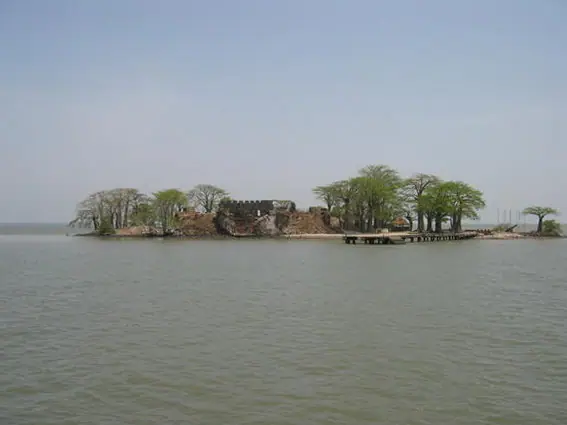
The most profound tour in the Gambia follows the river inland to Kunta Kinteh Island, once known as James Island. Reached by pirogue from Albreda or Juffureh, the island is now a small, eroding outcrop of laterite with the remains of a colonial fort, and it holds UNESCO World Heritage status for what happened here: it was a holding point in the transatlantic slave trade, where captured people were kept before being shipped across the Atlantic. Standing on it, with the river sliding past on both sides, is the kind of experience that silences a group.
The nearby village of Juffureh is famous as the ancestral home of a man taken into slavery in the 18th century, and its small museum, the old trading warehouse at Albreda, and the low, crumbling slave-house ruins all add context. Guides here are typically descendants of villagers and speak with real authority. Allow a full day from the coast; consider staying overnight upcountry to slow the pace.
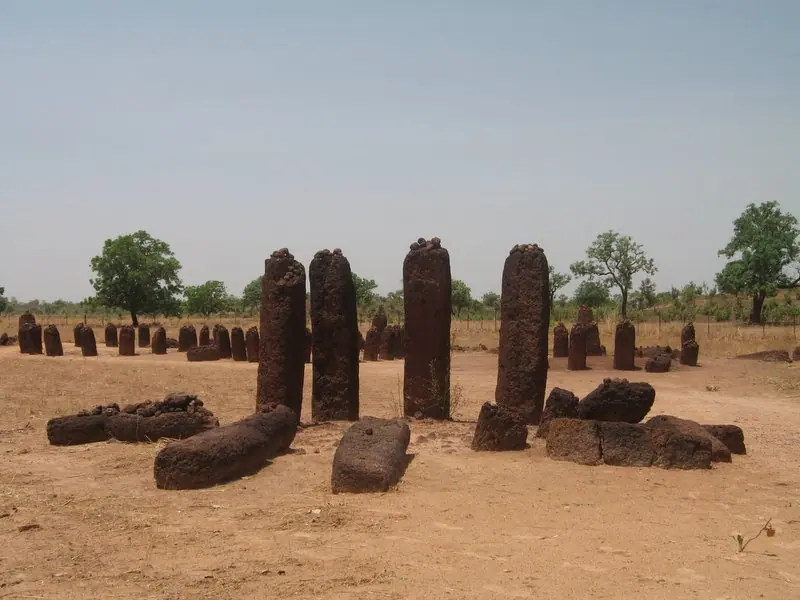
Further upstream, two more sites reward the extra travel. The Wassu Stone Circles are a cluster of precisely cut laterite columns and capstones raised centuries ago — a UNESCO-listed megalithic site on a par with those in Senegal, and still the subject of scholarly debate. Janjanbureh (Georgetown), on an island in the river, is a crumbling, atmospheric colonial-era town of verandas and mango trees, and the launching point for boat trips into the River Gambia National Park, where rehabilitated chimpanzees live on forested islands and hippos surface in the channels. Tendaba Camp, on the southern bank in Kiang West, is the classic overnight base for this stretch.
Music, Masquerade and Hospitality: Kora, Kankurang and the Bantaba
Gambian music travels well, and hearing it at the source is the reason many people come. The kora, a 21-string harp-lute played by hereditary griot families, is the country's signature instrument — its plucked, cascading lines underpin everything from praise songs to modern mbalax. The djembe and the wooden balafon fill in the rhythm, and you will find drumming and dance classes in Bakau and around the coastal strip, usually taught in family compounds and often ending in a village performance at the weekend.
Culture here is performed as well as played. The Kankurang, a masked initiate clad in bark fibre and wild leaves, appears at ceremonies and is recognised as intangible cultural heritage; the masquerade is not a show for tourists, so watch respectfully from a distance and never try to photograph the mask or the masked dancer. Village wrestling matches draw huge crowds, particularly on Sundays, and are as much social occasion as sport.
Hospitality has its own grammar. Greetings are extended, not perfunctory: a handshake, the familiar «Naka nga def?» or «I be ñaadi?», and a genuine exchange about family, health and the day before business begins. Shake with the right hand, often lightly touching your left forearm with your hand as a mark of respect; accept the tea if it is offered; ask before photographing anyone, especially women and elders; and dress modestly away from the beaches, particularly in upcountry towns and during Ramadan. Tipping guides, drivers and boatmen is customary and appreciated.
When to Go and How to Travel: Seasons, Festivals and Practicalities
The dry season runs from roughly November to May and is the classic window: warm, sunny and rarely wet, with December to February the most comfortable months before the heat builds in April and May. The harmattan can blow a fine dust haze across the sky in January and February, softening the light but rarely spoiling a trip. Birdwatchers time their visits to November through February, when migratory species swell the resident population to more than 500 recorded species in a country smaller than many European regions. The green season, June to October, brings heavy but usually short downpours, dramatic skies, lower hotel rates and landscapes at their most lush.
The cultural calendar is marked by Islamic holidays rather than fixed festivals. Koriteh (Eid al-Fitr) ends Ramadan with three days of new clothes, rice and tea; Tobaski (Eid al-Adha) sees families sacrifice a ram and share the meat across the neighbourhood; Ashura brings drumming and processions. Independence Day on 18 February is marked with parades and ceremony around MacCarthy Square in Banjul, and the Muslim New Year is observed quietly rather than as a tourist event. If your visit coincides with any of these, expect transport and shops to move slowly for a day or two and hospitality to be at its most generous.
Getting around is straightforward but unhurried. Gelly-gelly minivans and sept-place shared cars connect most towns cheaply, though they wait until full; private taxis are easy to hire for the day if you want to reach several sites at once. The Banjul to Barra ferry is an experience in itself and the gateway to the north bank. Bring a yellow fever certificate, take malaria precautions, drink bottled or filtered water, and carry small notes in dalasi for markets and tips. Most visitors find five to seven days enough for the coast, and two to three more days to do the river route justice. A respectful, curious traveller here is treated less as a customer than as a guest — which is exactly what makes a Gambia tour memorable.
Frequently asked questions
When is the best time of year to visit the Gambia?
November to May is the dry season, with December to February the most comfortable months. Birders favour November to February, when migratory species arrive. June to October is the wet, green season — humid with short heavy showers, fewer crowds and lower rates.
How many days do you need to see the Gambia properly?
Five to seven days covers Banjul, the Kombo coast, Makasutu, Tanji and Abuko comfortably. Add two to three days if you want to travel upriver to Kunta Kinteh Island, Juffureh, the Wassu Stone Circles and Janjanbureh, ideally with an overnight stay.
What should I eat in the Gambia, and is the food very spicy?
Try domoda (peanut stew), benachin, chicken yassa, supakanja and fresh grilled fish at Tanji. Heat usually comes from a separate chilli sauce, so you can control it. Vegetarian and vegan travellers are easily catered for with rice, groundnut, cassava leaf and vegetable dishes — just ask, and note that meat is often used as a flavouring rather than the main event.
How do I get around the Gambia without a car?
Use gelly-gelly minivans and sept-place shared cars for short hops and between towns; they are inexpensive but depart only when full. Private taxis can be hired by the day for multiple stops, and pirogues are used for river and mangrove trips. The Banjul to Barra ferry links the south and north banks.
What cultural etiquette should I know before visiting?
Greet people properly before asking anything, shake with the right hand, accept tea when offered, ask permission before taking photographs, and dress modestly away from the beach. Never photograph the Kankurang masquerade. During Koriteh and Tobaski, expect slow business hours and warm invitations — tipping guides, drivers and boatmen is customary.
Sort the rest of your trip
Everything for Gambia, in one place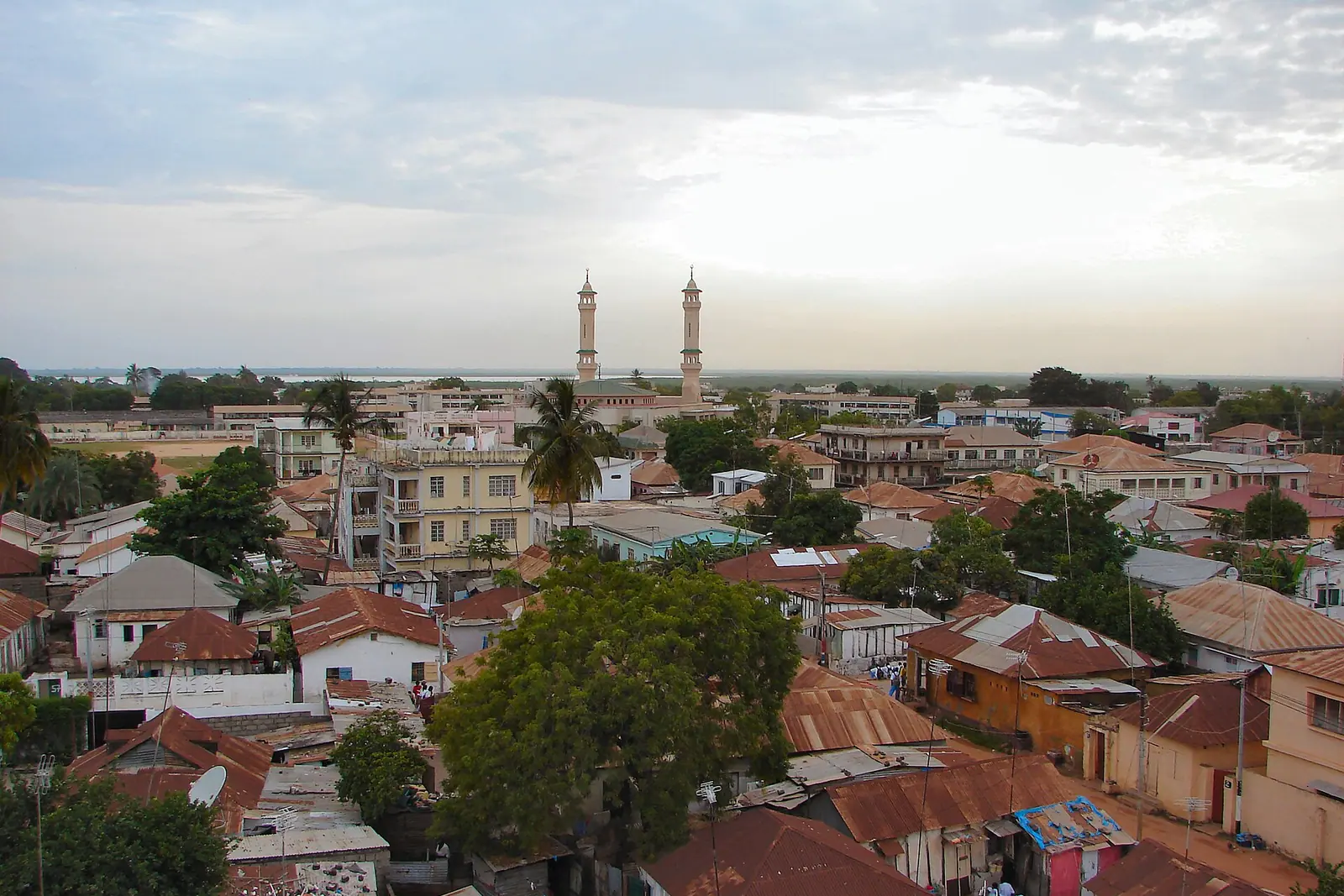
Stay in Gambia
Hotels, guesthouses and apartments — compared in one search.
Search hotels
Transfer in Gambia
Private driver waiting on arrival — no queues, no surprises.
Book a transfer
Stay online in Gambia
Travel eSIM — data the moment you land, no roaming bills.
Get an eSIM