The Gambia is a river-shaped sliver of West Africa, wrapped around its own waterways and small enough to cross in a day yet rich enough to fill a fortnight. One week is enough for palm-fringed beaches, forest reserves and the haunting ruins of the transatlantic slave trade upriver — and it all begins with a flight into Banjul.
Flights into Banjul International Airport: Routes, Seasons and Arrival
Almost every visit to The Gambia starts the same way: a long descent over the mangroves and mudflats of the River Gambia estuary, then wheels down at Banjul International Airport, which sits inland at Yundum roughly 25 kilometres south of the capital. Direct flights link several northern European cities — London, Manchester, Brussels, Amsterdam, Paris and Barcelona among them — with frequencies swelling from November to April and thinning to a trickle during the rains. If you want to travel outside the winter window, plan a one-stop routing through Casablanca or Dakar; it adds a few hours but opens up summer dates and often lowers the fare.
Flying time is shorter than most first-timers expect. From the UK it is around six hours, from Brussels or Paris about six and a half, and from Istanbul roughly seven to eight. Overnight departures are common on the winter schedules, which means you land in the morning, drop your bags and are on the sand before lunch. The terminal is small and manageable, though several wide-body arrivals at once can make immigration queues stretch.
Entry is straightforward for holders of British, EU, American and ECOWAS passports: you are stamped in free of charge on arrival, provided your passport has at least six months' validity. A yellow fever certificate is requested if you are arriving from a country where the disease is present, and it is a sensible precaution regardless. Once outside, official taxis and pre-booked hotel transfers take 30 to 45 minutes to the coastal resorts of Kololi, Kotu and Bijilo. Bring euros or pounds sterling to change into dalasi at the airport or in town, and keep cash for everything beyond the hotels — cards are accepted in surprisingly few places.
Days 1 and 2: Banjul, Bakau and the Kombo Coast
Ease in gently. Your first afternoon is best spent at Kotu Beach, where fishing boats still come ashore beside the hotel strip, or wandering the shaded trails of Bijilo Forest Park, a pocket of coastal woodland where green monkeys troop across the path and bushbabies emerge at dusk. The Kololi strip nearby handles dinner and live music, and it is the easiest place to arrange the excursions that fill the rest of the week.
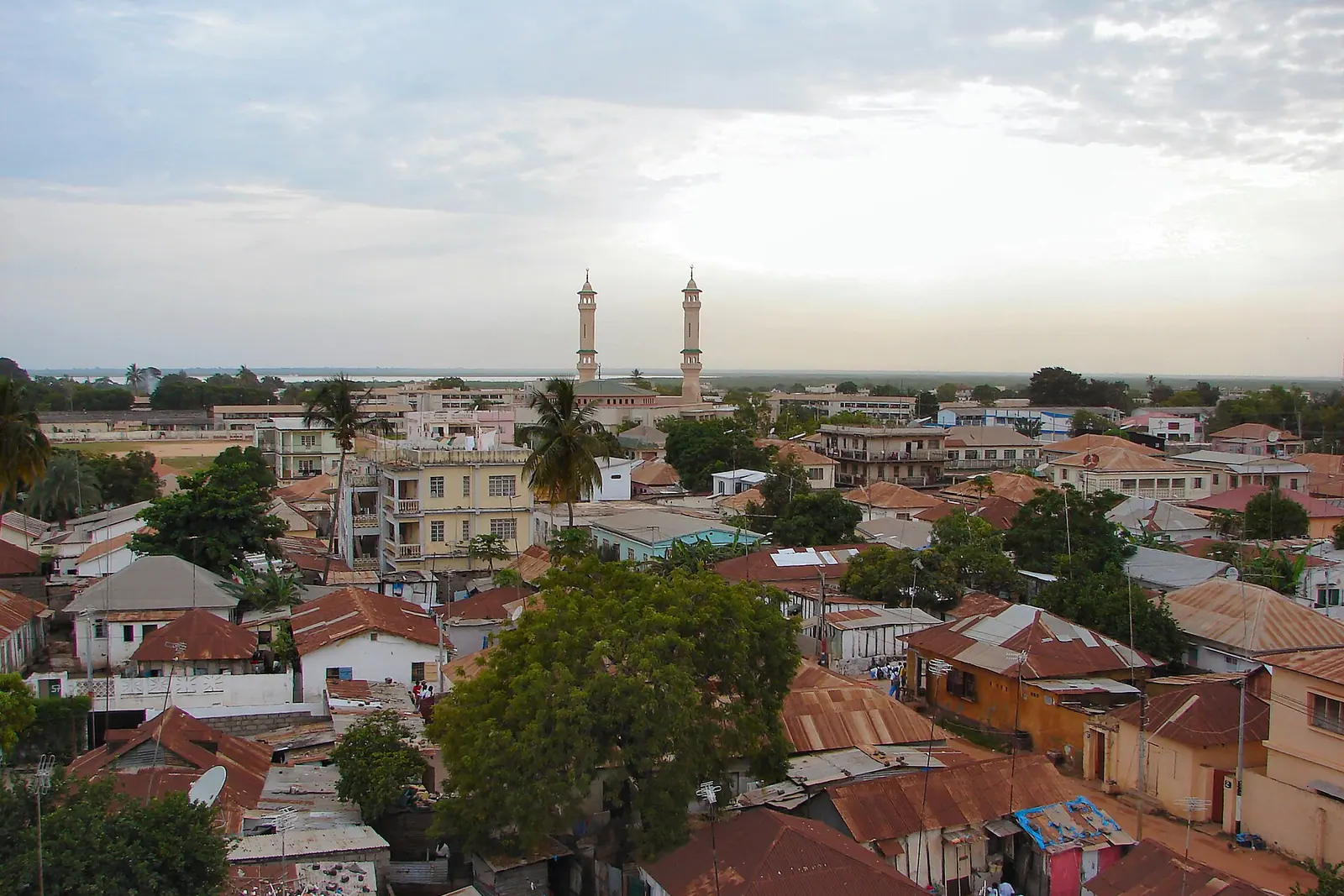
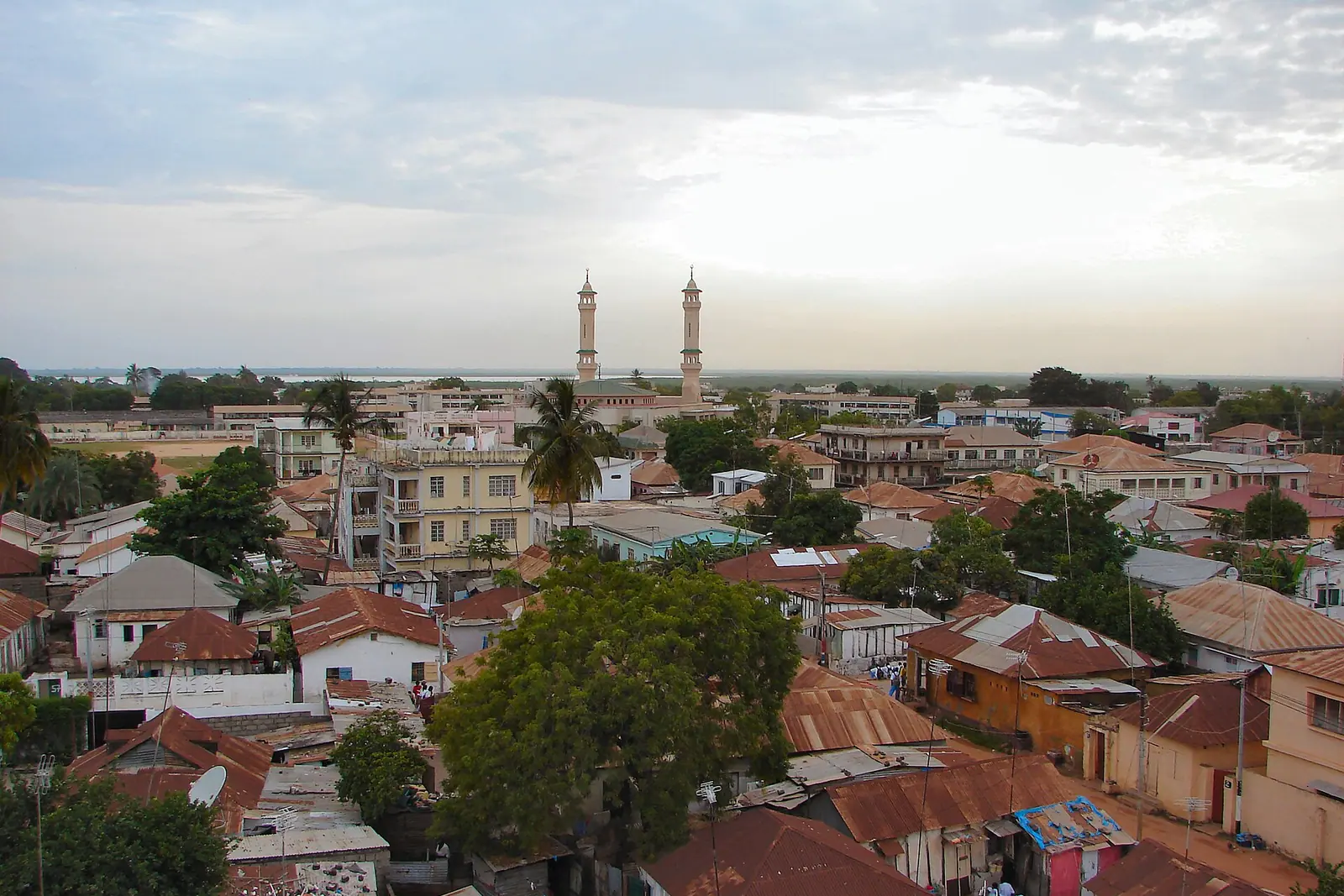
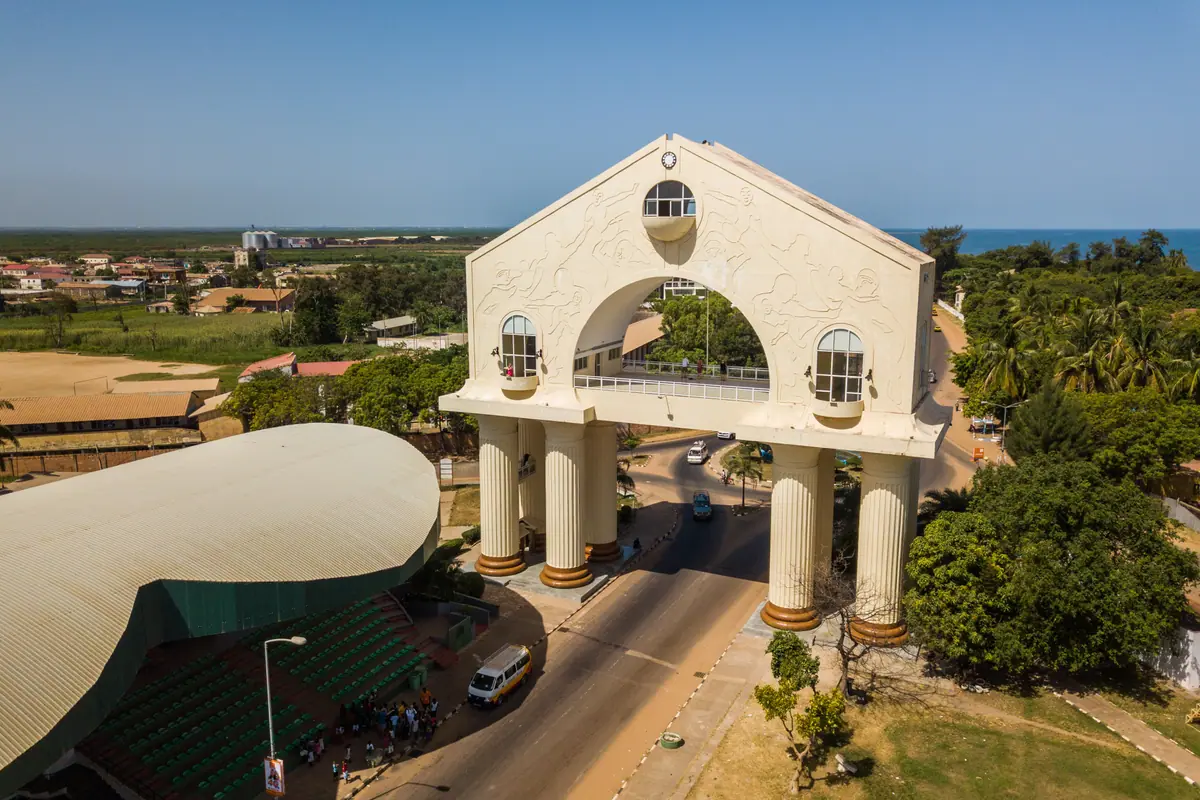
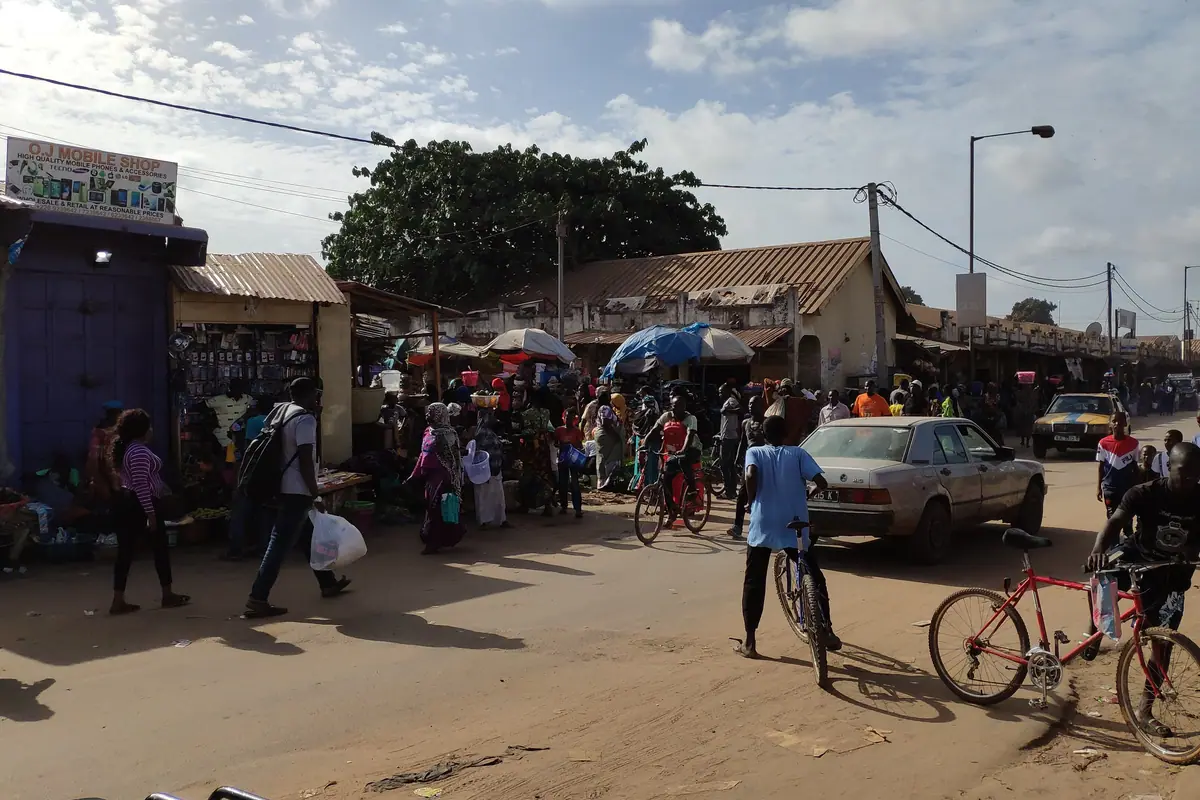
Give your second day entirely to the capital. Banjul is small, low-rise and hot, and its landmarks are clustered within walking distance. Start at Arch 22, the triumphal gateway built in 1996; the viewing gallery at the top gives you the whole city, the river mouth and the ferry terminal in one sweep. From there, the Albert Market is a loud, brilliant tangle of fabric, fish, herbs and hardware — go with a guide the first time and keep your hands free for bargaining. The National Museum, housed in a colonial-era building, explains the country's ethnic groups and its grim role in the transatlantic slave trade, and makes a useful primer before you head upriver later in the week.
Round off the day in Bakau at the Kachikally Crocodile Pool, a sacred site where dozens of Nile crocodiles bask beside a spring believed to cure infertility. Visitors can touch the calmest of them, and the small adjoining museum explains the ritual significance. Finish with a plate of benachin — the local one-pot rice — or domoda, a rich groundnut stew, and an early night.
Day 3: Makasutu Culture Forest, Lamin Lodge and Abuko Nature Reserve
Head inland on your third morning to the Makasutu Culture Forest, a 1,000-hectare mosaic of palm forest, savannah and mangrove creek about 45 minutes from the coast. Guided walks of two to three hours take you through the palm groves to a creek where a pirogue waits to pole you quietly past monitor lizards, kingfishers and herons. Local guides explain which trees cure which ailments, and there is a craft workshop where you can watch wood being carved and dyed.
After lunch, continue to Lamin Lodge, a stilted timber building raised over the mangrove shallows of the Gambia River's creeks, a short drive away. It is a wonderfully ramshackle place to sit with a drink while fishing boats and oyster collectors work the channels below, and boat trips can be arranged on the spot for those who want a closer look at the mangroves.
On the way home, stop at Abuko Nature Reserve, gazetted in 1968 and one of the oldest protected areas in West Africa. At just over a hundred hectares it is easily walked in an hour or two along shaded gallery forest, past a crocodile pool and an animal orphanage, with red colobus, vervets and more than 250 recorded bird species. It is the perfect low-effort introduction to Gambian wildlife before the longer journeys ahead.
Days 4 and 5: Upriver to Kunta Kinteh Island, Juffureh and Albreda
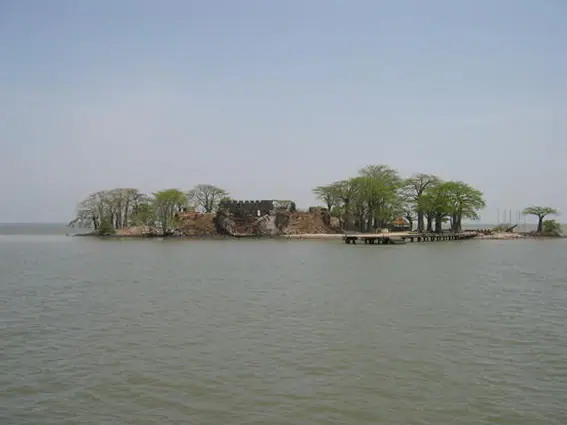
This is the emotional heart of any Gambia itinerary. Kunta Kinteh Island — formerly James Island — is a UNESCO World Heritage site, a crumbling fort lost in the middle of the river, its walls steadily eroded by the current. It was one of the last points of departure for enslaved Africans shipped across the Atlantic, and standing on the remaining brickwork with water slapping at your feet is a sobering experience. Boats run from Albreda on the north bank, a crossing of twenty to thirty minutes depending on the tide.
Pair the island with Juffureh, the village widely identified as the birthplace of Kunta Kinteh, whose story was carried into the wider world by Alex Haley's family history. A small museum and a community research centre in Juffureh, plus the old French trading post at neighbouring Albreda, complete the picture. Villagers act as guides and the fee goes to the community, so it is worth accepting the offer.
Logistically, this can be done as a very long day trip — roughly three hours' driving each way from the coast, plus a ferry across the river at Banjul or a detour along the Trans-Gambia corridor — but it is far better to sleep upcountry. Lodges at Tendaba, on the south bank about three hours from the coast, make an excellent base: early-morning and late-afternoon boat trips from there drift through the mangroves past pelicans, goliath herons and kingfishers, and the birdwatching is at its best between November and February.
Day 6: Wassu Stone Circles, Janjanbureh and the River Gambia National Park
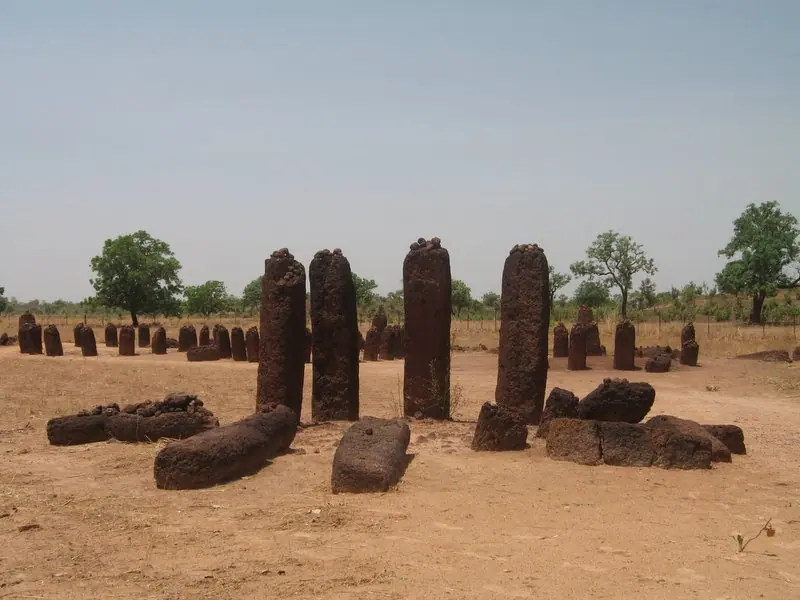
Push further east on day six along the south bank road to the Wassu Stone Circles, a UNESCO-listed cluster of laterite pillars raised between the eleventh and fifteenth centuries as burial markers. Some stand two metres tall, and the small site museum does a good job of explaining the archaeology without over-explaining it. The stones are fenced and well cared for, and the site is rarely crowded.
Twenty-odd kilometres beyond lies Janjanbureh, on MacCarthy Island in the middle of the river and reached by a short, busy ferry crossing. Once a colonial trading town on the trade route to the interior, it has a sleepy streetscape of crumbling warehouses and one of the best-preserved former slave houses in the country. Boat trips from here reach the chimpanzee rehabilitation islands in the River Gambia National Park, where rescued chimps live on forested islands, and pods of hippos wallow in the channels nearby.
Be realistic about distances: the driving is slow, the road surfaces vary and a breakdown can eat an afternoon. Hiring a four-wheel drive with a local driver is money well spent, and the alternative — treating the coast as your base and making Kunta Kinteh Island the single upriver excursion — is a perfectly good way to travel with only seven days.
Day 7: Tanji Fishing Village, Sanyang and the Southern Beaches
Spend your last full day in the south. Tanji Fishing Village is a working beach, not a postcard: by mid-morning the painted pirogues are already back and the sand is a theatre of unloading, gutting, smoking and selling, with drumming and singing to keep the rhythm. Ask before photographing, and expect to be offered a guide. Next door, the Tanji Bird Reserve protects a lagoon, mudflats and coastal scrub where terns, gulls, waders and raptors gather — well over three hundred species have been recorded in the area.
From there, carry on to Sanyang and its long curve of sand, where the surf is gentle enough for beginners and the beach bars are pleasantly unhurried, or continue south to Kartong, home to a community-run reserve and a sacred crocodile pool near the Senegalese border. Gunjur, in between, gives you another fishing beach with far fewer visitors. It is worth keeping a couple of hours in the late afternoon for the craft markets around Kololi if you want woodcarvings, batik or drums to take home.
Most return flights leave in the evening or after dark, so check out by midday, arrange a day room if you need one, and allow a generous two to three hours at the airport. Driving back along the coast road, with the palms flickering past and the river somewhere behind you, one week can feel remarkably full in a country this size.
Frequently asked questions
Are there direct flights to The Gambia, and how long do they take?
Yes — direct services operate from several northern European cities, and the flight takes about six hours from the UK, six and a half from Brussels or Paris and seven to eight from Istanbul. Direct schedules are concentrated between November and April, so summer travellers usually connect through Casablanca or Dakar instead.
What is the best time of year to fly to The Gambia?
November to April is the dry season, with warm days, cool evenings and very little rain; November and April are the sweet spots for lower fares and thinner crowds. December to February brings the dusty harmattan haze but the best birdwatching. Fares drop sharply from June to October, when the rains turn the country green, though some upriver lodges close and humidity climbs.
Do I need a visa or vaccinations for The Gambia?
Most British, EU, American and ECOWAS passport holders are admitted visa-free with a stamp on arrival, provided the passport has six months' validity. A yellow fever certificate is required if you are arriving from a country with transmission risk, and antimalarial precautions plus routine travel vaccinations are strongly advised for all visitors.
Can I see The Gambia in one week?
Comfortably, if you focus on the coast and one upriver excursion. The classic week covers Banjul, Bakau, the Makasutu and Abuko forests, Kunta Kinteh Island and Juffureh, and the southern beaches around Tanji and Sanyang. Adding Janjanbureh and the chimpanzee islands is possible but means long, slow driving days — better suited to ten days or a fortnight.
How do I get around The Gambia once I land?
Shared bush taxis and minibuses called gele-gele cover most routes cheaply but slowly. For sightseeing, hire a car with a driver, which costs little by European standards and spares you the potholes and police checkpoints. The ferry across the river at Banjul to Barra is the traditional route north, though queues can be long, so allow extra time if your itinerary takes you upriver.
Sort the rest of your trip
Everything for Gambia, in one place
Stay in Gambia
Hotels, guesthouses and apartments — compared in one search.
Search hotels
Transfer in Gambia
Private driver waiting on arrival — no queues, no surprises.
Book a transfer
Travel insurance
Medical cover, delays and lost baggage — sorted before you go.
Get covered