The Gambia is mainland Africa at its most compact: a narrow ribbon of river, mangrove and rice field that slips into the Atlantic just below the Sahara's dust line. In a single day you can rest a hand on a crocodile at a sacred pool, drift past hippos on the great river, and eat grilled fish on a beach where crews still haul nets by hand. This is where to build a trip around.
Banjul and the Kombo Coast: City, Sand and the Senegambia Strip
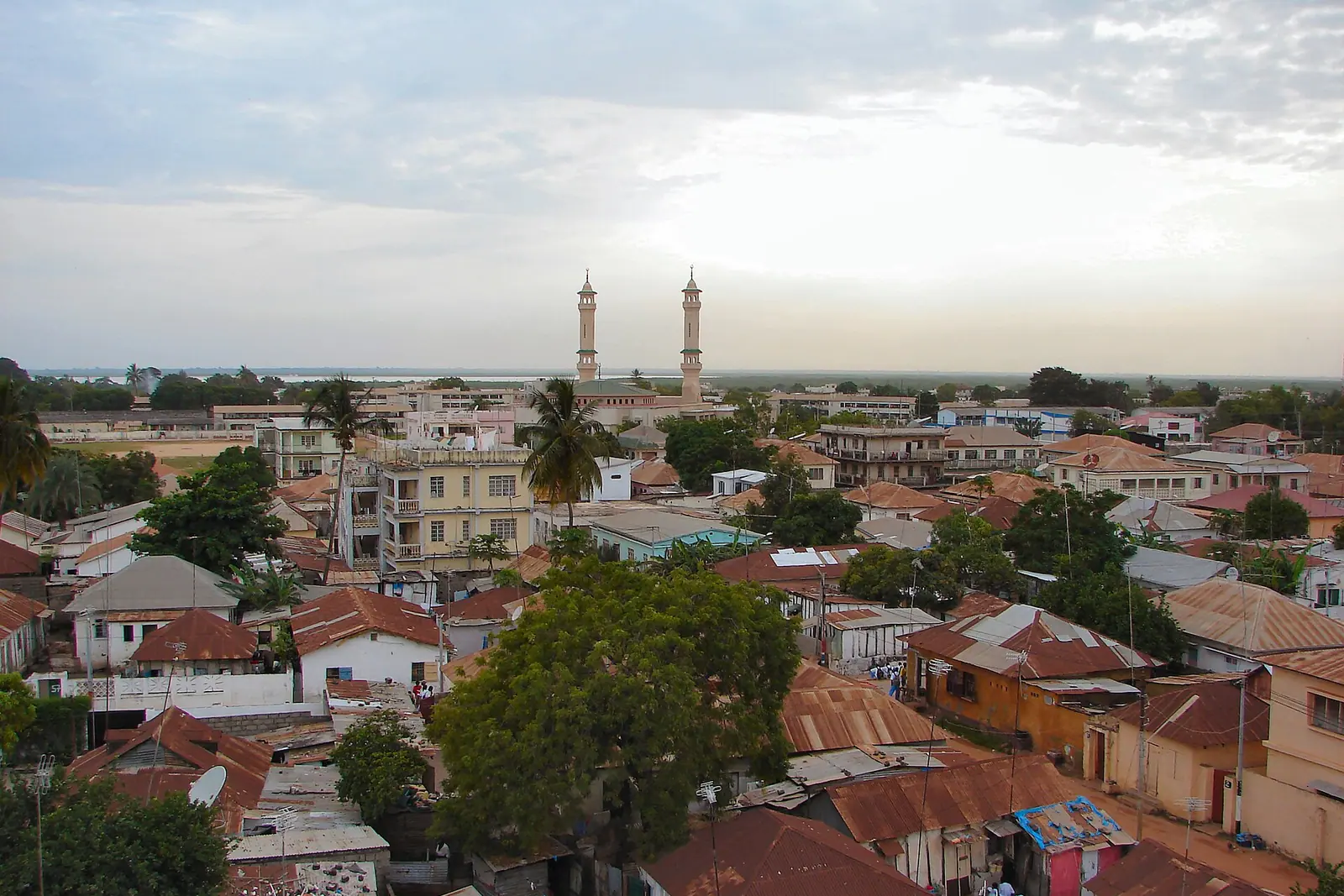
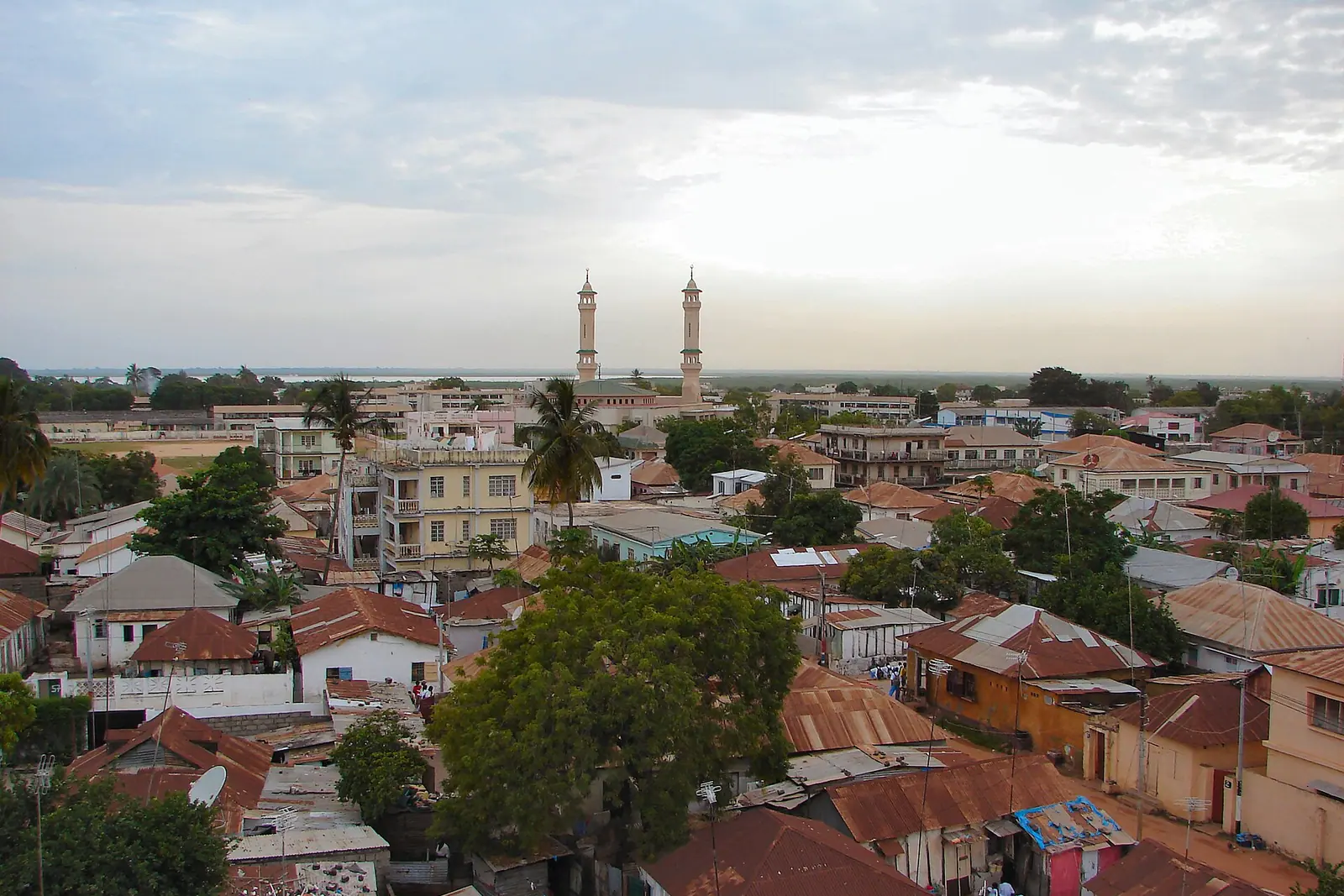
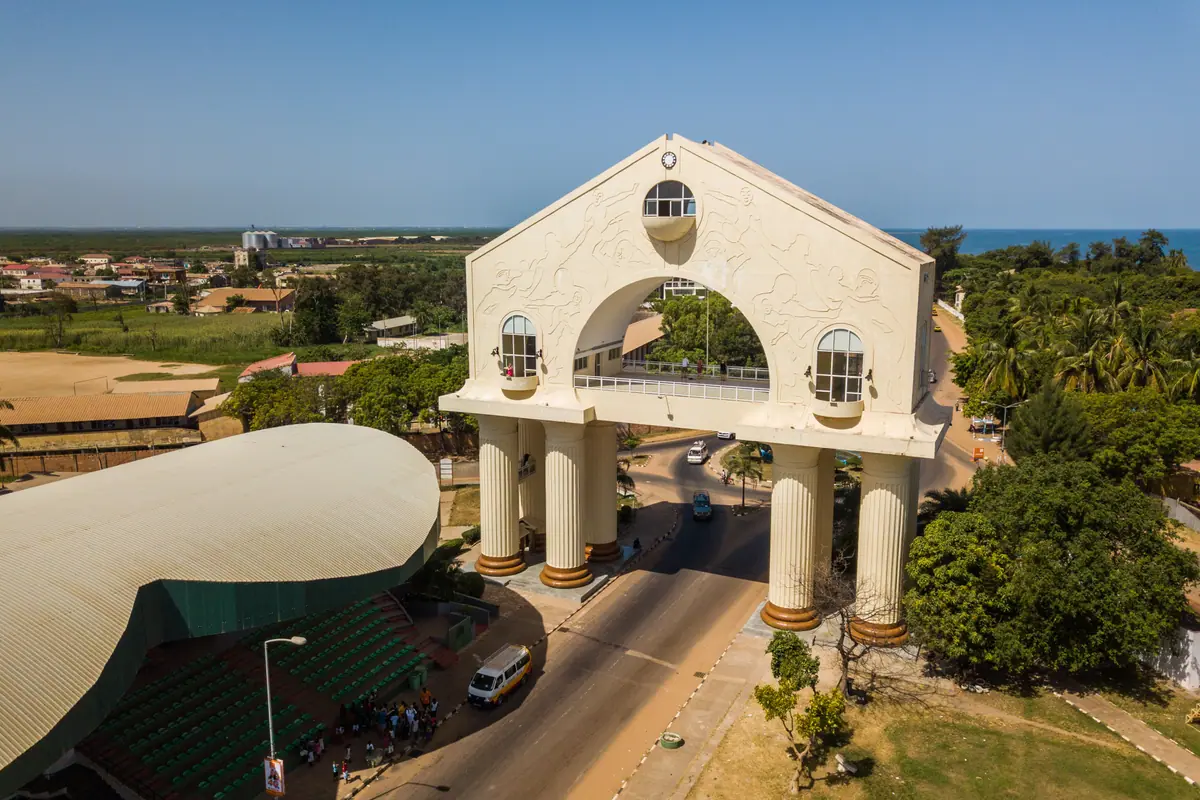
Banjul occupies St Mary's Island at the river mouth, a low-rise capital of dusty streets, port traffic and unhurried markets. Start at Arch 22, the 35-metre gateway guarding the city's eastern approach; a lift carries you to a gallery with a wide view over the rooftops, the river and the ferry terminal where boats shuttle to Barra on the north bank. Below it, the Albert Market on Liberation Avenue is the capital's loud, colourful heart — wax-print cloth, tie-dye, silverwork, herbs and household goods spilling out past the stalls. Half a day covers central Banjul comfortably; go early, before the heat thickens.
Most visitors sleep on the coast instead, in the built-up strip running from Bakau through Kololi to Bijilo. Kololi's Senegambia Strip delivers the country's densest nightlife — a kilometre of restaurants, bars, craft stalls and live kora music — and sits five to ten minutes' walk from decent sand. Kotu, just north, has a calmer beach, a small creek that makes a gentle first birdwatching stroll, and a handful of hotels set in gardens.
The dry season, roughly November to May, is the dependable window: warm days, cooler evenings, almost no rain. December to February brings the harmattan, a dry haze that softens the light and coincides with the arrival of migratory birds. Rain falls mainly from June to October, when the country turns vivid green, room rates dip and afternoon downpours are heavy but short.
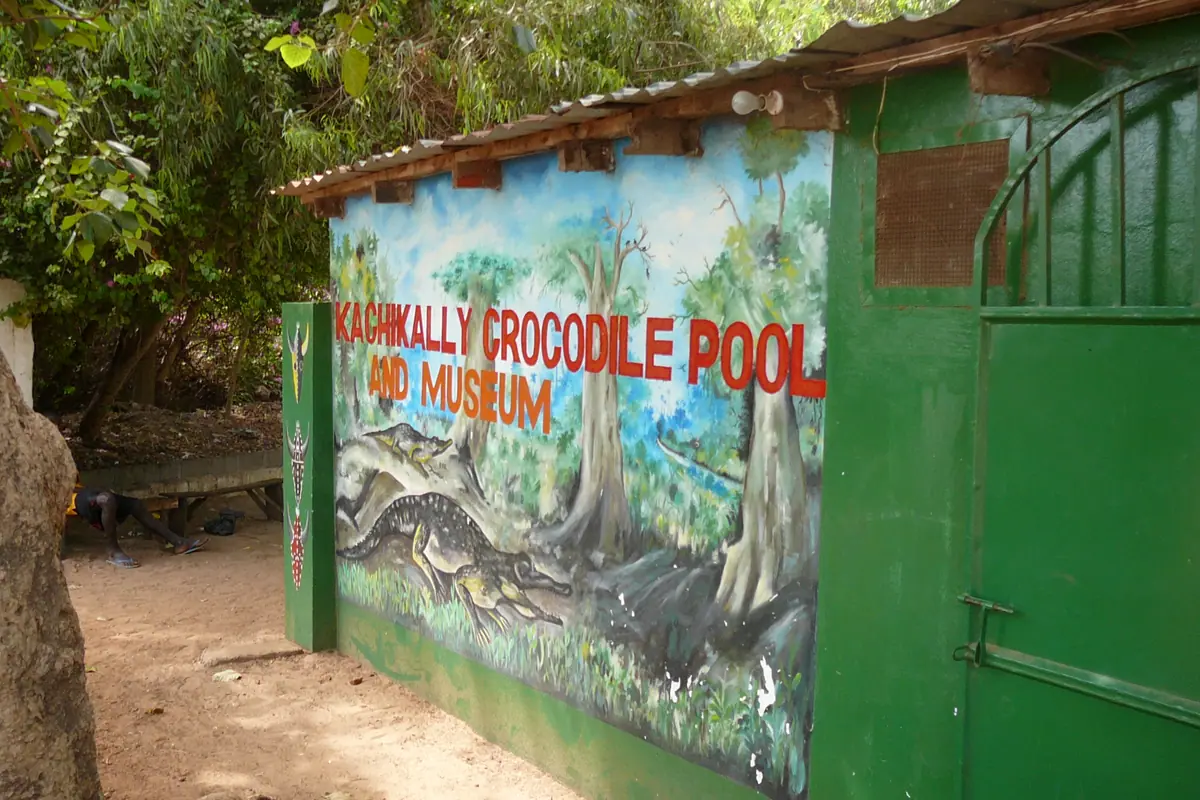
Kachikally Crocodile Pool: Bakau's Sacred Water
In the town of Bakau, a short ride from Kololi, the Kachikally crocodile pool lies at the end of a sandy path beneath tall trees. Around a hundred Nile crocodiles live here, and although they look exactly as alarming as you would expect, they are habituated and famously placid — guides will show you how to stand alongside one and stroke a tail if you want the photograph. The pool is one of three sacred crocodile sites in the country, and its water is still sought out by people hoping for healing or fertility.
The same compound holds a small museum on Gambian history and tradition, and the leafy grounds are worth an easy hour's wander. Pair the visit with the Bakau craft market, where carvers work in front of you, and the modest botanical garden nearby, which draws a good range of birds. Mornings are best: fewer groups, softer light, cooler air.
Allow one to two hours in total and carry small notes for entry, guide tips and market purchases. It is one of the few headline sights in the country that slots neatly into a half-day alongside an afternoon on the beach.
Makasutu, Abuko and Bijilo: Wild Places Minutes from the Coast
Makasutu Culture Forest, inland near Brikama, is a palm forest cut by a tidal creek. A guided visit of a few hours usually includes a dugout pirogue trip through mangroves, walking trails past baboons, monitor lizards and kingfishers, a lookout tower, and often a demonstration of palm-wine tapping or a performance of drumming and dance. Most people take it as a half-day outing with lunch included.
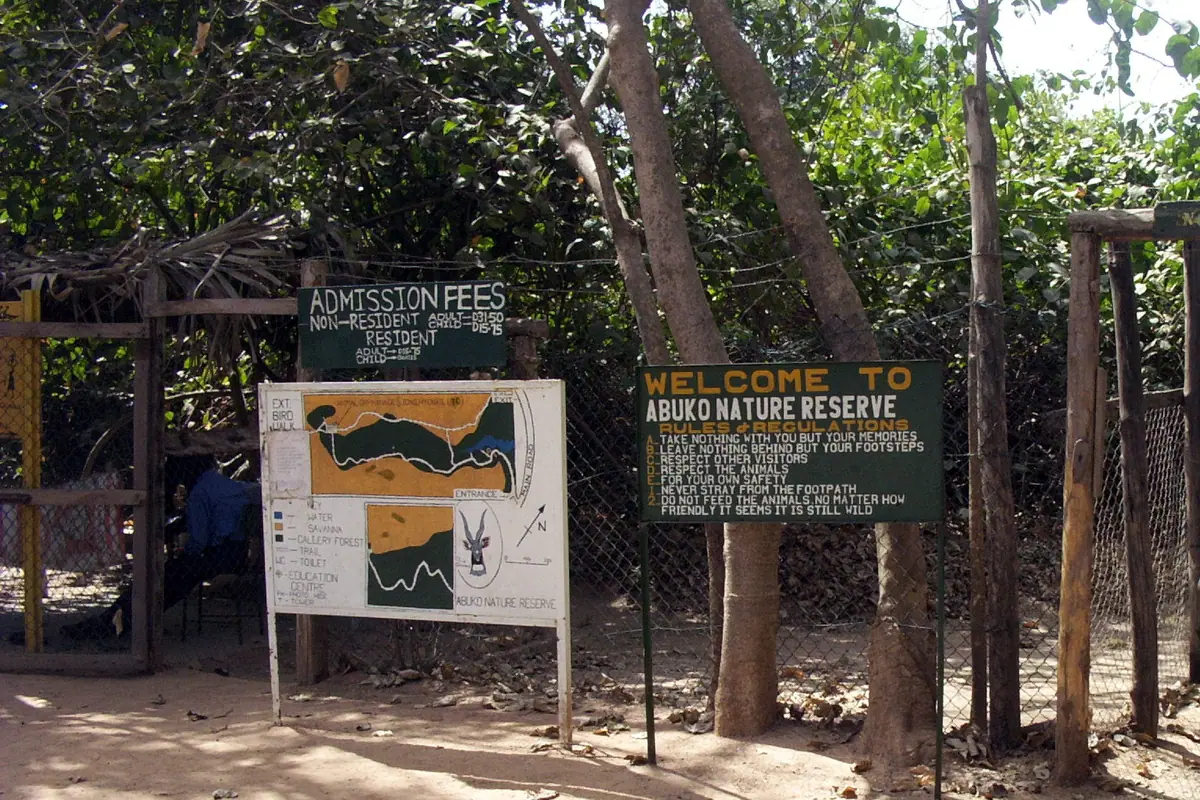
Abuko Nature Reserve, closer to the coast, is the country's oldest protected area — a pocket of gallery forest with shaded paths and a walkway over a pool where crocodiles bask. Red colobus, green monkeys, bushbuck and a long bird list live inside its small boundary, and the circuit takes about an hour to ninety minutes at an easy pace. Nearby, Bijilo Forest Park, known to everyone simply as the Monkey Park, is a coastal strip of woodland between Kololi and Bijilo where green monkeys and birds are almost guaranteed.
Together the three form a neat progression: an hour for Bijilo, half a day for Abuko with the beach afterwards, a full half-day for Makasutu. All lie within an hour of the coastal hotels, and all reward early morning or late afternoon, when wildlife moves and the heat loosens its grip.
Kunta Kinteh Island and the Roots Trail at Juffureh
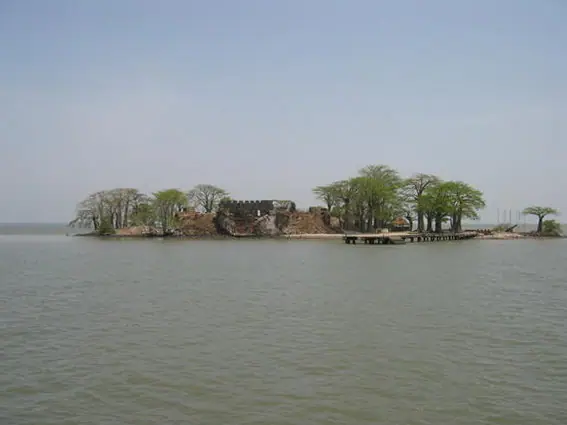
The most historically weighty excursion in The Gambia heads upriver to Kunta Kinteh Island, a small, steadily eroding outcrop about 30 kilometres from Banjul. It once carried a European trading fort and served for centuries as a departure point in the transatlantic slave trade; today it is a World Heritage site, holding fragments of wall, a weathered baobab and a silence that does most of the talking. The crossing is made by boat, usually from Albreda or Banjul, and tide and current decide whether landing is possible.
The mainland villages belong to the same story. At Albreda a small museum sets out the site's history, and neighbouring Juffureh is celebrated as the ancestral home of Kunta Kinte, whose life became one of the most widely known accounts of enslavement. Local guides move you between village, museum and jetty, and the day is as much about conversation and daily life as about ruins.
A day trip from the coast runs roughly six to eight hours including road transfers and the boat ride, and it is hot and completely exposed — hat, water and sun cream are non-negotiable. Travellers with a deeper interest can stay overnight upriver and continue east the following morning rather than turning straight back.
Upriver to Janjanbureh: Stone Circles, Hippos and Chimpanzee Islands
The middle stretch of the river is The Gambia at its quietest. Janjanbureh, still widely called Georgetown, sits on MacCarthy Island, reached by a small ferry and about a five- to six-hour drive from the coast along the South Bank Road. It is an old trading town of crumbling warehouses, broad streets and an easy riverside atmosphere, and it makes a good base for two or three nights.
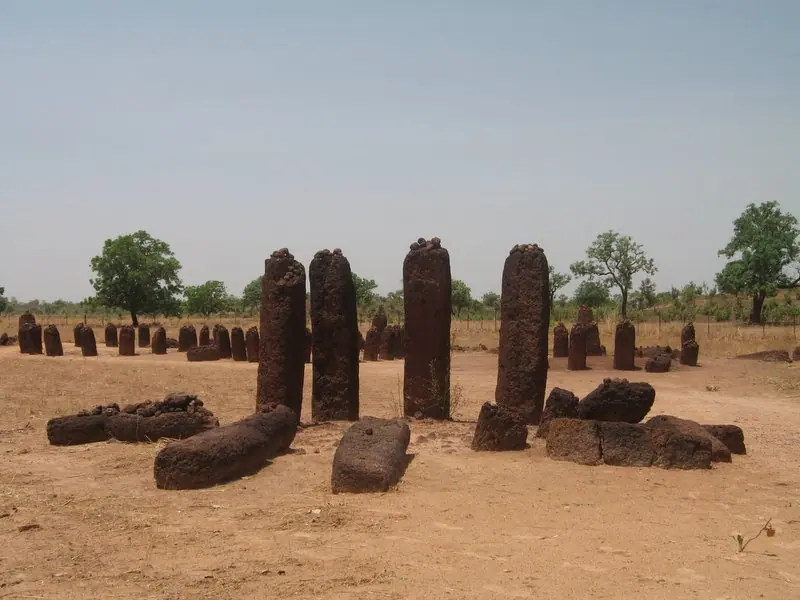
Nearby stand the Wassu Stone Circles, a World Heritage cluster of laterite pillars raised between roughly the tenth and thirteenth centuries and generally read as burial markers, with a small museum and a viewing path. On the water, boat trips from Janjanbureh enter the River Gambia National Park, where a rehabilitation project cares for chimpanzees on a chain of islands — you watch from the boat rather than landing — and where hippos, crocodiles, baboons and dozens of bird species are routine sightings.
Upriver travel works best between November and May, when roads are passable and the heat is at its most forgiving. A two- to three-night loop lets you take in Janjanbureh, the stone circles and the wildlife without rushing. Expect long, bumpy drives and simple guesthouses rather than polished resorts.
Tanji, Sanyang and the Southern Beaches
Tanji, south of the main resort strip, is a working fishing village where painted pirogues come in through the surf and the sand fills with crews and women smoking and drying the catch — loud, colourful and photographed constantly. Just beyond it, Tanji Bird Reserve is a mix of lagoon, scrub, mudflat and woodland that ranks among the finest birdwatching sites in the country; wintering waders, terns and raptors gather from November to March.
Keep heading south and the beaches empty out. Sanyang offers a long curve of sand, a small fishing community and gentle surf; Gunjur and Kartong are quieter still, with community-run wetland and forest projects near Kartong and another sacred crocodile pool at Folonko. Between July and October, green turtles and other species nest on some of these southern beaches, and night walks with local monitors are sometimes possible in season.
The drive from Kololi to Tanji takes around 45 minutes, with Sanyang another half hour beyond. Bring cash, since ATMs thin out away from the tourist area, and expect beach bars and guesthouses rather than large hotels. Paired with a morning at the Tanji fish market, this is the easiest way to see the side of the country the resort strip never shows.
Frequently asked questions
When is the best time to visit The Gambia?
November to May is the dry season and the safest bet for beach time, upriver trips and road travel. December to February is cooler with harmattan haze, and November to March is peak season for migratory birds. June to October is green, humid and cheaper, with short violent showers rather than all-day rain.
How many days do you need in The Gambia?
Five to seven days is a comfortable minimum. A typical split is four or five nights on the coast for Bakau, Abuko, Makasutu and the beaches, plus two or three nights upriver for Kunta Kinteh Island, Janjanbureh, the stone circles and the national park.
Is The Gambia easy for first-time visitors?
It is small, English-speaking and used to visitors, with a short flight from Europe and a compact tourist strip. Take the usual precautions after dark and with your belongings, arrange antimalarial protection, and check current vaccination entry requirements — a yellow fever certificate is often asked for.
How do you get between the sights?
Distances are short — the country is only about 50 kilometres wide — but roads and ferries slow everything down. Shared minibuses are cheap and slow, taxis work for local hops, and a hired car with driver is the practical choice for the Roots trail and upriver journeys. Allow a full day each way for anything beyond Janjanbureh.
What should I pack for The Gambia?
Light cotton clothing, a sun hat, strong sun cream, insect repellent, binoculars for the bird reserves and a power bank for occasional outages. Carry cash in local currency for markets, pools, guides and beach bars, as cards are mostly accepted only in larger hotels.
Plan it — experiences in Gambia
Live search, booked directly with trusted providers.
Sort the rest of your trip
Everything for Gambia, in one place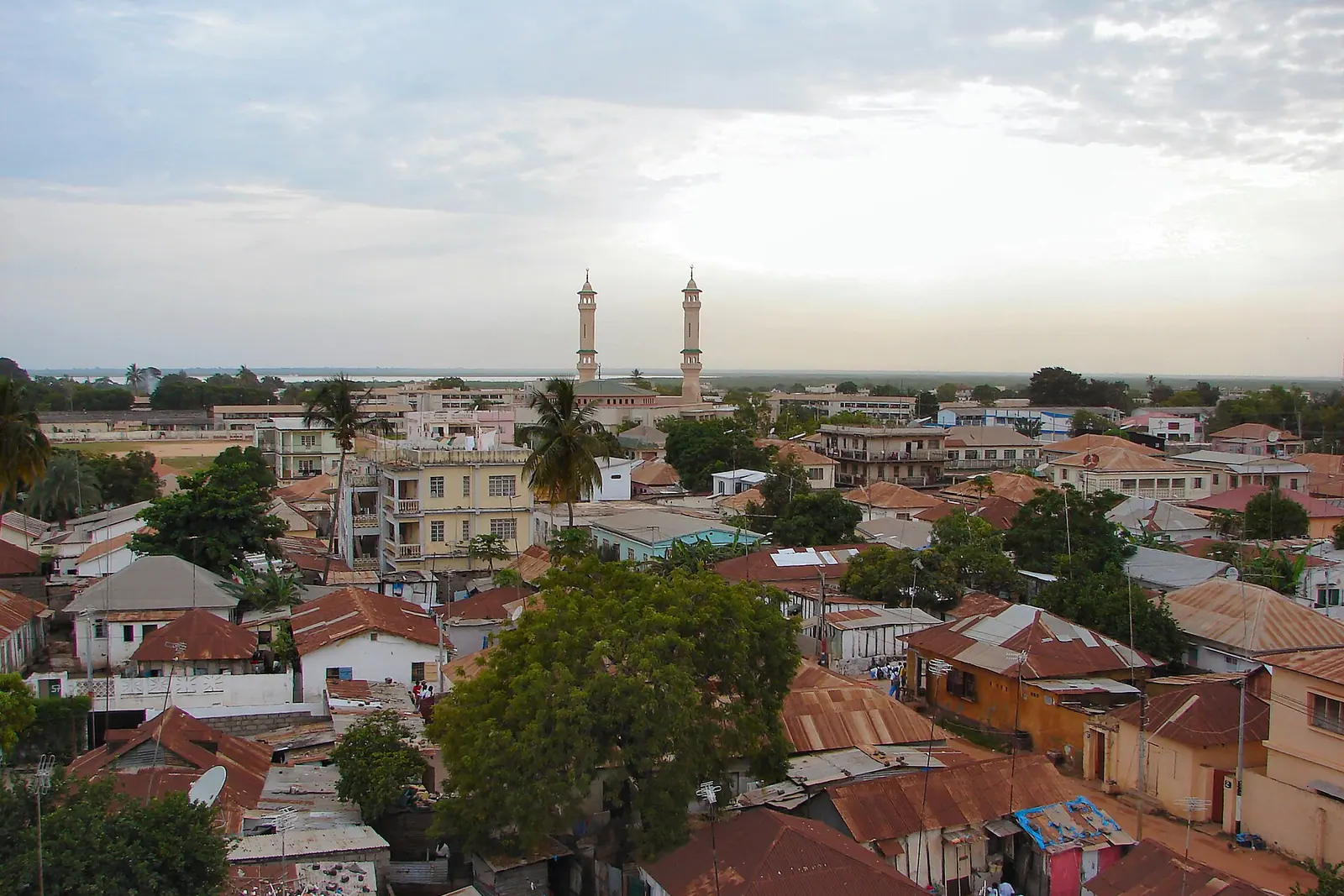
Stay in Gambia
Hotels, guesthouses and apartments — compared in one search.
Search hotels
Transfer in Gambia
Private driver waiting on arrival — no queues, no surprises.
Book a transfer
Stay online in Gambia
Travel eSIM — data the moment you land, no roaming bills.
Get an eSIM