Ecuador packs a continent into a country you can cross in a day: glacier-topped volcanoes straddling the equator, a colonial capital of gilded churches and red-tiled roofs, cloud forest, Amazon floodplain and a Pacific archipelago where sea lions sprawl across the footpath. What follows is the shortlist worth building an itinerary around — the named landmarks, the timing that makes them work, and the details that turn a rushed checklist into a real journey.
Quito: A Colonial Old Town Under a Volcano
Quito's historic centre was among the first places on earth inscribed for its architecture, and it earns the billing on foot. Start at Plaza Grande, the city's civic heart, where the Presidential Palace, the Archbishop's Palace and the whitewashed Cathedral face one another across a square that fills with shoe-shiners, families and pigeons by mid-morning. A few blocks away, the Church of La Compañía de Jesús is the showstopper: an interior so thickly covered in gold leaf that it took roughly 160 years to finish, with a carved facade of Andean suns and vines that quietly rewrites the European baroque rulebook. The vast San Francisco monastery and its plaza are a calmer counterpoint, and the cobbled Calle La Ronda is where the old town turns into balconies, workshops and evening music.
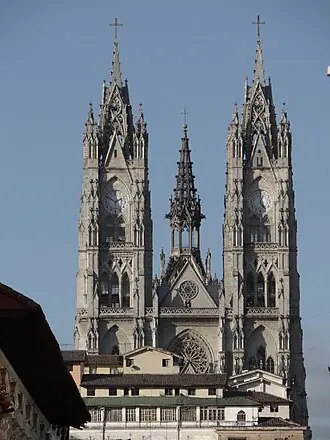
Climb, and the city changes shape. The neo-Gothic Basílica del Voto Nacional looms over the northern edge of the centre; its gargoyles are modelled on Ecuadorian wildlife — iguanas, armadillos, tortoises — and its towers can be scaled by ladder and gangway for the sharpest rooftops-and-volcanoes panorama in Quito. On the southern hill, the winged Virgin of El Panecillo watches over the valley, while the TelefériQo cable car lifts you from the city's edge up the slopes of Cruz Loma to around 4,000 metres, where the air thins and, on a clear morning, a chain of snow peaks lines the horizon.
Altitude is the thing to respect here: Quito sits at roughly 2,850 metres, so plan an unhurried first day, drink more water than feels necessary and go easy on alcohol and late nights. Mornings are usually the clearest window for volcano views before cloud builds in the afternoon. Two or three full days covers the old town, the viewpoints and a day trip, with Sundays popular for street life and weekday mornings best for churches and museums.
Standing on the Equator at Mitad del Mundo
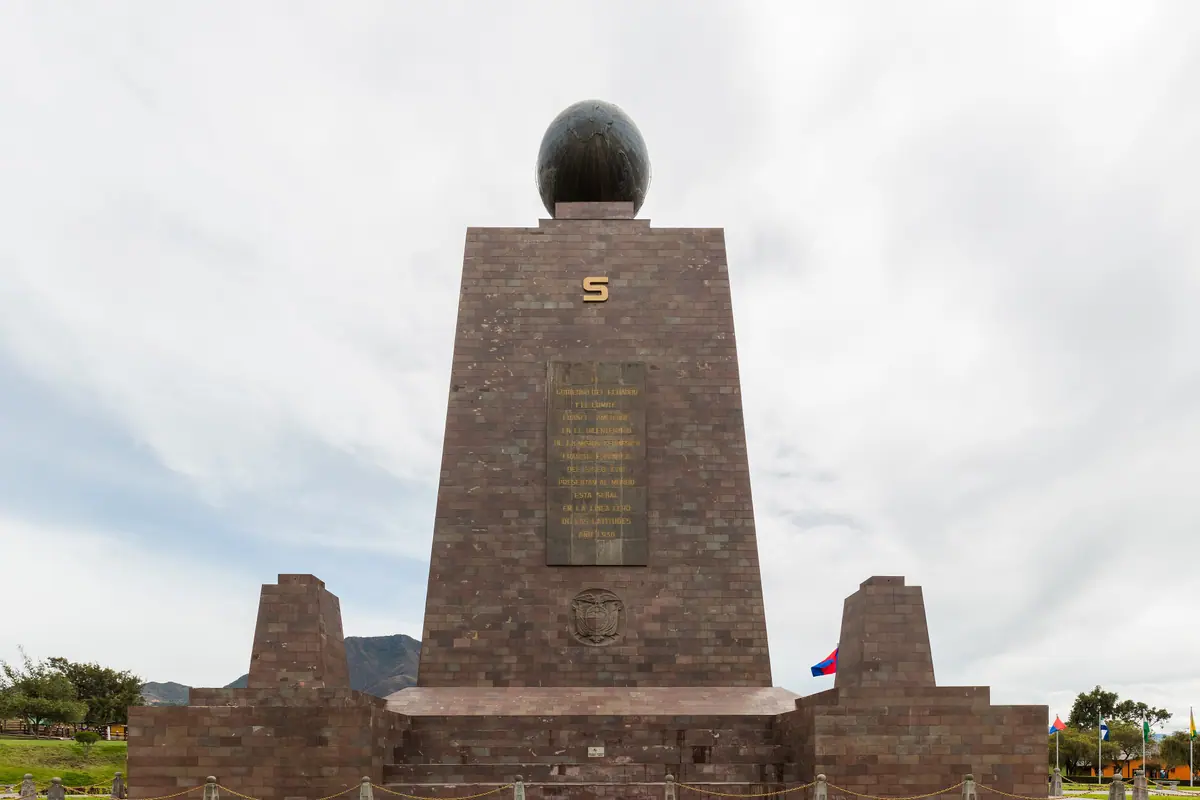
An hour north of Quito, the Mitad del Mundo monument marks the line that gave the country its name, with a stone plaza, a small ethnography museum and a yellow-painted line that visitors straddle for the obligatory photograph. Nearby, the outdoor Intiñan site runs the classic equator demonstrations — water down a plug, eggs balanced on nails, a sundial that behaves oddly — and though the exact line has shifted slightly with modern measurement, the theatre of the place is half the fun. Pair it with the Pululahua crater just beyond the monument, a vast green caldera that is one of the very few inhabited volcanic craters anywhere, its farmland and cloud pools visible from the rim.
Continue north and you reach Otavalo, home to one of the largest and most celebrated indigenous markets in South America. Saturday is the big day, when the Plaza de Ponchos fills with weavers, haggling and an ocean of textiles, but there is a smaller market on other days and the town's craft workshops run year-round. Around Otavalo the landscapes stack up: the indigo water of Cuicocha crater lake, the Peguche waterfall just outside town, the leather workshops of Cotacachi, and Lake San Pablo beneath the Imbabura volcano.
This is one of the easiest Andean day trips from the capital — a couple of hours each way — but staying a night turns it from a drive into something better: an early market before the buses arrive and a quiet mountain evening after they leave.
The Avenue of the Volcanoes: Cotopaxi, Quilotoa and Baños
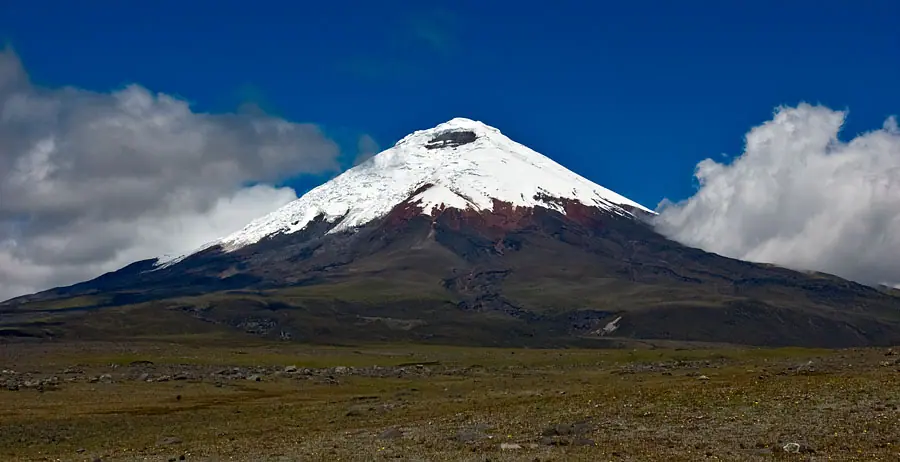
South of Quito, the inter-Andean corridor known as the Avenue of the Volcanoes strings together some of the most photogenic peaks in the hemisphere. Cotopaxi National Park is the headline act: a near-perfect cone rising to 5,897 metres with an ice cap that gleams like enamel. Visitors can drive up to a parking area and walk to the José Rivas mountain hut, wander the lunar landscape around Laguna Limpiopungui, or, with certified guides and proper acclimatisation, attempt the summit. The clearest views generally come in the drier months from June through September, and early starts beat the afternoon cloud.
Further south, the Quilotoa crater holds a turquoise lake so saturated it looks dyed, rimmed by a hiking circuit of roughly three to four hours through highland villages, sheep tracks and steep descents to the water. Beyond it, Chimborazo is a different kind of giant: its summit is the farthest point on the planet from the earth's centre thanks to the equatorial bulge, and its lower slopes are roamed by vicuñas — walk to the first refuge around 4,800 metres and the altiplano opens out around you.
Then there is Baños de Agua Santa, the adventure hub where the Andes tip towards the Amazon. The Ruta de las Cascadas threads down the valley by bicycle or bus, past the roaring Pailón del Diablo waterfall, reached by a series of suspension bridges and damp stairways. Above town, the Casa del Árbol swing dangles over a hillside with the Tungurahua volcano in the background, and hot springs at the edge of the urban grid soak away the altitude aches.
Cuenca, El Cajas and the Inca South
Cuenca is the counterweight to Quito: a smaller, softer colonial city of white walls, wrought-iron balconies, flower markets and river stone. Its historic centre is a UNESCO site, anchored by the Plaza Abdón Calderón and the enormous blue-domed cathedral of the Immaculate Conception, whose three domes have become the city's signature. Walk the El Barranco strip along the Tomebamba River, where old houses hang over the water on crumbling arches, and visit the Pumapungo museum complex, which combines archaeological ruins with an excellent ethnographic collection.
This is also the place to buy a genuine Panama hat — an Ecuadorian invention woven from toquilla straw, with the finest specimens so pliable they can be rolled and passed through a ring. Homero Ortega's workshops and the museum devoted to the craft explain the whole process, from palm fibre to finished brim. For a half-day escape, El Cajas National Park begins about forty minutes away, a stark, beautiful plateau of more than 200 lakes, twisted polylepis forest and hiking trails that climb through cloud to around 4,000 metres. Bring a rain shell whatever the morning looks like.
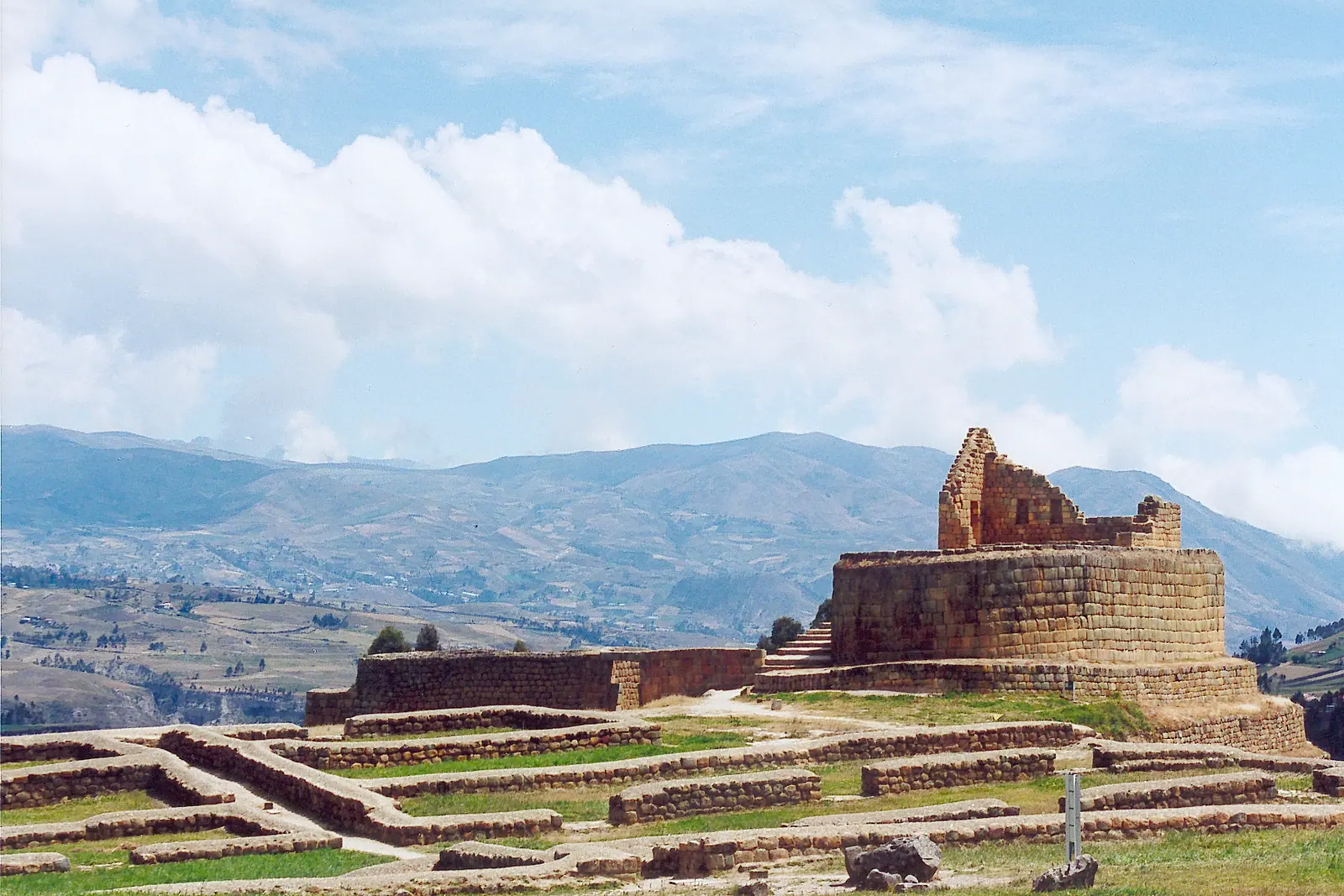
Deeper into the southern Andes, Ingapirca is the largest surviving Inca complex in Ecuador, built on an earlier Cañari settlement and crowned by a curved Temple of the Sun. Nearby Alausí is the boarding point for the Devil's Nose train ride, a switchback descent through the mountains that climbs and reverses its way down a near-vertical wall of rock.
The Galápagos Islands: Wildlife Without a Fence
Roughly a thousand kilometres off the coast, the Galápagos are a country within a country — volcanic islands where the animals have no instinct to flee. Flights leave Quito and Guayaquil for Baltra and San Cristóbal, and from there you either join a small cruise or island-hop by speedboat between inhabited hubs. Santa Cruz is the usual base: Puerto Ayora has the research station dedicated to giant tortoise breeding, and a walk to Tortuga Bay past marine iguanas and white-tipped reef sharks in the shallows. On Isabela, the largest island, the Sierra Negra volcano and the lava tubes of Los Túneles reward a longer stay, while Bartolomé delivers the postcard view of Pinnacle Rock above a golden beach.
Wildlife-watching rules apply everywhere: always with a licensed naturalist guide, never touching or feeding, keeping a set distance, and nothing removed from the islands. Diving and snorkelling at Kicker Rock off San Cristóbal is often the highlight of a trip — hammerheads, rays and swirling schools in a channel that splits an old tuff cone — and North Seymour and Española are reliable for blue-footed boobies, frigatebirds and waved albatross.
The islands work year-round. December to May brings warmer, calmer water, good for snorkelling and nesting season; June to November is cooler and choppier but the nutrient-rich currents draw more marine life. Three to five nights is the realistic minimum for a meaningful visit, and seven to ten lets you combine several islands without spending all your time in transit.
Into the Amazon: Cuyabeno and the Napo Basin
Ecuador's slice of the Amazon is small but extraordinarily rich. The Cuyabeno Wildlife Reserve is the classic introduction — a flooded forest of blackwater lagoons and drowned trees reached via Lago Agrio, where canoes glide past river dolphins, hoatzins, caimans and troops of squirrel monkeys, and night walks reveal tarantulas and tree frogs inches from the trail. Further south, the Yasuní National Park protects what is often described as one of the most biodiverse patches of forest on earth, with lodges reached by boat down the Napo River from Coca.
Expect simple but comfortable jungle lodges, meals included, and a rhythm of early morning excursions, midday rest and evening activities. Pack quick-drying long sleeves and trousers, a headlamp, high-factor sunscreen and insect repellent, and take the rubber boots most lodges provide — the mud is part of the experience. A yellow fever vaccination is commonly recommended for this region, and a three- to four-night stay is the sensible minimum: the first day is travel, and the forest only starts revealing itself once you stop moving.
Guides make or break an Amazon trip. A good naturalist can call in birds you would never find alone, read the forest by sound and explain why this landscape matters. Book through established lodges, and ask what a typical day looks like before you commit.
Frequently asked questions
When is the best time of year to visit Ecuador?
It depends on the region. The Andean dry season from roughly June to September, with a second clearer window around December and January, gives the best volcano views around Quito, Cotopaxi and Cuenca. The Pacific coast is sunniest from December to April, the Amazon is wettest from April to June, and the Galápagos are rewarding year-round — warmer and calmer water from December to May, cooler and richer in marine life from June to November.
How many days do I need in Ecuador?
Two weeks is a realistic minimum for a satisfying trip: two or three nights in Quito, a few days in the Andes for Cotopaxi, Quilotoa or Baños, and a jungle lodge stay of three to four nights. Add five to seven nights if you want the Galápagos without rushing between islands, and consider building in a rest day at altitude early on.
Is altitude sickness a problem in Ecuador?
Quito sits at about 2,850 metres, and several popular hikes go well above 4,000 metres, so yes, it can affect anyone. Spend your first day lightly, hydrate constantly, eat regularly, avoid heavy drinking and consider ascending gradually. Mild headaches and breathlessness are common and usually ease within a day or two; if symptoms worsen, descend rather than push on.
What currency is used, and what should I pack?
Ecuador uses the US dollar, with locally minted coins for small change, so there is no exchange-rate guesswork. Pack layers: Quito and the highlands can be cool and showery at any time, the coast is hot and humid, and the Amazon needs quick-drying long sleeves, a rain shell and strong insect repellent. Sturdy shoes, a warm fleece and a sun hat cover most itineraries.
Can I visit Cotopaxi, the Amazon and the Galápagos independently?
The Amazon and the Galápagos effectively require licensed guides — park rules in the Galápagos and practical safety in the rainforest mean you travel with a naturalist either way. Cotopaxi National Park is easier to do on your own to the parking area and lower trails, but summit attempts need certified mountain guides and proper acclimatisation. Quito, Otavalo, Cuenca and Baños are all straightforward to explore independently.
Plan it — experiences in Ecuador
Live search, booked directly with trusted providers.
Sort the rest of your trip
Everything for Ecuador, in one place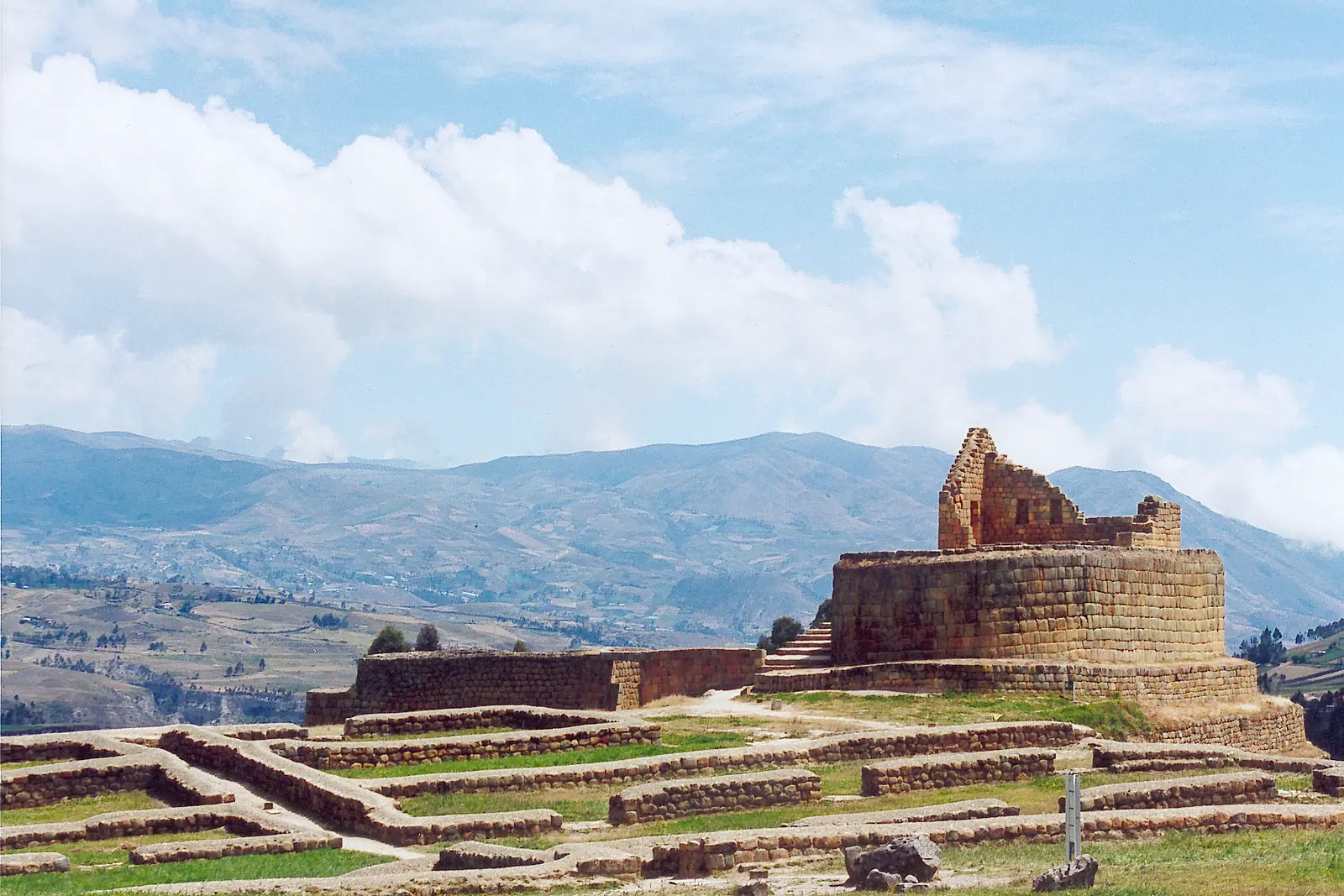
Stay in Ecuador
Hotels, guesthouses and apartments — compared in one search.
Search hotels
Transfer in Ecuador
Private driver waiting on arrival — no queues, no surprises.
Book a transfer
Stay online in Ecuador
Travel eSIM — data the moment you land, no roaming bills.
Get an eSIM