Ecuador is the rare country where you can stand on a glacier at dawn, raft a jungle river after lunch and watch sea lions flop across a beach before dinner. Distances are short, the scenery changes violently, and the must-see list reads like several countries folded into one.
Quito: A Colonial Capital Beneath a Smoking Volcano
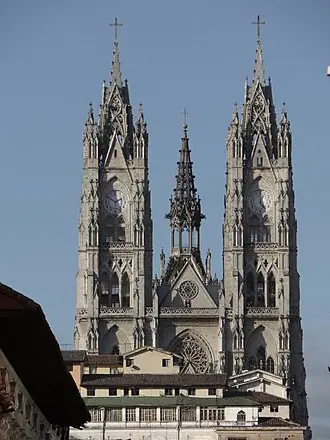
Most journeys begin in Quito, a city strung along a narrow Andean valley at roughly 2,850 metres. Its historic centre was among the first places on earth inscribed as a World Heritage site, and it earns the status block by block: the vast Plaza Grande flanked by the presidential palace and the archbishop's residence, the gilded interior of La Compañía de Jesús, the candy-striped arches of the Basílica del Voto Nacional, whose towers you can climb by ladder, and the stone plaza of San Francisco, the oldest of the city's great convents. Below it all stands El Panecillo, a hill crowned by a winged Virgin of Quito looking out over the rooftops.
Give yourself at least two full days, because the altitude slows everyone down. Spend the first morning wandering the centro histórico and La Ronda, the narrow cobbled lane where balconied houses sell canelazo and humitas into the evening. On day two, ride the Teleférico cable car up the slopes of the Pichincha volcano for a panorama of the whole valley — at the top you are above 4,000 metres, so dress for wind and sleet even when the city below is sunny.
North of town, the Mitad del Mundo monument marks the equatorial line with a yellow painted stripe down the middle of a plaza; nearby you can balance an egg on a nail and watch water drain straight down a sink. Quito is also the gateway to everything else: the Avenue of the Volcanoes runs south from here, and flights to the coast and the islands leave from the same airport.
Cotopaxi, Quilotoa and the Avenue of the Volcanoes
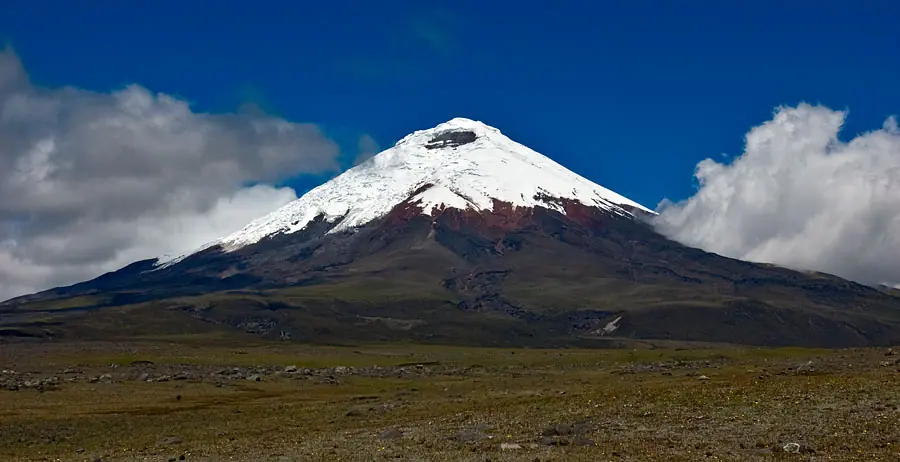
South of Quito the Andes tighten into a corridor of snow cones known as the Avenue of the Volcanoes. The headline act is Cotopaxi, a near-perfect white cone at 5,897 metres that is one of the highest active volcanoes anywhere. Inside Cotopaxi National Park, a rough road climbs across golden páramo grassland to the José Rivas refuge at 4,800 metres, from which climbers push for the summit overnight; day visitors can hike instead to the jade shallows of Laguna Limpiopungui, where wild horses graze and the volcano's reflection sits in the water.
Further south, Quilotoa is a collapsed caldera holding a mineral-green lake roughly 250 metres below its rim, with the crater edge sitting close to 3,800 metres. A steep trail drops to the shore in about forty minutes and takes twice that to climb back out; mules wait at the bottom for anyone who misjudges it. The surrounding Quilotoa Loop threads through Quechua farming villages such as Isinliví and Chugchilán, where simple hostels serve soup and fried plantain to hikers walking between them over three or four days.
Continue down the corridor and Chimborazo appears — at 6,263 metres the farthest point on the planet's surface from the earth's core, and a favourite acclimatisation climb. To the east, the thin air of the highlands gives way to the cloud forests of Mindo, where the road corkscrews through orchids and tree ferns and the night air fills with the whirr of hummingbird wings. Most travellers tackle this stretch by bus or hired car over four to seven days, stopping wherever the weather opens up.
Cuenca, Ingapirca and the Southern Highlands
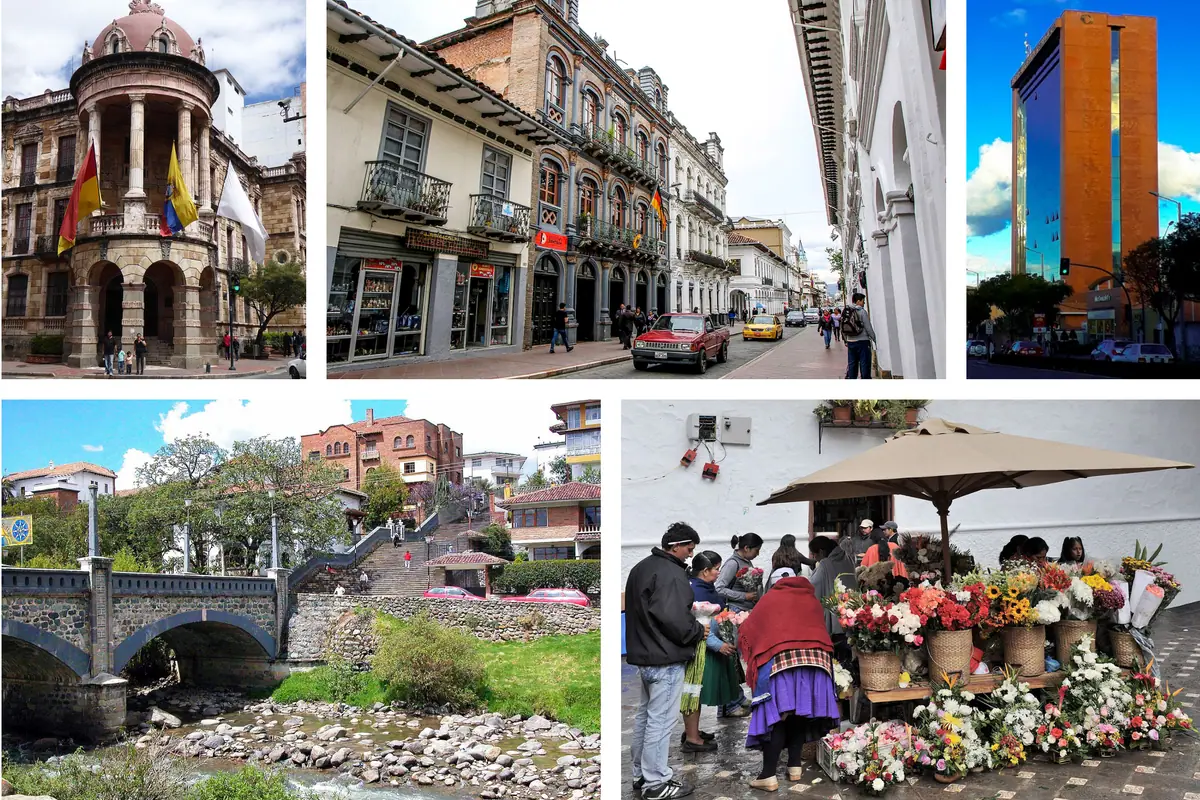
Cuenca is Ecuador's loveliest city and its most walkable. Three rivers braid through the centre, and the colonial grid is anchored by the Catedral de la Inmaculada Concepción, whose three blue-and-white domes have become the symbol of the city. Nearby, the barranco walkway runs along the Tomebamba riverbank beneath hanging gardens, while the Museo Pumapungo pairs Inca and Cañari ruins with a superb ethnographic collection on Ecuador's indigenous groups.
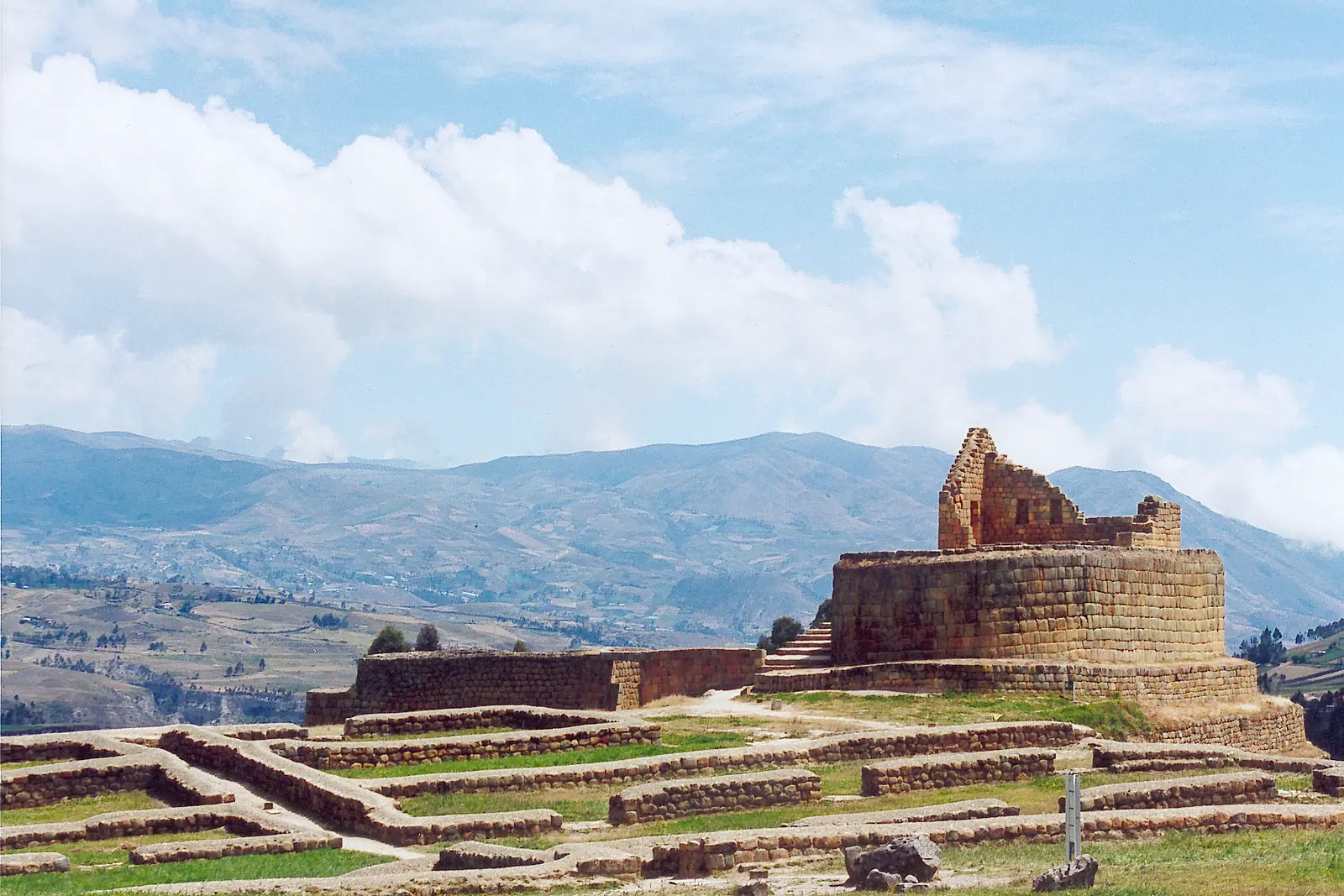
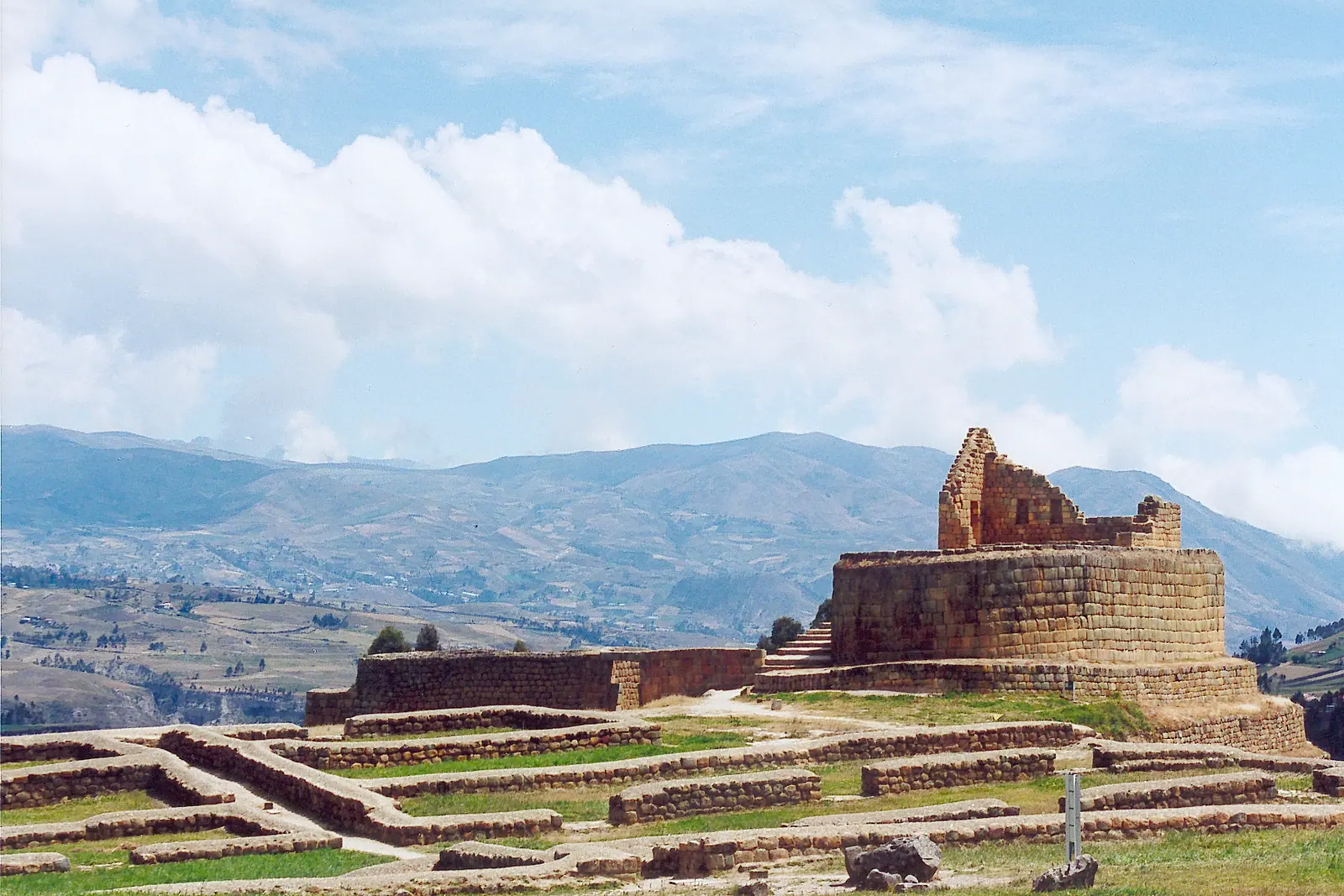
Day trips from Cuenca are outstanding. About ninety minutes north, Ingapirca is the country's largest surviving Inca complex, a curved Temple of the Sun built with stones fitted so tightly that no mortar was needed. To the west, El Cajas National Park spreads across a cold, lake-dotted plateau between roughly 3,900 and 4,400 metres — a landscape of twisted polylepis trees, tussock grass and more than 200 lagoons, crossed by trails that range from an easy one-hour loop to full-day ridge walks.
South of Cuenca, the craft villages of Gualaceo and Chordeleg specialise in ikat shawls and filigree silver, and beyond them Vilcabamba sits in a warm, dry valley famous for the longevity of its residents and for hiking trails into the surrounding hills. Buses make the run from Quito in about ten hours overnight; short domestic flights cut it to under an hour and free up time for the páramo.
Baños and the Amazon: Waterfalls, Rafting and Rainforest
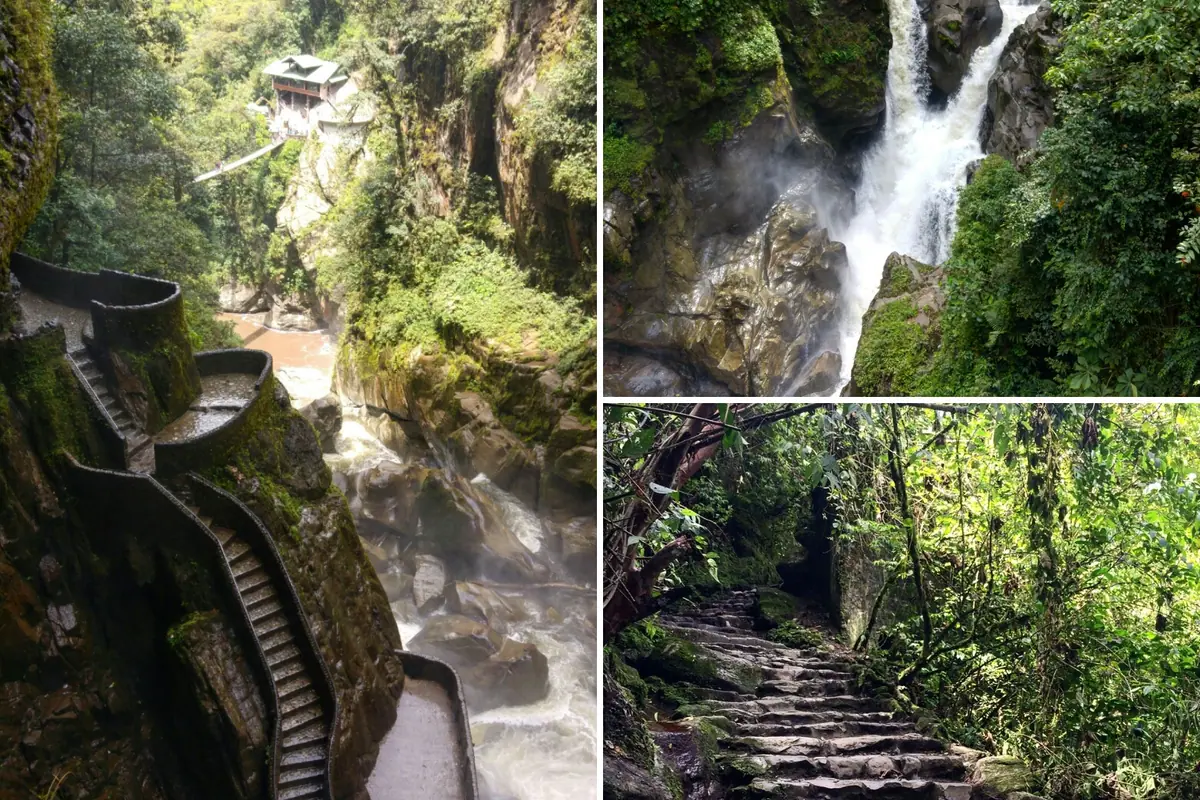
Baños de Agua Santa sits at the foot of the still-steaming Tungurahua volcano, and it has quietly become Ecuador's adventure capital. The Ruta de las Cascadas is a string of waterfalls along a river gorge that you can ride by rented bike, and the most famous stop is the Pailón del Diablo, where a thundering curtain of water drops into a basalt cauldron and a tunnel lets you walk behind the spray. At La Casa del Árbol, a swing hangs from a treehouse above a cliff edge, launching riders out over the void with the volcano behind them.
Baños also offers rafting on the Pastaza, canyoning, zip lines and hot springs fed by the volcano itself. The town's basilica is worth a look, and the local taffy pulled on hooks in shop doorways is a tradition as much as a snack. Budget two or three days if you want more than one activity.
East of the Andes, the road plunges into the Oriente, Ecuador's slice of the Amazon basin. Around Tena and Misahuallí, jungle lodges run canoe trips, night walks and visits to Kichwa communities along the Napo River, while the Cuyabeno Reserve and Yasuní National Park offer the deepest wildlife encounters — pink river dolphins, howler monkeys, macaws and caiman. Plan on three to five days for a lodge stay, and expect humid heat, mosquitoes and rain at any time of year.
The Galápagos Islands: Wildlife Without Fear
The Galápagos are the reason many people come to Ecuador at all: a volcanic archipelago roughly 1,000 kilometres off the coast where animals never learned to fear humans. On Santa Cruz, Puerto Ayora is the base, with the Charles Darwin Research Station and its giant tortoise breeding programme, plus a walkable trail to Tortuga Bay's white-sand surf beach and the clear crevices of Las Grietas. Isabela, the largest island, pairs the vast Sierra Negra crater with snorkelling at Los Túneles, where seahorses and white-tipped reef sharks shelter in lava arches.
Smaller islets deliver the postcard moments. Bartolomé's Pinnacle Rock rises out of a golden bay where penguins paddle; North Seymour is a nesting ground for frigatebirds and blue-footed boobies; Española hosts the waved albatross between roughly April and December. Almost all visitor sites require a licensed naturalist guide, so most travellers either join a liveaboard cruise of four to eight days or base themselves on two or three islands and take day boats.
Getting there means a flight from Quito or Guayaquil to Baltra or San Cristóbal, a national park entry fee and a transit control card, plus strict rules about staying on marked trails and carrying nothing organic between islands. Pack reef-safe sunscreen, a rash guard and a light rain shell; the warm, wet season from December to May brings calm seas and superb snorkelling, while the cooler months from June to November deliver choppier water and more marine life offshore.
The Pacific Coast and the Spondylus Route
Ecuador's coastline runs from mangroves in the north to dry forest and surf breaks in the south along the Ruta del Spondylus. Montañita is the loudest stop, a party-and-surf town where board rentals and beachfront hostels crowd the sand; nearby Olón and Ayampe are quieter, with long grey-sand beaches framed by green headlands. Further north, Puerto López is the launching point for Isla de la Plata, a dry-forest island often nicknamed a poor man's Galápagos for its blue-footed boobies and frigatebirds, reached by a two-hour boat ride.
Between June and September, humpback whales migrate up the coast and can be spotted from the same boats, and the neighbouring Machalilla National Park protects the crescent of Los Frailes beach plus archaeological sites at Agua Blanca. Inland, Guayaquil, Ecuador's largest city, deserves a half day even from transit: the Malecón 2000 riverfront promenade, the pastel wooden houses of Las Peñas climbing Santa Ana hill, and the iguanas that sprawl across the lawn of Parque Seminario.
Timing matters across the whole country. The highlands are driest from June to September and again in December and February, when clear skies reveal the volcano cones; the Amazon is least muddy from December to March; the coast is warmest from December to April. With ten days to two weeks you can link Quito, Cotopaxi, Quilotoa, Baños and Cuenca by bus or short flights; add five to eight days if the Galápagos are on your list, and book those islands well ahead.
Frequently asked questions
How many days do you need to see Ecuador properly?
Ten to fourteen days is enough for the highlands and a taste of the Amazon: Quito, Cotopaxi or Quilotoa, Baños, and Cuenca with a side trip to El Cajas or Ingapirca. Add five to eight days for the Galápagos, either as a cruise or a two- or three-island land-based stay.
When is the best time to visit Ecuador?
The Andean highlands are clearest from June to September and in December and February, when the volcano views open up. The Galápagos is warm and calm from December to May and cooler and richer in marine life from June to November. In the Amazon, December to March tends to be drier and easier for wildlife spotting.
How do you cope with the altitude in Quito and the Andes?
Quito alone sits around 2,850 metres, and Quilotoa, El Cajas and the Cotopaxi refuge climb well past 3,800. Take your first day slowly, drink plenty of water, eat lightly, skip alcohol for a night or two, and save strenuous hikes for your second or third day. Descending always helps if symptoms worsen.
Do you need a guide in the Galápagos?
Yes. Almost every visitor site in the national park can only be entered with a licensed naturalist guide, which is why cruises and guided day tours dominate. You will also need to pay the national park entry fee and complete a transit control card, and you must stay on marked trails and avoid carrying seeds, soil or food between islands.
Is Ecuador easy to travel independently?
Very. The country uses the US dollar, buses reach almost every town on a dense network, and short domestic flights link Quito, Guayaquil, Cuenca and the islands. Spanish helps enormously outside the main tourist centres, and a few phrases go a long way in markets and village hostels.
Plan it — experiences in Ecuador
Live search, booked directly with trusted providers.
Sort the rest of your trip
Everything for Ecuador, in one place
Stay in Ecuador
Hotels, guesthouses and apartments — compared in one search.
Search hotels
Transfer in Ecuador
Private driver waiting on arrival — no queues, no surprises.
Book a transfer
Stay online in Ecuador
Travel eSIM — data the moment you land, no roaming bills.
Get an eSIM