Chile is a country that refuses to be one thing: a colonial capital under a wall of Andes snow, a bohemian port stacked with painted houses, a desert where the ground smokes at dawn, and a granite massif at the end of the world. Stretch it end to end and you cross salt flats, vineyards, temperate rainforest, fjords and Polynesian stone statues. Here is how to see the landmarks that define it.
Santiago: Colonial Squares, Skyline Views and Andean Escapes
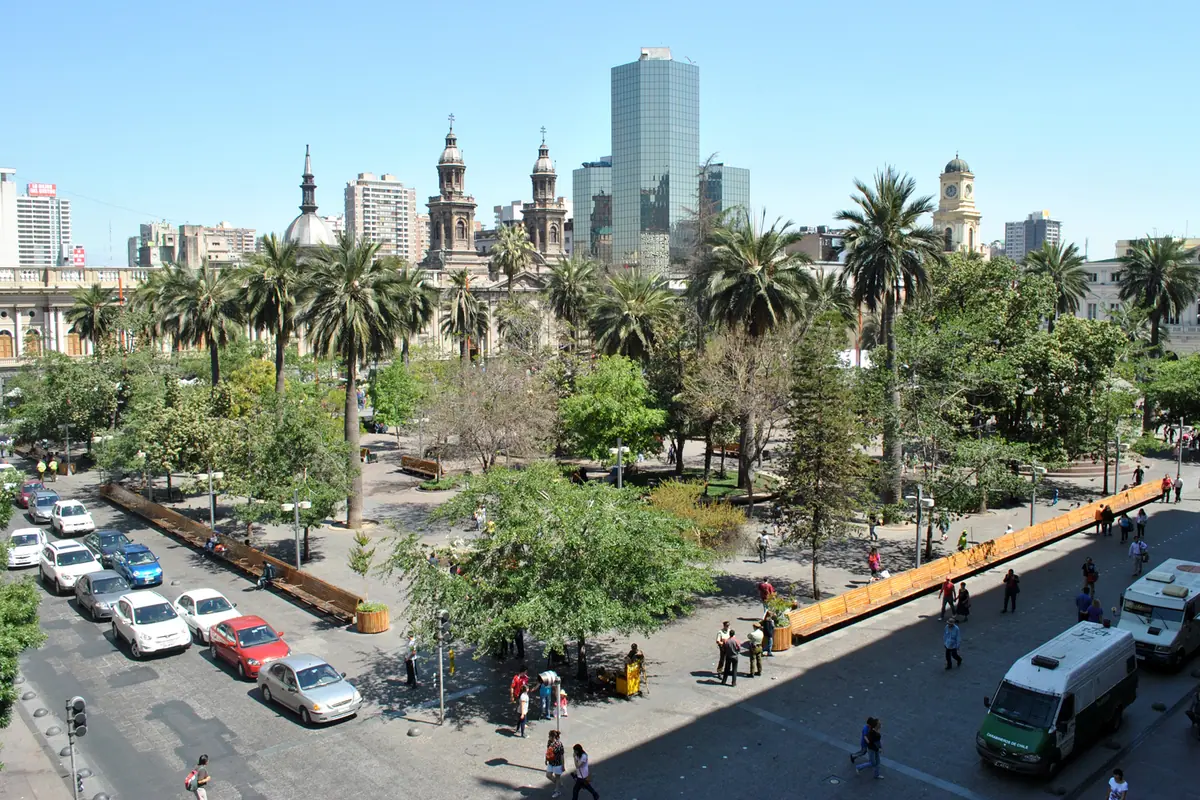
Most journeys begin in Santiago, and the city rewards a couple of unhurried days. Start at the Plaza de Armas, the grid's 16th-century heart, where the Metropolitan Cathedral faces the Museo Histórico Nacional across a square full of street performers and chess players. A few blocks west, the neoclassical Palacio de La Moneda anchors the civic district; time a visit for the changing of the guard, which draws a small crowd on the plaza's north side. Wander east through Barrio Lastarria for bookshops, pavement cafés and the Bellas Artes museum, then cross the river into Bellavista to see La Chascona, the eccentric hillside home of poet Pablo Neruda.
For a sense of the city's scale, ride the funicular up Cerro San Cristóbal, the 300-metre wooded hill that splits Santiago in two. From the terraces below the Virgin statue you get the classic postcard — office towers fading into the Andes, which turn pink at sunset on clear evenings. Alternatively, the observation deck of the Gran Torre Santiago in the Costanera Center puts you on the top floor of South America's tallest building. Afterwards, eat at the Mercado Central, where counters overflow with Pacific shellfish: reineta, locos and the ubiquitous congrio.
Santiago is also the launchpad for the Andes. Between June and September, ski resorts such as Valle Nevado, El Colorado and La Parva sit barely an hour from downtown, connected by hairpin switchbacks. In warmer months, head instead to the Cajón del Maipo for hot springs and reservoir views, or spend a day in the Casablanca and Maipo valleys tasting Sauvignon Blanc and Carmenère. Spring (September–November) and autumn (March–May) give the best light, mild temperatures and thinner crowds.
Valparaíso and the Pacific Coast: Funiculars, Murals and Neruda's View
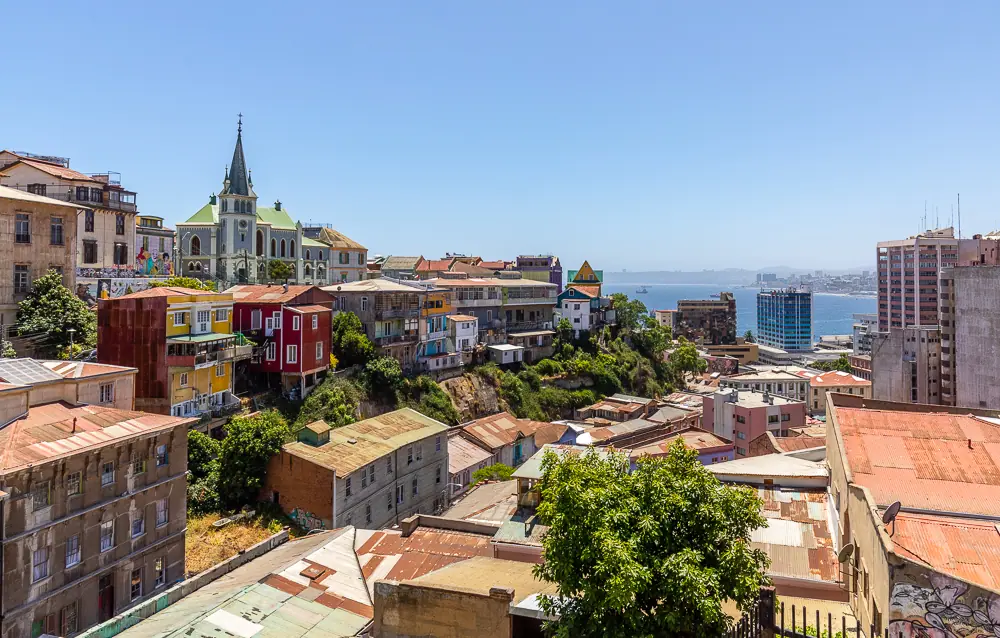
An hour and a half from the capital, Valparaíso spills down 40-odd hills toward a working port. The historic quarter is a UNESCO-listed tangle of brightly painted tin-clad houses, steep stairways and vintage ascensores — the creaking funicular lifts that haul locals and visitors up the slopes. Ride the Ascensor Concepción or Reina Victoria, then simply get lost: Cerro Alegre and Cerro Concepción are where the murals are boldest, the cafés most charming and the viewpoints most vertiginous. Look for the Paseo Gervasoni and Paseo Atkinson, two promenades with bay views over container cranes and navy frigates.
Neruda fans should climb to La Sebastiana, his whimsical five-storey house on Cerro Florida, preserved with its ship's-barrel bar, music boxes and panoramic study. Down in the flatlands, the Plaza Sotomayor and the crumbling warehouses of the port district tell the story of a city that boomed on 19th-century shipping before the Panama Canal stole its trade. Boat trips around the bay run on calm mornings and give a completely different read of the hills.
The coast either side is worth a detour. Viña del Mar offers manicured gardens and a sandy city beach, while the dunes at Concón are a magnet for paragliders and sunset picnics. Further south at Isla Negra, a third Neruda house sits above the surf, packed with figureheads and ships in bottles. Cool, foggy mornings are typical year-round here; pack a windproof layer even in summer.
The Atacama Desert: Valle de la Luna, Geysers and Star-Filled Skies
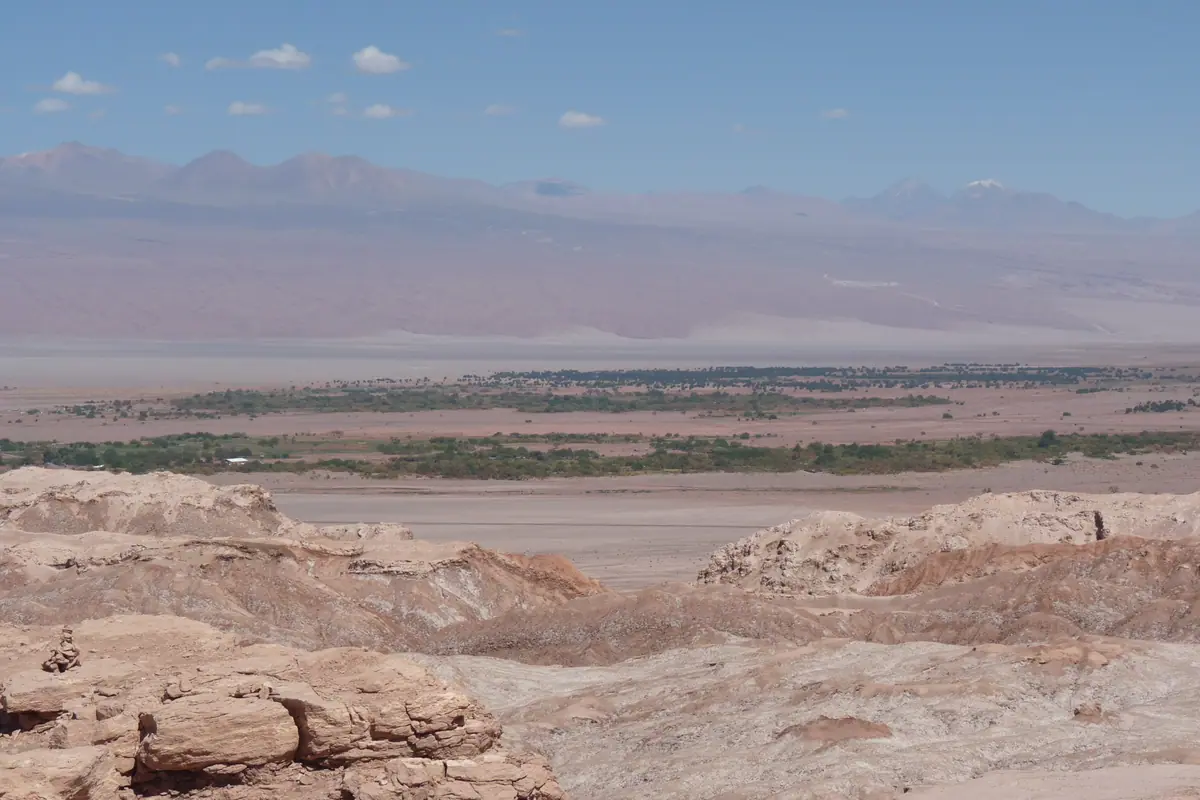
In the far north, around the oasis town of San Pedro de Atacama, the driest desert on earth serves up landscapes that look borrowed from another planet. The classic excursion is the Valle de la Luna at sunset, when salt caverns, sand dunes and sculpted ridges flush crimson and the distant Licancabur volcano turns to silhouette. Nearby, the Valle de la Muerte draws sandboarders and hikers down enormous dunes, while the salt flats of the Salar de Atacama hold lagoons where flamingos feed at dawn.
Set an alarm for the Geysers del Tatio, reached by a pre-dawn drive at roughly 4,300 metres. Dozens of steam columns erupt from the crust in the freezing half-light, and the reward afterwards is a thermal dip at Termas de Puritama, a series of warm pools cut into a canyon. Other high-altitude highlights include the altiplanic lagoons of Miscanti and Miñiques, the salt-crusted Laguna Cejar where you float effortlessly, and the red-rock valley of Piedras Rojas.
Atacama is also one of the world's great stargazing destinations. Several observatories and astronomy tours operate out of San Pedro, using telescopes to unpack the southern sky — the Magellanic Clouds, Saturn's rings, dense star clusters. Give yourself at least three nights: altitude takes adjusting, and the region's weather can shift. April to October brings cold, crystal-clear nights; January and February can see rare altiplano rain that muddies roads and closes passes.
Torres del Paine and Patagonia: Trekking at the End of the World
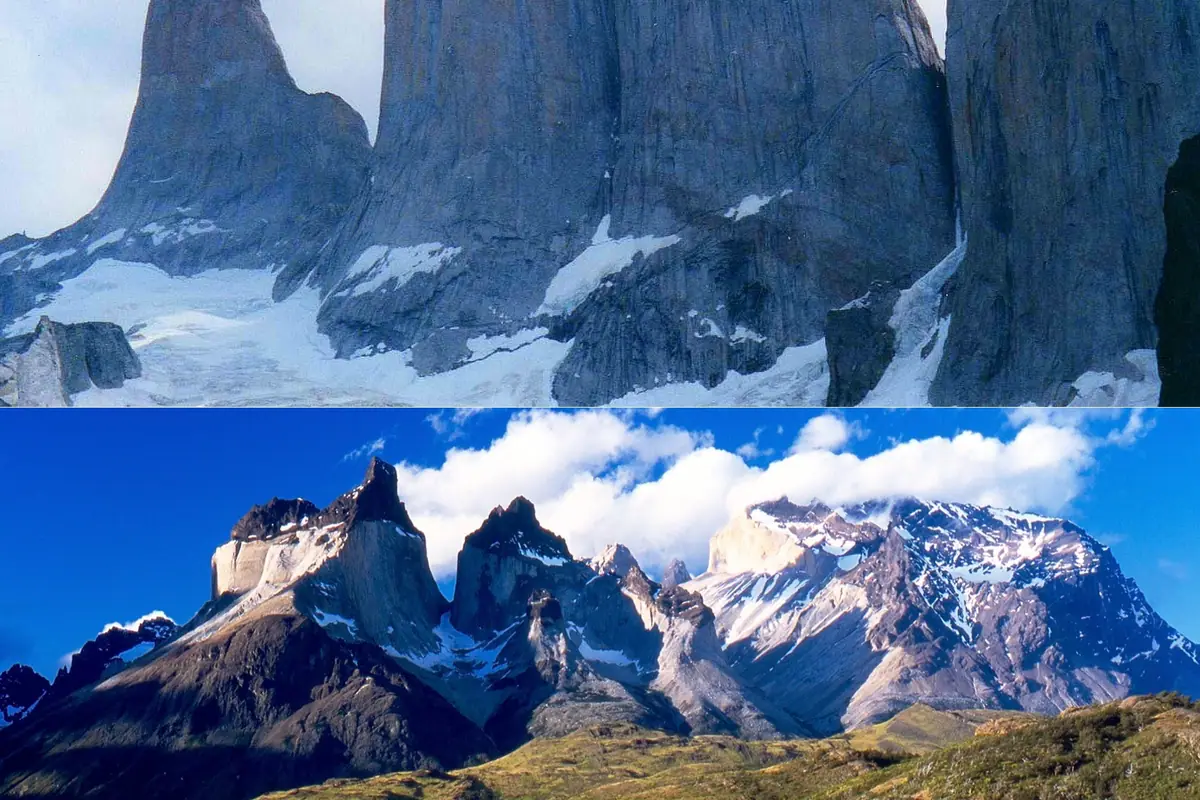
Chile's signature wilderness is Torres del Paine, a national park of granite towers, turquoise lakes and the immense Grey Glacier. The most famous day hike climbs to the Base of the Towers, a steep, boulder-strewn ascent rewarded by three vertical spires reflected in a glacial tarn — start early, as afternoon winds can be brutal. Longer itineraries follow the W Trek, a four-to-five-day route linking the towers, the French Valley and Grey Glacier, staying in refugios or at campsites along the way. The full circuit, the O Trek, takes around eight days and adds a remote back side of the massif.
Base yourself in Puerto Natales, a small port town two hours away where you rent gear, plan transport and eat enormous seafood stews. Nearby, the Milodón Cave offers a short, wind-whipped walk through a huge natural shelter where the remains of an extinct giant sloth were found. Weather here is legendary for changing four seasons in a day: sunburn, sleet and gale-force gusts in a single afternoon.
Further south, Punta Arenas is the jumping-off point for boat trips to Magdalena Island, where tens of thousands of Magellanic penguins breed between October and March. This is also the gateway to Tierra del Fuego and the Strait of Magellan. The Patagonian season is short and sharp — November to March is the only realistic window, and lodges and campsites book out months ahead for the peak of January.
Easter Island: Moai, Quarries and Polynesian Beaches
Some 3,500 kilometres out in the Pacific, Easter Island — Rapa Nui — is one of the planet's most extraordinary archaeological landscapes. Its moai statues, carved from volcanic tuff between roughly the 13th and 17th centuries, stand on ceremonial platforms called ahu along the coast. The most photogenic is Ahu Tongariki, where 15 figures line up against the ocean; arrive before sunrise to watch them emerge from the dark. At Rano Raraku, the quarry where nearly all the statues were made, dozens of moai still lie half-finished and half-buried in the hillside.
Beyond the statues, the island rewards slower exploration. Anakena is a genuine palm-fringed swimming beach with its own ahu, while the ceremonial village of Orongo perches on a cliff edge above the crater lake of Rano Kau, home to the birdman cult's petroglyphs. Rent a vehicle or join a guided loop to cover the far side of the island, and leave time for the small but excellent anthropological museum in Hanga Roa.
Flights from Santiago take about five to six hours, and the island's costs and limited accommodation mean most visitors stay three to four nights. The climate is mild and subtropical year-round, with the driest, most settled conditions from October to March. Bring sun protection, cash and patience — this is a place to move at island pace.
Chiloé, the Lakes District and the Marble Caves
South of the wine country, Chile turns green. The Lakes District is volcano country: Villarrica smoulders above the resort town of Pucón, where you can hike to the crater rim or soak in riverside hot springs, and snow-capped Osorno rises above Llanquihue lake near Puerto Varas, a town of German-influenced timber houses and kuchen cafés. Further south, the Carretera Austral threads through fjords, glaciers and temperate rainforest — a legendary road trip best done in the southern summer.
Chiloé, an island archipelago reached by ferry or bridge, is a world apart. Its wooden churches, several of them UNESCO-listed, dot the countryside, while Castro's waterfront is defined by palafitos — brightly painted stilt houses leaning over the tide. Try the curanto, a pit-cooked feast of shellfish, meat and potato, and keep an eye out for the island's distinctive black-necked swans and penguin colonies.
The showstopper is the Marble Caves on Lago General Carrera, near the village of Puerto Río Tranquilo. Boat or kayak trips glide into wave-carved chambers of banded blue, white and grey stone; the water's colour shifts through the day, so midday to early afternoon gives the brightest reflections. Access depends on calm weather, and the season runs roughly October through April — outside that, winds and cold often shut the boats down.
Frequently asked questions
What is the best time of year to visit Chile?
It depends on the region. For Santiago, Valparaíso and the wine valleys, spring (September–November) and autumn (March–May) are ideal. Patagonia and Torres del Paine are only really accessible from November to March. The Atacama Desert is good year-round, but April to October offers the clearest night skies for stargazing. The Lakes District and Chiloé are wettest in winter (June–August); the Marble Caves boat season runs roughly October to April.
How many days do I need in Chile?
Two weeks is the sweet spot for a first trip, letting you combine Santiago and Valparaíso with either the Atacama Desert or Patagonia — not both comfortably, given the distances. Add three to four extra nights if you want Easter Island, which requires a five-to-six-hour flight each way from Santiago. A dedicated Patagonia trekking trip needs at least seven to ten days on the ground.
Do I need to book Torres del Paine in advance?
Yes, especially for the November-to-March season. Campsites, refugios and park entry have limited daily capacity and popular slots sell out months ahead, so plan your W Trek or O Circuit itinerary and reservations early. Independent trekkers must register and show proof of bookings on arrival; guided trips are worth considering if you'd rather not manage logistics in changeable Patagonian weather.
How do I handle the altitude in San Pedro de Atacama?
San Pedro itself sits around 2,400 metres, but excursions like the Geysers del Tatio and the altiplanic lagoons climb above 4,000 metres. Give yourself a day to acclimatise, drink plenty of water, go easy on alcohol the first night, and save the highest trips for later in your stay. If you have heart or respiratory conditions, check with a doctor before booking high-altitude tours.
Is Chile expensive, and how do I get between regions?
Chile is one of the pricier countries in South America, particularly in Patagonia and on Easter Island, though budget guesthouses and local buses keep costs manageable elsewhere. Because the country is over 4,300 kilometres long, most travellers fly between hubs — Santiago, Calama for Atacama, Puerto Natales or Punta Arenas for Patagonia — and use buses or rental cars for shorter hops. Book internal flights early for the best fares in peak season.
Plan it — experiences in Chile
Live search, booked directly with trusted providers.