Brunei is the quiet one: a small, oil-rich sultanate on the northern edge of Borneo where the mosques are gilded, the rainforest is far older than the monarchy, and the evening's entertainment is a night market thick with smoke and sizzling satay. It is a destination that rewards slow travel — a country you can cross in a long afternoon but never quite finish exploring. Here are the landmarks and experiences worth building a trip around.
The Golden Domes of Bandar Seri Begawan
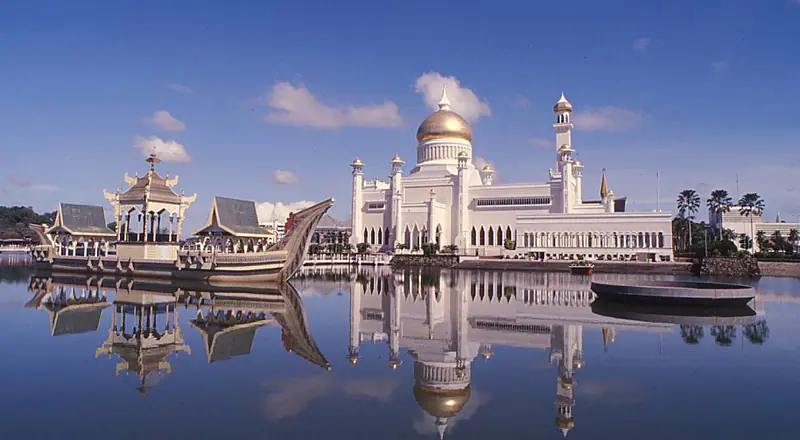
Start where every visit to Brunei starts: at the Omar Ali Saifuddien Mosque, the marble-and-gold centrepiece of the capital. Completed in the late 1950s and named for the 28th sultan, it sits in a man-made lagoon so the dome appears to float twice — once in the sky and once in the water. The interior is a cool sweep of Italian marble, stained glass and chandeliers, and the grounds hold a stone replica of a royal barge, a ceremonial vessel that once carried dignitaries along the river. Come at dusk, when the floodlights warm up and the call to prayer rolls across the water toward Kampong Ayer.
Non-Muslim visitors are welcome outside prayer times, and robes are lent at the entrance; shoes come off at the steps, and photography is fine outdoors but restricted inside the prayer hall. The second great landmark is the Jame'Asr Hassanil Bolkiah Mosque, a few minutes' drive out toward Gadong, crowned with 29 golden domes and four tiled minarets in a garden of fountains and palms. It is the country's largest mosque and, by night, arguably its most photogenic building. Both are quietest in the morning. Note that many sites close to visitors on Fridays around midday for prayers, and modest dress — shoulders and knees covered — is expected everywhere.
A third, less-visited stop for architecture lovers is the smaller Ash-Shaliheen Mosque near the government quarter, an airy Andalusian-style building with carved timber and cool tiled courtyards. Together the three make an easy half-day circuit by car.
Kampong Ayer: A Thousand-Year-Old City on Stilts
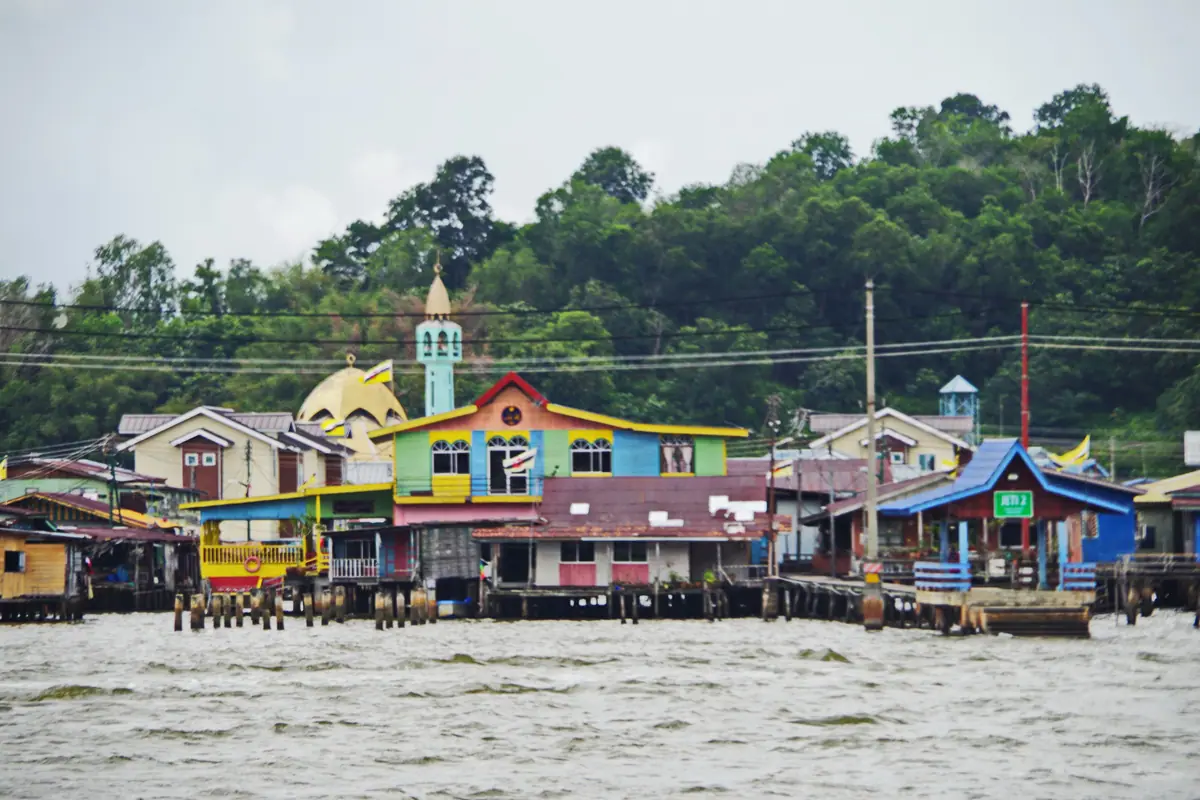
Across the water from the mosque lies Kampong Ayer, the water village that has been inhabited for roughly a thousand years and once prompted early visitors to call Brunei the Venice of the East. At its height it housed around 30,000 people; today perhaps a third of that number still live in some forty stilt villages strung along the Brunei River. This is not a museum. There are schools, clinics, a police station, a fire station with boats instead of engines, and mosques built on pilings, all connected by tens of kilometres of plank walkways.
The best way in is a water taxi — a small wooden boat hailed from the waterfront in the centre of town for a dollar or two — and the best way around is simply to walk, following the concrete boardwalks past laundry lines, potted orchids and cats sleeping on railings. A small cultural gallery on the water explains the village's history and runs short guided walks, and a handful of family homestays let you sleep over the river. Go at first light, when the mist sits low and the village smells of coffee and diesel, or in the late afternoon when the light turns amber. Ask before photographing people in their doorways.
A useful trick: combine the walk with a river crossing to the opposite bank and a stop at the Tamu Kianggeh morning market, where vendors sell jungle honey, sago, dried fish and unfamiliar fruit. It is the fastest way to understand what Bruneians actually eat.
Royal Splendour: The Palace, the Regalia and the Sultan's Story
The Istana Nurul Iman, home to the Sultan of Brunei, is the largest residential palace in the world — a sprawling complex of some 1,700 rooms topped with gold domes, sitting behind gates on the river just upstream from the city centre. Ordinary visits are impossible; you can admire it from a boat on the Brunei River or from the roadside gates, which is spectacle enough. The exception is the Hari Raya Aidilfitri open house, when for three days after the end of Ramadan the palace opens its doors and the Sultan personally greets tens of thousands of visitors. If your trip coincides with it, go — it is one of the most remarkable public events in Southeast Asia.
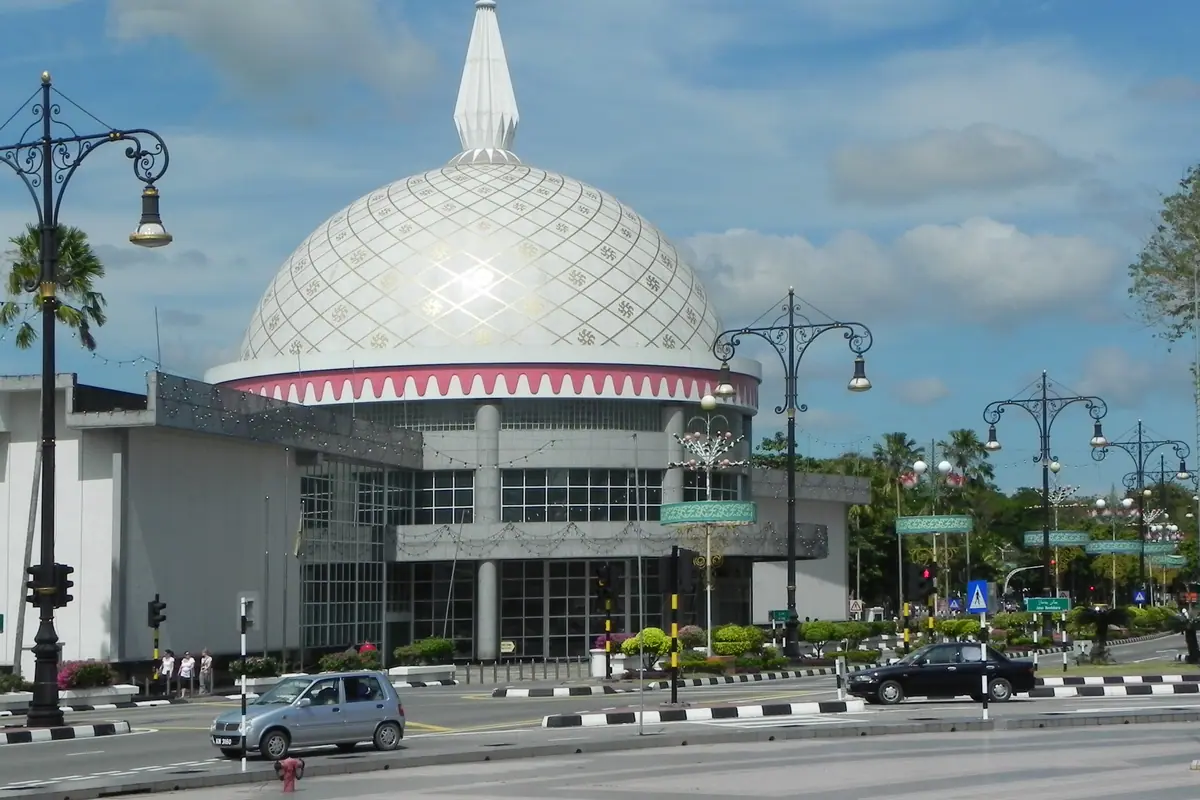
For a proper look at royal Brunei, head to the Royal Regalia Museum in the centre of the capital. Entry is free, shoes are removed at the door, and inside you will find the gilded chariot that carried the Sultan through the streets at his coronation, ceremonial shields and spears, scale models of the palace, and an astonishing gallery of gifts from foreign governments. Allow an hour, more if you like reading.
Round the corner, the Malay Technology Museum covers the country's other heritage — boat-building, brasswork, sago processing and the engineering behind the water villages — while the small Brunei Museum holds Islamic art, natural history and an archaeology gallery. Note the midday closure on Fridays, and that these are gentle, low-key museums rather than blockbuster attractions; that is part of their appeal.
Ulu Temburong National Park: Borneo Rainforest, Unhurried
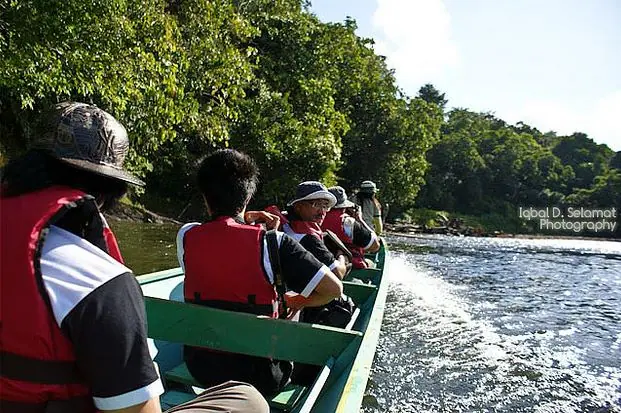
Brunei's showpiece natural landmark is Ulu Temburong National Park, a protected block of primary rainforest in the country's eastern exclave, reachable only by river. For years the journey meant a fast boat from the capital to the town of Bangar and then a longboat upstream; since the opening of the long bridge across the bay, most visitors now drive to Temburong in under an hour and pick up a boat at the park boundary. Either way, the last stretch is on the water, engine cut at times to drift past kingfishers and macaques.
The signature experience is the canopy walkway — a steel structure climbing through the emergent trees high above the forest floor, with a viewing tower at the top where, on a clear morning, you look out over unbroken green to the ridges of the interior. Below, the forest holds hornbills, gibbons, flying squirrels and, inevitably, leeches after rain; wear long trousers, closed shoes and light colours, and take the leech socks if they are offered. Day trips run from the capital and typically take a full ten to twelve hours, but it is far better to stay a night or two in one of the simple riverside lodges near Batang Duri or Sumbiling, where you eat rice and river fish and fall asleep to cicadas.
If you have less time, the Bukit Patoi forest trail in Temburong offers a half-day hike to a rocky plateau with views back over the lowlands, and the Sungai Liang forest recreation area on the Belait highway has easy boardwalk trails through similarly old jungle.
Night Markets, Mangroves and Proboscis Monkeys
Brunei eats cheaply and well, and the Gadong Night Market is where that happens. From late afternoon, hundreds of stalls fire up grills for satay, chicken wings and grilled fish, alongside nasi katok — the national bargain plate of rice, fried chicken and sambal — plus neat rows of brightly coloured kuih, fresh sugarcane juice and durian when it is in season. It is busy between about six and nine in the evening, mostly cash, and mostly locals. Come hungry and graze.
For something distinctly Bruneian, try ambuyat, a gluey sago starch eaten by twirling it around a bamboo fork and dipping it into a sour, spicy sauce. It is the dish most visitors have never heard of and every Bruneian grew up with.
Then get back on the water. A late-afternoon or dusk cruise up the Brunei River past Kampong Ayer and into the mangroves is the best wildlife hour in the country: proboscis monkeys with their absurd pendulous noses settling into riverside trees, silvered langurs, monitor lizards, kingfishers, and — if you stay out late enough — fireflies flickering in the nipa palms. Trips last an hour or two and leave from the waterfront; bring insect repellent and something to cover your shoulders.
Beyond the Capital: Oil Country, Blackwater Lakes and Quiet Coast
Most travellers never leave the capital, which is a shame, because Brunei's western districts are easy and empty. Head southwest along the coastal highway for around ninety minutes and you reach Seria, the country's oil town, marked by the Billionth Barrel Monument on the seafront — a sculptural arch of pipes commemorating the billionth barrel pumped from the field beneath it. The drive passes Sungai Liang's forest trails and the long stretch of Kuala Belait's quiet streets near the Malaysian border.
Inland from the main road lies Tasek Merimbun, a dark, still blackwater lake surrounded by forest and a small community of Dusun and Iban families. Boardwalks loop through the swamp forest, birdlife is good in the early morning, and the whole place is usually near-empty on weekdays. Closer to the capital, Luagan Lalak recreation park offers lake views and picnic shelters, while the coast at Muara and Jerudong has beaches that are pleasant for a stroll at low tide, if not for swimming.
Practically, this is a country made for driving: public buses are limited, taxis are scarce and ride-hailing can be slow, so hiring a car gives you the freedom to string together the mosques, markets, lakes and rainforest at your own pace. The whole country is smaller than many European regions — nothing is more than a couple of hours from anything else.
Frequently asked questions
How many days do you need in Brunei?
Three to four days is enough to cover the capital properly — the Omar Ali Saifuddien Mosque, Kampong Ayer, the royal museums, Gadong Night Market and a river wildlife cruise — plus a day trip into Ulu Temburong National Park. Add another day or two if you want to stay overnight in the rainforest or drive out to Seria and Tasek Merimbun.
What is the best time to visit Brunei?
Brunei is hot and humid all year, typically 26–32°C with heavy downpours possible in any month. The driest stretch generally falls between February and April, which is the most comfortable window for rainforest hikes and river trips. The wettest period tends to run from November to January. Ramadan shifts timings significantly: many restaurants close during daylight hours, and some attractions run shorter schedules.
Is alcohol available in Brunei?
Alcohol is not sold in public in Brunei, and there is no bar or nightclub culture. Non-Muslim visitors may bring in a strictly limited duty-free allowance for personal consumption, but it must be declared and rules are enforced. Restaurants and hotels serve non-alcoholic cocktails and fresh juices, and the food scene more than compensates.
What should I wear and how should I behave?
Dress modestly: shoulders and knees covered is the safe default, especially in rural areas and at religious sites. Women should expect to cover their hair when entering a mosque — robes and headscarves are usually lent free at the entrance — and everyone removes shoes. Fridays see many businesses close around midday for prayers, and public displays of affection are best avoided.
How do I get to Ulu Temburong National Park?
You can drive across the long bridge to Temburong in under an hour from Bandar Seri Begawan, then continue by longboat into the park. Organised day trips from the capital usually last ten to twelve hours and include transport, boat, guide and lunch. Staying a night in a riverside lodge is far more rewarding, and gives you the early-morning canopy walkway when the mist is still rising.
Plan it — experiences in Brunei
Live search, booked directly with trusted providers.
Sort the rest of your trip
Everything for Brunei, in one place
Stay in Brunei
Hotels, guesthouses and apartments — compared in one search.
Search hotels
Transfer in Brunei
Private driver waiting on arrival — no queues, no surprises.
Book a transfer
Stay online in Brunei
Travel eSIM — data the moment you land, no roaming bills.
Get an eSIM