Brunei is small enough to cross in an afternoon but layered enough to fill a week of eating, river crossings and rainforest mornings. Tourists come for the gold-domed mosques and the water village; they stay for smoky night-market satay, sago dipped in sour binjai sauce, and the strange quiet of a sultanate that runs on its own rhythm.
Start With Nasi Katok: Brunei's Everyday Plate
If you eat only one thing in Brunei, make it nasi katok. The name roughly means 'knock rice', a nod to the old practice of knocking on a neighbour's door to buy a cheap meal, and the dish has barely changed since: a mound of white rice, a piece of fried chicken, and a fierce sambal wrapped in brown paper or a banana leaf. It costs about a dollar or two and turns up everywhere — roadside stalls, food courts, offices at lunchtime. Every vendor guards a different sambal recipe, and locals will argue about whose is best the way other countries argue about football.
Then graduate to ambuyat, the dish outsiders rarely meet. It is a sticky, near-translucent paste made from sago starch, served in a bowl with a set of candas — long bamboo forks you twirl to catch a strand. You dip it into any of several sauces, usually something sour and fishy like binjai (wild mango) or tempoyak (fermented durian), then swallow without chewing. It is texturally strange, entirely Bruneian, and best eaten at a family-style restaurant where the whole table shares one bowl.
Beyond those two, breakfast is the meal to plan around. Look for soto — a light turmeric-scented noodle soup — roti canai pulled and folded on a hotplate, and trays of kuih, the small steamed or grilled cakes that Bruneians eat between meals: penyaram (palm sugar and rice flour), kelupis (glutinous rice steamed in leaves), and dense little cakes made with pandan, coconut and gula apong. Wash it down with teh tarik poured long from height, or a glass of cendol thick with green rice-flour jelly.
Markets After Dark: Gadong and Tamu Kianggeh
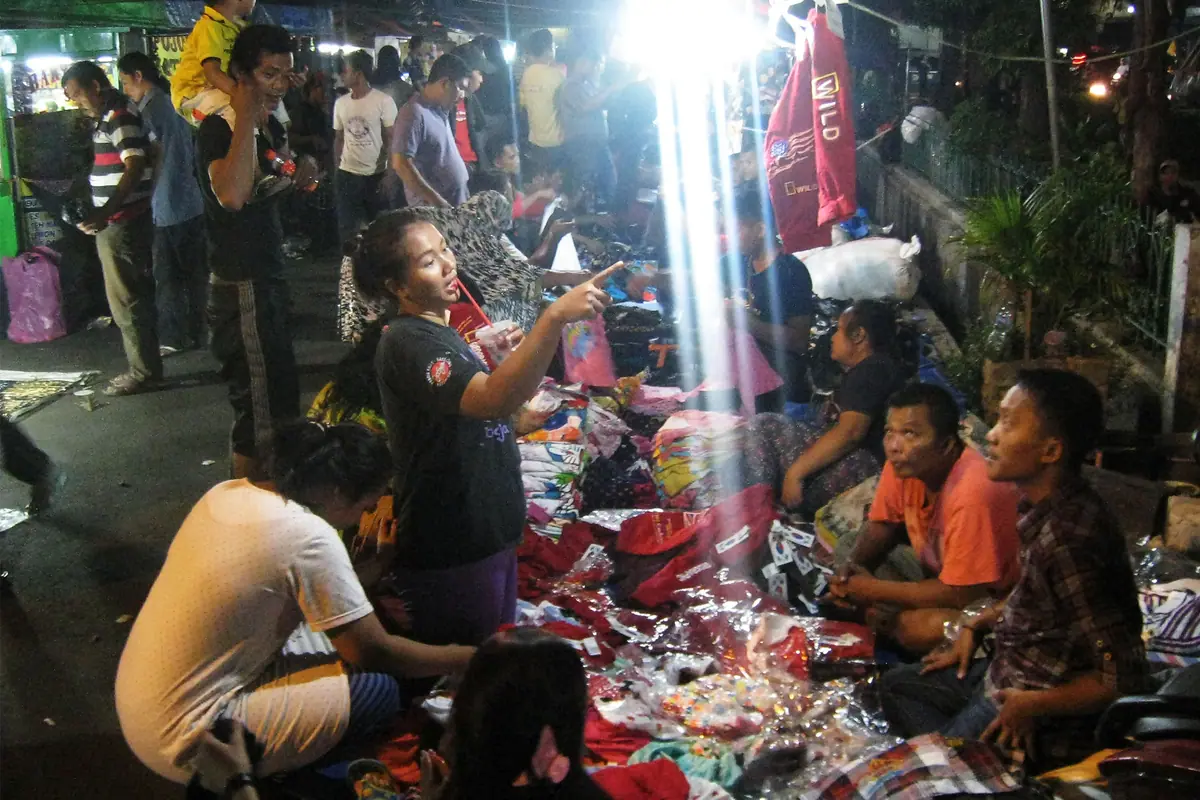
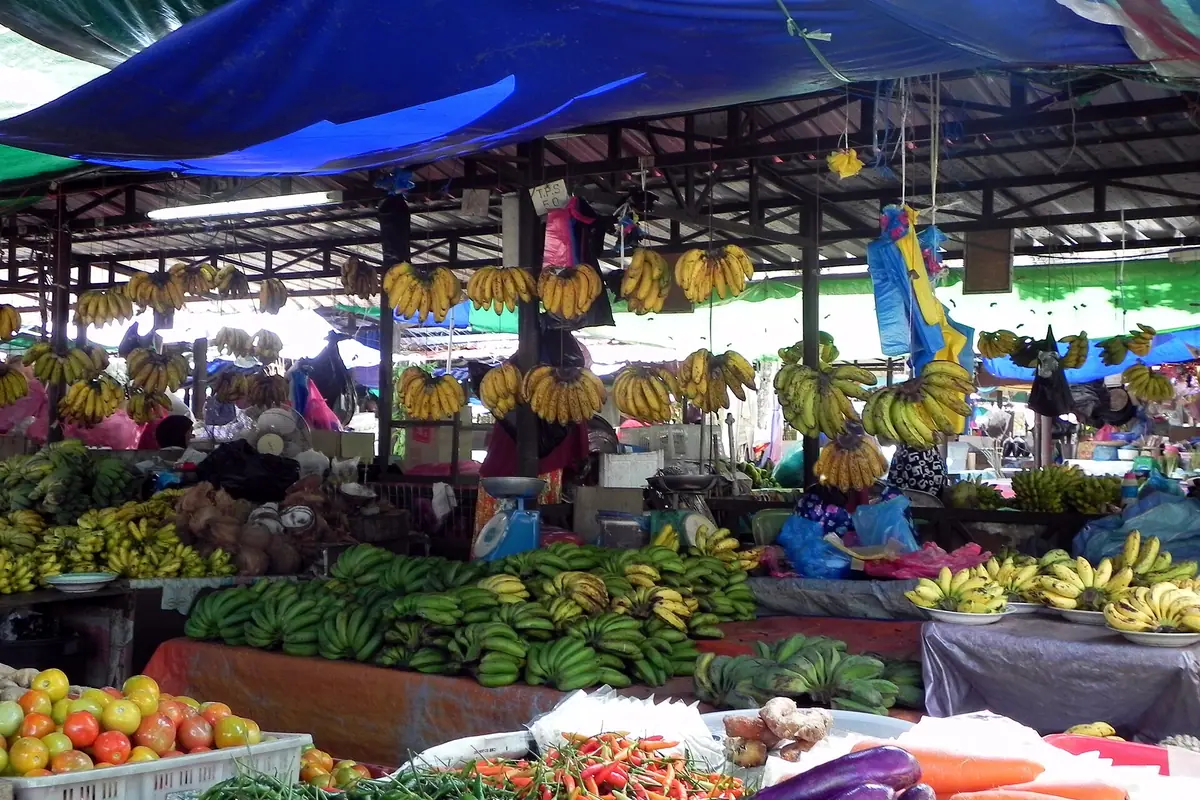
Gadong Night Market, usually called Pasar Malam Gadong, is the single best introduction to Bruneian eating. It opens in the late afternoon and runs into the night as hundreds of stalls light up with satay grills, banana-leaf-wrapped fish, chicken wings, noodles, dumplings and towers of rainbow-coloured kuih. There is almost no ceremony: you point, you pay in small notes, and you eat at a plastic table or standing up. Go hungry, go early enough to watch the grills firing up, and go with cash.
Mornings belong to Tamu Kianggeh, a long-running market on the banks of the Kianggeh River in the capital. This is where cooks, and increasingly curious visitors, come for jungle produce: wild ferns, bamboo shoots, ginger flowers, sago, forest honey and bundles of herbs you will not recognise. It is also a kuih market, with trays of freshly made cakes still warm, and a good place to buy local coffee powder, keropok (fish crackers) and jars of sambal to take home.
Further afield, the district towns hold their own tamu — weekly open-air markets where farmers from Tutong and Belait bring fruit, vegetables, river fish and handicraft. If your visit coincides with one, rearrange your day for it. These markets are less staged than anything in the capital, and a conversation over a bag of rambutan is often the most memorable local experience a visitor has.
Kampong Ayer: A Water Village That Actually Works
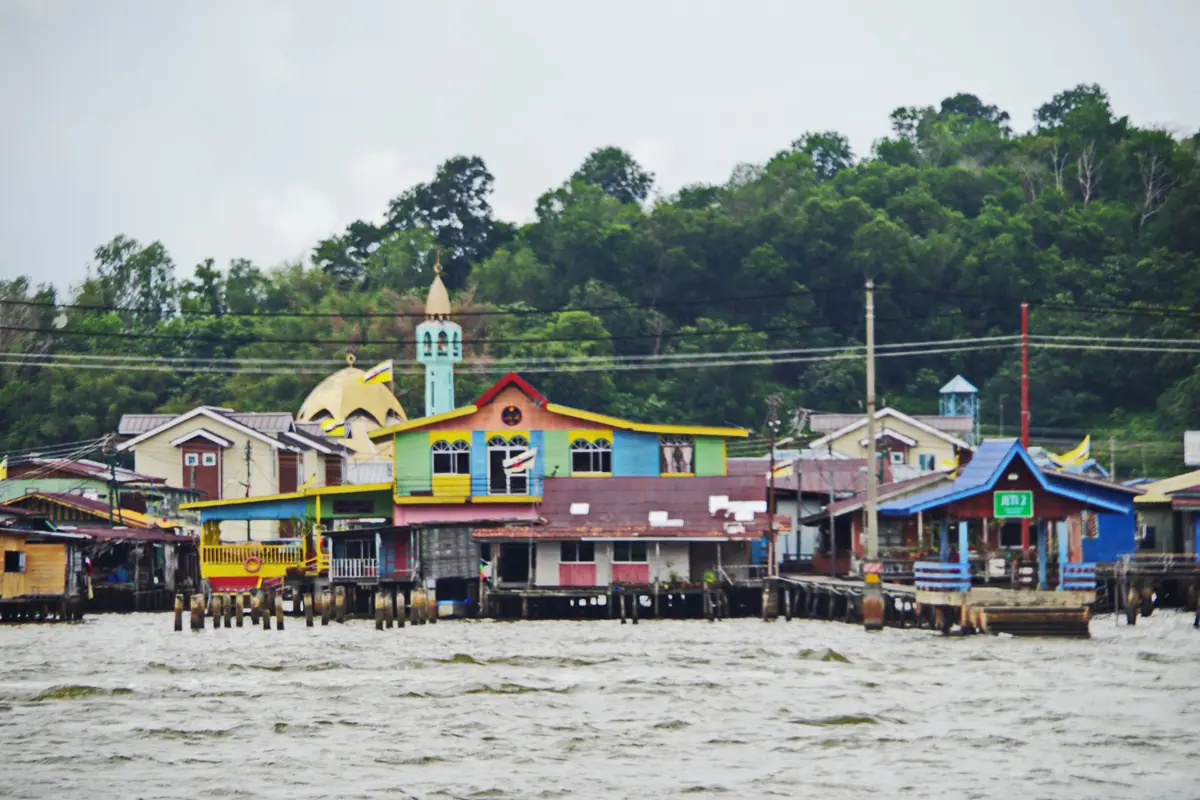
Kampong Ayer is not a heritage exhibit, it is a working neighbourhood of roughly 30,000 people spread across stilted houses, walkways, schools, clinics and mosques on the Brunei River. You reach it by water taxi from the concrete waterfront in Bandar Seri Begawan — the ride costs about a dollar and takes minutes. Wander the wooden plankways on foot; the planks are uneven, some are broken, and you should not treat anyone's front deck as a viewing platform without being invited.
Start at the Kampong Ayer Cultural and Tourism Gallery near the jetty to get your bearings, then take a longer boat trip upriver. The classic route runs past the Sultan's riverside palace, Istana Nurul Iman, whose golden domes are visible only from the water, and into the mangroves where proboscis monkeys, monitor lizards, kingfishers and, if the light is right, fireflies put on a show. Late afternoon is the best window: cooler, softer light, and animals moving before dark.
For something deeper than a boat ride, arrange a homestay or a meal with a family in the village. That is where you learn the practicalities — how fresh water and post arrive, how houses are rebuilt after fires, why some families have kept the same address on stilts for generations. Tea, fried bananas and an hour of conversation will teach you more about Brunei than any museum.
Marble, Gold and Royal Regalia: The Must-See Sights
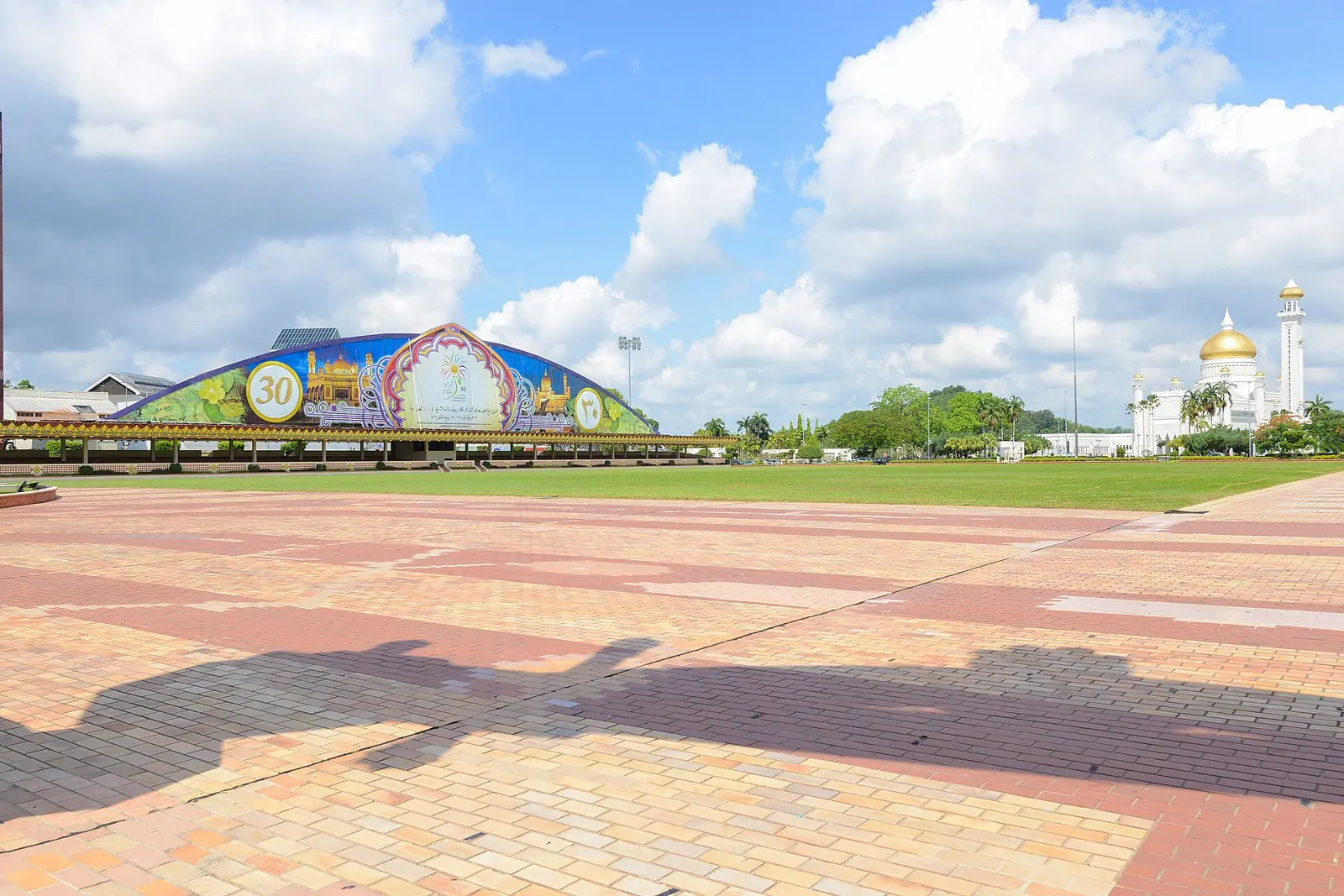
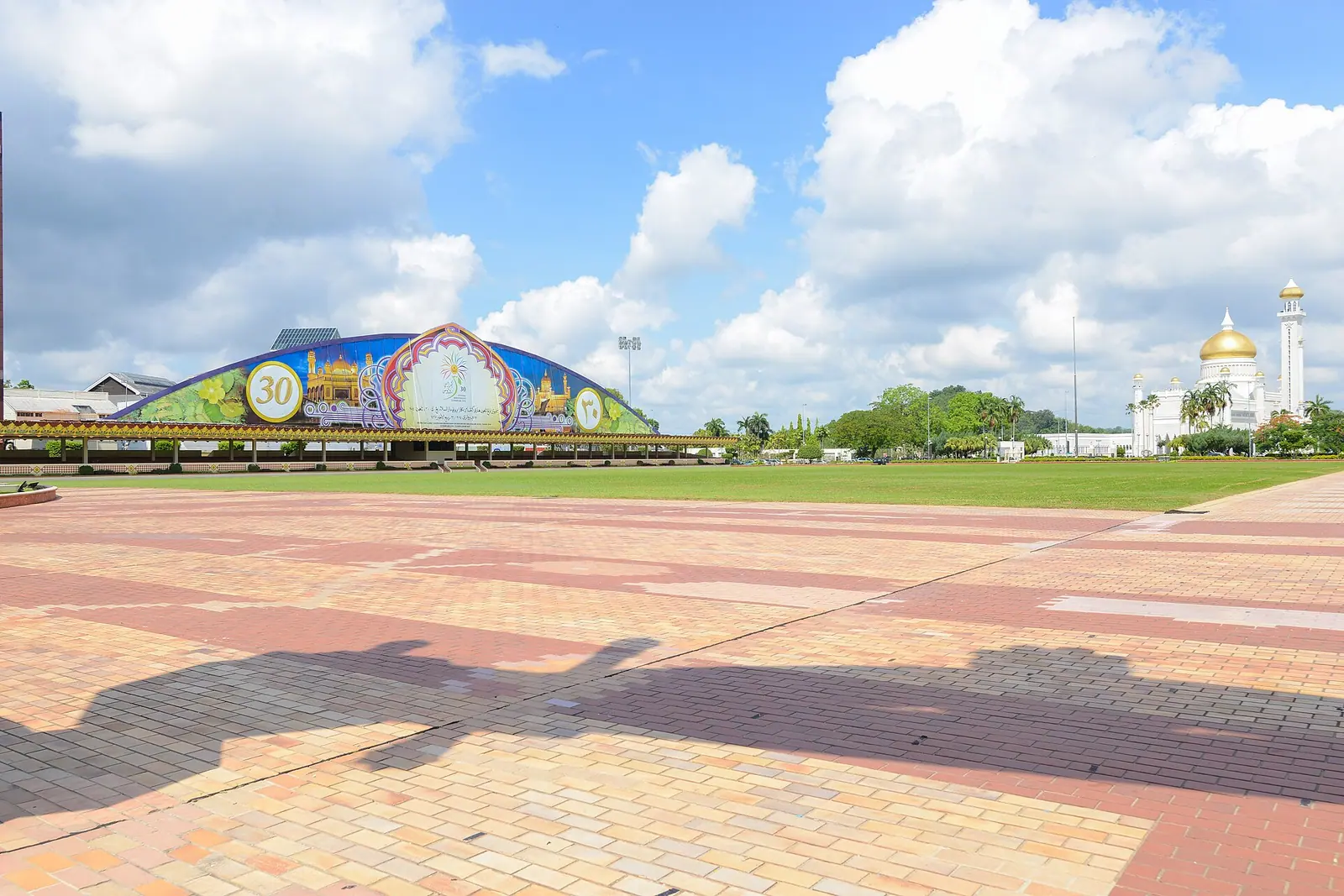
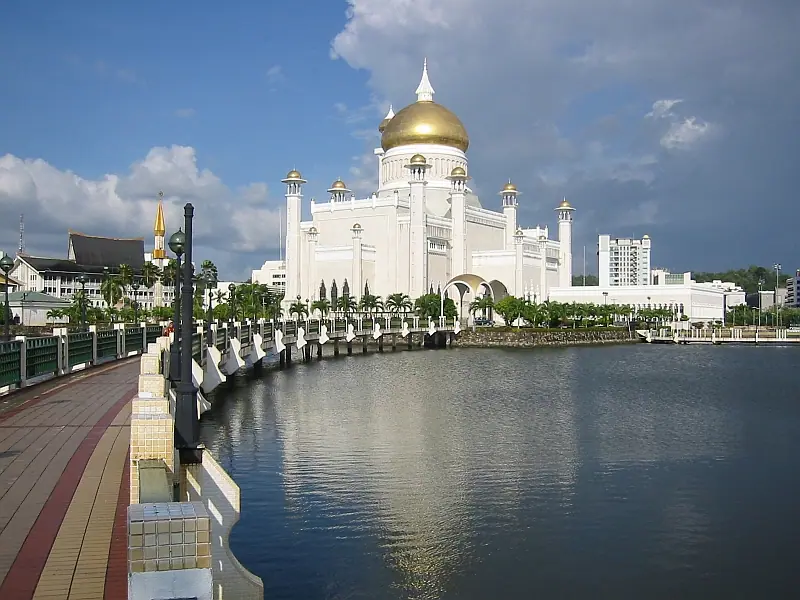
The image on every Brunei postcard is Sultan Omar Ali Saifuddien Mosque in the capital, with its marble minarets, gold dome and a ceremonial stone barge floating in the lagoon beside it. Visit twice if you can — once in the morning for photographs, once at dusk when the call to prayer echoes over the water and the lights come on. Non-Muslim visitors are welcome outside prayer times and on days other than Friday; robes are lent at the entrance, and shoes come off at the steps. Just opposite, Taman Mahkota Jubli Emas is a landscaped waterfront park that gives you the classic reflected view across the lagoon.
The other essential is Jame' Asr Hassanil Bolkiah Mosque in the Kiarong area, the country's largest, ringed by golden domes and set in formal gardens and fountains. It is a different scale of grand entirely, and worth an hour even if you have already seen the first mosque.
Between them, fill your days with the museums of Kota Batu: the Brunei Museum for archaeology, Islamic art and a genuinely good gallery on the country's oil history, and the nearby Malay Technology Museum, which reconstructs traditional water-village houses, boat-building and metalwork. In central Bandar, the Royal Regalia Museum holds the Sultan's coronation chariot, ceremonial regalia and the gifts given by visiting heads of state — free to enter, cool, and quietly fascinating. The Istana Nurul Iman, one of the world's largest residential palaces, is not open to the public except during Hari Raya Aidilfitri, when the palace opens its doors to ordinary visitors in a tradition worth timing a trip around.
Into the Rainforest: Ulu Temburong and Beyond
Ulu Temburong National Park is Brunei's wilderness showpiece and the reason many travellers bother to go beyond the capital. You reach it via Bangar, either by speedboat across Brunei Bay from the waterfront in the capital — a breezy, island-hopping ride of under an hour — or by driving over the long bridge across the bay and continuing by road. From Bangar it is longboats up the Temburong River, past riverbank villages and into forest so dense the light changes.
Inside the park, the signature experience is the canopy walkway: a suspended steel-and-timber structure rising through the treetops, with several towers linked by narrow spans. Climb it at dawn if you can. The forest wakes loudly — hornbills, gibbons, a thousand birds — and from above the canopy you look out over unbroken rainforest that has never been logged. Bring quick-drying clothes, a rain jacket, proper shoes and leech socks if you plan to walk; the park is wet year-round and the trails are mud.
If you have extra days, add Peradayan Forest Reserve for the hike up Bukit Patoi, a short, steep climb to a bare rocky plateau with views across Temburong. In Tutong district, Tasek Merimbun Heritage Park protects a dark, still lake surrounded by forest and Dusun villages, and Belait district offers Luagan Lalak, a shallow flooded forest and picnic area that turns glassy at sunset.
Timing, Etiquette and Getting Around
Brunei is equatorial, so expect heat and humidity all year. The drier, more comfortable window runs roughly from February to April; the northeast monsoon from around November to March brings heavier downpours, and from around August to October smoke haze can occasionally drift in and dull the views. Rain rarely lasts all day — plan outdoor mornings, indoor afternoons. Friday is the week's quietest day: government offices and many shops close from around noon to two for prayers, and mosques are busiest, so avoid scheduling a mosque visit then.
Dress modestly, especially away from resorts: shoulders and knees covered, and swimwear only at pools and beaches. Inside mosques, women are given robes and head coverings, and everyone removes shoes. Brunei is a dry country — alcohol is not sold, and there is no bar scene — and during Ramadan, non-Muslims are expected to avoid eating and drinking in public during daylight hours; many restaurants close or move to takeaway. It is also polite to eat and pass things with the right hand, and to accept at least a token of the food or tea you are offered.
Getting around is easier than its reputation suggests but not effortless. Public buses are cheap and infrequent; taxis are scarce; ride-hailing and hotel-arranged cars are the practical option, and water taxis handle the river. The Brunei dollar trades at par with the Singapore dollar and both are widely accepted. Three or four days is enough for the capital, Kampong Ayer and the main mosques; add two more for the rainforest and the western districts — and always carry small notes, because markets and river boats run on cash.
Frequently asked questions
What food should I try first in Brunei?
Nasi katok — rice, fried chicken and sambal wrapped in paper — is the everyday national dish and the cheapest introduction to local cooking. Follow it with ambuyat, a sago-starch paste eaten with bamboo forks and sour dips, then work through the kuih at Gadong Night Market or Tamu Kianggeh.
When is the best time to visit Brunei?
February to April is generally the driest and most comfortable stretch. Rain falls year-round, with the heaviest downpours during the northeast monsoon from around November to March. Haze sometimes affects views between roughly August and October. Time a visit around July if you want to see the Sultan's birthday celebrations, or Hari Raya Aidilfitri for the palace open house.
Is alcohol available in Brunei?
No. Alcohol is not sold in Brunei and there is no bar or nightlife culture, though non-Muslim visitors are generally permitted a small personal allowance brought in on arrival. Expect mocktails, fresh juices, teh tarik and coffee instead, and never bring alcohol to a local home or event.
How do I get to Ulu Temburong National Park?
Most visitors take a speedboat from the waterfront in Bandar Seri Begawan to Bangar, then transfer to a longboat up the Temburong River. It is also possible to drive across the bridge spanning Brunei Bay and continue by road. Access to the canopy walkway is normally arranged through a guided tour or a forest lodge, so book ahead in peak months.
What should I wear and how should I behave at Brunei's mosques?
Cover shoulders and knees, remove your shoes at the entrance, and keep your voice low. Women are lent robes and head coverings at Sultan Omar Ali Saifuddien Mosque and Jame' Asr Hassanil Bolkiah Mosque. Non-Muslim visitors are welcome outside prayer times and generally not on Fridays, so plan mosque visits for other days of the week.
Sort the rest of your trip
Everything for Brunei, in one place
Stay in Brunei
Hotels, guesthouses and apartments — compared in one search.
Search hotels
Transfer in Brunei
Private driver waiting on arrival — no queues, no surprises.
Book a transfer
Stay online in Brunei
Travel eSIM — data the moment you land, no roaming bills.
Get an eSIM