Brunei is small enough to cross in a single afternoon, yet it packs in golden-domed mosques, a water village older than the sultanate's oil wealth, and a rainforest canopy you can stand above at sunrise. It is a country of quiet contrasts — strict in its Islamic observance, genuinely warm in its welcome, and still almost untouched by mass tourism.
Golden Domes and Royal Splendour in Bandar Seri Begawan
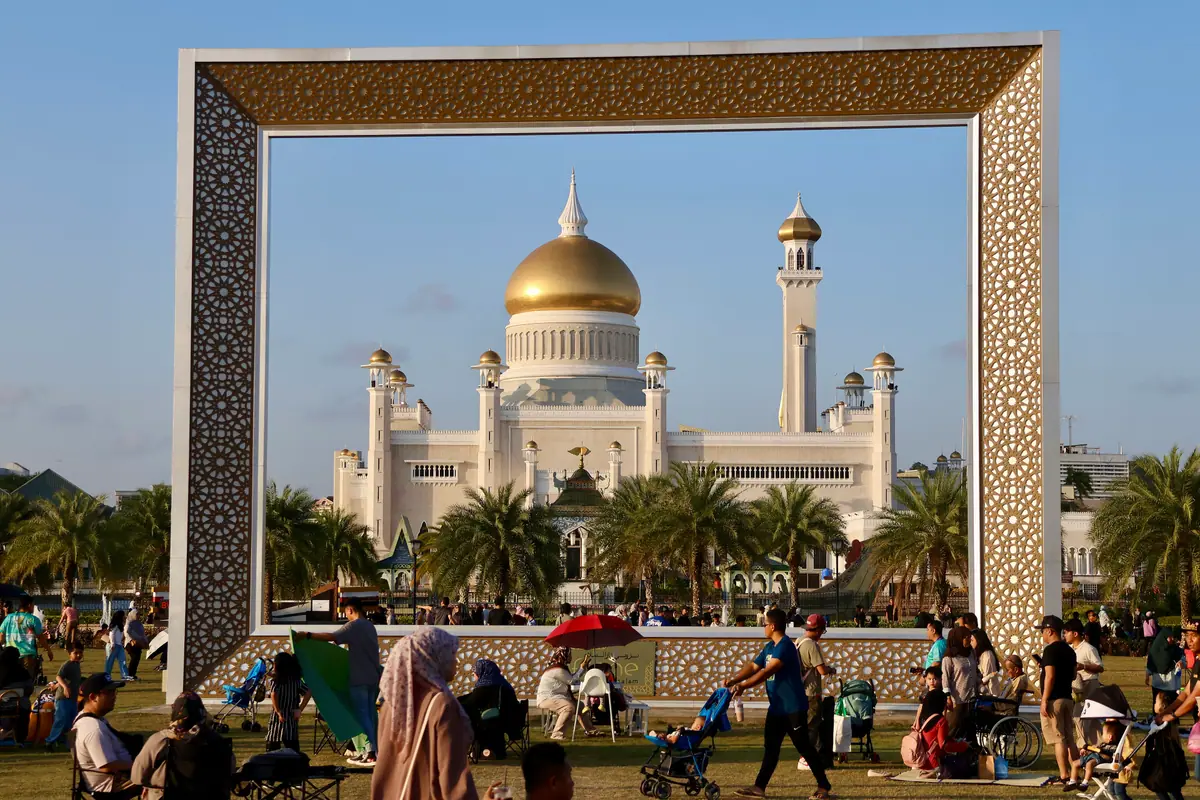
Start with the image that defines the country: the Omar Ali Saifuddien Mosque, completed in 1958 and named for the father of the present Sultan. Its marble minarets, Italian-marble floors and 44-metre golden dome sit beside an artificial lagoon holding a replica of a 16th-century royal stone barge. Come at dusk, when the dome and the lagoon light up together and the call to prayer rolls across the water. Non-Muslim visitors are welcome outside prayer times; robes are lent free at the entrance, and shoes come off at the steps.
Ten minutes away in the Kiarong district stands the Jame' Asr Hassanil Bolkiah Mosque, the largest in the country and unmistakable for its 29 golden domes — one for each of the current Sultan's years at the time of building. The tiered gardens and fountains are floodlit at night, and the interior, open to visitors on set days outside prayer hours, is a swirl of marble, stained glass and chandeliers.
For context on how this small nation became so wealthy, the Royal Regalia Museum in the city centre is essential. Inside you'll find the gilded royal chariot used in coronation processions, ceremonial shields, spears, jewel-encrusted regalia, and galleries devoted to the Sultan's coronation and jubilee celebrations, plus the flood of gifts from foreign dignitaries. It is air-conditioned, free to enter and takes a comfortable 60–90 minutes. Nearby, the gates of Istana Nurul Iman — the world's largest residential palace, with nearly 1,800 rooms — can be seen from the road or, better, from a boat on the Brunei River; the palace opens its doors to the public only during the three days of Hari Raya Aidilfitri.
Kampong Ayer and the Brunei River: Life on Stilts
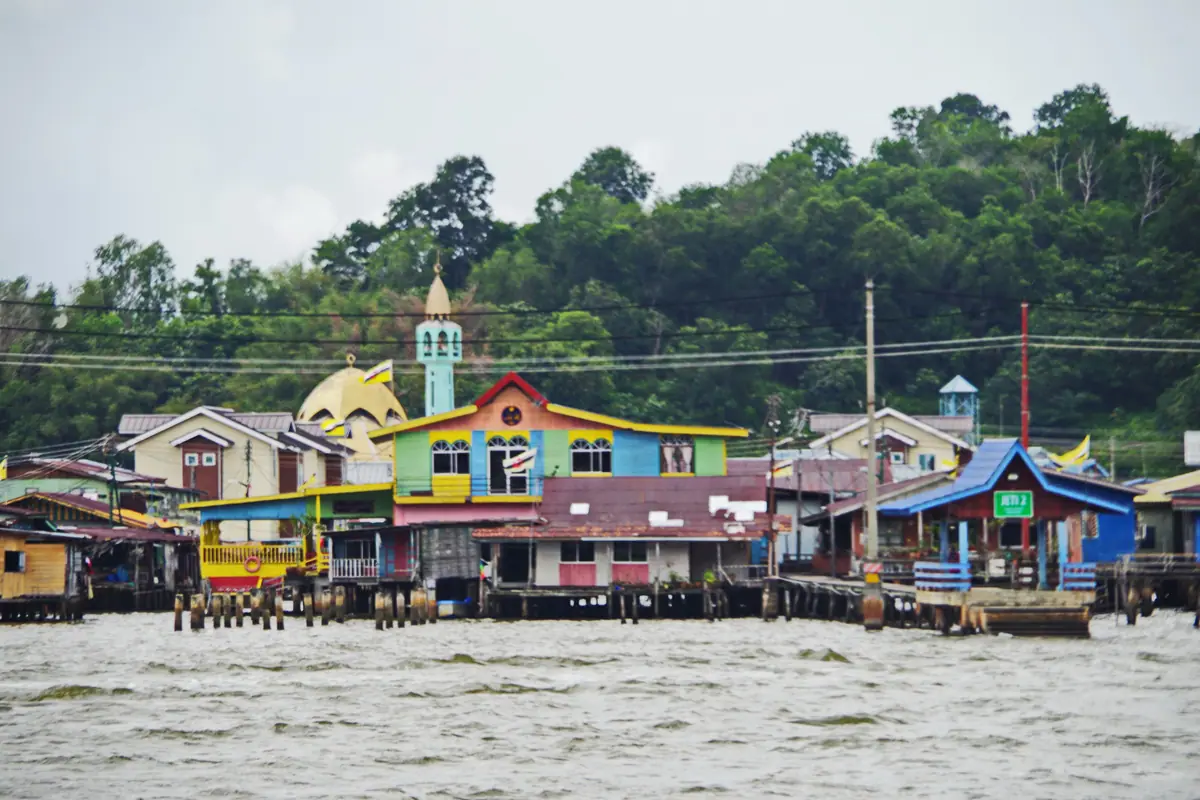
Kampong Ayer is the sight most visitors remember longest. This sprawl of stilt houses, wooden walkways, schools, clinics and mosques on the Brunei River is often called the world's largest water village, and it has been continuously inhabited for centuries — long before oil transformed the country. Water taxis buzz between the city's jetties and the village all day; a crossing takes a few minutes and costs very little, and drivers are happy to slow down for photos.
Step ashore onto the plank walkways and the pace changes completely. You'll pass laundry lines, potted orchids, cats dozing on warm boards and children cycling along corridors above the water. The Kampong Ayer Cultural and Tourism Gallery explains the settlement's history and crafts, and several families welcome visitors for tea and local cakes — an easy, low-key way to meet people. Wear shoes with grip, since the boards are slippery after rain.
Pair the village with a river cruise, ideally in the early morning or late afternoon when the light is soft and wildlife is active. The mangrove fringes upstream are one of the most reliable places in Borneo to spot proboscis monkeys crashing through the branches, along with long-tailed macaques, monitor lizards, kingfishers and white-bellied sea eagles. Back on dry land, Tamu Kianggeh, the morning market on the edge of the city, is the place to stock up on tropical fruit, rice cakes and breakfast snacks.
Ulu Temburong National Park: Rainforest Above the Clouds
The Temburong district is Brunei's wild east, a pocket of primary rainforest separated from the rest of the country by Brunei Bay. Most travellers reach it by speedboat from the capital to the town of Bangar, a ride of roughly 45 minutes, or by the long bridge that now links Temburong to the mainland. From Bangar, narrow longboats head up the Temburong River into Ulu Temburong National Park, and the further you go, the more the forest closes in overhead.
The park's signature experience is its canopy walkway: a series of aluminium towers and suspension bridges strung through the treetops, roughly 40–50 metres above the forest floor. Climb it at dawn and you may find yourself standing above a sea of mist with hornbills calling below. Guided walks explain the dipterocarp giants, pitcher plants, strangler figs and the astonishing noise of the jungle at night. Most visitors stay overnight at a lodge inside or near the park, since day trips leave little time in the forest.
For something less strenuous, Bukit Patoi Forest Recreation Park offers a marked trail to a rocky viewpoint over unbroken rainforest, doable in a half-day. Expect heat, humidity and sudden downpours in any month — pack quick-dry clothing, insect repellent, a dry bag for electronics and shoes you don't mind soaking. Leeches are present but manageable with long socks. A 4WD or arranged boat is usually needed for access, and permits are handled by whichever operator or lodge you book with.
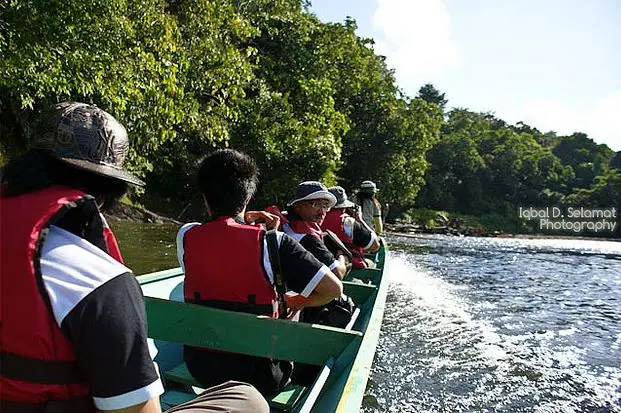
Wetlands, Lakes and Green Escapes Close to the City
You don't need to travel far for nature. Pulau Selirong Forest Recreation Park, a mangrove island in Brunei Bay reached by boat, has elevated boardwalks threading through saltwater forest where proboscis monkeys, silvered langurs, mudskippers and mangrove snakes are regularly seen. Access is by arranged boat with a permit, and the loop walk takes around two hours — bring water, as the humidity is fierce.
Inland in Tutong district, Tasek Merimbun Heritage Park protects a dark, tranquil lake ringed by forest and a small Dusun village, with a suspension bridge, picnic areas and short trails. It's about an hour's drive from the capital and makes a gentle half-day out, especially in the cooler early morning. Closer still, Tasek Lama Recreational Park sits almost in the centre of Bandar Seri Begawan, with a small waterfall, jogging paths and resident macaques — a favourite of locals at sunrise and sunset.
If you want sand and sea, Muara Beach near the port is the capital's go-to spot for weekend picnics and grills, with shallow water and long views across the bay. Berakas Forest Reserve, on the coast road, protects rare heath forest and has easy walking trails that stay relatively dry underfoot. All of these are best visited between morning and mid-afternoon, before the afternoon build-up of cloud turns into rain.
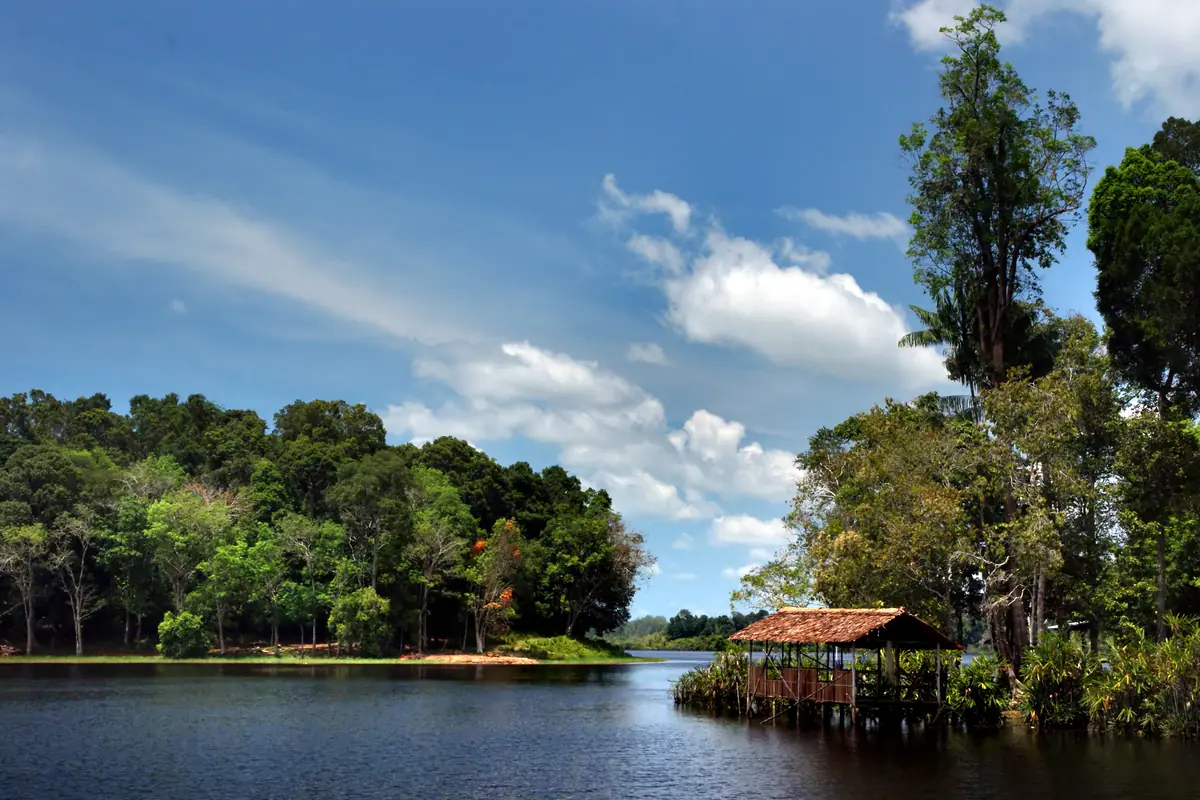
Oil-Town Heritage and the Belait Coast
Brunei's modern wealth began in the western Belait district, and a drive there is a lesson in how oil shaped the country. In Seria, the Billionth Barrel Monument commemorates the astonishing output of the local oilfield, its arches framing a landscape still dotted with nodding pump jacks. The town's discovery centre explains the geology and technology of the industry in a hands-on way, and it's a genuinely interesting stop for families and curious travellers alike.
The Belait coastline also holds some of Brunei's least-visited beaches, backed by casuarina trees and quiet Malay kampongs. Further east in Tutong, Pantai Seri Kenangan is the classic local beach — a narrow spit of sand with the South China Sea on one side and a river mouth on the other, busy with families and food stalls at weekends.
On the way back toward the capital, Jerudong Park is a Brunei institution: an amusement park with free entry to the grounds, evening fountain shows and lights, and rides paid for individually. It's a relaxed, very local night out. Allow a full day if you're driving to Seria and back from Bandar Seri Begawan — the return trip alone takes around two hours each way on the coastal highway.
Markets, Local Food and the Rhythm of a Visit
Brunei's food scene is small but satisfying, and much of it happens after dark at the Gadong Night Market. Dozens of stalls fire up in the late afternoon, turning out satay skewers, grilled fish, fried noodles, nasi katok — rice with fried chicken and sambal, the country's beloved cheap meal — plus an extraordinary array of kuih, the colourful steamed and fried cakes made with coconut, pandan and palm sugar. Come hungry, bring small notes, and eat at the shared tables in the middle.
The one dish every visitor should try is ambuyat, a sticky sago starch with almost no flavour of its own, twirled onto a bamboo fork and dipped into cacah, a tangy, sour-savoury sauce. It's eaten across the country, but the water-village eateries serve it with the best view. Fresh tropical fruit is everywhere, and durian season brings roadside stalls and passionate opinions.
Timing matters in Brunei. The driest, most pleasant months generally run from January to May, with February to April the sweet spot for rainforest walks and river trips; November to January brings the northeast monsoon and heavier rain. During Ramadan, daytime dining is restricted and many restaurants close, though evening food markets become livelier than ever. On Fridays, most shops and attractions shut for roughly two hours around midday prayers, so plan museum and mosque visits for other days or later in the afternoon. A comfortable visit takes three to four days: one or two for the capital and Kampong Ayer, one for a river or mangrove trip, and one or two for Temburong or the Belait coast.
Frequently asked questions
How many days do you need in Brunei?
Three to four days is ideal. Give one to two days to Bandar Seri Begawan for the Omar Ali Saifuddien Mosque, the Royal Regalia Museum and Kampong Ayer, plus a river cruise for proboscis monkeys. Then dedicate a day or an overnight stay to Ulu Temburong National Park, or a day trip to Seria and the Belait coast. Five days lets you add Tasek Merimbun and the Tutong beaches without rushing.
When is the best time to visit Brunei?
January to May is generally the drier stretch, with February to April offering the best conditions for rainforest hikes, canopy walkways and boat trips. The northeast monsoon from November to January brings frequent heavy showers, though rain falls year-round in this equatorial climate — usually as short afternoon downpours. Expect high humidity and temperatures in the low 30s Celsius whenever you come.
How do you get to Ulu Temburong National Park?
Most visitors take a speedboat from Bandar Seri Begawan to Bangar, which takes about 45 minutes, or drive across the long bridge connecting Temburong to the mainland. From Bangar, longboats continue up the Temburong River into the park. Access is usually arranged through a lodge or tour operator who handles permits and boat transfers, and staying overnight gives you the dawn canopy walkway experience.
Is alcohol available in Brunei?
Alcohol is not sold openly in Brunei. Non-Muslim visitors may bring in a limited personal allowance, which must be declared at customs on arrival. In practice most travellers simply enjoy the local coffee, fresh juices and teh tarik, and nobody expects otherwise. Public drunkenness is taken seriously, so keep any consumption private and discreet.
What should I wear and how should I behave at mosques and in villages?
Dress modestly, with shoulders and knees covered, and remove shoes before entering mosques, homes and many galleries. Robes are lent free at mosque entrances for visitors whose clothing isn't suitable. Non-Muslims can enter mosques outside prayer times, but avoid Friday midday prayers, when most sites close for around two hours. In Kampong Ayer, ask before photographing people or stepping onto private walkways.
Plan it — experiences in Brunei
Live search, booked directly with trusted providers.
Sort the rest of your trip
Everything for Brunei, in one place
Stay in Brunei
Hotels, guesthouses and apartments — compared in one search.
Search hotels
Transfer in Brunei
Private driver waiting on arrival — no queues, no surprises.
Book a transfer
Stay online in Brunei
Travel eSIM — data the moment you land, no roaming bills.
Get an eSIM