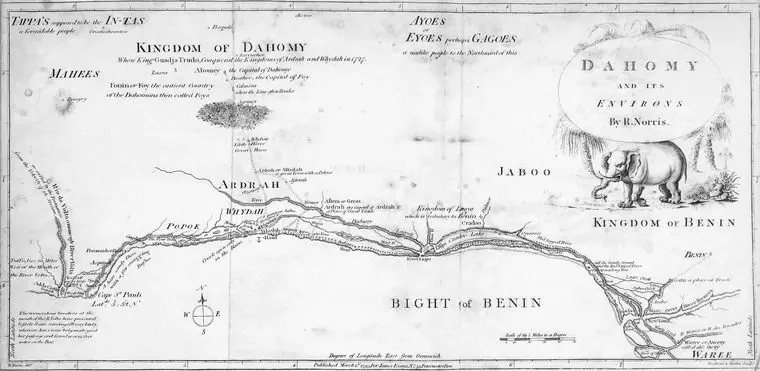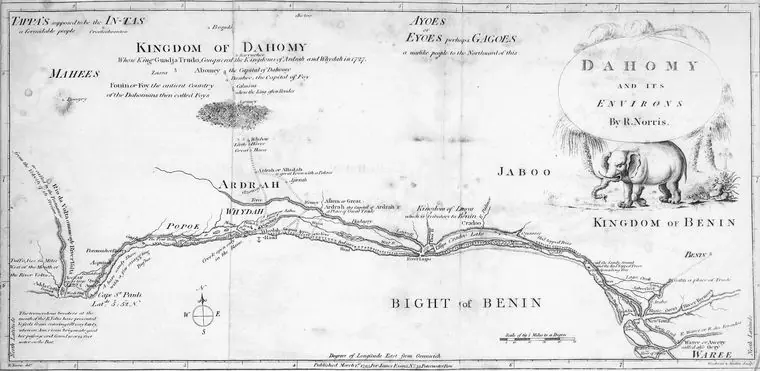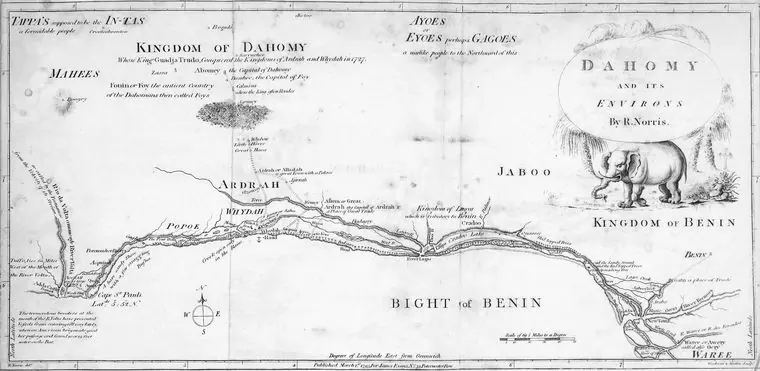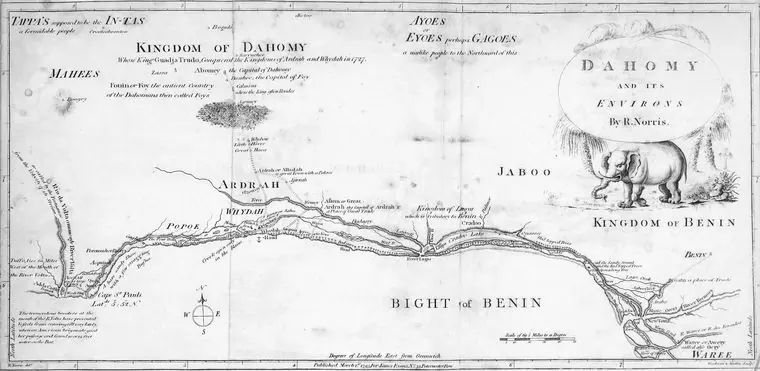
Benin packs an extraordinary amount of history into a narrow strip of West Africa, where the Atlantic crashes against a coast once known as the Slave Coast and stilt houses rise from a lagoon like a mirage. From the royal palaces of the old Dahomey kingdom to a national park where elephants still roam the savannah, this is a country that rewards travellers who go slowly and look closely.
Ouidah: Walking the Route des Esclaves to the Door of No Return
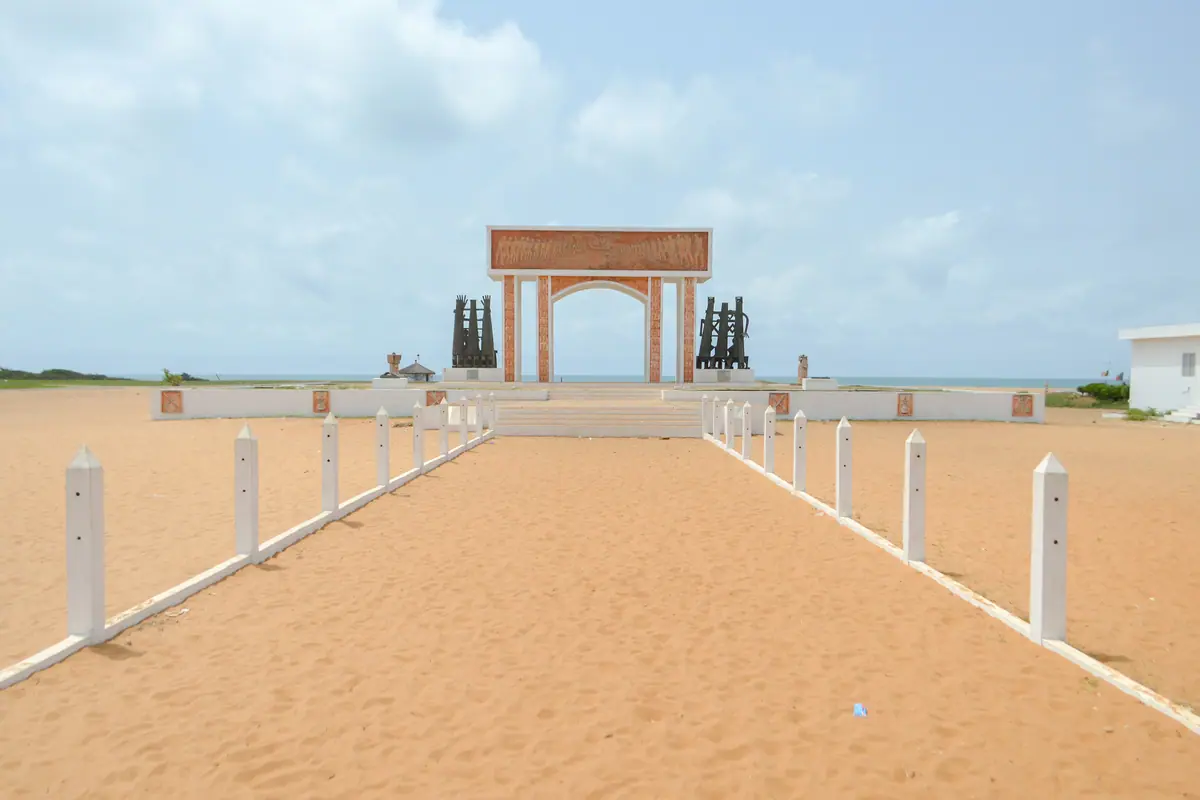
Ouidah is the emotional heart of any trip to Benin. A sandy, low-slung town about 40 km west of Cotonou, it was one of the busiest ports in the transatlantic slave trade, and the 3.5 km Route des Esclaves commemorates that history with quiet power. You follow the same path captives were forced to walk, past the Auction Square, the Tree of Forgetfulness and the Zomachi memorial, until the road ends at the Door of No Return — a simple arch on the beach facing the ocean. Standing there at dusk, with fishing pirogues bobbing offshore, is one of the most affecting experiences in West Africa.
The town itself is layered with Vodun heritage, which is a living religion here rather than a folkloric curiosity. The Temple of Pythons houses dozens of sacred snakes that visitors may handle with a guide, while the nearby Sacred Forest of Kpassè honours the town's founding deity. Also worth an hour is the Basilica of the Immaculate Conception, an imposing Afro-Brazilian church built by returnees from the Americas, and the small museum dedicated to the slave trade just off the main square.
If your dates are flexible, aim for early January, when Ouidah hosts its annual Vodun festival. For two days the town fills with drumming, spirit possession ceremonies, processions to the beach and visitors from across the diaspora — a genuinely joyful counterpoint to the solemn history along the route.
Ganvié: Paddling Through Africa's Largest Stilt Village
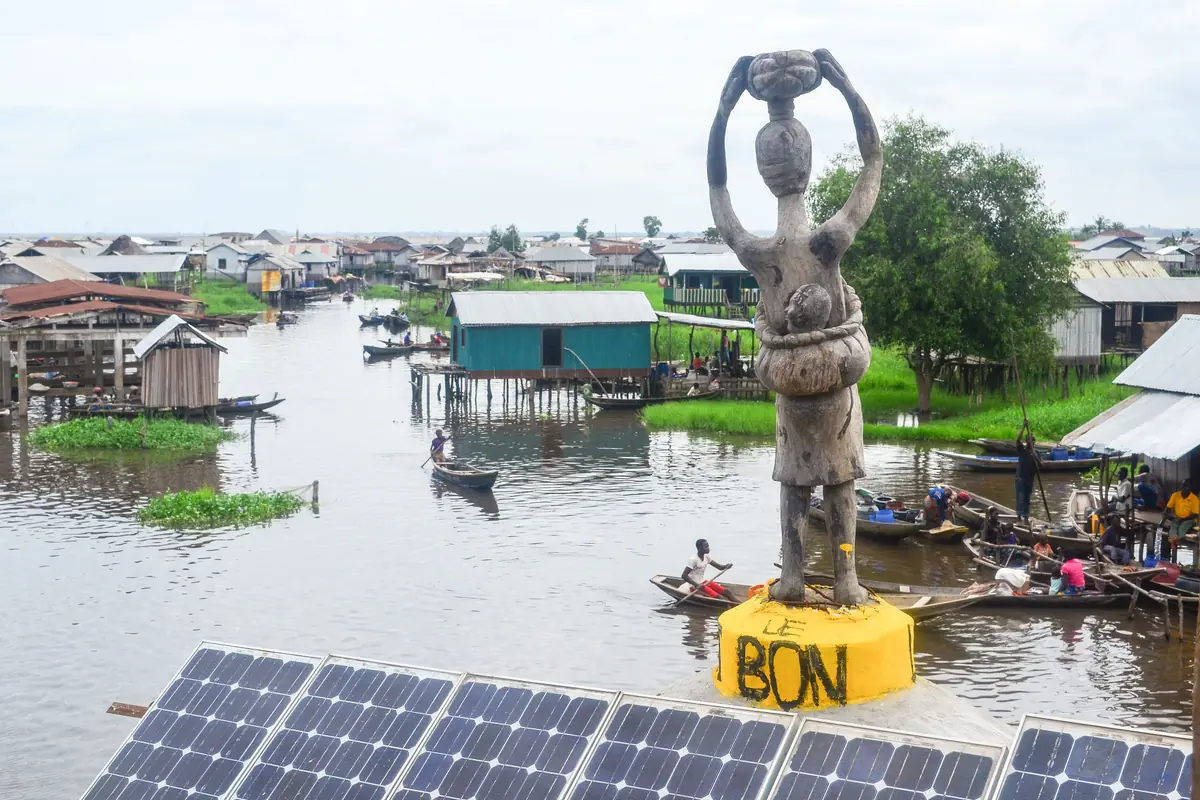
About 25 km from Cotonou, on the northern edge of Lake Nokoué, sits Ganvié — a complete town of roughly 30,000 people built entirely on stilts above the water. It was founded in the 17th century by the Tofinu people, who fled slave raiders and found refuge in the lagoon where their enemies' horses could not follow. Today it is one of Benin's undeniable must-see sights.
You reach it by motorised pirogue from the village of Abomey-Calavi, a crossing of around 30 to 45 minutes through water hyacinth and fishing traps. Once inside, the scale is startling: bamboo and wooden houses on poles, a floating market where women paddle dugouts piled with mangoes and cassava, a school, a mosque, and a bar-restaurant on stilts where you can eat grilled tilapia hauled straight from the lake. Go early in the morning when the market is busiest and the light is soft, and take a local guide who can explain the fishing techniques you'll see — the underwater brushwood enclosures called acadja are ingenious.
Bring small change for tips and for the crafts sold from canoes, and remember that this is a residential community, not a theme park: ask before photographing people, especially inside the floating market.
Abomey: The Royal Palaces of the Kingdom of Dahomey
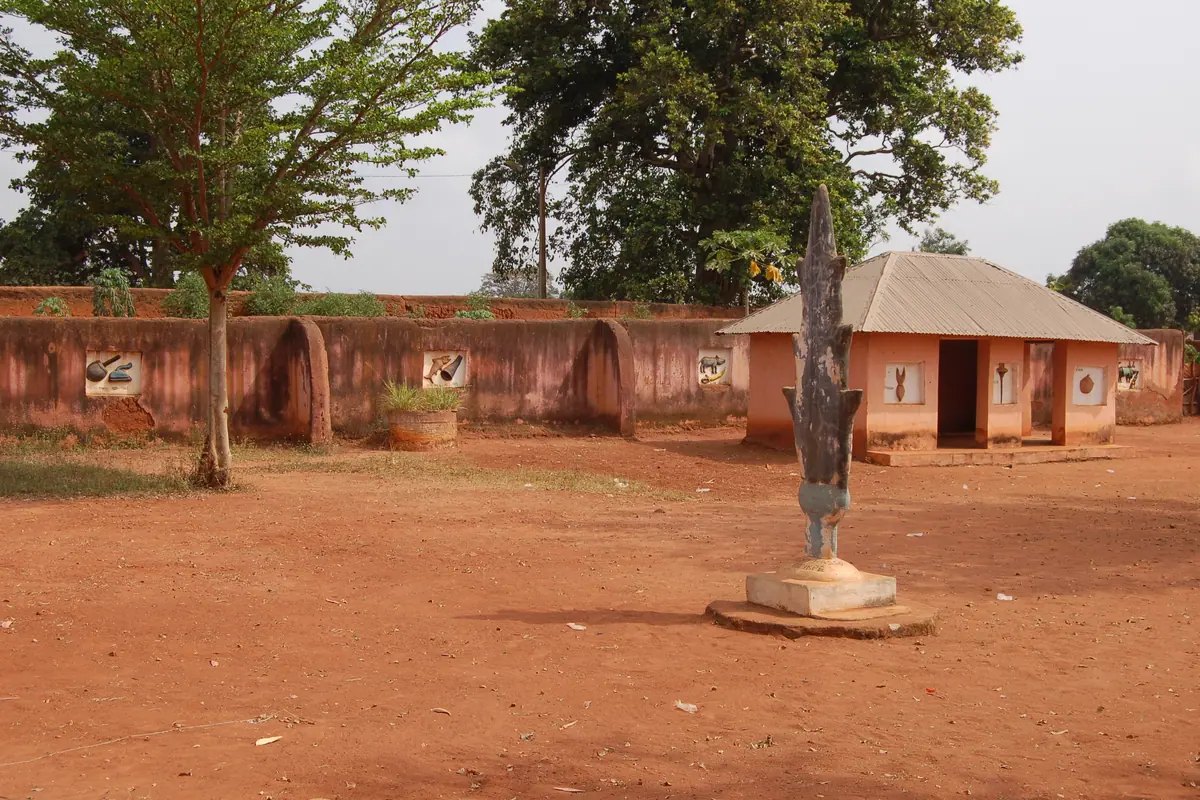
Some 130 km north of Cotonou lies Abomey, capital of the powerful Kingdom of Dahomey and home to the Royal Palaces — a UNESCO World Heritage Site and the single most important historical monument in Benin. Twelve kings ruled from here between the 17th and 19th centuries, each building a palace within the same walled compound, and the site still holds their tombs, courtyards and throne rooms.
The on-site historical museum is superb, with a modest but powerful collection: royal thrones mounted on human skulls, appliquéd banners, brass figures and the famous bas-reliefs that once decorated the palace walls. Guides here are knowledgeable and can explain the kingdom's fabled Amazon warriors — the all-female Agojie regiment — and the annual customs ceremony that drew tribute from across the region. Allow two to three hours, and pair the visit with the town's craft workshops where appliqué cloth is still made by hand.
Abomey makes an easy overnight stop on the way north to the Atakora mountains, and it is a convenient base for exploring the surrounding Zou department. The dry months from November to March are the most comfortable for walking between the palace courtyards and the town's old quarters.
Cotonou: Dantokpa Market, Cathedral and Atlantic Beaches
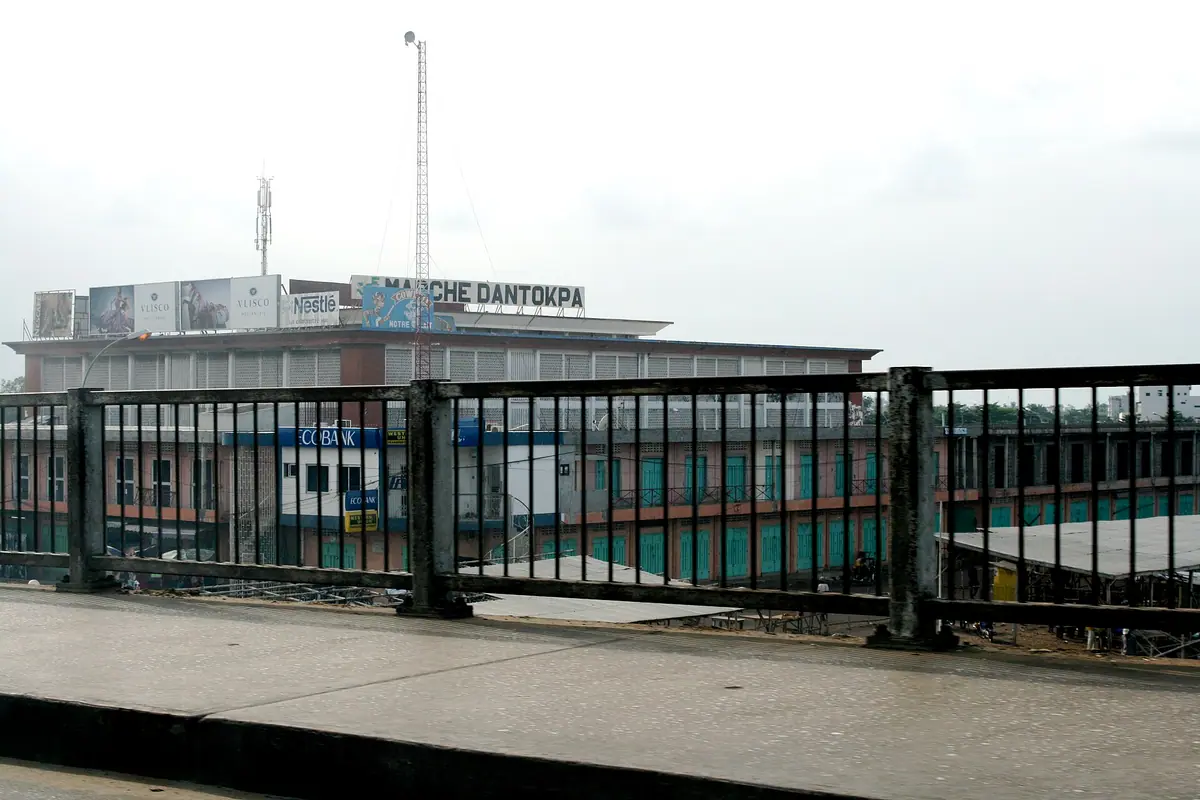
Cotonou is Benin's bustling economic capital, and while it is short on monuments it is long on energy. The Dantokpa Market is the largest open-air market in West Africa — a sprawling, sensory overload of fabrics, spices, used clothing, medicine stalls and the famous fetish section where you can buy dried chameleons, carved figures and Vodun supplies. Go with a guide the first time and keep your bag in front of you.
Architecturally, the city's landmark is the Cathedral of Notre-Dame de Miséricorde, a striking modern structure with a swooping concrete canopy that looks like a ship's hull sheltering the congregation. Nearby are the Artisanal Centre for crafts and the old Portuguese fort on the waterfront, which now houses a museum. In the evening, the Corniche and the beaches of Fidjrossè draw crowds for grilled fish, cold drinks and Atlantic sunsets.
Cotonou works best as a base rather than a destination in itself: it has the country's main airport, the widest choice of hotels and restaurants, and excellent roads radiating toward Ouidah, Porto-Novo and Ganvié. Set aside one full day for its markets and museums before heading out.
Porto-Novo: Colonial Grandeur and the Musée da Silva
Benin's official capital, Porto-Novo, is a quieter, more graceful city than Cotonou, with a well-preserved colonial quarter. Its highlight is the Musée da Silva, an Afro-Brazilian merchant's house filled with family portraits, period furniture, lace and photographs that trace the fascinating story of returnees from Brazil who shaped this region's architecture and cuisine. It remains one of the most intimate museums in the country.
Elsewhere in town, the Grande Mosquée with its red-and-white facade, the ethnographical museum named after Alexandre Sènou Adandé, and the Grand Marché de Porto-Novo are all worth a leisurely half-day. The Etienne Dinet garden and the Jardin de la Marina offer shade and a view over the lagoon.
Porto-Novo is just 30 km from Cotonou, making it an easy day trip. Combine it with the Yoruba-Nago cultural sites nearby, and consider visiting during one of the town's festivals, when traditional masquerades and drumming fill the streets.
Pendjari National Park and the Atakora Highlands
In the far north, the Pendjari National Park is one of the last great wildlife strongholds of West Africa, forming part of a vast transboundary reserve with neighbouring Burkina Faso. It shelters elephants, lions, buffalo, hippos, baboons and more than 300 bird species. The dry season, roughly December to April, is the time to visit: vegetation thins and animals gather at waterholes, making sightings far more likely. Game drives depart from the park's lodges at dawn and dusk, and the landscape — golden savannah studded with baobabs and the dramatic Pendjari escarpment — is worth the journey alone.
South of there, the Atakora mountains near Natitingou are Benin's most beautiful region. The small town is the gateway to the Tanougou Falls, a wide cascade with a swimmable pool, and to the Tata Somba houses around Boukoumbé and Koussoukoingou — fortified two-storey mud-and-thatch dwellings that are UNESCO-listed and still lived in by Somba families. Hiring a local guide lets you visit a household and understand how these extraordinary structures were designed for defence.
Distances are long — Cotonou to Natitingou is about 600 km, and the road onward to Pendjari adds several hours — so plan at least three or four days for the north, ideally with a 4x4 and a driver. Nights are cool up here, so pack a light fleece even in the dry season.
Frequently asked questions
When is the best time to visit Benin?
The dry season from November to March is the most comfortable, with lower humidity and easier travel. December to April is best for wildlife in Pendjari National Park, and early January brings the Vodun festival in Ouidah. The rainy season runs roughly April to July in the south and can make northern tracks difficult.
How many days do you need in Benin?
Seven to ten days lets you cover the south properly — Cotonou, Ouidah, Ganvié, Porto-Novo and Abomey — with a couple of nights in the north. If you want Pendjari and the Atakora highlands as well, allow two weeks.
Is Benin safe for travellers?
Benin is generally considered one of the more stable and welcoming countries in the region. Petty theft happens in crowded markets, so keep valuables secure, avoid travelling on rural roads after dark, and check the current situation for the far northern border areas, where conditions can change.
What should I pack and prepare before travelling to Benin?
A yellow fever vaccination certificate is required for entry. Malaria prophylaxis is strongly advised, along with routine vaccinations. Bring a French phrasebook or app — French is the official language — plus cash in West African CFA francs, since card payments are limited outside major hotels.
What is Vodun and can visitors attend ceremonies?
Vodun is an official religion in Benin and is practised by a large share of the population, with Ouidah as its spiritual centre. Visitors can respectfully attend ceremonies and the January festival through local guides. Always ask permission before taking photographs, and dress and behave modestly.
Plan it — experiences in Benin
Live search, booked directly with trusted providers.