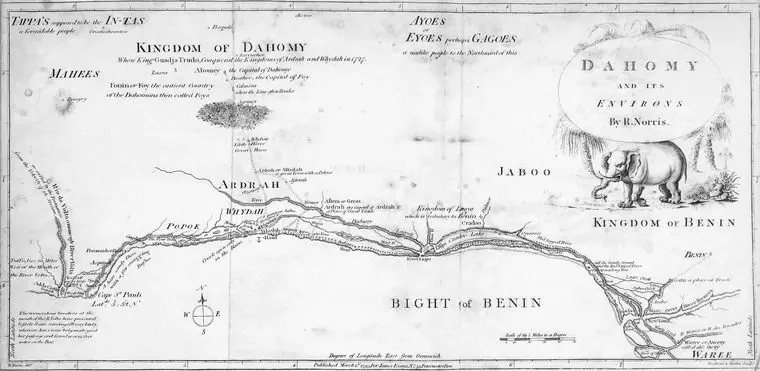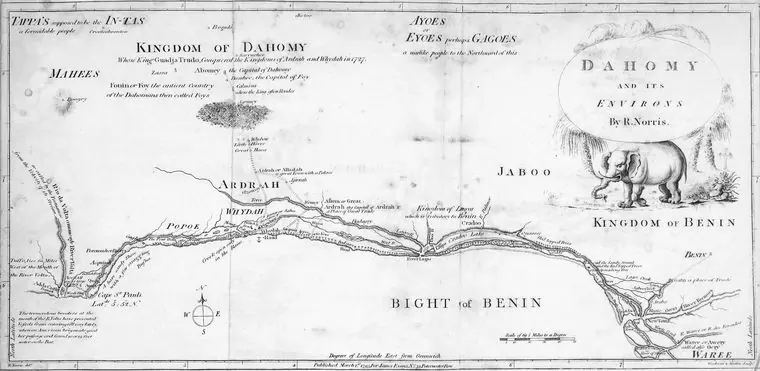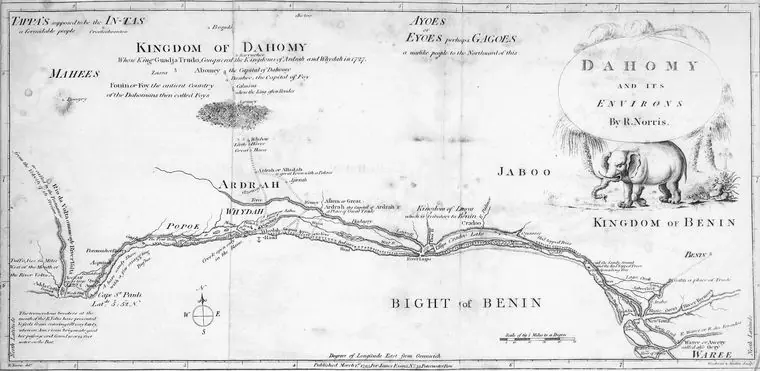
Benin packs an entire continent's worth of drama into a country roughly the size of England: a lagoon city built on stilts, a slave route that ends at an arch on the sand, the throne rooms of the Dahomey kings and elephants moving through a savanna park that still feels genuinely wild. This is the birthplace of Vodun, the homeland of the Agojie women warriors, and one of the most rewarding, least crowded corners of West Africa.
Cotonou: Motorbike Swarms, Fetish Markets and the Country's Best Seafood
Cotonou is not the official capital, but it is the engine of the country: the largest city, the main port, and the place where almost every Benin itinerary begins and ends. Its streets are ruled by zémidjans, the yellow-shirted motorbike taxis whose name means "take me quickly" in Fon. Always agree the fare before you climb on, and expect the ride itself to be a highlight in a city that never quite stops.
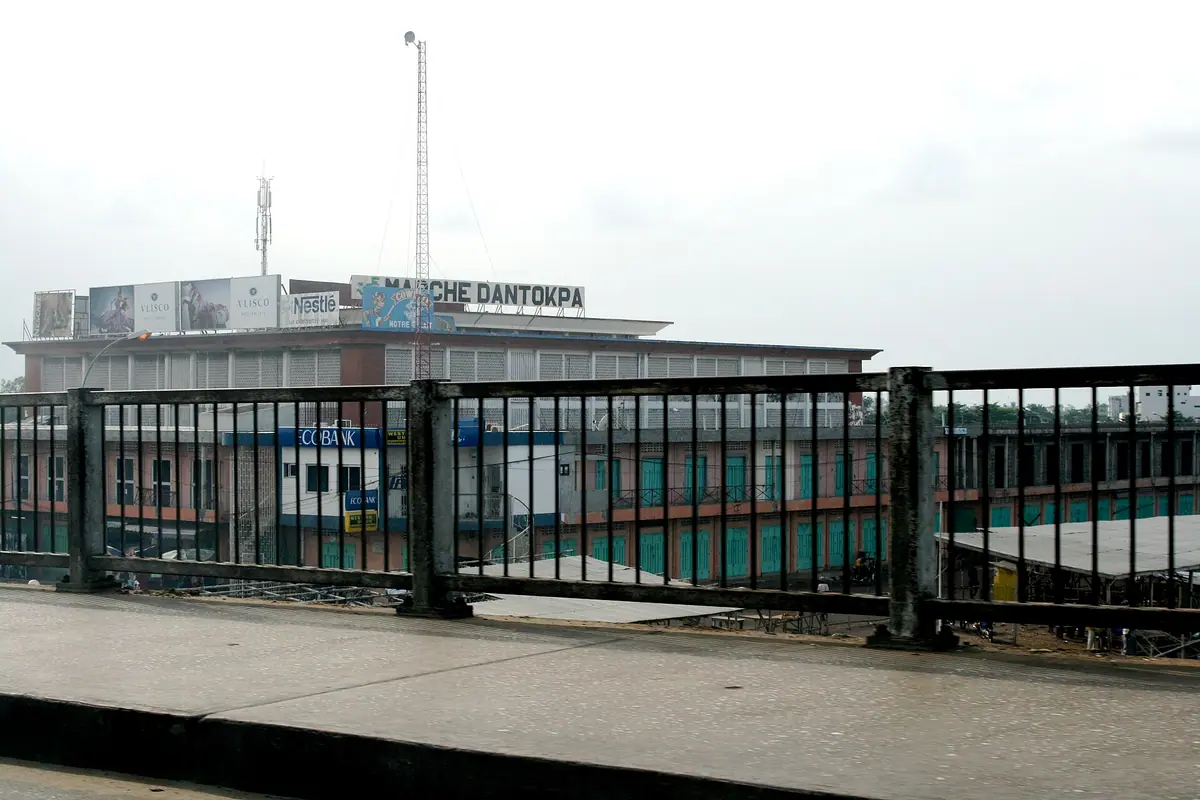
The single unmissable stop is Dantokpa Market, a sprawling 20-hectare bazaar pressed against the lagoon edge and one of the biggest trading places in West Africa. Come before 9am when the produce, cloth and hardware sections are at full roar, then walk a few minutes to the fetish market at Akodésséwa, where stalls hang with dried animal parts, iron charms, bottles and beads sold for Vodun rituals. This is a working spiritual space rather than a show: ask permission before photographing, keep your voice low, and accept that a small courtesy payment is often expected.
Afterwards, decompress on the Boulevard de la Marina, look up at the red-and-white striped bulk of Notre-Dame de Miséricorde cathedral, and browse the artisan stalls nearby for appliqué cloth and woodcarving. Finish at Fidjrossè beach, where grilled fish, cold beer and Atlantic sunsets draw half the city on weekend evenings. A half-day is enough to get the measure of Cotonou; two nights makes it a comfortable base.
Ouidah: Walking the Route of the Slaves to the Door of No Return
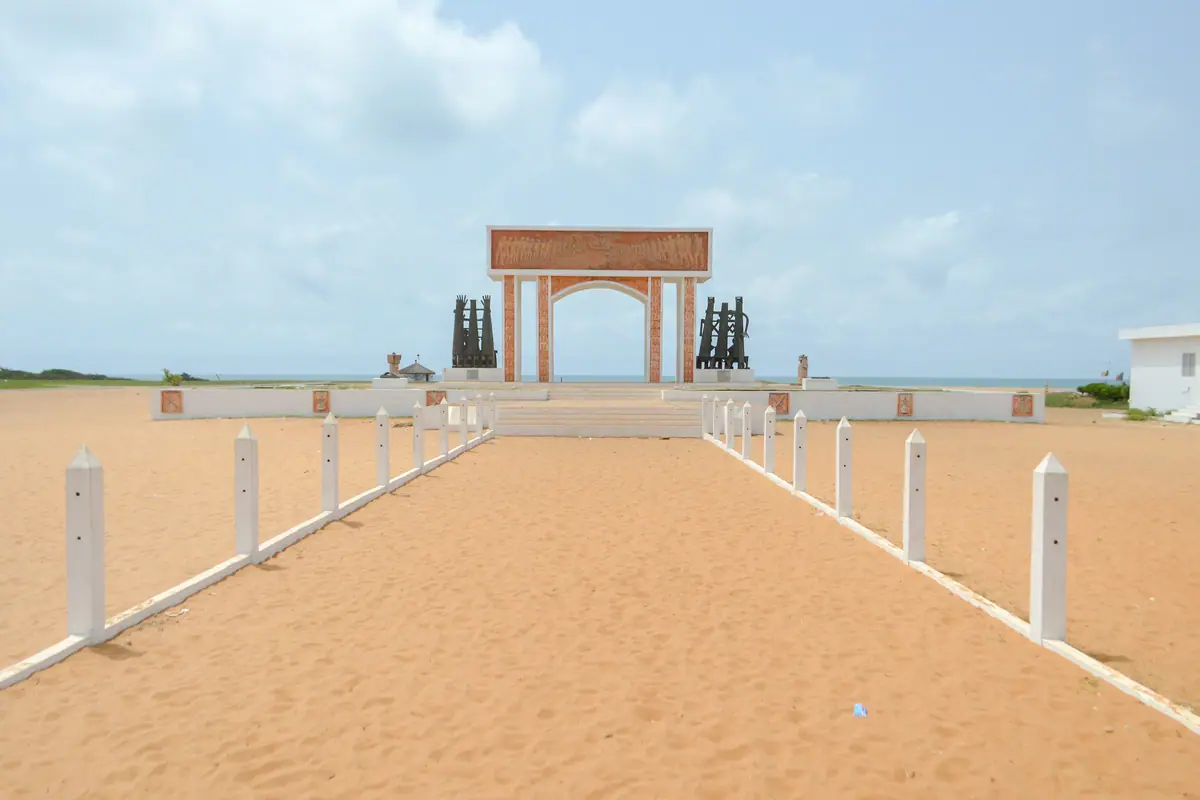
Forty kilometres west of Cotonou, Ouidah is where Benin's hardest history and its most vivid living culture sit side by side. The Route des Esclaves runs four kilometres in a straight line from the old town to the sea, past the square where captives were auctioned and the Tree of Forgetfulness, where men were made to circle so they would forget their homelands. It ends at the Door of No Return, a monumental arch on the beach above a mass grave and memorial wall. Allow half a day, more if you want to sit with it.
Back in town, the Python Temple keeps dozens of serpents in a courtyard shrine, and the Sacred Forest of Kpassè shelters Vodun statues, a small museum in an old Portuguese fort and the tangled roots of the region's spiritual traditions. The Basilica of the Immaculate Conception, built with the money and ambition of Afro-Brazilian returnees, gives the streets their pastel and wrought-iron flavour.
If your dates are flexible, plan around 10 January, when Benin celebrates national Vodun Day. Ouidah fills with drumming, Egungun masquerades and pilgrims arriving from Cotonou and beyond; accommodation sells out weeks ahead, so book early and expect prices to rise.
Ganvié and the Lagoons: A City That Floats
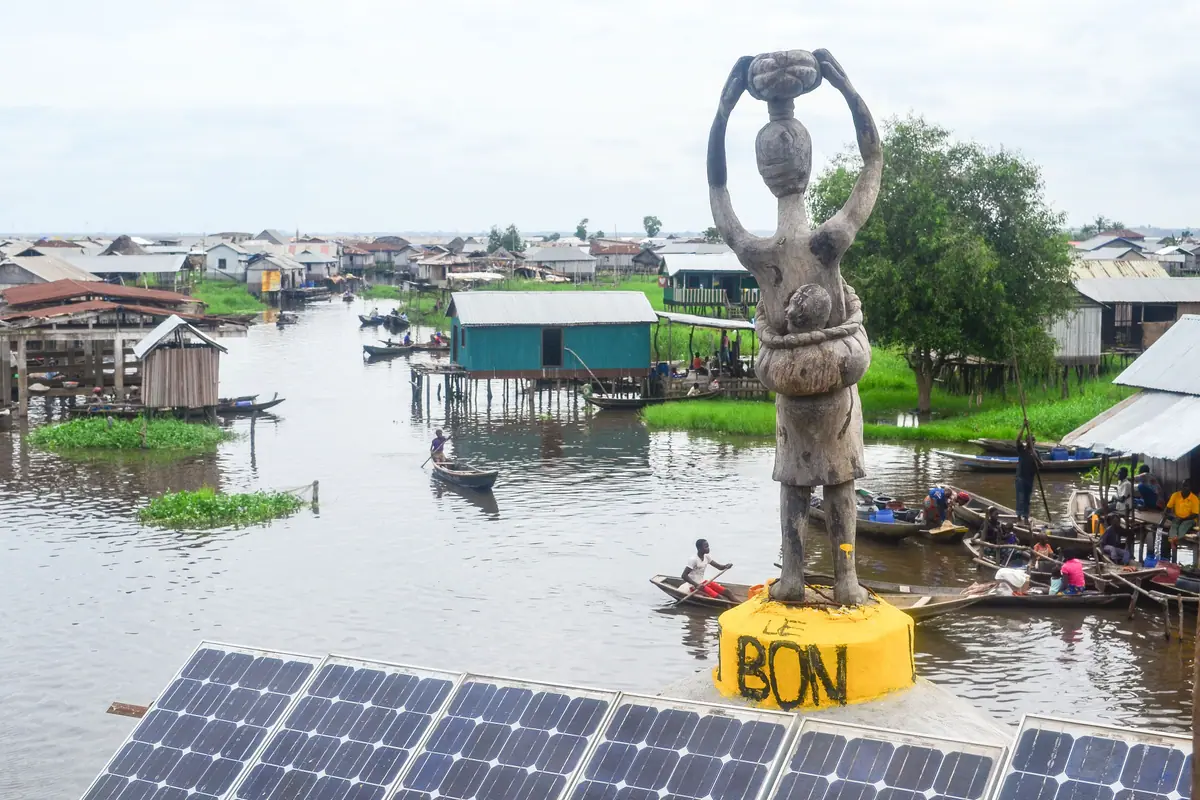
Ganvié is the image most travellers carry home from Benin: roughly 30,000 people living in bamboo-and-thatch houses raised on stilts above Lake Nokoué, travelling by pirogue the way other towns use bicycles. It was founded centuries ago by Tofinu families fleeing slave raiders, who judged the open water a safe refuge. You reach it by motorised canoe from Abomey-Calavi in around 30 to 45 minutes, or on a longer lagoon crossing from Cotonou.
Go early. The floating market is busiest in the first hours of daylight, when women paddle produce between the houses and fishermen check their brushwood fish traps. Agree the route and duration with your boatman in advance — two to four hours is typical — and ask to stop at one of the over-water cafés for a drink or a plate of fish, which keeps your money inside the community. Skip the urge to hand out sweets or pens to children, and ask before photographing anyone at home.
Lake Ahémé, further west around Possotomè, is the quieter counterpoint: dugout canoes, reed beds and a slower pace, easily combined with a night or two on the coastal strip towards Grand-Popo.
Abomey: Palaces, Appliqué and the Kingdom of Dahomey
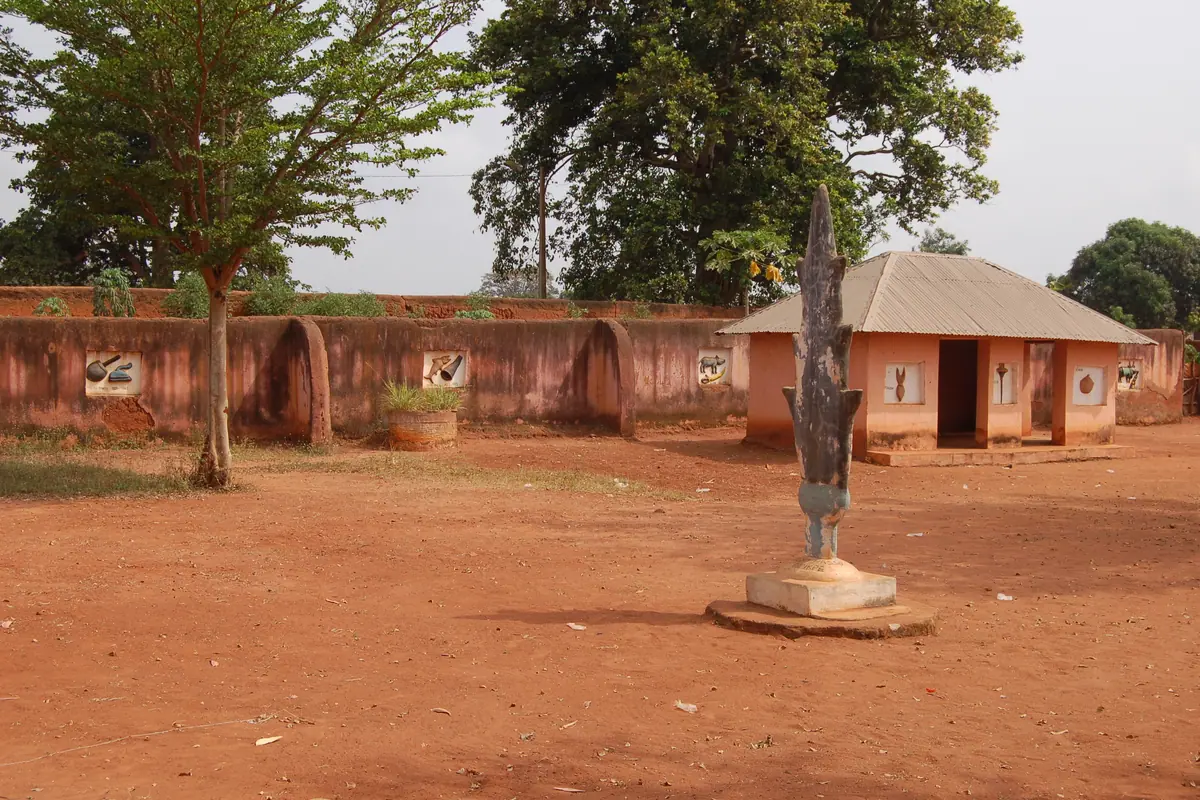
The royal palaces of Abomey, about 145 kilometres north of Cotonou and a two-and-a-half to three-hour drive, are the country's essential historic site and a World Heritage-listed one. Twelve kings of Dahomey ruled from this complex of earth-walled courtyards, and what survives has been restored into a historical museum: bas-relief panels recording each king's symbols, thrones, war banners, appliqué hangings and the tomb of King Ghézo. A guide will walk you through in roughly ninety minutes; the clay walls alone are worth the trip.
This is also the setting for the Agojie, the all-female regiment known to outsiders as the Amazons of Dahomey, and for King Béhanzin's stand against French colonial troops in the 1890s. The palace courtyards, the royal tombs and the ceremonial drums all carry that story.
Before leaving, head into the town's appliqué workshops, where artisans stitch the cloth banners and quilts that Abomey is famous for — they are among the best-value souvenirs in Benin. On the road south, break the journey at Dassa-Zoumé, whose granite hills rise abruptly out of the plain and draw pilgrims to a hillside shrine.
The Atacora Highlands: Tata Somba Houses and Pendjari Wildlife
Northern Benin is a different country from the humid coast. The paved highway runs from Cotonou to Natitingou in eight to ten hours, though short domestic flights serve the north and save a day. Make Natitingou your base: within half an hour are the Tata Somba, fortified two-storey earthen houses built by the Betammaribè people, with granaries perched on their flat roofs and tiny doorways reached by ladders. The cluster at Koussoukoingou is the classic example — go with a local guide and, if you can, on market day, when the surrounding villages empty into town.
Pendjari National Park, spread across roughly 4,800 square kilometres along the border with Burkina Faso, is the region's flagship reserve and the most accessible of the big West African parks. Elephants, lions, buffalo, hippos and several kinds of antelope move through the woodland and savanna, alongside hundreds of bird species. The dry season from December to April, and especially the shoulder months before the rains, is the time to go: vegetation thins, waterholes concentrate the animals and early-morning drives pay off. Expect guided 4x4 excursions with park rangers, and stay at least two nights to give yourself a real chance of sightings.
Further north-east, the vast W National Park straddles three countries and rewards travellers with far more time and planning. Note that the far north borders Burkina Faso and Niger: check current government travel advice before committing, use organised guides and vehicles, and avoid driving these roads after dark.
Porto-Novo and the Atlantic Coast: Afro-Brazilian Streets and Empty Beaches
Porto-Novo, the official capital, sits an hour east of Cotonou and makes an easy half-day trip. Its Afro-Brazilian quarter is a grid of pastel facades, shuttered windows and ornate balconies left behind by returnees from South America, centred on the Grande Mosquée with its colonial-era frontage. The ethnographic museum occupies a former royal palace, and the Honmè compound nearby tells the story of the kings who ruled this end of the coast. Weekday mornings are quietest, and the town's market is lively without being overwhelming.
For sand and lagoons, head west along the Route des Pêches, a coastal road threading through fishing villages, coconut groves and smoky fish-drying racks. It leads to Grand-Popo, near the mouth of the Mono River, where the Atlantic runs parallel to a chain of lagoons separated only by a strip of land. The beaches are long, empty and excellent for walking; canoe trips into the mangroves are the best way to see birdlife. It is about two hours from Cotonou and busiest at weekends.
A sensible shape for a first visit: five to six days in the south for Cotonou, Ouidah, Ganvié, Abomey and the coast, then four to five days in the north for the Atacora and Pendjari. Travel by road is slow but scenic, and every leg is worth lingering over.
Frequently asked questions
When is the best time to visit Benin?
The dry season from November to March is the most comfortable, with cooler evenings and little rain; December to February also brings harmattan dust that hazes the sky. The south has two wet spells (roughly April to July and September to October), while the north has one long rainy season. Wildlife viewing in Pendjari is best from December through April and into May.
How many days do I need in Benin?
Seven to ten days lets you link the south and north properly: five to six days for Cotonou, Ouidah, Ganvié, Abomey and the Grand-Popo coast, plus four to five for the Atacora and Pendjari. If you only have a long weekend, stay south — Ouidah is about an hour from Cotonou and Abomey around three.
Do I need a visa and vaccinations for Benin?
Most visitors apply online for an e-visa before travelling, and a yellow fever vaccination certificate is required on arrival. Malaria is present year-round, so talk to a travel clinic about prophylaxis. French is the official language, with Fon widely spoken in the south and Bariba in the north; English is common in hotels but not on the street.
Is Benin safe for travellers?
Benin is generally calm and hospitable. The main risks are petty theft in crowded markets, muggings after dark in cities, and road accidents involving motorbike taxis, so use helmets and agreed fares. The far northern border zones near Burkina Faso and Niger require extra caution — check current government travel advice, travel with guides and avoid night driving.
What should I pack and know before visiting Vodun sites?
Pack light long sleeves and trousers, a hat, a headscarf for mosques, insect repellent and cash in local francs, since ATMs are scarce outside Cotonou. At temples, shrines and ceremonies, dress modestly, ask before taking photographs, and never touch ritual objects or step over offerings. Tipping guides and boatmen is customary and appreciated.
Plan it — experiences in Benin
Live search, booked directly with trusted providers.