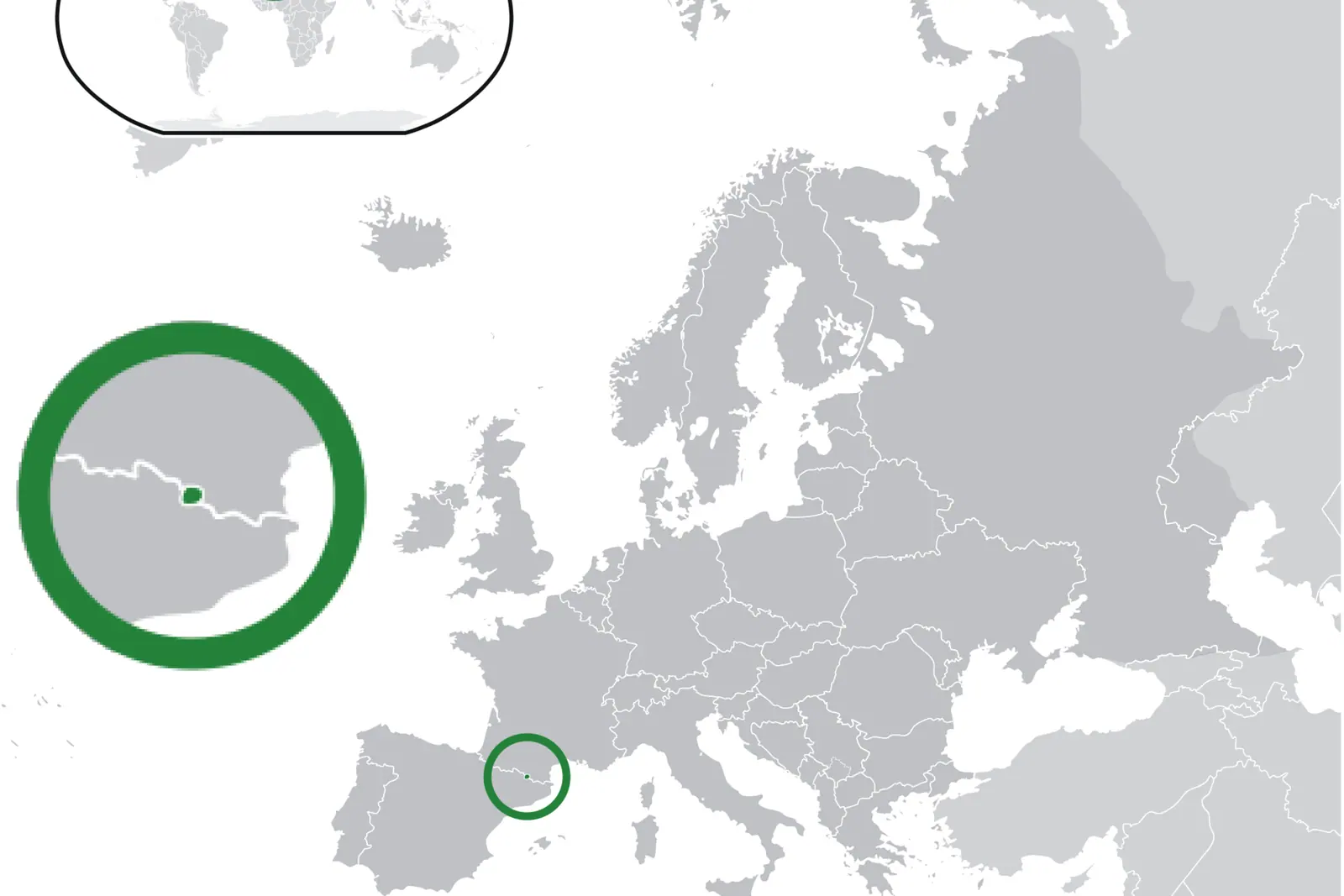
Andorra packs an entire alpine world into a pocket-sized country wedged between France and Spain, where ski lifts climb out of shopping streets and 12th-century churches sit a few bends away from thermal spas. Its capital is the highest in Europe, its valleys are UNESCO-listed, and almost everything worth seeing is within an hour's drive of everything else.
Andorra la Vella and Escaldes-Engordany: Europe's Highest Capital
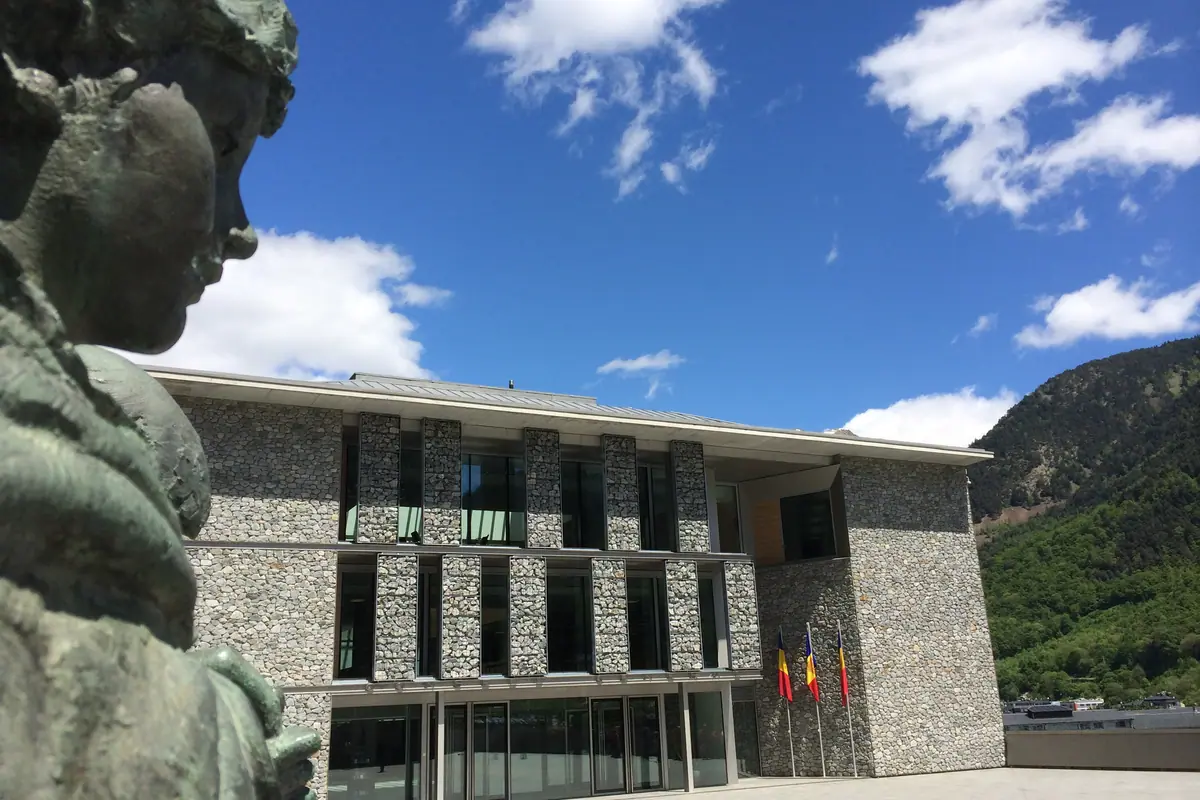
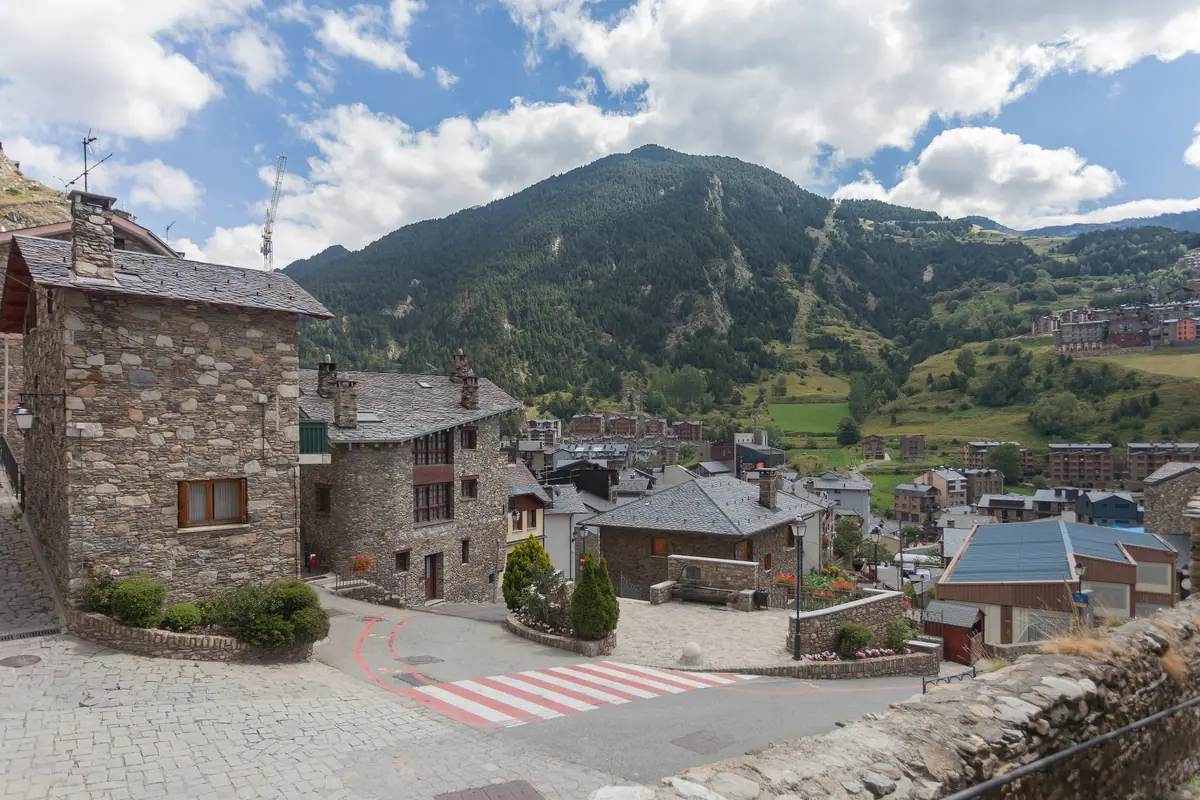
Andorra la Vella sits at 1,023 metres, making it the highest capital city in Europe, and it feels it: the town is squeezed into a narrow valley with apartment blocks stacked up the hillsides and pine forest pressing in on every side. Start at Plaça del Poble, the terrace on the roof of the government building, for a quick orientation over the rooftops, then walk five minutes to Casa de la Vall, a fortified stone house from 1580 that served as the seat of the country's parliament and still holds one of the oldest parliamentary rooms in Europe. From there, Avinguda Meritxell and Avinguda Carlemany form the retail spine of the country — electronics, perfume, sportswear and tobacco at low-tax prices — but the real pleasure is ducking off them into the lanes of the old quarter around the church of Sant Esteve.
For a free, flat and unexpectedly lovely walk, follow the Rec del Solà and Rec de l'Obac, two irrigation channels cut into the mountainside above town. The paths run level along stone terraces, past vegetable plots and tiny kitchen gardens, with the whole valley laid out below; an hour covers a good stretch and the evening light here is superb. Next door in Escaldes-Engordany, the name itself means "hot springs", and Caldea — a glass-and-water thermal complex with indoor lagoons, steam rooms and outdoor pools facing the mountains — is the obvious way to end a day of driving or hiking. Nearby, the small lake of Engolasters and its Romanesque chapel of Sant Miquel sit at the top of a cable car, and the medieval Pont de la Margineda arches gracefully over the Valira river just south of the capital.
Romanesque Churches and Medieval Stone Bridges
Andorra has one of the densest concentrations of Romanesque art in the Pyrenees, and the churches are small, dark-stone and often unlocked in daylight. The finest is Sant Joan de Caselles in Canillo, an 11th- to 12th-century building with a slender square bell tower, a wooden baldaquin and fragments of fresco inside; it stands alone on a grassy terrace above the main road, exactly as it has for nine centuries. Just outside Andorra la Vella, the church of Santa Coloma is instantly recognisable for its round Lombard tower, one of the few circular bell towers in the region, and its interior holds reproductions of colourful Romanesque murals.
Further north, Sant Climent de Pal in La Massana preserves some of the most vivid 12th-century painting in the country, while Sant Martí de la Cortinada in Ordino combines Romanesque wall painting with a later baroque altarpiece and stands beside a stone bridge and a cluster of old houses. The Sanctuary of Meritxell in Canillo is the national shrine and the country's patron, a modern basilica built after a fire in 1972 alongside the original chapel, with a large plaza that hosts the annual national day celebrations on 8 September. Half the joy of these visits is simply the drive between them: the main valley roads pass through villages of slate roofs and wrought-iron balconies, and the turn-offs climb into hamlets where the only sounds are cowbells and the river.
Grandvalira and Vallnord: Skiing Across the Pyrenean Slopes
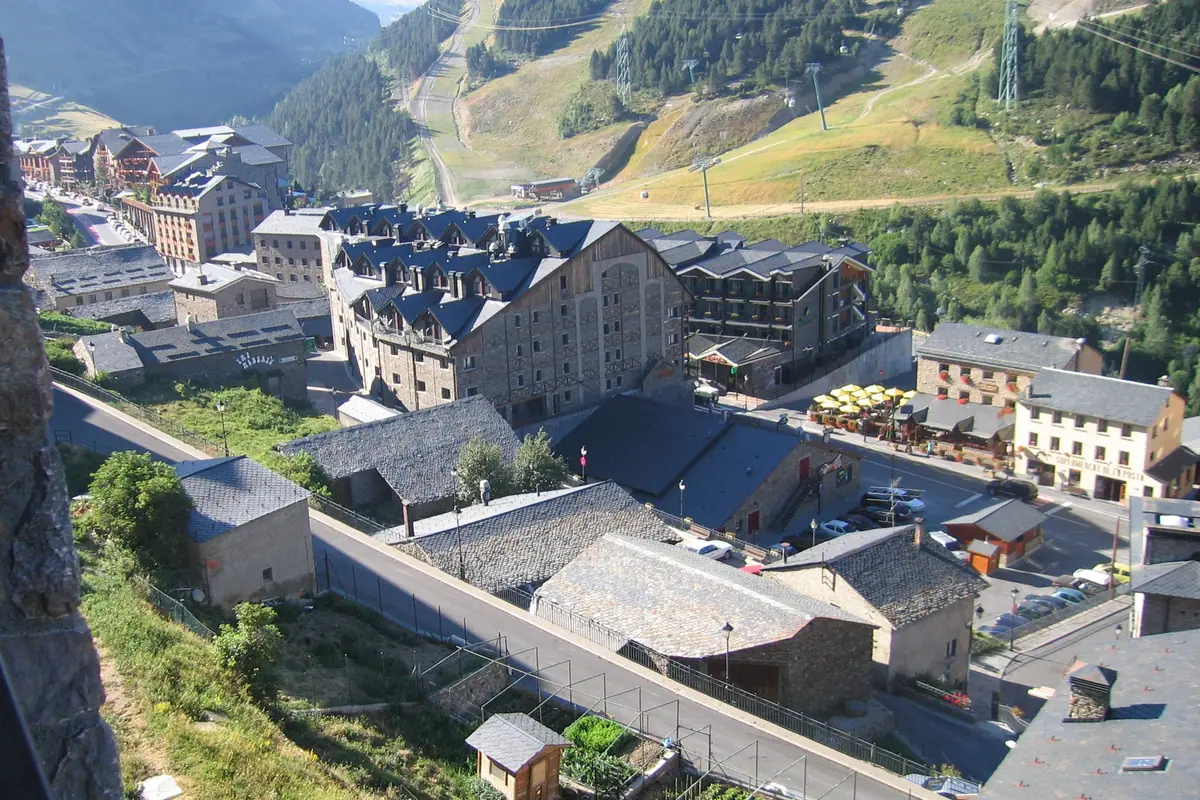
Winter is when Andorra fills up, and the skiing is the reason. Grandvalira is the biggest ski area in the Pyrenees, linking the sectors of Pas de la Casa, Grau Roig, Encamp, Canillo, El Tarter and Soldeu into a network of lifts and groomed runs that suits beginners and confident intermediates especially well. Soldeu regularly hosts top-level alpine racing, which tells you something about the terrain and snow management, while Grau Roig and Canillo have gentle nursery slopes and ski schools that teach in several languages. The season generally runs from early December to mid-April, with Pas de la Casa — right on the French border at over 2,000 metres — usually the most snow-sure and the last to close.
Vallnord, on the other side of the principality, splits into Pal-Arinsal, which is family-oriented with tree-lined runs and a snow park, and Ordino-Arcalís, quieter, higher and a favourite for off-piste skiing and ski touring. The two areas are no longer lift-linked to each other, so pick your base accordingly: Soldeu and El Tarter for Grandvalira, Arinsal or La Massana for Vallnord. If you prefer your snow flat, the Nordic ski trails at La Rabassa above Sant Julià de Lòria offer cross-country skiing and marked snowshoe routes through the forest, and most resorts rent snowshoes for those who want the views without the downhill.
Summer in the High Pyrenees: Hikes, Lakes and Viewpoints
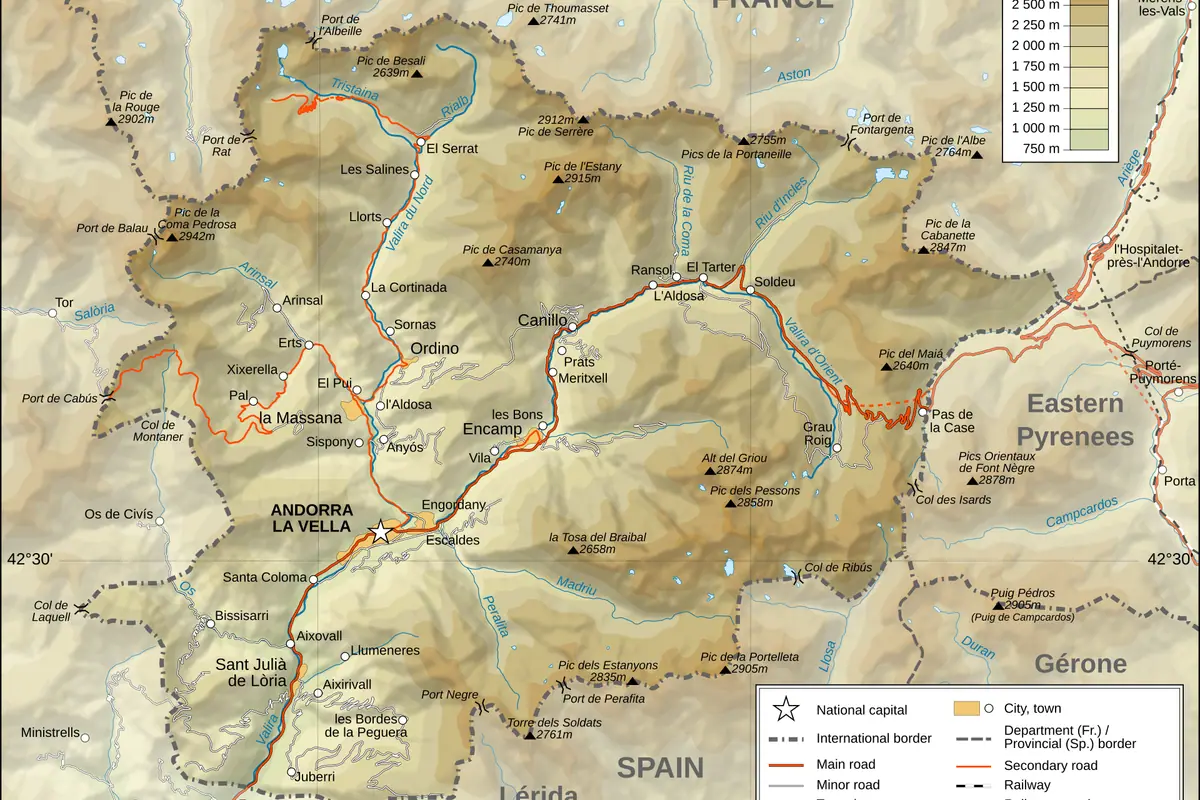
Once the snow melts, Andorra becomes a walking country, and the standout is the Madriu-Perafita-Claror Valley, a UNESCO-listed cultural landscape covering roughly a tenth of the country. There are no paved roads inside it — only mule tracks, dry-stone shepherds' huts, terraced fields and glacial cirques — and you can walk for two hours or a full day without meeting more than a handful of people. Access is from Escaldes-Engordany or Entremesclar, and the climbs are steady rather than technical.
For a summit, head for Coma Pedrosa, at 2,942 metres the highest point in Andorra; the usual route starts from Arinsal and takes five to six hours return, with a steep, hands-on final section and big views into Spain and France. Easier and arguably prettier are the Estanys de Tristaina in Ordino, three glacial lakes reached in about two hours' walking from the end of the Arcalís road, with the Mirador Solar de Tristaina — a huge circular mirror sculpture on the ridge — just beyond. The Vall de Sorteny nature reserve, also in Ordino, is a botanical paradise of alpine flowers in June and July, and the Cirque de Pessons above Grau Roig offers a gentler circuit past a string of small tarns. For a view with almost no effort, the Mirador Roc del Quer in Canillo is a cantilevered walkway jutting out over the valley, with a bronze figure staring calmly into the void beside it.
Museums, Forges and Family Days Out
Andorra's museums are small but genuinely engaging, and several are housed in buildings that are attractions in themselves. The National Automobile Museum in Encamp displays a surprisingly rich collection of vintage cars, motorcycles and bicycles, tracing how a country with no railway and no airport motorised itself over the twentieth century. In La Massana, the Farga Rossell is a restored nineteenth-century iron forge where you can see the water-powered hammer and understand how Andorra's iron and smuggling economy worked; the Camí Ral and the Iron Route walking trails link these sites across the valleys.
For a look at how prosperous Andorran families lived, Casa Rull in Sispony and the manor house of Casa Areny-Plandolit in Ordino are both furnished period interiors, the latter with a fine garden and a collection of traditional crafts. Families gravitate to Naturlandia above Sant Julià de Lòria, a mountain park with an alpine coaster running down through the trees, animal enclosures and adventure circuits, plus snow activities in winter. And if the weather turns — which it does, often without warning in the mountains — Caldea's indoor thermal pools in Escaldes-Engordany are the standard Andorran answer, warm, family-friendly and open well into the evening.
When to Go, How to Get Around and What to Eat
Andorra has no airport and no railway, which is part of its charm. Most visitors arrive by road from Barcelona or Girona in around three hours, or from Toulouse in about two and a half, over the border at La Seu d'Urgell on the Spanish side or through the Envalira tunnel and Pas de la Casa from France; the tunnel keeps the French route open year-round when the high pass is snowbound. Buses run frequently from both countries, but a car makes the mountain villages, viewpoints and trailheads far easier to reach, and the main valley road between Sant Julià de Lòria and Canillo is fast and well maintained.
Timing matters. December to April is ski season, busiest over Christmas, New Year and half-term weeks. Late May and June bring green meadows, waterfalls and quiet roads; July to September is the best hiking window, warm but with afternoon thunderstorms that make early starts wise. October is the connoisseur's month, when the deciduous slopes turn gold and the crowds vanish. Winter nights are cold and clear even in the valleys, so pack accordingly whatever the season.
Eat like a local: escudella i carn d'olla, a hearty meat-and-vegetable stew, and trinxat, cabbage and potato fried with bacon, are the classic mountain dishes, along with grilled river trout, wild mushrooms in autumn and canelons after a day outdoors. Mountain refuges and bordas serve generous set menus at lunchtime, and the capital's cafés do excellent pastries and coffee. Finish with a soak at Caldea or a slow evening on a terrace in Ordino, listening to the river, and you will have understood why this tiny country holds on to its visitors.
Frequently asked questions
How do I get to Andorra if there's no airport?
You travel by road. Regular buses and private transfers connect Andorra with Barcelona and Girona in Spain and Toulouse in France, taking roughly three hours and two and a half hours respectively. By car you enter from Spain at La Seu d'Urgell or from France via Pas de la Casa, where the Envalira tunnel keeps the route open all winter.
What is the best time of year to visit Andorra?
December to April suits skiers, with Grandvalira and Vallnord at their best from January to March. For hiking and sightseeing, July to September is ideal, though afternoon storms are common, so start walks early. Late May, June and October are quieter shoulder months with lower prices and beautiful scenery.
How many days do I need in Andorra?
Three to four days is a good balance: one day for Andorra la Vella and Escaldes-Engordany, including Casa de la Vall and Caldea, one for the Romanesque churches along the main valley, and one or two for the mountains — whether that means skiing at Grandvalira or hiking in the Madriu-Perafita-Claror Valley.
Is Andorra good for beginner skiers and families?
Yes. The nursery slopes at Canillo and Grau Roig in Grandvalira and the tree-lined runs of Pal-Arinsal in Vallnord are well suited to beginners, and ski schools teach in several languages. Non-skiers have plenty to do too, from the alpine coaster at Naturlandia to snowshoe trails at La Rabassa.
What should I not miss on a first visit to Andorra?
Prioritise Casa de la Vall and the old quarter of Andorra la Vella, the Romanesque church of Sant Joan de Caselles in Canillo, the Sanctuary of Meritxell, the Mirador Roc del Quer, the three lakes of Tristaina in Ordino and a half-day in the Madriu-Perafita-Claror Valley. Add a session at Caldea and you have covered the country's highlights.
Plan it — experiences in Andorra
Live search, booked directly with trusted providers.
Sort the rest of your trip
Everything for Andorra, in one place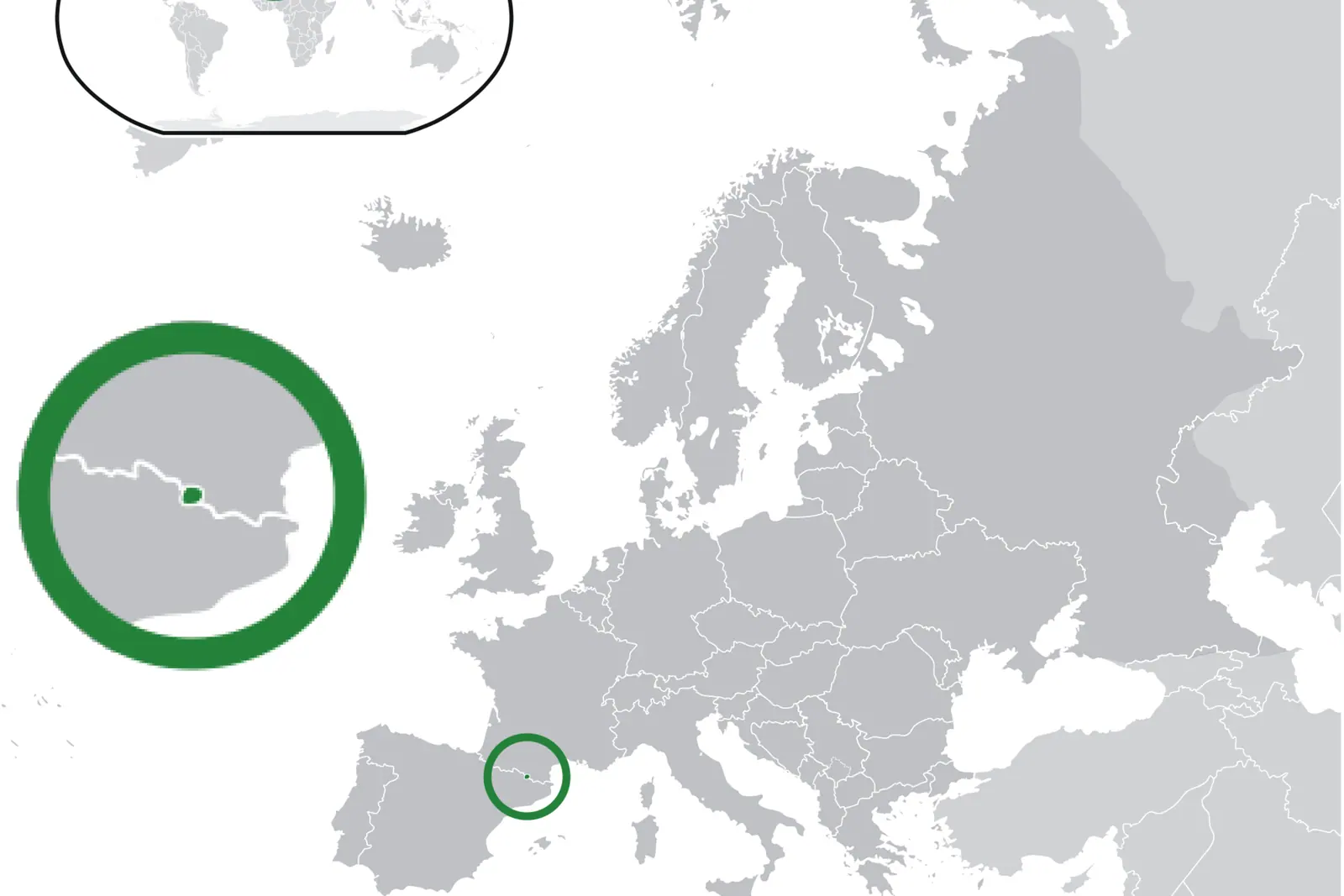
Stay in Andorra
Hotels, guesthouses and apartments — compared in one search.
Search hotels
Transfer in Andorra
Private driver waiting on arrival — no queues, no surprises.
Book a transfer
Stay online in Andorra
Travel eSIM — data the moment you land, no roaming bills.
Get an eSIM