South Sudan is not a destination you stumble into — it is one you plan for, and the bed you choose shapes the whole trip. Almost all of the country's comfort is concentrated in Juba, while beyond the capital the accommodation thins out to mission guesthouses, river camps and fly camps pitched beside some of Africa's last great wilderness. Get the logistics right and you are rewarded with the White Nile, the Sudd wetlands and an antelope migration few travellers ever see.
Where to Stay in South Sudan: Juba Sets the Standard
If you are booking hotels in South Sudan, you are almost certainly booking them in Juba. The capital holds the overwhelming majority of the country's genuinely comfortable rooms, and they cluster in a handful of neighbourhoods: Jebel and Tomping close to the airport, Munuki and Hai Malakal for mid-range guesthouses, and Kator for smaller places near the older parts of town. The pattern is consistent wherever you land — a walled compound, a gate with a guard, a generator humming somewhere behind the kitchen, and a courtyard where guests eat breakfast before heading out.
Inside, expect air-conditioned rooms, en-suite bathrooms fed from rooftop water tanks, mosquito nets over the beds and breakfast included in the rate. The better places add a swimming pool, a shaded garden bar and an airport transfer service; the simpler ones offer a fan, a shared veranda and a kitchen you can occasionally use. Power comes from the grid when it is on and from generators or solar when it is not, so carry a power bank and do not count on charging overnight. Internet is usually delivered through a mobile hotspot or a rooftop data link — perfectly adequate for messages, unreliable for anything heavier.
Book well ahead. Juba's room stock is small, and the city fills up quickly when government delegations, aid workers and regional conferences arrive at the same time. Rates move with demand rather than with the calendar, so a quiet week and a busy one can look very different. For longer stays, apartment-style places with a kitchenette and a washing machine work out cheaper and calmer than a hotel room, and several operate in Munuki and Gudele.
Juba's Must-See Landmarks, Minutes From Your Hotel
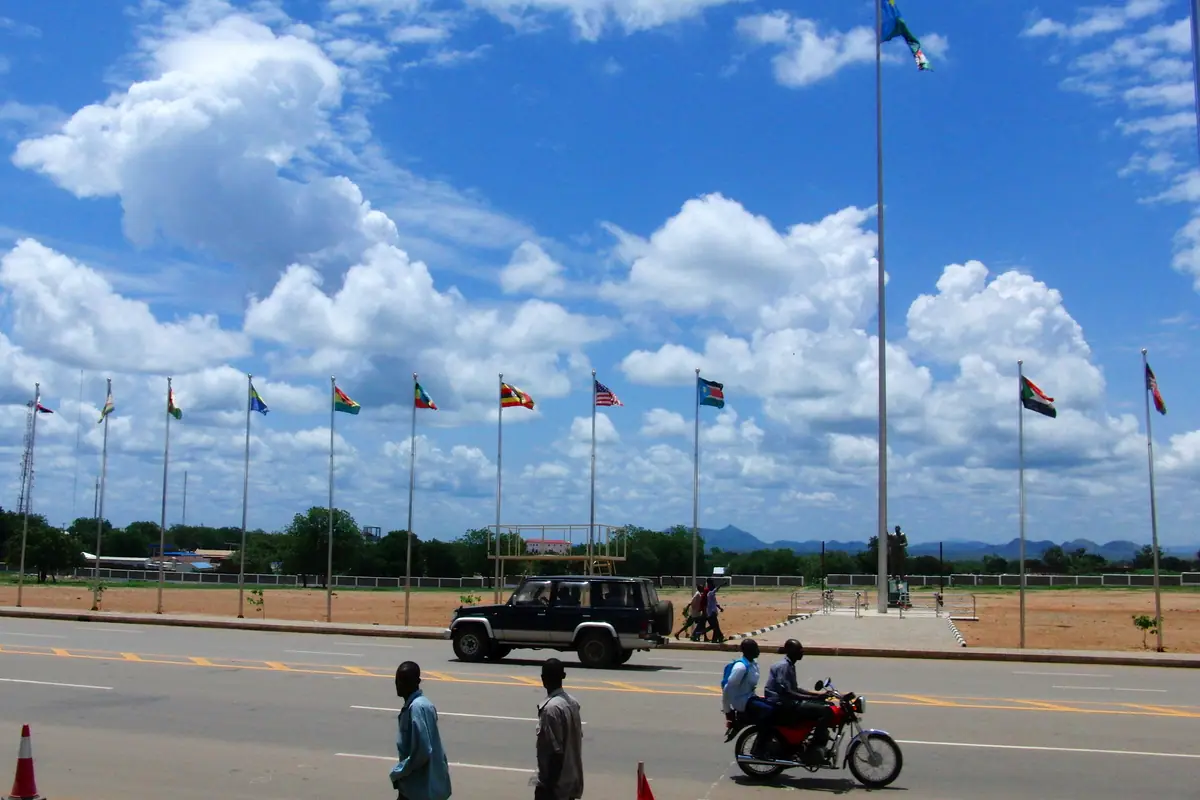
The John Garang Mausoleum is the city's civic heart: a landscaped memorial square built around the tomb of the independence leader, watched over by a towering statue and flanked by palms. It is here, in a space that manages to feel both solemn and celebratory, that the country's national occasions are marked. It is an easy stop on the way between the airport road and the river, and worth an hour of slow walking.
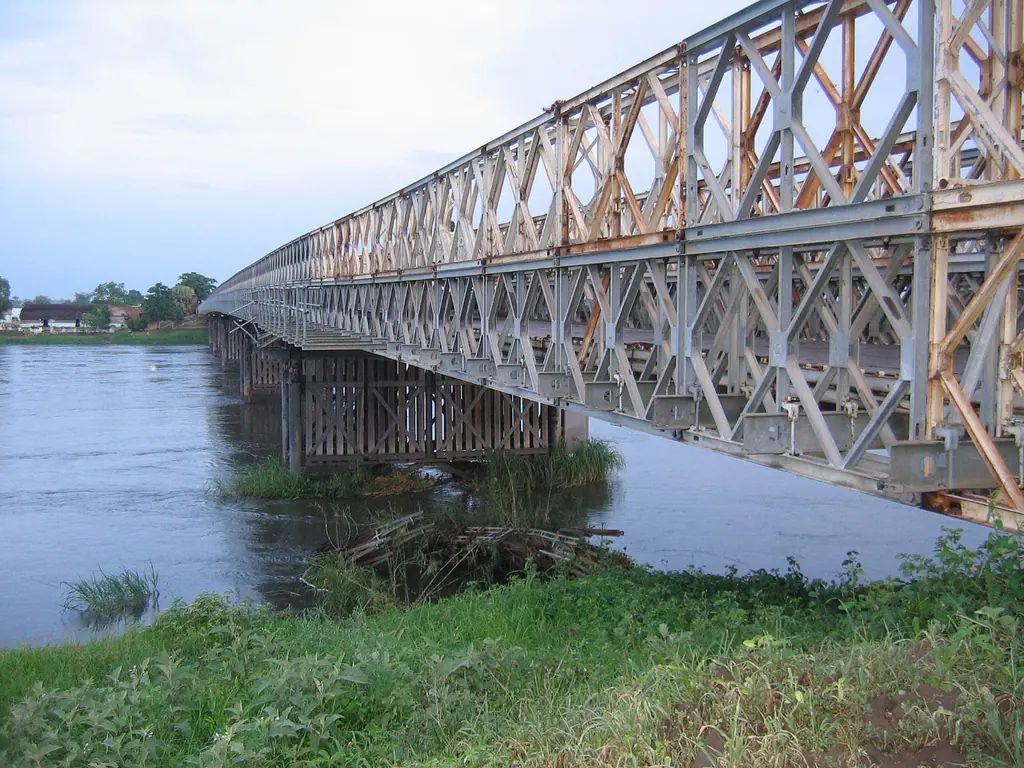
The Juba Nile Bridge carries the Uganda road across the White Nile and is the closest most visitors get to the river's scale — locals gather along the banks at dusk to fish and watch the light drop behind the water. Inland, Konyo Konyo Market is the great sensory experience of the capital: pyramids of mangoes and okra, sacks of sorghum, hand-woven baskets, shea butter, drum makers and tailors all pressed into narrow lanes. The South Sudan National Museum holds an ethnographic collection of harps, drums, spears and beadwork that makes sense of the country's dozens of distinct cultures, while St. Teresa's Cathedral and All Saints Cathedral anchor the older quarters with their brick towers and Sunday choirs.
For a view of the whole city, climb or drive up Jebel Kujur, the granite ridge that rises above the southern edge of town — sunrise is cooler and clearer than sunset here. The Nyakuron Cultural Centre hosts music, dance and theatre on the right evenings. Do your sightseeing by daylight and arrange a car and driver rather than walking after dark.
Nimule National Park and the Southern Border Route
The most accessible wilderness sleep in the country lies south of Juba, where the paved road to the Ugandan border runs about three hours to Nimule. Nimule National Park, gazetted in the 1950s, protects a stretch of the White Nile's east bank where elephants swim between islands, hippos loaf in the shallows and baboons patrol the riverine forest. The park's signature sight is the Fula Rapids, where the river narrows and tears through black rock in a roar of white water that you can hear before you see it.
Sleeping options here are modest and practical: small guesthouses and riverside camps in Nimule town, plus a handful of basic lodges that arrange game drives with local rangers. Rooms are simple — a bed, a net, a shower, a fan — and the reward is evenings beside the river with fish eagles calling across the water. Park entry permits are arranged at the gate, and the best months for wildlife and for comfortable driving are the dry season from December through March, when the tracks harden and the grass stays low.
This corridor is also the gateway to Eastern Equatoria. Continue east towards Torit and the country opens into the Imatong foothills, green and cool compared with the plains. Because the route to the border is sealed, it is one of the few upcountry journeys in South Sudan you can make comfortably in a single day from the capital.

Boma and Bandingilo: Safari Camps and the Great Antelope Migration
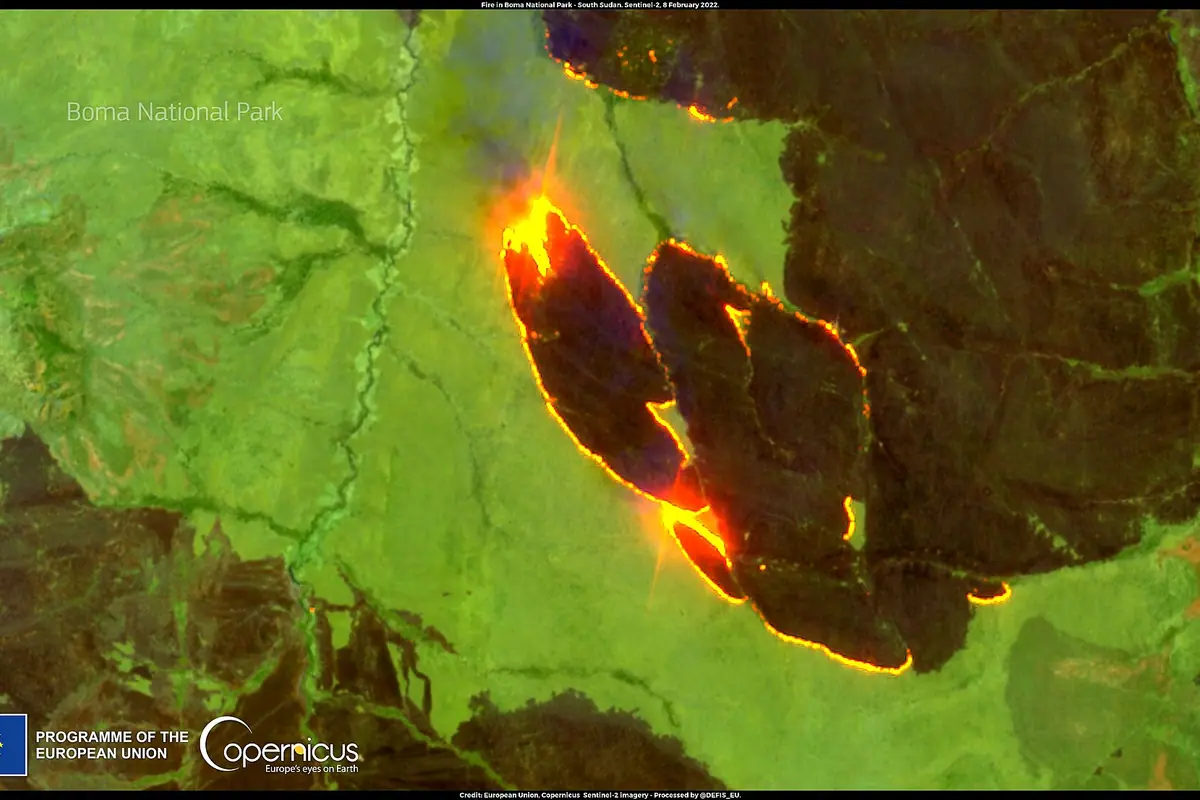
There are no hotels in the conventional sense in South Sudan's flagship parks — and that is precisely the appeal. Boma National Park sprawls across the Jonglei plains towards the Ethiopian highlands, a landscape of grassland, seasonal floodplain and wooded ridge that supports white-eared kob, tiang, Mongalla gazelle, buffalo, lions and wild dogs. Each dry season, enormous herds move between Boma, Bandingilo National Park and the fringes of the Sudd in one of the continent's great ungulate migrations.
Bandingilo sits much closer to Juba, its eastern edge reachable in a couple of hours by 4x4, which makes it the realistic choice for a short trip. Overnight arrangements are expedition-style: mobile tented camps set up by operators based in Juba, or community-run camps with dome tents, bucket showers and a fire. You sleep under a canvas roof with the sound of insects and, if you are lucky, lions in the distance.
Getting there takes planning. Expect to fly into a bush airstrip in a light aircraft or to commit to long, dusty drives with a reliable vehicle, spare fuel, extra water and food. Go with an operator who knows the routes, holds the necessary permits and employs local guides — that is also how the parks' community tourism committees benefit. The window from January to April, when surface water shrinks and herds concentrate, is when the plains are at their most dramatic.
The Sudd, Bor and Malakal: Sleeping Beside the White Nile Wetlands
The Sudd is the reason many travellers come at all: a vast papyrus swamp on the White Nile, so flat and so wide that the river loses itself in channels, lagoons and floating islands of vegetation. Bor, north of Juba on the edge of the wetland, is the usual base for exploring it — and Shambe National Park, further downstream, protects a stretch of riverbank where elephants and antelope move through the reeds. Lake No, where the Bahr el Ghazal meets the White Nile, is one of the strangest and most beautiful points on the river.
Accommodation here is deliberately plain. Expect mission and church guesthouses, government rest houses and NGO compounds with spare rooms, all running on generators, tank water and goodwill. Bedding is basic, showers are often buckets, and food is whatever the kitchen is cooking — usually rice, beans, goat and flatbread. What you lose in comfort you gain in immediacy: a boat pushed off the bank at dawn, hippo eyes above the surface, fish eagles on the snags, and the shriek of a million waterbirds as the light comes up.
Further north, Malakal sits on the Nile as a river port town with a handful of simple lodges where traders and officials stay. If you plan to travel this far, organise everything through a local contact before you arrive, carry your own bottled or filtered water, and treat the journey by boat as the highlight rather than an inconvenience.
Wau, Rumbek, Yambio and the Imatong Mountains: Regional Stays and Practicalities
Beyond Juba the map opens out into regional capitals with a couple of guesthouses each. Wau, the country's second city, is a green, spacious place of teak trees and wide streets, with St. Mary's Cathedral standing over the centre and Southern National Park within reach of a long day's drive. Rumbek, in Lakes State, is dominated by the Holy Family Cathedral, an immense brick church that has been rising for decades and remains one of the most striking buildings in the country. Yambio, far west in Western Equatoria, is lush and humid, close to the forests and Bangangai Game Reserve, with coffee and teak country beyond the town.
For walkers, the Imatong Mountains near Torit are the great prize: forested ridges, waterfalls and Mount Kinyeti, the country's highest peak at just over 3,000 metres. There are no lodges up there — you arrange a guesthouse in Torit and hike with local guides. In Wau, Rumbek, Yambio and Torit, rooms are found through churches, community organisations and word of mouth rather than online, so ask around early and confirm by phone before you travel.
The practical rhythm is the same across the country. The dry season from November to March is the most comfortable time to travel, with dust, clear nights and passable roads; the rains from roughly June to September turn laterite tracks to soup and can strand you for days. Bring US dollars in clean, smaller notes, because cards are rarely accepted and functioning ATMs are scarce. Pack long sleeves and trousers for respect and for mosquitoes, a yellow fever certificate, malaria prophylaxis, rehydration salts and a water filter. Move with a trusted driver and 4x4, sort permits and check official travel advisories for the specific state you intend to visit — then go, and you will have some of Africa's least-visited country almost to yourself.
Frequently asked questions
Which city should I base myself in for hotels in South Sudan?
Juba. It holds nearly all of the country's comfortable hotels, guesthouses and apartment-style stays, has the main international airport and the best road links, and puts you within reach of the Juba Nile Bridge, the John Garang Mausoleum, Konyo Konyo Market and the edge of Bandingilo National Park. Everywhere else, plan on simple guesthouses or expedition camps.
What is the best time of year to visit South Sudan?
The dry season from November to March is the most comfortable for travel, with firmer roads, lower humidity and, by January, herds concentrating in the parks. December to April is the strongest window for wildlife in Boma, Bandingilo and Nimule. The rainy months around June to September bring lush scenery but badly degraded upcountry roads.
Do hotels in South Sudan have reliable electricity and Wi-Fi?
Most mid-range and upper-range places run generators or solar alongside an intermittent grid supply, and water arrives by tank, so hot showers are not guaranteed. Wi-Fi is usually a mobile-data hotspot — fine for messaging, poor for video. Carry a power bank, a torch and a spare SIM or data bundle.
Can I visit Boma or Nimule National Park independently?
Nimule is the easy one: it is a sealed three-hour drive from Juba and you can arrange permits and a ranger at the gate. Boma and Bandingilo are remote, require permits, fuel, water and a capable 4x4, and are far more realistic with an operator running tented camps. Nimule works best in the dry season; Boma between January and April.
How should I handle money and health preparations?
South Sudan is largely a cash economy — bring US dollars in clean, smaller denominations, as cards are rarely accepted and ATMs are unreliable outside Juba. On the health side, arrange yellow fever certification, malaria prophylaxis and travel insurance that covers medical evacuation, and plan to drink only filtered or bottled water.
Plan it — hotels in South Sudan
Live search, booked directly with trusted providers.
Sort the rest of your trip
Everything for South Sudan, in one place
Transfer in South Sudan
Private driver waiting on arrival — no queues, no surprises.
Book a transfer
Things to do in South Sudan
Skip-the-line tickets, guided tours and standout experiences.
See experiences
Stay online in South Sudan
Travel eSIM — data the moment you land, no roaming bills.
Get an eSIM