San Marino packs a whole republic onto the shoulders of Monte Titano, and where you sleep changes the trip completely — inside the walled lanes above the cloud line, in the town that clings to the cliff below, or down on the plain where the Rimini road arrives. Choose well and you get the towers to yourself at dawn, before the coaches roll in.
Where to Stay in San Marino: One Small Country, Three Very Different Addresses
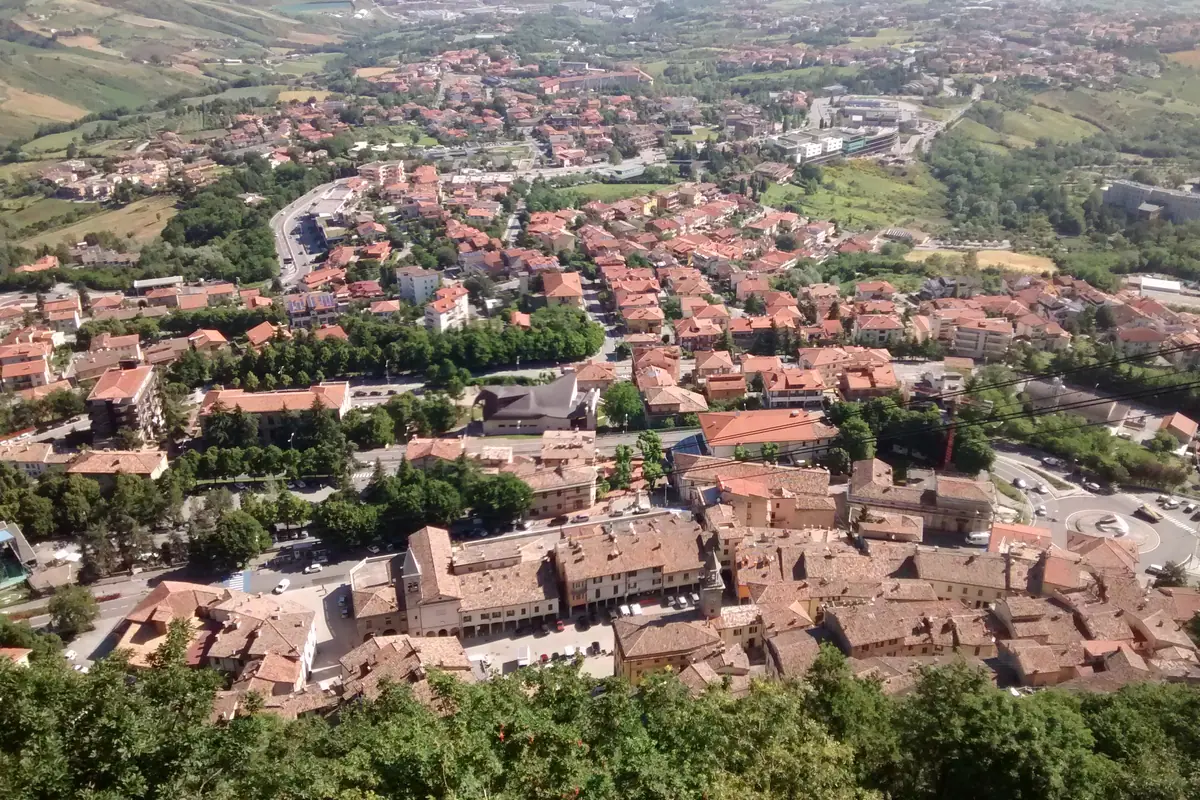
The entire republic measures roughly 61 square kilometres, wrapped around the limestone ridge of Monte Titano, so picking a hotel here is less about districts and more about altitude. You have three realistic choices: the walled historic centre of the City of San Marino up on the ridge, the town of Borgo Maggiore folded into the slope directly beneath it, and the lowland border settlements of Dogana and Serravalle, where the road in from Rimini runs flat and fast. Each one gives you a genuinely different holiday.
The country speaks Italian, uses the euro and mints its own coins, and has no airport of its own — the nearest is on the coast at Rimini, about half an hour away by car, with Bologna further out at roughly two hours. Regular buses climb from Rimini's railway station to the gates of the capital, which makes a car-free stay perfectly workable. If you do drive, accept now that the historic centre is effectively car-free for visitors: vehicles stop at the car parks and garages lower down, and the last stretch is done on foot or by cable car.
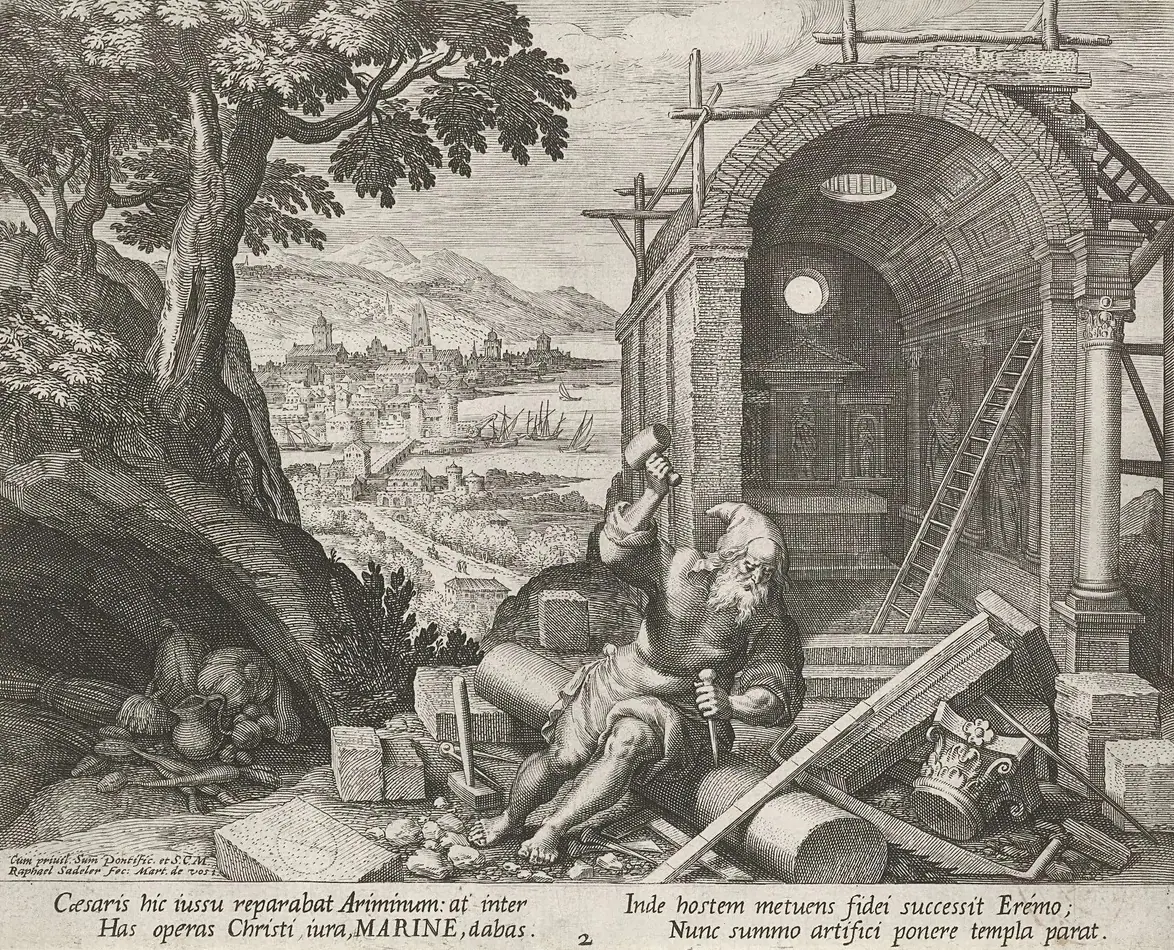
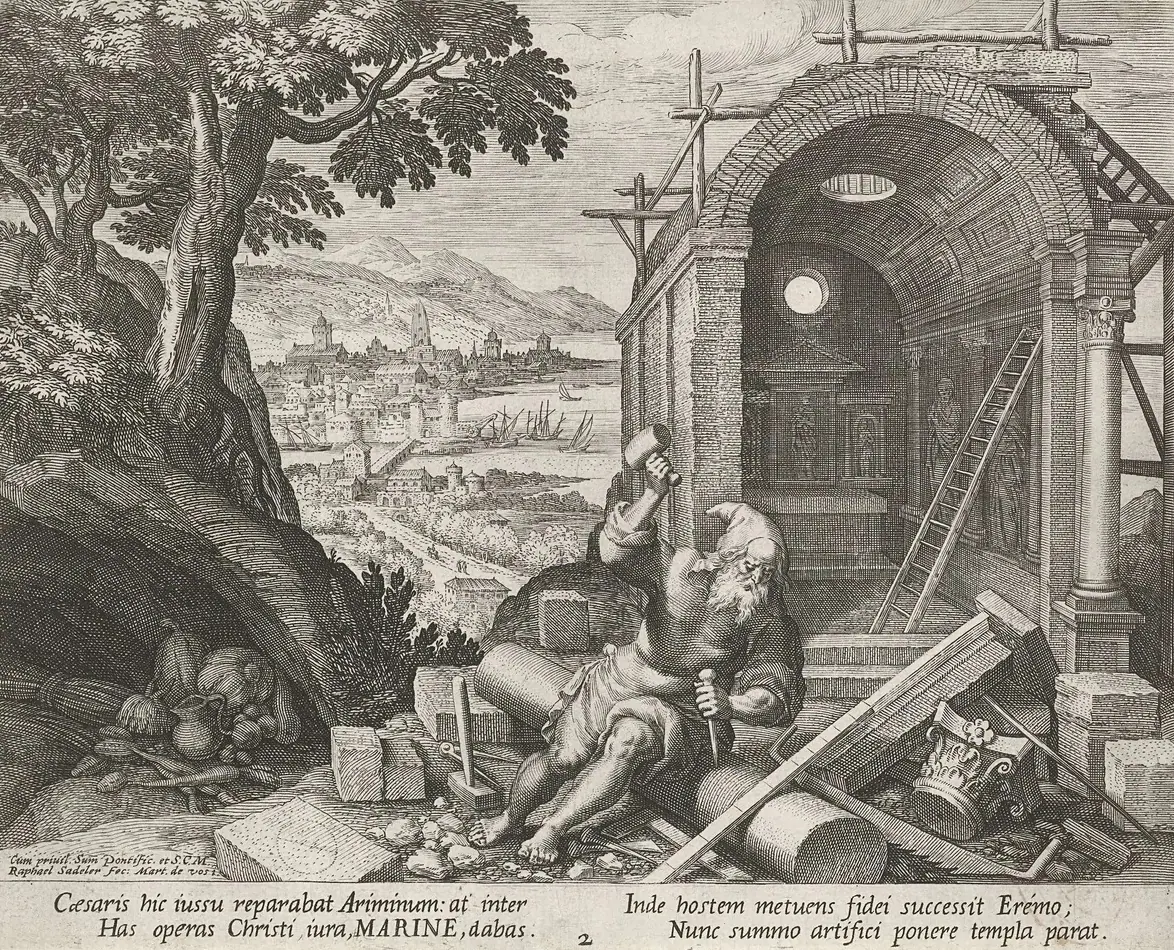
It also helps to know what you are sleeping inside. San Marino traces its founding to a Dalmatian stonemason named Marinus in 301 AD and calls itself the world's oldest surviving republic; Monte Titano and its three medieval towers have been recognised as a UNESCO World Heritage Site since 2008. Staying overnight means you are not just visiting a monument — you are briefly living in one.
Inside the Walls: Hotels on the Ridge of Monte Titano
The historic centre is a compact knot of stone lanes, stairways and small squares sitting at around 700 metres, and accommodation here comes in two flavours: a handful of larger, more formal hotels in converted palazzi, and intimate family-run inns with a dozen rooms or fewer, often above a shop or a trattoria. Rooms with a real balcony view over the patchwork of Romagna hills below are the prize, and they are the first thing to disappear in high season.
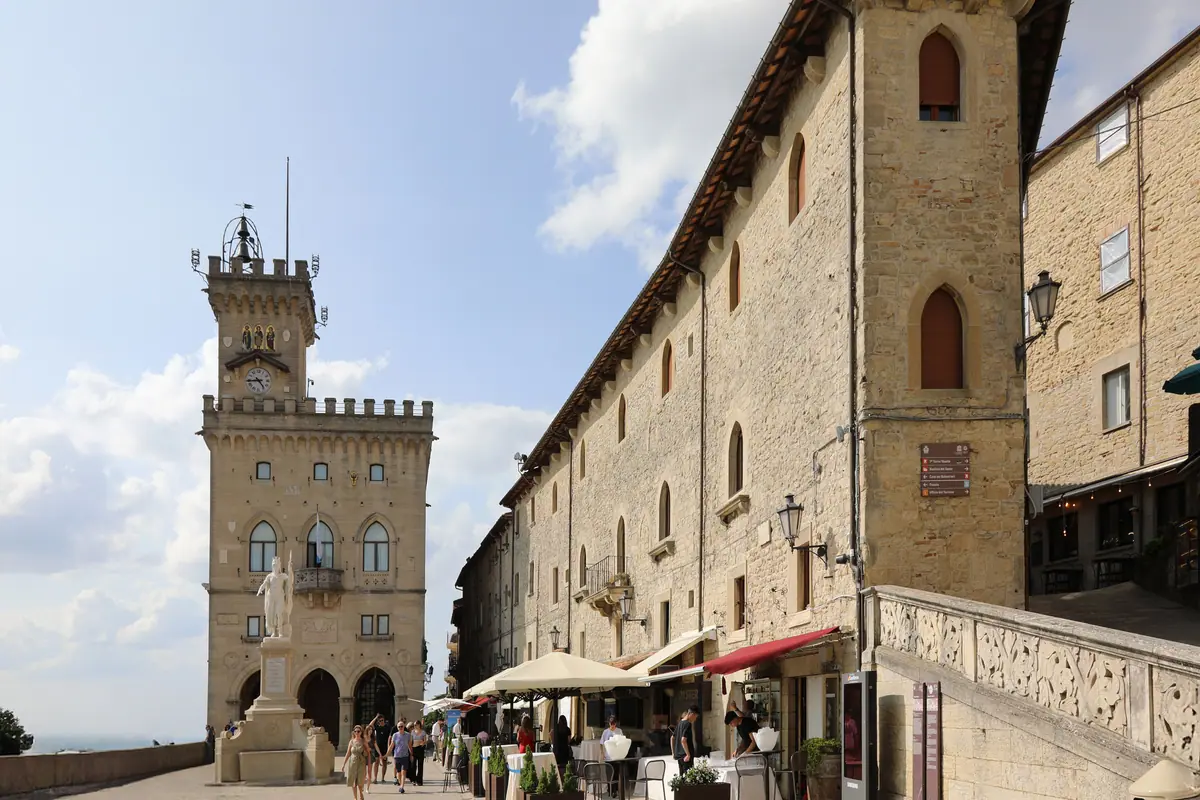
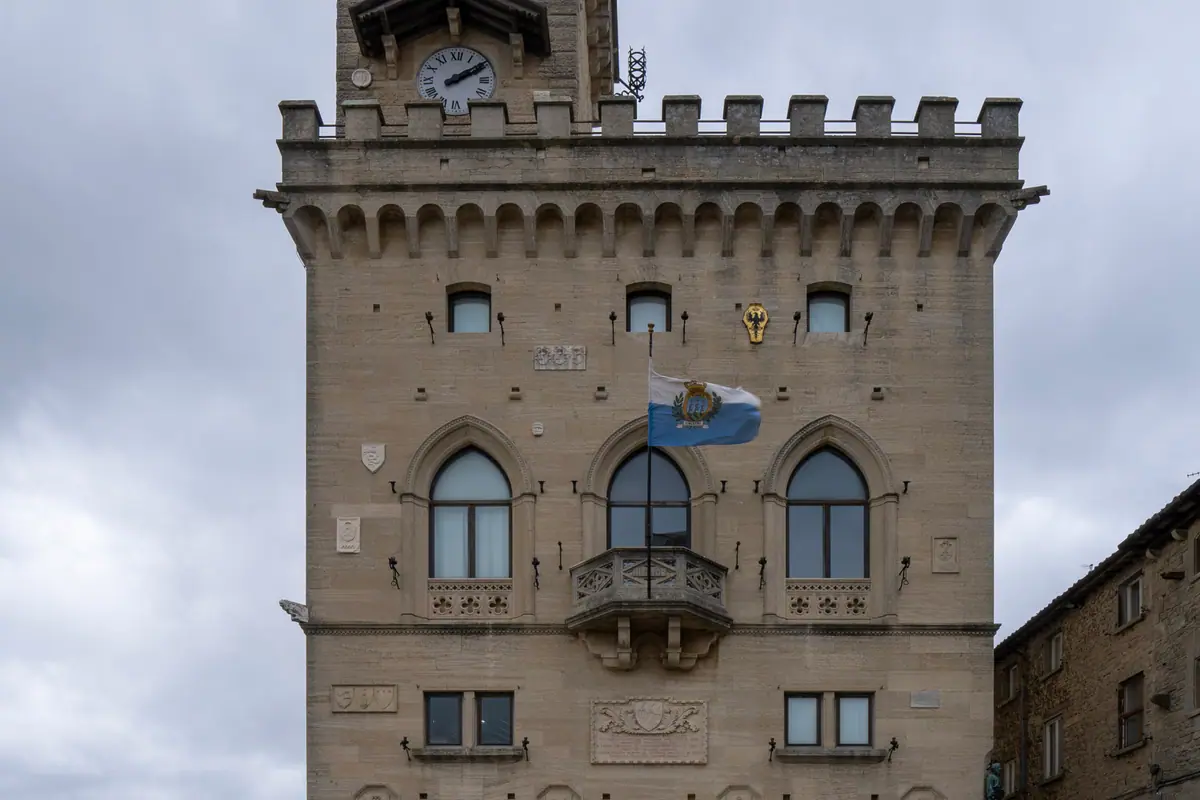
Staying up here puts the headline sights on your doorstep. You step out towards Piazza della Libertà, the ceremonial heart of the country, where the neo-Gothic Palazzo Pubblico faces the statue of Liberty and the Guard of the Rock changes in front of you. A few minutes further and you are at the Basilica di San Marino, the neoclassical church that holds the relics of the saint himself, and at Porta San Francesco, the old gate that still marks the entrance to the medieval town.
The trade-off is logistics: luggage over cobbles, limited parking, and fewer rooms than demand. In exchange you get something day-trippers never see — the lanes almost empty after the last coach leaves, bells echoing off the walls at seven in the evening, and the towers catching first light while you are still in your dressing gown.
Below the Cliff: Borgo Maggiore, Dogana and the Countryside
Borgo Maggiore sits on the slope under the capital and is connected to it by a cable car that covers the height difference in about two minutes, with views that make the fare feel like a sightseeing ticket in itself. The town has a genuine local life — a long-running market, ordinary shops, bars where people are not carrying rucksacks — plus a wider spread of guesthouses, B&Bs and small hotels at gentler rates than the ridge. For drivers it is the pragmatic choice: you park easily and ride up.
Further out, Dogana and Serravalle lie on the flat land towards the coast, close to the main road and the bus route. They suit anyone treating San Marino as a base for exploring the Rimini Riviera, the Romagna hinterland or the hill villages of the Marche, and they are the cheapest places to find a room. What you lose is the drama — no cliff-edge sunsets, no towers out of the window.
Between the two, the surrounding countryside hides a scattering of farm stays and country guesthouses on the lower slopes, where the pace is slow, dinners are long and the local wine is poured generously. If you have a car and value quiet over convenience, this middle ground is often the nicest surprise of a San Marino stay.
The Must-See Sights Within Walking Distance of Your Room
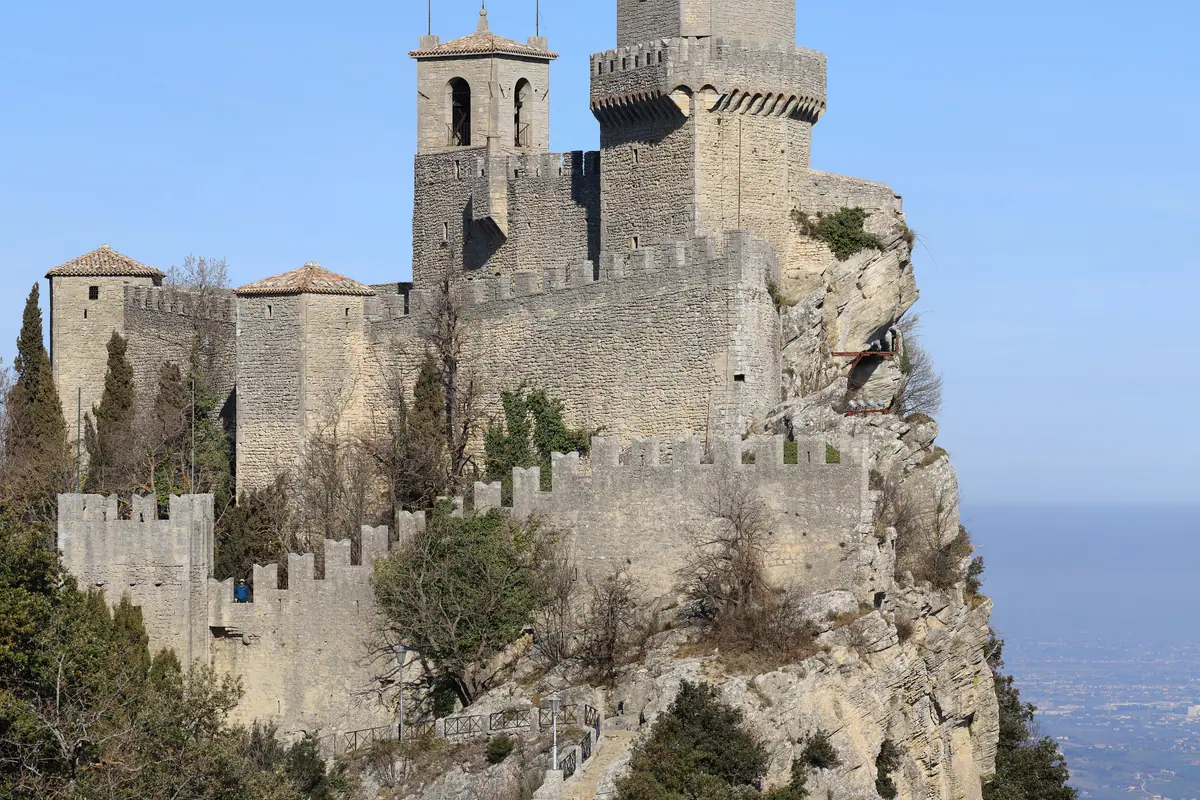
The three towers are the reason most people come, and they are all reachable on foot from the historic centre. Guaita, the First Tower, is the oldest and the most photographed, a bristling fortress perched on the rock with a sheer drop on three sides. Cesta, the Second Tower, stands on the highest point of Monte Titano and houses a museum of ancient weapons; from its battlements you look straight across at Guaita. Montale, the Third Tower, is the smallest and the only one you cannot enter, but the walk out to it along the crest is the quietest stretch of the ridge.
Between Guaita and Cesta runs the Passo delle Streghe — the Witches' Path — a narrow ledge of a trail with a vertiginous view on both sides and the best photograph you will take all holiday. It is short, but not for anyone uneasy with heights. Lower down, the Cava dei Balestrieri, an old quarry turned arena, hosts crossbow displays and medieval festivals, and the small Museo di Stato fills in the history from prehistoric finds to the republic's stubborn survival.
Allow a full day for the towers, the basilica and the squares if you are moving at holiday pace, or half a day if you stride. The rest of the country is small enough to see in an afternoon: the church and art gallery of San Francesco, the sanctuary church of the Immaculate Conception, and the villages of the lower hills, all linked by winding roads with the sea glittering away to the east.
When to Go, and How to Plan the Stay
Spring and early autumn are the sweet spots. From April to June the hills are green, the light is long and the lanes are manageable; September and October bring golden vineyards and cool, clear mornings. July and August are hot, crowded and expensive, with the historic centre heaving between mid-morning and late afternoon — which is precisely why an overnight stay pays off. Winter is quiet, sometimes misty and occasionally dusted with snow, and many smaller guesthouses close or trim their hours.
Book two to three months ahead for the ridge, more if your dates land on a festival weekend or a public holiday; the walled centre has very few beds relative to the millions who pass through each year. Two nights is the ideal stay — one full day for the towers and museums, one slow day for the lower towns and the cable car — while a single night still beats a rushed day trip.
Practical points worth knowing before you book: the cable car runs between Borgo Maggiore and the capital through the day but stops in the evening, so check the timing if you plan to stay below and dine above. Buses from the coast thin out after dark. Coins, stamps and duty-free shopping are a local speciality, so leave a little room in your bag.
Eating, Drinking and the Evening Quiet
San Marino eats like its neighbours — Romagna on one side, the Marche on the other. Expect piadina flatbreads stuffed with cheese and cured meat, fresh pasta with ragù, grilled meats and sheep's cheese, and finish with a slice of Torta Tre Monti, a layered wafer cake named after the three towers and sold in almost every shop on the ridge. Local wines are modest and honest; a carafe of Sangiovese with a view over the valley is the memory most people take home.
Dining inside the walls is atmospheric but touristic, with menus in several languages and prices to match; walk five minutes off the main lane, or ride down to Borgo Maggiore, and the cooking gets more personal and less polished. Book ahead for the handful of restaurants with terrace views at sunset, since they fill fast in summer. If you are staying up on the ridge, a late dinner and the walk home through lamplit alleys is one of the great small pleasures of the country.
Evenings are the real argument for sleeping here rather than in Rimini. Once the coaches leave, the squares empty, the souvenir stalls shut and the towers go dark against the sky. You can hear your own footsteps on the stone. That silence, more than any room service, is what you are paying for.
Frequently asked questions
How many days should I spend in San Marino?
Two nights and one full day covers the historic centre, all three towers, the basilica and the state museum at a comfortable pace, with time left over for Borgo Maggiore and the cable car. If you are short on time, one night still transforms the experience, because you get the lanes before the day-trippers arrive and after they leave.
Is it better to stay in San Marino or on the coast at Rimini?
Staying in San Marino gives you quiet evenings, sunrise over the towers and a genuine sense of the place. Rimini is cheaper, has beaches and a wider choice of hotels, but the journey up and down eats into your day. A good compromise is a couple of nights on the ridge plus the rest of your trip on the coast.
Do I need a car to reach San Marino, and where do I park?
No car is needed — buses run from Rimini's railway station up to the capital, and the cable car links Borgo Maggiore to the historic centre. Drivers cannot take vehicles into the walled town; you leave the car in a garage or car park below and continue on foot or by cable car, which is why many people base themselves in Borgo Maggiore instead.
What is the best time of year to book a hotel in San Marino?
Late April to June and September to October offer the best balance of weather, manageable crowds and availability. July and August are hot and busy and should be booked two to three months ahead, especially for rooms with a valley view. Winter is peaceful and cheaper, but some smaller guesthouses close and fog can hide the views.
Are there cheap places to stay in San Marino?
Yes. The lowest rates are in Dogana and Serravalle on the plain near the main road, and in the smaller guesthouses and farm stays of the surrounding countryside. Borgo Maggiore sits in the middle — cheaper than the ridge, yet only a two-minute cable-car ride from the towers. Budget rooms in the historic centre itself are scarce, so book early.
Plan it — hotels in San Marino
Live search, booked directly with trusted providers.
Sort the rest of your trip
Everything for San Marino, in one place
Transfer in San Marino
Private driver waiting on arrival — no queues, no surprises.
Book a transfer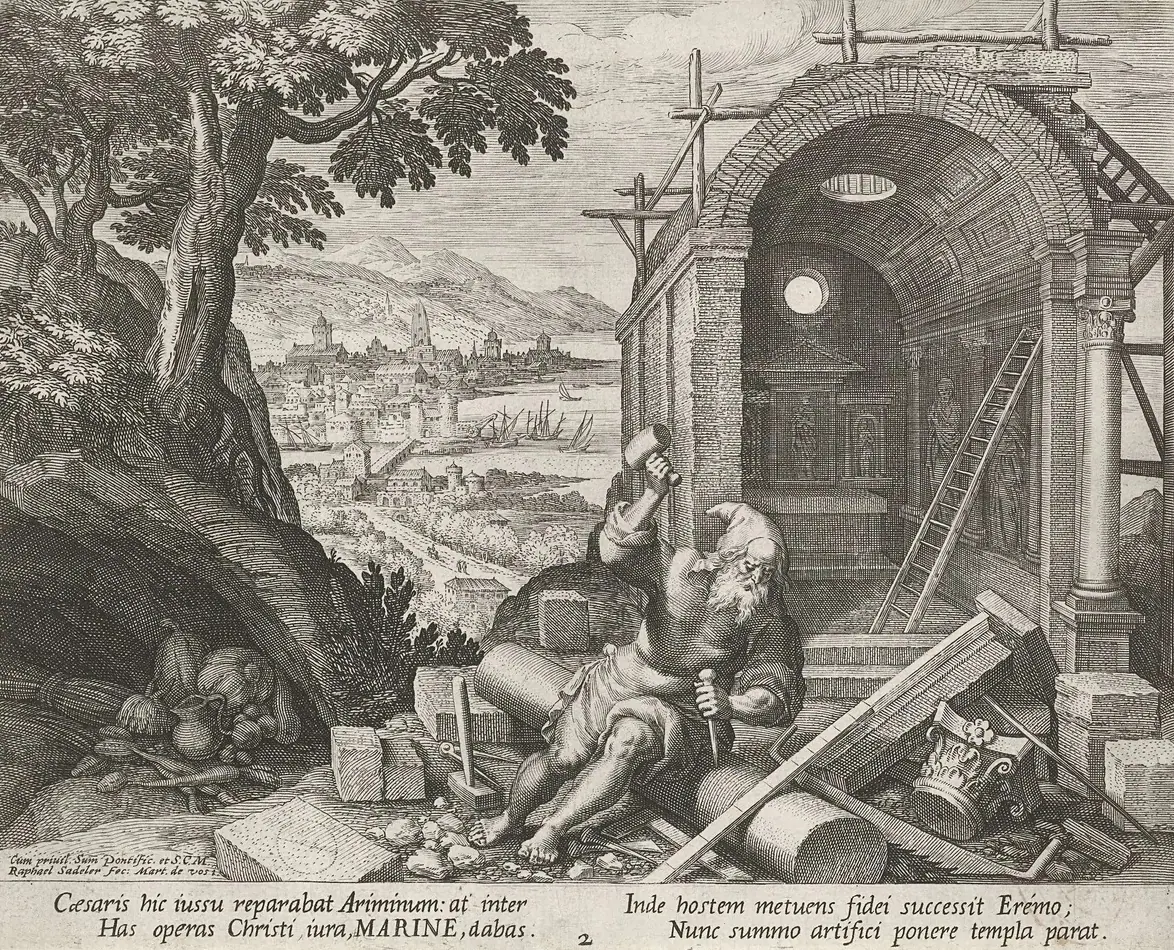
Things to do in San Marino
Skip-the-line tickets, guided tours and standout experiences.
See experiences
Stay online in San Marino
Travel eSIM — data the moment you land, no roaming bills.
Get an eSIM