Most travellers land in Doha expecting a stopover and leave wishing they had booked the week. Qatar is barely larger than a long weekend's drive, yet it packs in a UNESCO-listed fort, a desert that runs straight into the sea, and one of the most confident museum scenes in the Gulf. This is how to use seven days well.
Days 1–2: The Old Heart of Doha — Souq Waqif, the Corniche and the Museum of Islamic Art
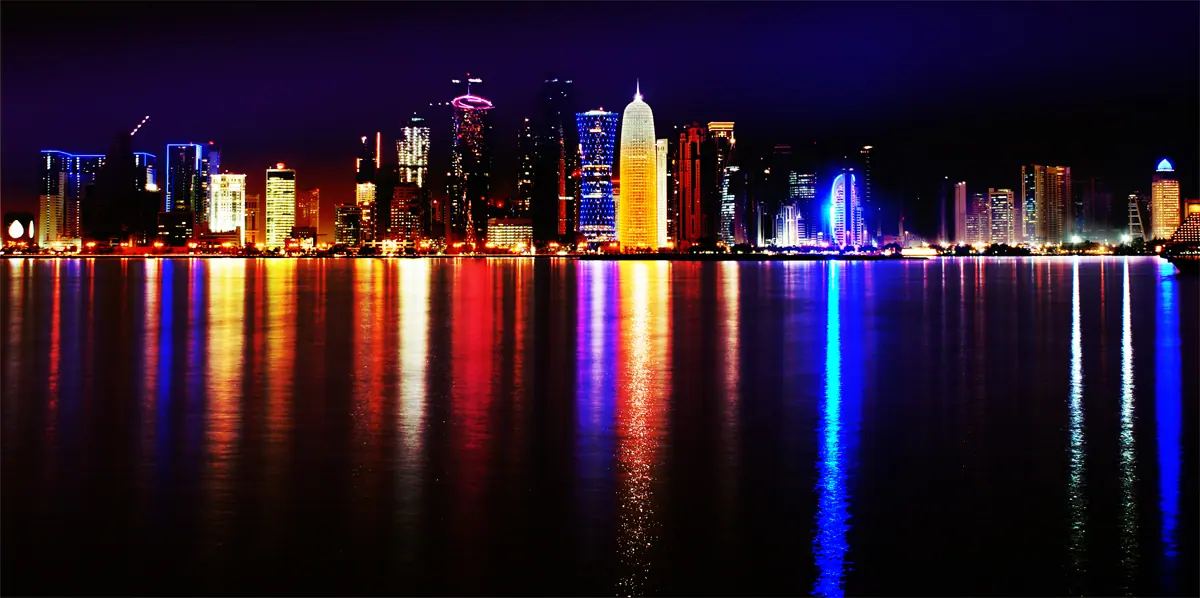
Start gently, because the first thing that hits you after a long flight is the heat and the time zone. Once you have dropped your bags, walk the Corniche, Doha's curving waterfront promenade, in the late afternoon when the light softens over the dhows and the glass towers behind them. The full sweep from the Museum of Islamic Art to the Sheraton Park is roughly 7 km, flat and best done on foot in one direction and by taxi back. This is also the moment to notice how compressed the city is: everything you have read about is visible in a single panorama.
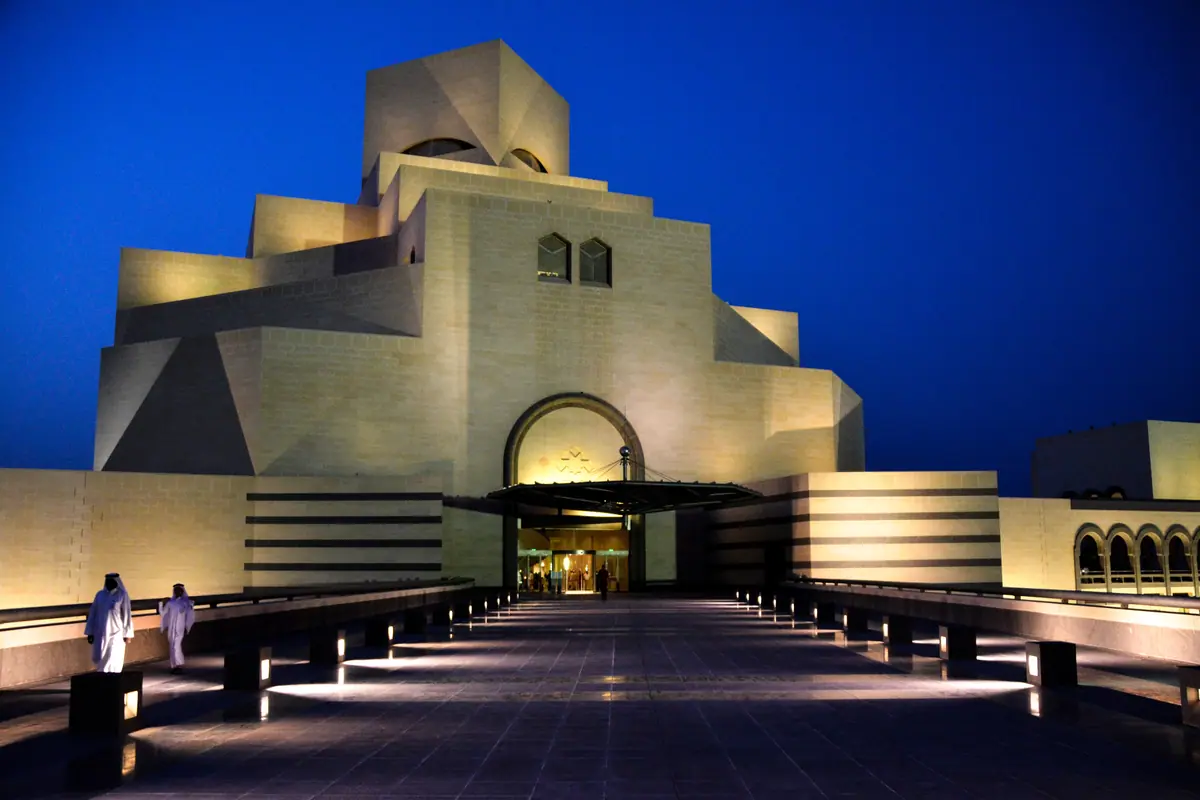
Day two belongs to Souq Waqif, the restored market that is the city's living room. Go in the morning for the spice and falcon wings, then again after dark when the courtyards fill with families, shisha smoke and the smell of grilled meat. Inside the souq, the Falcon Souq is worth an hour on its own — a working market where hunting birds are bought, weighed and trained, with a falcon hospital attached. Nearby, the Museum of Islamic Art sits on its own purpose-built island, its collection spanning metalwork, ceramics, textiles and manuscripts from three continents; the galleries are calm and beautifully lit, and the MIA Park beside it is one of the best sunset spots in the country. Allow three to four hours for the museum, more if you take the park and the café afterwards.
Practical notes for the first two days: museums typically close one day a week, so check timings before you build a day around one. The Doha Metro is clean, cheap and useful for the Corniche, Souq Waqif and Katara, but the souq district is compact enough to walk. Dress modestly in public — covered shoulders and knees — and remember that Friday mornings are quiet, with many shops and restaurants only opening in the afternoon.
Day 3: Modern Doha — National Museum of Qatar, Msheireb and Katara Cultural Village
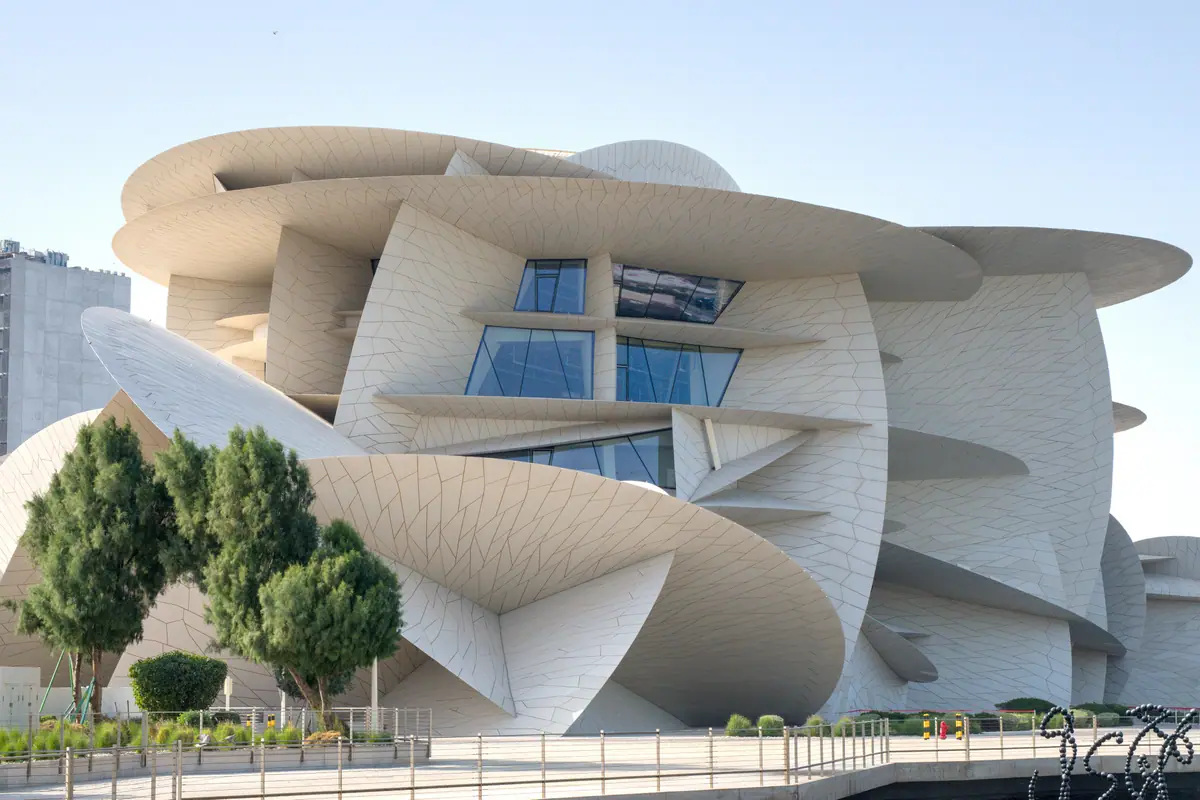
Spend day three on the city's newer face. The National Museum of Qatar, shaped like a cluster of desert rose crystals, tells the country's story from pearl diving and Bedouin life through oil and independence, and it is genuinely one of the most engaging museums in the region — plan two to three hours, and book ahead if you are visiting at a weekend. From there, walk or take a short ride into Msheireb Downtown Doha, a carefully rebuilt quarter of low-rise, traditional-inspired architecture with quiet squares, galleries and coffee shops that feel a world away from the highway traffic around it.
In the afternoon, head north along the coast to Katara Cultural Village, a purpose-built campus of theatres, galleries, a mosque with turquoise tiling and an amphitheatre facing the sea. Katara is where the city comes to eat in the evening, so stay for dinner at one of the waterfront restaurants. Continue to The Pearl-Qatar, an artificial island of marinas and pastel Mediterranean-style streets, and then on to Lusail, the newer city to the north with its own promenade and skyline. It is an easy half-day if you have a car or use taxis; the distances between these three are small but not walkable.
If you are travelling with children, swap part of the afternoon for Aspire Park, a huge green space with a lake and views of the Aspire Tower, or for the indoor Venetian-style canals of Villaggio. Neither is essential, but both are reliable ways to escape the midday sun.
Day 4: South to the Desert — Sealine, Dune Bashing and the Inland Sea
Day four is the one people remember. Drive or join a tour south from Doha towards Sealine, the dune belt about an hour from the city where the sand starts to roll and the roads end. This is dune-bashing country: 4x4 vehicles deflating their tyres at the roadside before climbing the ridges and dropping down the far side. If you are driving yourself, you need a proper four-wheel drive, low tyre pressures and experience — otherwise book a guided desert safari, which almost always includes pickup from your hotel.
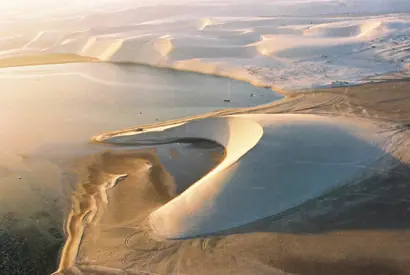
The prize at the end is Khor Al Adaid, the Inland Sea, where towering dunes fall directly into a tidal inlet of the Gulf. It is one of the few places on earth where the desert meets the sea like this, and the scale is disorienting in the best way. Most tours stop here for photos, a swim in the shallows if the tide allows, and a simple camp lunch; some run overnight camps with dinner, music and stargazing, which is worth considering if your schedule permits a night out of the city.
Practicalities: go early, ideally leaving Doha by 7am, to avoid the worst heat and the crowds of convoys that build up by late morning. Bring more water than you think you need, a hat, closed shoes and a scarf for the sand, and avoid the desert entirely during the summer months when temperatures routinely exceed 40°C. The cooler months, from November to March, are the only sensible window for this day.
Day 5: The North — Al Zubarah Fort, Al Jassasiya and the Quiet Coast
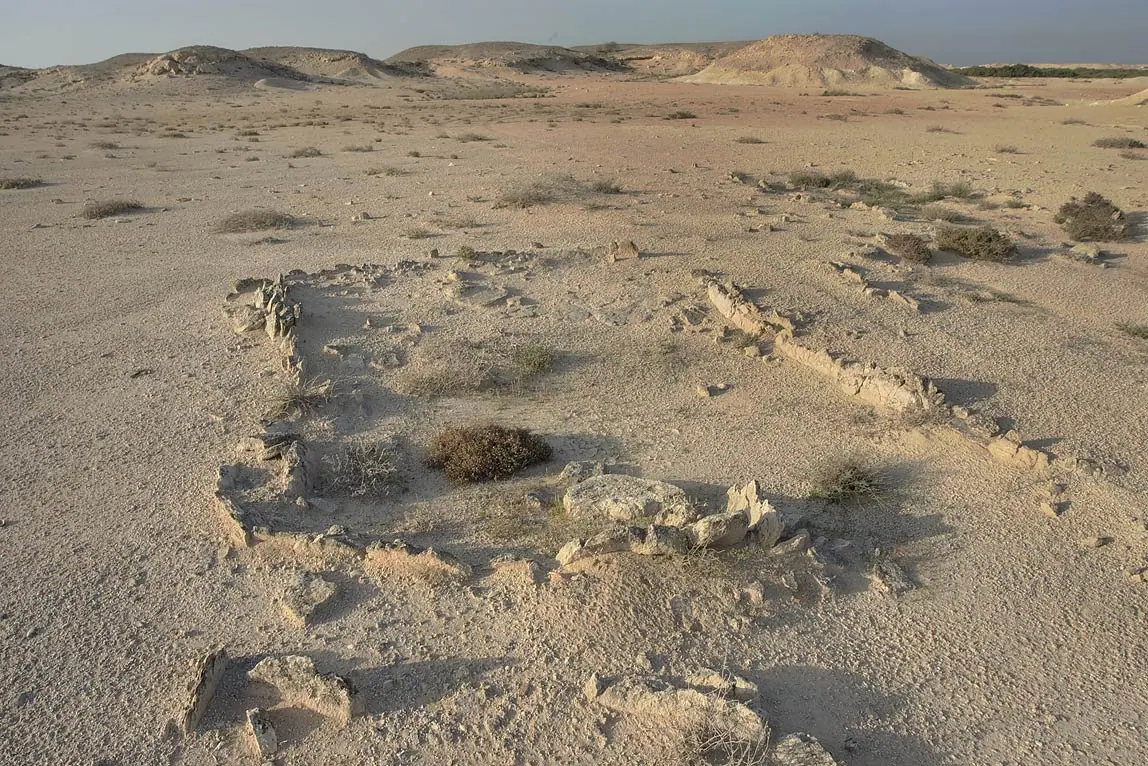
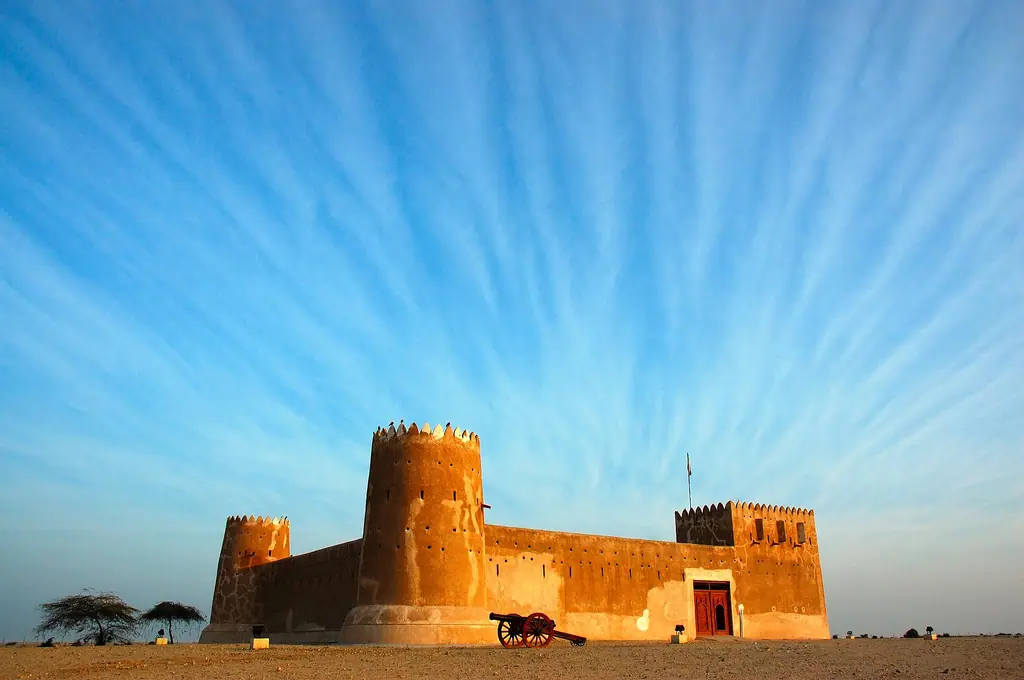
Head north on day five for a completely different Qatar: low, pale, sparsely populated and full of history. The main stop is Al Zubarah, a UNESCO World Heritage Site on the north-west coast. The walled fort, with its four corner towers, is the gateway to the ruins of a prosperous 18th- and 19th-century pearl-trading and merchant town that was abandoned and swallowed by sand. Walk the excavated streets, then climb the fort walls for the view over the empty coastline — the scale of what was lost is the whole point.
On the way, detour to Al Jassasiya, a low rocky rise covered in hundreds of petroglyphs carved into the limestone: cup marks, boats, rosettes and shapes whose meaning is still debated. It is unmarked, unguarded and quietly extraordinary. Further along the north coast, Al Shamal and Al Ruwais are small, unhurried towns with fishing harbours and simple seafood restaurants, and Bin Ghannam Island — universally known as Purple Island — has mangrove channels you can kayak through at high tide, with herons and flamingos depending on the season.
If you are travelling between roughly April and July, the beaches near Fuwairit are a nesting site for hawksbill turtles, and organised night watches sometimes allow visitors to see hatchlings make their way to the water. All of the above is a long, full day by car from Doha — around two hours each way to the northern tip — so leave early, fuel up in Al Khor or Al Shamal, and do not attempt it without a vehicle or a private driver.
Day 6: The West — Zekreet, Film City and the Sheikh Faisal Museum
The west coast is where Qatar turns strange and cinematic. Zekreet is a landscape of white limestone outcrops, mushroom-shaped rock formations carved by wind, and a narrow, dramatic peninsula. Standing among them you will understand why a film set — known as Film City, a replica of an old Gulf fort and village — was built here. It is a short walk from the road, free to visit, and one of the most photogenic places in the country.
Nearby, Dahl Al Misfir is a limestone sinkhole that drops roughly 40 metres into the ground, glowing faintly with gypsum crystals in certain light and cool enough at the bottom to feel like another climate. It is fenced and you cannot descend, but it is a striking 20-minute stop. Inland from here, the Sheikh Faisal Bin Qassim Al Thani Museum houses an astonishingly eclectic private collection — vintage cars, traditional weapons, carpets, fossils, Qur'anic manuscripts and more — in a fort-like building surrounded by palms, and it is far less visited than Doha's big museums.
If your visit falls between roughly October and March, check whether a camel race is scheduled at the Al Shahaniya racetrack, where robot jockeys and owners in SUVs drive alongside the track shouting encouragement. It is a genuine local spectacle rather than a tourist show. This whole western loop is best done as a self-drive day with a four-wheel drive, or as a private guided tour; public transport does not reach any of it.
Day 7: A Slow Doha Day and Departure
Keep the last day light. Start at the Qatar National Library in Education City, a startling building of glass and white marble where the heritage collection is displayed in a sunken archaeology-style pit. Wander Education City's campus architecture nearby, then choose one more museum depending on your taste — Mathaf for modern Arab art, or a return to the Museum of Islamic Art's park for a final slow walk by the water.
If you want one last piece of the old country, drive 20 minutes south to Al Wakrah, a small fishing town with its own restored souq, a Corniche and simple grilled-fish restaurants where the pace is noticeably gentler than Doha's. Families and anyone with energy to spare can instead spend the afternoon at Banana Island, reached by boat from the city, for beaches and pools before the airport run.
Leave at least three hours for the airport, which is large and busy, and remember that Friday and Saturday make up the local weekend, so traffic peaks and museum hours shift accordingly. If you are flying out late, a farewell plate of machboos or grilled hammour somewhere along the Corniche is a fitting last meal.
When to Go, How to Get Around and What to Pack
The best months for a week in Qatar are November through March, when daytime temperatures sit comfortably in the low twenties and you can spend all day outdoors. December and January can be genuinely cool in the evenings, so pack a light jacket. April and October are shoulder months — still hot, but manageable. From May to September, plan on spending the middle of the day indoors and reserve the desert for early morning or, better, skip it entirely.
Getting around is easiest by rental car if you want the northern and western days; roads are excellent and signage is in English and Arabic. For Doha itself, the metro and ride-hailing apps cover almost everything, and taxis are plentiful. Between cities, buses exist but are slow and infrequent, so most visitors combine a few guided tours with self-driving.
Pack light, breathable clothing that covers shoulders and knees, good sunglasses, high-factor sun cream, a refillable water bottle and sturdy shoes for the ruins and rock carvings. Modest dress is appreciated everywhere and required in mosques and government buildings. Alcohol is available in licensed hotels and restaurants, not in general shops, and during Ramadan eating, drinking and smoking in public during daylight is frowned upon — many restaurants close or restrict daytime service, while hotel dining continues behind screens.
Frequently asked questions
How many days do you need in Qatar?
Seven days lets you see Doha properly and still reach the desert, the northern heritage sites and the west coast. If you only have three or four days, base yourself in Doha and add a single desert day — that covers the highlights without constant driving.
What is the best time of year to visit Qatar?
November to March offers the most comfortable weather for sightseeing, camping and dune trips. April and October are hot but workable. June to September is extremely hot and humid, so outdoor plans should be limited to early mornings and evenings.
Do I need a car in Qatar?
Not for Doha, where the metro, taxis and ride-hailing apps are enough. You do need a vehicle — ideally a four-wheel drive — or a guided tour to reach Khor Al Adaid, Zekreet, Al Zubarah and the northern coast, as public transport does not serve these areas.
Is Qatar expensive to travel in?
Mid-range hotels, restaurants and taxis are comparable to Western European cities, and the metro is very cheap. Costs climb sharply with desert camps, private drivers and fine dining, while museums and the Corniche cost little or nothing.
What should I wear and what etiquette should I follow?
Cover shoulders and knees in public, and wear a scarf for mosque visits. Public displays of affection are discouraged, alcohol is limited to licensed venues, and during Ramadan avoid eating, drinking or smoking in public during daylight hours.