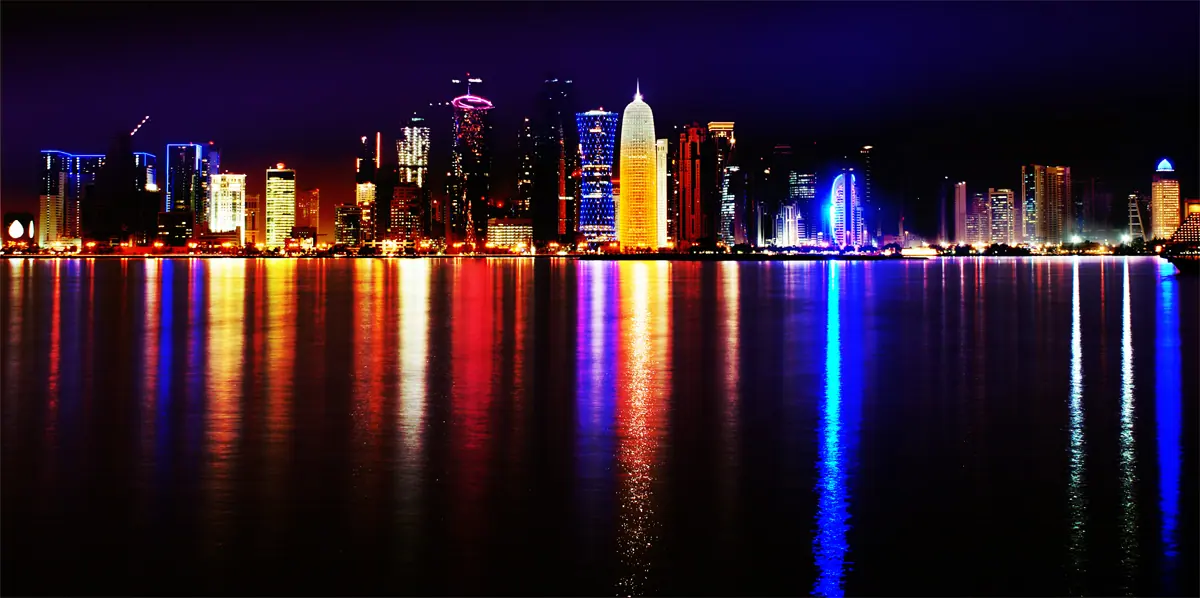
Qatar is a peninsula the size of a long weekend's road trip, yet it packs pearl-diving ruins, a skyline that glitters like cut glass and a food culture that tastes of saffron, cardamom and slow-simmered lamb. Most travellers see it as a stopover; the ones who stay three or four days find a country that eats late, argues about football, races camels at dawn and welcomes strangers into its majlis with dates and tiny cups of coffee.
What Qatari Food Actually Tastes Like: Machboos, Majlis and Karak
Start with machboos, the dish every Qatari household claims to make best. It is rice cooked in a spiced broth — dried lime, cardamom, cinnamon, turmeric, a whisper of saffron — with chicken, lamb or fish folded through it, and it arrives on a platter big enough to share. Around it come harees, a silky porridge of wheat and meat pounded until it turns velvet, and thareed, a stew ladled over torn flatbread so the bread drinks up the sauce. In winter, madhruba — a slow-cooked rice and milk porridge — is what people eat when the evenings turn cool enough for a jacket.
The ritual matters as much as the recipe. Guests sit on cushions around a communal platter and eat with the right hand, and refusing food is a small social offence. Ramadan reshapes the whole calendar: harees and luqaimat — golden dough balls drenched in date syrup — appear at iftar, and the streets empty and then erupt after sunset. Sweets show up at celebrations: balaleet, sweet saffron vermicelli with an omelette on top, is a classic Qatari breakfast dish that surprises everyone the first time.
Karak is the fuel of daily life: strong black tea simmered with evaporated milk, cardamom and sugar, served in a small glass, usually alongside something hot and freshly fried. Roadside cafeterias and little tea counters around Souq Waqif and the older districts do the best versions, and drinking it standing up at 11pm with strangers is one of the most authentically Qatari things you can do.
Souq Waqif and the Old City: Doha's Living Room
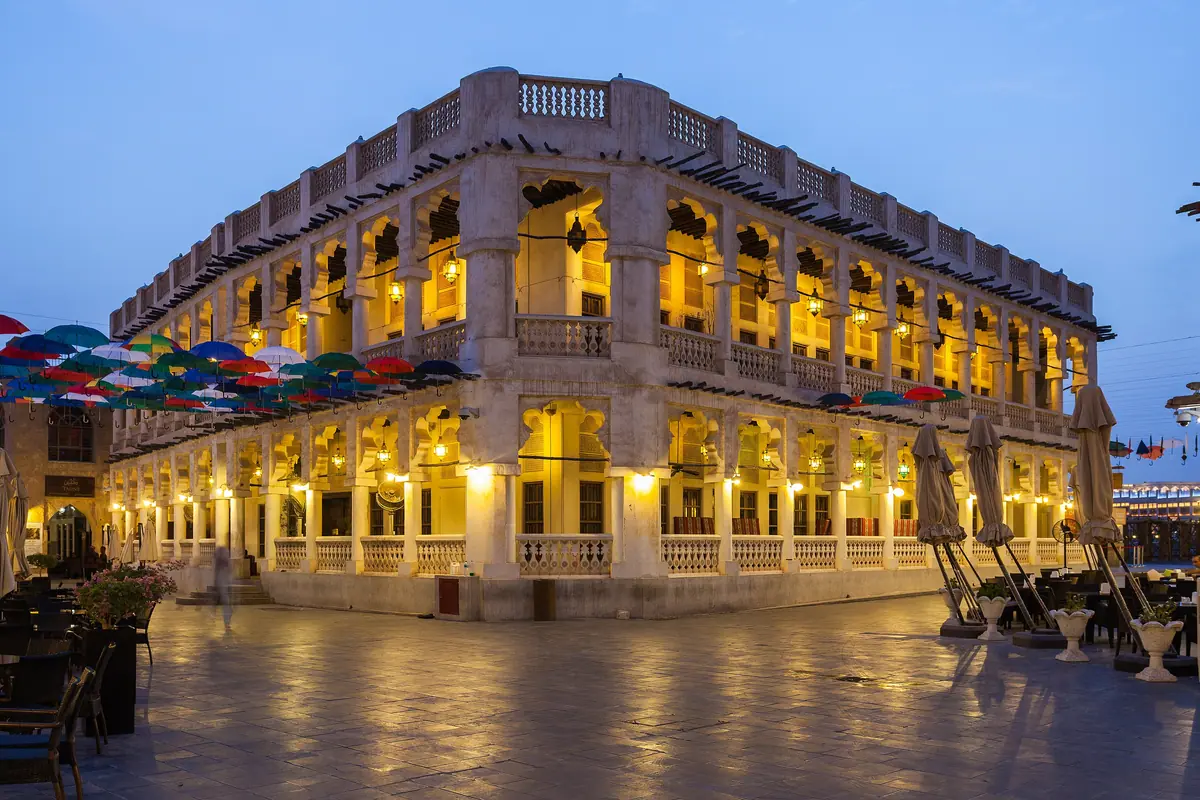
Souq Waqif is the beating heart of the old city and the single best introduction to Qatar. Rebuilt on its historic foundations, it is a maze of spice lanes, fabric sellers, perfume stalls and shisha courtyards where falconers, money changers and families on evening walks all share the same alleys. The smells are the memory: sacks of dried limes and frankincense, cardamom dust, grilled meat from the open-air kitchens that appear at dusk.
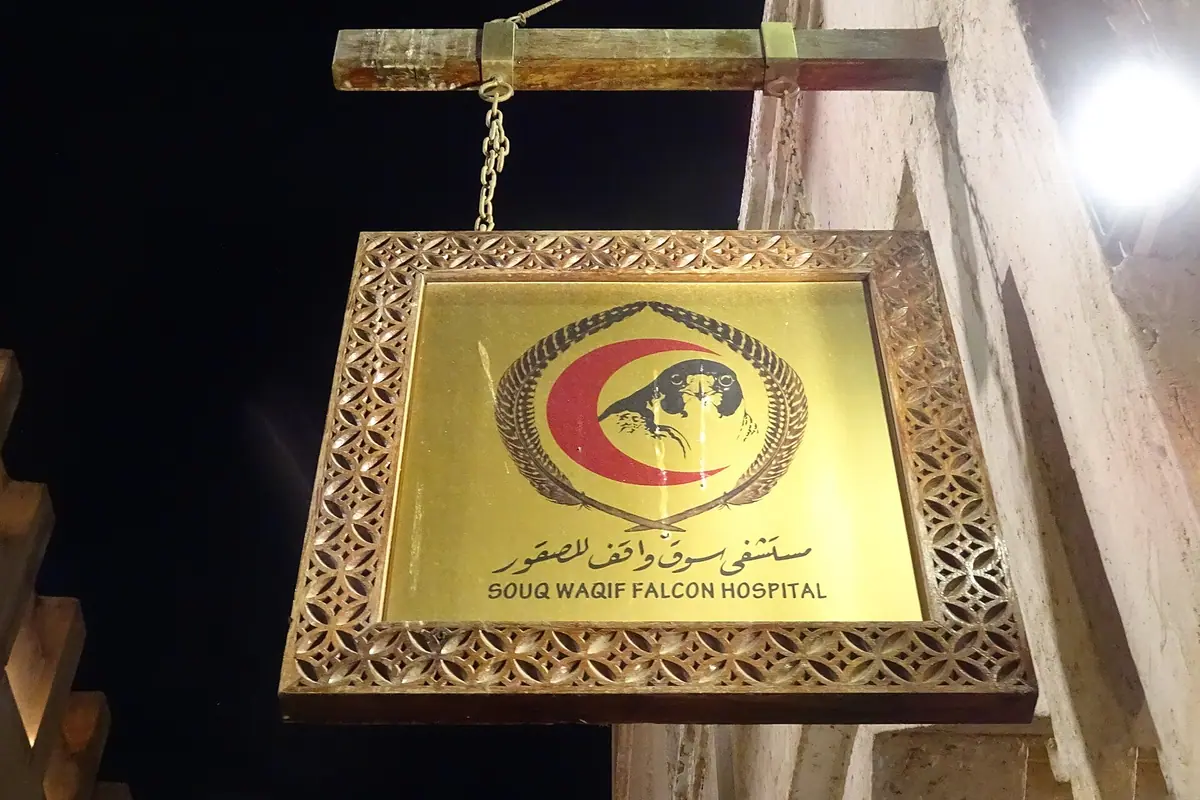
Come early for the fish and vegetable market end, then return after dark when the lanterns come on and the place fills up. The Falcon Souq inside the market is genuinely extraordinary — a purpose-built complex where hunting birds sit hooded on perches, some worth a small fortune, with a dedicated hospital and all the leather, bells and gloves that falconry requires. Just beyond the souq, Al Koot Fort sits in whitewashed contrast above the street, a reminder that this was a fortified, pearling town long before the towers went up.
Ten minutes' walk away is Msheireb Downtown Doha, a restored quarter whose malls, museums and shaded squares show the city's other face: modern, air-conditioned, immaculately designed. Finish the evening on the Corniche, the crescent of waterfront that curves from the souq past the skyline, with a traditional dhow cruise from the harbour — an hour of warm wind and reflected skyscrapers.
Museums Worth Building a Trip Around: Islamic Art, the Desert Rose and Katara
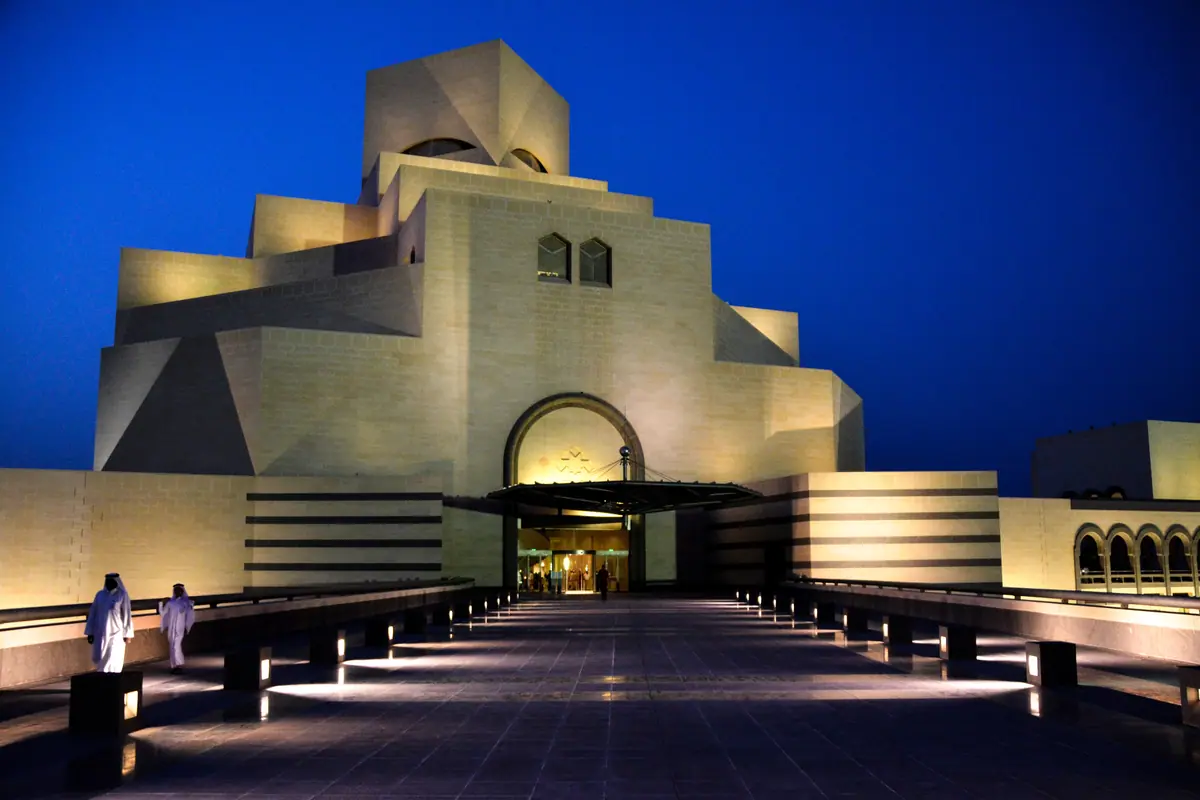
The Museum of Islamic Art stands alone on its own reclaimed island off the Corniche, a building of stacked geometric blocks with a glass wall that frames the skyline like a painting. Inside, a collection spanning roughly fourteen centuries of the Islamic world covers manuscripts, inlaid metalwork, ceramics, textiles and astronomically precise instruments; the galleries are calm and quiet in a way the city outside is not. Allow two to three hours, then walk the promenade to the adjacent park for the classic photograph back towards the towers.
The National Museum of Qatar is the unmissable piece of architecture: a cascade of interlocking discs shaped like a desert rose, with galleries that walk you through Bedouin life, the pearl-diving economy, the discovery of oil and the country's vertiginous modernisation. It's the clearest explanation you'll get of how a fishing and pearling coast became what it is. Families with children do well here; the storytelling is visual rather than wordy.
Katara Cultural Village, further up the coast, is the country's cultural campus — an amphitheatre, galleries, a mosque with hand-painted tiles, pigeon towers, and a beach where the water is calm in the mornings. Alongside it, the Arab Museum of Modern Art in Education City explores modern and contemporary art from the region and is a good counterweight to all the heritage. Between them you can spend a full, unhurried day indoors, which matters enormously between May and September.
Desert, Inland Sea and Ancient Rock Carvings
An hour's drive south of Doha, the tarmac ends at Sealine and the sand begins. This is where desert excursions launch: dune driving over the crescent ridges, camel rides, sandboarding and, most memorably, the run to Khor Al Adaid, the inland sea, where towering dunes drop straight into turquoise water. It is one of the very few places on earth where the desert meets the ocean like this, and it is protected — go with a licensed guide, and stay for sunset if you can. Overnight desert camps, with grilled food and no light pollution, are worth the slight discomfort.
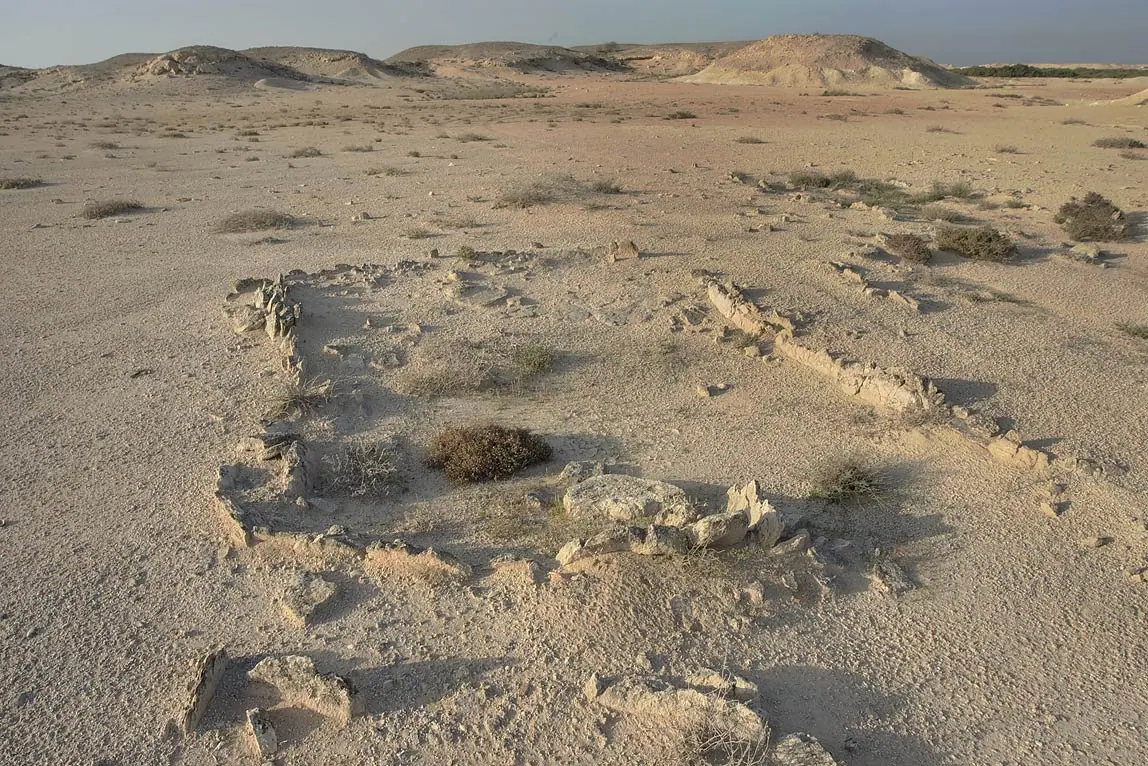
Further north-west, the Zekreet Peninsula hides a strange and beautiful surprise: a line of four steel monoliths rising out of the barren rock in the sculpture installation East-West/West-East, visible from miles away and best visited early before the heat. Nearby at Al Jassasiya you can walk among hundreds of petroglyphs — cup marks, boat shapes and geometric carvings pecked into low limestone by people whose purposes remain a mystery.
If you're in the country between October and April, spend a Thursday morning at the camel racing track at Al Shahaniya, where robot-jockeyed camels thunder down a long straight and owners lean over the rails shouting. It's free to watch, deeply local and finishes early enough to leave the rest of the day free.
Beyond Doha: Pearling Towns, Watchtowers and Mangroves
Head north-west for around ninety minutes and you reach Al Zubarah, the country's most important archaeological site and a UNESCO World Heritage listing: a walled 18th- and 19th-century pearling and trading town, abandoned to the sand, beside a restored fort with a small museum. The emptiness is the point — dunes, sea and low ruins with almost nobody there. Combine it with a stop at the Sheikh Faisal Bin Qassim Al Thani Museum on the road back, a gloriously eccentric private collection of cars, carpets, coins and traditional crafts.
Closer to Doha, Al Wakrah keeps the feel of an old fishing and pearling town, with a low-key souq, a dhow harbour and a corniche where families picnic in the evenings. Inland at Umm Salal Mohammed, the Barzan Towers stand like sentinels — 19th-century watchtowers built to guard the wells and give early warning of approaching raiders.
For greenery, go to Al Khor and the mangrove channels of Bin Ghannam Island, often called Purple Island, where kayakers paddle between roots and flamingos and herons feed at low tide. Winter is the only sensible season for it, and the tide times dictate your visit — check before you set out.
When to Go, How to Move and How to Behave
Come between November and March. Daytime temperatures sit comfortably in the low twenties, evenings in December and January need a light jacket, and the whole country moves outdoors — souq nights, desert camps, dhow cruises, camel racing. April and October are tolerable but humid; from May to September the heat is genuinely punishing and life retreats indoors to museums, malls and pools. Two full days covers the highlights; four lets you add the desert, Al Zubarah and a slow morning in Katara.
Doha's driverless metro is cheap, spotless and connects the airport, the souq area, Katara, the exhibition centres and the stadiums; ride-hailing apps and metered taxis fill the gaps, and the Corniche and souq districts are walkable in winter. Public buses are limited, so plan day trips to the desert, Al Zubarah or Al Khor with a guide or a hired car rather than relying on spontaneity.
Dress modestly in public: shoulders and knees covered in souqs, museums and government areas, though hotels, beaches and clubs are relaxed, and both men and women can wear shorts and swimwear at resort pools. Alcohol is served only in licensed hotel restaurants and bars, and is invisible during Ramadan daytime. During the holy month, working hours shorten, some venues close, and the fourteenth night brings Garangao, when children in traditional dress go door to door collecting sweets — a joyful, family-centred night that visitors are welcome to witness. Also worth knowing: National Sports Day in February shuts down offices for a country-wide day of walking, cycling and football, and National Day on 18 December fills the Corniche with parades, car decorations and fireworks.
Frequently asked questions
How many days do you need in Qatar?
Two full days is enough for Souq Waqif, the Museum of Islamic Art, the National Museum of Qatar, Katara and the Corniche. Add two more days to do the desert and Khor Al Adaid inland sea, Al Zubarah and Al Wakrah properly without rushing.
What is the best time of year to visit Qatar?
November to March. Temperatures are mild, evenings can be cool in December and January, and desert trips, camping, dhow cruises and camel racing all run. Summer from May to September is extremely hot and best avoided unless you plan to stay indoors.
What food should I try in Qatar?
Machboos (spiced rice with meat or fish), harees, thareed, madhruba in winter, luqaimat and balaleet for sweets, and karak tea. Eat at souq kitchens and family-style restaurants where dishes are shared from a central platter.
Can tourists drink alcohol and what are the rules during Ramadan?
Alcohol is available only in licensed hotel restaurants and bars; it isn't sold in shops or served in public. During Ramadan, daytime eating, drinking and smoking in public are discouraged, and some venues adjust hours, but hotel restaurants continue to serve after sunset.
How should I dress and behave in Qatar?
Cover shoulders and knees in souqs, museums and public buildings, and dress modestly in residential areas; resort pools and private beaches are relaxed. Ask before photographing people, especially women, and accept coffee or dates if offered — it is a genuine gesture of welcome.