Portugal looks small on a map until you start counting the distances — Lisbon to Porto is a half-hour in the air, Lisbon to Madeira is under two hours, and each landing drops you into a completely different landscape. This is a one-week route built around flying smart: land in Lisbon, work north through Sintra and Porto, then spend your final days on a beach or a volcanic island.
Day 1: Landing in Lisbon and Easing into Alfama
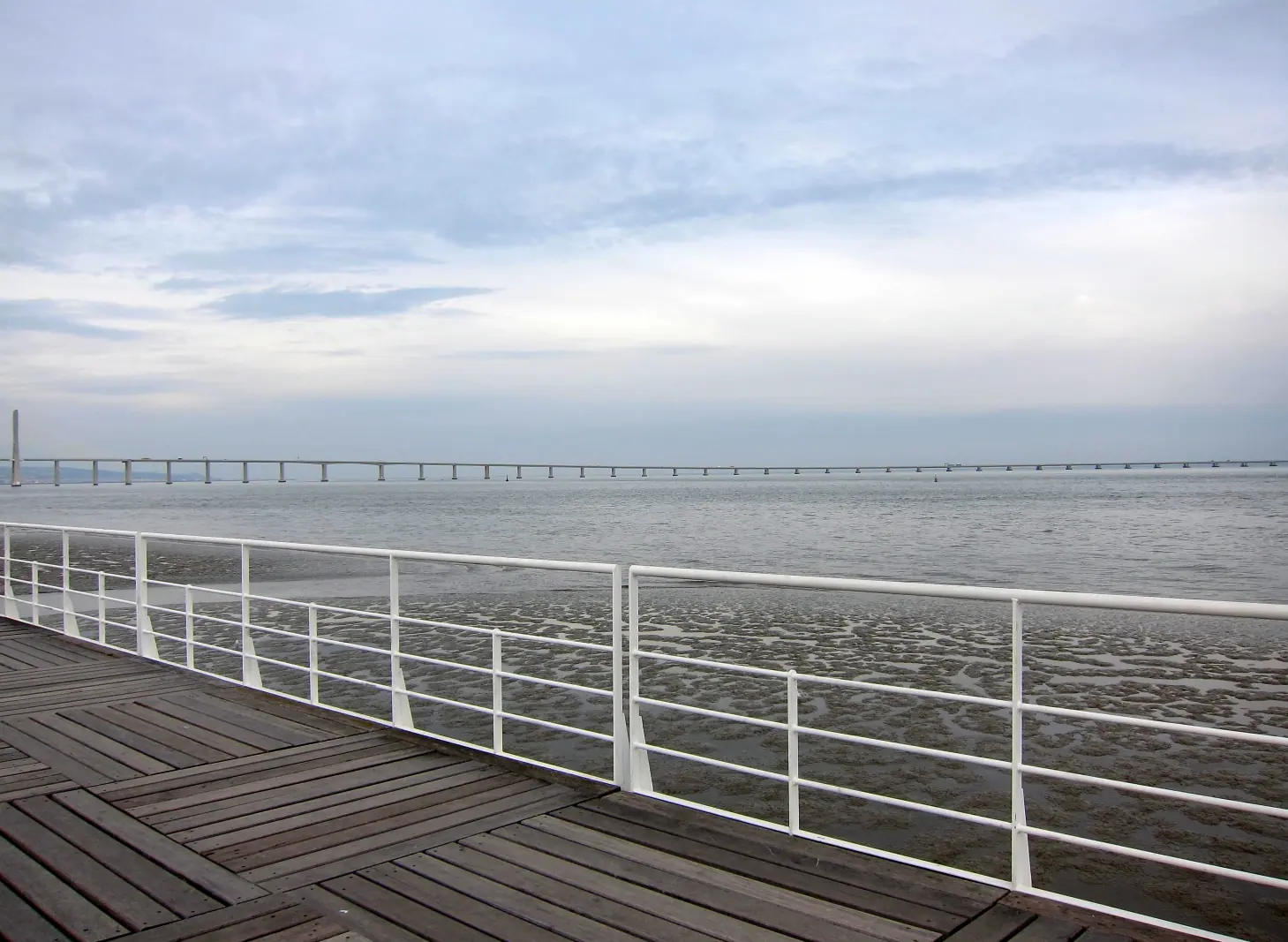
Most long-haul and European flights touch down at Lisbon's Humberto Delgado Airport, which sits remarkably close to the centre — a metro ride of roughly twenty minutes or a short taxi hop puts you in the Baixa within half an hour of clearing baggage claim. Resist the urge to sleep. Drop your bags, walk downhill to Praça do Comércio, and let the wide brown Tagus estuary do the work of waking you up. The square, rebuilt after the 1755 earthquake, is the ceremonial front door of the city, with its triumphal arch framing the grid of Baixa streets behind it.
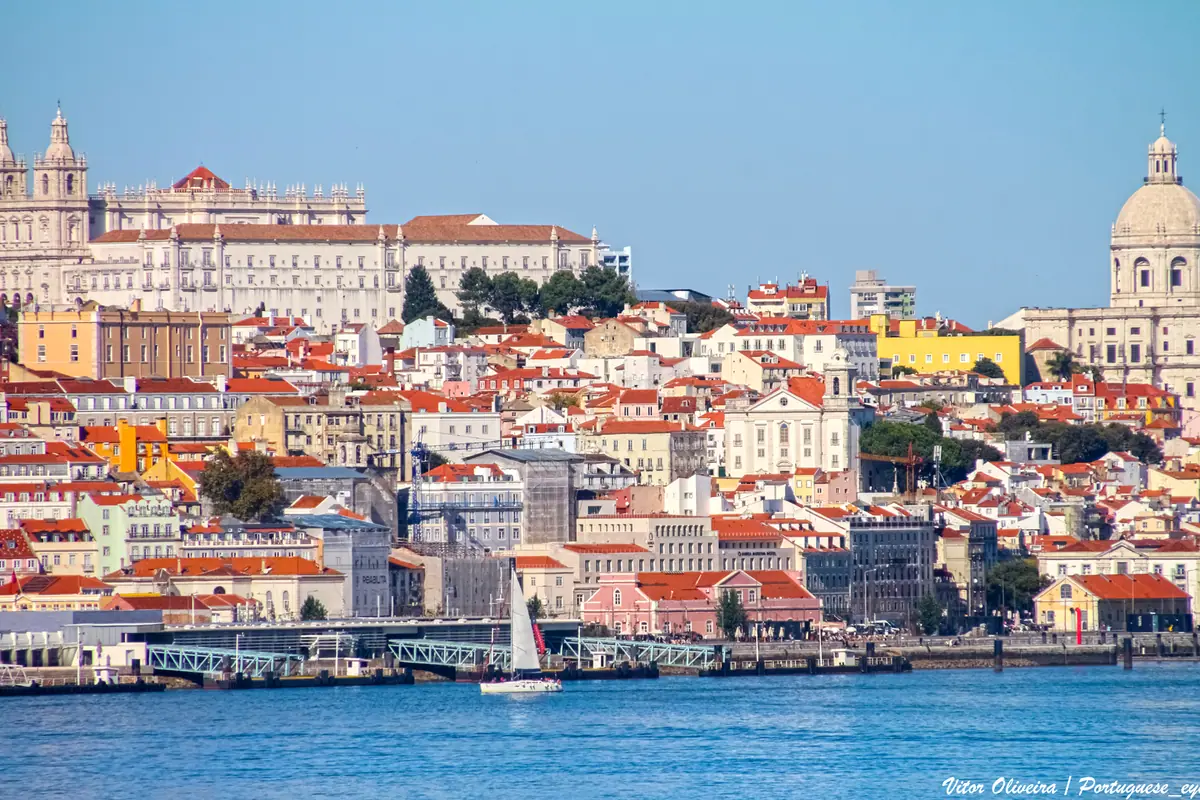
From there, drift east into Alfama, the oldest quarter, where laundry hangs between tiled facades and the streets narrow into staircases. Two viewpoints anchor the wander: Miradouro de Santa Luzia, with its pergola and azulejo panels, and the higher Miradouro da Senhora do Monte, the best free panorama over the castle and the river. Finish with grilled fish in a tiny tasca and, if you have the energy, a few minutes of mournful fado drifting out of a doorway — no ticket required if you simply stand in the lane and listen.
Book your arrival for late April to June or September to October if you can. Those windows bring warm, clear days without the crushing July and August heat and crowds, and flight prices are noticeably gentler than at peak summer. Winter flights are cheap but the Atlantic weather can be grey and gusty, so pack a waterproof layer whatever the forecast promises.
Day 2: Belem, the Castelo and Lisbon's Unmissable Sights
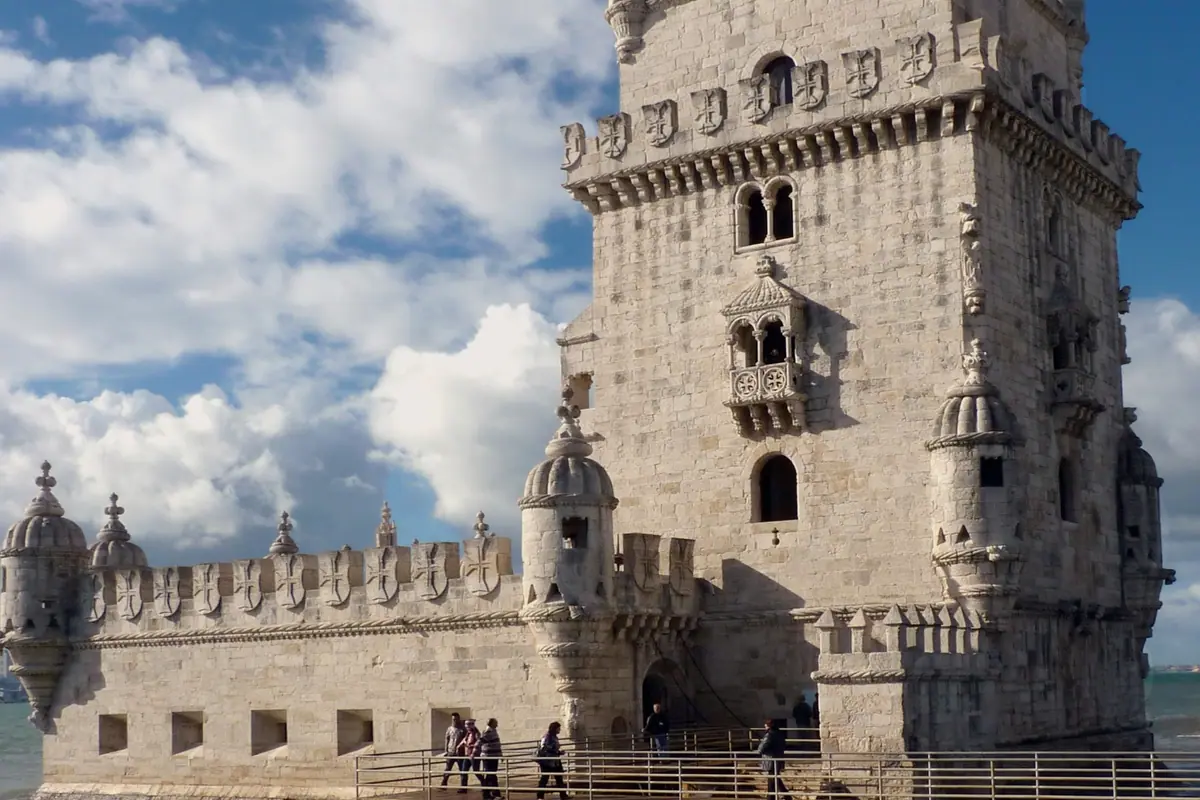
Start early in Belém, the riverside district that holds Portugal's greatest monuments. The Jerónimos Monastery, a UNESCO-listed masterpiece of Manueline stonework carved into ropes, sea monsters and spices, opens its cloisters in the morning and the queue grows fast — arrive within the first hour. A few minutes' walk away, the Torre de Belém rises straight out of the water, a fortified tower that once guarded the harbour entrance; climb to the top for views back along the river. Between them stands the Padrão dos Descobrimentos, the great ship-prow monument to the navigators, and slightly upstream the striking modern collection of the Belém Cultural Centre and the riverside art museum next door.
Break for a warm custard tart, dusted with cinnamon, from one of the bakeries near the monastery — this is the neighbourhood that made pastéis de nata famous, and eating one here is a genuine rite of passage. Then take tram 15 or the train back towards the centre and climb to Castelo de São Jorge, the Moorish hilltop fortress whose terraces give you the definitive view of Lisbon's red rooftops spilling towards the river. Peacocks wander the walls, and the camera obscura in the nearby tower is a clever way to see the city in real time.
End the day in Bairro Alto or the riverside lanes of Cais do Sodré, where the market hall fills with food stalls and the streets turn into one long, cheerful crowd after dark. If you have a spare hour, the National Tile Museum in the old convent at Xabregas explains the blue-and-white azulejos you have been walking past all day.
Day 3: Sintra's Palaces and the Edge of Europe
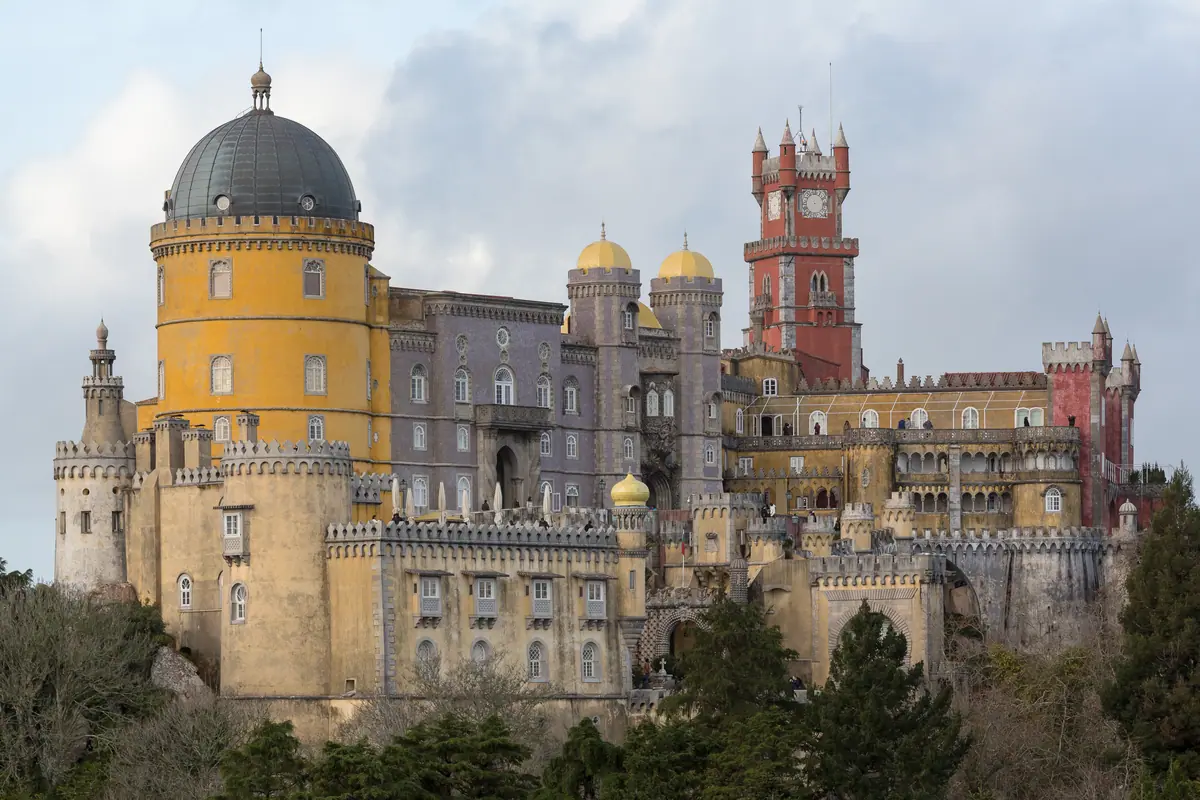
Sintra is a forty-minute train ride from Rossio station and feels like a different climate — cool, misty and wooded, with palaces dropped into the hills. Buy a timed ticket for the Palácio da Pena first and take the earliest slot you can; its painted terraces, domed towers and absurdly romantic setting above the treetops are the single most photographed sight in Portugal, and by midday the shuttle buses disgorge crowds. Allow two to three hours there.
Afterwards, walk or ride down to Quinta da Regaleira, where a spiral initiation well descends nine tiers into the ground and tunnels connect grottoes and follies across a mossy estate. The Castelo dos Mouros, a ruined Moorish wall snaking along the ridge, is a steeper but quieter alternative with enormous views. If you have time for one more, the gardens at Monserrate are the most overlooked and least crowded of Sintra's estates.
Finish the day at the coast. Bus 403 winds through the hills to Cabo da Roca, the westernmost point of mainland Europe, where a lighthouse clings to cliffs above the Atlantic and the wind is always doing something dramatic. Continue to Cascais for a late dinner by the marina, then take the train back to Lisbon — a full day, but one that justifies the early alarm.
Days 4-5: Flying North to Porto and the Douro Valley
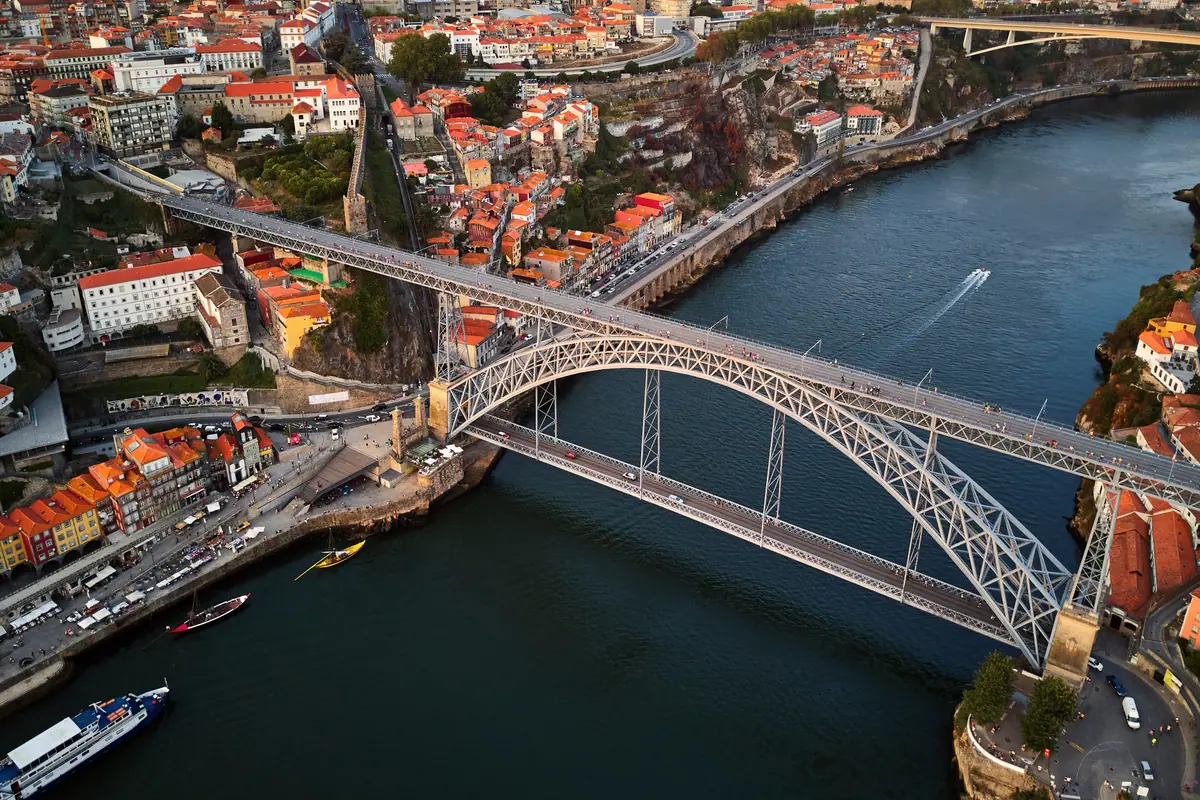
A short hop of around an hour connects Lisbon and Porto, and it is the single best use of a domestic flight on this route if your week is tight; the train takes roughly three hours and is scenic but eats daylight. Porto rewards you immediately. Cross the Dom Luís I Bridge on its upper deck, where trams rattle past and the two banks of the Douro open up beneath you, then descend into Ribeira, the riverside quarter of tall, narrow houses, and wander the medieval lanes up to the São Bento railway station, whose entrance hall is papered with twenty thousand azulejo tiles depicting Portuguese history.
Climb the Clérigos Tower for the classic rooftop view, peek into the century-old ornate bookshop on Rua das Carmelitas, and browse the Bolhão Market for cheeses, olives and cured meats. Across the river in Vila Nova de Gaia, the port lodges offer tours and tastings of tawny and vintage ports, with cellars that stay cool even in August. Sunset from the Miradouro da Vitória, above the roofs and the river, is the city's best free finale.
Spend day five in the Douro Valley, easily reached by train from São Bento or Campanhã to Pinhão. The line follows the river through terraced vineyards that have been carved into the hillsides for centuries; from Pinhão you can visit quintas for tastings or take a taxi up to the São Leonardo da Galafura viewpoint, where the river bends in a near-perfect loop below you. September and early October are harvest season, when the valley is at its most alive.
Days 6-7: Choose Your Finale — Algarve, Madeira or the Azores
With two days left, take another short flight. The Algarve is forty-five minutes from Lisbon into Faro, and from there the coast delivers honey-coloured cliffs and sea caves: the Benagil Cave, accessible by kayak or boat from nearby beaches, the sculpted rock stacks of Ponta da Piedade near Lagos, and the golden sands of Praia da Marinha. Fly into Faro and base yourself in Lagos or Tavira if you want a car-free, walkable last stretch. The Algarve is warmest from May to October and still pleasant for coastal walks in February.
Madeira is a touch under two hours from Lisbon and offers something entirely different: Funchal's gardens and cable car up to Monte, the levada walking trails that follow irrigation channels through laurel forest, and the sunrise from Pico do Arieiro, where you stand above a sea of cloud at nearly 1,800 metres. The volcanic peninsula of Ponta de São Lourenço is a half-day hike with vertical cliffs on both sides, and the natural rock pools at Porto Moniz are swimmable most of the year. Madeira's climate is mild in every season, though the north coast catches rain.
If you would rather trade islands for volcanoes, the Azores are roughly two and a half hours from Lisbon into Ponta Delgada on São Miguel, where Sete Cidades' twin crater lakes and the steaming geothermal fields at Furnas fill a two-day visit. Whichever you pick, keep the last night near your departure airport — inter-island and regional flights are frequent but weather on the islands can shift schedules at short notice.
Flight Smarts: When to Fly, What to Book and What to Expect
Portugal's main international gateways are Lisbon, Porto and Faro, with Funchal on Madeira and Ponta Delgada in the Azores handling island arrivals; Terceira and a few smaller airports serve the remaining islands. Long-haul services concentrate on Lisbon, so if you are flying from outside Europe, build your trip outward from there. Internal flights are short — rarely more than two and a half hours — but they are also busy in summer, so book seats as soon as your dates are firm, especially for island routes in July and August.
Timing matters more than anything else. Late spring and early autumn give you warm weather, thinner crowds and better fares; midsummer is hot in Lisbon and the Algarve and crowded on the coast; winter is mild in the Algarve but wet and windy further north, with Atlantic storms occasionally disrupting flights to Madeira and the Azores. For domestic hops, arrive at the airport around ninety minutes ahead — these terminals are compact and security is quick, but baggage queues can snarl in peak season.
Pack layers rather than an umbrella you will fight with in the wind, and bring shoes with grip, because Portuguese cobbles and calçada pavements are beautiful and treacherous in the rain. If you plan to drive in the Algarve or explore Madeira independently, book a car in advance for summer, and remember that many island and valley roads are steep and narrow. Finally, treat the train as a genuine option for Lisbon to Porto or the Douro — it drops you in the centre of town, which a flight never does.
Frequently asked questions
What is the best time of year to fly to Portugal?
Late April to June and September to October offer the best balance of warm weather, manageable crowds and reasonable fares. July and August are hottest and busiest, particularly in Lisbon and the Algarve, while winter is mild in the south but wetter and windier in the north and on the islands.
Which airports should I fly into for a one-week trip?
Lisbon is the main long-haul gateway and the logical starting point. Porto works well for a northern route, Faro for the Algarve, Funchal for Madeira and Ponta Delgada for the Azores. Short domestic flights connect all of them, usually in under two and a half hours.
Is it better to fly or take the train between Lisbon and Porto?
Flying takes about an hour in the air but adds airport time at both ends; the train takes roughly three hours and delivers you straight into the city centre with no baggage restrictions. If your week is tight, fly north and take the train back, or use the train for a Douro Valley day trip from Porto.
How far ahead should I book internal flights in Portugal?
Book as soon as your dates are fixed for summer travel, especially to Madeira and the Azores, where seats on the most convenient departure times sell out first. Spring and autumn give you more flexibility, but island routes are worth locking in early in any season.
Do I need a car for this itinerary?
Not for Lisbon, Sintra or Porto, where trains, trams and metro cover everything, and not for the Douro Valley if you use the riverside railway. A car is genuinely useful in the Algarve for reaching clifftop beaches and in Madeira for the mountain viewpoints, but book it well ahead during peak months.
Sort the rest of your trip
Everything for Portugal, in one place
Stay in Portugal
Hotels, guesthouses and apartments — compared in one search.
Search hotels
Transfer in Portugal
Private driver waiting on arrival — no queues, no surprises.
Book a transfer
Travel insurance
Medical cover, delays and lost baggage — sorted before you go.
Get covered