There is no commercial airport inside Palestine, so every visit begins with a flight into a neighbouring hub and a border crossing that feels like the first chapter of the story. What follows is a seven-day loop through the West Bank — stone alleyways, olive terraces, mosaic floors and holy sites layered on top of one another — that fits comfortably into a single week.
Arriving in Palestine: Flights, Borders and Getting Your Bearings
Because Palestine has no working civilian airport, most travellers land at the international airport serving Tel Aviv, roughly an hour by road from Jerusalem, and continue by shared taxi, bus or private transfer. The alternative route is to fly into Amman and cross the Jordan Valley at the Allenby/King Hussein Bridge, a crossing that involves a Jordanian departure terminal, a shuttle bus across no-man's-land and a Palestinian arrival hall — expect one to two hours on a good day, longer on Fridays and around holidays. A third option for those already in the region is to fly into the airport near Eilat in southern Israel and drive north.
Once you are in the West Bank, everything is closer than it looks on a map. Shared minibuses and service taxis link Jerusalem with Bethlehem, Ramallah, Jericho, Nablus and Hebron, and fares are paid in the Israeli shekel, the currency you will use everywhere. Arabic is the everyday language, though English is widely spoken in hotels, restaurants and taxi ranks. Journeys between cities can take thirty minutes or two hours depending on checkpoints, so build slack into every day rather than scheduling sightseeing back to back.
The sweet spots for weather are March to May and September to November, when the hills around Bethlehem and Hebron are green or golden and daytime temperatures sit in the low twenties. Summer is punishing in Jericho and along the Dead Sea, where the mercury climbs past 40°C, while winter brings cold rain to the hill towns and, occasionally, snow to Ramallah. Spring also brings wildflowers to the terraces and the olive harvest colours the autumn.
Days 1–2: The Old City of Jerusalem and the Mount of Olives
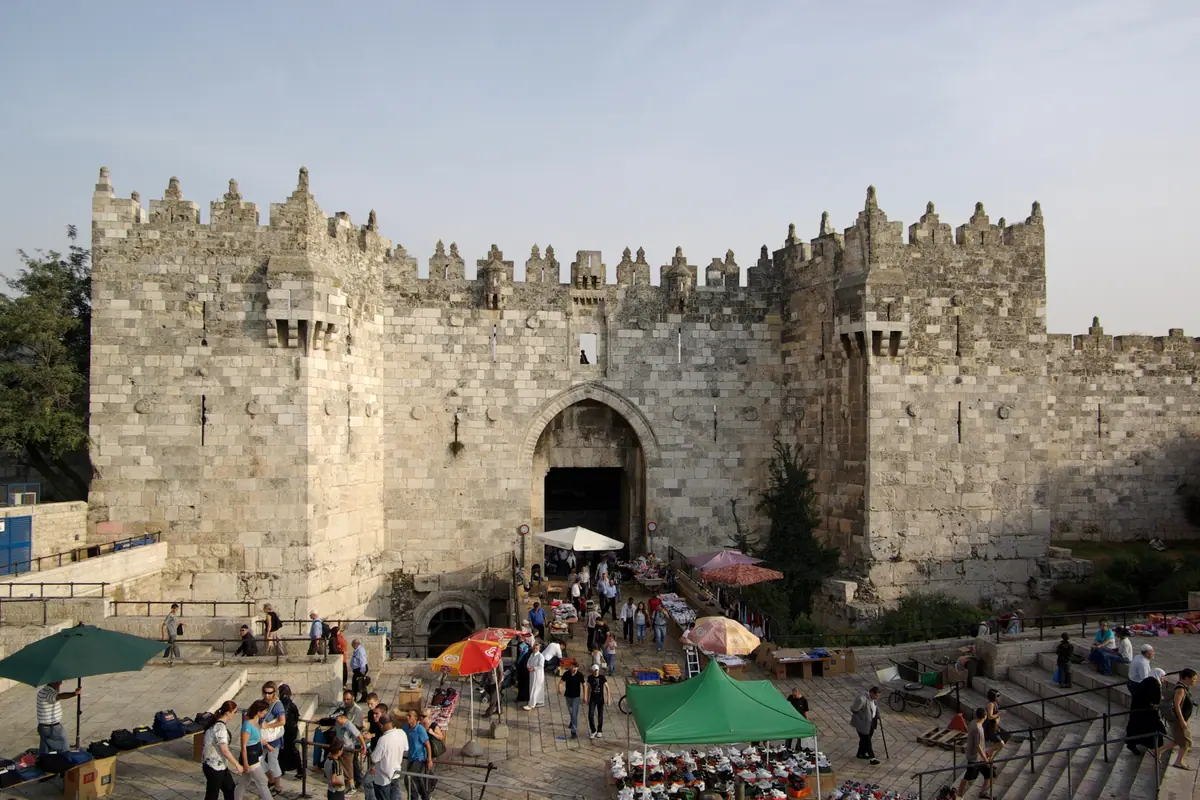
Begin at Damascus Gate, the liveliest entrance to the walled Old City, where the morning trade in bread, spices and coffee spills down the steps. Follow the Via Dolorosa through the Stations of the Cross to the Church of the Holy Sepulchre, the vast, dimly lit basilica built over the sites venerated as Golgotha and the tomb of Christ. Arrive before nine in the morning if you want the Stone of Anointing to yourself; by midday the queues for the Edicule stretch across the rotunda.
The same walled plateau holds the Haram al-Sharif, crowned by the golden Dome of the Rock and the silver-domed Al-Aqsa Mosque, one of the oldest and most revered sites in Islam. Non-Muslim visitors enter through a single gate near the Western Wall during limited morning hours, and modest dress covering shoulders and knees is required. Below the esplanade, the Western Wall draws worshippers around the clock, and the separation between the two is measured in a few dozen footsteps and several thousand years of history.
Spend your second afternoon on the Mount of Olives, where the panorama from the vantage point above the Jewish cemetery takes in the entire Old City, the Dome of the Rock and the desert hills beyond. Walk downhill past the Church of Dominus Flevit, the onion domes of the Russian church and the Garden of Gethsemane, where ancient olive trees stand beside the Church of All Nations. Sunset here is the single best free spectacle in the country.
Day 3: Bethlehem, the Church of the Nativity and the Battir Terraces
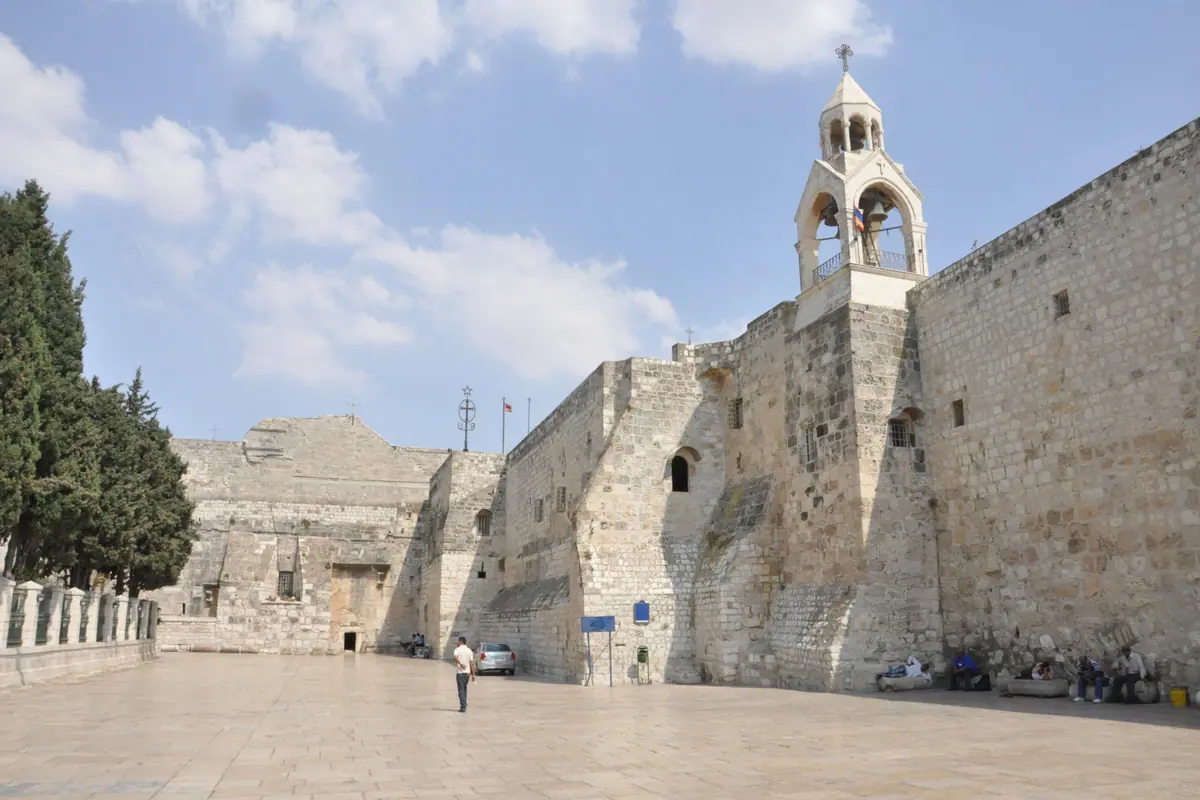
A short ride south of Jerusalem brings you to Bethlehem, where Manger Square is dominated by the Church of the Nativity, the oldest continuously used church in the Holy Land. Duck through the low Door of Humility, then descend to the Grotto of the Nativity, marked by a silver star, and the adjoining Cave of the Manger. The adjacent Church of St Catherine and the cloisters are quieter, and the Franciscan bells on Christmas Eve fill the square with pilgrims from every continent.
Nearby are the Milk Grotto, a chalk-white cave with a tradition tied to the Holy Family, and the Shepherds' Fields in Beit Sahour, where chapels sit among olive groves and open views. Art lovers should walk the length of the separation wall that runs along the edge of the city, now one of the world's longest stretches of political street art, painted and repainted by visiting muralists.
If you have time, push on to Battir, a hillside village whose ancient terraces, Roman-era irrigation channels and dry-stone walls are inscribed as a World Heritage landscape. The walking trail along the valley floor takes about two hours at an easy pace and passes Roman pools and a restored railway line. Bring water and sun protection — there is very little shade once you leave the village.
Day 4: Jericho, Wadi Qelt and the Dead Sea Shore
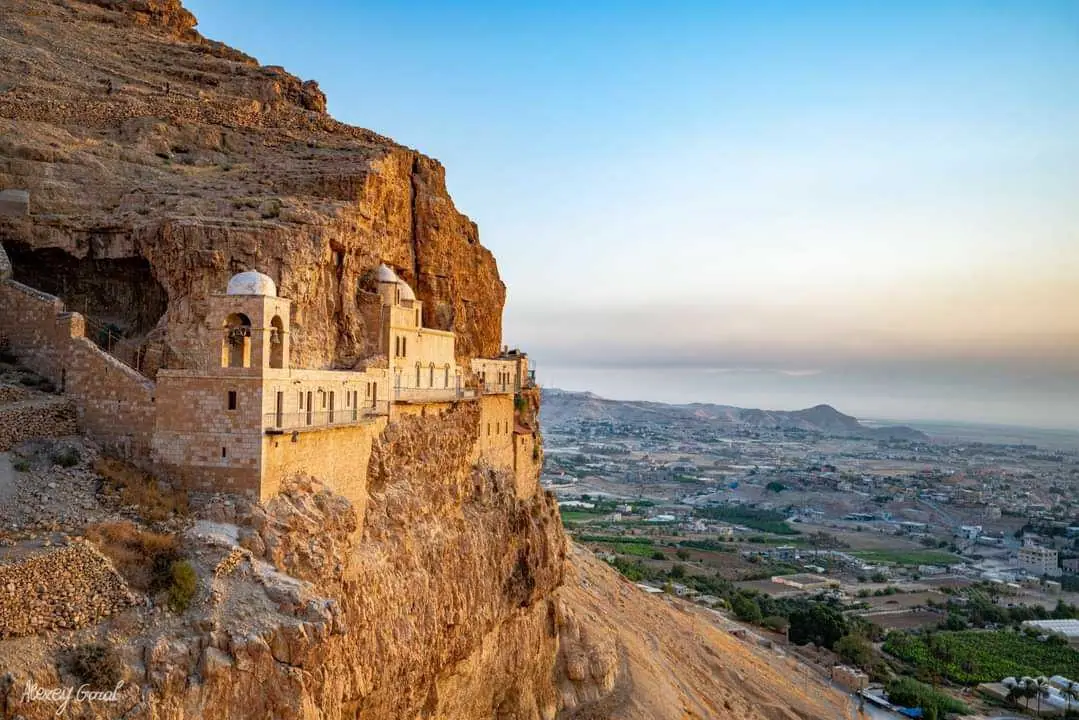
Jericho claims the title of the lowest and one of the oldest continuously inhabited towns on earth, roughly 250 metres below sea level. Start at Tell es-Sultan, the archaeological mound where layers of Neolithic settlement have earned World Heritage status, then visit Hisham's Palace, an eighth-century Umayyad retreat whose mosaic floors, including the celebrated Tree of Life panel, are among the finest in the region. A cable car lifts visitors up the Mount of Temptation to a Greek Orthodox monastery wedged into the cliff face.
Between Jerusalem and Jericho runs Wadi Qelt, a dramatic gorge where St George's Monastery clings to the rock above a seasonal stream. The classic approach is a two- to three-hour walk from the road above, descending past hermit caves; go early, carry water and never attempt it alone in high summer. The monastery itself opens to visitors in the mornings, with shoulders and knees covered.
Finish the day floating in the Dead Sea, whose hyper-saline water makes sinking impossible, on one of the West Bank beaches north of the salt flats. The mud is free, the sunset over the Judean hills is spectacular, and the shore is at its most comfortable from October to April. Rinse off immediately afterwards — the brine stings every small cut.
Day 5: Nablus, Mount Gerizim and the Ruins of Sebastia
Nablus is the West Bank's most atmospheric working city, its Old City a maze of covered souks, spice stalls and caravanserais. Look for the traditional soap factories, where olive oil, lye and lime are still cooked and cut into cubes stamped by hand, then queue at a pastry shop for a plate of hot knafeh, the city's signature cheese dessert. The Turkish baths and the Great Mosque, with its ornate fourteenth-century portal, are both worth an unhurried hour.
On the edge of the city stands Jacob's Well at Balata, a deep rock-cut cistern inside a Greek Orthodox church and one of the oldest venerated water sources in the region. Above Nablus rises Mount Gerizim, home to a small Samaritan community who maintain their own ancient Torah and celebrate Passover with a public sacrifice on the mountaintop — a remarkable thing to witness if your visit coincides with spring.
An hour north-west, Sebastia layers Roman columns, a Herodian temple platform, a Crusader cathedral and a village of olive-oil presses on one hilltop. The site is rarely crowded, the views over the surrounding valleys are wide, and the local families who run the small cafés serve some of the best maqluba you will eat anywhere in the country.
Days 6–7: Hebron, Ramallah and the Road Home
Hebron, or Al-Khalil, is built around the Ibrahimi Mosque, the shrine over the Cave of the Patriarchs and one of the holiest sites for both Muslims and Jews. The Old City's covered market is famous for glass-blowing and hand-painted ceramics, and you can watch molten glass being shaped in workshops that have operated for centuries. Be prepared for a heavily secured city centre, with checkpoints and a quieter atmosphere than elsewhere in the West Bank.
Round off the week in Ramallah, the de facto administrative capital, where Al-Manara Square anchors a busy café culture and the Yasser Arafat Museum and the Mahmoud Darwish Museum offer two very different portraits of modern Palestinian history. Dar Zahran, a restored 200-year-old house, is a good place to buy crafts directly from makers. From here it is under an hour back to Jerusalem.
For the return leg, allow a full morning if you are crossing to Jordan via the Allenby/King Hussein Bridge, and check the day's opening hours in advance — the crossing closes for the Sabbath and on major holidays. Many travellers fly out of Amman or Tel Aviv the following day, so book an evening flight rather than a midday one to avoid a sprint at the border.
Frequently asked questions
Is there an airport in Palestine?
No. There is currently no operating commercial airport in the West Bank or Gaza, so visitors fly into a neighbouring hub — the international airport serving Tel Aviv, Amman's Queen Alia International Airport, or the airport near Eilat — and continue by road or across a land border.
How do I get to the West Bank from Amman?
Most travellers cross the Jordan Valley at the Allenby/King Hussein Bridge, using a shuttle bus between the two terminals. Allow one to two hours in normal conditions, longer on Fridays and around religious holidays, and have your onward transport arranged before you arrive on the Palestinian side.
When is the best time of year to visit Palestine?
March to May and September to November offer the most comfortable weather for walking in Jerusalem, Bethlehem and Nablus. Winter is cold and wet in the hill towns, while Jericho and the Dead Sea shore become seriously hot from June to August and are best visited early in the morning.
How many days do you need in Jerusalem's Old City?
Two full days let you cover the Church of the Holy Sepulchre, the Via Dolorosa, the Haram al-Sharif and the Western Wall without rushing, plus an evening on the Mount of Olives. Add a third day if you want museums, the City of David or the Mount Zion sites.
What should I pack for a week in the West Bank?
Pack modest clothing that covers shoulders and knees for holy sites, comfortable walking shoes for cobbled alleys, a refillable water bottle, sun protection and a light rain shell in winter. Carry your passport at all times, since you may be asked for it at checkpoints between cities.
Plan it — flights in Palestine
Live search, booked directly with trusted providers.
Sort the rest of your trip
Everything for Palestine, in one place
Stay in Palestine
Hotels, guesthouses and apartments — compared in one search.
Search hotels
Transfer in Palestine
Private driver waiting on arrival — no queues, no surprises.
Book a transfer
Travel insurance
Medical cover, delays and lost baggage — sorted before you go.
Get covered