Few places on earth compress so much sacred ground, Roman stonework and desert drama into so short a drive. Palestine runs from the cliff monasteries of the Jordan Valley to the terraced olive hills of Hebron, with Bethlehem and the Old City of Jerusalem at its heart. This is a landscape you travel slowly, on foot and by shared taxi, one old town at a time.
Bethlehem and the Church of the Nativity
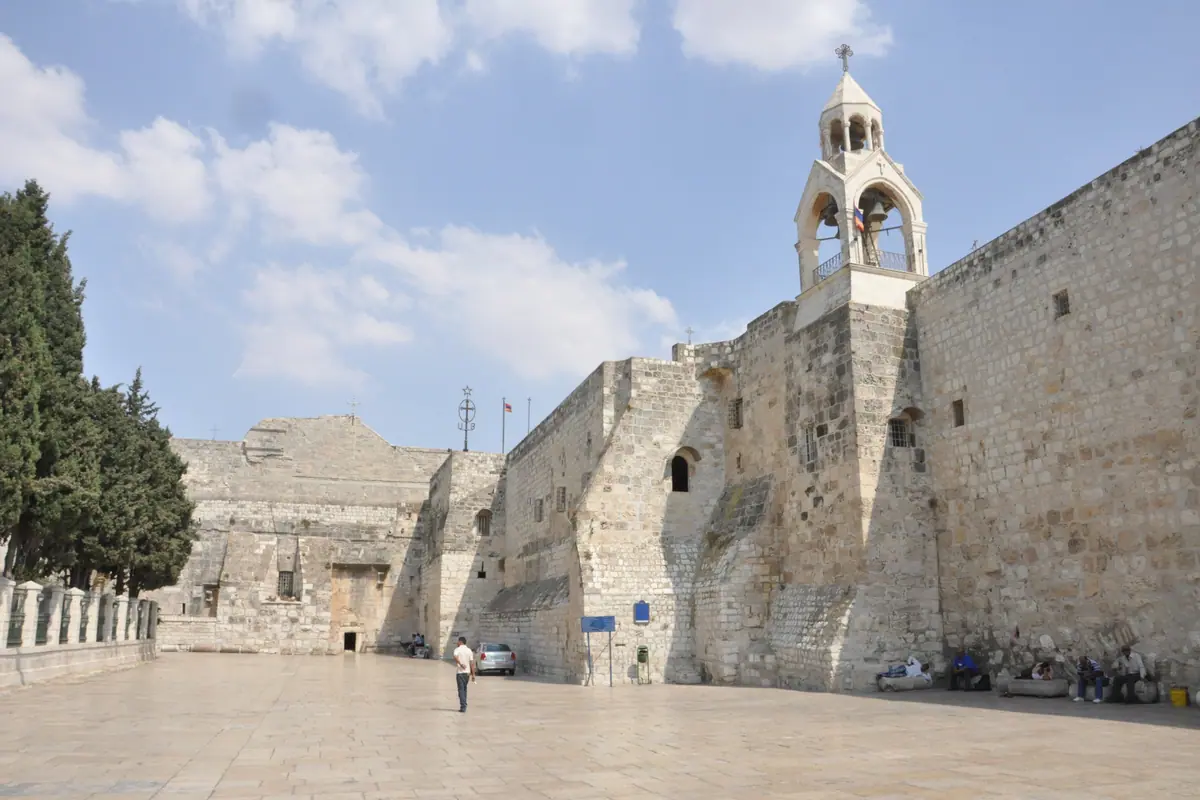
Manger Square is the natural first stop for most visitors, and the basilica that rises above it is the reason. The Church of the Nativity was founded in the fourth century and rebuilt under Justinian, making it one of the oldest continuously used churches anywhere. You enter through the Door of Humility, a low stone lintel that forces everyone — pilgrim, bishop, tourist — to bow. Below the nave lies the Cave of the Nativity, marked by a silver star, with St Catherine's Church beside it and three different Christian communities sharing custody of the building. Come at opening time or in the last hour before closing; midday brings the heaviest groups.
The town rewards a slower wander. The Milk Grotto, a chalky cave chapel a few minutes downhill, and Shepherds' Field in neighbouring Beit Sahour are both easy walking additions, and the old market streets are full of olive-wood carving workshops that have supplied pilgrims for generations. Along the edge of town, the separation wall carries a long stretch of political street art, and just outside the built-up area the ancient terraced valley of Battir and the three Byzantine-era Solomon's Pools show how old the farming here really is.
Half a day more buys you Herodium, the fortress-palace Herod the Great built on an artificially raised hill about twenty minutes southeast. From the summit the view sweeps over the Judaean desert to the Dead Sea. It is hot, exposed and best done early or late; take water and a hat.
The Old City of East Jerusalem
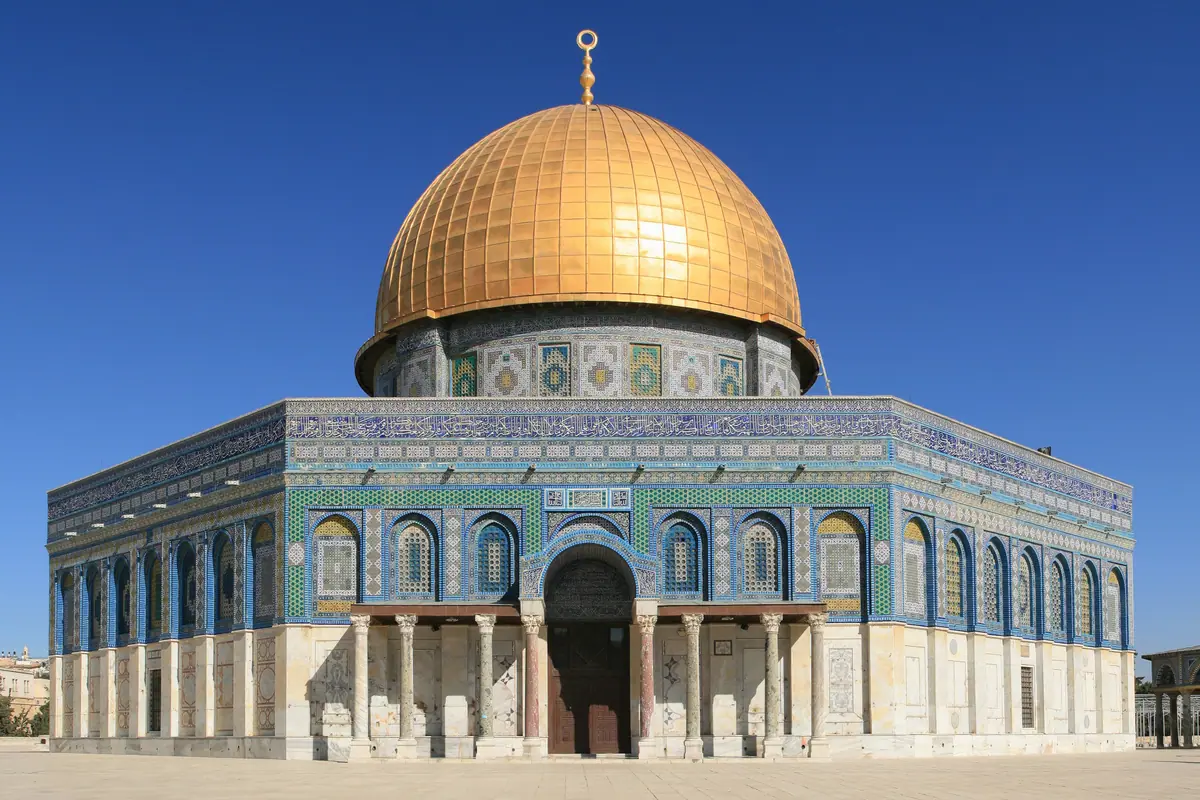
Inside the sixteenth-century walls, four quarters pack together a kilometre of lanes. The Haram al-Sharif — the Noble Sanctuary, known to Jews as the Temple Mount — holds the Dome of the Rock with its gold-and-blue tilework and the vast Al-Aqsa Mosque. Access for non-Muslim visitors is limited to particular gates and morning hours, and those arrangements change, so ask locally on the day rather than assuming. Modest dress covering shoulders and knees is expected everywhere in the Old City; a scarf is useful and shoes come off in mosques.
The Church of the Holy Sepulchre is the other anchor, built over the sites of the crucifixion and the tomb. Inside you find Golgotha, the Edicule enclosing the tomb, and the Stone of Anointing where pilgrims kneel. It is shared by several denominations, which explains the ladders and the locks, and it is at its most atmospheric at dawn and again in the final hour before closing. Between these two poles runs the Via Dolorosa, its fourteen stations threading through the Muslim Quarter souk, past the pools and Crusader church of St Anne, out through Damascus Gate or down to the Western Wall.
Save an afternoon for the Mount of Olives, where the Garden of Gethsemane, the Church of All Nations, Dominus Flevit and the onion domes of the Russian church cling to the slope above a view that takes in the whole walled city. On Mount Zion you can add the Dormition Abbey and the Room of the Last Supper, and near Jaffa Gate the medieval citadel houses a museum that walks you through four thousand years of the city's story. Sunset from the Mount of Olives is the classic closing shot.
Jericho, the Jordan Valley and the Dead Sea
Jericho sits nearly 250 metres below sea level, which makes it the warmest place in the country in winter and a genuinely punishing one in high summer. Its headline archaeological site, Tel es-Sultan, is a mound of layered cities beside the spring of Elisha, with a round stone tower that ranks among the oldest structures people have ever built. From the outskirts a cable car climbs to the Mount of Temptation, where a Greek Orthodox monastery clings to a cliff face above the plain.
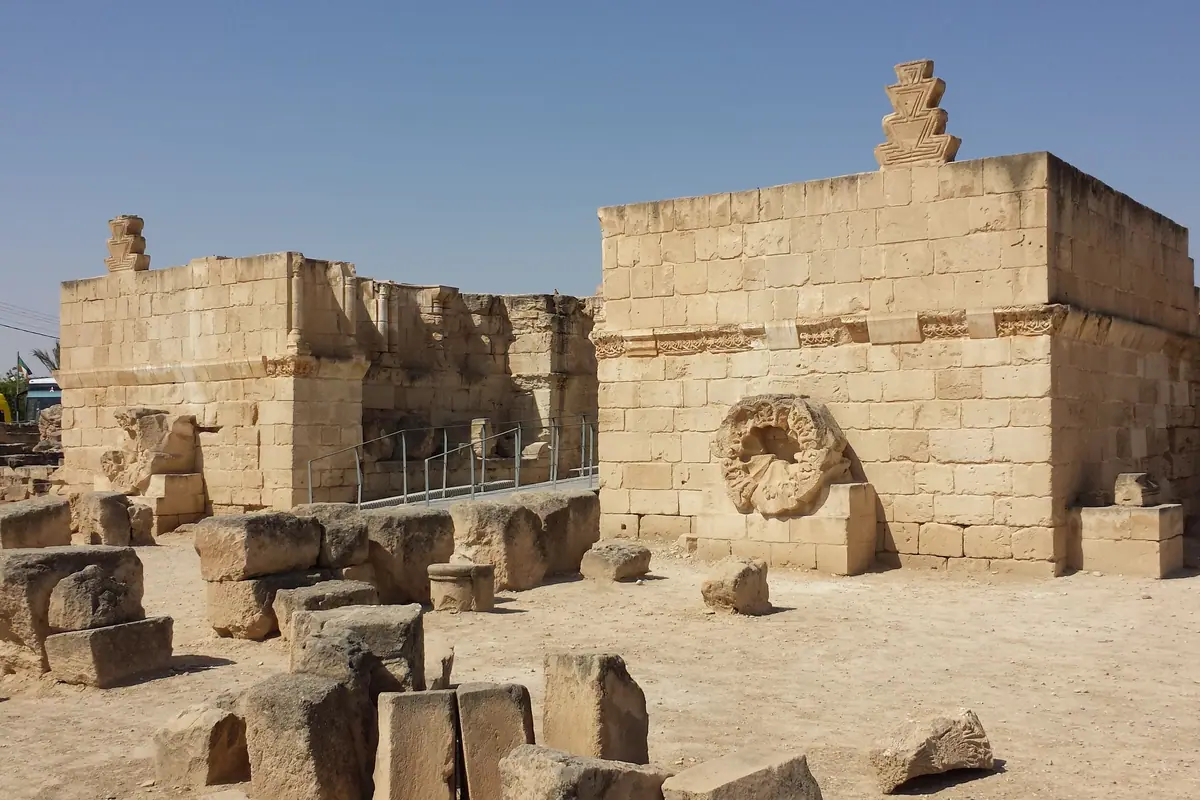
Two more stops belong on the same day. Hisham's Palace, a ruined Umayyad winter residence, preserves a magnificent mosaic floor best known for the tree of life with animals grazing beneath it. Further east, the shrine of Nabi Musa marks a traditional burial place of Moses, and in the stark gorge of Wadi Qelt the monastery of St George hangs over a dry riverbed in a way that photographs never quite capture. Down at the Jordan River, the baptism site draws pilgrims in white robes to a small, green, surprisingly intimate stretch of water.
Finish at the northern shore of the Dead Sea, where you float rather than swim, coat yourself in mineral mud and watch the salt crusts turn pink at sunset. Go early morning or late afternoon, bring sandals for the sharp salt, and keep the water out of your eyes. Late autumn through early spring is the comfortable window down here.
Nablus, Sebastia and the Northern Highlands
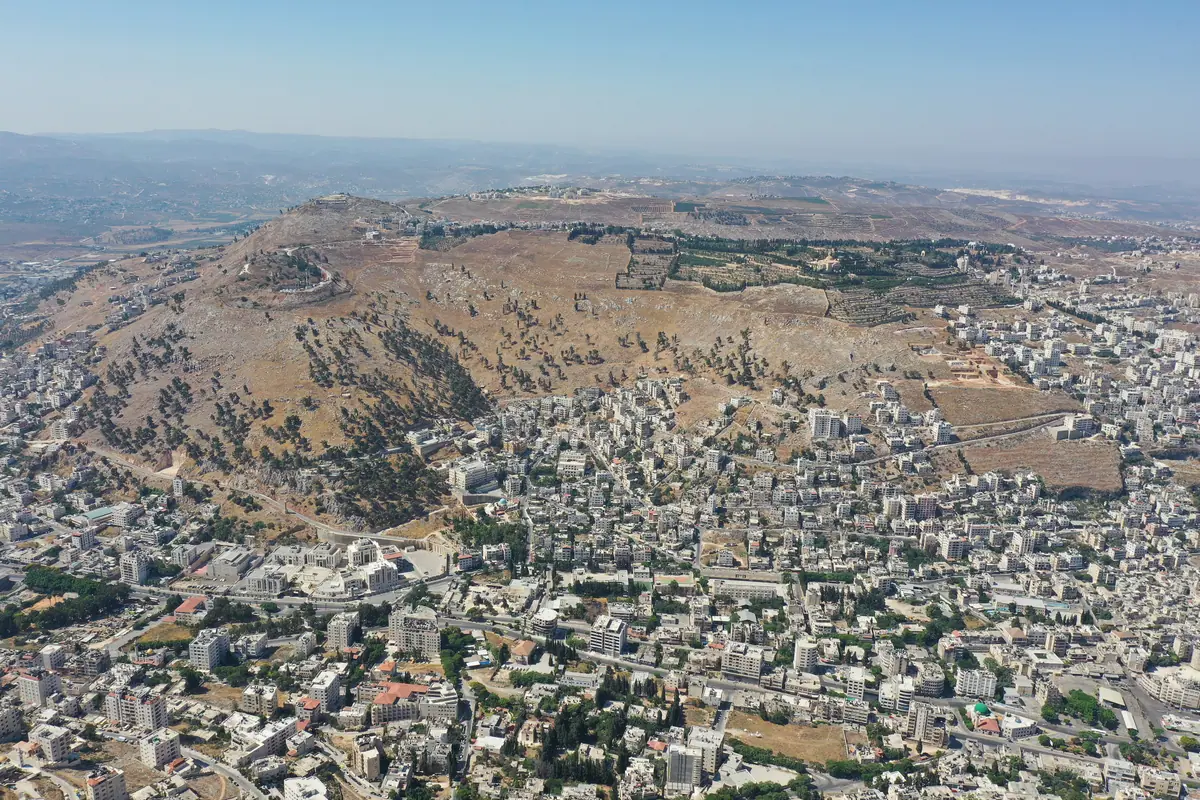
Nablus has one of the liveliest old towns in the region: a covered souk that smells of cardamom and olive oil, an eighteenth-century Turkish bath still in use, and family soap factories pressing hard white blocks from olive oil, lime and ash in the same way for centuries. This is also the place to eat kunafa — hot, cheesy, soaked in syrup — preferably in the morning, straight from the tray, the way locals do it.
Just outside the city at Balata, a church encloses Jacob's Well, one of the oldest sites of Christian pilgrimage in the region. Above the town, Mount Gerizim is home to a small Samaritan community with its own scriptures and festivals, and the ruins of their ancient sanctuary. North-west of Nablus lies Sebastia, an atmospheric village of Roman colonnades, a temple built for Augustus and a Crusader cathedral over a tomb traditionally linked to John the Baptist.
Time a visit for October or November and you will land in the middle of the olive harvest, when families spread tarpaulins under the trees and the air smells of crushed fruit. Spring, roughly March to May, is the other sweet spot, when the hills turn green and the wildflowers are out.
Hebron and the Southern Hills
Hebron, or Al-Khalil, is built around one extraordinary building: the Ibrahimi Mosque, raised over the cave believed to hold the tombs of Abraham, Isaac and Jacob with their wives. The shrine is split between a mosque and a synagogue, with separate entrances and security checks, and visitors should dress conservatively and expect a quiet, sombre atmosphere. It is one of the most historically layered places you can stand in.
The old town around it is a tangle of stone-vaulted lanes, a covered market, and workshops where glass is blown over open flames and ceramics and leather are finished by hand. It is a working city rather than a stage set, so go with patience and an interest in conversation. The surrounding hills are wine and grape country, and the late-summer harvest fills the roadsides with fruit stalls.
Nearby detours worth folding in include the terraced farming landscape around Battir and the springs and vineyards that give the southern highlands their softer side. Winter here can be genuinely cold, with rain and occasional snow settling on the hilltops.
Ramallah, the Central Hills and Planning Your Trip
Ramallah is Palestine's brisk, contemporary counterweight to the holy cities: Al-Manara Square with its lion column, a dense vegetable market, Ottoman-era houses in the old quarter, and a café and gallery scene that fills in the evenings. It makes a practical base, with short drives to Birzeit and to the village of Taybeh, which holds a lively beer festival each October and is known for its small brewery.
On timing, the best months across most of the country are March to May and September to November — mild days, clear light and, in spring, hillsides covered in flowers. Summer is fine in the highlands but brutal in the Jordan Valley and at the Dead Sea, while winter brings rain and cold to Bethlehem, Ramallah and Hebron and pleasant warmth to Jericho. Ramadan shifts opening hours and restaurant rhythms for a month each year, and Fridays are quiet in Muslim areas while Sundays go quiet in Christian ones.
Getting around is easier than it looks: shared taxis and service vans connect the main towns cheaply and frequently, and within old cities your feet are the only sensible transport. Journeys can stretch unpredictably at checkpoints, so plan fewer stops and allow slack rather than racing between five towns in a day. Carry your passport, cover up at religious sites, learn a few words of Arabic — and check current conditions before you travel, because the situation on the ground can change quickly.
Frequently asked questions
What is the best time of year to visit Palestine?
March to May and September to November are ideal almost everywhere: comfortable temperatures, clear skies and, in spring, green hillsides and wildflowers. Jericho and the Dead Sea are at their best from November to March, while highland towns like Bethlehem, Ramallah and Hebron get cold, wet winters with occasional snow.
How many days do you need to see the main sights?
Seven to ten days is a realistic window. That covers the Old City of Jerusalem, Bethlehem and Herodium, a full day in Jericho with the Dead Sea, a day each for Nablus and Hebron, and a relaxed evening or two in Ramallah, without spending half your trip in transit.
How do you travel between Bethlehem, Jericho, Nablus and Hebron?
Shared taxis and service vans link the main towns frequently and cheaply, usually departing from a central station in each city. Journeys are short in distance but can stretch at checkpoints, so allow generous buffers and avoid scheduling more than two towns in a single day.
What food should I try in Palestine?
Don't miss musakhan, roast chicken over sumac-spiced onions and flatbread; maqluba, an upside-down rice and vegetable dish; and Nabulsi kunafa eaten warm in the morning. Falafel, hummus and olive oil with za'atar are everyday staples, and the olive harvest in October and November is the best moment for fresh-pressed oil.
What should I wear and how should I behave at holy sites?
Cover shoulders, chest and knees, and carry a scarf for churches and mosques; shoes come off before entering mosques. Dress a little more conservatively in Hebron and in the Old City generally, ask before photographing people, and keep voices low during prayer. A respectful, unhurried manner opens far more doors than any guidebook tip.
Plan it — experiences in Palestine
Live search, booked directly with trusted providers.
Sort the rest of your trip
Everything for Palestine, in one place
Stay in Palestine
Hotels, guesthouses and apartments — compared in one search.
Search hotels
Transfer in Palestine
Private driver waiting on arrival — no queues, no surprises.
Book a transfer
Stay online in Palestine
Travel eSIM — data the moment you land, no roaming bills.
Get an eSIM