Namibia is a country built for wings: a landscape of rust-red dunes, salt pans and gravel plains so vast that a five-hour drive can pass in forty minutes of flying. This one-week loop links the Namib's great dunes, the cold Atlantic coast and Etosha's floodlit waterholes, hopping between bush airstrips that most travellers never see from the ground.
Why Fly Namibia Instead of Driving It
Namibia is the second-least densely populated country on earth, and its highlights sit absurdly far apart. Windhoek to Sossusvlei is roughly 350 kilometres of tar and gravel; Sossusvlei to Etosha is closer to 700. Driving that circuit in a week means spending your holiday behind a windscreen. A light aircraft turns those marathon transfers into scenic hops of 45 minutes to two hours, usually cruising at 8,000 to 10,000 feet over the Naukluft Mountains or the white edge of the Atlantic.
The trade-off is weight and flexibility. Most charter flights run with soft duffel bags limited to around 15 to 20 kilograms per person, and schedules bend to weather, so mornings often start before sunrise. On the plus side, a pilot-guide can point out a herd of desert-adapted elephants from the air, land on a private strip beside your lodge, and have you at Deadvlei's dead camelthorn trees before the day-trippers have left their coffee.
The dry winter months from May to October are the classic window: cloudless skies, cool mornings, and game concentrated around water. November to April brings heat, dramatic thunderheads and green desert, which photographers love but which can soften gravel airstrips after rain.
Days 1–2: Windhoek to the Namib Sand Sea
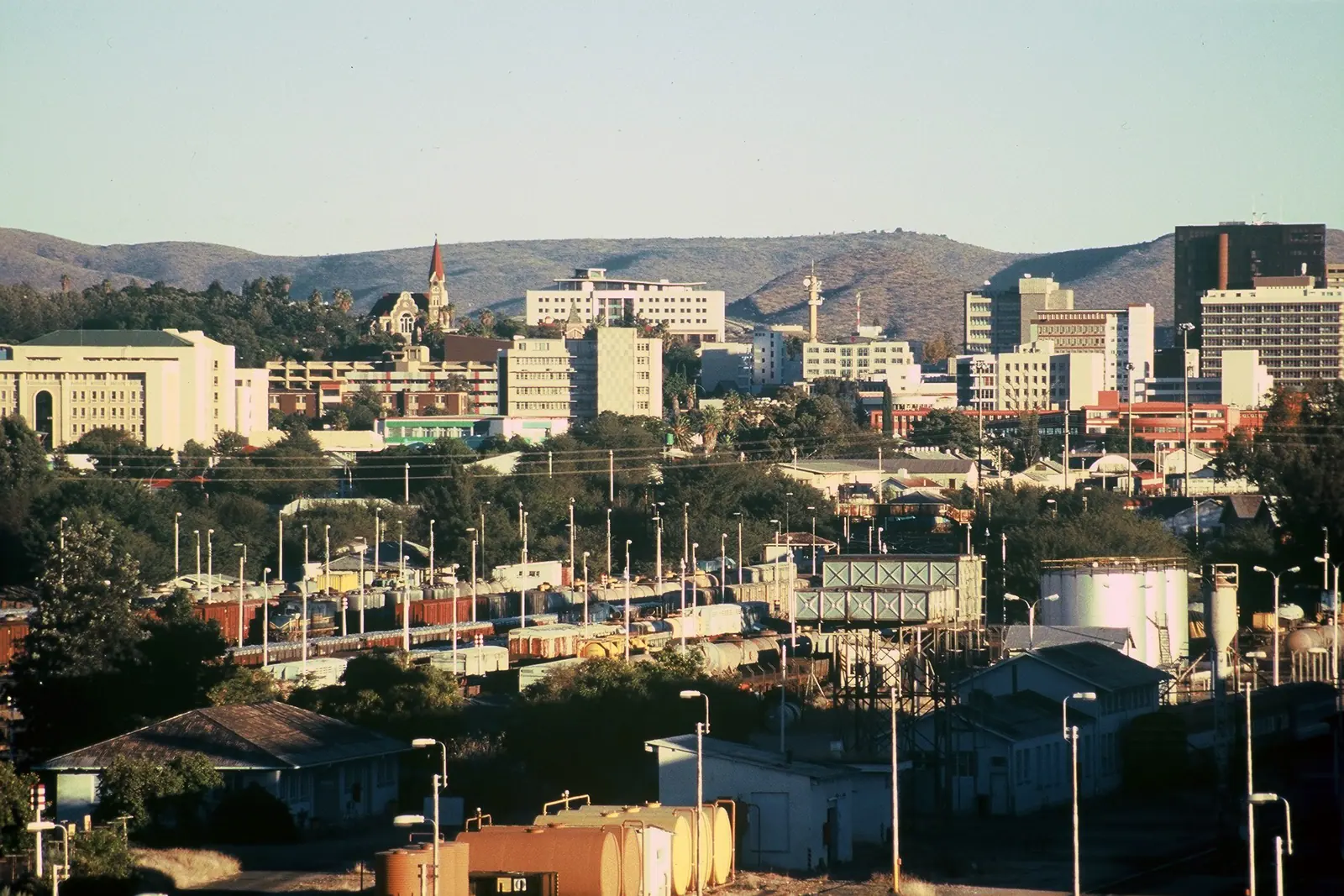
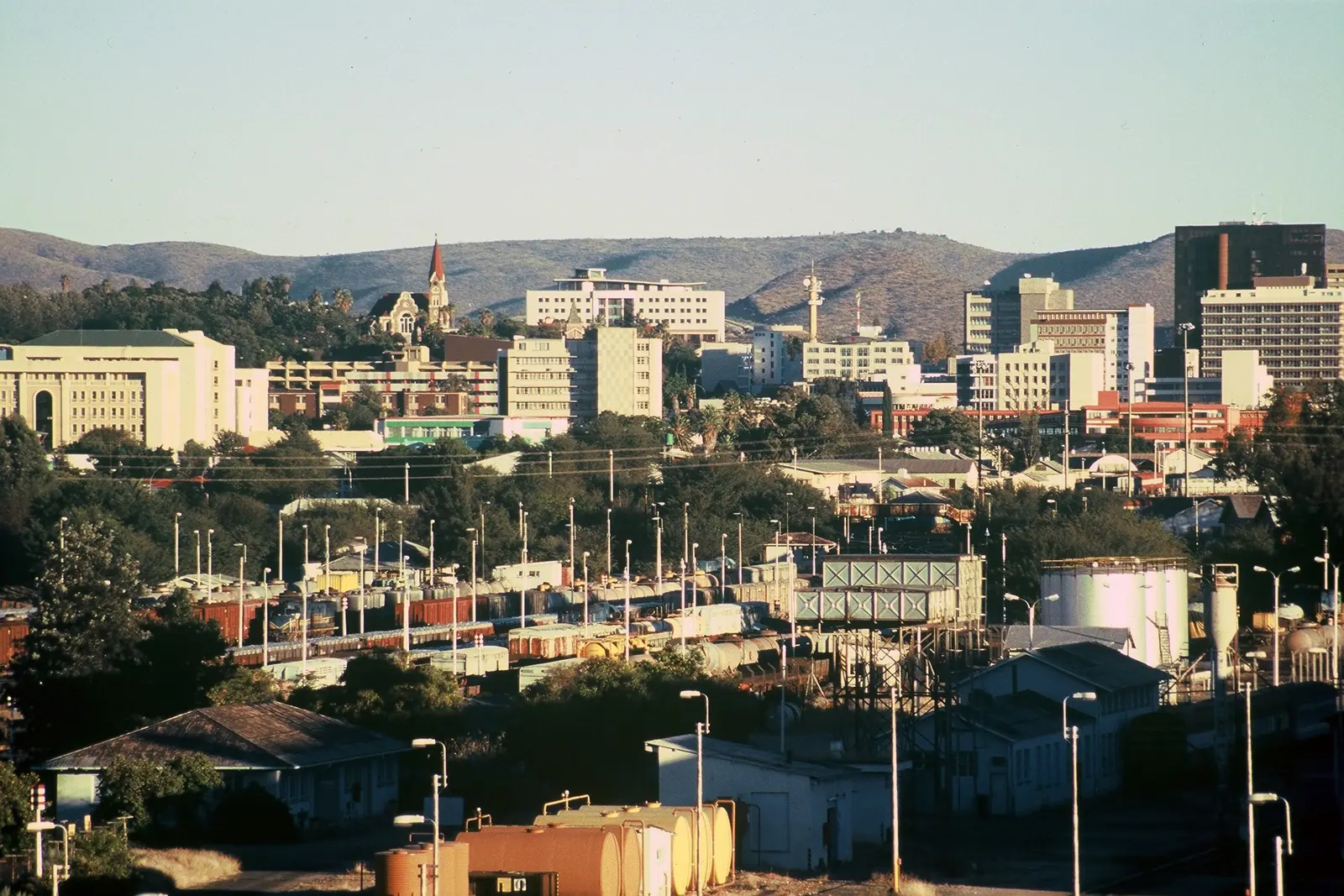
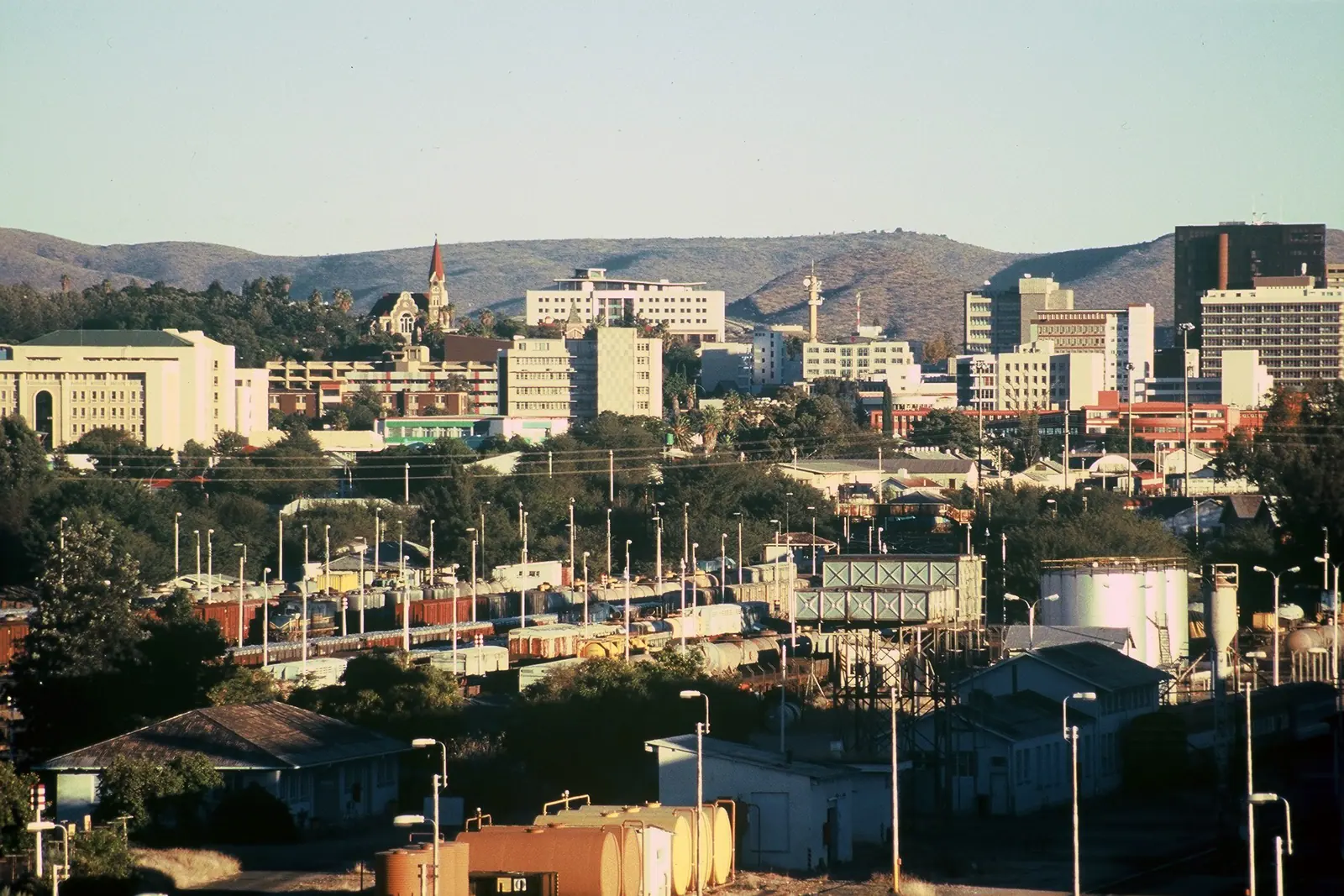
Begin in Windhoek, a small, orderly capital where the Christuskirche's sandstone spire and the Independence Memorial Museum on Robert Mugabe Avenue give you an easy half-day of orientation. Fly out of Eros Airport rather than the international terminal — charter operators cluster there — and within an hour you are over the Khomas Hochland, watching the plateau fracture into the escarpment that guards the Namib.
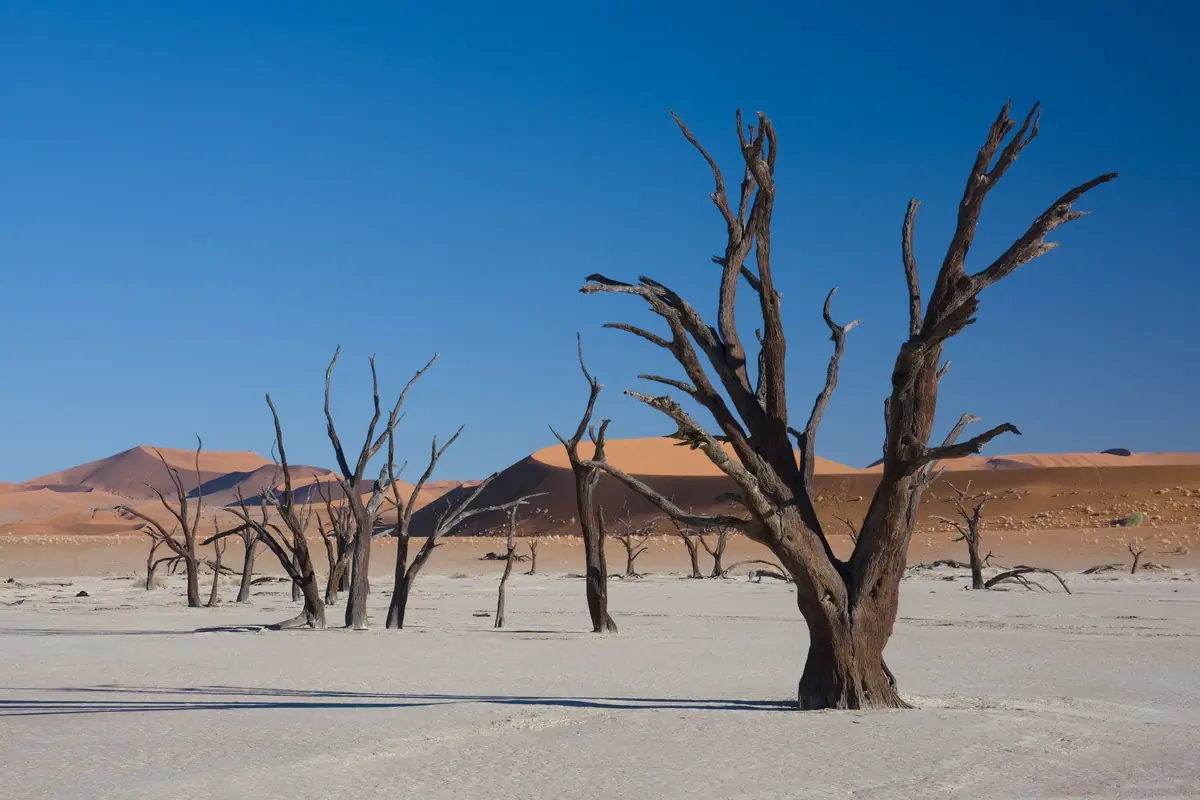
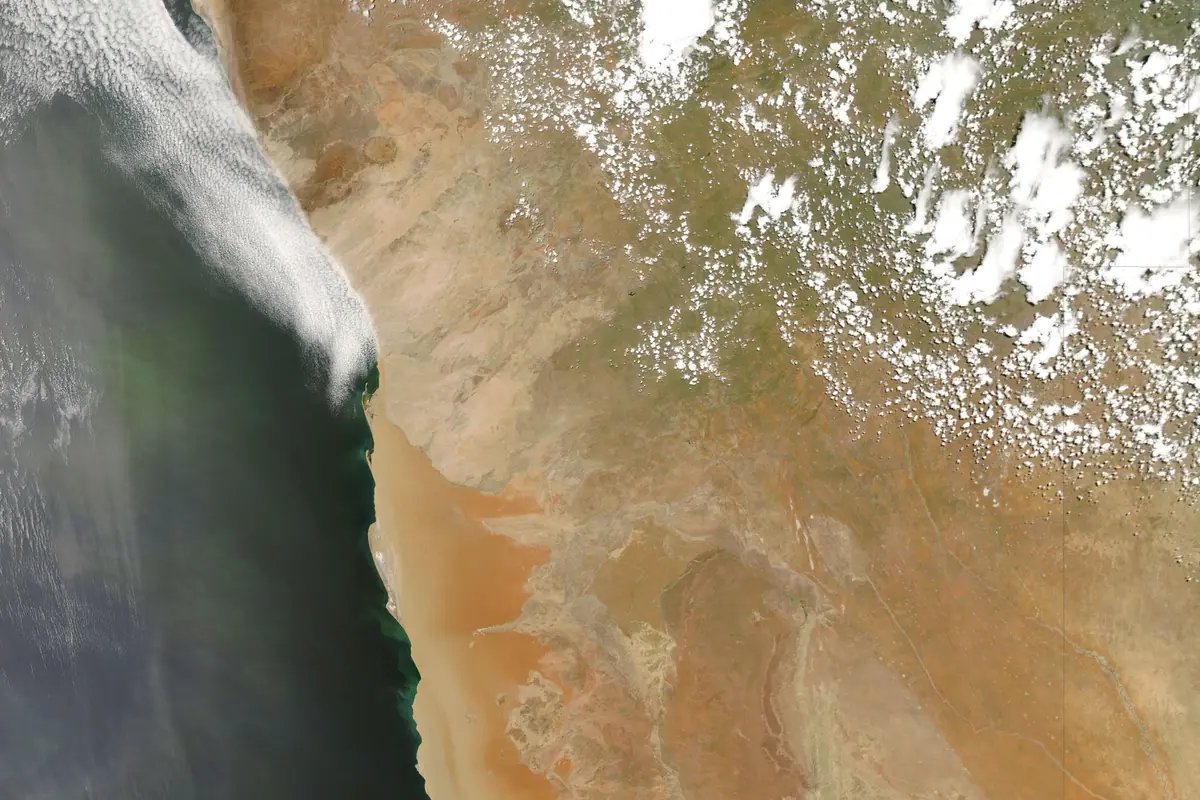
Land at Sesriem or one of the private strips near the park gate and spend two nights. The essential sights are all within the Namib-Naukluft Park: Dune 45, which most people climb for sunrise; the vlei at Sossusvlei itself, where a dry white clay pan sits ringed by 300-metre dunes; and Deadvlei, reached on foot past Big Daddy dune, where blackened camelthorn skeletons stand on cracked white earth against an orange wall of sand. Sesriem Canyon, a 30-metre-deep slot carved through conglomerate, is a cool, shaded contrast in the heat of the afternoon.
Allow a full day for the dunes and a second morning for either a hot-air balloon launch over the sand sea or a drive into the Naukluft section for klipspringer and Hartmann's mountain zebra. Nights here are cold in winter and star-crowded year-round.
Days 3–4: Swakopmund, the Skeleton Coast and Damaraland
From the desert, fly west to Swakopmund, a German-colonial seaside town of palm-lined streets, a long pier and a cold, fog-wrapped ocean. The flight crosses the dune belt in minutes and often gives you your first sight of the coast's famous fog bank. Spend a night or two and use it as a base: kayak with seals and dolphins out of Walvis Bay's lagoon, or take a 4x4 down Sandwich Harbour, where towering dunes plunge straight into the surf.
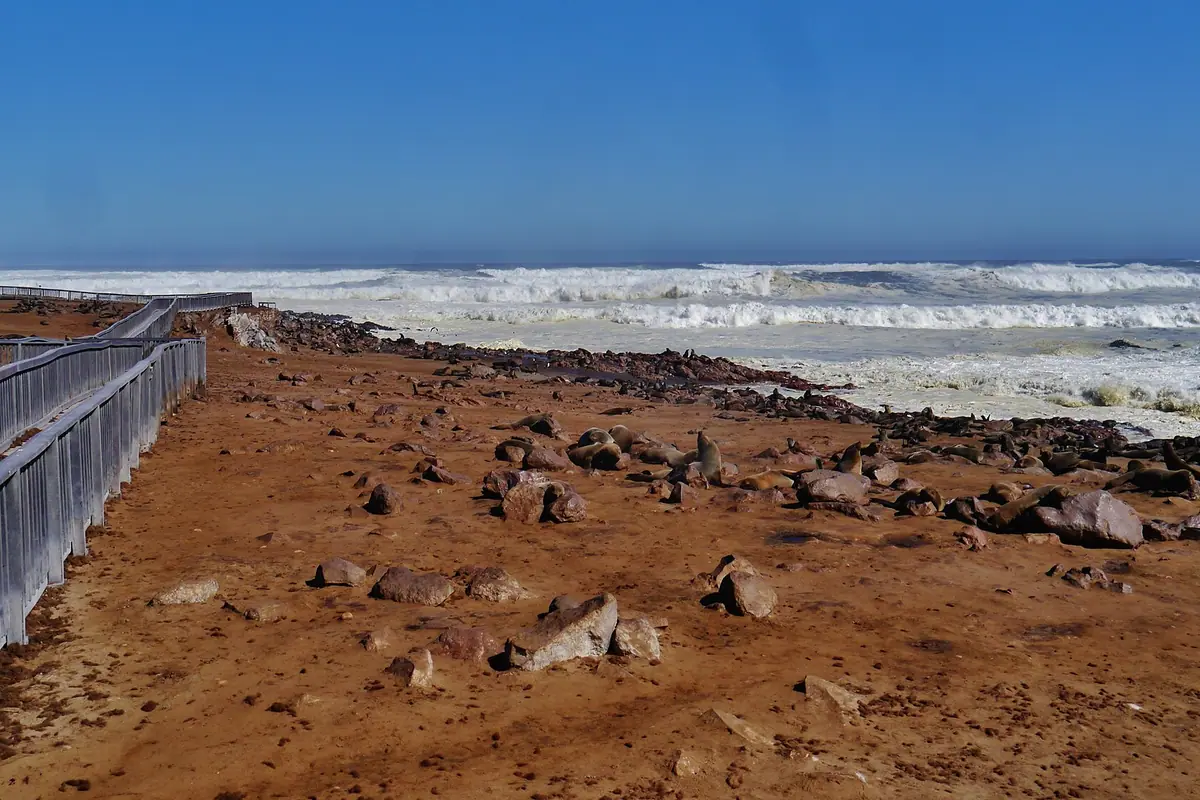
The coast and the interior north of it are the real flying country. Head up past Henties Bay to Cape Cross, one of the largest Cape fur seal colonies on the continent, then turn inland to Damaraland. Here the UNESCO-listed rock engravings at Twyfelfontein — lions, giraffes, and the famous 'dancing kudu' — sit beside the Organ Pipes and the Burnt Mountain, all within a short drive of Doro Nawas and the Aba Huab valley.
If time allows, push further north to the Kunene River and Epupa Falls, where baobabs and Makalani palms crowd a 60-metre cascade in a series of curtain-like drops. This is the most remote leg of the week and the one that best justifies having wings.
Days 5–6: Etosha National Park from the Air
Etosha is a shallow, mineral-white pan roughly 120 kilometres across, and seeing it from the air — the endless glare, the pale dust, the green smudge of Mopane scrub at its edge — explains why animals gather here. Land at one of the strips serving Okaukuejo in the west or Namutoni and Halali further east, and settle in for two nights.
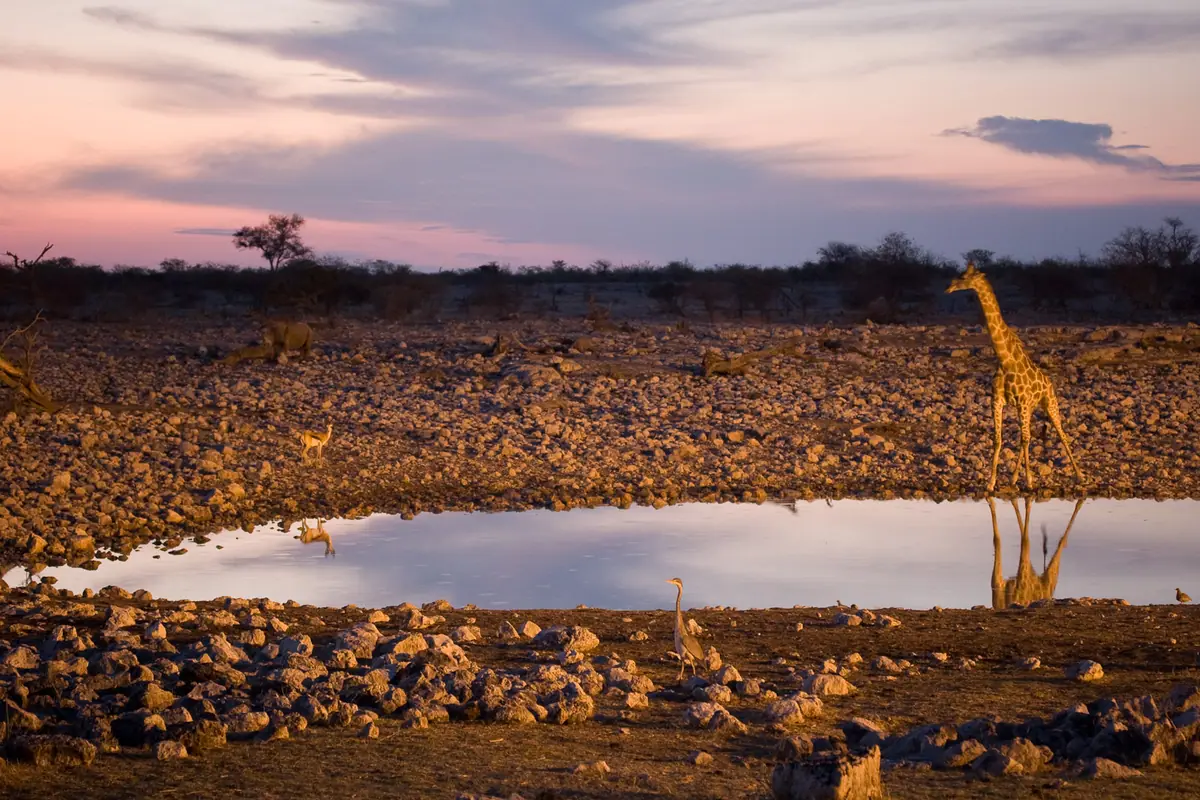
The park's rhythm is waterhole-driven. Okaukuejo's floodlit waterhole is legendary for after-dark sightings: black rhino shuffling out of the dark, elephant herds arriving in near silence, lions drinking while jackals wait at the rim. Halali, tucked beneath a dolomite hill, has its own quieter pan, and Namutoni's old German fort looks out over Fischer's Pan, a magnet for flamingos when it holds water, along with large flocks of blue cranes.
Game drives in the cool early morning and late afternoon are far more productive than midday, when most creatures shade up. Expect the whole cast: elephant, giraffe, Burchell's zebra, blue wildebeest, springbok, gemsbok, kudu, and with luck, cheetah, leopard and lion. In the wetter months, the pan itself turns into a shallow lake that draws flamingos and pelicans by the thousand.
Day 7: Waterberg, Okonjima and the Flight Home
Save the last day for the country's central plateau, where the terrain turns green and mountainous. Waterberg Plateau Park rises as a 200-metre sandstone table with rare species on top — sable antelope, roan and Cape vulture colonies nesting on the cliffs. It is a good final stop if you want walking trails after a week of game drives.
Alternatively, land at Okonjima, the base for large-carnivore conservation work, and join a guided tracking walk or a night drive; it is one of the few places where you can follow cheetah and leopard on foot with researchers. Either way, the final hop back to Windhoek's Hosea Kutako International Airport takes well under two hours.
Build a buffer of at least three hours before an international departure, and keep the airstrip weather in mind — afternoon crosswinds are common in the central highlands, so most operators schedule the last repositioning flight for the morning.
Practical Flying Notes for a Namibian Week
You have two options: a self-fly safari, where you pilot a small single-engine aircraft while a professional guide flies alongside in a second machine, or a fully guided charter where a commercial pilot handles everything. Self-fly requires a valid licence, a Namibian validation, and genuine comfort with gravel runways, high-density altitudes and long stretches of featureless terrain. Guided charters suit most travellers and cost less than people assume when split across four to six seats.
Pack soft bags, not hard cases, and expect a strict per-person weight. Bring layers: desert mornings near Sossusvlei can drop close to freezing in July, while Etosha afternoons regularly pass 35°C. Sun protection, a wide-brimmed hat, binoculars and a dust-proof camera bag matter more than formal clothing. Rehydrate constantly, especially on flying days, and carry cash in Namibian dollars or South African rand for park fees and small purchases where card machines are unreliable.
Note that northern Namibia, including Etosha and the Kunene, is a low-risk malaria area; consult a travel clinic before departure. Airstrips vary from tar to compacted calcrete and sand, and several lodges use private strips that can be soft after rain. A 5- to 7-kilogram soft camera allowance is often negotiable on a private charter — ask early, not at the apron.
Frequently asked questions
Is one week enough for a flying safari in Namibia?
It is enough for a focused loop covering the Namib Desert, the coast, Damaraland and Etosha. You will move almost every day. If you want Epupa Falls or the Kalahari as well, add three to four days, because each extra stop costs a flying day.
What is the best time of year to fly through Namibia?
May to October offers clear skies, cool mornings and the best game viewing around waterholes in Etosha. November to April is hotter and greener, with dramatic storm light for photographers but a higher chance of wet, soft airstrips.
How much luggage can I bring on a light aircraft?
Assume 15 to 20 kilograms per person in a soft duffel, plus a small day bag. Camera equipment often needs a separate allowance and should be declared in advance. Hard-shell suitcases usually stay behind in Windhoek.
Do I need to be a pilot to do a flying safari in Namibia?
No. Guided charters with a commercial pilot are the norm and are usually flown in four- to twelve-seat aircraft. Self-fly options exist for licensed pilots willing to obtain a local validation and fly as part of a guided formation.
Which Namibian attractions should not be missed on a one-week flight itinerary?
Prioritise Deadvlei and Sossusvlei, Sesriem Canyon, Cape Cross, Twyfelfontein's rock engravings, and Etosha's Okaukuejo, Halali and Namutoni waterholes. If your routing allows a single northern extension, Epupa Falls on the Kunene River is the most spectacular.
Sort the rest of your trip
Everything for Namibia, in one place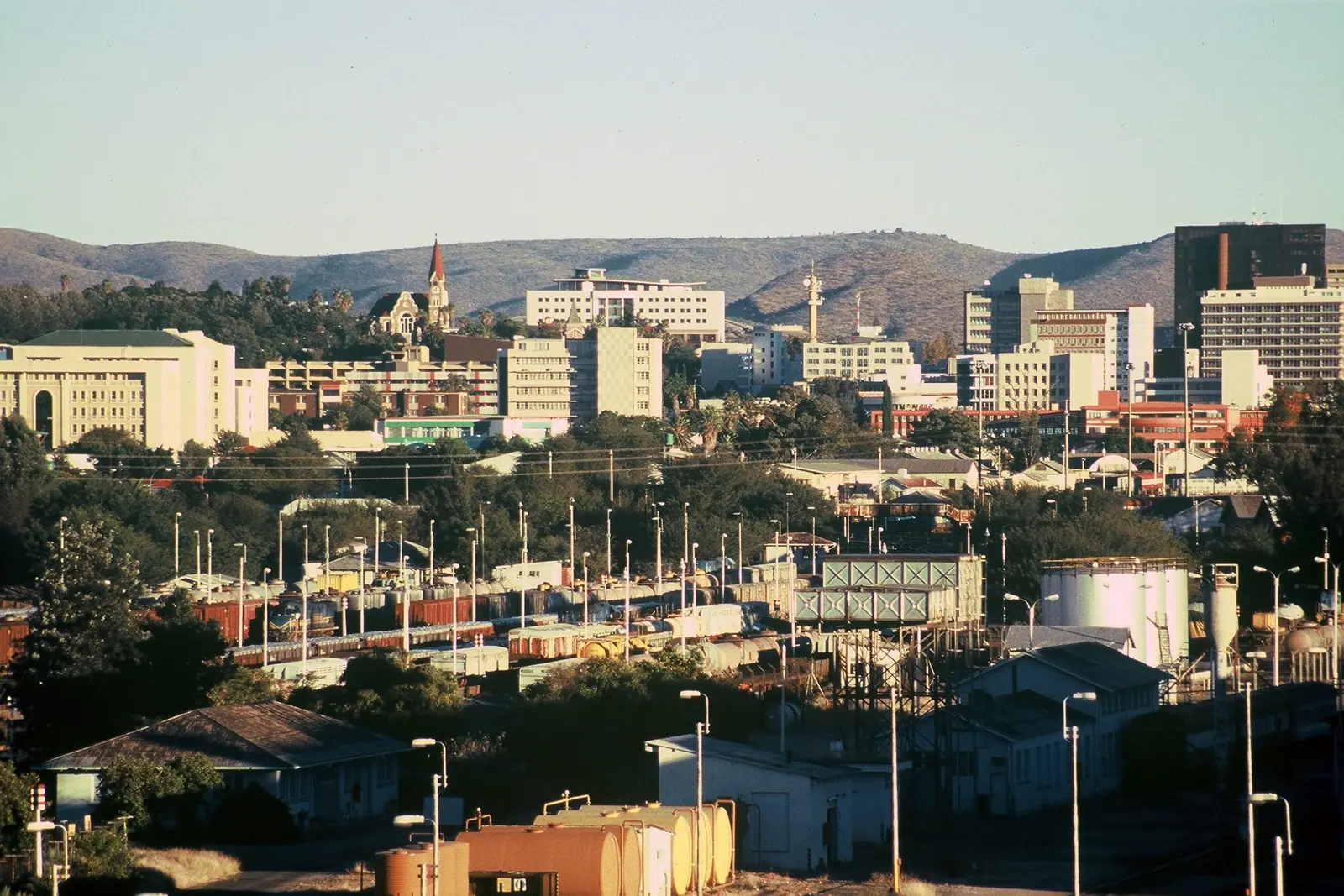
Stay in Namibia
Hotels, guesthouses and apartments — compared in one search.
Search hotels
Transfer in Namibia
Private driver waiting on arrival — no queues, no surprises.
Book a transfer
Travel insurance
Medical cover, delays and lost baggage — sorted before you go.
Get covered