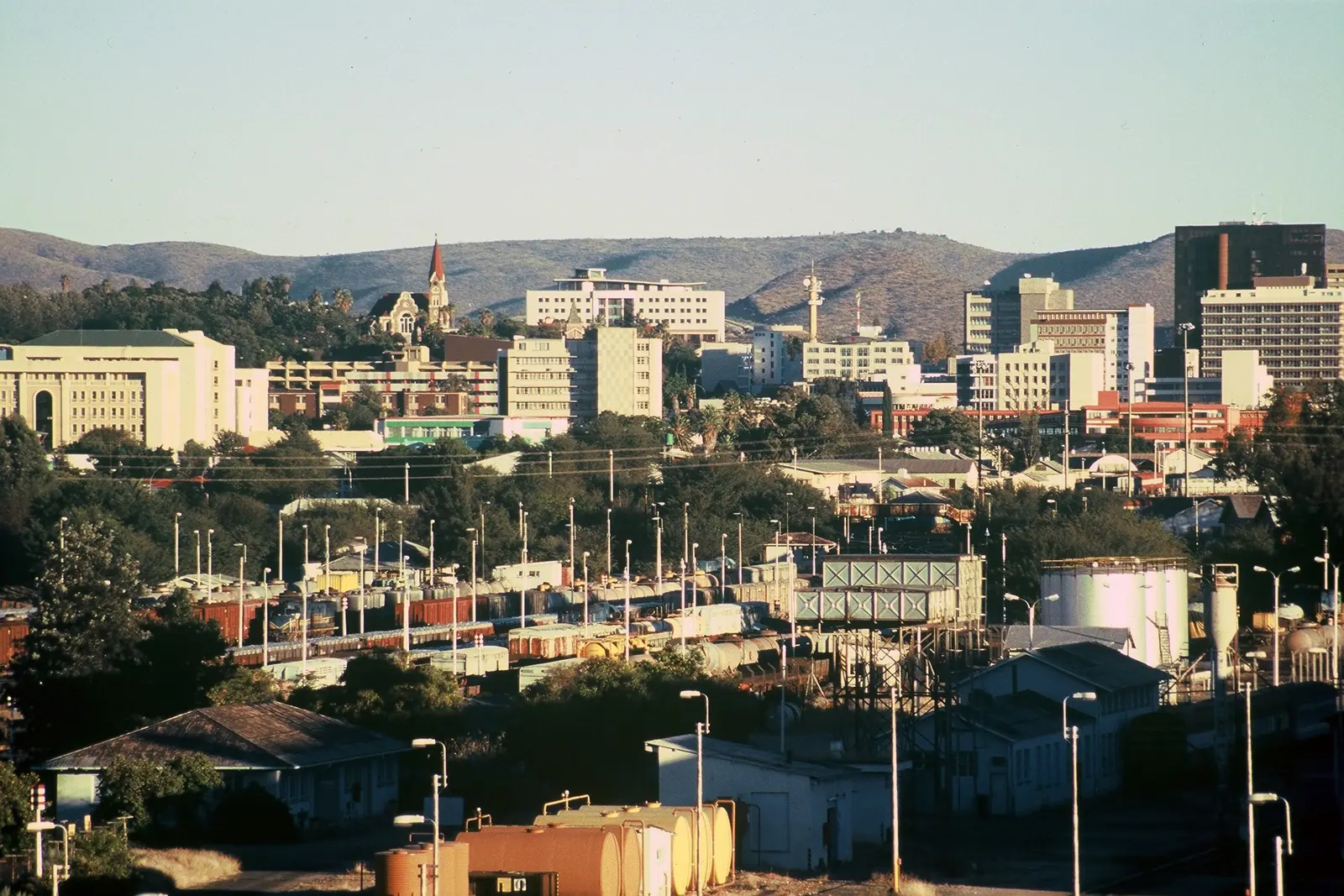
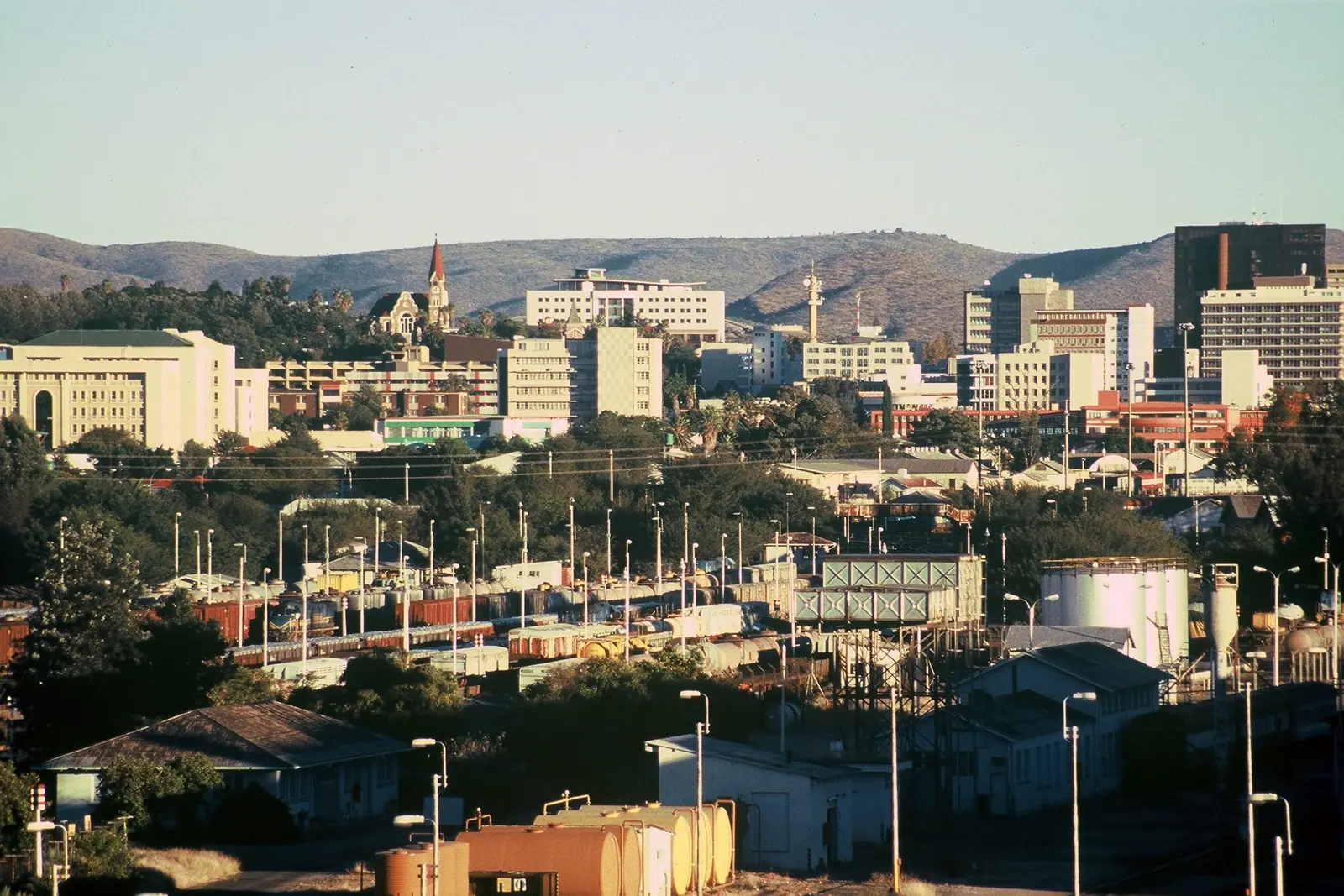
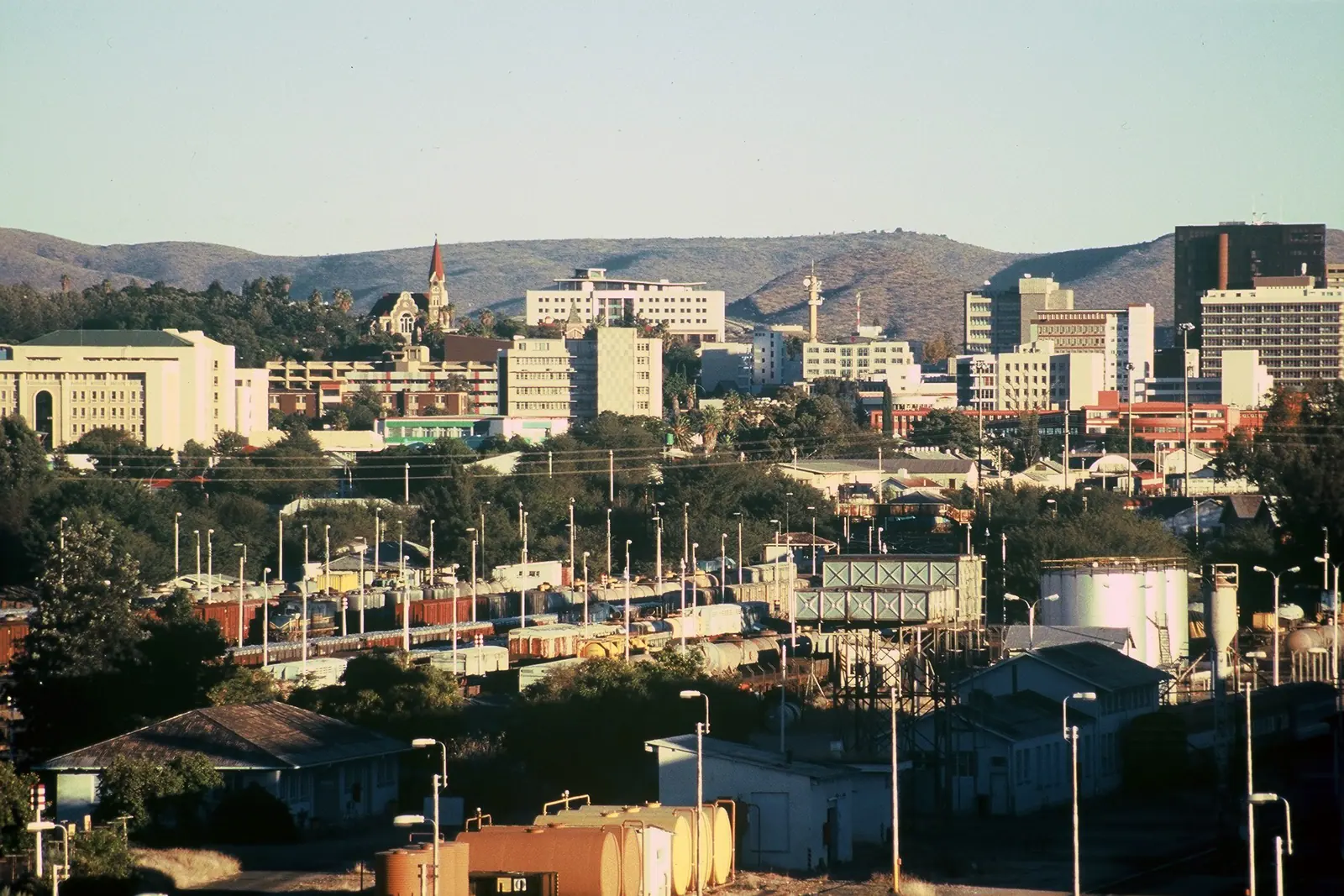
Namibia is a country that measures itself in horizons — dune ridges that run to the sea, salt pans that shimmer into mirage, gravel roads that hum for hours between one small town and the next. It is also one of the most surprising places in Africa to eat, listen and learn, if you slow down enough to sit by a fire and talk to the people who live here. This guide is about touring Namibia with your senses switched on.
Why Namibia Rewards the Curious Traveller
Covering roughly 824,000 square kilometres with a population of only a few million, Namibia is one of the emptiest countries on earth — and that emptiness is the point. A classic touring loop from Windhoek to Sossusvlei, down to the coast, north to Etosha and back takes in dune fields, shipwreck coasts, granite mountains and some of Africa's best wildlife viewing, with driving distances of four to six hours between most stops. Nothing here is rushed, and nothing is close.
There are two broad ways to tour. Self-drive travellers in a 4x4 set their own rhythm, cooking under the stars at community campsites and stopping whenever a herd of oryx crosses the road. Guided small-group tours trade that freedom for local interpretation — a guide who can explain why the Himba women of the Kunene coat themselves in red ochre butterfat, or which trees the San once used for medicine on the walk up to Twyfelfontein.
Timing matters enormously. The dry months from May to October bring clear skies, cool nights and animals crowding the waterholes; September and October are prime for Etosha as the bush thins. The green season from November to April turns the interior into flowering grassland, fills the sky with thunderheads and brings migrant birds and newborn antelope — plus lower rates and emptier roads for anyone who doesn't mind the heat.
What Namibia Tastes Like: Kapana, Oshifima and Kalahari Truffles
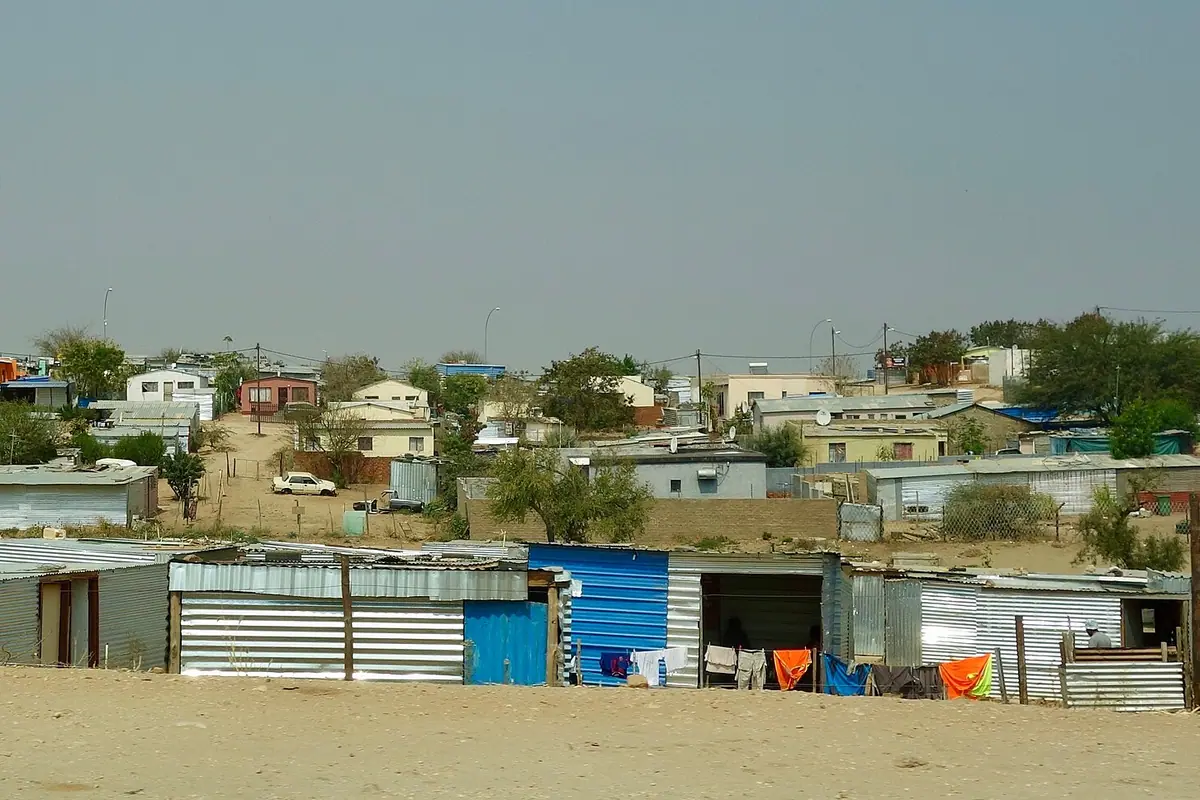
Namibian food is a conversation between desert, cattle country and coastline. Start in Katutura, the township on the edge of Windhoek, where kapana is the evening ritual: thin strips of beef grilled over an open drum fire, chopped fine with a knife, tossed with chilli, salt and a raw onion relish, then eaten with your fingers from a paper cone or a shared platter. Order a cold locally brewed lager, take a plastic chair, and you have the most sociable meal in the country for very little money.
In the north, the staple is mahangu — pearl millet — cooked into a stiff white porridge called oshifima that you eat with your right hand, pressing it into a ball and dipping it into stewed omagungu (mopane worms), wild spinach, or sour milk known as oshikandela. If you are travelling the Oshiwambo heartland around Oshakati and Ondangwa, ask whether oshikundu, a lightly fermented millet drink, is being made; it is usually drunk the same day it is brewed.
Along the Atlantic, the menu flips entirely. Walvis Bay produces some of the finest oysters in the southern hemisphere, served simply with lemon in the restaurants of Swakopmund, where German bakeries still turn out black forest cake and apple strudel behind Art Nouveau facades. Around the Kalahari edge, after good summer rains, locals hunt the prized Kalahari truffle, a knobbly tuber dug from the sand and cooked with butter or folded into scrambled eggs. Add farm-stall biltong and droëwors, potjie and braai, and you understand how a country this arid eats so well.
Top Attractions: Sossusvlei, Deadvlei and the Namib-Naukluft
The Namib is the oldest desert on earth, and Sossusvlei is its showpiece — a clay pan at the end of a river that never reaches the sea, ringed by star-shaped dunes that rise close to 300 metres. Gates at Sesriem open at sunrise for a reason: climb Dune 45 in the first light, with your footprints the only mark on the ridge, and you will see the sand soften from apricot to deep rust as the sun lifts. Farther along, Big Daddy towers over the pan and rewards the slog with a view straight down into Deadvlei.
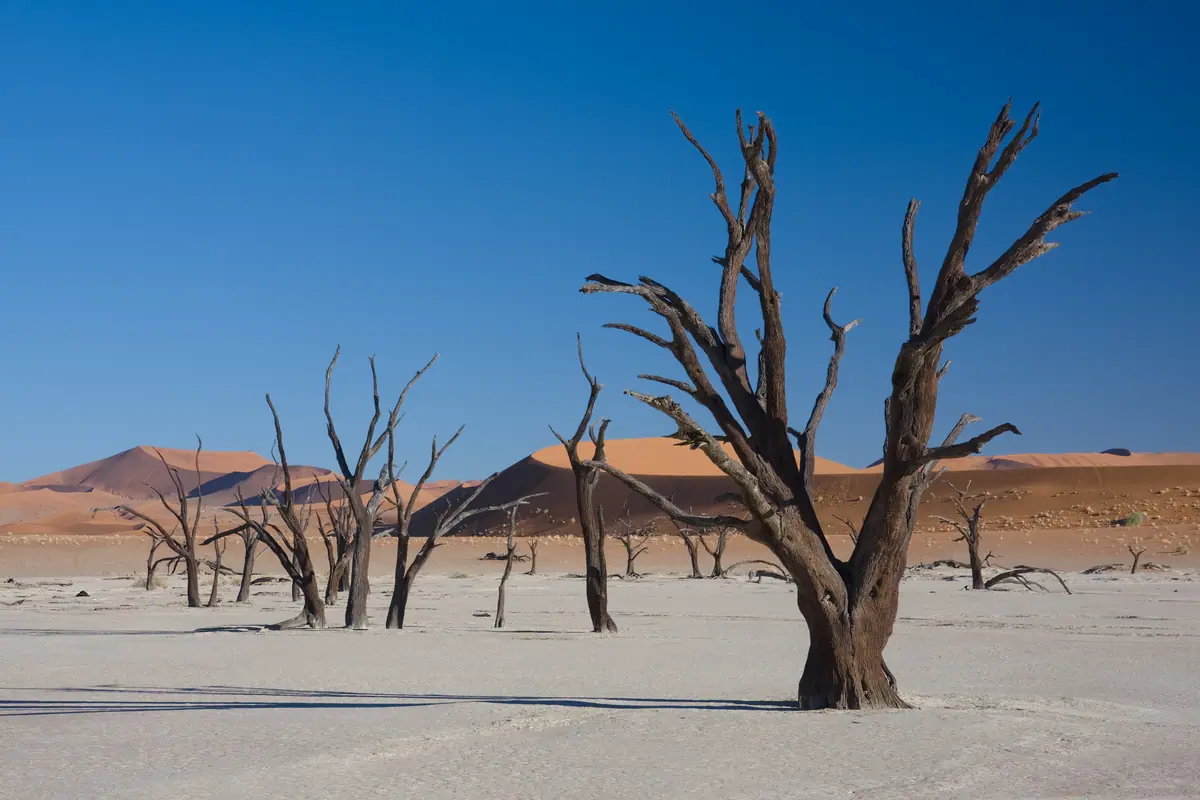
Deadvlei itself is the image most people carry home: a bleached white pan studded with black camel thorn skeletons that fell roughly nine centuries ago and never rotted in the dry air, framed by the tallest dunes in the area. The final five kilometres of the approach are deep sand and usually require a 4x4 or the shuttle that runs from the car park. On the way back, stop at Sesriem Canyon, a narrow, cool slot cut by the Tsauchab River, where you can walk between polished walls barely an arm's width apart.
Stay overnight inside or just outside the park and you gain two things most day-trippers miss: a second sunrise among the dunes, and the sky. The neighbouring NamibRand Nature Reserve is a protected dark-sky area, so bring a headlamp with a red setting and spend an hour simply looking up — the Milky Way here is so bright it casts shadows.
Etosha and the Northern Wilderness
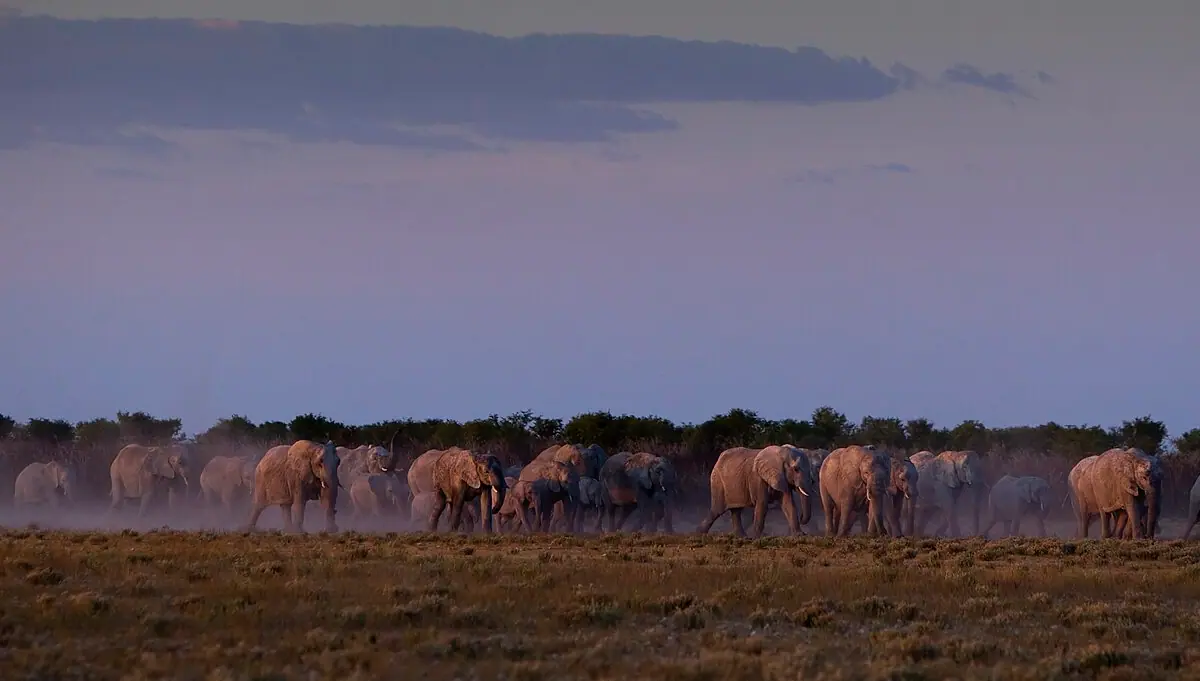
Etosha National Park, roughly 22,000 square kilometres wrapped around a vast white salt pan, is where most Namibia tours deliver their wildlife chapter. The pan itself covers more than 4,700 square kilometres and, in a wet year, fills with a shallow sheet of water that draws flamingos and pelicans. In the dry season, everything converges on the pumped and natural waterholes — elephant herds arriving in family groups, black rhino, lion, giraffe, and the endemic black-faced impala.
Base yourself at one of the main camps, Okaukuejo, Halali or Namutoni, and plan your days around dawn and dusk drives on the gravel loops. Okaukuejo's floodlit waterhole is famous for night-time rhino sightings from a bench a few metres away. September and October are the sweet spot: water is scarce, vegetation is low, and the viewing is almost theatrical. Guided night drives and walks with resident guides add the small things — genets, owls, the tracks you would otherwise roll straight past.
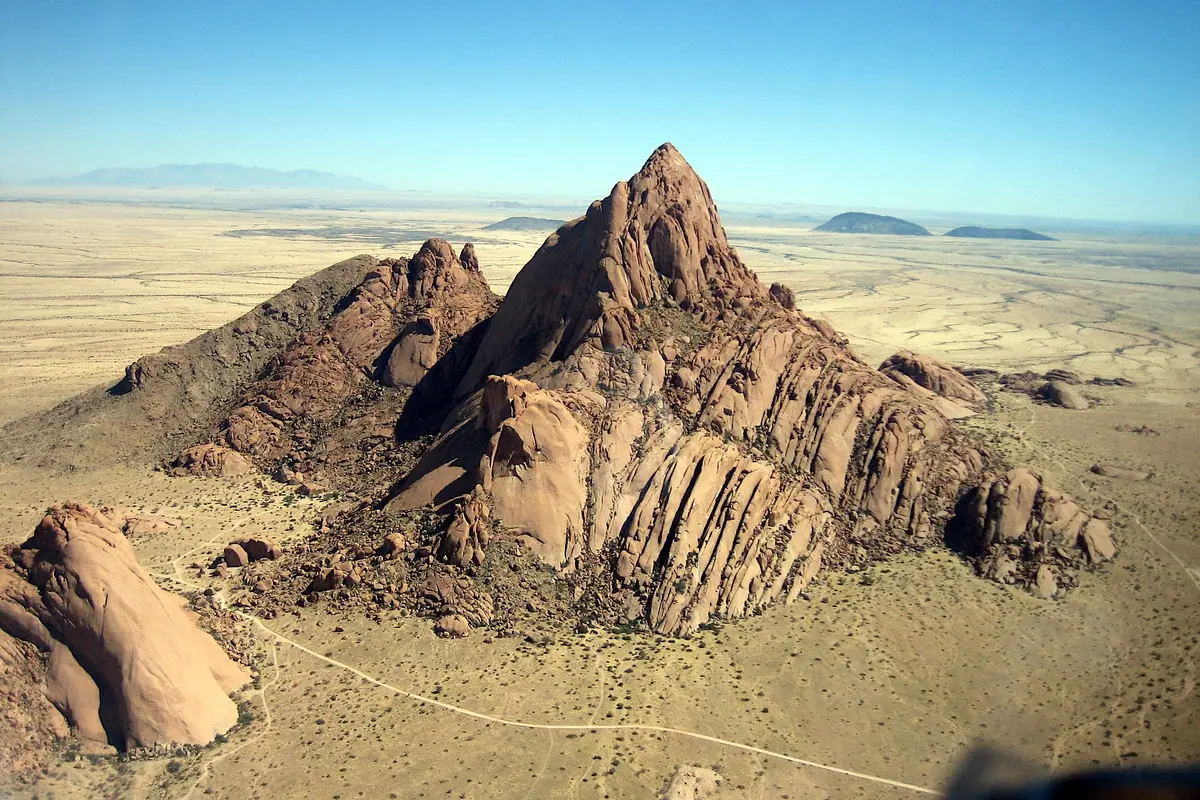
North and west of Etosha, the touring gets wilder. Damaraland's dry riverbeds hide desert-adapted elephants and free-roaming black rhino tracked on foot with community guides; the granite domes of Spitzkoppe and the Brandberg massif rise out of gravel plains; Epupa Falls splits the Kunene River into a chain of palm-fringed cascades on the Angolan border; and the Skeleton Coast, with its whale bones and rusted wrecks, and the roaring seal colony at Cape Cross, remind you how unforgiving this shoreline can be.
Living Culture: Rock Art, Himba and Damara Traditions
Namibia's cultural highlight is not a museum case — it is Twyfelfontein, a UNESCO World Heritage Site in Damaraland where more than 2,500 rock engravings of lions, giraffes, hunters and spirals were pecked into red sandstone, some of them thousands of years old. Walk it with a local guide and the site stops being a gallery and becomes a map of waterholes, hunting routes and ritual. Nearby, the Damara Living Museum near Twyfelfontein demonstrates fire-making, healing plants and the click consonants of the Khoekhoe language in a way that is genuinely run by the community.
In the far northwest, Himba communities in the Kunene region continue a semi-nomadic cattle life. Women coat their skin and braids with otjize, a paste of butterfat, ash and ochre, and the conical headdresses and copper jewellery you see are not costume — they mark age, status and family. The right way to visit is through a conservancy-run guide who knows which families are receiving visitors, and to ask before photographing anyone, always. Buying directly from craft sellers rather than through a middleman keeps the money where it belongs.
Elsewhere, Herero women in long Victorian-style dresses and horned otjikaiva headdresses bring colour to the streets of Windhoek, Okahandja and Omaruru, and northern Owambo towns like Oshakati and Ondangwa hum with markets, churches and a lively music scene. In Windhoek, spend a morning at the Independence Memorial Museum and the Christuskirche, then head into Katutura for township art projects where sewing, beadwork and jewellery are sold straight from the workshop floor.
The Coast and the Deep South: Swakopmund, Kolmanskop and Fish River Canyon
Swakopmund is the strangest and most enjoyable town in Namibia: German colonial architecture, a woollen mist rolling in off the Atlantic, a long wooden jetty and a bakery culture that survives a hundred degrees of desert heat inland. It is also the adventure capital — sandboarding and quad biking on the dunes outside town, catamaran trips from neighbouring Walvis Bay to see flamingos, pelicans and Cape fur seals, and 4x4 excursions south to Sandwich Harbour, where towering dunes plunge directly into the surf.
Farther south lies Kolmanskop, a ghost town near Lüderitz abandoned after the diamond rush faded, where the desert has poured through doorways and filled entire rooms with sand, waist-deep and sculpted. Tours run daily from Lüderitz, whose Felsenkirche perches above a windswept bay ringed by penguin colonies and wild coastal drives.
Then comes the south's great finale: the Fish River Canyon, about 160 kilometres long and up to 550 metres deep, second in scale only to the Grand Canyon. Viewpoints at Hobas are an easy drive, but the five-day, 90-kilometre canyon hike — permitted only from around May to September and booked months ahead through the park authority — is one of southern Africa's true wilderness treks. Finish with a soak at the warm springs at Ai-Ais and you have closed the loop on a country that keeps surprising you.
Frequently asked questions
When is the best time to take a Namibia tour?
For wildlife, the dry season from May to October is best, with September and October the peak for Etosha because water is scarce and the bush is thin. For dramatic skies, green landscapes and birdlife, travel November to April, accepting hotter days and afternoon thunderstorms. Sossusvlei is spectacular year-round but brutally hot between November and March, so plan dune climbs at sunrise.
Do I need a 4x4 and can I self-drive in Namibia?
You can self-drive the main tarred loop between Windhoek, Etosha, Swakopmund and Sossusvlei in an ordinary car, but a 4x4 opens up the last stretch into Deadvlei, the Skeleton Coast, Damaraland and the Kaokoveld. Distances are long, many roads are gravel, and fuel stops can be 200 kilometres apart, so plan each day's driving, carry water and lower your tyre pressure on corrugated gravel.
How long do I need to see the highlights?
Ten to fourteen days is the realistic minimum for a comfortable loop: two nights for Sossusvlei, three for Etosha, a night or two in Swakopmund, and time in Damaraland or Twyfelfontein. With a week you should choose either the northern wildlife route or the southern desert and canyon route rather than attempting both.
What should I eat and drink in Namibia, and is the water safe?
Try kapana in Katutura, oshifima with mopane worms in the north, Kalahari truffles after good rains, and Walvis Bay oysters in Swakopmund. Tap water is generally safe in towns and lodges, but treat or filter water if you are camping remotely. Alcohol is widely available; note that some conservancy areas restrict drinking and photography out of respect for local custom.
How do I visit Himba or Damara communities respectfully?
Go with a conservancy-appointed guide or a community-run living museum such as the one near Twyfelfontein, which keeps fees within the community. Always ask before taking photographs, avoid handing sweets or money to children, and buy crafts directly from the makers. Treat a village visit as a conversation with hosts rather than a stop on a sightseeing checklist.
Sort the rest of your trip
Everything for Namibia, in one place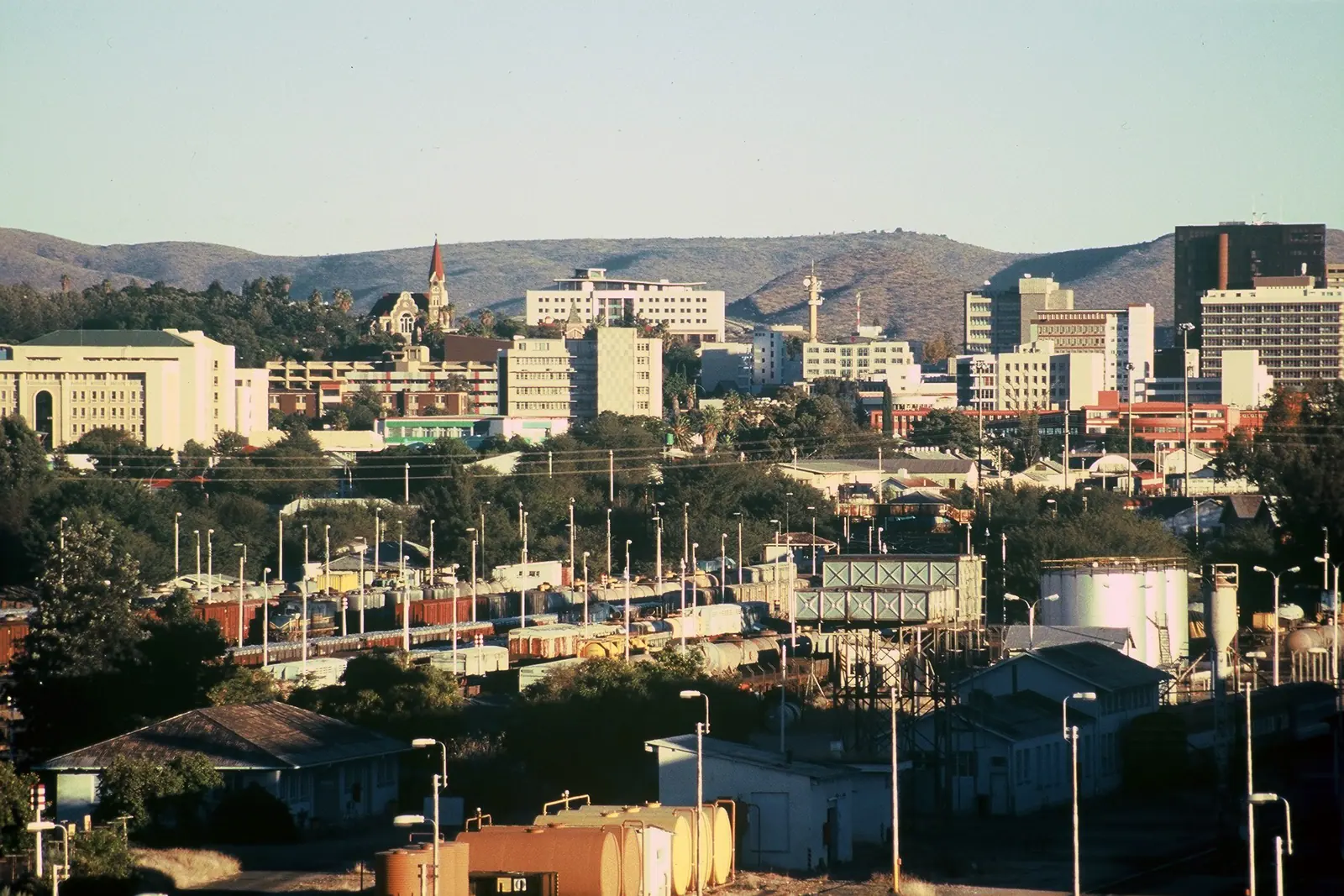
Stay in Namibia
Hotels, guesthouses and apartments — compared in one search.
Search hotels
Transfer in Namibia
Private driver waiting on arrival — no queues, no surprises.
Book a transfer
Stay online in Namibia
Travel eSIM — data the moment you land, no roaming bills.
Get an eSIM