Malawi is the kind of country that quietly rearranges your priorities: a morning in a crowded city market, an afternoon snorkelling over clouds of jewel-coloured cichlids, and dinner under a baobab while hippos grunt somewhere out on the Shire. Choosing where to sleep is really choosing how you want to travel — city, plateau, lake or bush.
How Lodging in Malawi Works: Cities, Lake and Bush Camps
Accommodation here falls into four loose families, and most itineraries mix at least three of them. In Lilongwe and Blantyre you find full-service city hotels with pools, reliable Wi-Fi and air conditioning, plus a deep bench of small guesthouses in leafy residential suburbs. Along the lakeshore the mood shifts to thatched lodges, beach bandas and simple chalets where the main amenity is a hammock and a view of the water. Inland, safari camps range from comfortable tented rooms with en-suite bathrooms to genuinely rustic bush camps, and in the highlands around Zomba, Mulanje and Mzuzu you will mostly be staying in family-run lodges and old estate houses.
Timing matters more than most first-time visitors expect. The dry season from May to October brings cloudless skies, cool evenings and the best road conditions, and it is also peak season — book lakeshore lodges and park camps several months ahead for July and August. The green season, roughly November to April, means afternoon downpours, lush scenery, excellent birding and noticeably lower rates, though some dirt roads into remote reserves become slow and slippery. Shoulder months in May and October are the sweet spot: warm water, thin crowds and reasonable prices.
One practical quirk: distances look short on paper but take longer than you think. Malawian roads are mostly single-carriageway, often shared with cyclists, goats and overloaded minibuses, so budget generously and avoid arriving at a lakeshore lodge after dark if you can.
Lilongwe: The Capital as a Practical Base
Most trips begin and end in Lilongwe, which spreads wide and green around its airport and is best understood as two towns in one. The Old Town is the busy, commercial heart, with a chaotic market, Indian and Malawian restaurants, and cheap guesthouses within walking distance of the bus stations. The newer City Centre, a few kilometres away, is where government buildings, embassies and the smarter hotels sit, along with the War Memorial Tower and the leafy streets of Area 3 and Area 43, both popular for mid-range guesthouses and self-catering cottages.
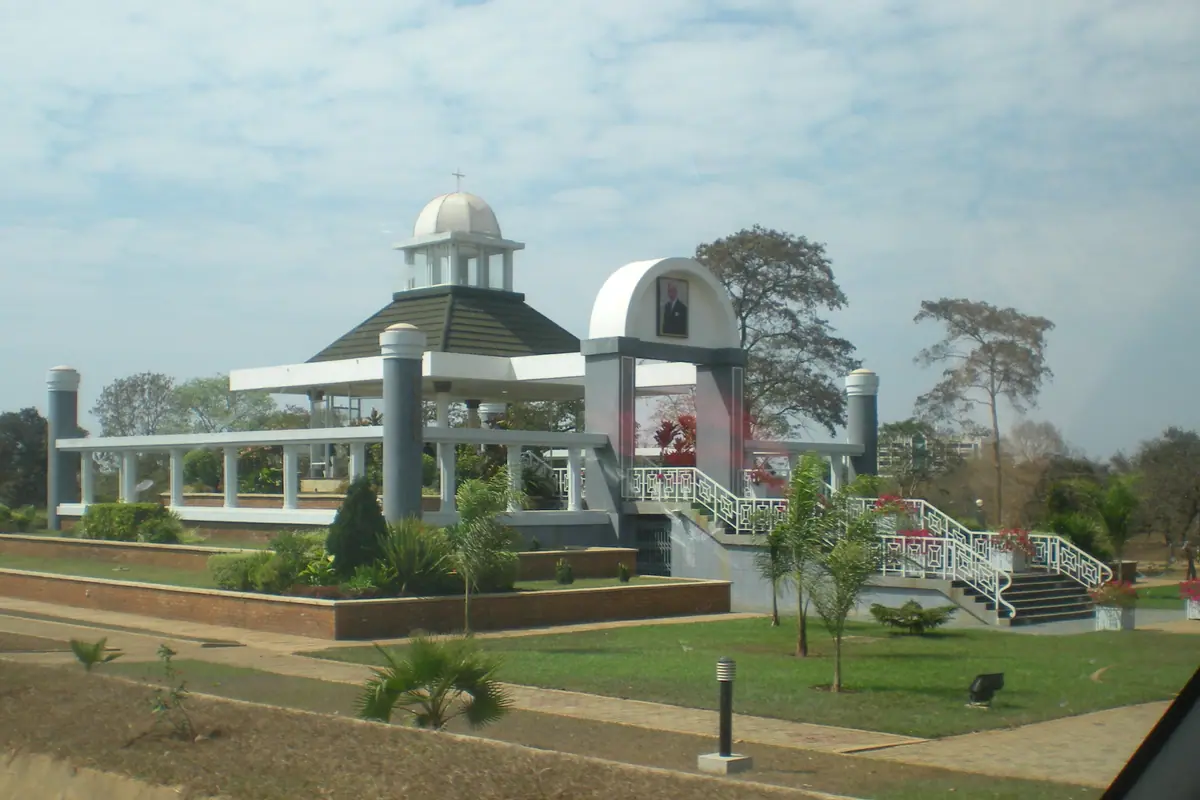
The city rewards a spare half-day. The Lilongwe Wildlife Centre, just off the Kenyatta Road side of the reserve, is a leafy sanctuary for rescued animals and one of the easiest places in the country to stretch your legs among vervet monkeys and duikers. The Kamuzu Mausoleum, a marble monument to Malawi's first president set in quiet gardens, is a short drive from the City Centre and rarely crowded. If you have a full day, head west to the Dzalanyama Forest Reserve, where miombo woodland and granite outcrops offer walking and birding far from the traffic.
Base near the airport for early flights, and in Old Town or Area 3 if you want markets, restaurants and a shorter transfer south towards Blantyre or the lake. Kamuzu International Airport sits north of the city, so allow 30 to 45 minutes for the transfer in daytime traffic.
Blantyre and the Shire Highlands: History, Tea and Mount Mulanje
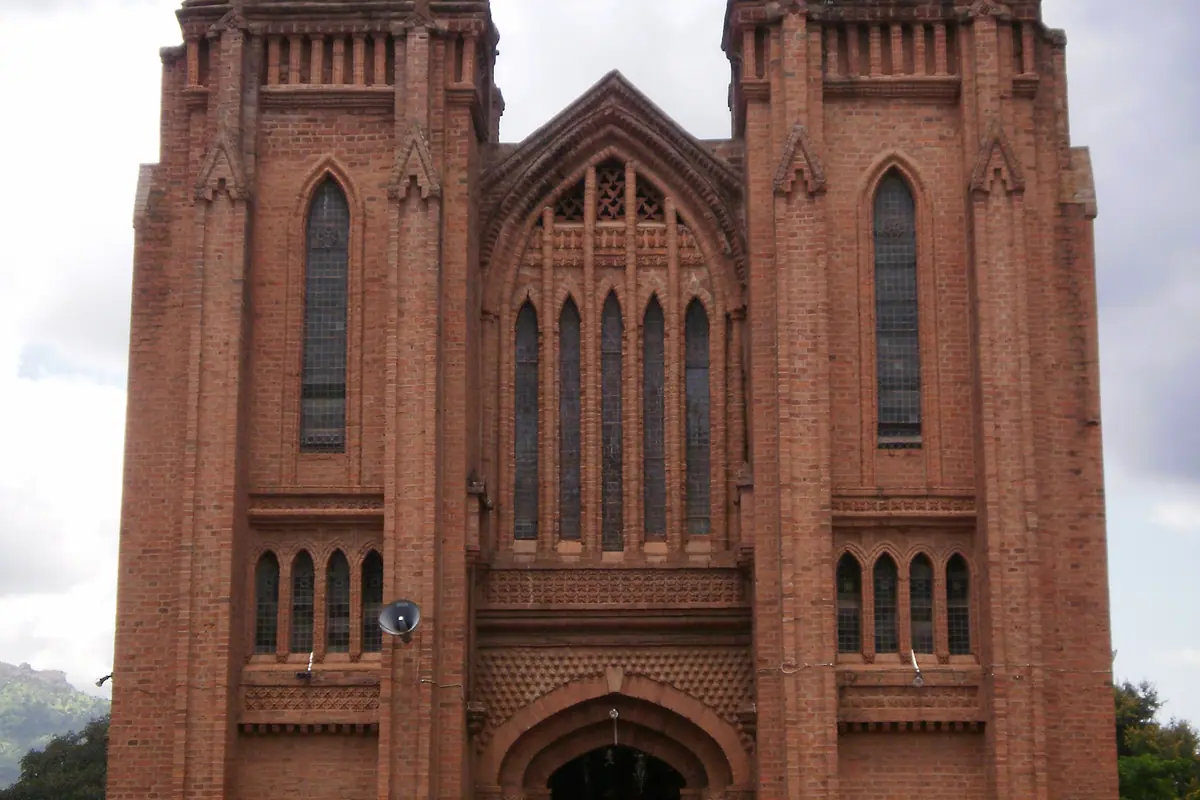
Blantyre is Malawi's commercial capital and its oldest settlement, a city of steep streets, jacaranda and colonial-era brickwork. Its most photographed landmark is Mandala House, a low, whitewashed trading building that is the oldest surviving structure in the country and now houses galleries and a cafe. Nearby, St Michael and All Angels Church, built in the 1880s from hand-made bricks and rising like a small fortress above the town, is worth the climb for the view alone. The Museum of Malawi, in the adjoining township of Limbe, fills in the history, and the Limbe market is the place to buy chitenje cloth by the metre.
The real draw, though, is what surrounds the city. Tea estates carpet the hills towards Thyolo, where you can stay in converted estate houses surrounded by waist-high bushes and wake to mist rolling off the fields. Further east, the Mulanje Massif rears up almost two and a half kilometres above the surrounding plain; its highest point, Sapitwa Peak, tops 3,000 metres and is a serious two- to three-day hike with a guide. Shorter walks from the Likhubza trailhead reach waterfalls and cedar groves in a few hours, and cedar-lined pools make for memorable swims.
Stay in Blantyre for restaurants and services, or in a tea estate or Mulanje trailhead lodge if you would rather wake up inside the landscape. Either way, keep a warm layer handy: the highlands are noticeably cooler than the lake, and evenings can be genuinely cold in June and July.
Zomba and Mzuzu: High Ground, Cool Air and Local Life
Zomba was the country's colonial capital, and it still feels like a town that never rushed to catch up. The old botanical gardens and the tree-lined streets below the plateau make an easy, pleasant base, while just above the town the Zomba Plateau rises to around 2,000 metres, carpeted in pine and montane forest. Emperor's View looks out over the vast Shire Valley, Williams Falls drops through cool rainforest a short walk from the road, and Chingwe's Hole is a sheer chasm with a local legend attached. The King's African Rifles Memorial and the lively Zomba Market round out a day, and the cool air makes this one of the most comfortable places in Malawi to sleep.
In the far north, Mzuzu is a working highland town rather than a resort, but it is the natural gateway to the Viphya Plateau and to the Nyika, and its market is a great place to buy locally grown coffee. Lodges here are simple and friendly, and the surrounding countryside — rolling hills, smallholder farms, pine plantations — is quietly beautiful.
Consider Zomba as a two-night stop between Blantyre and the lake, and Mzuzu as a single night before or after the northern parks. Both towns have a handful of proper hotels plus numerous guesthouses, and both are good places to slow down, do laundry and reorganise a backpack.
Lake Malawi: Cape Maclear, Nkhata Bay and Likoma Island
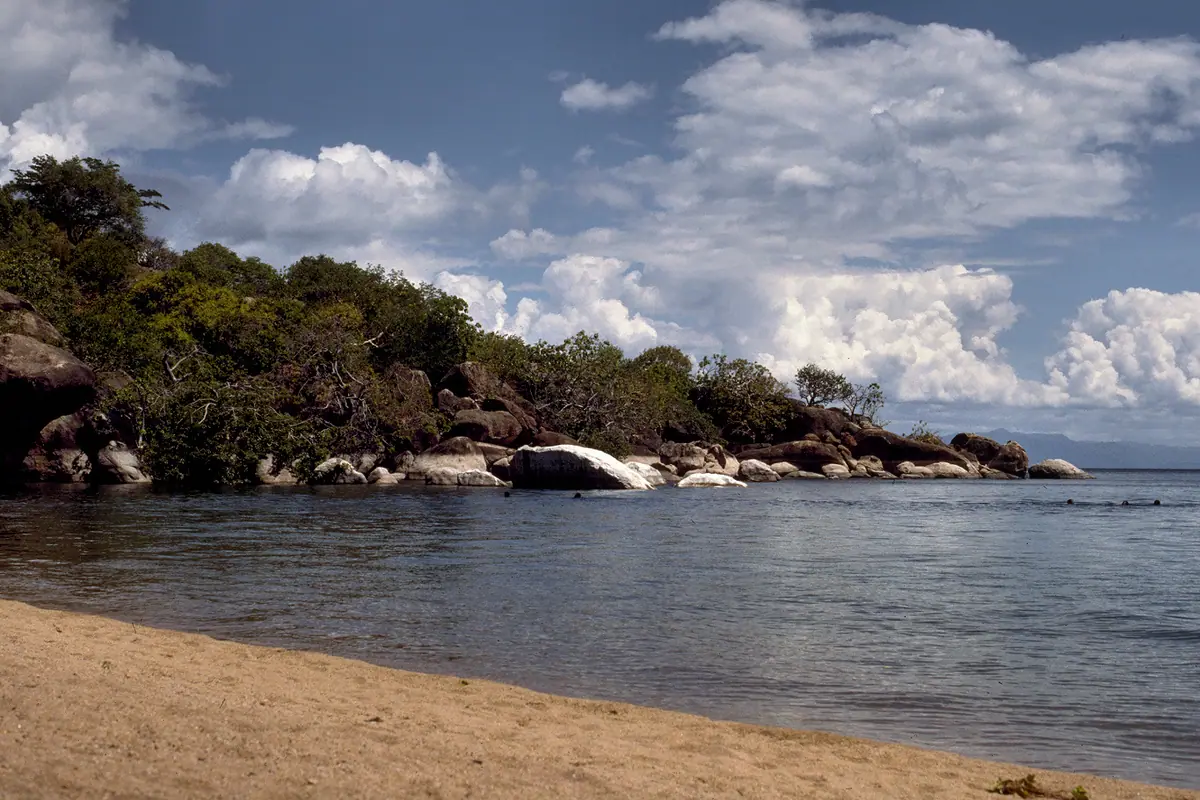
Lake Malawi is the reason many people come, and the accommodation along its shores is the most varied in the country. In the south, Cape Maclear and the village of Chembe sit inside Lake Malawi National Park, a protected stretch of water famous for its thousands of cichlid species. Lodges here range from backpacker bandas to polished lakeside rooms, and the days fill with kayaking to the granite islands of Mumbo and Domwe, snorkelling over Thumbi West, and sunsets that turn the whole bay pink. Water clarity is best in the dry months from about June to October, when snorkelling is at its most rewarding.
Further north, Nkhata Bay is built into a hillside above the water, with Chikale Beach a short walk from town and a string of relaxed lodges stacked along the bay. It is a good place to learn to dive, sail a small catamaran or simply do very little for a few days. Far out on the eastern side, Likoma Island is reached by boat or light aircraft and feels like another world: dusty tracks, mango trees and the extraordinary St Peter's Cathedral, a full-sized Gothic church built of locally made brick in the early twentieth century.
The classic way to travel the lake is by the ageing lake steamer that still links the lakeshore towns on a slow, sociable route — cabins are basic, the decks are wonderful, and it is one of the last great slow journeys in southern Africa. Wherever you swim, ask your hosts about currents and shallow-water risks, and stick to the clear offshore water that locals use.
Safari Stays: Liwonde, Majete and the Nyika Plateau
Malawi's parks are smaller and quieter than their famous neighbours, which is exactly their appeal. Liwonde National Park, strung along the Shire River in the south, is the classic introduction: boat safaris drift past pods of hippo and herds of elephant coming down to drink, while game drives and guided walks search out antelope, crocodiles and a remarkable bird list. Tented camps inside and just outside the park range from cushioned comfort to honest bush simplicity.
South of Blantyre, Majete Wildlife Reserve was restocked with lion, elephant, buffalo, leopard and rhino after decades of poaching, and it now offers some of the most rewarding game viewing in the country, with community-run camps and a strong conservation story behind every drive. Far to the north, the Nyika National Park is something else entirely: high, open grassland rolling to the horizon around 2,000 metres, grazed by zebra and roan antelope, and smothered in orchids during the rains. Nkhotakota and Kasungu reserves offer quieter, wilder alternatives for travellers with time to spare.
For wildlife, aim for the late dry season from August to October, when vegetation thins and animals concentrate around water. Nights in the bush can be surprisingly cold between June and August, so pack a fleece alongside your sun hat, and remember that park camps are small — a few rooms each — so book early for peak months.
Frequently asked questions
When is the best time to visit Malawi?
The dry season from May to October offers the most reliable weather, the best road conditions and the strongest game viewing, with July and August the busiest and most expensive months. The green season from November to April is wetter, with heavy afternoon downpours, but it brings lush landscapes, superb birding, orchids on the Nyika and much lower room rates. May and October are excellent compromises.
How long do I need to see the country properly?
Ten days to two weeks lets you combine Lilongwe, Blantyre or Zomba, a few nights on Lake Malawi at Cape Maclear or Nkhata Bay, and a safari in Liwonde or Majete without feeling rushed. If you want to add Likoma Island and the Nyika Plateau, allow three weeks and accept some long driving days or short internal flights.
How do I get between the towns and lodges?
Most travellers hire a car with a driver, which is comfortable and reasonably affordable when split between a few people. Self-drive is possible but demanding, and shared minibuses cover the main routes cheaply if slowly. Lilongwe to Blantyre is roughly four hours, Lilongwe to Cape Maclear about four to five, and short internal flights serve the main centres and one or two island and park airstrips.
Is it safe to swim in Lake Malawi?
Yes, in most bays popular with visitors, but there are caveats. Ask your lodge about bilharzia risk in shallow, weedy water near villages, and avoid swimming close to river mouths or reedy edges where hippos and crocodiles can occur. The clearest, safest swimming and snorkelling is offshore around rocky points and islands, especially in the dry season.
What practical things should I pack or prepare?
Bring malaria prophylaxis or at least a doctor's advice, since most of the country below the highlands carries some risk year-round. Pack layers, because plateau and bush nights get cold from June to August, plus reef-safe sunscreen, a torch, cash in local kwacha for rural areas, and a universal adapter for the British-style three-pin plugs.
Sort the rest of your trip
Everything for Malawi, in one place
Transfer in Malawi
Private driver waiting on arrival — no queues, no surprises.
Book a transfer
Things to do in Malawi
Skip-the-line tickets, guided tours and standout experiences.
See experiences
Stay online in Malawi
Travel eSIM — data the moment you land, no roaming bills.
Get an eSIM