Madagascar is the world's fourth-largest island, and its roads curve for days where its aircraft hop in an hour. This seven-day route uses the domestic flight network to stitch together baobabs, rainforest lemurs and a beach island — without spending half your holiday in a minibus.
Why a Fly-In Week Works — and What It Demands
Distances here are deceptive. The drive from the highland capital down to the western baobab country can swallow two full days, and the run north to the coast is longer still. Domestic flying turns those epics into ninety-minute hops, which is why a single week can plausibly hold both rainforest and reef. The trade-off is flexibility: schedules are thin, aircraft are small, and a departure that leaves at dawn may slip to midday for reasons that have nothing to do with you.
Build your week around two or three flights maximum, with a slack day before your international departure. Turboprop cabin allowances are typically around 15 kilograms of checked luggage, so pack soft bags and keep them light. Book seats as early as you can, particularly for the northern coastal runs and for anything in the July–August peak, and always confirm the day before travel.
The best window for this itinerary is roughly May to November, the cool dry season, when dirt airstrips firm up and cyclone risk retreats. December to March brings heavy rain, road washouts and the real possibility of cancelled legs. If you want humpback whales off the eastern coast, aim for July to September; for whale sharks in the northwest, the shoulder months of October and November are the sweet spot.
Days 1–2: Antananarivo, the Highland Capital
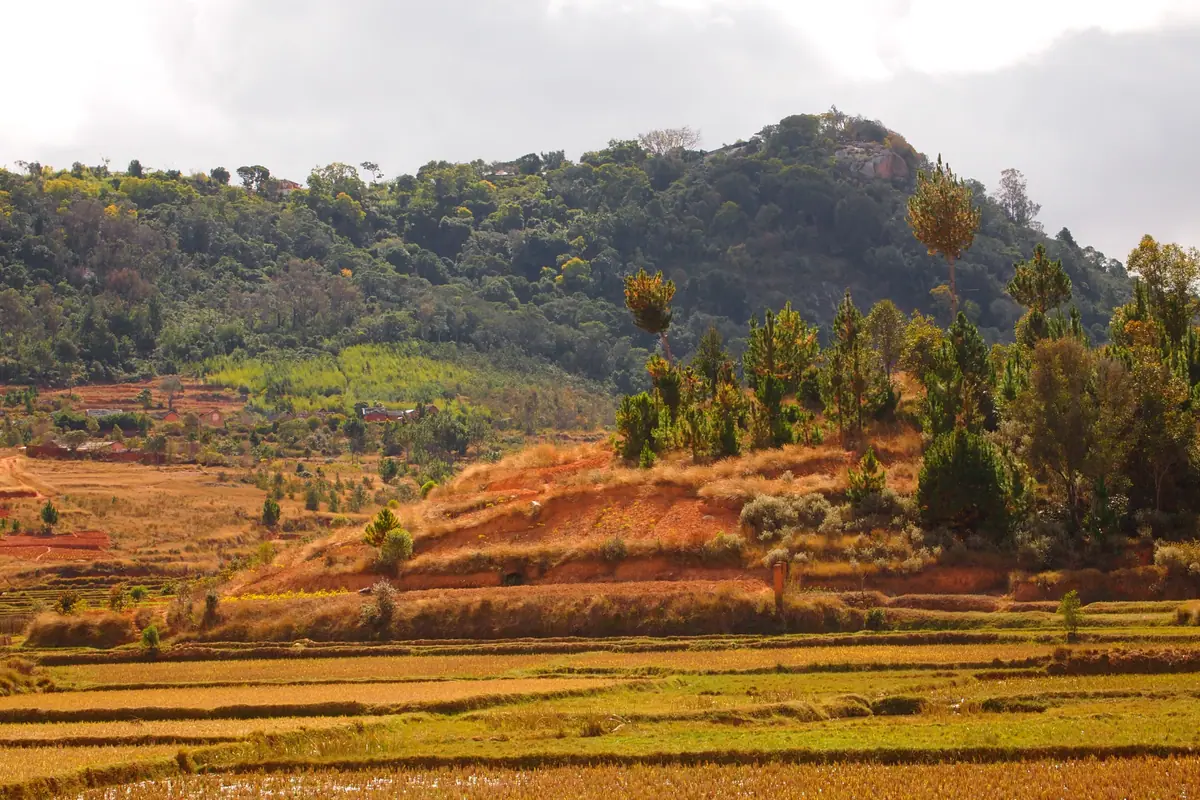
Most journeys begin at Ivato, about 20 kilometres from the city centre, and the drive in already tells you where you are: rice paddies, red-brick houses stacked up hillsides, and the sprawling market districts of a capital sitting at around 1,280 metres. Give yourself a full day here before flying anywhere, both to shake off the long-haul flight and because Antananarivo rewards a slower look than its reputation suggests.
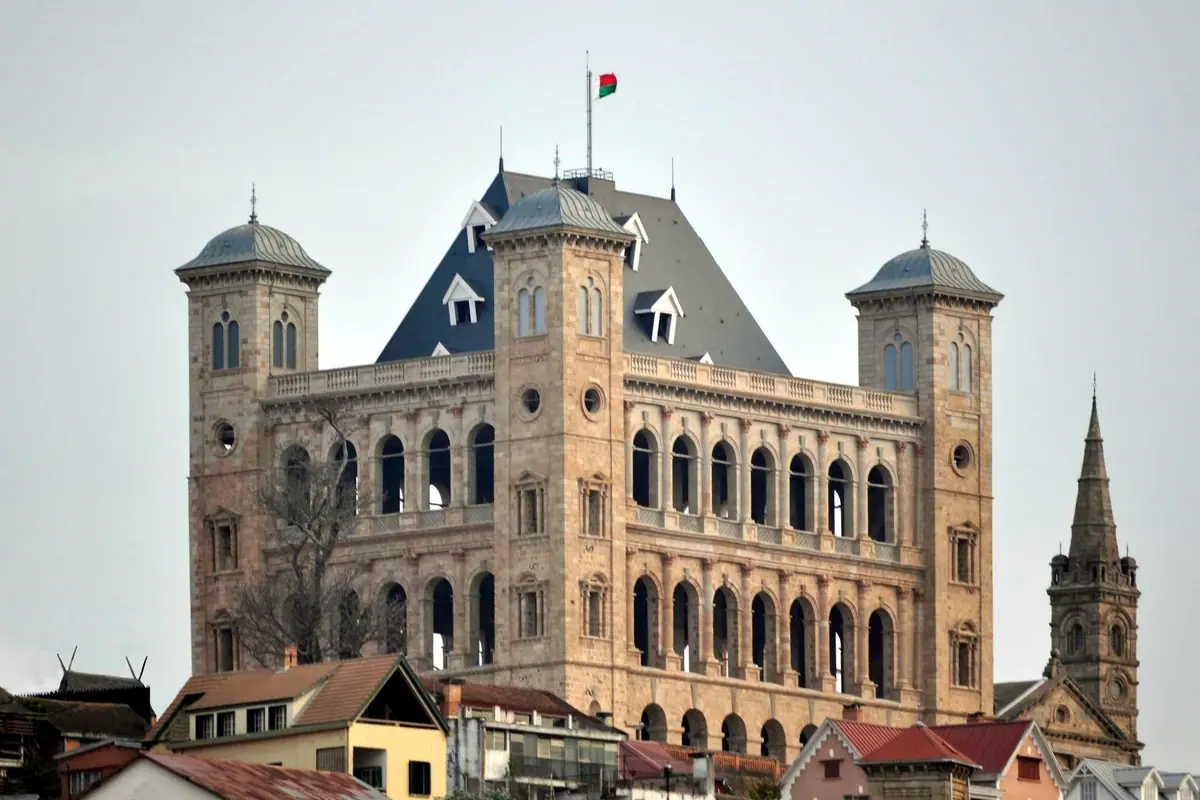
Start at the Rova of Antananarivo, the reconstructed royal compound on the highest point of the Analamanga hill, where the panorama over the twelve hills of the old town is the best in the city. Below it, the staircases and stalls of Analakely market tumble down toward Avenue de l'Indépendance — go in the morning when the produce, spices and woven goods are still arriving. In the afternoon, drive north to the Royal Hill of Ambohimanga, a UNESCO-listed walled royal village of rosewood gates and sacred pools that predates the capital itself and remains a place of pilgrimage.
If you want lemurs without leaving the city, the Lemurs' Park on the road back toward Ivato gives you a gentle, walk-through introduction to several species, including the acrobatic Coquerel's sifaka. Birders should carve out an hour at Lac Tsarasaotra, a protected wetland in the middle of the city where herons, jacanas and the endangered Madagascar pond heron share the reeds with the traffic.
Days 3–4: Fly West to Morondava and the Avenue of the Baobabs
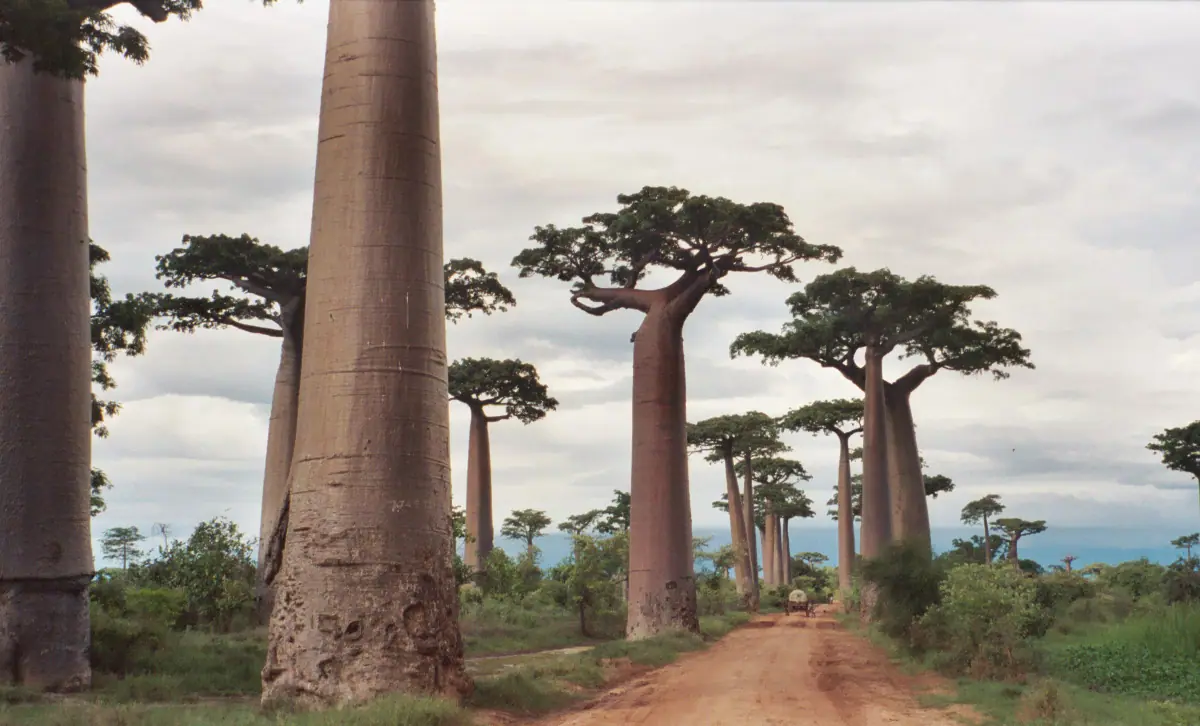
The short westward flight to Morondava drops you into a different Madagascar entirely — hot, dry, flat and threaded with lagoons. The town itself is a low-key fishing and trading port, but the reason to come lies 45 minutes north by road, where the Avenue of the Baobabs lines a dusty track with a colonnade of Adansonia grandidieri. These trees are centuries old, with swollen grey trunks and crowns that look grafted on upside down. Come for sunset, when the light turns orange and the whole avenue glows, and again at first light if you can face the early alarm — the crowds thin and the baobabs stand alone against a pink sky.
Use your second day for Kirindy Forest, roughly two hours further north, a dry deciduous woodland that is one of the best places in the country to see nocturnal lemurs on a night walk. The reserve is also a stronghold of the fossa, Madagascar's largest carnivore, and daytime trails reveal giant jumping rats and the strange, spiny flora of the west. If you have an extra day to spare, the Tsingy de Bemaraha is a UNESCO-listed limestone labyrinth of razor-sharp pinnacles reached by a long, rough drive north — spectacular, but it will not fit comfortably into a seven-day flying week.
Remember that Morondava's flights back to the capital are often early, and that a return north to Nosy Be will almost always route through Antananarivo. Treat that connection as a half-day in itself, and never schedule it for the same afternoon as an onward international flight.
Days 5–7: Nosy Be and Its Satellite Islands
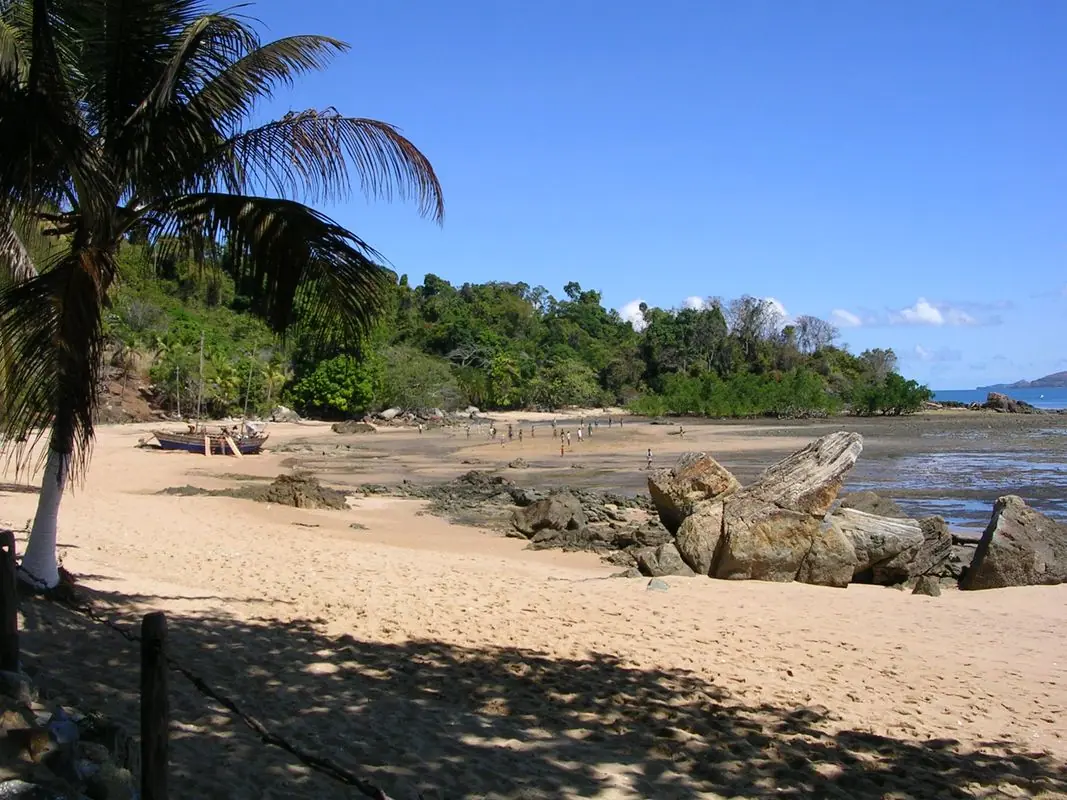
A ninety-minute flight north brings you to Nosy Be, the country's main beach destination, ringed by ylang-ylang plantations and water that shifts from jade to deep blue. Base yourself near Ambatoloaka or in the quieter north around Andilana, and spend the first afternoon simply acclimatising — the sun here is fiercer than the highlands and the pace is deliberately slow.
The island's real treasures are offshore. Nosy Komba, a volcanic cone cloaked in forest, is famous for its habituated black lemurs and for the woodcarvers whose stalls line the landing beach. Nosy Tanikely is a protected marine reserve where you can snorkel straight off the sand over coral, turtles and clouds of reef fish; go early, before the day boats arrive. On the main island, the Lokobe Strict Nature Reserve protects the last pocket of original forest, home to black lemurs and the tiny Nosy Be mouse lemur, and the crater lakes and viewpoints of Mont Passot give you the best sunset on the island.
If you have time for one more flight, the far north is worth the detour: Antsiranana, known as Diego Suarez, is a gateway to Amber Mountain National Park, a cool rainforest full of endemic chameleons and waterfalls, and to the Ankarana Reserve, where limestone tsingy, bat caves and crowned lemurs sit within reach of the spectacular Three Bays. This northern loop works best as its own week, but a single night in Diego before returning south is just about feasible.
Rainforest Alternative: Andasibe and the Indri
If you would rather trade beach for forest, swap the western leg for Andasibe-Mantadia National Park, about three hours by road east of the capital and reachable without any further flight. The park's great draw is the indri, the largest living lemur, whose wailing territorial call carries for kilometres through the mist — hearing it at dawn is one of Madagascar's defining travel moments and, unlike most wildlife here, it is almost guaranteed.
Analamazaotra, the smaller reserve within the park, is where most visitors walk, with good chances of diademed sifakas, woolly lemurs and a chorus of endemic birds. Neighbouring Vakona Forest Lodge has a small island reserve where lemurs will happily investigate your shoulder. Mantadia itself is wilder, steeper and best for serious walkers with a full day to spare.
You can slot this in on days three and four and still reach Nosy Be afterward by flying from Antananarivo, though it makes for a tight week. If you choose it, drop Morondava entirely rather than trying to do both — Madagascar punishes ambitious itineraries, and the roads east are slow even before the rain.
Practicalities for a Week in the Air
Weather shapes everything. The austral winter, roughly June to August, is dry and pleasantly cool in the highlands but can be chilly and misty at Andasibe and downright cold on Antananarivo evenings — bring a fleece alongside your swimmers. October and November grow hot and humid before the rains break, and the coast becomes sticky. Whichever month you choose, travel with a spare day at the end; internal cancellations are a normal part of life here, not a crisis.
Pack for two climates: layers for the highlands, light long sleeves and insect repellent for the rainforest and the west, reef shoes for the northwest, and a headlamp for night walks. Cash is essential outside the main towns, so change money on arrival in Antananarivo and carry smaller notes. Roads inside towns are slow and potholed, so leave generous margins when connecting a flight with a ground transfer.
Finally, resist the urge to see everything. Madagascar rewards depth over coverage — a week spent flying between three regions, with real time in each, will leave you with baobabs at sunset, the indri's dawn call and a reef full of turtles rather than a blur of airports.
Frequently asked questions
How many internal flights can I realistically fit into one week in Madagascar?
Two or three legs is the sensible maximum. Flights are short but schedules are sparse and delays are common, so a third leg usually eats a day you would rather spend in the forest or on the water. Always route connections through Antananarivo and leave a buffer day before flying home.
What is the best time of year for this fly-in itinerary?
May to November, the dry season, is the safest bet: firmer airstrips, fewer cancellations and comfortable temperatures in the highlands. For humpback whales add July to September; for whale sharks in the northwest, aim at October or November. Avoid the December-to-March cyclone season.
Can I see lemurs without trekking deep into a rainforest?
Yes. The Lemurs' Park near Ivato in Antananarivo is an easy introduction, Andasibe's Analamazaotra reserve offers near-certain indri sightings on gentle trails, Kirindy Forest delivers nocturnal species on night walks, and Nosy Komba has habituated black lemurs close to the beach.
How much luggage can I take on domestic flights?
Small turboprops typically allow around 15 kilograms of checked baggage plus a small cabin bag, and soft-sided bags are much easier to stow. Weigh your bag before you leave home and post or leave behind anything you do not need, because excess charges can be steep.
Should I choose the baobabs or the eastern rainforest?
If your week is short, pick one. The western route gives you the Avenue of the Baobabs, Kirindy's fossa and dry spiny forest, while the eastern route delivers the indri's unforgettable call and lush montane rainforest. Beach time on Nosy Be pairs naturally with either.
Plan it — flights in Madagascar
Live search, booked directly with trusted providers.
Sort the rest of your trip
Everything for Madagascar, in one place
Stay in Madagascar
Hotels, guesthouses and apartments — compared in one search.
Search hotels
Transfer in Madagascar
Private driver waiting on arrival — no queues, no surprises.
Book a transfer
Travel insurance
Medical cover, delays and lost baggage — sorted before you go.
Get covered