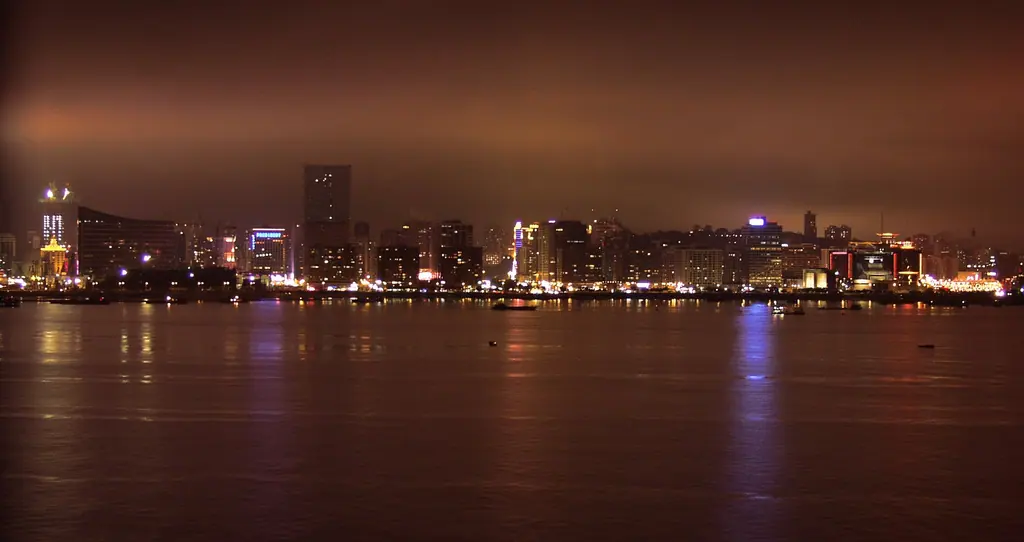
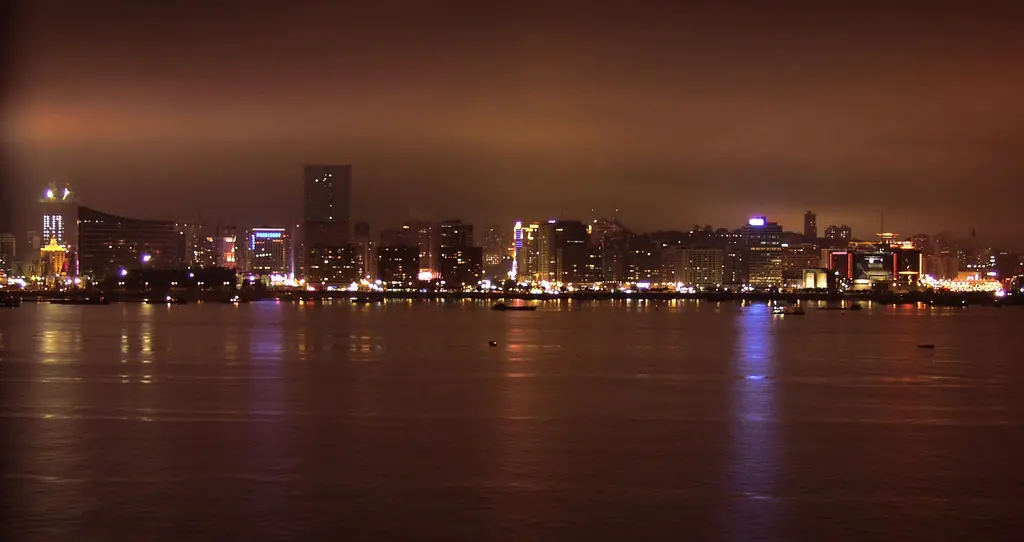
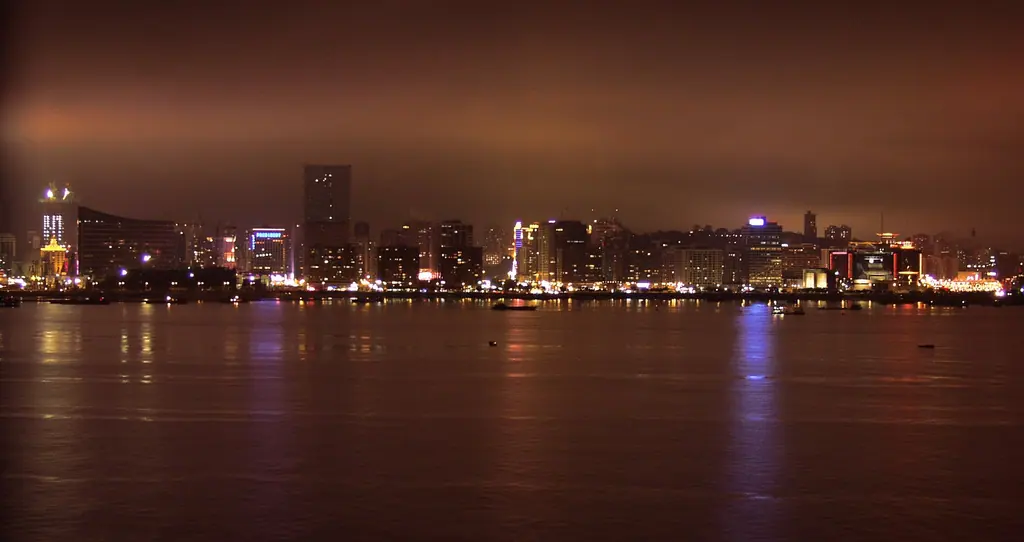
Macau compresses two worlds into a space you can cross by bridge in a quarter of an hour: baroque church façades and Cantonese roast shops on the peninsula, and a lagoon of illuminated resort towers rising from reclaimed land on Cotai. Where you sleep decides which of those Macaus you wake up to — and how much of your day disappears into taxis.
Two Macaus, Two Very Different Hotel Maps
Macau is a patchwork of four connected pieces: the peninsula that juts down from mainland China at the Border Gate, then Taipa, then the reclaimed Cotai strip, then quiet Coloane at the southern tip. Bridges and causeways link them, and outside rush hour you can travel from the old town to the resort strip in under fifteen minutes. That compactness is the good news. The complication is that hotels here are not simply rooms — they are addresses that put you either inside a UNESCO-listed historic centre or inside a self-contained pleasure complex.
Broadly, the accommodation falls into three families. On the peninsula you find boutique properties carved out of restored Portuguese-era buildings, small guesthouses tucked behind the shopping lanes around Senado Square, and mid-range towers along the Outer Harbour. On Cotai, hotel rooms are components of enormous integrated resorts that also hold theatres, shopping arcades, pools, spas, restaurants and gaming floors. In Taipa and Coloane, the mood drops several notches: village guesthouses, small hotels near the airport, and a handful of low-rise pousadas with garden courtyards.
Choose by your evenings rather than your mornings. If you want to eat your way through Rua do Cunha and walk home at midnight, Taipa wins. If the historic centre is the point of the trip, pay the premium to sleep within a few minutes' walk of the Ruins of St. Paul's. And if you want a pool the size of a small lake, blackout curtains and eleven restaurants downstairs, book Cotai and accept that the old town becomes a taxi ride.
The Cotai Strip: Suites, Spas and a Half-Scale Eiffel Tower
The Cotai Strip is the wharf-to-wharf spine of reclaimed land running between Taipa and Coloane, and it reads as a skyline designed to be photographed from a moving vehicle. A half-scale replica of the Eiffel Tower rises above one of the grandest resorts, its own viewing deck lit nightly; elsewhere there are Venetian-style canals with working gondolas, a giant Ferris wheel set into a hotel façade, a white-sand pool that looks imported from a tropical island, and towers wrapped in gold-tinted glass that glint for kilometres.
Rooms on Cotai tend to be suites rather than rooms, and the operators compete on absurd scale — multi-room layouts, marble bathrooms, dedicated butler floors, pillow menus, and in-house spas with plunge pools and traditional Chinese therapies. Food is a serious draw rather than an afterthought: Cantonese fine dining, Portuguese tasting menus, Japanese omakase counters, Sichuan hotpot and late-night congee shops all within a single complex. The trade-off is atmosphere — corridors are long, lobbies are loud, and checking in behind a tour group on a Saturday afternoon can take longer than the drive from the border.
Practicalities matter more here than anywhere else in Macau. Distances between resorts look short on a map but the walk along Estrada do Istmo between two neighbouring properties can run twenty-five minutes in heat and humidity. The light rail's Taipa line is a cheap, air-conditioned way to hop between Cotai, Taipa Village and the peninsula side, and the free resort shuttle network covers the airport, the ferry terminals and the Border Gate. Taxi queues form fast after evening shows, so decide early whether you are watching the clock or the fountains.
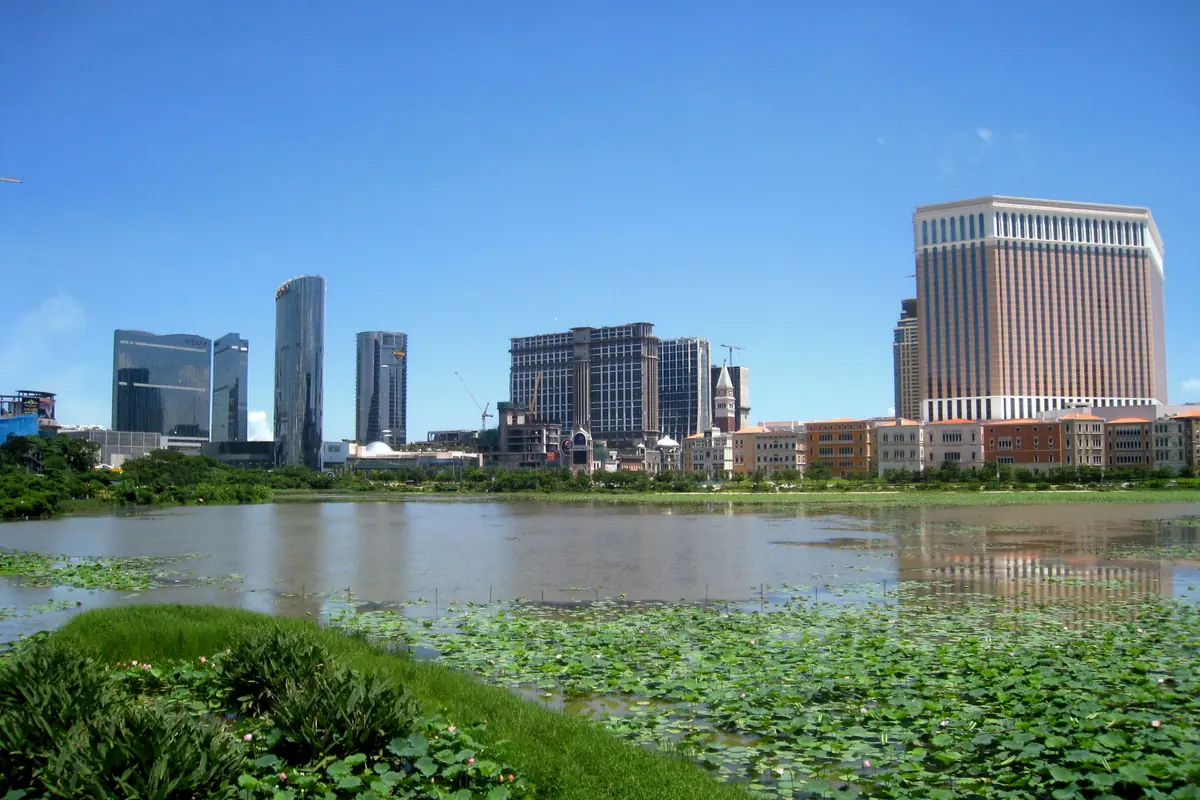
The Peninsula: Sleeping Inside the UNESCO Historic Centre
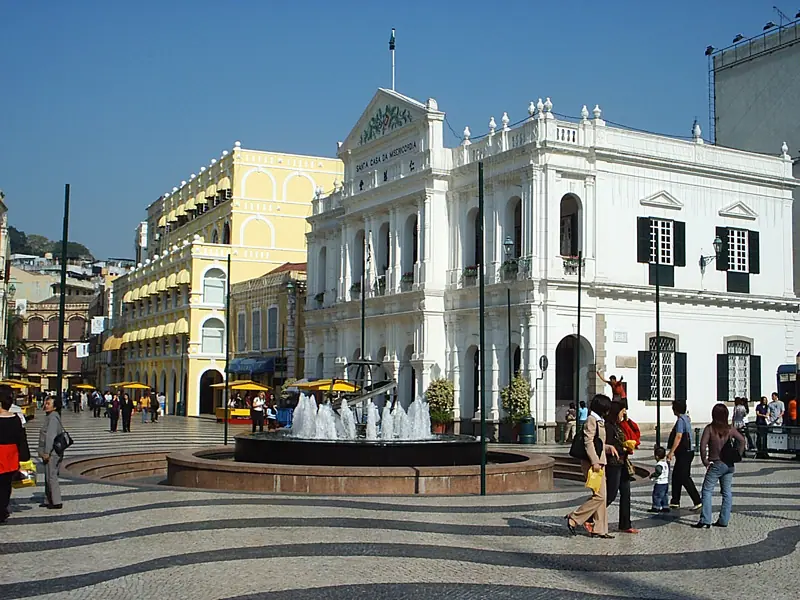
This is where Macau's soul is, and where the landmark list gets dense. Senado Square lays out its wave-patterned Portuguese pavement beneath candy-coloured colonial buildings; a few minutes uphill you reach the Ruins of St. Paul's, the surviving stone façade of a church founded in the early seventeenth century and gutted by fire in 1835. Beside it sits Mount Fortress and the Macau Museum, with the whole cluster forming the heart of the UNESCO-listed Historic Centre of Macau. St. Dominic's Church, the Holy House of Mercy and the shop-lined lanes of Rua da Felicidade are all within a slow ten-minute stroll.
Hotels on the peninsula split between character and convenience. Boutique properties occupy restored townhouses — think tiled floors, shutters, internal courtyards and rooftop terraces angled toward the Ruins — while larger hotels cluster around the Outer Harbour and Nam Van Lake with harbour or tower views. Rooms in the historic core tend to be smaller than their Cotai counterparts and sound insulation varies in older buildings, but you gain something no resort can sell: the old town after dark, when the tour groups have gone and the lanes smell of baking almond cookies.
Add A-Ma Temple at the Barra waterfront, a fifteenth-century complex of pavilions and rock carvings that gave the city its name, and Guia Fortress with its white lighthouse and chapel on the peninsula's highest point. Both are walkable from the centre, though the climb to Guia is genuinely steep. Be realistic about traffic: the peninsula's roads choke at peak hours and taxis are scarce in the rain, which is another argument for choosing a hotel you can reach on foot.
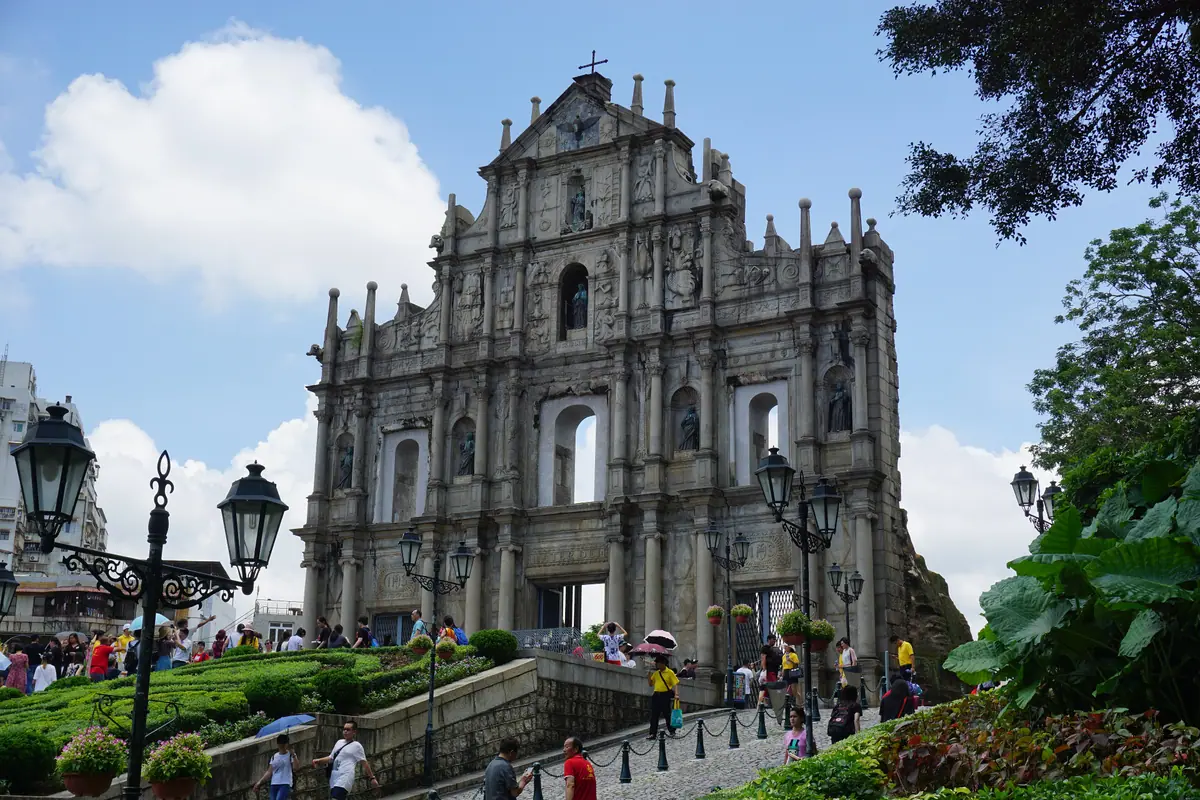
Taipa and Coloane: Slower Nights, Better Breakfasts
Taipa Village is the easy-going counterweight to Cotai's spectacle. Rua do Cunha is its edible spine — Portuguese egg tarts, pork chop buns, almond biscuits and peanut candy sold from shopfronts that have been there for decades — and the surrounding lanes hold Our Lady of Carmel Church, colonial villas and the Taipa Houses-Museum on Avenida da Praia, a row of pastel-green former residences facing a mangrove-lined lagoon. Staying here means you can eat dinner at nine, wander home through streets that still feel like a neighbourhood, and be on Cotai's doorstep in five minutes by light rail.
Coloane, further south and reached by a causeway, is where Macau goes to exhale. Coloane Village wraps around a small square with the Chapel of St. Francis Xavier, its walls holding a relic and its square framed by bakeries; Hac Sa Beach offers dark, mineral-tinted sand and a long promenade, backed by walking trails that climb through woodland toward Alto de Coloane, the territory's highest point. Hotels are few, low and quiet — garden pousadas, family-run guesthouses and a couple of small properties near the beach.
This is also the most convenient base for early flights, since Taipa sits roughly ten minutes from the airport and beside the ferry terminal, and the light rail connects it to both Cotai and the peninsula. The trade-off is evening energy: after about ten o'clock, Taipa and Coloane go quiet, taxis are thin on the ground and you will rely on hotel shuttles or the last trains. For families, couples and anyone who finds casino floors exhausting, that quiet is precisely the point.
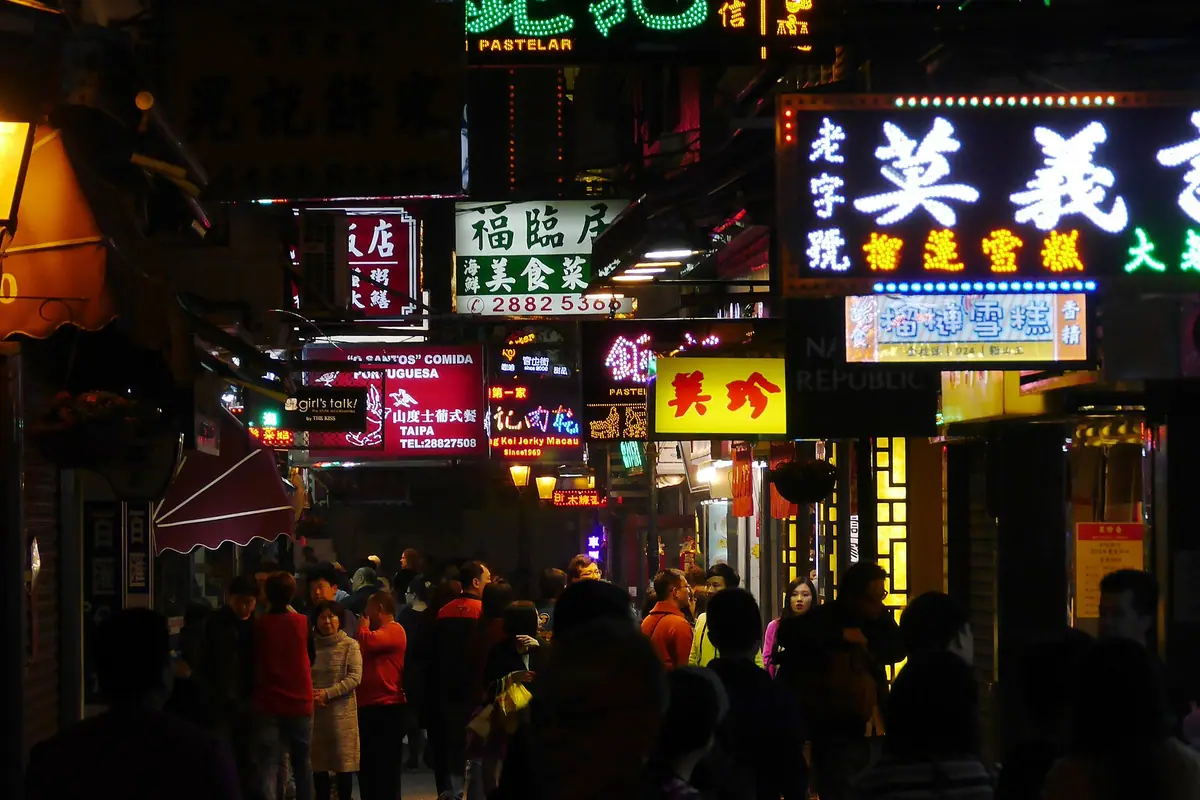
Landmarks Worth Choosing Your Hotel Around
Macau Tower is the landmark most hotel choices orbit, and the one worth planning a half-day around. The tower rises 338 metres above the Sai Van Lake waterfront, with an observation deck at 223 metres, a glass-floor Skywalk, an outdoor climb up the mast and the world's highest commercial bungee jump from the 233-metre platform. Hotels on the peninsula's southern edge and around Nam Van Lake put you within a short taxi ride, and the revolving restaurant upstairs is a decent sunset option on a clear day.
On the peninsula, Guia Fortress and its lighthouse crown the highest hill, with views across the Pearl River estuary toward the mainland; the Macau Grand Prix, held every November, runs on the street circuit that curls around its base, which is worth knowing before you book a room with a 'quiet' promise in that week. Mount Fortress, the Macau Museum and the Ruins of St. Paul's form the historic trio above Senado Square, while A-Ma Temple anchors the southern waterfront at Barra, where the light rail line terminates.
Further afield, Fisherman's Wharf on the Outer Harbour gives you a promenade of themed architecture and family entertainment, the Macau Science Centre sits beside it with its distinctive angled shell, and the Kun Iam Statue stands in the water off the eastern shore. The pattern is simple: peninsula hotels put you near history and the tower; Cotai hotels put you near the light shows, the Eiffel Tower replica and the resort pools; Taipa and Coloane put you near the food and the beaches.
When to Go and How to Book a Macau Hotel Sensibly
October to December is the sweet spot: humidity drops, daytime temperatures settle in the low twenties, and the outdoor terraces on Cotai and the walking routes around Coloane become genuinely pleasant. March and April are a decent second window, mild but often misty, with fog clinging to the bridges. Summer from May to September is hot, sticky and wet, with the heaviest rain and the real risk of typhoons between July and September; when a high typhoon signal is hoisted, ferries stop, bridges close and hotels fill quickly with stranded guests, so keep your plans flexible and never book a same-day crossing you cannot afford to miss.
Winter is mild rather than cold — most days sit between about twelve and eighteen degrees — but the Christmas, New Year and Lunar New Year periods are the year's most expensive, and Lunar New Year also shuts some small family-run restaurants for days at a time. The first week of October, when mainland China takes its National Day holiday, is similarly frenetic. Midweek stays outside those windows are dramatically better value than Friday and Saturday nights, which in Macau are their own separate price category.
A few practical habits make the stay smoother. Book direct with the property for anything longer than a couple of nights and ask about resort fees and breakfast packages, since these are often added on arrival. Almost every large resort runs free shuttles to the Border Gate, both ferry terminals and the airport, so you rarely need a taxi on arrival day. The pataca is pegged to the Hong Kong dollar, which circulates widely at parity, and casino floors are strictly twenty-one-and-over with passports checked at the door. Finally, request a non-smoking floor and confirm whether your room faces the resort's nightly light show — spectacular once, less so at one in the morning.
Frequently asked questions
Which area of Macau should a first-time visitor stay in?
For a short first trip, the peninsula's historic centre puts the Ruins of St. Paul's, Senado Square and A-Ma Temple within walking distance and Macau Tower a short ride away. If you want resort pools, big suites and evening entertainment, stay on the Cotai Strip. Taipa Village is the compromise: village food and atmosphere, with the light rail connecting you to both.
How many nights do you need in Macau?
Two nights covers the historic centre and Macau Tower comfortably, with an evening on Cotai. Three nights lets you add Taipa Village, Coloane and Hac Sa Beach without rushing, and gives you a buffer if a typhoon or heavy rain disrupts a day.
When is the cheapest time to book a Macau hotel?
Midweek nights from January to March, and again in late April and May, are generally the quietest and cheapest. Avoid the first week of October, Lunar New Year and mid-November, when the Macau Grand Prix fills the city's rooms.
Do you need to be 21 to stay in a Macau resort hotel?
No. Families and under-21s are welcome in the hotels, restaurants, pools and shops of the integrated resorts. You must be 21 or over to enter the casino floors, and photo ID or a passport is checked at the entrance.
What is the best way to get around between Macau hotels and attractions?
The light rail's Taipa line links Cotai, Taipa Village and the Barra waterfront on the peninsula cheaply and quickly, and most large resorts run free shuttle buses to the Border Gate, ferry terminals and airport. Taxis are useful for the historic centre, but queues build after evening shows and in heavy rain.
Sort the rest of your trip
Everything for Macau, in one place
Transfer in Macau
Private driver waiting on arrival — no queues, no surprises.
Book a transfer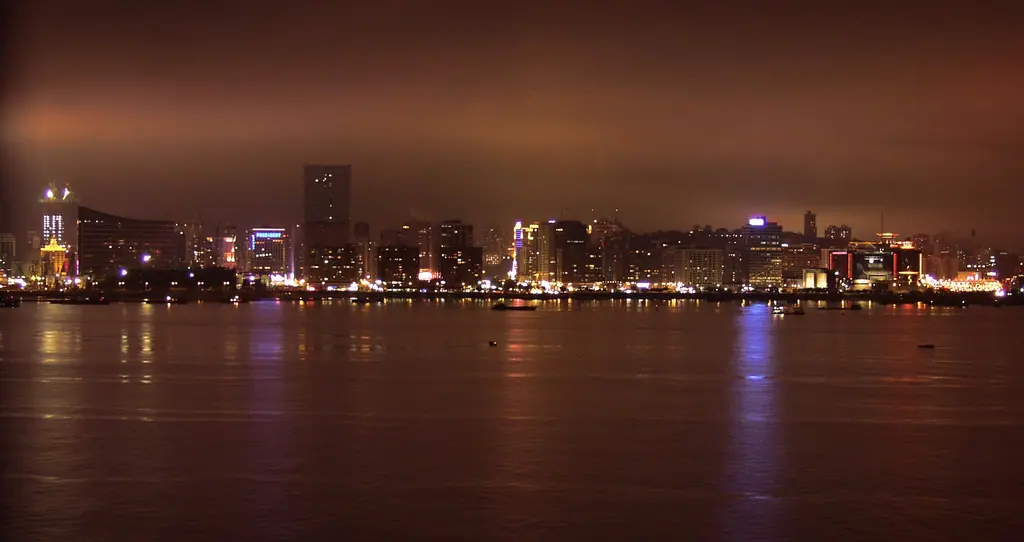
Things to do in Macau
Skip-the-line tickets, guided tours and standout experiences.
See experiences
Stay online in Macau
Travel eSIM — data the moment you land, no roaming bills.
Get an eSIM