Libya is one of the last genuinely uncrowded corners of the Mediterranean world, where Roman cities stand almost alone beside the sea and Saharan caravan towns still glow white against the sand. A single week won't cover it all, but it is enough for Leptis Magna, Sabratha, Tripoli's old town and a taste of the desert.
Planning the Week: Flights, Permits and the Right Season
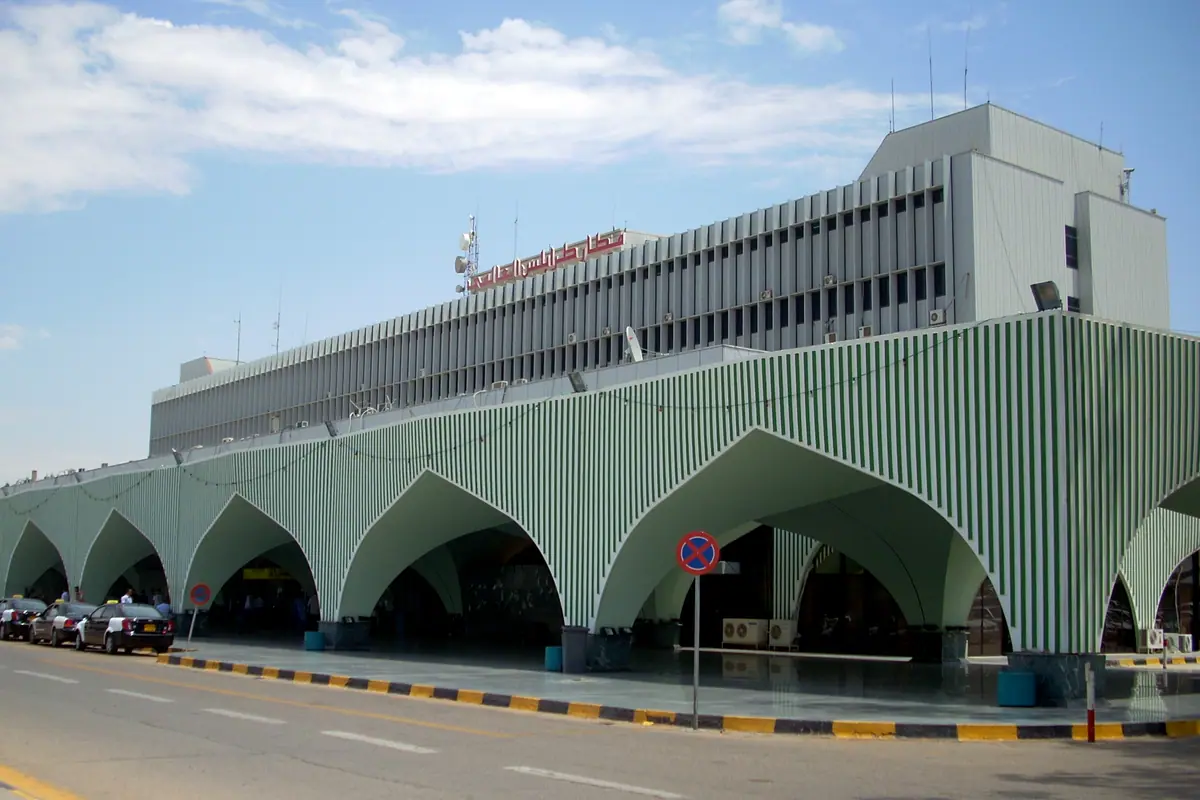
Short answer: almost nobody arrives in Libya independently. Entry is normally arranged through a licensed local sponsor who issues an invitation, handles the visa, and provides an escorting guide, and that structure shapes the whole week — you travel as a small group with a driver and a permitted itinerary, which is why a seven-day plan works so well. Flights arrive mainly at Mitiga International Airport in Tripoli, with a second gateway at Benina International Airport in Benghazi for the eastern sites. Common routings connect through Tunis, Cairo, Istanbul, Amman or Rome, and early-morning departures are the norm.
Time your trip between October and April. Late autumn and early spring are ideal — warm, clear and comfortable for walking around ruins — while high summer regularly pushes past 40°C and makes midday sightseeing miserable. Winter days in Tripoli are mild, but desert nights in the south can drop close to freezing, so pack layers regardless of the month. Friday is the quiet day for shops and offices, though archaeological sites generally remain open.
Move around by road and, where useful, by domestic flight or long desert convoy. The classic western loop — Tripoli, Sabratha, Leptis Magna, then Ghadames — fits neatly into seven days. Distances look small on a map but checkpoints, convoys and road conditions slow everything down, so accept that you will cover less ground than you would in Tunisia or Egypt.
Carry cash in local currency for tips, snacks and small entry fees; card machines are rare outside a handful of Tripoli hotels. Bring a scarf, modest clothing for towns, a torch, and more memory cards than you think you need.
Days 1–2: Tripoli — The Red Castle, Martyrs' Square and the Medina
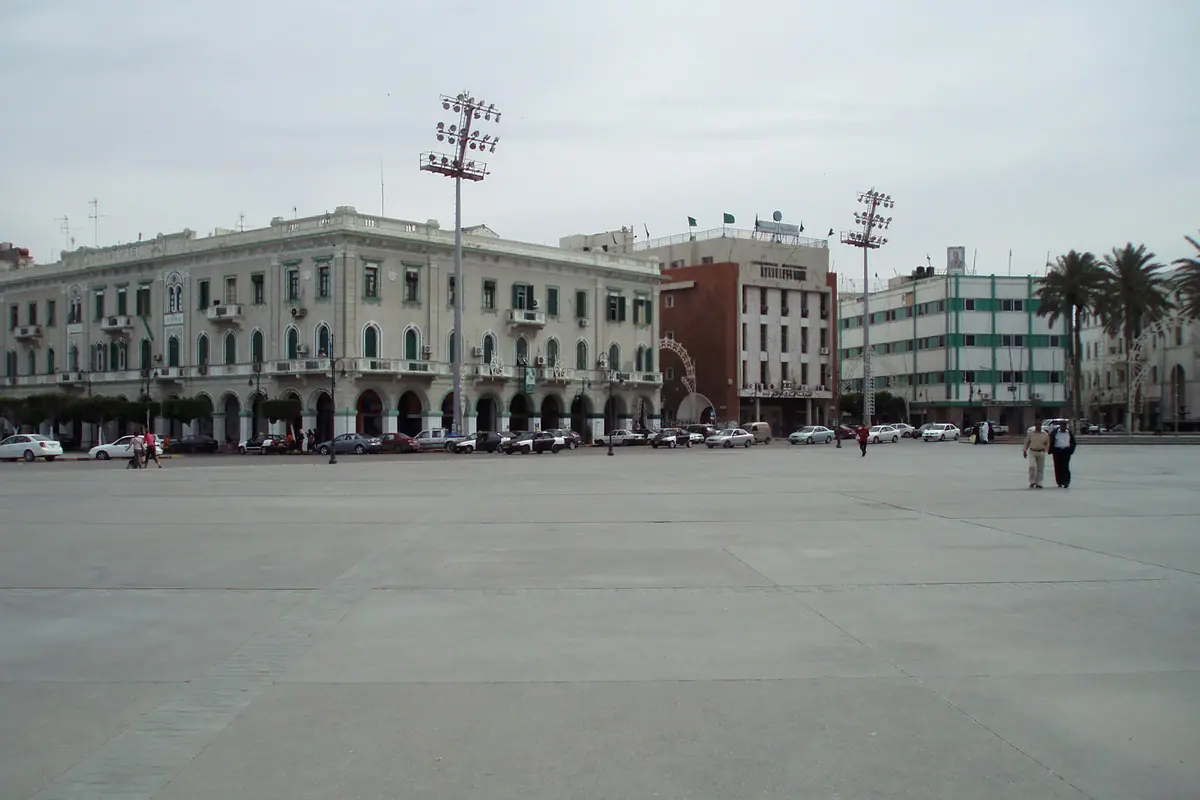
Start where the city looks at the sea. Martyrs' Square opens onto the waterfront, and the vast honey-coloured fortress on its edge — the Red Castle, or Assaraya al-Hamra — is the single best introduction to the country. Inside its walls sits the national museum, with mosaics, statuary and Phoenician, Roman, Byzantine and Ottoman finds gathered from across Libya. Give it a full morning; the collection is far larger than most visitors expect.
Then step into the old medina behind the square. The Marcus Aurelius Arch, a second-century triumphal gateway, still marks the entrance to the souk, and beyond it the lanes run past the Gurgi Mosque with its slender minaret, the Ottoman-era Karamanli House, and workshops selling copper, textiles and spice. It's small enough to wander without a strict route — an hour or two of unhurried walking is the whole point.
Use the second day for the everyday city: the fish market and the corniche in the late afternoon, mint tea in a medina café, and a first proper Libyan meal of couscous or bazin with lamb and pumpkin. Sleep in the capital both nights, because day three starts early with the drive west.
Day 3: Sabratha's Roman Theatre on the Western Shore
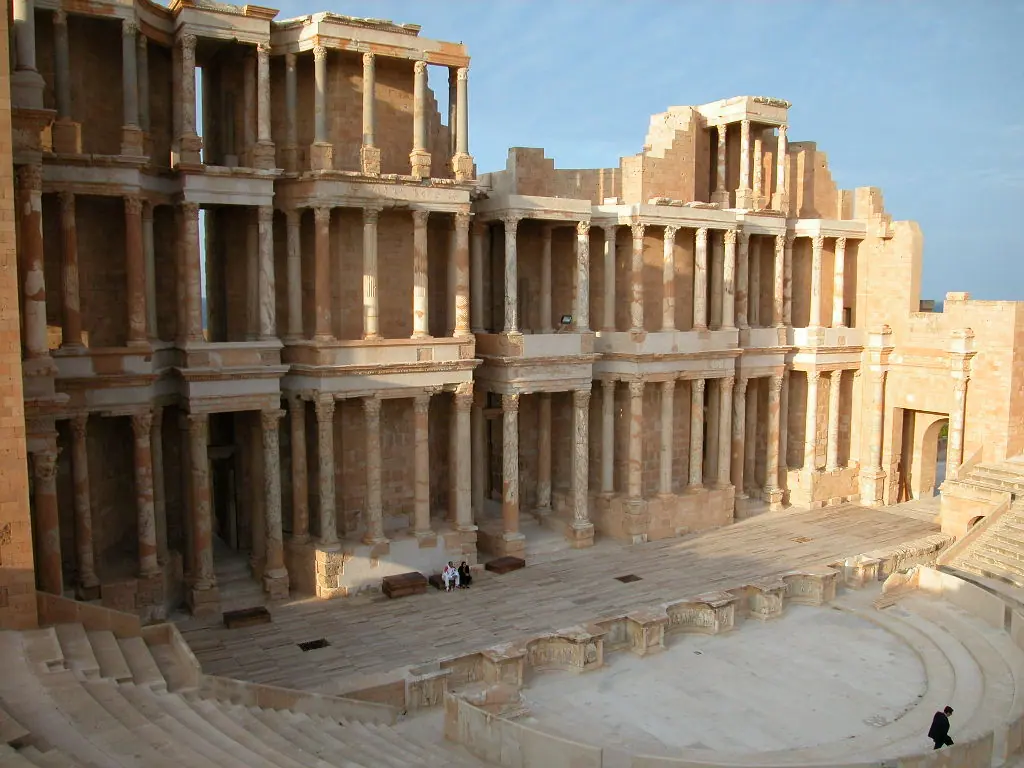
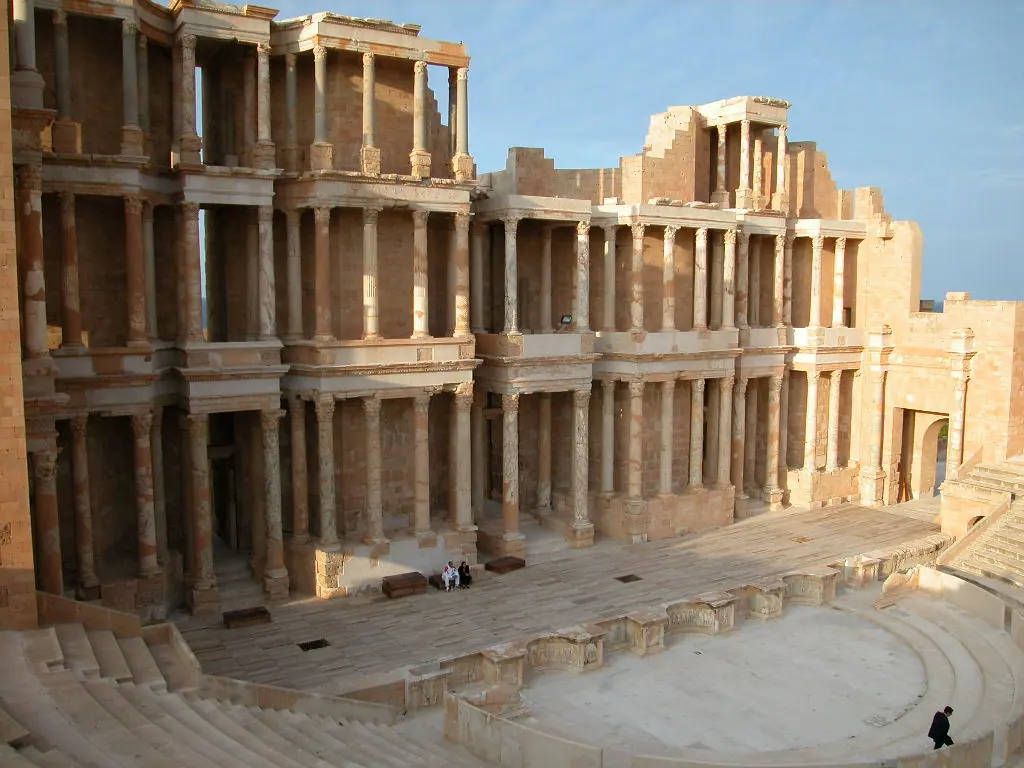
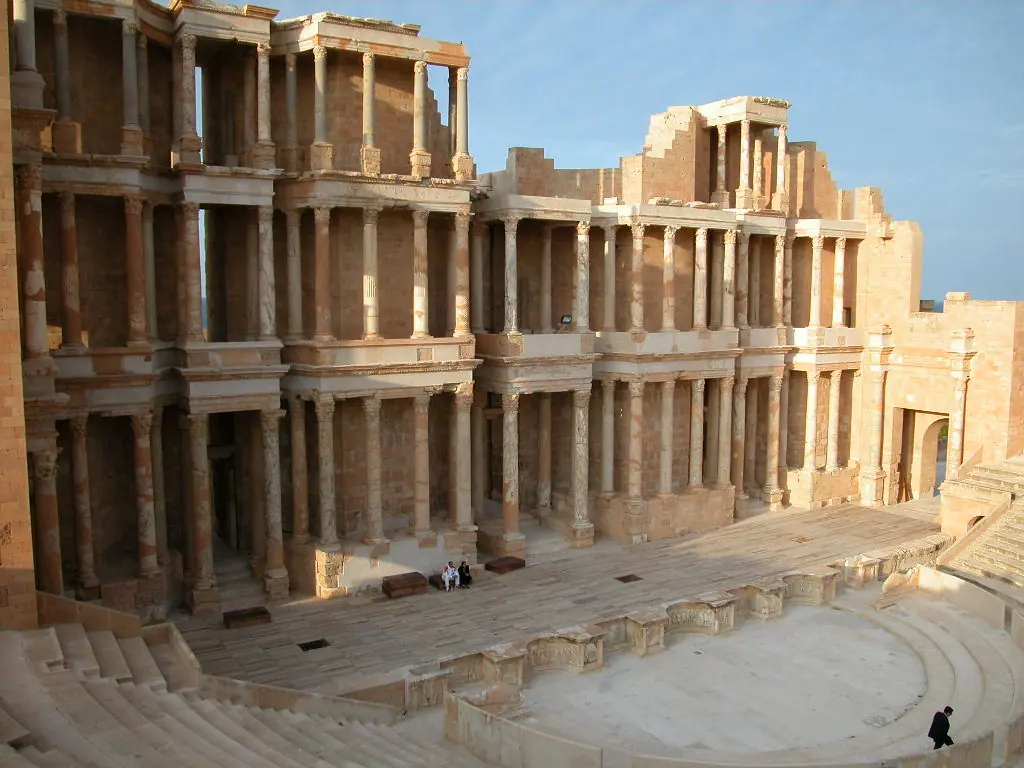
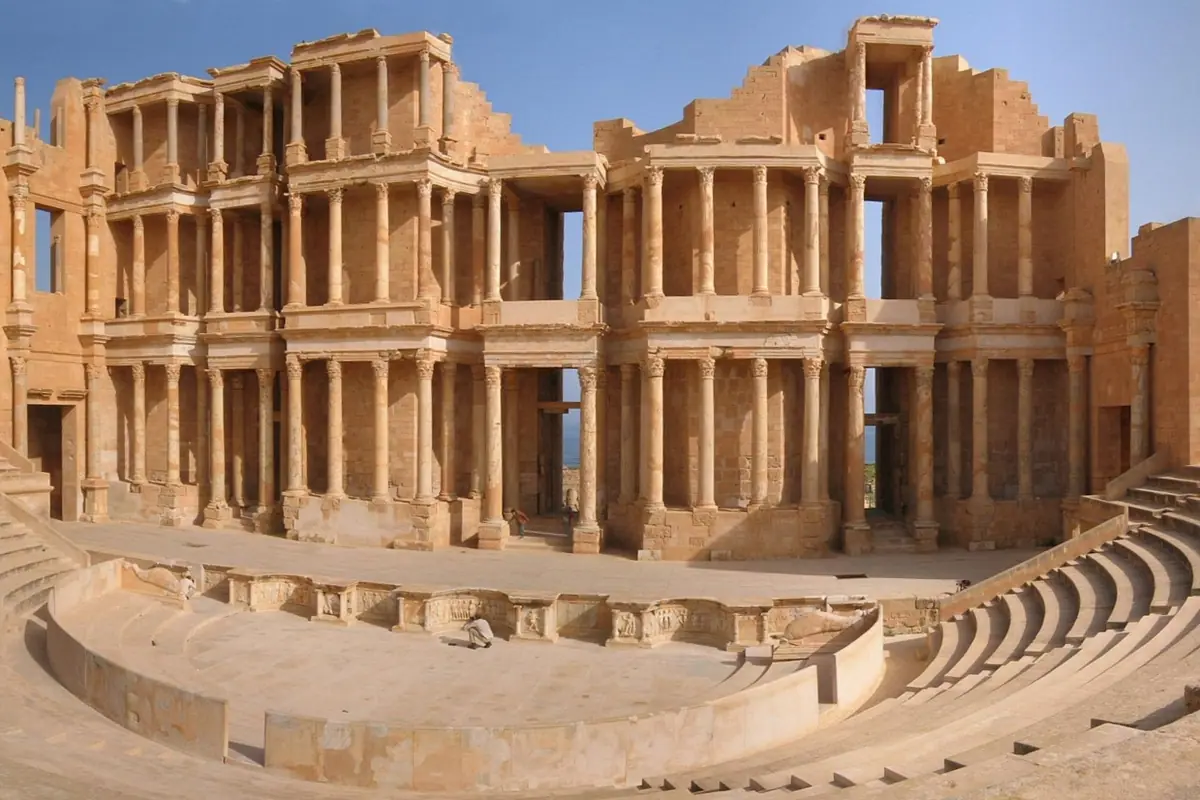
An hour and a bit west of Tripoli, Sabratha is the warm-up act that could headline anywhere else. Founded as a Phoenician trading post and later rebuilt as a Roman city, it faces the Mediterranean across a low ridge of ruins, and its theatre is the reason most people come. Three tiers of seating rise against a towering stage wall carved with reliefs of gods, myths and theatrical scenes — standing on the top row with the sea behind you is one of Libya's great travel moments.
Beyond the theatre, walk the colonnaded streets past the temples of Liber Pater, Isis and Serapis, the forum, and the bathhouses where mosaics — including the famous marine floor — still hold their colour. There is a small on-site museum, and the site is usually quiet enough that you can hear the wind and the sea rather than tour groups.
Plan on two to three hours on site, then either return to Tripoli for the night or push on toward Khoms so that Leptis Magna is waiting for you at opening time the next morning. The coastal road is straightforward, with a pause for grilled fish in Zuwara or Zliten depending on your route.
Day 4: Leptis Magna — The Roman Metropolis by the Sea
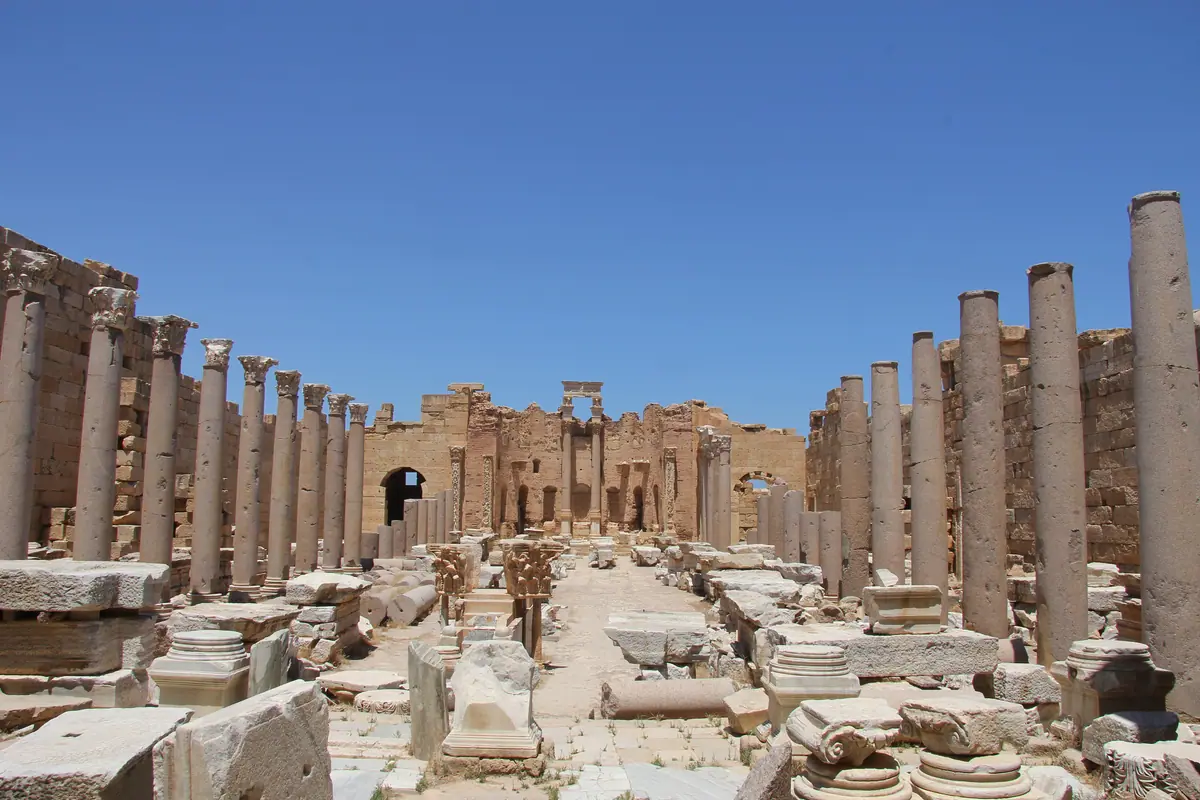
Leptis Magna, east of Tripoli near the town of Khoms, is the crown of any Libyan itinerary and one of the best-preserved Roman cities anywhere in the Mediterranean. It was the birthplace of the emperor Septimius Severus, and he spent lavishly on it: the result is a monumental city of broad colonnaded avenues, a forum paved in gleaming marble, a basilica of soaring columns, and public baths large enough to hold a small town.
Walk in through the Severan Arch — its sculpted panels are among the finest surviving examples of imperial relief carving — then follow the main street down to the Hadrianic Baths and the palaestra. The theatre, cut into the hillside with a view over the ruins, and the vast circus beyond the walls are usually empty in the early morning. Set aside at least half a day, and if you can, take an hour at the small museum to see the finds in context.
The nearby harbour, silted up centuries ago, explains why this city became so rich: olive oil from the interior was shipped across the empire from here. Bring water, a hat and sturdy shoes — the ground is loose and the sun is relentless even in winter — and don't rush the last section of the site, which most visitors skip.
Days 5–6: Ghadames, the White Pearl of the Sahara
From Tripoli, the road runs southwest toward the Algerian and Tunisian borders and the oasis of Ghadames, a UNESCO-listed caravan town that has been described as the pearl of the desert for good reason. Its old quarter is a labyrinth of whitewashed houses, some stacked four storeys high, linked by covered passageways that kept women, children and goods in cool shade while the sun hammered the rooftops outside.
Hire a local guide to unlock the old town — the doors are mostly closed without one — and climb to a rooftop terrace at sunset for the view over the palm groves, the minarets and the dunes beyond. Don't miss the Ayn al-Faras spring, where the oasis is irrigated, and the small museum in a traditional house that shows how families divided their summer and winter quarters.
Nights here are extraordinary: cold, silent and brilliantly starry. Simple guesthouses and a handful of small hotels sit beside the new town, and dinner is usually lamb, dates and bread baked in a sand oven. Two nights is about right — one to arrive and explore, one for the palms, the museum and a slow walk to the edge of the sand.
Day 7 and Beyond: Cyrene, Apollonia and the Ubari Lakes
Your final day depends on which direction you've saved for last. In the east, above Benghazi, the Jebel Akhdar greens into a plateau of cypress and thyme where the Greek city of Cyrene spreads across a hillside: the Temple of Zeus, the Sanctuary of Apollo, the theatre and the agora. Twenty minutes away, Apollonia's harbour ruins sit on the shore, and the mosaics at Qasr Libya are worth the detour inland.
If the desert has hooked you instead, the far south keeps its own treasures. The Ubari Lakes — among them Gaberoun and Umm al-Maa, fringed with reeds and salt — appear like a mirage in the sand sea, and the Acacus Mountains shelter thousands of prehistoric rock paintings and engravings in their canyons. Further south still, Waw an Namus is a volcanic crater ringed by startling black ash and blue-green pools.
Realistically, both the east and the deep south need a whole extra week or a separate trip. Build your first visit around the west, and treat Cyrene and the Fezzan as the reason to come back — as most people who make it to Libya once inevitably do.
Frequently asked questions
Do I need a guide and a visa to visit Libya?
Yes. Almost all visitors enter on a visa arranged by a licensed local sponsor, and travel is done with an approved guide and driver on a permitted itinerary. Independent backpacking is not realistic, so budget for a tour or a private driver-guide and apply well in advance.
What is the best month to travel in Libya?
October to April is the sweet spot. March and November are especially pleasant — warm days, cool nights and clear light for ruins. July and August are punishing, with temperatures above 40°C inland and in the desert, and midday sightseeing becomes genuinely risky.
Can I see Leptis Magna and Sabratha in one day?
Technically yes, but you would short-change both. Sabratha sits west of Tripoli and Leptis Magna to the east, roughly two hours apart by road. Split them across two days, starting early, and allow half a day for Leptis Magna and two to three hours for Sabratha.
How do I reach Ghadames and the Sahara lakes?
Ghadames is a long drive southwest of Tripoli, usually done as an overnight or two-night stop. The Ubari Lakes and the Acacus lie much further south in the Fezzan, typically reached by domestic flight to the Sabha area followed by desert driving, and they normally require a dedicated southern itinerary.
What should I know about dress, photos and checkpoints?
Dress modestly, especially in towns and oases — shoulders and knees covered, and a scarf handy for women. Ask before photographing people, avoid anything that looks official or military, and be patient and polite at checkpoints; your guide will handle the paperwork and the conversations.