Libya holds some of the most complete Roman cities anywhere on earth, a Greek colony whose temples once rivalled Athens, and a Saharan interior painted with rock art older than the pyramids. It is not a country you wander casually — but for travellers who go with a licensed guide and a little patience, the rewards are extraordinary.
Tripoli: The Old Medina, the Red Castle and Martyrs' Square
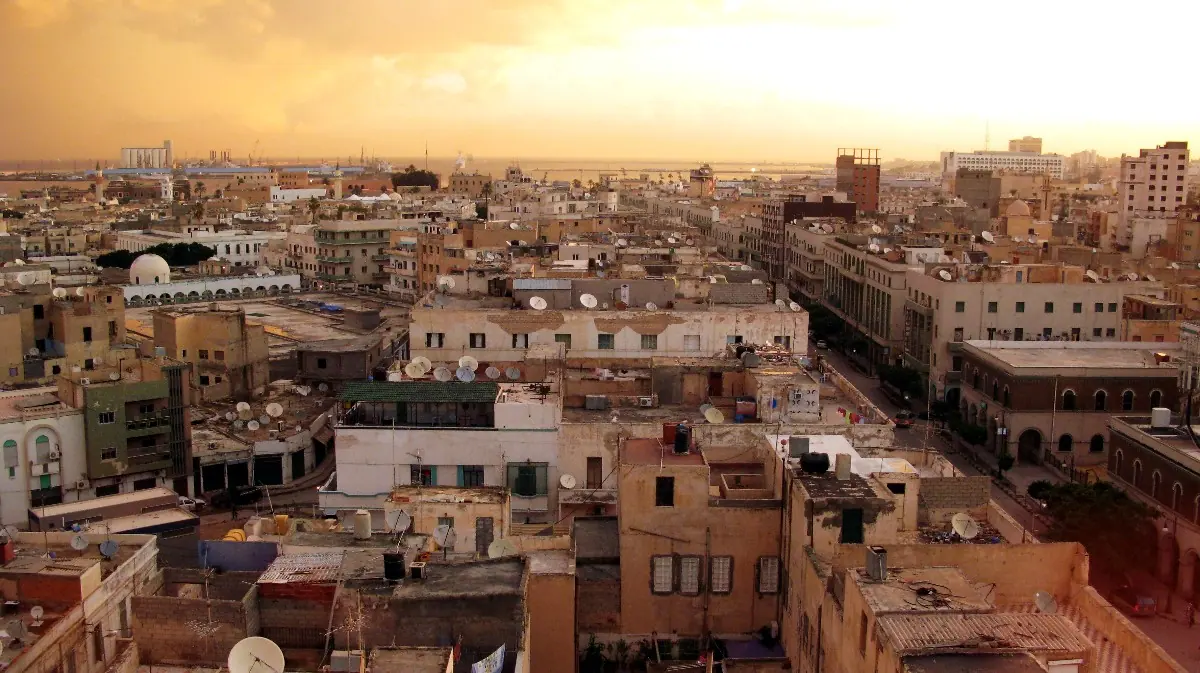
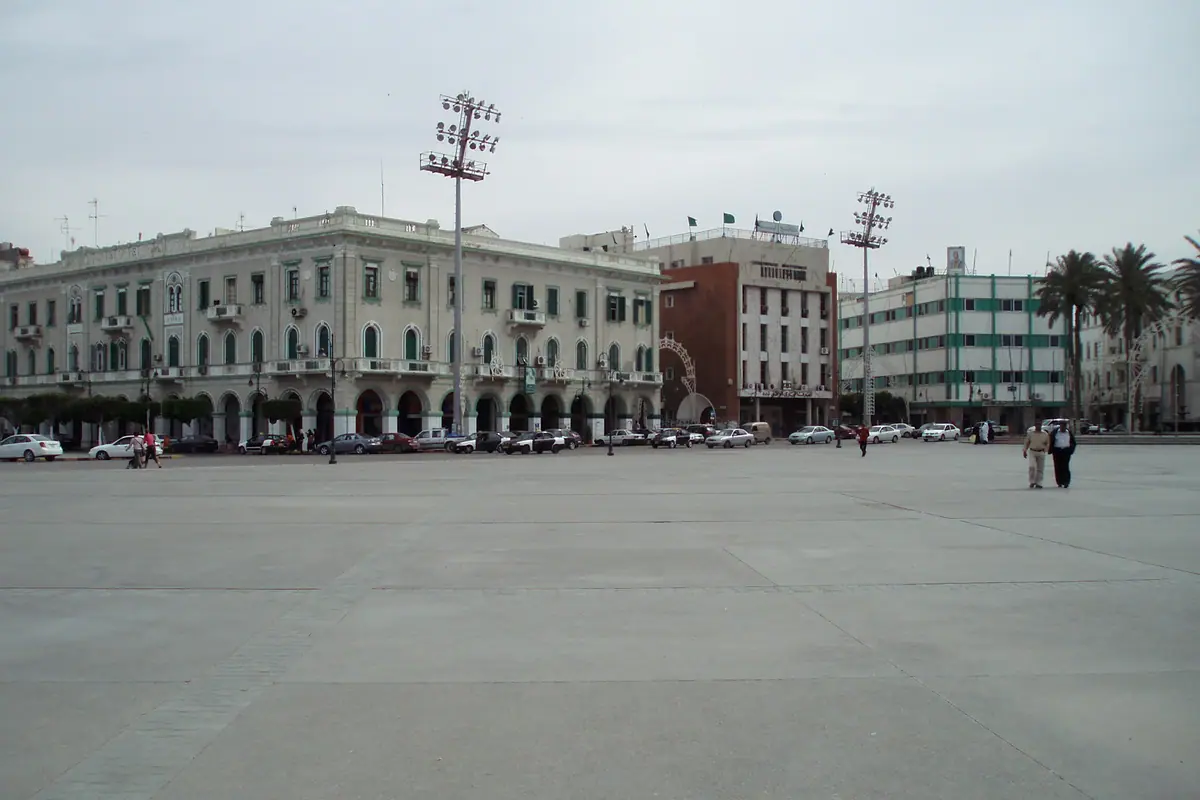
Most journeys begin in Tripoli, and the city rewards a slow first day. Martyrs' Square sits at the centre of things, opening onto the corniche where families stroll in the evening and the sea breeze cuts the heat. A short walk away stands the Red Castle, or Assaraya al-Hamra — a sprawling Ottoman fortress built over earlier Roman and Byzantine foundations, now filled with galleries of Roman sculpture, Berber silverwork and finds hauled up from the desert. From there you step straight into the Old Medina, a maze of whitewashed lanes, tiny workshops and cafes where the smell of cardamom coffee drifts out of doorways.
Don't miss the Marcus Aurelius Arch, a Roman triumphal gateway from the second century that still spans a medina street, and the Gurgi Mosque, whose slender columns and tiled courtyard are among the prettiest in the city. The gold souk and the spice market are worth an hour even if you buy nothing — sacks of paprika, cumin and dried mint, stacked beside phone shops and barbers. Two full days here is comfortable, with evenings saved for grilled fish near the port and plates of couscous or bazin scooped up with flatbread. Spring and autumn are the sweet spots on the coast; midsummer is humid and can push past 35°C.
Leptis Magna: Rome's Grandest African City
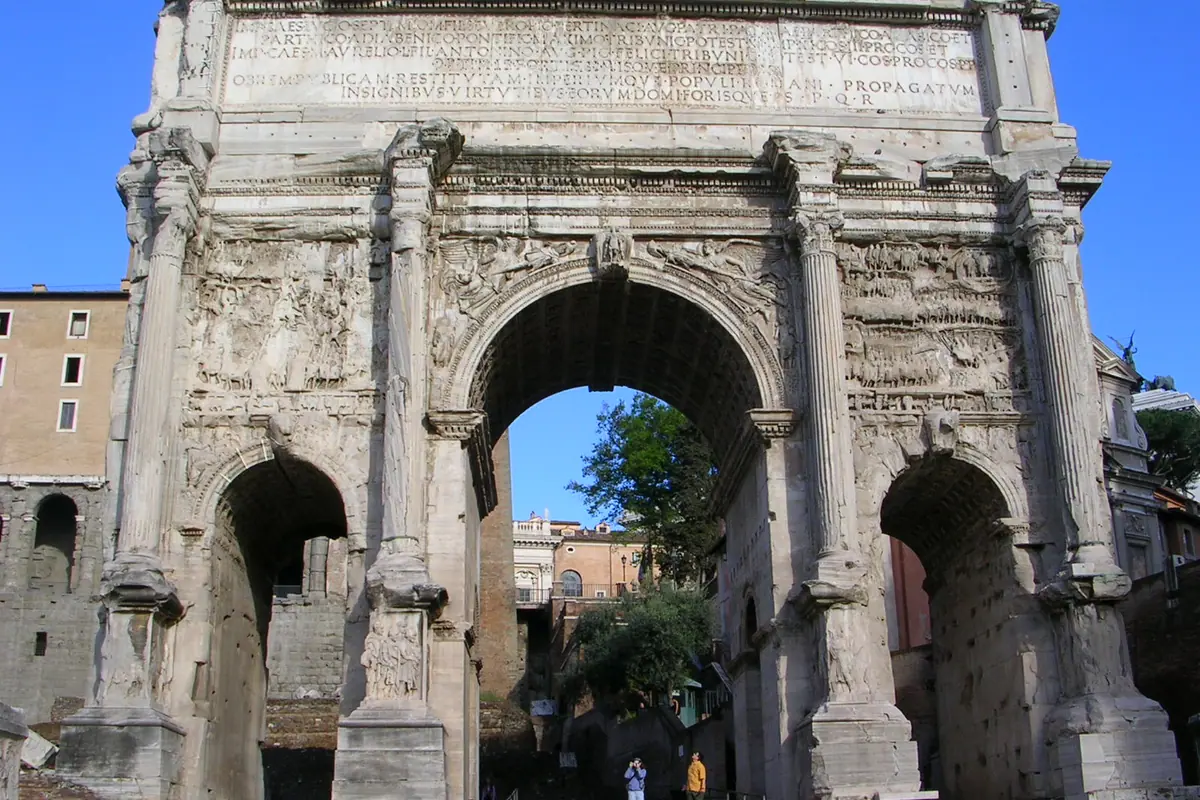
Roughly two hours east of Tripoli, at Al Khums, lies the site many visitors come to Libya for. Leptis Magna was a Phoenician trading post that grew into one of the wealthiest cities of the Roman Empire, and it was buried under windblown sand for centuries — which is why so much of it survives. You enter past the Arch of Septimius Severus, a four-sided monument carved with reliefs, built to honour the emperor who was born in this very city. Beyond it spreads the Severan Forum, a colonnaded square of pale limestone so vast it feels theatrical, with the great basilica beside it and the Hadrianic Baths still showing the outlines of marble pools and under-floor heating.
Give it at least three hours, and more if you want to walk the full length of the colonnaded street down to the harbour, past the theatre, the circus and the amphitheatre on the city's edge. The site is exposed and there is little shade, so start early, carry water and wear a hat. Most trips pair Leptis with the nearby museum and the mosaics at Villa Selene. A guide earns their fee here — without one, you're looking at beautiful stones; with one, the Punic foundations, Roman ambitions and later Arab layers all start to speak.
Sabratha: A Roman Theatre Above the Waves
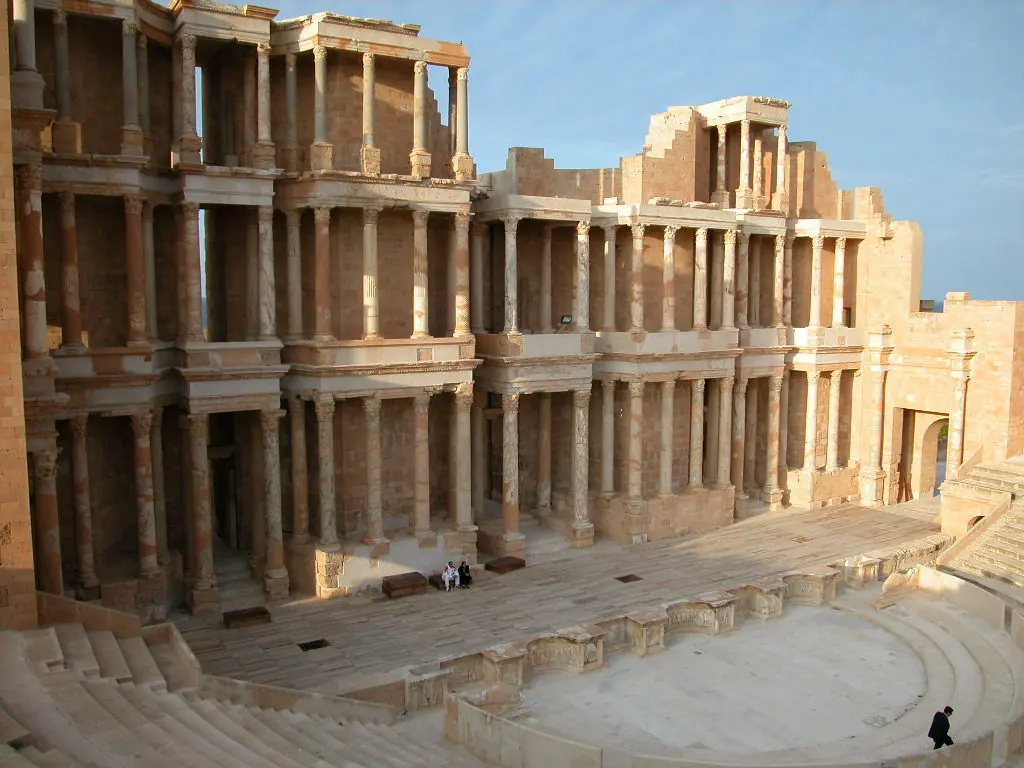
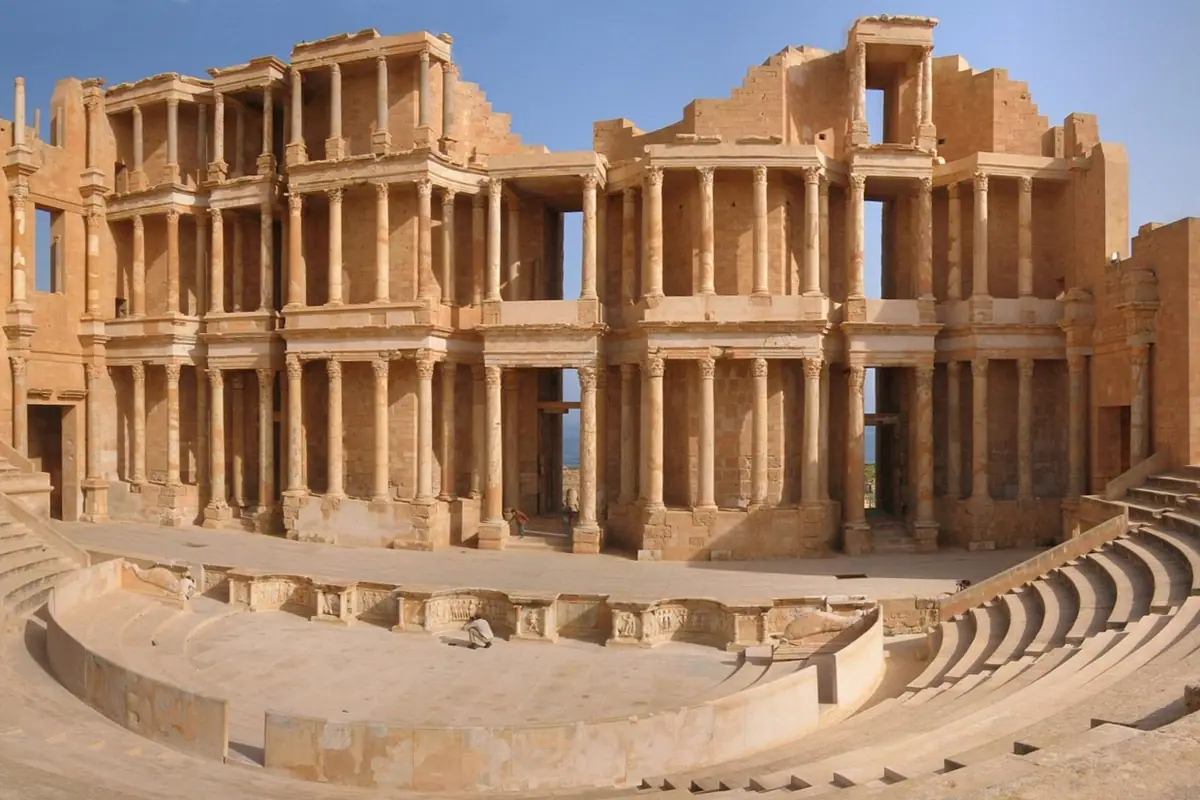
About ninety minutes west of Tripoli, Sabratha began as a Phoenician anchorage and became a Roman city of temples, baths and villas. Its centrepiece is the theatre: three tiers of seating for thousands, backed by a stage wall of columns that has been re-erected against a backdrop of sea and sky. Standing in the upper rows near sunset, with the light going gold across the stone, is one of the great experiences of North Africa. The surrounding ruins include the Antonine temple, a forum, bathhouses and the remains of houses whose mosaic floors are now displayed in the site museum — look for the sea gods and mythological scenes still vivid in their coloured tesserae.
Sabratha works beautifully as a half-day trip, and the coast nearby is good for a swim in the warmer months. Because it's close to Tripoli it's often combined with Leptis Magna in a loop, though the two deserve separate visits rather than a rushed single day. Mornings are cooler and quieter; late afternoon gives the best photographs. As at every archaeological site in Libya, a licensed guide accompanies visitors, and modest dress — shoulders and knees covered — is expected and appreciated.
Cyrene, Apollonia and the Green Mountain
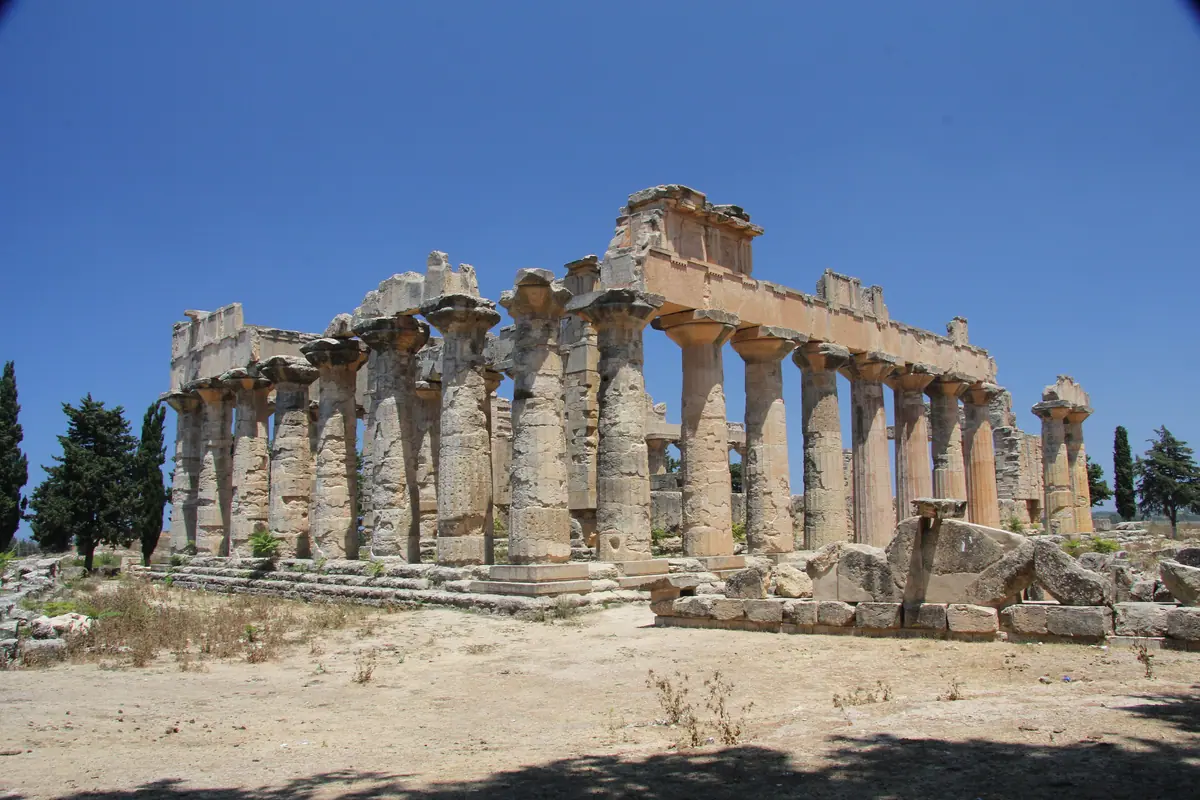
In eastern Libya, the limestone plateau of Jebel Akhdar — the Green Mountain — rises above the coast in a band of juniper, cypress and farmland that feels nothing like the desert. Here the Greeks founded Cyrene in the seventh century BC, and the ruins are scattered across a ridge above the modern town of Shahat. The Temple of Zeus is the monumental heart of it, its tumbled columns once part of one of the largest Doric temples the Greeks ever built. Nearby lie the Sanctuary of Apollo with its temple and fountain, the tomb-lined necropolis cut into the rock, and the Sanctuary of Demeter on the hillside.
Below the plateau, the harbour city of Apollonia holds a small Greek theatre and Byzantine basilicas with their columns still standing; further along the coast, Ptolemais and the mosaics at Qasr Libya round out a remarkable cluster. Plan two to three days based in or near Benghazi, and travel with a guide — access and road conditions can change. Spring is the loveliest season, when the plateau turns green and wildflowers fill the slopes, and the mountain air stays noticeably cooler than the coast.
Ghadames: The Pearl of the Desert
Far to the south-west, at the meeting point of Libya, Tunisia and Algeria, Ghadames rises out of the palm groves as a whitewashed labyrinth of mud-brick houses. The old town is a masterpiece of desert engineering: covered alleyways form cool, shaded corridors at ground level, while the rooftops are linked into a separate walkway once used by men, leaving the streets below to women and children. Houses are decorated with geometric painted patterns, and each has a summer terrace open to the stars. It's easy to see why it's called the pearl of the desert.
Base yourself in the newer town and spend a morning in the old quarter with a local guide, who will point out the museum-house, the mosque and the Ain al-Faras spring that feeds the date gardens. In October, Ghadames hosts a lively festival of traditional dress, music and racing. The drive from Tripoli is long, so many visitors fly instead, or break the journey at Nalut to see the hilltop Berber granaries and the Kabaw escarpment. Winter days are mild and nights genuinely cold — pack a warm layer. The best window runs from November to March.
The Deep Sahara: Tadrart Acacus, the Ubari Lakes and the Garamantes
South of everything lies the Fezzan, and beyond it the landscapes that make Libya unforgettable. The Tadrart Acacus is a massif of sandstone towers and arches whose rock shelters are painted and carved with giraffes, elephants, ostriches and swimming figures — images made when this was savannah, not sand. In the Wadi Mathendous, enormous petroglyphs of wild cattle and great cats cover the cliff faces. Further south, the Ubari lakes appear like a mirage: Um al-Maa and Gaberoun, fringed with reeds, ringed by dunes, their water salty and impossibly blue against the orange sand.
Nearby, the mud-brick ruins of Germa mark the capital of the Garamantes, the desert kingdom that tunnelled irrigation channels beneath the sand and traded across the Sahara long before Rome took an interest. At the elbow of the dune seas stand the great Sand Sea of Ubari and the Murzuq dunes, where expeditions camp under enormous skies. Getting here is a serious undertaking: desert travel requires permits, a licensed guide, 4x4 vehicles and several days, and much of the deep south is only visited on organised expeditions. Fly from Tripoli to Sebha and go between November and March, when days are bearable and nights are freezing. Borders and remote zones can close without notice, so always confirm current access before committing.
Frequently asked questions
Is Libya open to tourists, and how do I visit safely?
Tourism exists but is tightly organised. Most visitors arrive on a sponsored tourist visa arranged in advance through a licensed local operator, and travel with an accompanying guide. Some regions — remote border zones and parts of the deep south — are off-limits or need special permits. Security conditions shift, so check your government's current travel advice and work with an operator who monitors access daily.
What is the best time of year to visit Libya?
October to April is the most comfortable window overall. On the Mediterranean coast, March to May and October to November are ideal; midsummer is hot and humid. For the Sahara — Ghadames, the Ubari lakes, Tadrart Acacus — aim for November to March, when daytime temperatures are pleasant, though desert nights can drop close to freezing.
How many days do I need to see the main sights?
A week to ten days covers Tripoli, Leptis Magna, Sabratha and Ghadames comfortably. Add four to five days if you want Cyrene, Apollonia and the Green Mountain in the east, and another four to six for a serious Saharan expedition to the Fezzan. Rushing between regions is unwise; internal flights help enormously.
What should I pack and know before I go?
Bring modest clothing covering shoulders and knees, a scarf for mosques and rural areas, strong sun protection, a hat and sturdy shoes for uneven archaeological ground. Cash in Libyan dinars is essential — cards are accepted almost nowhere outside a few city hotels, and ATMs are unreliable. A European-style two-pin adapter, a torch and warm layers for desert nights all earn their place in your bag.
What is Libyan food and daily life like for visitors?
Expect generous, home-style cooking: couscous with lamb or vegetables, bazin — a dense dough eaten with a spicy sauce — hearty soups, grilled fish along the Tripoli corniche, and endless glasses of sweet mint tea. Arabic is the everyday language, with Italian and some English understood in the cities. Fridays are quiet, alcohol is effectively unavailable, and photography of people, military sites and official buildings should always be cleared first.
Plan it — experiences in Libya
Live search, booked directly with trusted providers.