Libya is one of the last genuinely unrepeated journeys on the Mediterranean — Roman cities of marble and mosaic with nobody to share them with, a Greek colony on a green mountain, and a Sahara so quiet you can hear the tea being poured from a height. Come for the ruins, stay for the food, the festivals and the endless, courteous ritual of the glass of shahi.
Bazeen, Couscous and Desert Dates: How Libya Eats
Libyan cooking sits exactly where its geography does — a Mediterranean coast of olive oil, fish and fresh herbs, an inland plateau of barley, lamb and tomatoes, and a Saharan south of dates, camel milk and bread baked in hot sand. The national dish is bazeen: a smooth dome of barley dough turned out into a deep bowl and flooded with a red, chilli-warmed broth of lamb, onion and tomato, with potatoes and chickpeas tucked underneath. It is eaten by hand from a shared plate, and if you are invited to share one, you have been invited into the family. Couscous is the Friday classic, steamed over a lamb or fish stew, and shorba Libiya — a mint-flecked soup of lamb and chickpeas — opens almost every proper meal.
Street corners fill in the morning with sfinz, rounds of yeasted dough fried in oil, sometimes with an egg cracked inside, and with ka'ak rings sold from trays and dipped in tea. At Eid, kitchens work for days over usban, tripe stuffed with rice, herbs and offal, and for the pastries that turn up on every tray: ghoriba, makroud and syrup-soaked ka'ak. Look for bsisa, a power-packed morning blend of roasted barley and fenugreek ground with oil and honey, and for asida, a soft wheat or barley pudding served with honey and butter.
The pantry is regional in a way that rewards slow travel. Olive oil, almonds, apricots and mountain honey come from the Jebel Akhdar — the Green Mountain — and from the terraced hills of the Jebel Nafusa, where Amazigh families still press their own oil. Dates come north from the oases of Ghadames, Jalu and Kufra, some so soft they collapse in the hand; the best are sold in loose, sticky blocks in the markets. Tea is the great social engine of the country: green tea steeped with mint or with roasted peanuts in the coastal style, and in the Sahara the Tuareg three-glass ceremony — a bitter first pour, a sweet second, a gentle third — that can stretch a simple hello into an hour. Food is not aggressively spicy; heat arrives as a spoonful of harisa on the side.
Meals run late, portions are generous and no restaurant will rush you out. If you can, time a Friday around a home-cooked couscous, and a desert evening around a fire and a kettle.
Tripoli's Old Medina: Souq al-Mushir and the Arch of Marcus Aurelius
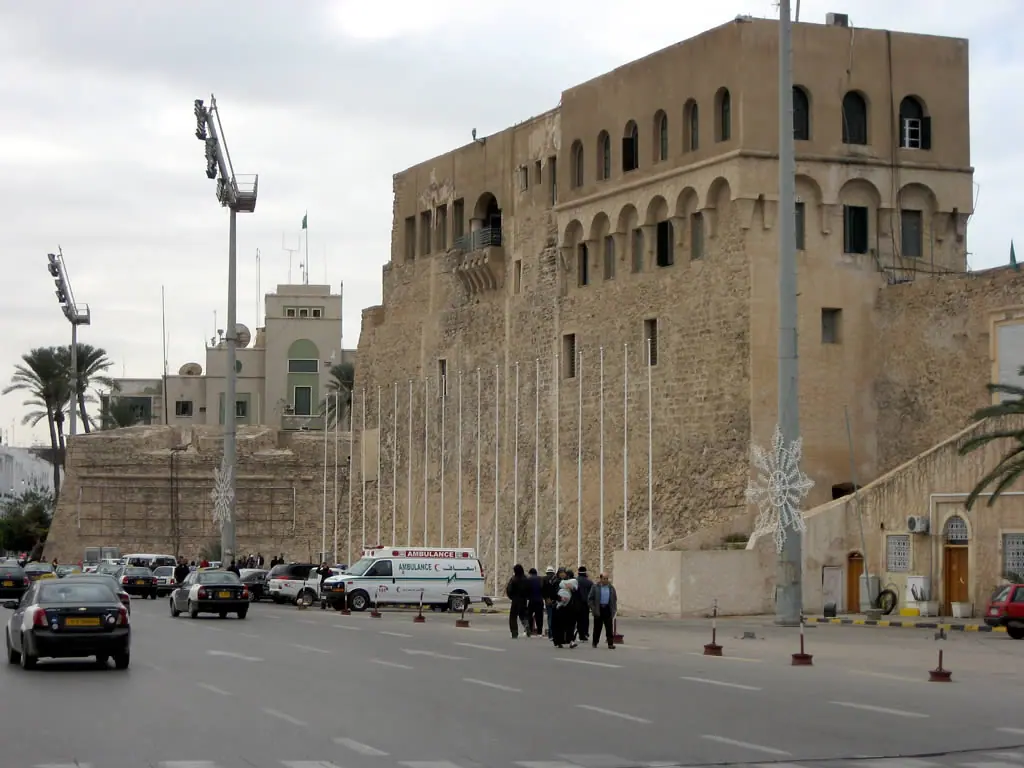
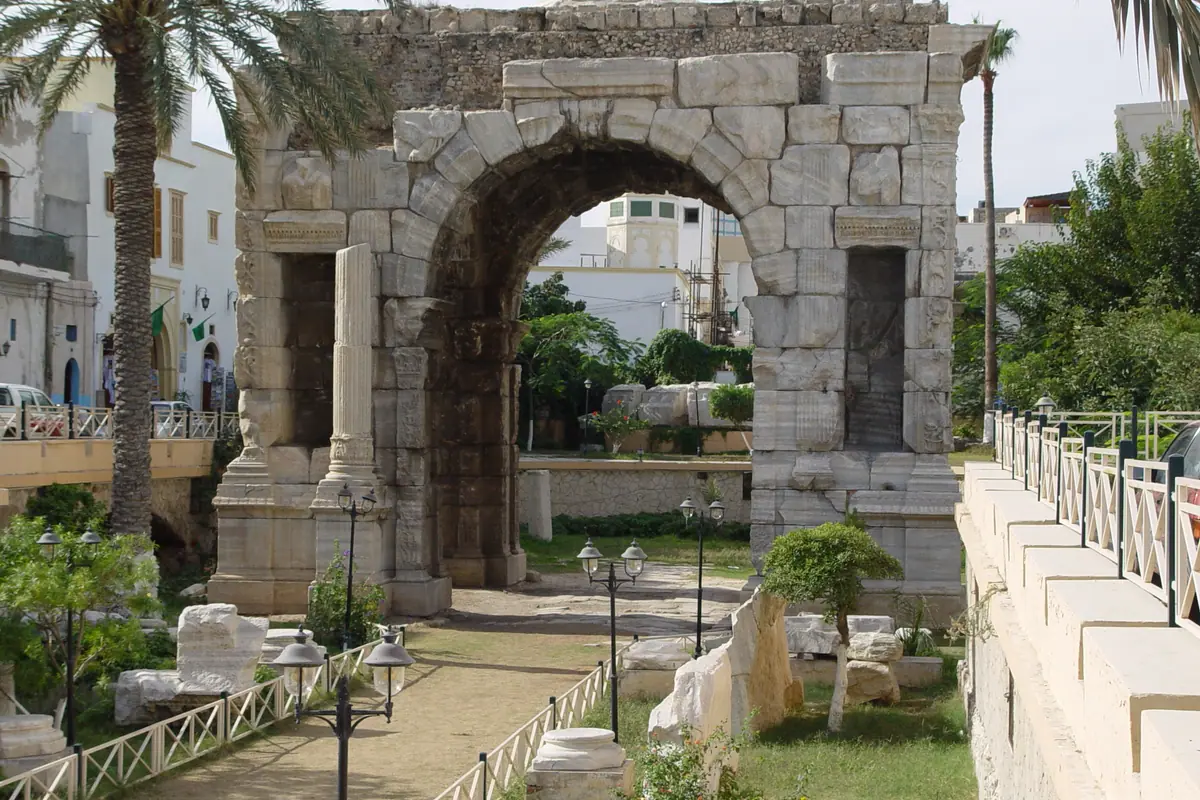
Tripoli's walled medina is a compact, whitewashed maze built over Roman and Ottoman layers, entered through historic gates such as Bab Hawara and Bab al-Bahr and still busy with ordinary life — tailors, barbers, spice sellers, boys delivering bread on scooters. On the harbour side stands the Red Castle, Assaraya Alhamra, a vast fortification that now holds a museum of archaeology and Islamic art, its ramparts looking straight out over the water. A few streets inland is the Arch of Marcus Aurelius, a second-century AD marble arch that is the only Roman monument still standing in the city, framed by cafés where you can sit at night with tea and watch the medina slow down.
The markets are the real experience. Souq al-Mushir is the copper-and-brass quarter, where hanging couscous steamers and coffee pots catch the light and the hammering never quite stops; Souq al-Attara sells perfume, incense, brocade and wedding finery; the spice stalls pile up cumin, dried mint, cinnamon, dried hibiscus and chilli, all scooped and weighed in front of you. Nearby stand the Karamanli-era mosques and the clock tower on Martyr's Square, the city's great open gathering place, at the edge of the old town.
Do as the locals do and build a day around it: the medina in the morning when the light comes sideways into the alleys, a Turkish bath or hammam in the afternoon, grilled fish by the harbour at dusk, and a long evening in the square. Fridays are slow — many shops stay shut until mid-afternoon — and the covered lanes are at their best when the heat of a summer day finally drops. Take a guide for the first wander; the medina is friendly but deliberately confusing, and the conversation is half the point.
Leptis Magna and Sabratha: Rome's African Showpiece
About 120 kilometres east of Tripoli, at Al Khums, lies Leptis Magna — one of the most complete Roman cities anywhere in the world and the single best reason many travellers come to Libya. Its scale takes a moment to absorb: the vast Severan forum and basilica, the Hadrianic baths, a market square with its measuring tables still intact, a theatre facing the sea, an amphitheatre and a circus on the fringes, and the four-way Arch of Septimius Severus, who was born here and spent lavishly on his home town in the late second century. Give it at least three to four hours, start early, and take water — the site is enormous and there is very little shade.
Al Khums makes a sensible lunch stop between the ruins and the coast road north, and the on-site museum, when open, holds mosaics, statuary and everyday objects that make the streets outside suddenly comprehensible. Between Leptis and Tripoli the road passes olive groves and small coastal towns where fishing still structures the day.
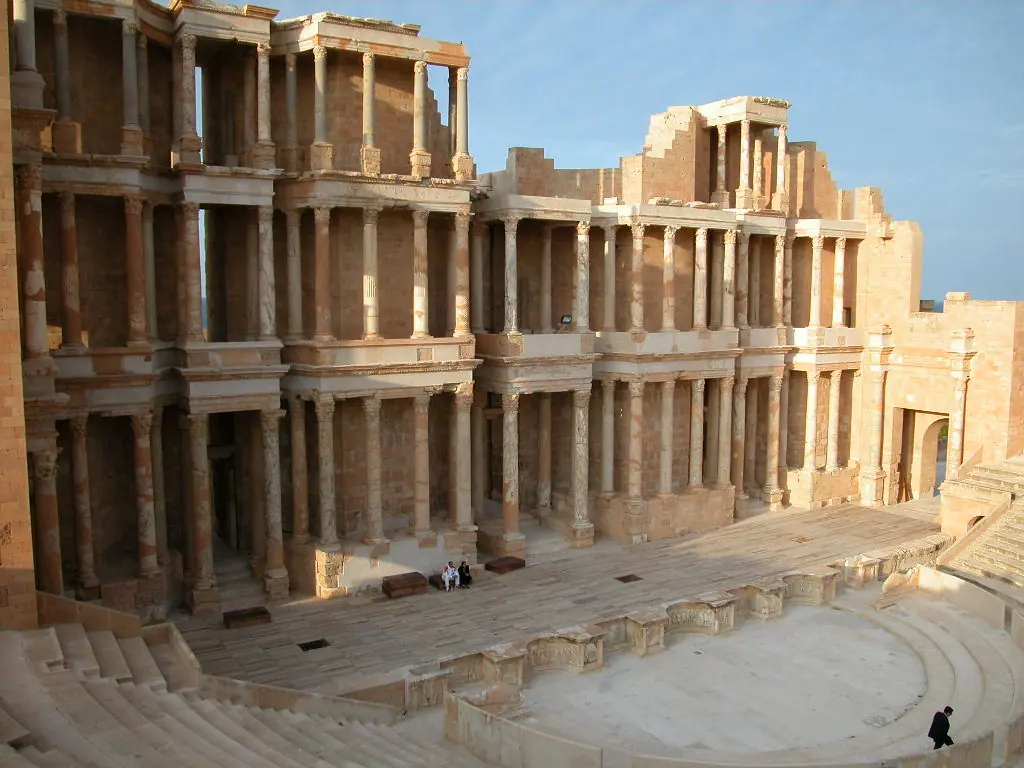
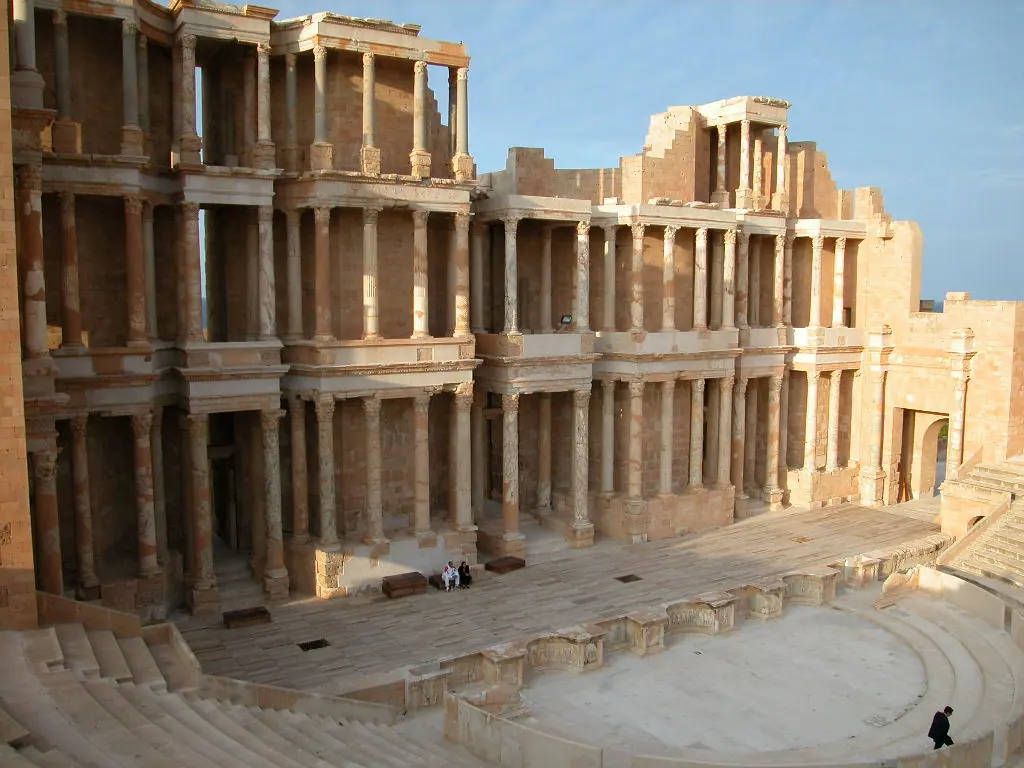
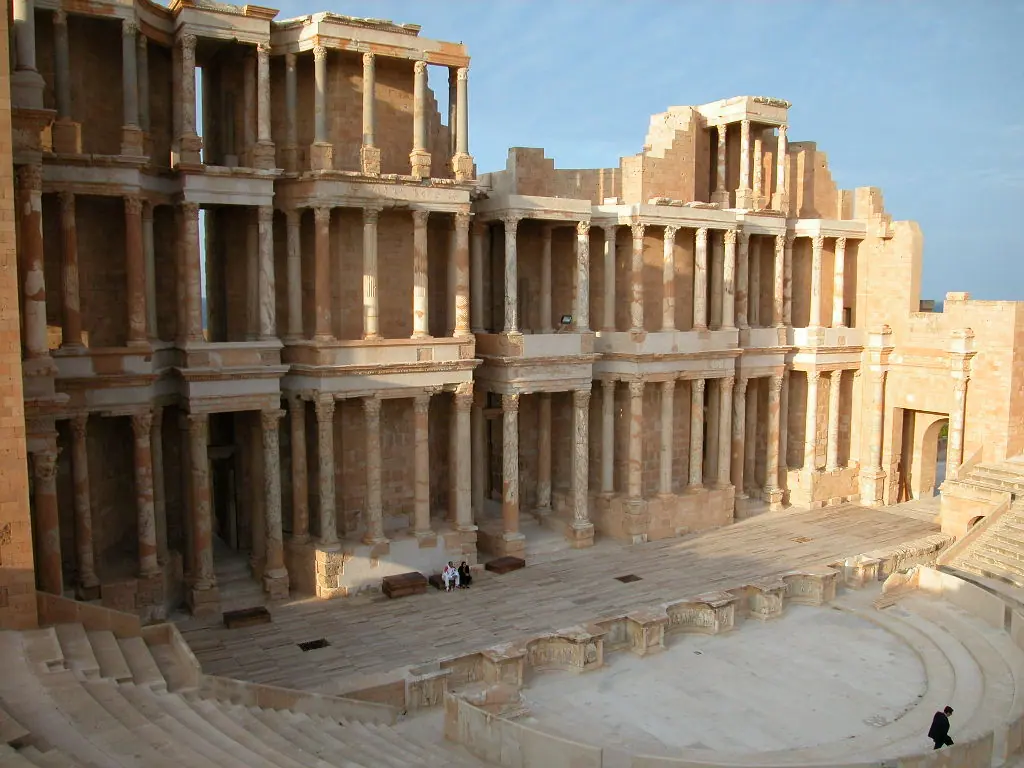
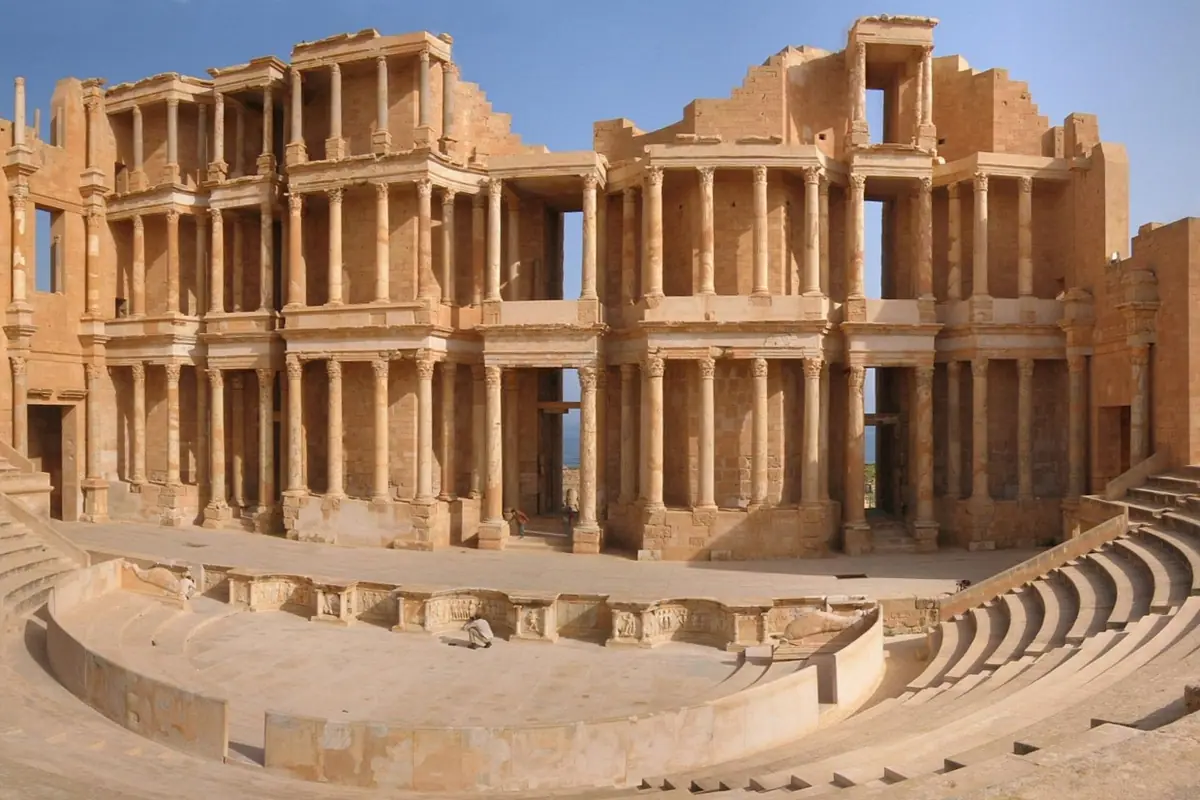
West of Tripoli, roughly 80 kilometres away, Sabratha began life as a Phoenician trading post and grew into a Roman city whose theatre is arguably the finest in the Mediterranean — a three-storey stage wall of columns and carved reliefs, restored but still dizzying, looking out over the sea. The surrounding site holds temples to Liber Pater, Serapis and Isis, scattered mosaics and a bath complex, and late afternoon is the time to be there, when the light turns the stone gold and the crowds are nil. Both Sabratha and Leptis Magna are inscribed on the UNESCO World Heritage list. If you have time after Sabratha, continue to the Amazigh-speaking coastal town of Zuwara for seafood and a very different slice of Libya.
The Green Mountain: Cyrene, Apollonia and Olive Country
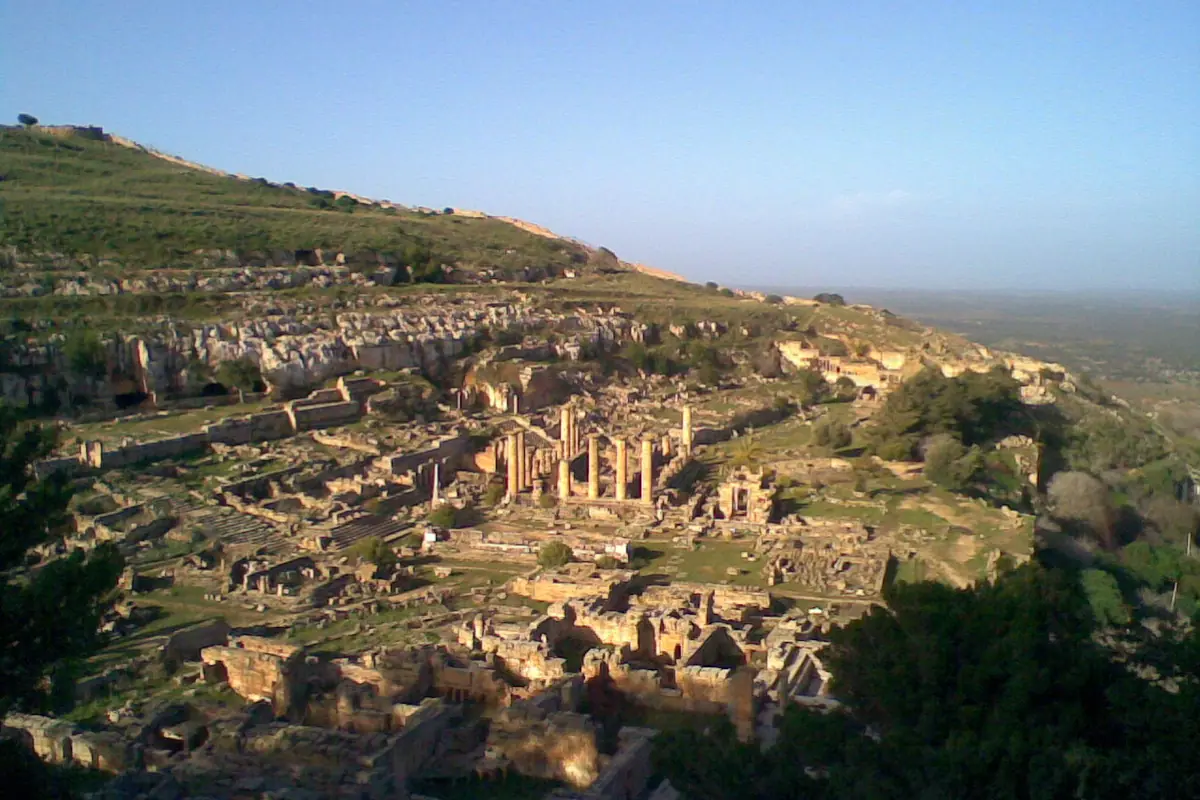
The Jebel Akhdar — the Green Mountain — is the anomaly that surprises everyone: a limestone plateau of juniper woods, orchards and olive groves above the bluest stretch of the Libyan coast. Its showpiece is Cyrene, near the modern town of Shahhat, founded in 631 BC by Greek settlers from Thera and one of the great cities of the classical world. The Temple of Zeus here has a ground plan larger than that of the Parthenon in Athens, and the site rolls on through the Sanctuary of Apollo, the agora, the Baths of Trajan and a necropolis of rock-cut tombs that extends for kilometres. Bring a hat and a full day; the ruins are spread out and the sun is honest.
Nearby, at Susa, sit the remains of Apollonia, Cyrene's ancient port, where a small Greek theatre and Byzantine basilicas stand almost at the waterline. Further along the coast, Ptolemais and the mosaic museum at Qasr Libya fill out an extraordinary archaeological corridor that most of the world has never heard of, let alone visited. Benghazi, rebuilt and busy, is the natural base for the region, with its own markets and old quarter to explore.
This is also the best eating country in Libya. Mountain honey, almonds, figs, pomegranates and cold-pressed olive oil appear on every table, and a rural lunch of slow-cooked lamb with green beans, fresh flatbread and a dish of oil and herbs can outshine anything on the coast. Come in spring — March and April — when the hillsides are bright with wildflowers and almond blossom and the coast road is at its greenest; autumn is a mild, golden second choice. Evenings up here are noticeably cooler than Tripoli, so pack a layer even in summer.
Ghadames, the Acacus and the Saharan South
Ghadames, around 600 kilometres southwest of Tripoli at the meeting point of the Libyan, Tunisian and Algerian borders, is the most beautiful town in the Sahara and a UNESCO World Heritage site. Its old quarter is a whitewashed labyrinth of covered alleyways that stay cool at midday and warm at night, organised by clan, with a mosque whose minaret rises above a sea of flat roofs. Traditionally the men farmed the palm groves and travelled, while the women moved between houses along the rooftops, and the old kitchens, store-rooms and painted doorways are still shown with real pride by the families who keep them.
Time your visit for the Ghadames festival, usually held in the cooler weeks around the October date harvest, when the whole town turns out in embroidered dress, Tuareg musicians play, and there is dancing, racing and a great deal of sweet tea. Around the town, hot springs irrigate the palm gardens and you can buy dates by the sackful straight from the groves.
Deeper into the south lies the Fezzan, a landscape of black volcanic rock, dune seas and salt lakes. The Tadrart Acacus mountains hold one of the world's richest galleries of prehistoric rock art — painted elephants, giraffes and human figures, some of it many thousands of years old — protected as a UNESCO site. The Ubari sand sea hides lakes at Gaberoun and Um el Ma, ribboned with reeds and ringed by palms, and further west the ash cone of Waw an Namus rises out of the desert with dark lakes in its crater. Germa, ancient Garama, was the capital of the Garamantes, whose underground irrigation channels still score the sand. Desert travel here is 4x4 country, arranged in advance with local Tuareg guides, and the rewards are nights of absolute silence, bread baked in buried sand and that three-glass tea ritual.
Seasons, Festivals and the Practical Art of Travelling Libya
Libya is a country of sharp seasons. The Mediterranean coast — Tripoli, Leptis Magna, Sabratha — is at its best from October to April, with mild, bright days and rain concentrated between December and February. May to September is genuinely hot and humid along the shore, though the sea is glorious. The desert south inverts everything: November to February is the season, with warm days and nights that can fall close to freezing in January, while June to August brings punishing heat well above 40°C. Spring can raise the ghibli, the dusty desert wind, and the Jebel Akhdar catches the most rainfall in the country — which is exactly why it is green.
Festivals follow the harvest and the religious calendar. The Ghadames gathering in October is the biggest draw, with the date harvest as its backdrop; the Amazigh towns of the Jebel Nafusa — Gharyan with its cave dwellings and pottery, Nalut and Kabaw with their hilltop granaries — celebrate their own spring festivals with music, dress and food. Ramadan reshapes the day entirely, with quiet streets until sunset and long, festive nights afterwards, while Mawlid and Eid bring trays of ghoriba, makroud and ka'ak through every doorway.
Practically, Libya is not a country you turn up in and wander. Tourist visits are arranged through licensed operators who sponsor your visa and provide an approved guide and driver, and you will generally travel as part of an escorted group or private itinerary rather than independently. Bring cash in Libyan dinars — cards work almost nowhere outside a few city hotels — and expect no alcohol at all, since it is prohibited. Dress modestly: shoulders and knees covered, a headscarf for women in mosques and in the old town of Ghadames. Ask before photographing people, and never photograph anything military or official. Allow ten days to two weeks to combine the coast with the desert, or about a week for Tripoli, Leptis Magna, Sabratha and the Green Mountain alone — and check your own government's current travel advice before booking, because the security picture is uneven and can change.
Frequently asked questions
Can tourists actually visit Libya?
Yes, but not independently. Tourist travel is arranged through licensed Libyan operators who sponsor your visa and supply an approved guide and driver, so you move through the country as part of a private or group itinerary. Availability and the areas open to visitors can shift with the security situation, so confirm current arrangements and your own government's travel advice well before booking.
What should I eat in Libya?
Start with bazeen, the barley dough served in a lamb and tomato broth, then Friday couscous, mint-scented shorba Libiya soup and Eid-time usban. For breakfast or street snacking, look for sfinz fried dough, ka'ak rings and bsisa. In the south, do not miss dates straight from the oases, bread baked in hot sand and the Tuareg three-glass tea ritual.
When is the best time to visit Libya?
October to April for the Mediterranean coast, when Tripoli, Leptis Magna and Sabratha are mild and comfortable. March and April are ideal for the Jebel Akhdar, when Cyrene and the olive country are green and flowering. The Sahara is best from November to February, with cold nights, while the desert in midsummer is dangerously hot.
How long do I need, and what are the must-see sights?
A week covers Tripoli's medina, the Arch of Marcus Aurelius, Leptis Magna and Sabratha. Ten days to two weeks lets you add Cyrene, Apollonia and the Green Mountain, plus Ghadames and, with permits and 4x4 support, the Tadrart Acacus rock art and the Ubari lakes. Anything less than a week feels rushed given the distances.
What are the rules on dress, alcohol and photography?
Alcohol is prohibited throughout Libya. Dress modestly — shoulders and knees covered, and a headscarf for women in mosques and in Ghadames' old town. Always ask before photographing people, and avoid photographing anything connected to the military, police or official buildings. Carry cash in Libyan dinars, as cards are accepted in very few places.