Kazakhstan is the ninth-largest country on earth, and its hotels come in as many flavours as its landscapes: glass towers beside a futuristic skyline, courtyard guesthouses under snow-capped mountains, and family-run rooms at the edge of a canyon that glows orange at sunset. Choosing where to sleep here is really a question of choosing which version of the country you want to wake up to.
Reading the Map Before You Book a Hotel in Kazakhstan
Distances are the first thing to understand. Almaty and Astana sit roughly 1,200 kilometres apart — a short flight, or a long overnight train ride through open steppe. Turkistan lies far to the south, the Caspian port of Aktau far to the west. Trying to see all of it in one week means spending your holiday in transit, so most travellers pick two or three bases and treat the rest as day trips or organised excursions. A sensible first-timer's triangle is Almaty, Astana and Turkistan, with a night or two in the countryside between them.
The accommodation itself is more varied than outsiders expect. In the big cities you will find everything from restored Soviet-era hotels with high ceilings and heavy curtains to boutique properties in converted merchant houses and international-standard high-rises with spas and rooftop pools. Outside the cities, the options shift to village guesthouses, lakeside cabins, mountain lodges and, in a few protected areas, simple yurt camps where dinner is served on a low table and the silence at night is complete.
Timing shapes both price and comfort. Spring and early autumn are the sweet spots almost everywhere: mild days, clear mountain views, no need to fight for a room. High summer brings domestic holidaymakers to the lakes and gorges, so book well ahead for July and August. Winter is a specialist season — superb for skiing above Almaty, brutal for sightseeing in Astana, where temperatures can drop past minus thirty.
Almaty: Where to Stay in the Old Capital of Gardens and Mountains
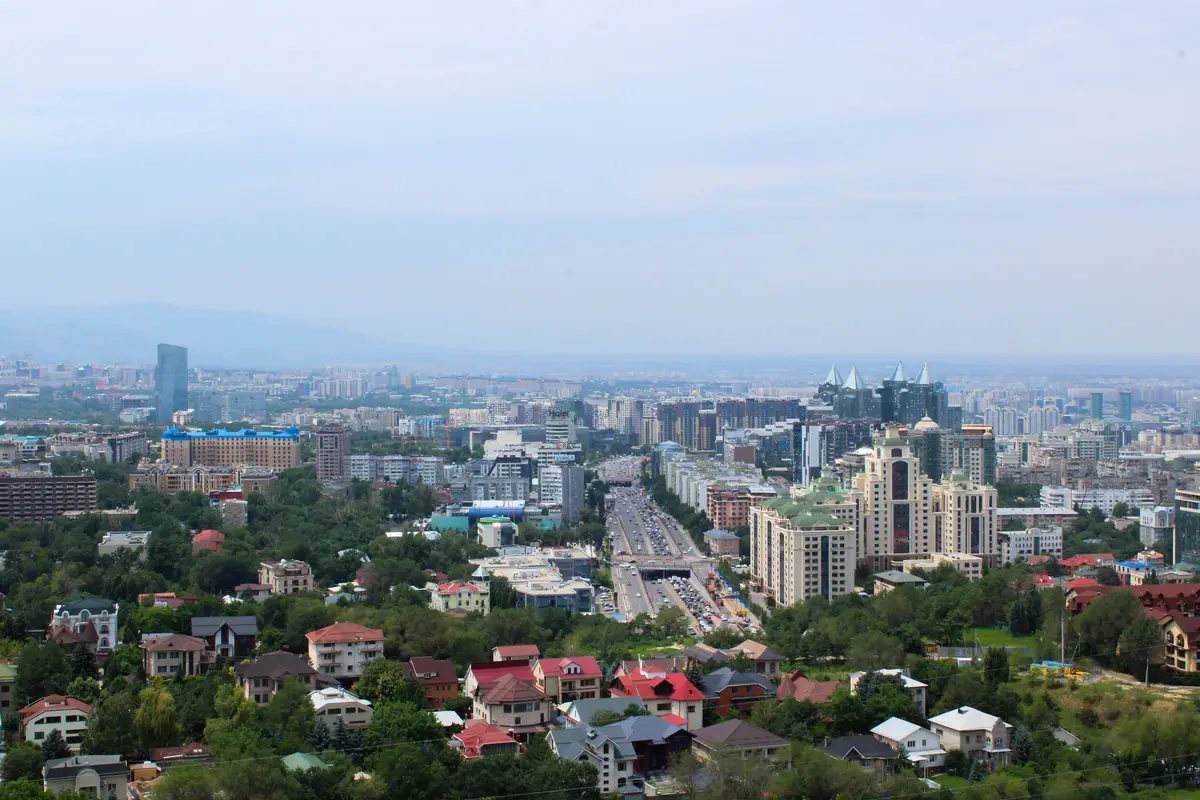
Almaty is the country's cultural heart, a green, walkable city of poplar-lined avenues sitting directly beneath the Trans-Ili Alatau range. The most atmospheric hotel district is the so-called Golden Quarter, the grid of streets around Panfilov and Dostyk avenues, where boutique hotels and design-led apartments sit within walking distance of cafés, galleries and the leafy Panfilov Park. Further south along Al-Farabi Avenue you will find larger business hotels with gyms and pools, convenient if you plan to head up to the mountains every day.
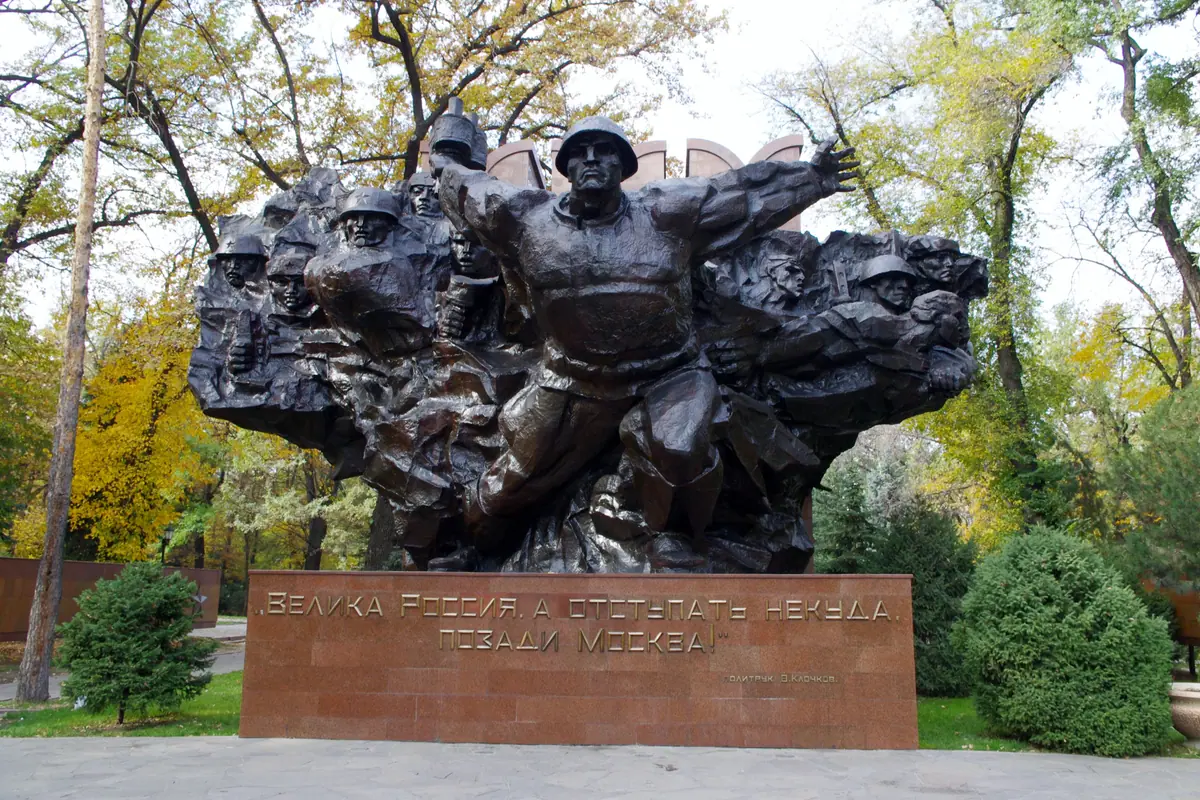
The city's landmarks cluster usefully around those districts. Panfilov Park holds the astonishing Ascension Cathedral, a brightly painted wooden church built without a single nail, and next door the Museum of Folk Musical Instruments. A few blocks away, the Green Bazaar is the place to graze on dried fruit, horse sausage, honey and fresh bread, while Republic Square anchors the civic end of town. From the base of Kok-Tobe Hill, a cable car climbs to the city's favourite viewpoint, and a short drive south brings you to the Medeu skating rink and the Shymbulak ski resort, reached by a scenic gondola. Continue further and you reach Big Almaty Lake, a turquoise reservoir set in a high valley.
Practically speaking, staying in the upper part of the city near Kok-Tobe gives you cooler evenings and mountain views; staying downtown gives you restaurants and nightlife within a stroll. The metro is small and of limited use for sightseeing, so choose a hotel within walking distance of what matters to you. May, June, September and October are the finest months for hiking and city wandering; December through March is ski season, when mountain lodges sell out fast at weekends.
Astana: Sleek Hotels Beneath the Bayterek Tower
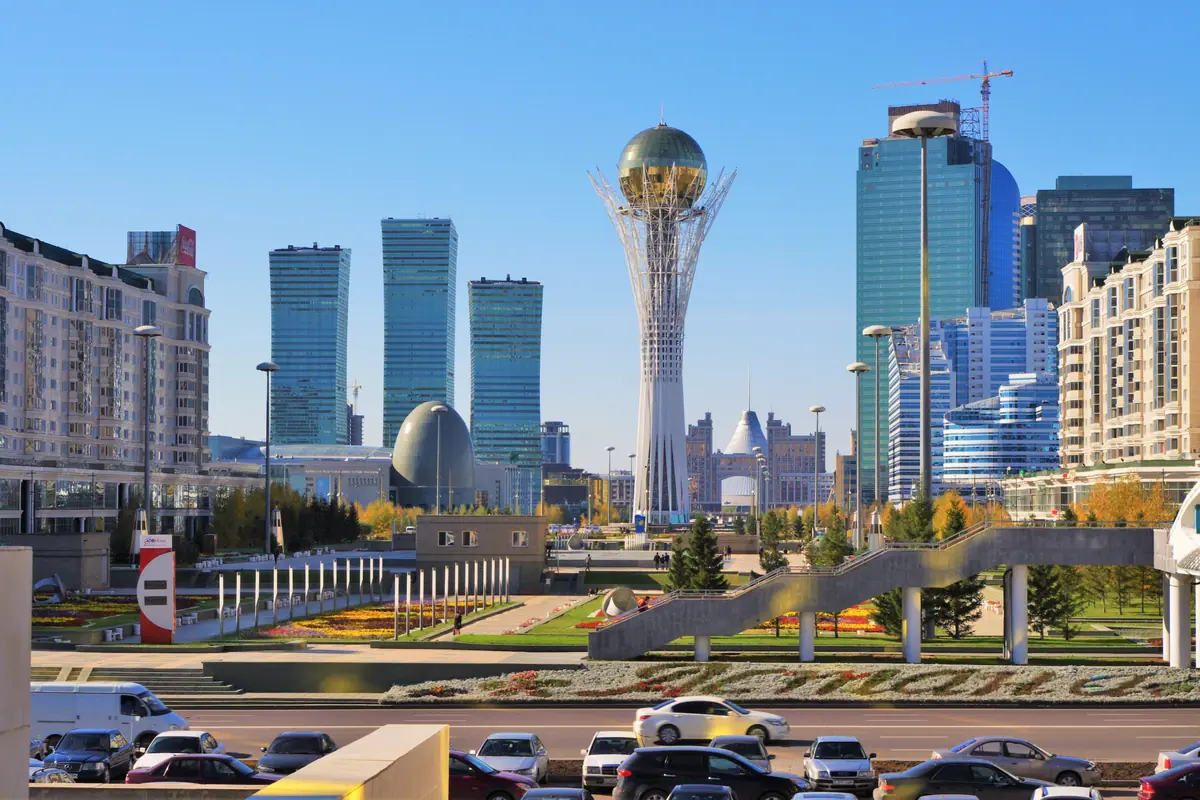
Astana, the capital, is a city built to impress. Its left bank is a showcase of contemporary architecture: the Bayterek Tower, with its golden viewing sphere, the towering tent-shaped Khan Shatyr, the glowing sphere of the Nur-Alem Future Energy Museum and the vast Hazrat Sultan Mosque with its white and gold domes. Most of the newer hotels sit along the Esil River embankment and around the axis linking Bayterek to the Presidential Palace, so a room here puts you in the middle of the spectacle, especially after dark when the buildings light up.
The Nation's Capital is also a museum city in the making. The National Museum of Kazakhstan, one of the largest in Central Asia, tells the story of the steppe peoples from the Bronze Age to independence, while the Pyramid of Peace and Reconciliation hosts concerts and gatherings under a stained-glass apex. If you want a quieter, greener base, the older right-bank neighbourhoods have smaller hotels and cheaper rates, with a short taxi ride across the river to the main sights.
Winter here is a genuine consideration rather than a footnote. From December to February the city becomes one of the coldest capitals in the world, and the difference between a pleasant stay and a miserable one often comes down to small hotel details: heated underground parking, indoor corridors linking rooms to restaurants, and a good lobby to wait in for a taxi. Summer, by contrast, is warm and lively, with the lake district around Burabay National Park about two and a half hours away by road — a favourite weekend escape of locals and a good reason to extend a stay.
Turkistan and the Mausoleum of Khoja Ahmed Yasawi
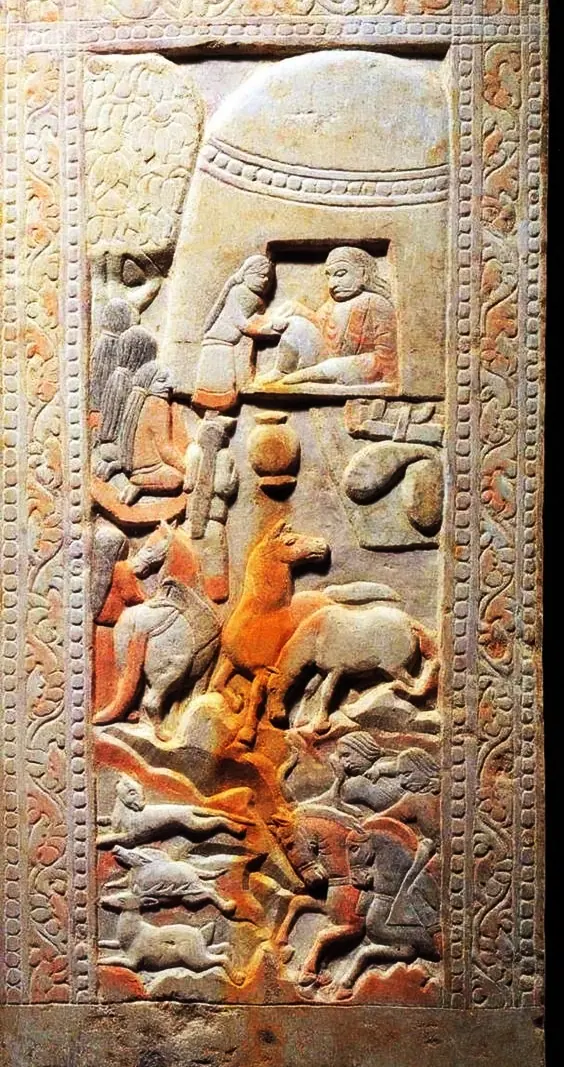
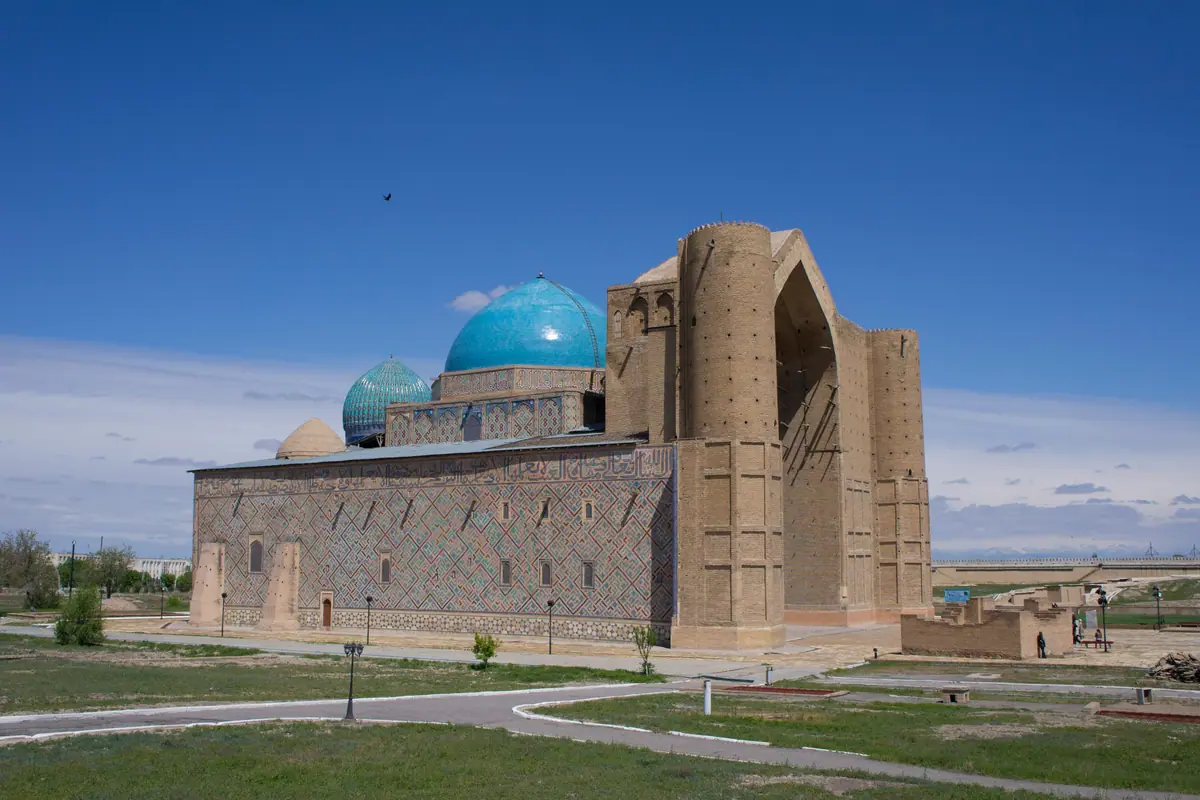
Few places in Central Asia feel as weighty as Turkistan, the southern pilgrimage town built around the Mausoleum of Khoja Ahmed Yasawi. Commissioned at the end of the fourteenth century by Timur and never quite finished, its enormous blue-tiled portal and domes dominate the skyline and were among the first sites in the country inscribed on the UNESCO World Heritage list. The surrounding complex includes a bathhouse, a mosque, a mausoleum for a descendant of the Sufi teacher and the tomb of the Kazakh khan Esim, all within a walled enclosure you can walk in an unhurried morning.
The town has grown into its role as a heritage destination, with a new cluster of hotels, guesthouses and small museums within comfortable walking distance of the mausoleum, plus a landscaped ceremonial avenue leading up to the main gate. Beyond Turkistan you can visit the ruins of ancient Otrar, one of the Silk Road cities destroyed by the Mongols, and the pilgrimage site of Arystan Bab, said to be the teacher of Yasawi himself. Shymkent, two hours away and served by frequent flights, is the usual gateway and a practical place to spend a night before or after.
Give Turkistan at least one full day, two if you want to add the surrounding archaeological sites — and time your visit for spring or autumn, when the light on the blue tiles is at its best and the heat is bearable. Nauryz, the spring new year celebrated around 21 March, brings festivals, wrestling matches and food stalls to the town, but also crowds, so book accommodation well in advance.
Steppe, Canyons and Lakes: Guesthouses Beyond the Cities
Some of Kazakhstan's best nights are spent far from any skyline. East of Almaty, the Charyn Canyon cuts a deep scar through the steppe, its Valley of Castles section a labyrinth of eroded red rock that most visitors walk at golden hour before retreating to a small guesthouse or cabin nearby. Further east lie the Kolsai Lakes, a chain of alpine pools linked by hiking trails, and Kaindy Lake with its eerie sunken forest of bare trunks rising from cold water; both are reached from the village of Saty, where family guesthouses serve horse meat, dumplings and strong tea. Allow two or three days if you want to do the canyon and the lakes properly, and hire a driver or join a small group tour — public transport does not reach them.
To the north-west of Almaty, Altyn-Emel National Park protects desert and mountain scenery on a grand scale, including the Singing Dune, a 150-metre ridge of sand that hums when the wind moves it, and the multicoloured striped badlands of the Aktau mountains. Guests stay in the village of Basshi, where accommodation is simple, warm and often includes dinner. From Astana, the forests and clear lakes of Burabay offer a similar escape with far less driving. In the far west, the surreal limestone deserts and canyons of Mangystau — Sherkala, the Bozzhyra tract, the underground mosque of Shakpak Ata — are best explored by 4x4 from the Caspian city of Aktau, which has the region's most reliable hotels.
Expect these rural stays to be comfortable rather than luxurious: shared bathrooms are common, Wi-Fi may be slow or absent, and dinner is whatever the family is cooking. That is part of the appeal. Bring cash, since card machines are rare outside the cities, and remember that July and August are peak season for domestic visitors — the same weekends when lakeside rooms vanish first.
Practical Booking Notes: Seasons, Payments and Local Etiquette
Most visitors from Europe, North America and much of Asia can enter Kazakhstan visa-free for short stays, though it is worth confirming the current rules for your passport before you fly, since they change from time to time. Hotels registered with the authorities will handle the compulsory registration of foreign guests for you; if you stay in private apartments or village homestays, keep your arrival documents in order and check the requirements carefully. The currency is the tenge, cards are widely accepted in city hotels and restaurants, and cash remains king on the steppe.
Transport between bases is straightforward. Domestic flights link Almaty, Astana, Shymkent, Aktau and Atyrau several times a day, while overnight trains between the two main cities are a classic experience — book a compartment in advance, especially in summer. Within cities, ride-hailing apps work well and are cheap. English is common in upscale city hotels and rare elsewhere; learning a few phrases in Russian or Kazakh, and using translation apps offline, makes rural stays much easier.
Finally, choose your hotel according to how you want to travel rather than chasing the lowest rate. A central boutique room in Almaty buys you walkable sightseeing; a mountain lodge buys you sunrise over the Zailiysky Alatau; a Turkistan guesthouse buys you empty dawn courtyards at the mausoleum before the tour buses arrive. In a country this large, location is the one thing you cannot fix after check-in.
Frequently asked questions
When is the best time of year to visit Kazakhstan?
Late spring (May to June) and early autumn (September to October) suit most itineraries, with mild weather in Almaty, good hiking conditions in the mountains and comfortable temperatures at Turkistan and the canyons. July and August are hot in the south and busy at the lakes, while December to March is ideal for skiing above Almaty but extremely cold in Astana.
Should I base myself in Almaty or Astana?
Almaty is the better base for a first visit: it is greener, more walkable and closer to mountain attractions such as Medeu, Shymbulak and Big Almaty Lake, and it works well as a starting point for Charyn Canyon and the Kolsai Lakes. Astana is essential for its architecture — Bayterek Tower, Khan Shatyr, Hazrat Sultan Mosque — but two or three days is usually enough, and it is far harsher in winter.
Do I need a visa to visit Kazakhstan, and do hotels handle registration?
Many nationalities can enter visa-free for short tourist stays, but rules vary by passport and are updated periodically, so verify the current position before booking. Registered hotels normally complete the mandatory registration of foreign guests on your behalf. If you stay in private apartments or village homestays, keep your entry documents and check whether you need to register yourself.
How far in advance should I book hotels in Kazakhstan?
For city hotels in Almaty and Astana, a few weeks ahead is usually fine outside major holidays. For July and August, and for the Nauryz celebrations in March, book one to two months ahead — especially for mountain lodges at Shymbulak, guesthouses in Saty near the Kolsai Lakes, and accommodation in Turkistan. Rural rooms are limited in number, so late planners often end up far from the trailheads.
Are hotels in Kazakhstan expensive, and what should I expect for my money?
Rates span a wide range. City hotels offer international-standard comfort with pools, spas and breakfast buffets, mid-range properties give you clean, well-located rooms at moderate prices, and village guesthouses are inexpensive and usually include home-cooked meals. Outside the cities, expect shared bathrooms, limited English and unreliable Wi-Fi — and bring cash, as card payment is uncommon beyond the main urban centres.
Plan it — hotels in Kazakhstan
Live search, booked directly with trusted providers.
Sort the rest of your trip
Everything for Kazakhstan, in one place
Transfer in Kazakhstan
Private driver waiting on arrival — no queues, no surprises.
Book a transfer
Things to do in Kazakhstan
Skip-the-line tickets, guided tours and standout experiences.
See experiences
Stay online in Kazakhstan
Travel eSIM — data the moment you land, no roaming bills.
Get an eSIM