Kazakhstan changes costume four times a year: wild tulip steppes in spring, turquoise alpine lakes in high summer, golden larch and apple harvests in autumn, and a snow-bright winter built for skiing and ice skating. The season you choose decides which mountains you can actually reach, how crowded the hotels are, and whether you'll be drinking tea on a sunny Almaty terrace or watching your breath freeze in the air in Astana.
Kazakhstan's Four Seasons at a Glance
Kazakhstan is the world's largest landlocked country, and its climate behaves like it: fiercely continental, with no sea to soften the edges. Almaty sits in the southeast, cradled by the snow-capped Trans-Ili Alatau mountains, while Astana sprawls across the northern steppe where winter means -20°C as a matter of routine and -30°C in a bad January. Summer flips the script — Almaty can hit 35°C in July, and the steppe shimmering north of the capital feels even hotter.
For most travellers, the sweet spots fall in two windows: late April to early June, and September to mid-October. Both deliver comfortable walking weather in the cities, open mountain roads, and enough daylight to actually use your days. Deep winter and high summer are for specialists — skiers, lake-swimmers, and people chasing a specific festival or launch.
Because the country is vast, most trips focus on one or two regions rather than trying to see everything. Domestic flights link Almaty, Astana, Shymkent, Aktau and Atyrau quickly; long-distance trains are slower but wonderfully atmospheric. Whichever region you pick, hotel availability and rates track the calendar closely, with sharp spikes around the March spring holiday, the July–August domestic holiday season, and the New Year period.
Spring (March–May): Nauryz, Steppe Tulips and Shoulder-Season Comfort
March still belongs to winter in most of the country, but the mood shifts around the 21st with Nauryz, the great spring festival. For three days, cities fill with yurts, horse games, music and tables set with traditional dishes, and Almaty in particular throws itself into the celebrations. Hotels in Almaty and Astana book out early for those dates, so plan well ahead if you want to be part of it.
Late March into April brings one of Kazakhstan's quietest spectacles: the steppe blooming with wild Greig's tulips, low carpets of red and yellow pushing up through dry grass in the foothills and in Altyn Emel National Park. It's unpredictable — a cold snap can delay everything by a fortnight — and the weather is honestly fickle, with rain, wind and sudden cold. The mountains are still buried in snow, and the road to Big Almaty Lake often stays closed until late May.
May is the real prize of spring. The foothills turn green, Medeu and Kok-Tobe become pleasant half-day outings, and guesthouses in villages near the Kolsai Lakes begin welcoming hikers again. It's also the most forgiving season for hotel booking: outside the Nauryz dates, you can often decide on a room a few days in advance, and the boutique guesthouses around Almaty's old centre still have space.
Summer (June–August): Mountain Lakes, Steppe Heat and Peak-Season Booking
June is arguably the most balanced summer month — warm but not brutal, with the high valleys finally clear of snow. July and August turn Almaty genuinely hot, regularly pushing past 30°C, and the sensible response is to go up. Medeu's high-altitude skating rink, the Shymbulak ski area reached by cable car, and the emerald expanse of Big Almaty Lake all sit a short drive from the city and run several degrees cooler.
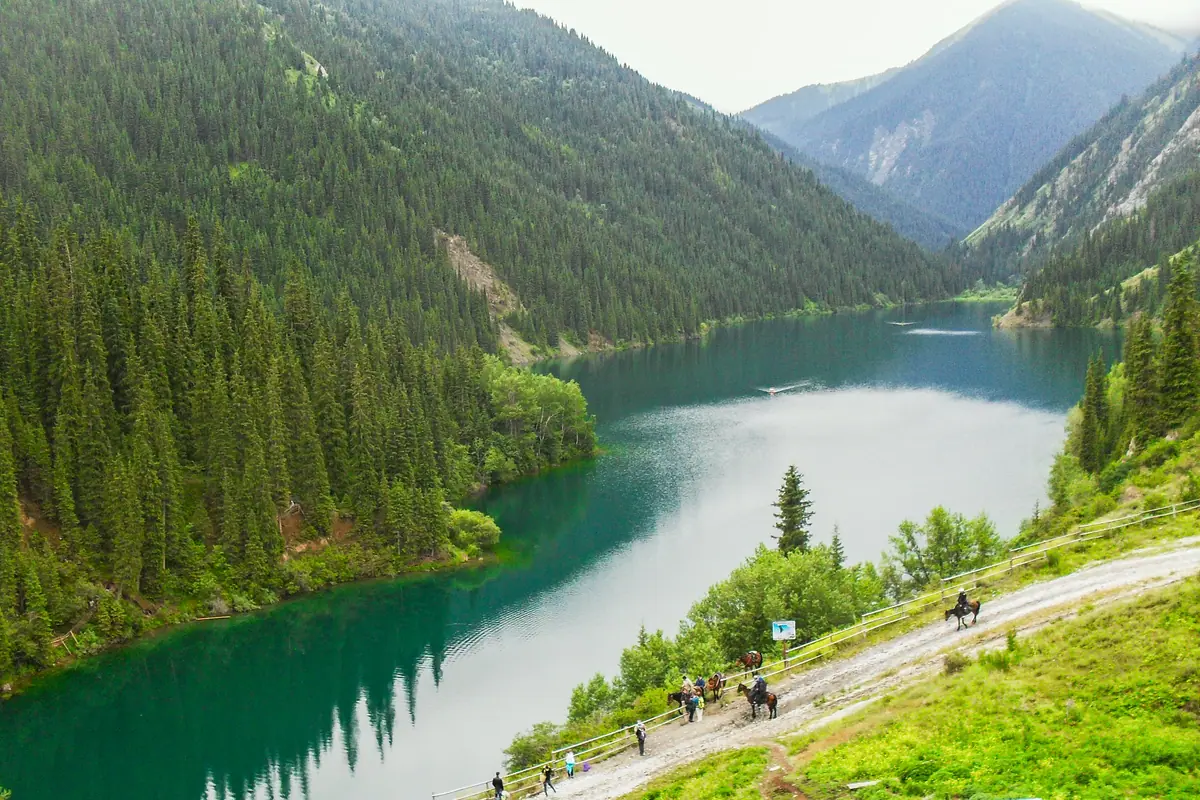
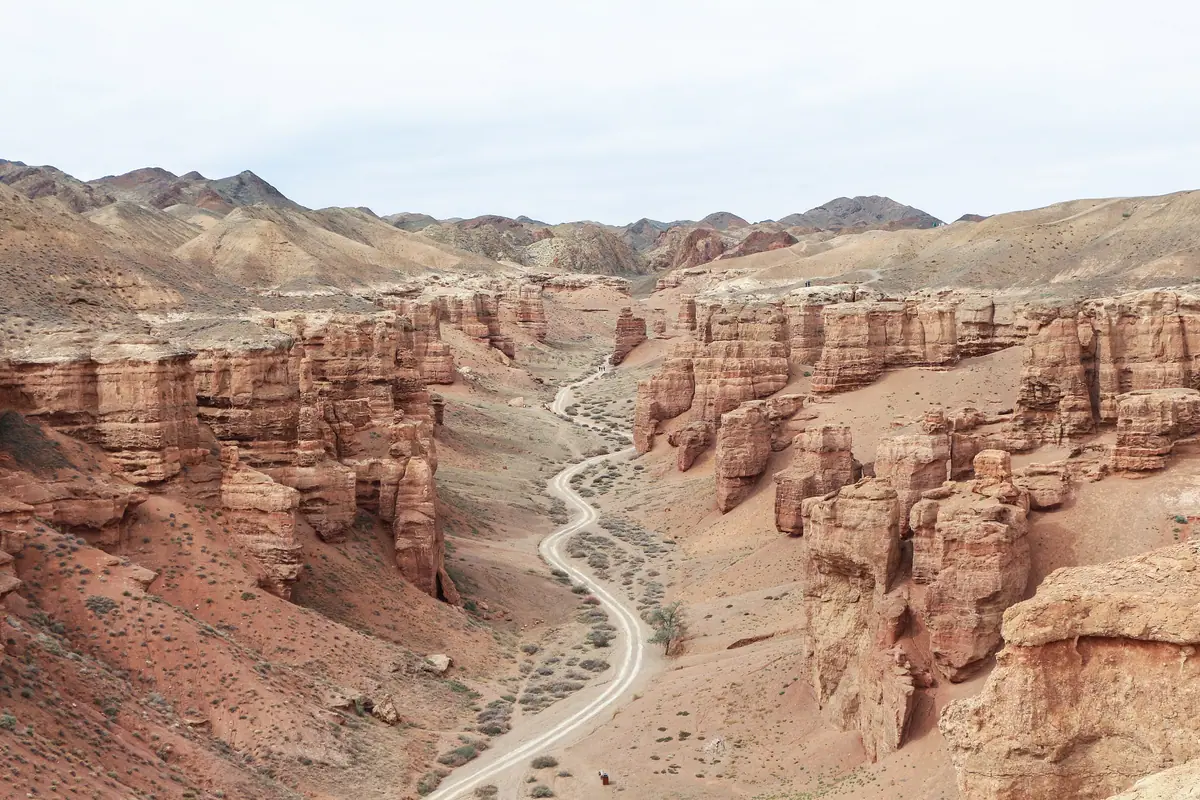
This is the season for the landscapes people come for. Charyn Canyon is best tackled at dawn before the heat builds, and Altyn Emel's Singing Dune hums underfoot in the dry air. The Kolsai Lakes and Kaindy Lake, with its eerie sunken forest of bare spruce trunks rising from the water, are at their most accessible from June through September and are usually visited over two or three days with a night in a village homestay.
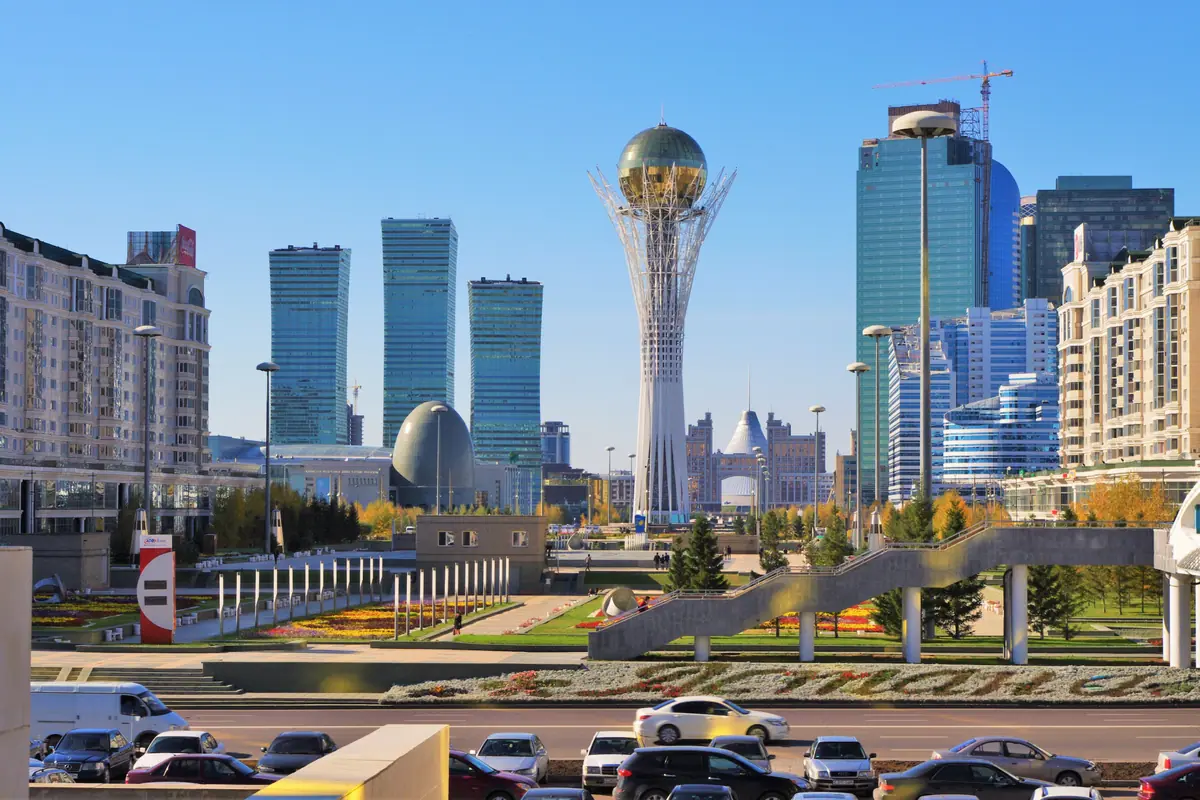
Astana comes into its own in summer: long daylight hours, a lively riverside embankment, and landmark sights such as Baiterek Tower, the vast Hazrat Sultan Mosque and the tent-shaped Khan Shatyr entertainment complex all comfortable to explore on foot. Expect peak-season pressure on accommodation — mountain lodges and guesthouses near the lakes often fill one to three months ahead for July and August, and the Caspian coast around Aktau gets busy with domestic holidaymakers. Book early and be flexible on dates.
Autumn (September–October): The Golden Season and the Best All-Round Window
If you can only pick one window, pick September. The heat breaks, days settle around 20–25°C, evenings turn crisp, and the Trans-Ili Alatau slopes above Almaty flare gold as the aspens and larches turn. It's harvest time too — the Green Bazaar in Almaty groans with apples, melons and dried fruit, and the terrace cafés along the leafy streets are at their best.
September and early October suit almost every kind of trip. Charyn Canyon is comfortable rather than scorching, the Kolsai Lakes still reflect perfectly on calm mornings, and the Mausoleum of Khoja Ahmed Yasawi in Turkistan — the country's most important architectural monument — is far more pleasant to explore than in midsummer. Astana usually stays mild into October before the first real cold snaps arrive, which makes this a good month to combine capital and mountains.
Hotel demand follows events as much as weather: autumn is conference season in Astana, and midweek business rates climb accordingly, while Almaty's small design hotels and guesthouses fill quickly for weekend breaks. By late October crowds thin and rates drop, but the first snow can close high mountain roads, and strong winds occasionally shut the Shymbulak cable car. Pack layers either way — the temperature swing between a sunny afternoon and a clear night is dramatic.
Winter (November–March): Shymbulak Skiing, Medeu Ice and Astana's Deep Frost
Almaty wears winter well. Temperatures hover around -5 to -10°C, sunshine is frequent, and the city becomes a base for genuinely good skiing at Shymbulak, whose season typically runs from late November into April. The Medeu rink, set high in the gorge, is one of the world's great outdoor speed-skating venues, and the cable car up to Kok-Tobe gives sweeping views over a white-roofed city wrapped in mountain haze.
Astana is a different proposition entirely. Winter here is serious, with weeks of -20°C and colder, short daylight, and a wind that finds every gap in your clothing. The compensation is that the capital's headline sights — Baiterek Tower, the blue-domed Hazrat Sultan Mosque, the Palace of Peace and Reconciliation, the National Museum — are largely indoor or quick to visit, and Khan Shatyr's climate-controlled interior even holds a beach-style pool area. Layer properly, cover your face, and keep outings short.
For hotels, the calendar matters more than the thermometer. The New Year and early-January holidays are the peak of the ski season, and lodges near Shymbulak and Medeu can be booked solid two to four months out. Mid-January to February is quieter and cheaper, with excellent snow still on the slopes. Skiers should also watch for the transition into March, when conditions soften and Nauryz bookings take over.
Must-See Landmarks, Season by Season
In Astana, plan for May to September. Baiterek Tower, the city's symbol, offers a viewing deck over the steppe; the Hazrat Sultan Mosque is one of the largest in Central Asia; and the Palace of Peace and Reconciliation, a glass pyramid by Norman Foster, anchors the new-city skyline beside the wide Ishim embankment. Summer evenings here are long and made for wandering.
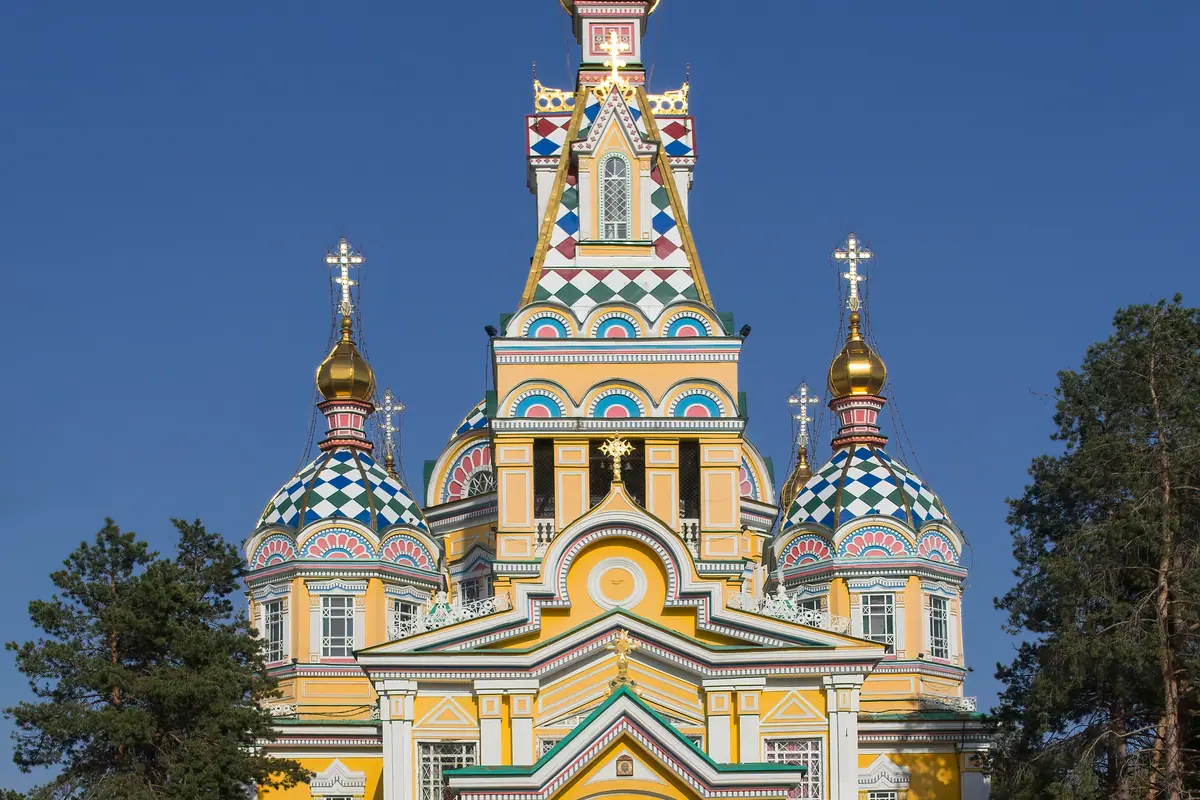
Around Almaty, the classic circuit — the candy-striped Zenkov Cathedral in Panfilov Park, the Green Bazaar, the Kok-Tobe viewpoint, Medeu and Shymbulak — works from April through October, with winter reserved for the ski resort. Beyond the city, Charyn Canyon, the Kolsai and Kaindy Lakes, and Altyn Emel's Singing Dune are at their best in late spring and early autumn, when temperatures are kind and the light is long and clear.
Further afield, the Mausoleum of Khoja Ahmed Yasawi in Turkistan deserves a spring or autumn visit, the stark desert of the Mangystau region — with the Bozzhyra tract and the fortress-like mount Sherkala — is best in April, May and September, and the shrinking Aral Sea is a sobering excursion in the same windows. Across all of them, late April to early June and September to mid-October remain the seasons that give you the most for your time.
Frequently asked questions
What is the best month to visit Kazakhstan overall?
September is the strongest all-round month: warm, mostly dry days, golden autumn colour in the mountains around Almaty, and comfortable conditions in the cities and canyons. May is the runner-up, with green foothills and the year's freshest landscapes.
How far ahead should I book hotels in Kazakhstan?
For July and August, the New Year holidays, and the Nauryz festival in late March, book one to three months ahead — mountain lodges and guesthouses near the Kolsai Lakes and Shymbulak sell out first. In the shoulder months of May and October you can often book a week or two in advance without trouble.
Is winter a good time to visit Kazakhstan?
Yes, if you want skiing and skating. Almaty's Shymbulak resort and the Medeu rink are at their best from December to March, and the city stays sunny and manageable. Astana, however, drops to -20°C and below, so most travellers see the capital in summer instead.
When can I see the steppe tulips bloom?
Greig's tulips usually flower from late March to late April in the foothills and in Altyn Emel National Park. The timing shifts with the weather each year, so allow some flexibility — a cold spring can push the bloom back by two weeks.
Can I visit Charyn Canyon and the Kolsai Lakes in one trip?
Yes, and many travellers do exactly that on a two- or three-day loop from Almaty, overnighting in a village guesthouse near the lakes. It works best between late April and early October, when the mountain roads are clear and the canyon isn't punishingly hot.
Plan it — hotels in Kazakhstan
Live search, booked directly with trusted providers.
Sort the rest of your trip
Everything for Kazakhstan, in one place
Transfer in Kazakhstan
Private driver waiting on arrival — no queues, no surprises.
Book a transfer
Things to do in Kazakhstan
Skip-the-line tickets, guided tours and standout experiences.
See experiences
Stay online in Kazakhstan
Travel eSIM — data the moment you land, no roaming bills.
Get an eSIM