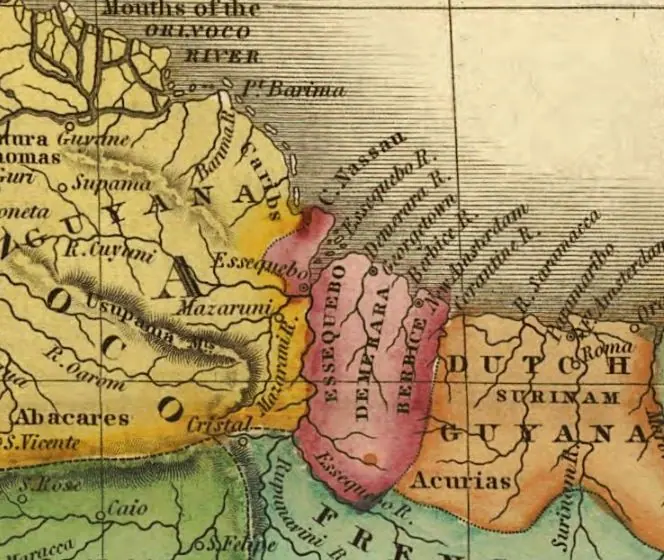
Guyana is a country you experience from the air as much as from the ground — a mosaic of brown rivers, unbroken rainforest and savannah that only makes sense once you've seen it from a small plane window. This seven-day route links the creaking wooden charms of Georgetown with the thunder of Kaieteur Falls, the canopy walkways of Iwokrama and the wide skies of the Rupununi.
Day 1: Landing at Timehri and Finding Your Feet in Georgetown
Almost every journey to Guyana begins at Cheddi Jagan International Airport at Timehri, roughly a 45-minute drive south of the capital along the Demerara River. Guyana is the only English-speaking country in South America, so the first conversations — taxi rates, directions, what time dinner starts — happen easily. Step outside and the air hits you: wet, warm, faintly sweet with rain on hot asphalt. Settle into a guesthouse in Kingston or around Main Street and spend the afternoon walking off the flight.
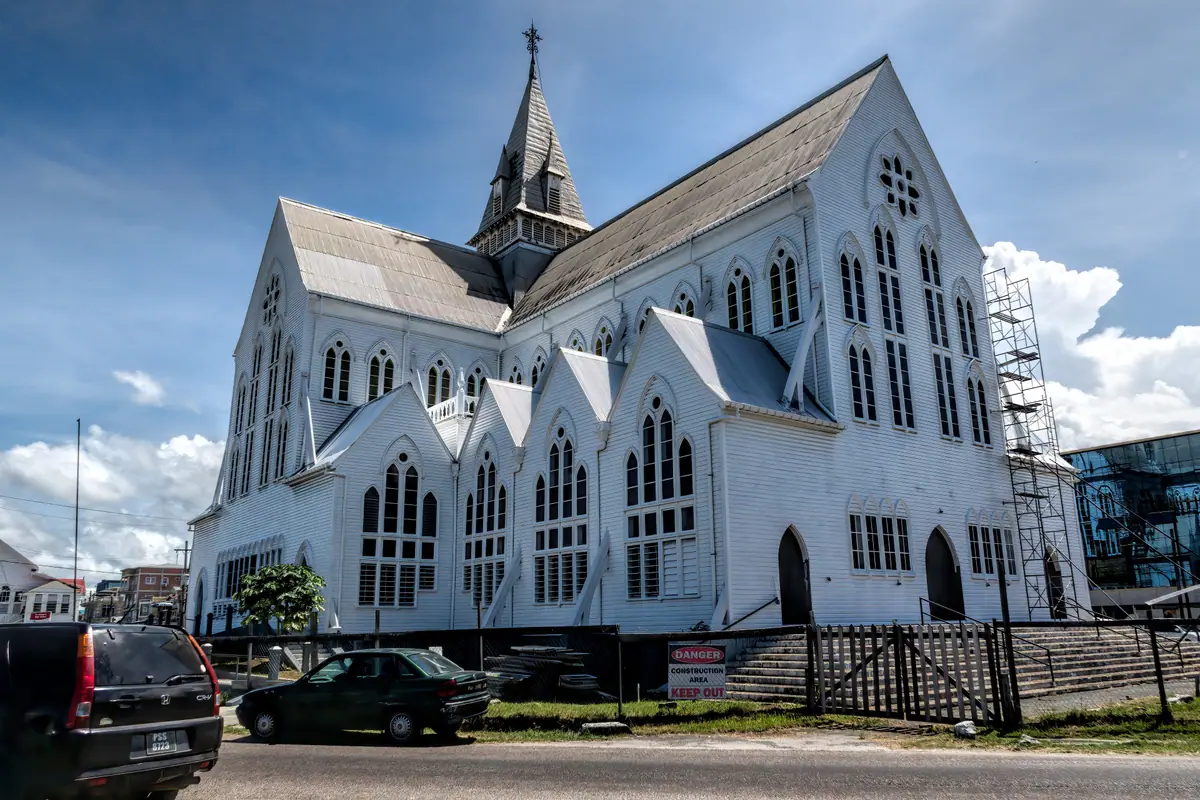
Start at Stabroek Market, the cast-iron landmark with its clock tower that has anchored the city's commerce since the 1880s. From there, wander to St. George's Cathedral, a soaring wooden structure dating to 1899 and one of the tallest timber churches in the world — the pews creak, the ceiling fans turn, and the whole building seems to breathe. End the day on the Georgetown Sea Wall, where families jog, fly kites and watch the Atlantic slap the concrete below.
One thing to fix in your head before you sleep: international flights use Timehri, but nearly all domestic flying happens from Eugene F. Correia International Airport at Ogle, about fifteen minutes east of the city centre. It is the small details like this that make a Guyana itinerary run smoothly.
Day 2: Georgetown's Colonial Core on Foot
Georgetown rewards a slow morning. Walk the Avenue of the Republic to the Public Buildings, a white neo-classical parliament house with a clock tower, then loop inland to the 1763 Monument in the Square of the Revolution — a bronze figure of the rebel leader Cuffy, fierce and larger than life. Nearby, the Guyana National Museum on North Road and the Walter Roth Museum of Anthropology on Main Street together give you a compact crash course in the country's Amerindian and colonial past.
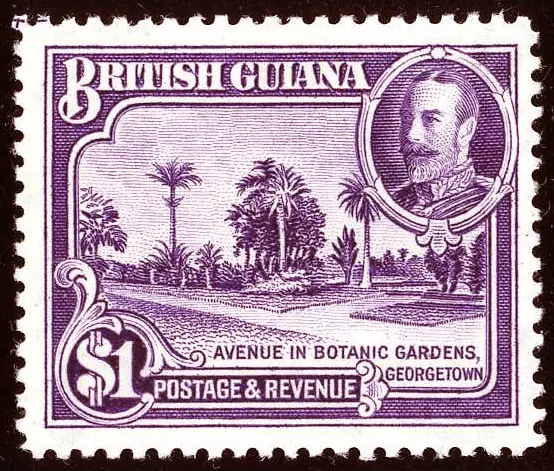
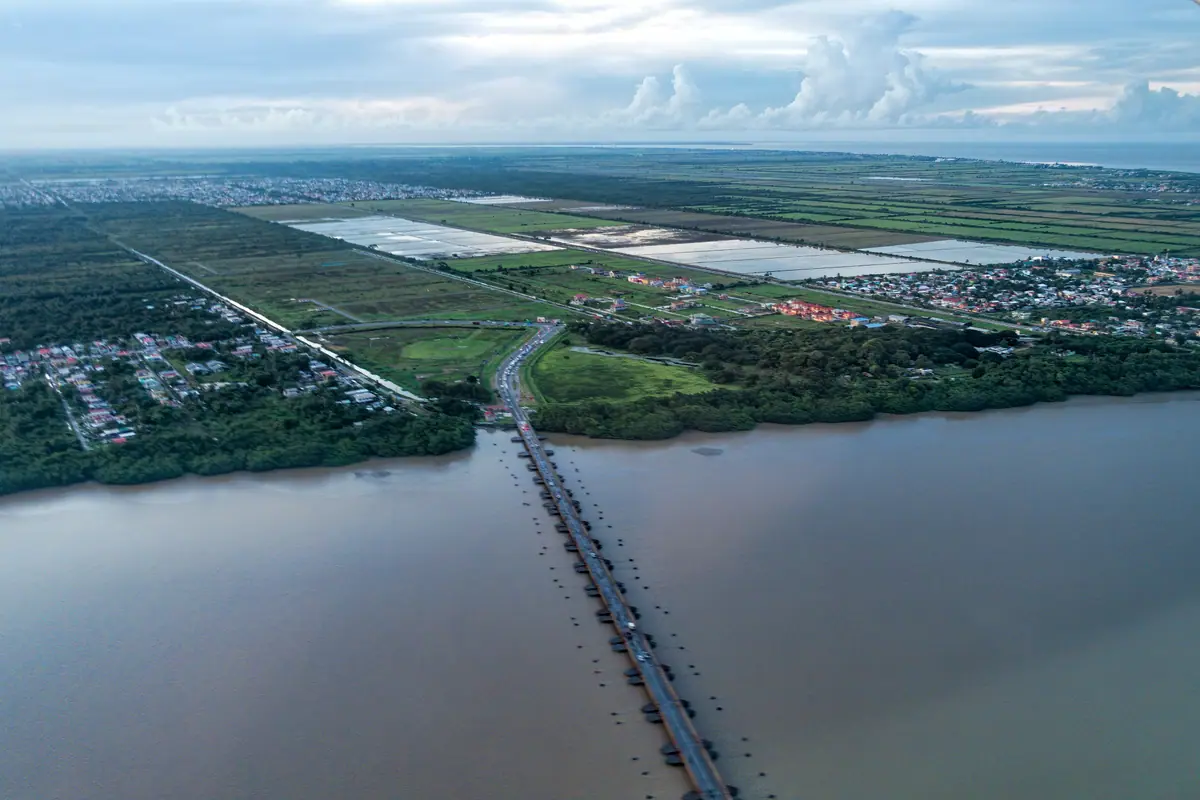
After lunch, take a taxi out to the Guyana Botanical Gardens, some 120 acres of palms, lily ponds and sloth-hung trees, with the small national zoo next door. If you want one more landmark before dark, drive west to see the Demerara Harbour Bridge, a floating pontoon span nearly two kilometres long that hinges open to let ships through — an engineering oddity that locals treat with affectionate exasperation.
Finish at a rum shop with a plate of pepperpot and rice, or something grilled from the Caribbean-Indian-Chinese mix that makes Guyanese food so hard to describe and so easy to keep eating. Sleep early: tomorrow is a flying day.
Day 3: Kaieteur Falls — The Flight That Defines Guyana
Most one-week Guyana itineraries are built around this single day. From Ogle you board a small single- or twin-engine aircraft for a flight of roughly an hour, climbing over a patchwork of forest and river before dropping onto a bush airstrip in the middle of Kaieteur National Park. There is no road in, no queue, no visitor centre worth the name — just you, a guide and a path through the moss.
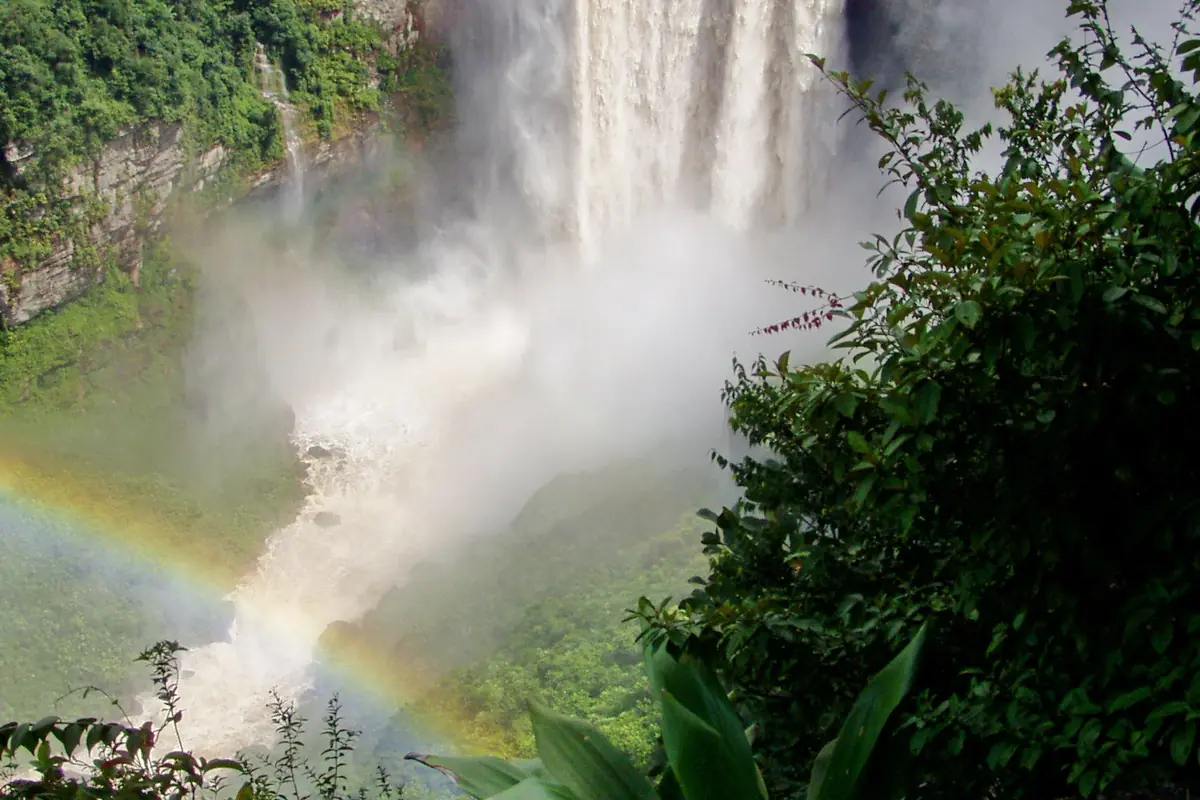
Then the ground simply ends. Kaieteur Falls throws the entire Potaro River over a cliff of about 226 metres in a single unbroken plunge, a volume of water that makes the drop feel alive — the spray rises in slow curtains, and the roar arrives a beat after the sight. Look for the tiny golden frog that bears the falls' name, the tank bromeliads clamped to every branch, and the swifts that thread the mist. Mornings are clearest; afternoon cloud often swallows the gorge entirely.
Many flights add a stop at Orinduik Falls on the Ireng River at the Brazilian border, where the water slides over red jasper terraces warm enough to swim in. Weight limits on these light aircraft are strict — usually a soft bag of around 10 to 14 kilograms per person — and departures are weather-dependent, so always keep a spare day at the end of your trip.
Days 4 and 5: Iwokrama, the Kanukus and the Rupununi Savannah
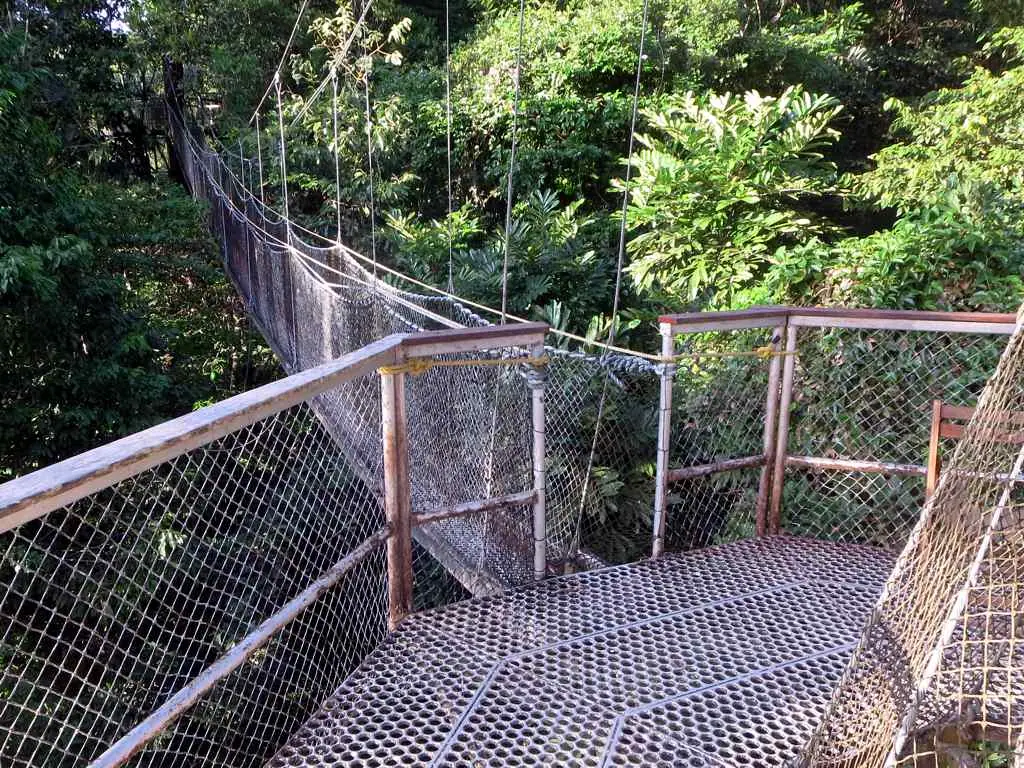
Fly south from Ogle to Annai or Lethem, a run of around an hour and a half to two hours over country that looks untouched from above. Base yourself in or near the Iwokrama Forest, one of the last great intact rainforest blocks in the Guianas, and walk the canopy walkway — a suspended bridge roughly 30 metres above the forest floor, swaying gently while macaws cross below and howler monkeys start their late-afternoon roar. Birders come for harpy eagles, Guianan cock-of-the-rock and the strange, prehistoric hoatzin.
Continue into the North Rupununi, where the Kanuku Mountains rise out of grassland like a spine and the Makushi village of Surama runs one of the country's best community-owned lodges. Days fill with 4x4 tracks, river canoes, and slow afternoons in hammocks. Near Karanambu, oxbow lakes bloom with giant Victoria amazonica lilies, and giant river otters hunt in noisy family groups.
Nights here are the real luxury: no light pollution, a sky dense with stars, and the sound of insects doing all the talking. Because bush airstrips go soft and visibility drops, almost all internal flying happens in the morning — build your days around that rhythm rather than fighting it.
Day 6: The Essequibo, Bartica and Fort Kyk-Over-Al
For your final full day, trade the plane for a boat. Fly back to Ogle in the morning, drive west to Parika, and take a riverboat down the Essequibo — Guyana's largest river and one of the widest in South America — to the little town of Bartica, known as the gateway to the interior. It is a working river town of stilted houses, gold traders and ferries, and it feels a world away from the capital.
From Bartica, boats run to Fort Kyk-Over-Al, a Dutch trading post founded in 1616 on a small island where the Essequibo, Mazaruni and Cuyuni rivers meet; only the brick shell of the fort survives, wrapped in roots, but the sense of history is thick. Add Marshall Falls on the Mazaruni for a freshwater swim between granite boulders, or visit a riverside Amerindian community such as Santa Mission if you would rather stay closer to the city.
If you are travelling between March and July, consider swapping this day for Shell Beach, where leatherback turtles haul themselves ashore to nest under cover of darkness — a genuinely unforgettable spectacle, but one that needs a charter flight to the northwest coast and careful tide planning.
Day 7: Last Morning in Georgetown and Flying Out
Keep your final morning loose. Return to Stabroek Market for cassareep, Demerara sugar, rum and woven crafts, or visit anything you missed — Castellani House for Guyanese art, the Guyana National Museum, or the 1830 Georgetown Lighthouse standing at the mouth of the Demerara on Water Street. A last plate of curry and roti, and you are ready to move.
On the flying side, book internal charters well ahead, especially during the dry-season windows of roughly September to November and February to April, when conditions are at their kindest and lodges fill fast. Pack soft-sided luggage, expect early departures, and treat published times as intentions rather than promises — a shower over the Pakaraimas can reset the whole board.
Finally, protect the buffer. Leave at least one spare day before your international departure from Timehri, carry a yellow fever vaccination certificate if you have been in the interior, sort malaria prophylaxis and insect repellent before you leave home, and take more Guyanese dollars in cash than you think you need — card machines thin out dramatically once the rainforest starts.
Frequently asked questions
How do internal flights in Guyana work?
Nearly all domestic flying departs from Eugene F. Correia International Airport at Ogle, east of central Georgetown, rather than the international terminal at Timehri. Services are small aircraft — often four to twelve seats — flown by local charter operators, and most departures are in the morning because afternoon heat builds thunderstorms that make bush airstrips unreliable.
How much luggage can I bring on a Guyana domestic flight?
Expect a strict allowance of roughly 10 to 14 kilograms per person, and pack in a soft-sided duffel rather than a hard case so it can be squeezed into a small cargo hold. Anything extra can often be stored at your Georgetown guesthouse while you fly to Kaieteur Falls or the Rupununi.
What is the best time of year to visit Guyana?
The driest and most comfortable months are roughly September to November and February to April, when forest trails are firmer and flights are less likely to be delayed. May to mid-July and December to January are the wettest periods. Turtle nesting at Shell Beach peaks from March to July, which is worth planning around if wildlife is your priority.
Can I visit Kaieteur Falls as a day trip?
Yes. A day return from Ogle takes about an hour each way by light aircraft, with two to three hours on the ground at the falls, and many trips also stop at Orinduik Falls on the Brazilian border. Everything depends on weather, so allow a spare day in your schedule in case your flight is postponed.
Do I need vaccinations or malaria tablets for Guyana?
A yellow fever vaccination certificate is commonly recommended, and sometimes required, for travel into interior regions such as the Rupununi and around Kaieteur. Malaria prophylaxis is generally advised for rainforest areas, and dengue-carrying mosquitoes are present nationwide, so pack repellent, long sleeves for evenings and a good travel health consultation before you fly.
Sort the rest of your trip
Everything for Guyana, in one place
Stay in Guyana
Hotels, guesthouses and apartments — compared in one search.
Search hotels
Transfer in Guyana
Private driver waiting on arrival — no queues, no surprises.
Book a transfer
Travel insurance
Medical cover, delays and lost baggage — sorted before you go.
Get covered