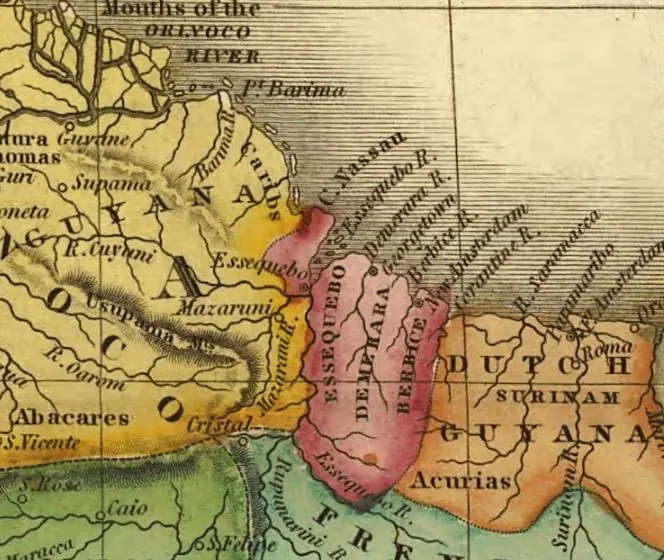
Guyana rarely behaves like a postcard Caribbean getaway: it is a vast, green, mostly forested country where the weather decides whether you reach a waterfall or an eco-lodge at all. Get the timing right and you can stand on the lip of Kaieteur Falls in clear light, drift past giant otters in the Rupununi, and sleep in a hammock camp under a sky with no light pollution for hundreds of kilometres. Get it wrong and you will spend your holiday watching rain sheet across the Demerara River.
Guyana's Year: Two Dry Seasons, Two Wet Ones
Guyana sits just north of the equator, so there is no winter to plan around. Temperatures on the coast hover between roughly 24°C and 31°C all year, with humidity that makes midday feel heavier than the number suggests, while the interior savannahs can swing hotter by day and noticeably cooler at night. What actually changes month to month is rain — and rain, more than temperature, dictates where you can go and what you can see.
The country effectively has four seasons. The long dry season runs from mid-July through November, the short dry from February into April. In between come the long wet season (May to mid-July), when the heaviest downpours arrive, and the short wet season (December into January), which mostly means grey, drizzly coastal days. Coastal Georgetown and the Demerara coast are wetter and breezier overall; the Rupununi savannahs in the south-west are drier and more seasonal, which is why ranches and eco-lodges out there feel the weather so sharply.
For most first-time visitors, the practical answer is simple: aim for the long dry season, with the short dry as a strong second choice. Those windows keep interior airstrips firm, dirt roads passable and wildlife concentrated around shrinking water sources — the three things that make a Guyanese trip work rather than merely happen.
The Dry Season Window: Mid-July to November
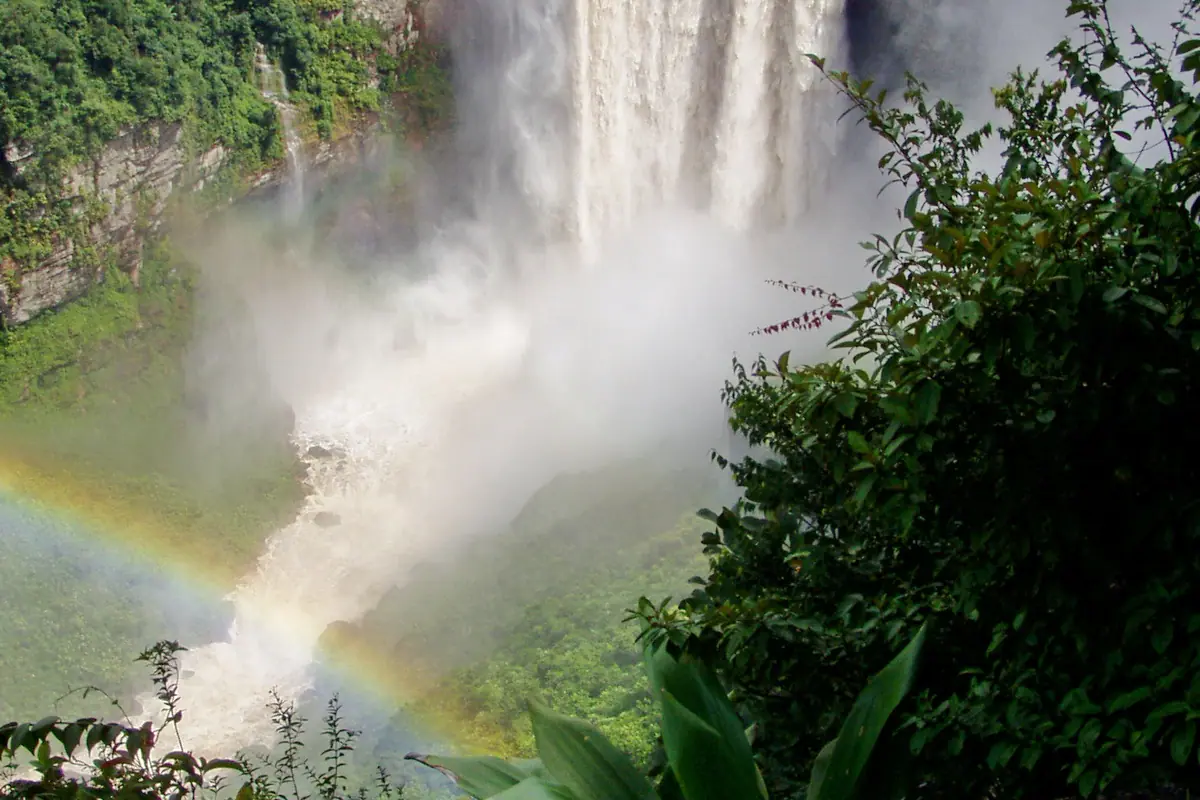
This is the stretch that opens up the whole country. Rivers drop, the Linden–Lethem road and the interior tracks become manageable, and light aircraft can land reliably on grass and gravel airstrips that serve the lodges and Amerindian villages of the Rupununi. It is also prime time for Kaieteur Falls, the colossal single-drop waterfall on the Potaro River that most visitors reach by small plane from Georgetown; in the dry months the skies are clearer and flights are far less likely to be scrubbed by cloud.
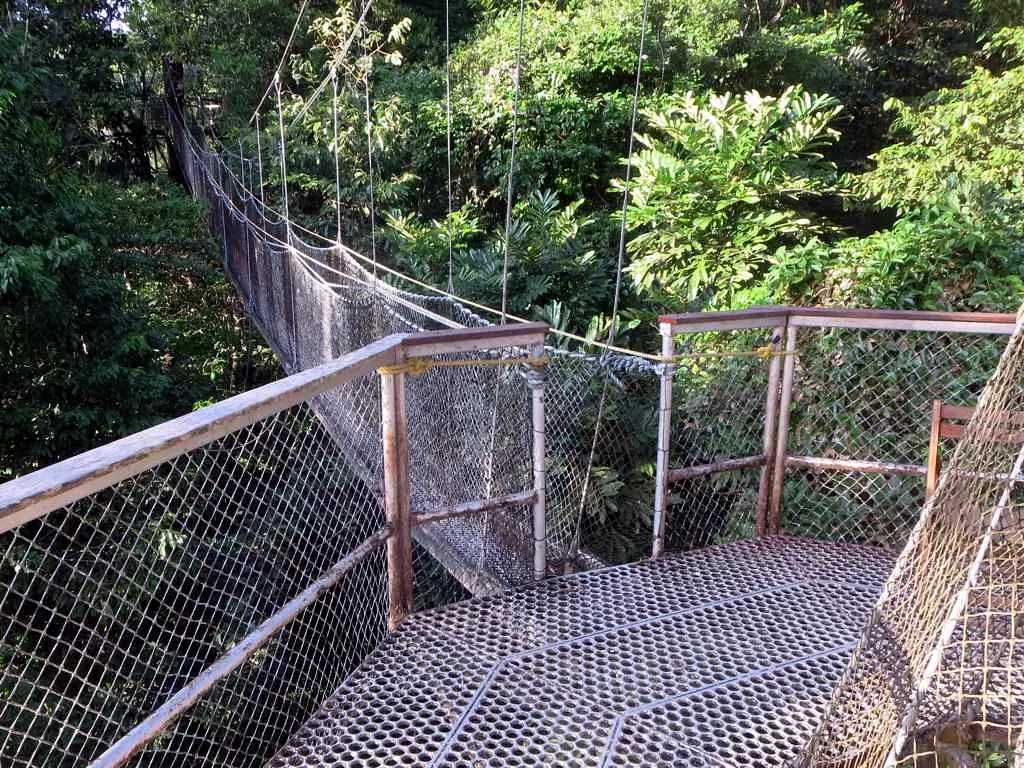
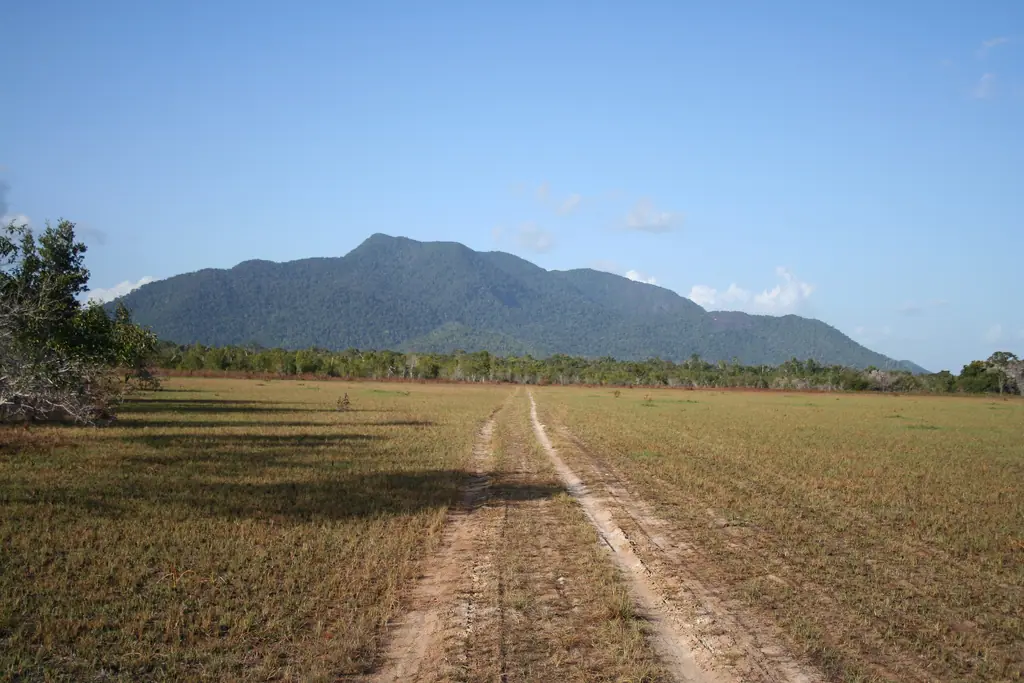
If you want the classic circuit, this is when it works: fly over Kaieteur and continue to Orinduik Falls on the Brazilian border, where the falls tumble over smooth jasper slabs you can actually bathe on. Pair that with the Iwokrama Canopy Walkway, suspended high in the rainforest canopy between the Essequibo and the Pakaraima Mountains, and a few days in the North Rupununi around Surama, where savannah, forest and wetland meet against the blue wall of the Kanuku Mountains.
The trade-off is heat and haze later in the season, plus peak demand. Community-run lodges in places like Surama and Rewa are small — often a handful of rooms or hammock spaces — so October and November bookings can close out months ahead. Travel in late July or August for greener landscapes and slightly softer rates, or September and October for the driest, clearest conditions and the best wildlife visibility.
The Short Dry Season: February to April
Guyana's second dry window is shorter and less predictable, but it is a lovely time to travel — especially if your interests lean towards birds, culture and the coast rather than deep-interior expeditions. Georgetown is at its most comfortable, with fresher breezes off the Atlantic and fewer of the long, soaking afternoon storms that define May and June. It is also when the country's biggest national celebration, Mashramani, fills the capital with costume parades and music on 23 February.
Out in the Rupununi, the short dry season firms up the savannah enough for road transfers and ranch stays, and the wetlands start to shrink, pulling jabiru storks, egrets, ibis and hundreds of other waterbirds into tighter, more viewable concentrations. The Easter period brings the Rupununi Ranchers' Rodeo at Lethem, when vaqueros from the surrounding ranches compete in a genuine frontier-town festival — book accommodation in Lethem and the nearby savannah long in advance for that week.
The main caveat is variability. Some years February stays damp well into March, and a late wet spell can soften tracks and delay light-aircraft departures. If you are building an itinerary around a specific lodge, build in a buffer day at the start and end and keep your Georgetown nights flexible.
Travelling in the Wet Season: Waterfalls, Mud and Lower Rates
The long wet season from May to mid-July is the most maligned period, and partly for good reason: interior dirt roads can turn to soup, river crossings become unpredictable, some remote lodges simply close, and light aircraft face more delays. A December–January trip is milder but still brings plenty of grey, drizzly days on the coast. If your dream is a multi-stop Rupununi expedition with road transfers, this is the window to avoid.
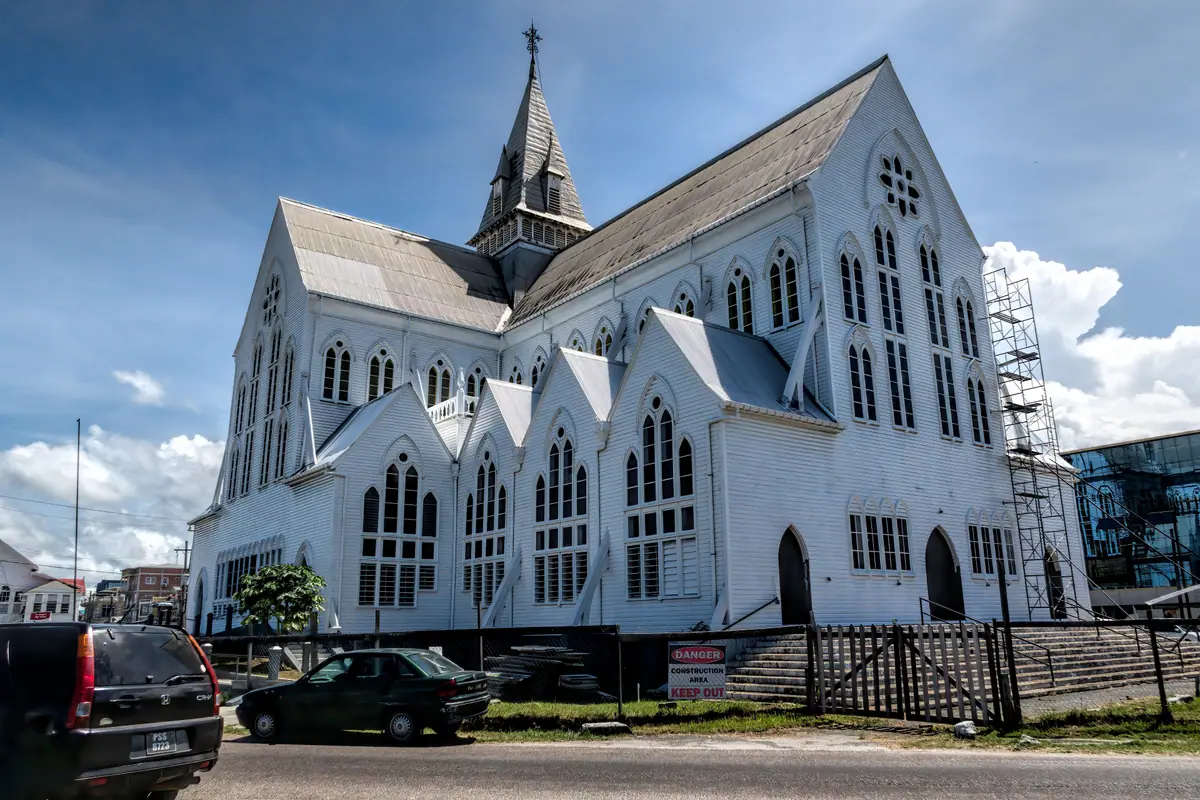
But the rains have their own rewards. Kaieteur Falls runs at full, thunderous volume, throwing up spray visible from the air, and every smaller cascade in the Pakaraima Mountains and along the Potaro comes alive — the kind of flow you simply will not see in October. Georgetown itself copes well: rain tends to arrive in intense bursts rather than all-day curtains, leaving gaps for Stabroek Market's chaotic timber-and-iron halls, the soaring wooden nave of St George's Cathedral, the colonial tombs and botanical collections of the Botanic Gardens, and the ocean-facing promenade along the Georgetown seawall.
Financially, this is the smartest time to be in the capital. City hotels and guesthouses drop rates and have real availability, which makes the wet season a good fit for a short cultural trip built around Georgetown, the Demerara Harbour Bridge, the National Museum and the Walter Roth Museum of Anthropology, with a single fly-in day trip to Kaieteur if the cloud allows. Just accept that flexibility is part of the deal.
Wildlife Timing: Turtles, Birds, Otters and Caiman
Guyana's wildlife calendar does not always align neatly with the tourist seasons, and for many visitors that is exactly the point. On Shell Beach, the long stretch of sand along the north-west coast, four species of sea turtle come ashore to nest between roughly March and August, with the giant leatherbacks arriving earliest and green, hawksbill and olive ridley turtles following. Night-time nesting walks and hatchling releases are among the most memorable experiences in the country — and the season overlaps neatly with the short dry and the start of the long dry.
Birders should think in terms of access rather than abundance. The dry months of September to November and February to April open up forest trails in the Iwokrama Forest, the Kanuku Mountains and the Berbice River area, where you can look for Guianan cock-of-the-rock, harpy eagles, scarlet macaws and hundreds of tanager and manakin species. The Rupununi's oxbow lakes and rivers are at their most concentrated in the dry season too, when giant river otters, black caiman, arapaima and river turtles crowd into shrinking channels.
Mammal watching in the interior — jaguar tracks, tapir, peccary, howler monkeys — is generally easier when the undergrowth is drier and quieter. If wildlife is your main reason for coming, plan around the long dry season, add two or three nights at a forest lodge rather than treating it as a day trip, and hire local guides whose knowledge of the trails and waterways will do more for your sightings than any amount of luck.
Festivals, Cricket and the Cultural Calendar
Guyana's calendar is layered with celebrations that come from its African, Indian, Indigenous, Chinese, Portuguese and European heritage, and they can genuinely shape when you travel. Mashramani on 23 February is the loudest of them, a Republic Day carnival of floats, steel pan and costume bands that takes over central Georgetown. Phagwah, the Hindu spring festival of colours, arrives in March, Easter brings kite-flying crowds to the seawall and the Rupununi rodeo out west, and the Guyana Carnival in May pulls diaspora visitors back to the capital.
Later in the year come Diwali, when the coast lights up with thousands of deyas, Eid celebrations, and Christmas, which is celebrated with unusual enthusiasm in Georgetown's streets and markets. September is Amerindian Heritage Month, with events in villages and in the capital that highlight Indigenous culture, craft and food — a good reason to combine a city stay with a community lodge visit.
Sport has its own pull: international cricket at Providence Stadium on the East Bank of the Demerara can fill every decent hotel room in the capital, so check fixtures before you fix dates. Whatever month you choose, book Georgetown accommodation first and build the interior around it, since city rooms are the scarce commodity during festival weeks and match days.
Frequently asked questions
What is the best month to visit Guyana?
September to November is the sweet spot: the long dry season is at its firmest, interior airstrips and roads are reliable, skies over Kaieteur Falls are clearest and wildlife concentrates around shrinking rivers and lakes. Late July and August are close behind with greener scenery and slightly lower demand, while February to April is the best alternative window for birding, culture and the coast.
Is it worth visiting Guyana in the rainy season?
Yes, if your trip is city-focused or flexible. The heaviest rains from May to mid-July can close remote lodges and make interior roads impassable, but Georgetown stays easy to explore, hotel rates fall, and Kaieteur Falls is spectacular at full flow. Treat a fly-in waterfall trip as weather-dependent and keep buffer days on both ends.
How far ahead should I book hotels and eco-lodges in Guyana?
Georgetown has a limited number of upscale rooms, and festival weeks like Mashramani in February, Guyana Carnival in May and international cricket fixtures at Providence Stadium can sell the city out. For interior lodges in the Rupununi, Iwokrama and the Pakaraima Mountains, book three to six months ahead for the dry season, since many have only a handful of rooms or hammock spaces.
What should I pack for Guyana, and are there health considerations?
Pack light, quick-drying clothing, a rain shell year-round, insect repellent, sun protection and sturdy footwear for rainforest trails. A yellow fever vaccination is commonly required for entry or onward travel, and antimalarial advice varies by region and itinerary, so consult a travel health professional well before departure. Interior travel is hot, humid and remote — carry more water than you think you need.
When is the best time for sea turtles and for birdwatching in Guyana?
Sea turtle nesting on Shell Beach runs roughly March to August, with leatherbacks first and hatchling releases peaking in the middle of that period. For birding, the dry seasons of September to November and February to April give the best trail access in the Iwokrama Forest, the Kanuku Mountains and the Rupununi, where waterbirds gather in large numbers as wetlands shrink.
Sort the rest of your trip
Everything for Guyana, in one place
Transfer in Guyana
Private driver waiting on arrival — no queues, no surprises.
Book a transfer
Things to do in Guyana
Skip-the-line tickets, guided tours and standout experiences.
See experiences
Stay online in Guyana
Travel eSIM — data the moment you land, no roaming bills.
Get an eSIM