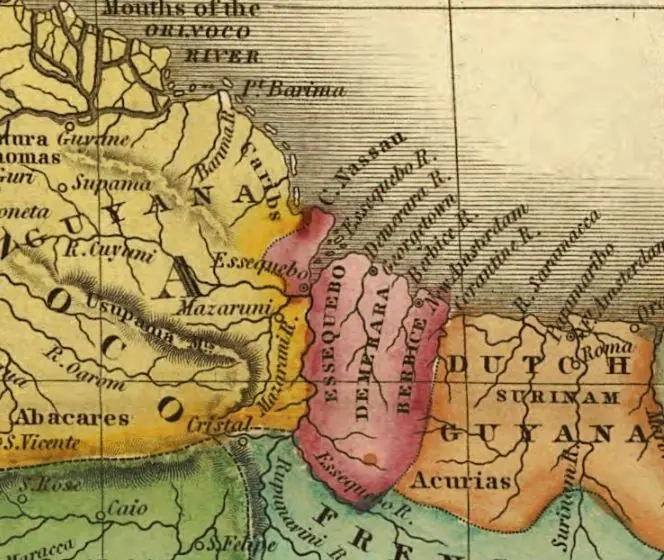
Guyana is the South American country that behaves like a secret: a slice of the Guiana Shield where rainforest still runs unbroken from the Atlantic coast to the Pakaraima Mountains, and where a single river can carry you past jaguar tracks, giant otters and a waterfall that drops 226 metres in one clean, roaring plunge. It is English-speaking, sparsely populated and gloriously unhurried, and the highlights here are not monuments but landscapes you have to earn with a small plane, a long boat and a pair of muddy boots.
Kaieteur Falls: Guyana's Thunderous Icon
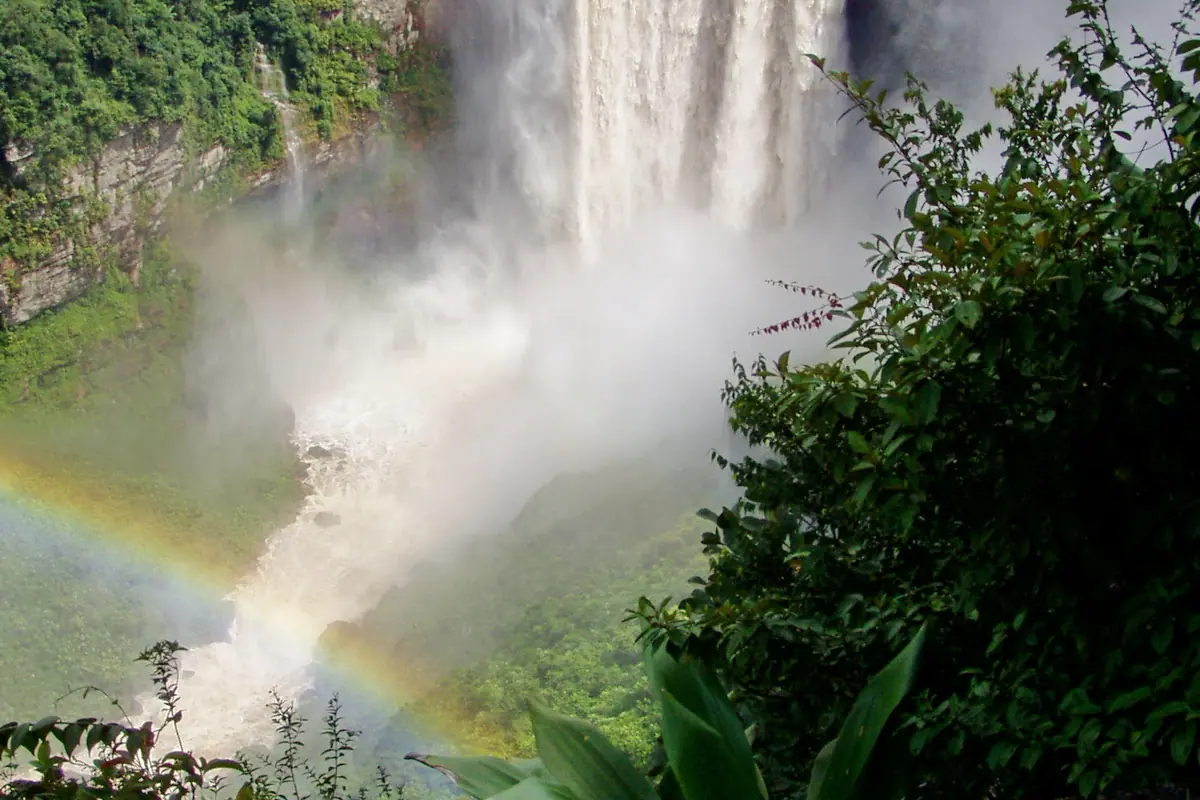
Nothing prepares you for the scale of Kaieteur Falls. The Potaro River, running dark with tannins through Kaieteur National Park, reaches a lip of sandstone and simply lets go, free-falling roughly 226 metres into a mist-filled gorge. It is among the highest single-drop waterfalls on Earth, and because it carries the entire volume of a major river rather than a seasonal trickle, the sound reaches you long before the viewpoint does. The plateau above is a strange miniature world of tank bromeliads holding litres of rainwater, and if you look carefully at the wet leaves you may find the tiny golden frog that lives almost nowhere else.
Most visitors arrive by light aircraft from Georgetown, a flight of about an hour over an unbroken green canopy that ends on a bush airstrip a short walk from the falls. Day trips typically allow two to four hours on the plateau, enough to follow guided trails to the main viewpoints, watch swifts and cock-of-the-rock flicker through the spray, and stand at the edge while the ground hums. Hardier travellers trek in over several days from Menzies Landing, camping along the river, which turns the falls into a reward rather than a photo stop.
Downriver, the landscape changes character completely. Orinduik Falls tumbles over terraces of red jasper and greenstone rather than plunging, and the pools at its base are warm, shallow and swimmable, with the Brazilian border just beyond the ridge. Combine the two in a single flight if you can, and you will see Guyana's two very different ideas of a waterfall in one afternoon.
Iwokrama Forest and the Canopy Walkway
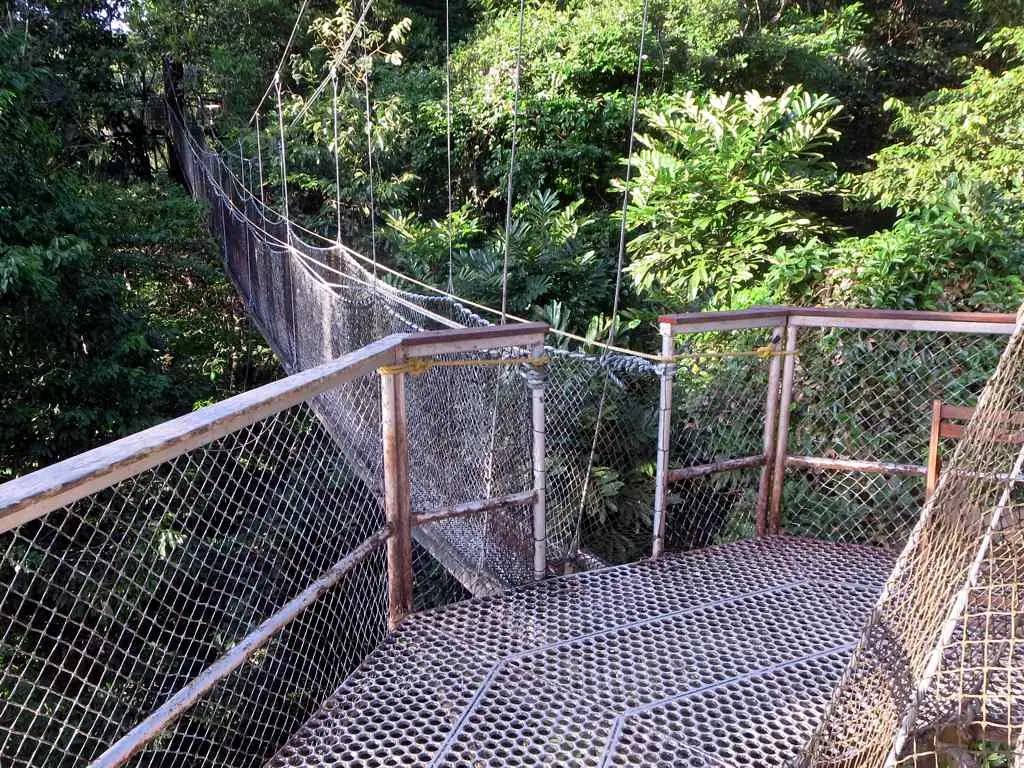
In the middle of the country, roughly between the Essequibo River and the foothills of the Pakaraima Mountains, lies Iwokrama, a tract of some 3,700 square kilometres of near-intact rainforest. It is one of the last great untouched forests of the Guiana Shield, and its most famous piece of infrastructure is a suspended walkway strung between giant trees, around 154 metres long and hanging some 30 metres above the forest floor. Standing there at dawn, level with the canopy rather than beneath it, is the single best way to understand how much life a rainforest actually holds.
The wildlife list reads like a field guide's greatest hits: jaguar, puma, tapir, eight species of primate, giant armadillo, black caiman and the enormous arapaima, one of the largest freshwater fish in the world. More than 450 bird species have been recorded here, including the harpy eagle, the Guianan cock-of-the-rock and the vivid pompadour cotinga. Because the forest is managed for both conservation and community use, sightings come with context: local guides read the forest by sound and track, and a morning walk often yields more than a week of solo wandering.
Access is usually by road along the Linden to Lethem highway, which cuts through the forest, with river trips on the Essequibo from the small community of Fair View. Nights are for spotlighting caiman along the water and listening for the low cough of a jaguar somewhere out in the dark. The dry months make the trails firmer and the drive more reliable, so plan Iwokrama for the middle of your trip rather than the edges.
The Rupununi Savannah: Otters, Ranches and Amerindian Villages
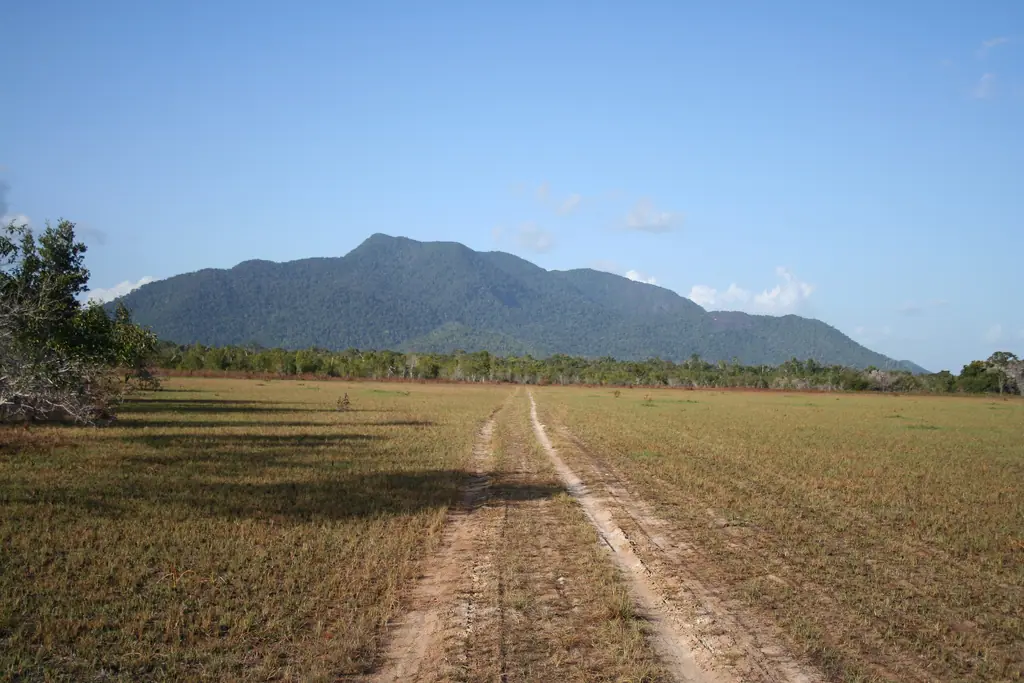
South of the forest, the trees open into the Rupununi, a vast savannah of termite mounds, gallery forest and shallow wetlands that floods dramatically in the wet season and turns to golden grass in the dry. The Rupununi River is the artery of the region, and its most celebrated residents are giant river otters, which fish and squabble in family groups near places like Karanambu, where decades of conservation work have made them unusually relaxed around boats. Early morning boat rides here are among the most rewarding wildlife hours in South America.
Further south, community-run villages such as Surama and Rewa offer a different model of travel: you stay in locally owned lodges, eat what the village cooks, and go out with guides who grew up tracking in these hills. Rewa sits at the confluence of its river with the Rupununi and is a base for catch-and-release fishing for arapaima, a fish that can exceed two metres and 100 kilograms. Surama looks out towards the Pakaraima Mountains from the edge of the savannah, and its trails climb into forest where the birdlife is extraordinary.
Around Yupukari, researchers and villagers work with black caiman, and guests can join night surveys on the water. Further west, working cattle ranches keep the old vaqueiro culture alive, with horsemen in wide hats moving herds across plains that look borrowed from another continent. The Kanuku Mountains, a forested range dividing the savannah, shelter an astonishing density of species and are best explored with a local guide. Give the Rupununi at least three or four nights; it is the part of Guyana people talk about for years afterwards.
Georgetown: Wooden Cathedrals, Markets and the Atlantic Seawall
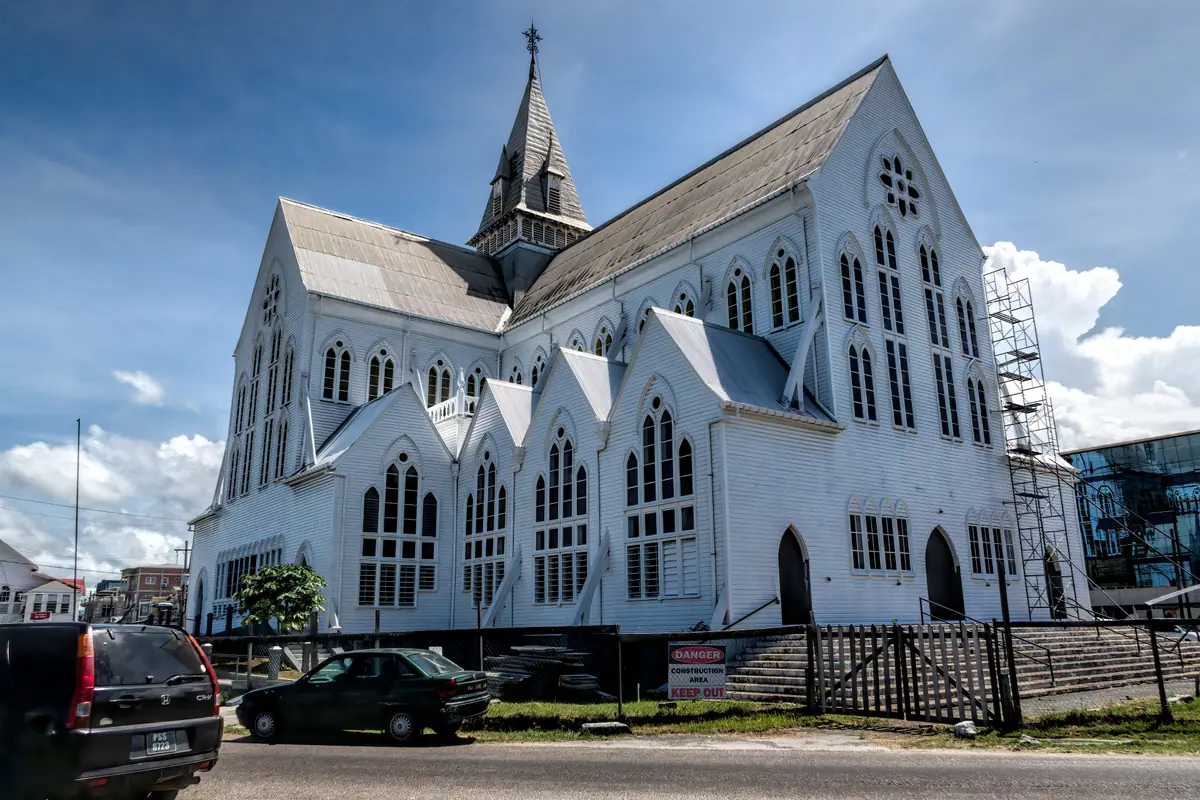
Guyana's capital is a low-rise, salt-bleached city of colonial timber, and its most astonishing building is St. George's Cathedral, completed in the 1890s, an intricately carved wooden structure that ranks among the tallest wooden churches in the world. A few blocks away, Stabroek Market heaves with produce, fish, gold jewellery and noise beneath a cast-iron clock tower that has become the city's emblem. Between them, the Walter Roth Museum of Anthropology and the national museum collections explain the Indigenous cultures and colonial layers that shaped the country.
The Georgetown Lighthouse, built in the 1830s, still stands guard where the Demerara River meets the Atlantic, and the Botanical Gardens nearby are a proper tropical park, complete with a pond where manatees surface to graze. The Umana Yana, a conical structure built by Indigenous craftspeople, is one of the city's most photographed landmarks. But the real civic living room is the seawall, a long stretch of colonial-era sea defence where families walk at dusk, kite-fly, play cricket and eat from roadside stalls as the sun drops into the ocean.
Georgetown is also where you should eat properly. Guyanese cooking is a mash-up of South Asian, African, Indigenous and Chinese traditions: pepperpot slow-cooked in cassareep, seven-curry platters, dhal puri, roti, fresh fish and plantain. Time a visit for Mashramani in February, when the streets fill with costume parades, or for Diwali and Phagwah, which light up the whole coast.
The Essequibo, Shell Beach and Guyana's Wild Coast
The Essequibo is Guyana's great river, running for more than a thousand kilometres and dotted with islands. On Fort Island, the 18th-century Fort Zeelandia and the old Dutch court building sit in near-silence under trees, a reminder that this coast was once contested by European powers. Bartica, at the confluence of the Essequibo, Mazaruni and Cuyuni rivers, is the main jumping-off point for the interior, and the ruined Fort Kyk-Over-Al on its island nearby is a pilgrimage for history-minded travellers. Boat trips up the Mazaruni reach Marshall Falls, where you can swim in cool, dark water below the cascade.
North-west along the coast, Shell Beach is one of the most important turtle nesting sites in the region. Between roughly March and July, leatherback turtles haul themselves out of the Atlantic at night to dig nests the size of bathtubs, followed by green, hawksbill and olive ridley turtles later in the season. Watching a leatherback, half a tonne of it, labour up the sand under a full moon is one of those travel memories that never dulls.
Guyana also happens to be a birdwatcher's paradise, with more than 800 recorded species packed into a country the size of Britain. Harpy eagles nest in the canopy of the interior, cock-of-the-rock display at forest leks, and the coast and savannahs swarm with waders, raptors, and parrots. Bring binoculars even if you have never called yourself a birder; by the end of a week, you probably will be.
When to Go and How to Move Around Guyana
Guyana has two dry seasons and two wet ones. The most reliable interior travel windows are roughly mid-August to November and February to April, when trails are firmer, rivers are lower and light aircraft are less likely to be delayed. The heavy rains arrive from around May to mid-August, with a shorter wet spell in December and January. Rain does not ruin a trip, but it floods savannah roads, softens forest tracks and can ground small planes, so build slack into any itinerary that depends on flying. Turtle season on the coast runs roughly March to July, which is worth planning around if that is your priority.
Getting in is straightforward: international flights land at Cheddi Jagan International Airport south of Georgetown, and Ogle airstrip on the city's edge handles domestic flights. The interior is reached by light aircraft to Lethem, Annai and other airstrips, by minibus and 4x4 along the Linden to Lethem road, which can take the better part of a day or more in the wet, and by boat where rivers are the road. Distances look small on a map and are not; a 300-kilometre journey can consume a full day.
Health prep matters more here than in most of South America. A yellow fever vaccination is commonly required for entry and is strongly advised for anyone heading inland, and malaria prophylaxis plus serious insect repellent are sensible for forest and river travel. Guyana is the only South American country with English as its official language, which makes independent travel far easier, and the currency is the Guyanese dollar. Allow at least seven to ten days, and ideally two weeks, if you want Kaieteur, Iwokrama and the Rupununi without living on airstrip timetables.
Frequently asked questions
How do I visit Kaieteur Falls?
Almost everyone flies in on a small aircraft from Georgetown, about an hour each way, with two to four hours on the plateau to walk the viewpoints. A multi-day trek from Menzies Landing is possible for fit, well-equipped hikers and is usually arranged with a local operator. Many flights also stop at Orinduik Falls, where you can swim.
What is the best time of year to visit Guyana?
The driest and most reliable windows are roughly mid-August to November and February to April, ideal for hiking, wildlife watching and interior flights. May to mid-August and December to January are wetter, with flooded savannah roads and occasional flight delays. Turtle nesting at Shell Beach peaks between March and July.
Do I need a yellow fever vaccination for Guyana?
A yellow fever certificate is commonly required for entry, and vaccination is strongly recommended for anyone travelling into the interior. Malaria prophylaxis is also advised for forest and river regions, along with repellent, long sleeves at dusk and sun protection.
How many days do I need in Guyana?
Seven to ten days covers Georgetown, Kaieteur Falls and one interior region comfortably. Two weeks lets you add Iwokrama, the Rupununi and a community village stay without rushing, which matters because travel days here are long and often weather-dependent.
Is Guyana good for wildlife watching?
It is exceptional. Jaguars, giant river otters, black caiman, tapirs and arapaima all live here, along with more than 800 bird species including harpy eagles and Guianan cock-of-the-rock. A local guide dramatically improves your chances, and night boat surveys in the Rupununi are a highlight.
Plan it — experiences in Guyana
Live search, booked directly with trusted providers.
Sort the rest of your trip
Everything for Guyana, in one place
Stay in Guyana
Hotels, guesthouses and apartments — compared in one search.
Search hotels
Transfer in Guyana
Private driver waiting on arrival — no queues, no surprises.
Book a transfer
Stay online in Guyana
Travel eSIM — data the moment you land, no roaming bills.
Get an eSIM