Guinea is West Africa at its most elemental — rain-fed rivers, red laterite roads and a coastline of mango-shaded islands. Where you sleep shapes how much of it you actually see: a glass-fronted business hotel on the Kaloum peninsula, a tin-roofed bungalow on Île de Kassa, or a chilly hill-station room in the Fouta Djallon. This guide maps the bases, the seasons and the landmarks worth building a whole trip around.
Where to Stay in Conakry: Kaloum, Camayenne and Kipé
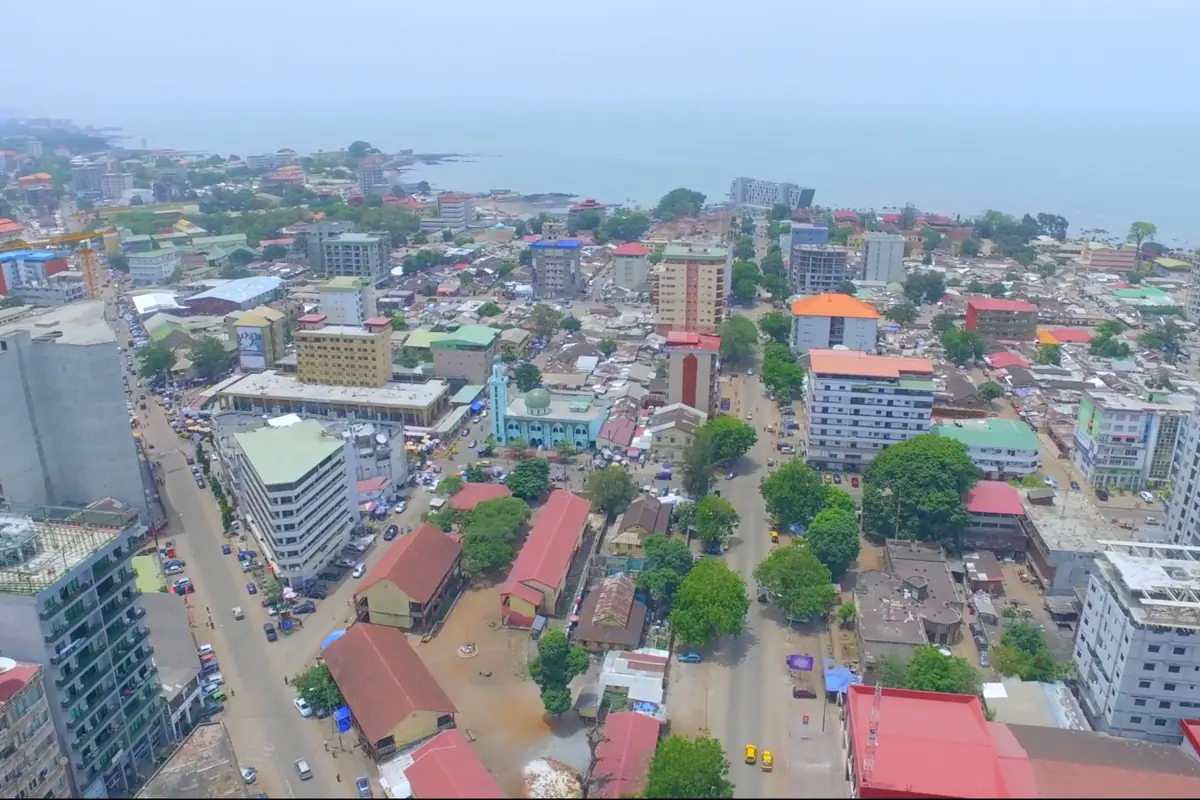
Conakry unspools along a long, narrow peninsula, and your choice of neighbourhood decides what your days look like. Kaloum sits at the very tip, where ministries, banks and shipping offices cluster around the Grand Mosque and the vast Marché Madina. The city's international-standard hotels are here, with pools, backup generators, air-conditioning and sea views — the most dependable water pressure and Wi-Fi in the country, and the highest rates. It is also the dustiest, noisiest corner of Guinea, with traffic that can turn a two-kilometre hop into half an hour.
Mid-range travellers do well in Camayenne and Sandervalia, a few minutes west of Kaloum. This is where you find independent hotels and small guesthouses within walking distance of the national museum, the botanical garden and the Cathédrale Sainte-Marie, and — crucially — close to the Boulbinet waterfront, where boats leave for the Îles de Los. Rooms are simpler, but value is noticeably better and evenings are calmer.
Further out, Kipé, Nongo and Ratoma form a newer residential belt with restaurants, gyms, supermarkets and apartment-style stays that offer weekly and monthly rates. It is closer to the airport road, so it suits a first or last night. Whatever you book, ask three questions before you commit: does the generator run through the night, is there a water storage tank, and are mosquito nets provided? Carry cash in Guinean francs — cards are accepted only at a handful of large hotels — and expect airport transfers to take 20 minutes early in the morning and well over an hour at rush hour.
Conakry's Must-See Landmarks, from the Grand Mosque to the Corniche
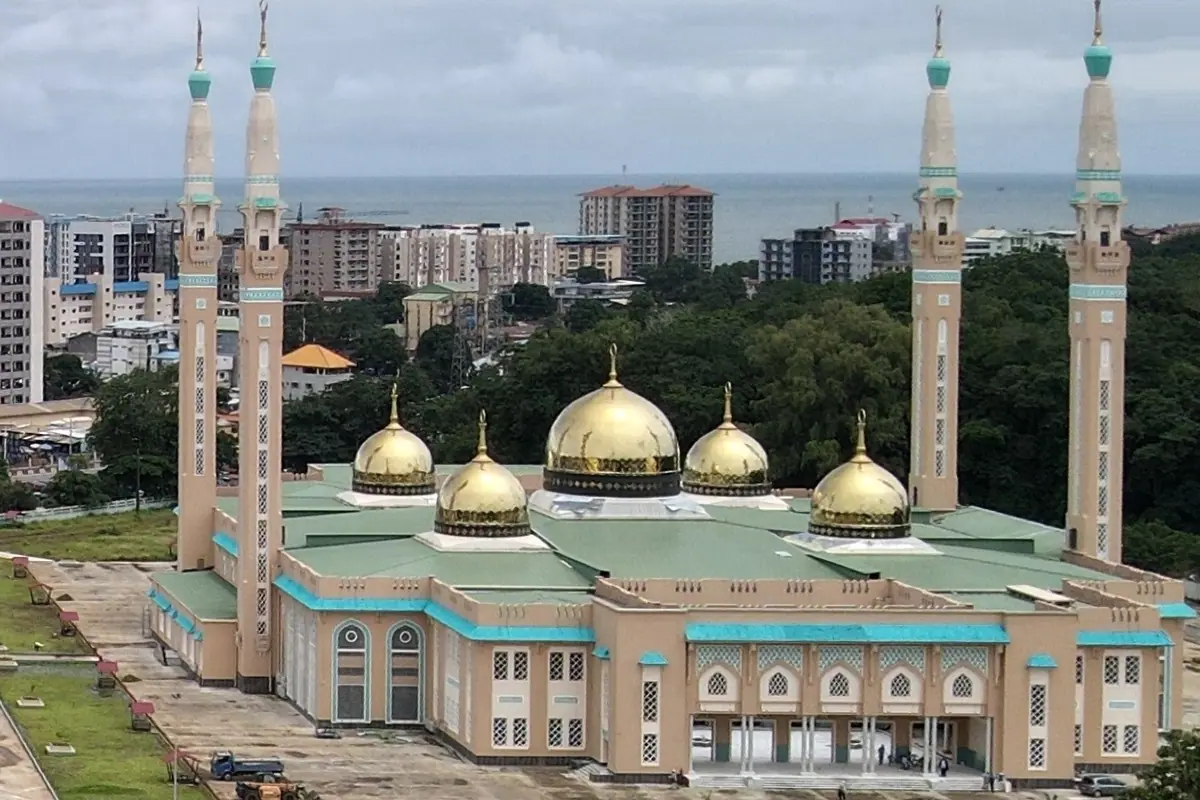
The Grand Mosque of Conakry, also known as the Fayçal Mosque, is the city's defining silhouette: a white-and-green complex with four soaring minarets standing between the presidential palace and the Atlantic. It ranks among the largest mosques in West Africa, and its courtyards are busiest around Friday prayers — visit quietly in the mid-morning, dress conservatively and carry a scarf. A short drive away stands the blunt, brutalist Monument du 22 Novembre, a landmark of modern Guinean history and a useful orientation point.
Once you have caught your breath, dive into the Marché Madina, an overwhelming, wonderful labyrinth of wax-print fabrics, tropical fruit, hardware, spices and second-hand clothing. Go early, bring small notes, keep phones and wallets zipped away, and treat the haggling as conversation rather than combat. Pair it with the National Museum in Sandervalia and the adjoining botanical garden, both gentle, shady stops, then walk to the pink-and-white Cathédrale Sainte-Marie near the water.
Finish the day along the Corniche Nord, the coastal road that curves past fishing pirogues, football pitches and roadside grilled-fish stalls. As the light drops, the Îles de Los float on the horizon and the whole city seems to exhale. It is the best free sight in Conakry and the perfect primer before you sail out to the islands.
Îles de Los: Beach Bungalows an Hour from the Capital
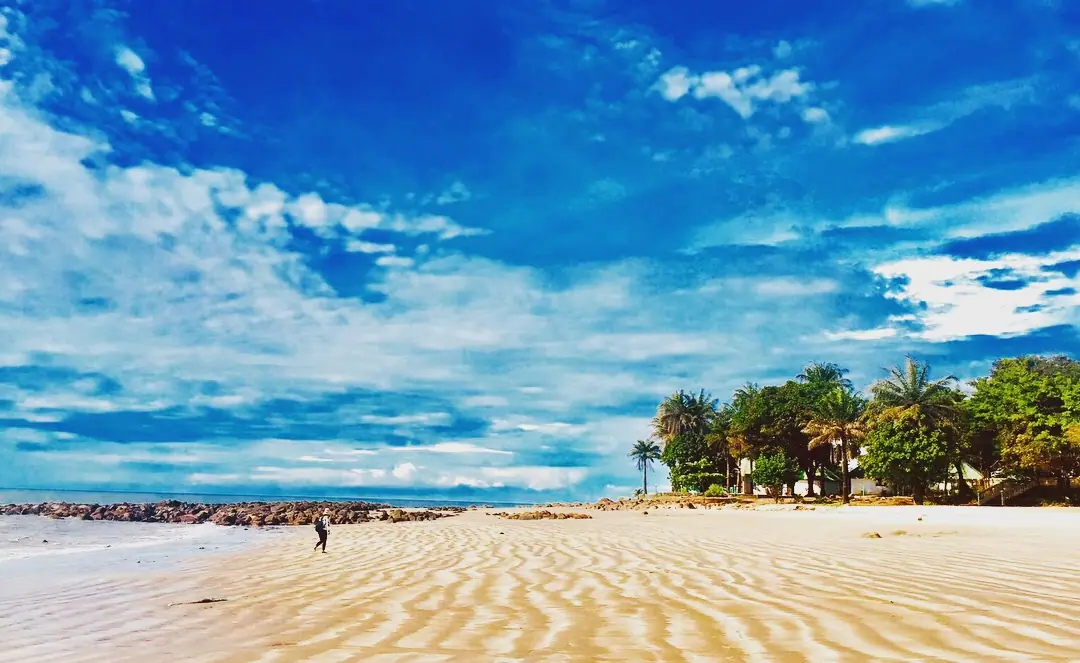
The Îles de Los are Guinea's easy island escape: three main islands — Kassa, Tamara and Roume — scattered 30 to 45 minutes offshore by pirogue or small boat from the Boulbinet port. Kassa is the largest and most populated, with sandy lanes, fishing villages, mango and coconut groves and a handful of beaches where you can swim, snorkel or simply watch the pirogues come in. Tamara is quieter, with a historic lighthouse and an old colonial cemetery slowly being reclaimed by vegetation, while Roume is best known for its chimpanzee sanctuary.
Accommodation is deliberately low-key: family-run bungalows and small guesthouses with basic bathrooms, cold or bucket showers and limited generator hours. A few slightly smarter places on Kassa offer fans, better beds and meals of grilled fish and rice. Book ahead in the dry season, especially for weekends, when Conakry families descend for the day — midweek visits feel almost private.
Come prepared. There are no ATMs on the islands, so bring enough cash for your whole stay, plus bottled water, a torch, insect repellent and a good book. The crossing is calmest between November and April; from June to October the rains can make the sea choppy and boats less frequent. Confirm your return trip with the boatman the moment you land, and keep an evening buffer in Conakry for the ride back.
Kindia, Dubréka and the Soumba Falls: Easy Escapes Inland
Two to three hours east of the capital, Kindia is a market town surrounded by orchards — oranges, pineapples and mangoes — and overlooked by Mount Gangan. Above the town, the waterfall known as the Voile de la Mariée, the Bride's Veil, tumbles down a fern-covered cliff, a short climb from the road. Hotels here are modest: small local establishments and mission-run guesthouses with ceiling fans and simple food, which is exactly what makes Kindia a comfortable staging post before the long haul to the highlands.
Much closer to Conakry, roughly an hour's drive out, the Soumba falls near Dubréka make a popular weekend escape, with pools for swimming and a couple of relaxed lodges and riverside picnic spots. Pair it with the beaches and mangroves around Bel-Air on the northern coast, or a walk through the rice fields and fish smokehouses that line the tidal creeks.
These short trips are ideal for jet-lagged first days or a final morning before a flight. Ask your driver to leave early — the road out of the capital is the bottleneck — and carry drinking water, sun protection and a rain shell, since Lower Guinea can shift from blazing sun to downpour in an afternoon.
Fouta Djallon: Highland Guesthouses in Dalaba, Pita and Labé
The Fouta Djallon is Guinea's other country: a cool sandstone plateau of grassy ridges, cattle tracks, thatched Fulani villages and waterfalls, where evenings demand a fleece even in the tropics. Dalaba, at around 1,200 metres, is the classic base — a faded colonial hill station of eucalyptus avenues and old villas, several of which have been converted into characterful guesthouses with fireplaces, walled gardens and home cooking.
From Dalaba you can reach the Cascade de Ditinn and the rock arch known as the Pont de Dieu, while Pita, a little over an hour away, guards the Chutes de Kinkon, where the river forces itself through a gorge in a series of falls and pools. Further north near Mali-ville stands the Dame de Mali, a slender rock formation said to resemble a woman, with the plateau's highest point, Mount Loura, rising behind. Labé, a larger, livelier town, has the broadest choice of hotels and a huge Monday-style market worth timing your trip around.
Getting there is the commitment: Conakry to Dalaba is roughly 400 kilometres, seven to nine hours on a good day, so break the journey with a night in Kindia or Mamou. A hired 4x4 with a driver makes the waterfall circuits far easier, and is close to essential after rain. Visit from November to April for dry roads and clear views; nights turn genuinely cold in December and February, and from June to September the tracks can turn slick and the clouds sit low on the hills.
Forested Guinea: Nzérékoré, Mount Nimba and the Road to Kankan
The far south-east is humid, green and thick with forest. Nzérékoré is the natural base for the Chutes de la Sala, a wide waterfall a short drive from town, and for trips into the Ziama forest reserve with its exceptional birdlife. Above it all rises the Mount Nimba Strict Nature Reserve, a World Heritage–listed massif on the borders with Côte d'Ivoire and Liberia, where grassy peaks climb to around 1,750 metres at Mount Richard-Molard. Access is restricted and arranged in advance with guides and permits, so plan this leg well before you leave home.
Accommodation down here is basic but friendly: small town hotels, mission guesthouses and simple campements, often with fans, cold showers and early generator cut-off. Bring a mosquito net if you can, plus repellent, a rain jacket, sturdy boots for the wet season and cash, because card machines are essentially nonexistent. Roads that are merely rough between December and April become genuinely challenging from June to October.
Reaching the forest is a journey in itself — about 1,000 kilometres from Conakry, comfortably two days via Kankan — and it is worth making the most of the stopovers. Kankan's Sudano-Sahelian Grand Mosque and its position on the Niger River make a memorable pause, while the country around Faranah guards the headwaters of that same great river. Allow three to four days each way if you want to travel without driving through the night.
Frequently asked questions
When is the best time to visit Guinea and book hotels?
The dry season from November to April is by far the easiest, with December to March offering the most reliable roads, calmest sea crossings to the Îles de Los and clearest views in the Fouta Djallon. The rains arrive in June and last into October, bringing heavy downpours in Conakry, muddy highland tracks and reduced boat services — but also lower rates and lush scenery. Book island bungalows and Dalaba guesthouses especially early for the Christmas and New Year period.
Do hotels in Guinea accept credit cards?
Only a small number of large city hotels take international cards, and even then the connection sometimes fails. Plan on cash: Guinean franc notes for everyday hotels, meals and taxis, plus euros or US dollars in clean, unmarked notes to exchange at banks or bureaux in Kaloum. ATMs are scarce and frequently out of service, so withdraw or exchange more than you think you need before heading inland.
What health precautions should I take?
A yellow fever vaccination certificate is expected on arrival, and malaria prophylaxis plus diligent mosquito avoidance are strongly advised year-round. Drink only bottled or properly treated water, avoid ice from unknown sources and eat freshly cooked food. Bring any prescription medicines with you, since supplies outside Conakry are limited, and take out travel insurance that covers medical evacuation.
How do I get to the Îles de Los and can I stay overnight?
Boats and pirogues leave from the Boulbinet waterfront in Conakry, taking 30 to 45 minutes depending on the island and sea conditions. Yes, you can stay — Kassa has the widest choice of family-run bungalows, with a few quieter options on Tamara. Departures are usually in the morning, so confirm your return crossing on arrival, carry all the cash you need, and allow a buffer day in Conakry in case the weather turns.
How long should I allow, and how should I get around?
Ten days to two weeks covers Conakry, the islands and the Fouta Djallon comfortably; add a week if you want to reach Nzérékoré and Mount Nimba. Distances are long and slow, so hire a 4x4 with a driver for the highlands and the forest, and use shared taxis or minibuses for shorter hops. Start early in the day, keep your itinerary flexible and treat every transfer as an experience rather than a chore.
Sort the rest of your trip
Everything for Guinea, in one place
Transfer in Guinea
Private driver waiting on arrival — no queues, no surprises.
Book a transfer
Things to do in Guinea
Skip-the-line tickets, guided tours and standout experiences.
See experiences
Stay online in Guinea
Travel eSIM — data the moment you land, no roaming bills.
Get an eSIM