Guinea is West Africa with the volume turned up: a peninsula capital where fishing boats land beside a four-minaret mosque, a highland plateau where the air turns cold and fonio grows in thin soil, and a rainforest south where drums are carved in roadside workshops and chimpanzees still move through the canopy. This guide follows the food, music and everyday hospitality from Conakry to the Fouta Djallon and on along the Kankan road, with the sights worth building a trip around.
Conakry: Fish Smoke, Market Noise and the Grand Mosque
Conakry begins at the water. The city unrolls east from the old grid of Kaloum along a peninsula with the Atlantic on both sides, and its cooking happens close to the boats: at the fish market in Taouyah, women scale the morning catch while charcoal grills smoke beside them, and plates of grilled bar, fried plantain and a fierce pepper-and-lime relish appear within minutes. Move through the city on foot and by motorbike taxi and you eat your way across half of West Africa in an afternoon — rice cooked in oil and stock, cassava-leaf sauce, peanut stew, fried dough, and juice pressed from ginger, hibiscus and tamarind.
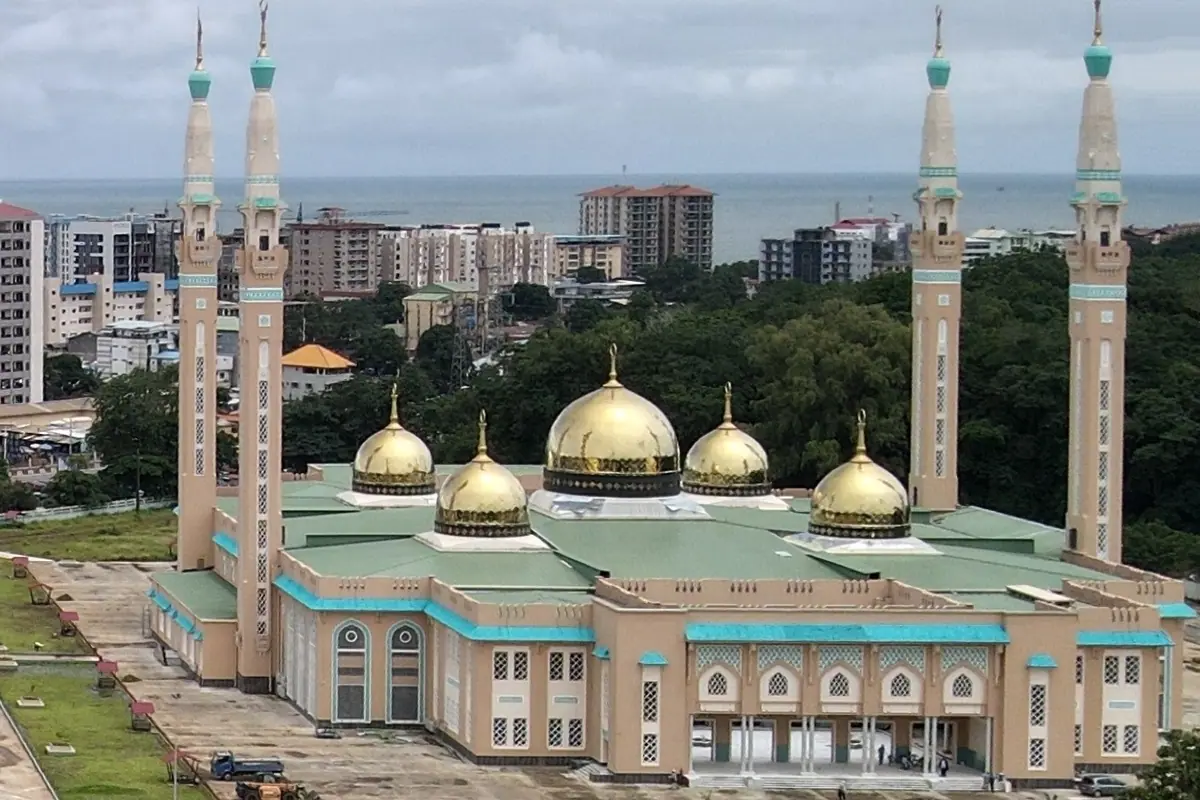
The great market here is Madina, a labyrinth of fabric stalls, enamelware, kola nuts, mangoes and smoked fish that swallows whole mornings; go early, keep your bag in front of you and let the crowd carry you along. In Kaloum, the Sandervalia National Museum holds a fine collection of masks and carved figures from the Baga, Nalu, Kissi and Malinké peoples — a useful primer before you see similar forms danced at ceremonies inland. The Grand Mosque of Conakry, with its four slender minarets, is among the largest in West Africa and looks best in late-afternoon light; from there, cross the Pont du 8 Novembre and follow the corniche as the sun drops behind the Îles de Los.
For a break from the city, the Soumba falls near Dubréka make an easy half-day trip, and the pineapple and citrus country around Kindia, with its own waterfall, is a couple of hours further on.
The Îles de Los: Pirogues, Beach Kitchens and Roume's Chimpanzees
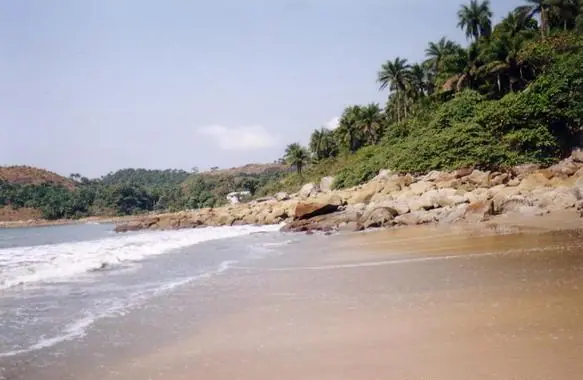
Three islands — Tamara, Kassa and Roume — lie a short pirogue ride from Conakry's harbour, close enough for a day trip but worth an overnight. Tamara has the sandiest beaches and a handful of simple guesthouses; Kassa is the largest, with fishing villages and palm groves; Roume is the smallest and quietest, its forest sheltering a chimpanzee sanctuary that receives visitors only by prior arrangement, so ask locally rather than turning up at the jetty.
The food is the reason to linger. Fishermen land bar, capitaine and snapper on the beach, and by evening the fish are scored, seasoned and laid over wood fires while rice, fried plantain, coconut and a scorching pepper sauce are assembled alongside. Coconut water comes straight off the tree and the pace is set by the tide. Seas are calmest and the water clearest from December to April; the crossing turns choppy and the guesthouses thin out during the heavy rains of July and August.
Fouta Djallon: Fonio, Hill Towns and the Kinkon Falls
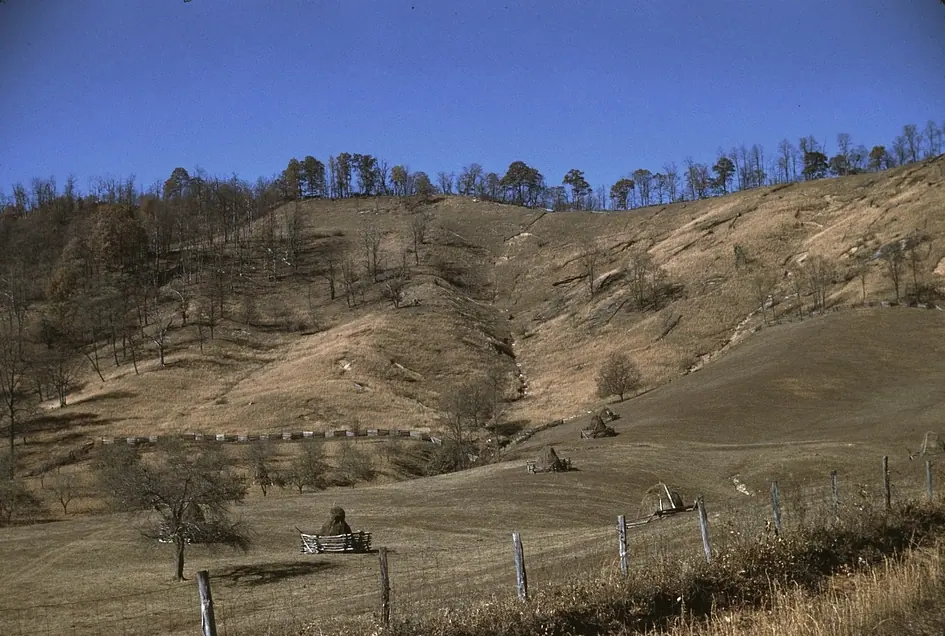
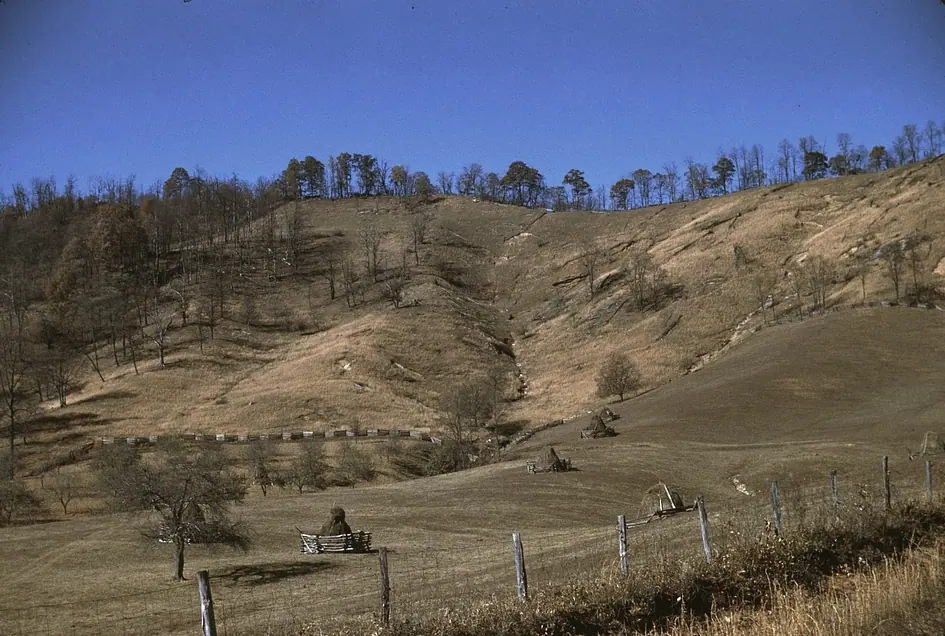
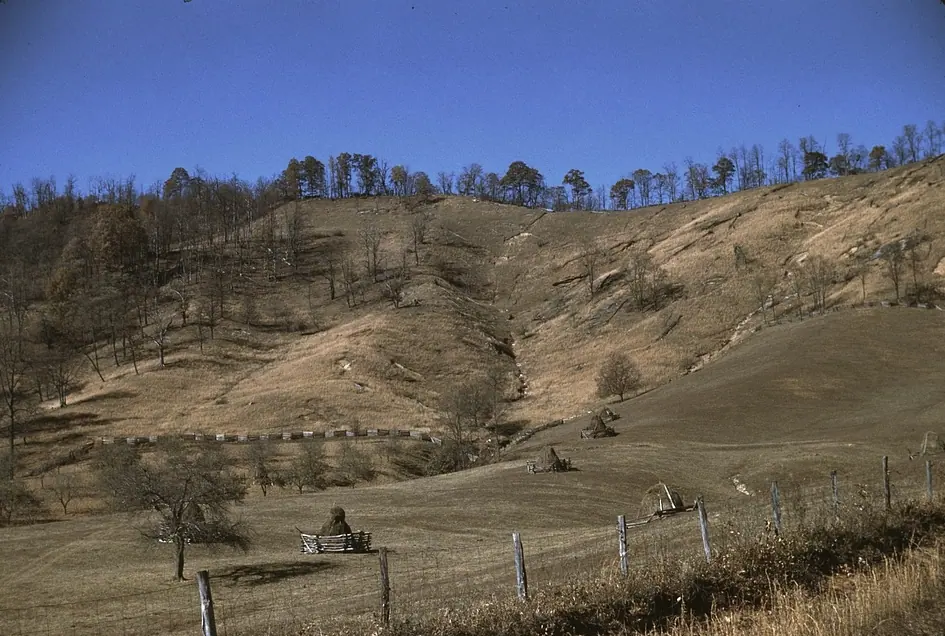
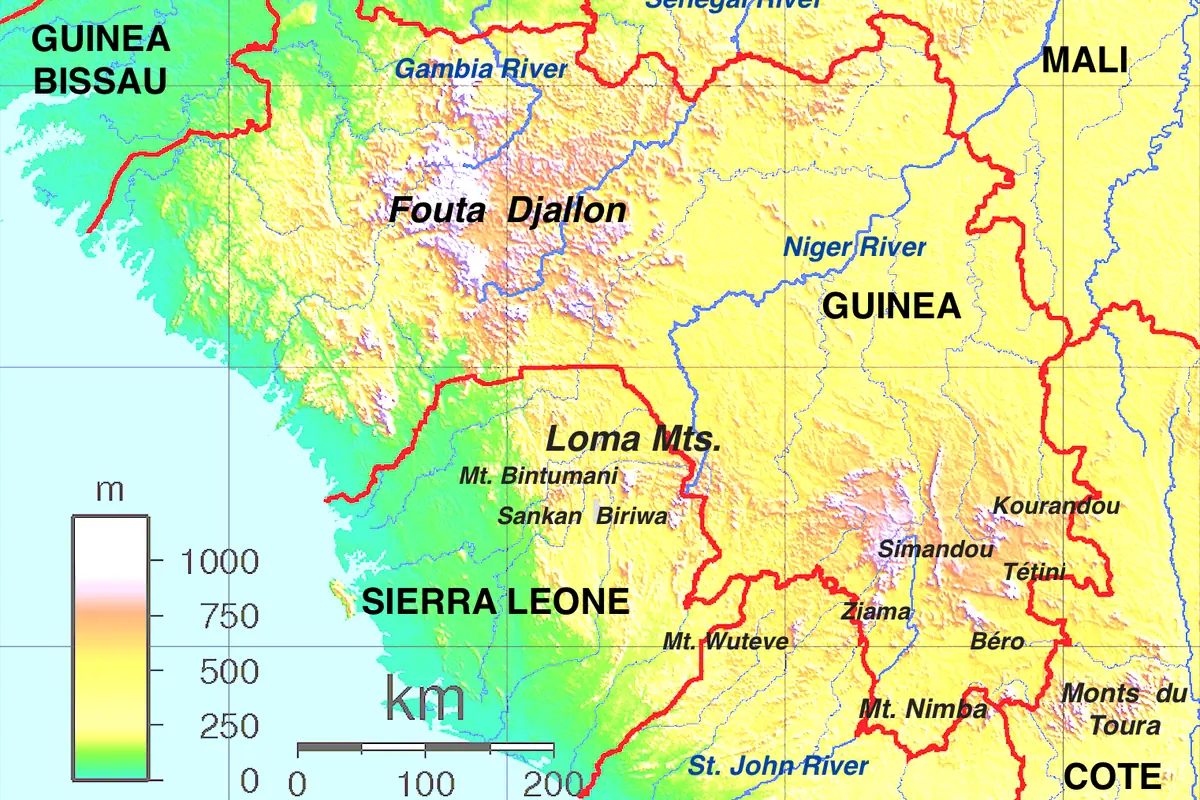
The Fouta Djallon is Guinea's highland heart, a sandstone plateau of rolling grassland and deep gorges where the air is cool and the light is sharp. Base yourself in Dalaba, a former hill station at around 1,200 metres with colonial-era villas, eucalyptus avenues and a market where Peul herders sell honey, fonio, potatoes and thick sour milk. The Ditinn falls thunder off the escarpment nearby, and a few hours east, outside Pita, the Kinkon falls drop in two wide curtains beside a small hydro station — go after the rains for volume, or in the dry season for the pools below.
Further north, Labé's grand market is one of the biggest in the region: indigo cloth, leatherwork, enamel bowls, sandals, kola and livestock, with the talk switching between Pular and French. This is fonio country. The grain is tiny, nutty and quick to cook, served steamed under peanut sauce, mixed with milk and sugar, or as a pale mound beside grilled meat; it has been grown on these plateau soils for centuries and now appears on menus far beyond Guinea.
Culture here is Peul and unhurried. Herders move cattle along the ridges with tall hats and walking sticks, and every visit begins with three rounds of green tea — the first bitter, the second sweet, the third light — poured from a height until foam fills the glass. Ask before taking photographs, accept the tea, and you will be invited to eat: millet couscous with fermented milk, rice with leaf sauce, or peanut stew scooped up with the right hand.
The Forest South: Djembe, Masks and the Slopes of Mount Nimba
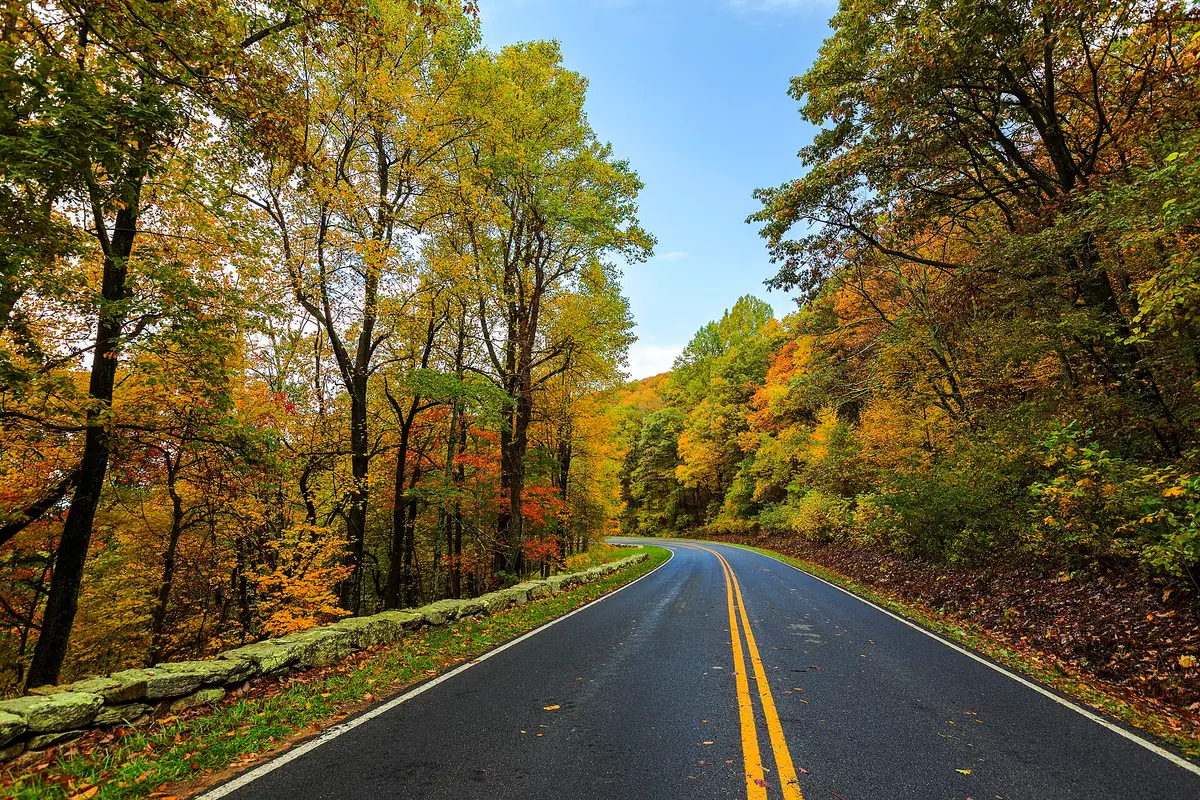
The far south-east is a different country: rainforest, red earth and the city of Nzérékoré, Guinea's second city and the hub of the forest region. North of it lies the Ziama forest, a vast protected reserve of towering trees and shy wildlife, and east along the Liberian border rises Mount Nimba, the country's highest peak at roughly 1,750 metres and a World Heritage-listed strict nature reserve. Access is regulated: expect to arrange a permit and a local guide through Lola, and to hike the lower slopes rather than the summit, through grassland and gallery forest where endemic frogs, shrews and western chimpanzees survive in a landscape of iron ore.
Guinea is one of the great drumming countries of West Africa, and this region helps make that reputation. Villages along the roads out of Conakry carve djembe, dunun and kenkeni from lenke and dugura wood, and in the forest south you may be lucky enough to see mask traditions performed at funerals and initiations — towering Baga headdresses on the coast, carved Toma and Guerzé masks inland. These are sacred events rather than shows: watch from a distance, dress modestly and never photograph without clear permission.
Food in the forest is darker, hotter and often sour. Cassava is pounded into fouti and eaten with okra or leaf sauce; palm oil stains rice a deep orange; river fish is smoked over racks; and palm wine, tapped at dawn and drunk by mid-morning before it turns, is shared in calabashes. Pair it with grilled plantain and a pepper sauce that will test you.
Haute-Guinée: Kankan, Kola Nuts and the Malinké Table
Haute-Guinée, the savannah north-east, is Malinké country and the old heart of trade and Islamic scholarship. Kankan sits on the Milo river, its Grand Mosque rising in the Sudanese style — mud-brick walls studded with projecting wooden beams that are climbed each year to re-render the surface. The town was a renowned centre of learning, and the ruined capital of the nineteenth-century empire-builder Samori Touré lies close by at Bisandugu; both deserve a guide and a slow afternoon. Kankan's other currency is the kola nut, sold in sacks in the market and offered to guests as a sign of respect.
The table here is built on rice. It arrives with peanut sauce thickened with groundnuts and dried fish, or with okra, cassava leaf or a piece of grilled meat, always with a small dish of hot pepper on the side. Tô, a stiff porridge of millet or maize, is the other staple, eaten with a sauce and rolled in the right hand. Meals are communal: wash your hands at the bowl, use your right hand only, and wait for the eldest to begin.
The road from Conakry to Kankan is long and often broken into stages, so allow a full day, more in the rains. November to March brings dry, comfortable weather; the harmattan haze of December and February turns sunsets orange but softens the landscape.
When to Go, How to Move and What to Expect
Guinea has a long dry season from November to April and a wet season from roughly June to October. December to March is the sweet spot almost everywhere: cool, clear nights in the Fouta Djallon, where Dalaba can drop to around 10°C, dry trails around Mount Nimba in January and February, and calm seas for the islands. The rains are heaviest on the coast — Conakry is one of the wettest capitals in West Africa — and July and August can turn roads into rivers, so plan highland and forest travel for the dry months if you can.
Distances are deceptive. Two weeks is a comfortable minimum for Conakry, the Îles de Los and the Fouta Djallon; add a week for Nzérékoré and Mount Nimba, and another if you want Kankan. Shared taxis and minibuses connect the main towns, motorbike taxis get you around the cities and pirogues serve the islands; expect long days on rough roads and start journeys early.
Bring cash. Guinea runs on the Guinean franc, card payments are rare outside a few city hotels and ATMs are unreliable, so change money at exchange bureaus and keep small notes for markets and taxis. A yellow fever certificate is required for entry, malaria precautions are essential, and bottled or treated water is the safe choice. Learning a greeting in Susu, Pular or Maninka before you arrive opens more doors than any tip.
Frequently asked questions
What is the best time of year to visit Guinea?
The dry season from December to April is best for most of the country: cool nights in the Fouta Djallon hill towns, firm trails around Mount Nimba in January and February, and calm crossings to the Îles de Los. The rains run roughly June to October and hit the coast hardest, with July and August often making rural roads difficult.
What food should I try in Guinea?
Start with riz gras, rice cooked in oil and stock, served with cassava-leaf sauce, peanut sauce or okra. Look for fonio from the Fouta Djallon, grilled bar and capitaine at the coast and islands, tô porridge in Haute-Guinée, pounded cassava fouti in the forest south, and street juices made from ginger, hibiscus and tamarind. Meals come with a hot pepper relish; ask for it on the side if you are cautious.
How long do I need to travel around Guinea?
Allow at least two weeks to cover Conakry, the Îles de Los and the Fouta Djallon at a reasonable pace, since road journeys are slow and often start before dawn. Add a week for Nzérékoré and Mount Nimba, and roughly another for Kankan and the north-east. Three weeks gives you a properly varied trip without spending every other day in a vehicle.
Can I pay by card or use ATMs in Guinea?
Rarely. Guinea is a cash economy built on the Guinean franc, card payments are accepted only at a few city hotels and larger businesses, and ATMs outside Conakry are scarce and frequently empty or offline. Bring enough currency to cover your trip, change money at exchange bureaus in the cities, and carry small notes for markets, taxis and tips.
What vaccinations or permits do I need for Guinea?
A yellow fever certificate is required for entry, and malaria precautions are strongly recommended for the whole country. Permits and a local guide are needed to enter the Mount Nimba strict nature reserve, normally arranged in Lola, and visits to the chimpanzee sanctuary on Île de Roume must be organised in advance. Check current visa rules and any regional travel advisories before booking flights.
Sort the rest of your trip
Everything for Guinea, in one place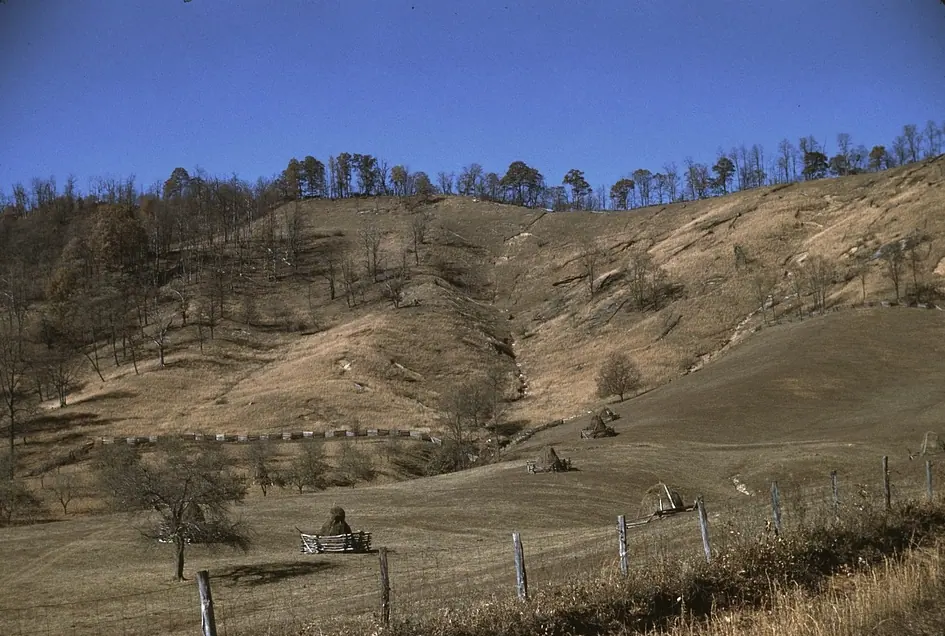
Stay in Guinea
Hotels, guesthouses and apartments — compared in one search.
Search hotels
Transfer in Guinea
Private driver waiting on arrival — no queues, no surprises.
Book a transfer
Stay online in Guinea
Travel eSIM — data the moment you land, no roaming bills.
Get an eSIM