Vatican City is barely half a square kilometre, yet a single morning inside its walls carries you through Roman tombs, Renaissance ceilings and a working pilgrimage site all at once. This guide walks you through the must-see landmarks, the rituals that shape local life, and the very good eating that happens just outside the walls.
Reading the Smallest State in the World Before You Arrive
Vatican City covers 0.49 square kilometres, and you can circle its entire Leonine Wall on foot in under an hour. What that walk conceals is roughly two millennia of art, archaeology and devotional life stacked behind a single boundary. Entering is disarmingly casual: from Rome you simply step across the white line at the edge of St. Peter's Square — no passport desk, no border post, just a shift in the pavement and a sudden absence of traffic. The museums, however, sit on the other side of the state, on Viale Vaticano, a ten-minute walk around the wall from the basilica. Many first-timers arrive at the square assuming that is the entrance and lose an hour.
Plan on a full day if you want both the museums and the basilica, or a comfortable half-day for one of them. The Vatican Museums and the Sistine Chapel realistically swallow four to six hours once you account for the Gallery of Maps, the Raphael Rooms and the sheer length of the corridors; St. Peter's Basilica takes another hour to ninety minutes, plus roughly forty-five minutes if you climb the dome. Timed-entry slots booked well in advance are the difference between a two-hour queue and walking straight in.
Late April through June and September through October are the sweet spots — warm but not brutal, and the light in the Basilica's windows is extraordinary. July and August bring punishing heat and the year's densest crowds. November to February is quieter and often grey, but the nativity scene in St. Peter's Square and the low winter sun make it a genuinely atmospheric season. Note that the museums close on Sundays except the last Sunday of each month, when entry is free and the crowds are biblical.
The Must-See Masterpieces: Museums, Raphael Rooms and the Sistine Chapel
The Vatican Museums began as a collection of classical sculpture for a pope's private pleasure, and that origin still shapes the experience. The Museo Pio-Clementino holds the Laocoön and the Apollo Belvedere, two marbles so influential they effectively wrote the rules of Western art. Nearby, the Gregorian Etruscan Museum and the Gregorian Egyptian Museum pull you back to the pre-Roman world, while the Gallery of Tapestries and the Gallery of Maps offer long, gilded corridors that are themselves the attraction — the maps' painted Italian regions glow under the ceiling, and it is always quieter here than the Sistine corridor ahead.
Then come the Raphael Rooms, four frescoed chambers that were Raphael's papal commission. The Stanza della Segnatura holds The School of Athens, a gathering of philosophers arranged like a who's who of the ancient world, with Raphael quietly inserting himself among them. Take your time; most groups pass through in ten minutes, and the room rewards twenty.
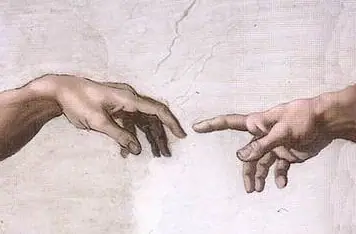
The Sistine Chapel is the endpoint, and it is worth remembering that this is a consecrated space as well as an artistic one. Michelangelo's ceiling and The Last Judgment cover the walls and vault in a scheme of astonishing colour, and guards enforce silence and a ban on photography. Circle the perimeter slowly rather than standing in the middle craning upward, and if you can secure one of the summer Friday evening openings, the chapel at dusk with a fraction of the daytime crowd is a completely different experience.
St. Peter's Basilica, the Dome and the Square
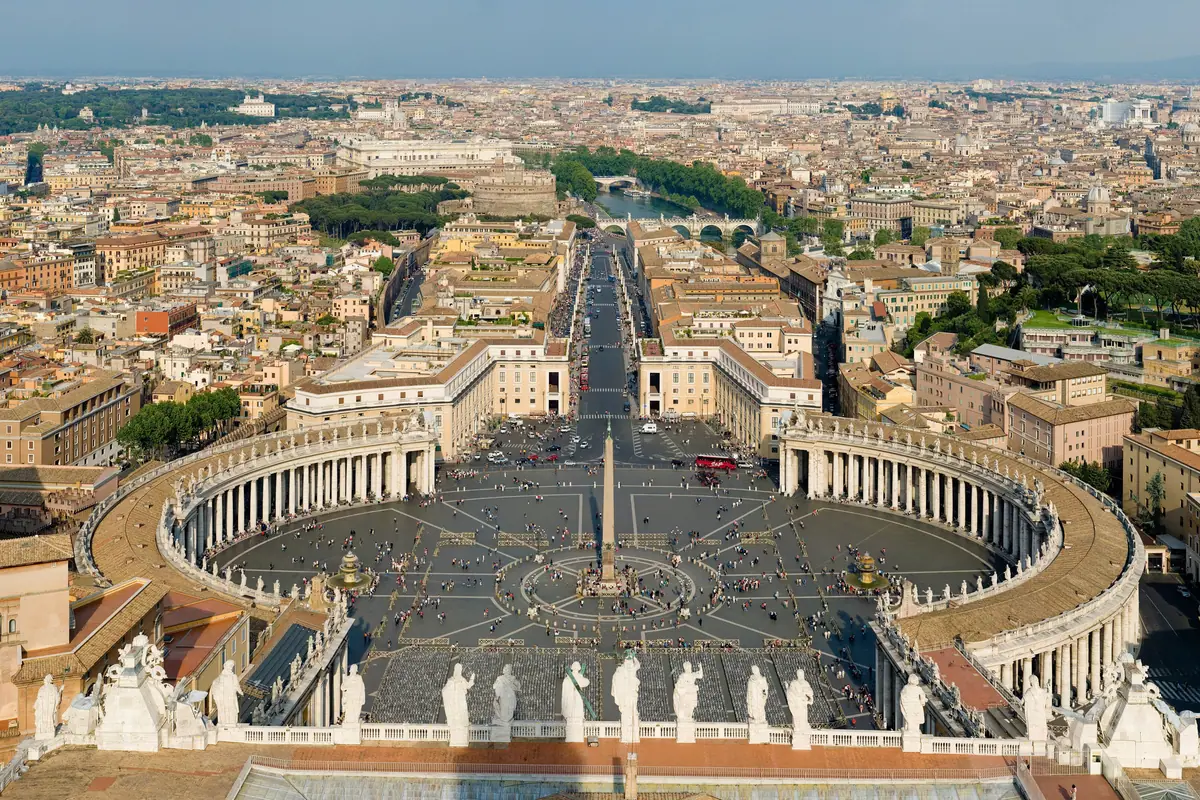
St. Peter's Square is the theatrical overture. Bernini's colonnade curves around it in two arms of 284 columns, four deep, designed so that the faithful would feel embraced rather than dwarfed. Stand on one of the two circular markers between the obelisk and the fountains, and the colonnade collapses into a single line of columns — a piece of seventeenth-century engineering that still surprises people who try it. This is also where the pope appears at the window of the Apostolic Palace for the Sunday Angelus, and where the square fills to capacity for Easter.
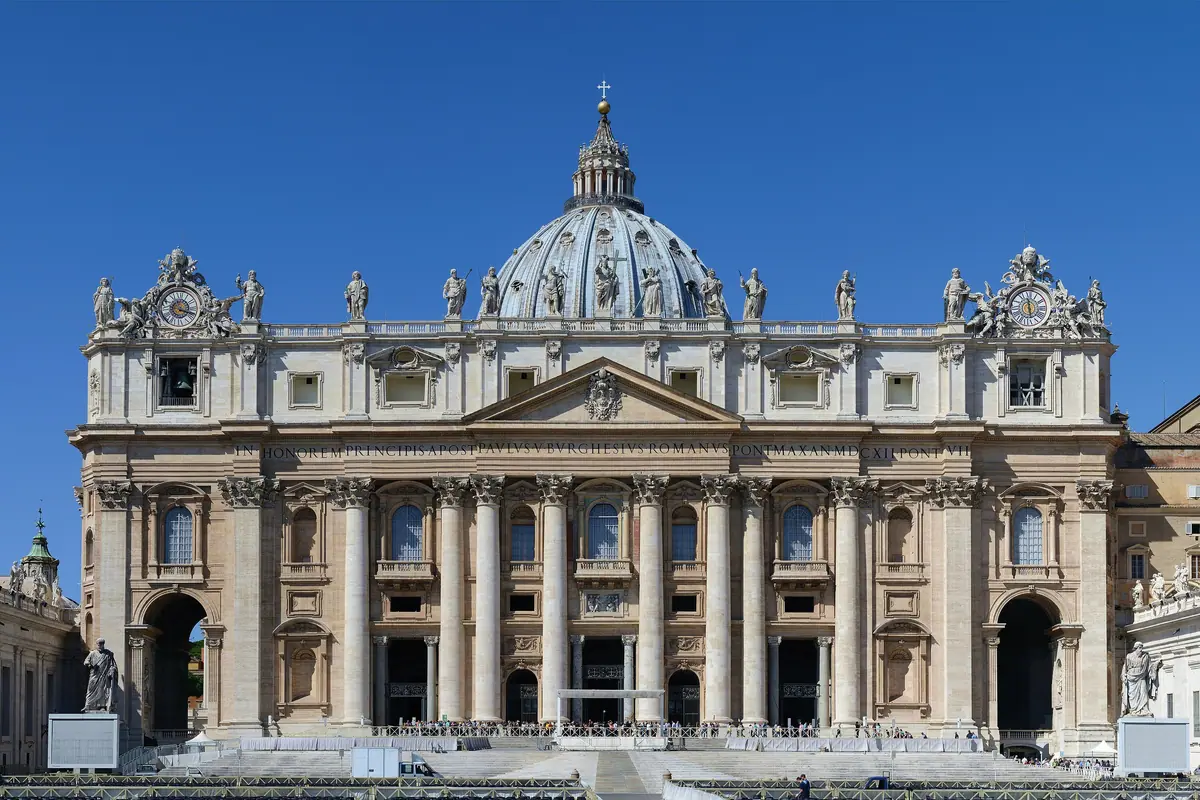
Inside the basilica, entry is free, though the security line is not. Once through, the scale is almost disorienting: Bernini's bronze Baldacchino rises over the papal altar, Michelangelo's Pietà sits behind glass near the entrance, and the bronze statue of St. Peter has a foot worn smooth by centuries of touching. Shoulders and knees must be covered, for men as well as women, and this is enforced. Beneath the floor, the Vatican Grottoes hold the tombs of popes, and the Treasury Museum displays the basilica's accumulated gifts.
The dome climb is the best value in the state. A lift takes you partway, cutting the ascent to 231 steps, or you can tackle all 551 for a cheaper ticket. Either way you finish inside the lantern, looking down into the nave, then out across the square and the whole sprawl of Rome to the Alban Hills. For something deeper, the Scavi tour descends below the basilica to a Roman necropolis predating Constantine's church, with the presumed tomb of St. Peter at its centre — groups are tiny, requests must be made months ahead, and it is the single hardest booking in the Vatican.
Papal Audiences, the Angelus and the Swiss Guard
The rhythm of Vatican life is set by the pope's calendar, and you can plan around it. A general audience is usually held on Wednesday mornings, outdoors in St. Peter's Square in warm weather and indoors in the audience hall when it turns cold. Tickets are free but must be requested in advance, and arriving ninety minutes early is not excessive — the atmosphere of a square slowly filling with pilgrims from every continent is half the experience. For something shorter and unscripted, the Sunday Angelus at noon needs no ticket at all: just be in the square a little before midday.
The Swiss Guard, founded in 1506, is the world's smallest and oldest standing army, and their Renaissance-style uniforms — often wrongly attributed to Michelangelo — are working dress, not costume. New recruits swear their oath on 6 May in the San Damaso Courtyard, a ceremony that is open to a limited public. You will see guards at every gate, but the barracks near the Porta Sant'Anna and the change of watch there are the closest thing to local pageantry. If you want maximum ceremony, target Christmas Eve Mass, Easter Sunday with the Urbi et Orbi blessing, or a canonisation — all of which require planning many months out.

Eating Around the Walls: Borgo, Prati and Trastevere
Vatican City has no restaurant strip of its own; the state's food culture lives just outside the walls, in the neighbourhoods where its employees actually eat. Borgo Pio is the closest thing to a Vatican high street — a narrow cobbled lane of trattorias, gelaterie, pizza al taglio counters and clerical tailors' windows, five minutes from the basilica and mercifully free of the crush that engulfs the square. Walk it at lunchtime and you will see Swiss Guards in plain clothes, seminarians and museum staff all queueing in the same places.
Order the Roman canon: cacio e pepe, carbonara and amatriciana, all built on pecorino, guanciale and pasta water rather than cream. Start with supplì — fried rice croquettes — or a slice of pizza bianca from a bakery counter. Breakfast for locals is a maritozzo filled with whipped cream and a standing espresso at the bar; sitting down can double the bill. Prati, the grid of streets north of the Vatican, is where the museum staff go for a proper midday meal, and Via Cola di Rienzo offers a food market, old-fashioned pastry shops and excellent delis for picnic supplies.
In the evening, cross the river to Trastevere for long dinners in ivy-hung lanes, or stay local with an aperitivo near Piazza Risorgimento followed by gelato. Bear in mind the local clock: lunch runs roughly 12:30 to 14:30 and many kitchens shut after that, while dinner rarely starts before 19:30. Anything open at 5pm near the basilica is cooking for tourists, not for Romans.
Quiet Corners and Local Rituals Most Visitors Miss
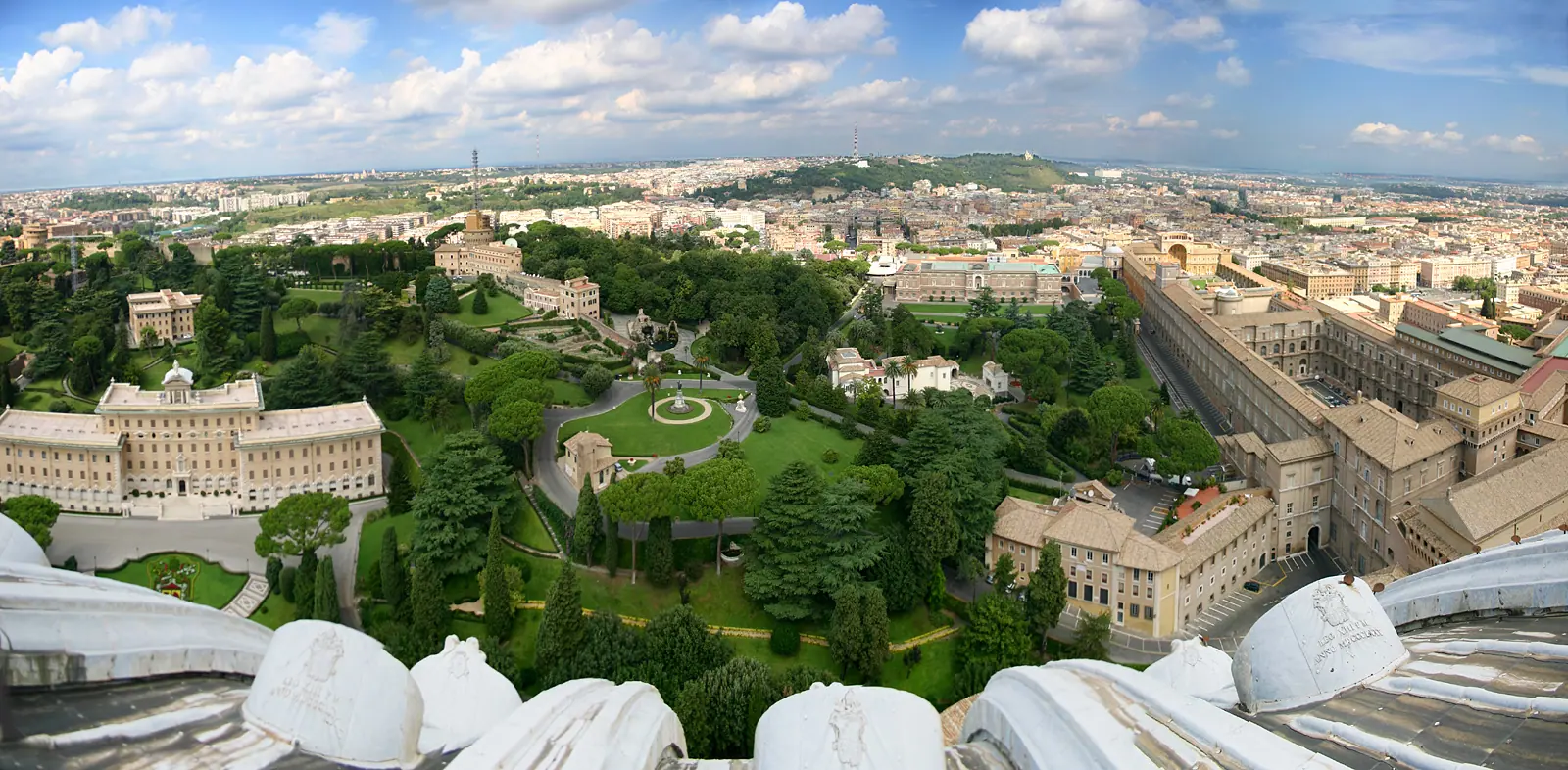
The Vatican Gardens occupy more than half the state and can only be visited on a guided walk, booked in advance. You move past the Casina Pio IV, a Mannerist pavilion, fountains, a replica of the Lourdes grotto and the state's tiny railway station — the shortest national rail network on earth. Equally overlooked is the Necropolis of the Via Triumphalis, an excavated Roman burial ground beneath the museums, where you walk among tombs, mosaics and funerary altars in near silence and in very small groups.
Follow the Passetto di Borgo, the elevated fortified corridor that connects the Vatican to Castel Sant'Angelo and once served as the popes' escape route in times of siege. The castle itself, built as Hadrian's mausoleum, has a terrace with one of the finest views of St. Peter's dome in the city. Just inside the Vatican walls beside the basilica, the Campo Santo Teutonico is a walled cemetery and church with a courtyard so still it feels sealed off from the crowds a few metres away. Nearby, the Vatican Post Office lets you send a card bearing a Vatican stamp — a small souvenir that genuinely travelled.
Practicalities That Make or Break a Vatican Day
Build your day around which day it is. Wednesdays bring papal audience crowds to the square but often leave the museums marginally lighter in the early morning. The last Sunday of the month means free museum entry and queues that can run for hours — avoid it unless you are prepared to arrive before opening. Summer Fridays sometimes bring evening openings, when the galleries empty out and the Sistine Chapel becomes almost contemplative. Otherwise, book the first slot of the day and walk fast to the Raphael Rooms before the groups catch up.
Comfortable shoes matter more than anything else you pack. The museum route is several kilometres of marble and mosaic flooring, much of it without seating, and the dome climb is genuinely strenuous. Large bags, tripods and umbrellas are not allowed and must be checked. Bring a refillable bottle; there are fountains throughout. Finally, allow buffer time: security screening at both the basilica and the museums is thorough, and a booked slot does not exempt you from the line.
Frequently asked questions
How long does a Vatican City tour actually take?
Budget four to six hours for the Vatican Museums and Sistine Chapel, then another one to two hours for St. Peter's Basilica including the dome climb. That is a full day. If you only have half a day, choose either the museums or the basilica and do it properly rather than rushing both.
Do I need to book tickets in advance?
Entry to St. Peter's Basilica is free, but the museums, the dome, the Vatican Gardens and the Roman necropolis below the basilica all require tickets or reservations. Book weeks ahead in high season, and months ahead for the Scavi underground tour, which takes only small groups and fills almost immediately.
Is there a dress code?
Yes, and it is enforced at the basilica, the Sistine Chapel and the gardens. Shoulders and knees must be covered for everyone, and hats should come off indoors. A light scarf or long shirt in your bag solves the problem in summer, when the guards will turn away anyone in shorts or sleeveless tops.
Where can I eat near the Vatican?
Vatican City itself has no public restaurant scene beyond museum cafés, so head for Borgo Pio just outside the basilica, the Prati district around Via Cola di Rienzo, or cross the river to Trastevere. Expect Roman classics like cacio e pepe and carbonara, pizza al taglio, supplì and gelato, with lunch served roughly 12:30 to 14:30.
Which day of the week is best to visit?
Early mornings on Tuesday, Thursday, Friday or Saturday are generally calmest. Avoid the last Sunday of the month, when museum entry is free and queues become extreme, and plan around Wednesday mornings if a papal audience fills the square. Summer Friday evening openings are the quietest window of the week for the Sistine Chapel.
Plan it — tours in Vatican City
Live search, booked directly with trusted providers.
Sort the rest of your trip
Everything for Vatican City, in one place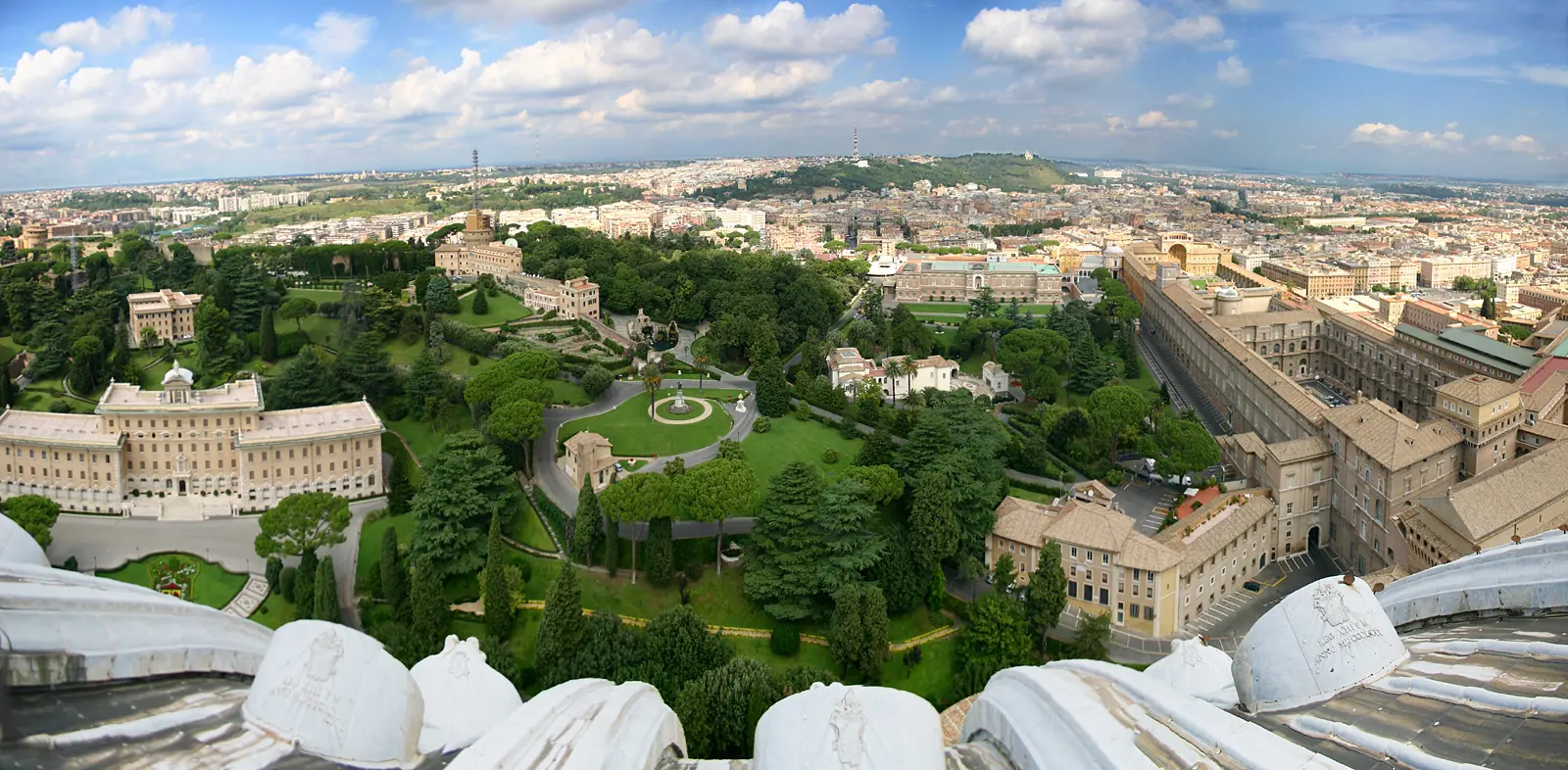
Stay in Vatican City
Hotels, guesthouses and apartments — compared in one search.
Search hotels
Transfer in Vatican City
Private driver waiting on arrival — no queues, no surprises.
Book a transfer
Stay online in Vatican City
Travel eSIM — data the moment you land, no roaming bills.
Get an eSIM