Tajikistan is where the map crumples into knife-edge ridges and the day ends around a shared cloth piled with bread, apricots and tea. Organised tours here are less about being herded and more about being handed from one mountain family to the next, with a plov pot and a poet's grave along the way. This guide covers what to eat, where the great sights lie, and how to travel in a way that leaves something behind.
A Country Built on Altitude, Seasons and Hospitality
Roughly the size of Greece but with more than nine-tenths of it above 1,000 metres, Tajikistan is stitched together by a single thread of road and a great many mountain tracks. The journey most tours follow runs from Dushanbe, the leafy lowland capital, southwest toward the ancient Sogdian cities, then southeast into the Pamirs where the land opens into a high, treeless plateau at over 4,000 metres. Almost every notable sight is reached either by the M41 — the Pamir Highway — or by the road that curls through the Fann Mountains.
Timing shapes everything. The lowlands around Dushanbe, Khujand and Penjikent are pleasant from April to early June and again in September and October, when mulberry trees line the streets and the bazaars overflow with melons and pomegranates. The high Pamirs open only from late June through September; outside that window, passes such as Ak-Baital can be snowbound and the yurt camps around Karakul Lake pack up and move down-valley. Winter travellers head instead to the slopes above Dushanbe or stay in the warmer south, where the lowland bazaars keep their own rhythm.
Hospitality is not a nicety here, it is a structure. A guest is offered tea before questions, bread before plans, and the best seat on the carpet. On a well-run tour this is the actual itinerary: mornings for the road and the ruins, afternoons for a chaikhana, a household kitchen or a village festival. Bring loose, modest clothing for rural areas, a willingness to sit cross-legged for long stretches, and a few words of Tajik or Russian — 'rahmat' and 'spasibo' both buy you a great deal of goodwill.
The Tajik Table: Osh, Qurutob and the Long Ritual of Tea
Tajik cooking is mountain food with a Persian soul, and the cornerstone is osh — rice cooked in a kazan with carrot, onion, chickpeas, garlic and lamb, then turned out in a golden dome and shared from one plate. It appears at weddings, funerals, Friday gatherings and roadside weddings-of-convenience, always with a heap of non, the round stamped flatbread that is never placed upside down and never thrown away. Around it sit shurbo, a clear lamb and vegetable broth, sambusa baked in a tandoor until the pastry blisters, and manti steaming under a cloth.
The dish to seek out is qurutob, sometimes described as Tajikistan's national meal. Dried balls of salted yoghurt — qurut — are dissolved into water, poured over torn fatir bread, and crowned with fried onion, tomato, cucumber, herbs and sometimes slivers of beef. It is sour, chewy, faintly shocking to a first-timer and completely addictive by the third bowl. In the Pamirs you will also meet chakka, a strained yoghurt sauce thick with herbs, eaten with bread and fresh apricots, plus yak-milk kurut and butter churned at altitude.
Tea is the engine of social life. Green tea, shirchoy with milk and salt, or a pot of black tea with dried fruit and sugar cubes — served in a chaikhana shaded by plane trees, or on a Pamiri veranda with a mattress and cushions. Refusing a second cup is read as impatience, so settle in. If you are invited to a household meal, take fruit or sweets rather than alcohol, eat with your right hand when no cutlery is offered, and expect the phrase 'yet another piece' to be non-negotiable.
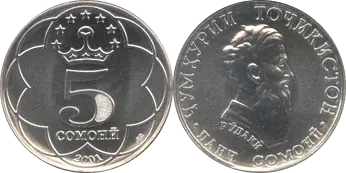
The Pamir Highway and the Wakhan Valley
The M41 from Dushanbe to Khorog, then on through Murghab to the Kyrgyz border, is the spine of almost every Tajik tour and one of the highest continuous roads on earth. The first stretch climbs over the Shatuti pass and follows the Panj river, with Afghanistan visible a stone's throw across the water, its villages of mud-brick and poplar unchanged in the binoculars. Khorog, the small Pamiri capital, is the natural pause: a botanical garden on the cliff, a bazaar of Chinese goods and yak-wool socks, and the Pamir Highway's only real café culture.
South of Khorog the Wakhan Valley rewards those who slow down. Yamchun Fortress sits on a bluff above the valley, its stone walls and crumbling towers dating back roughly two millennia, with the Panj and its Afghan bank spread out below. Just beneath it, the Bibi Fatima hot springs spill warm mineral water into a domed stone bathhouse where travellers and herders soak side by side. Further along are the fortresses of Khaakha and Vrang, and the Buddhist stupa at Vrang, reminders that this corridor was a silk-road artery long before it became a border.
Higher up, Murghab is a windswept town of container houses and yak herders at 3,600 metres, and beyond it Karakul Lake lies in a black-ringed crater at nearly 4,000 metres, frozen well into summer. Yak-wool hats, yak butter and salted milk tea appear on the table. Permit rules matter: travel in the Gorno-Badakhshan region requires a GBAO permit arranged in advance, and altitudes climb fast, so a slow first two days and plenty of water is the difference between a magnificent crossing and a miserable one.
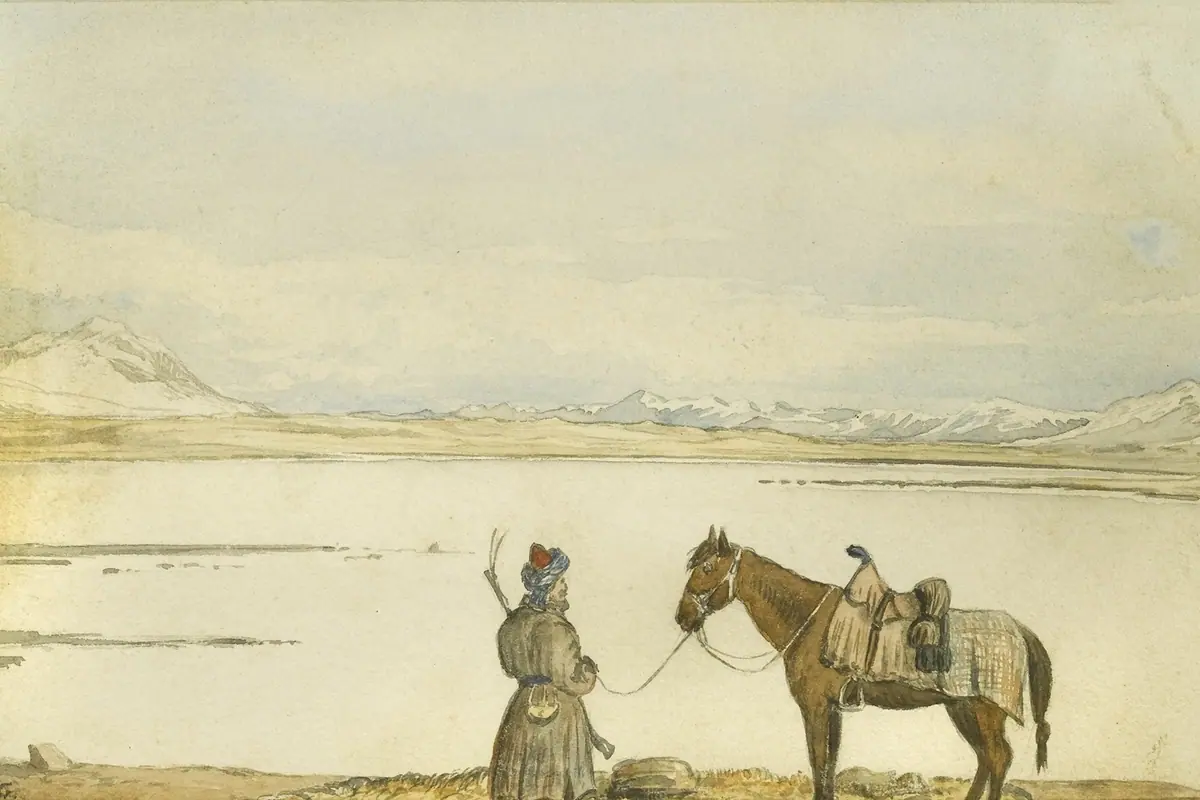
Fann Mountains, Iskanderkul and the Seven Lakes
West of Dushanbe, the Fann Mountains offer the country's most walkable alpine scenery: turquoise lakes, juniper slopes and villages where you can sleep in a homestay and eat apricot jam with sheep's cheese for breakfast. Iskanderkul, named for Alexander and set at around 2,200 metres, is the showpiece — an almost unreal blue sheet of water with a waterfall thundering into a gorge nearby and short trails leading up to viewpoints over the lake.
The Haft Kul, or Seven Lakes, string up a single valley near Penjikent, each one a different shade from milky jade to deep ink, with the highest at roughly 2,400 metres. You can drive between them in a day or walk the valley in two or three, stopping at villages where the tea comes with walnuts and the children race you to the next bend. Spring brings wild tulips and rushing snowmelt; autumn brings clear light and empty trails.
Below the lakes, Penjikent holds the ruins of a Sogdian city that flourished before the Arab conquest, its frescoes and fire temples still legible to anyone with imagination. A short drive away, Sarazm is a UNESCO-listed settlement nearly 5,500 years old, among the oldest in Central Asia, with excavated walls and burial sites that predate the Silk Road itself. Combined with a night in a Penjikent guesthouse, this is the region's essential history day.
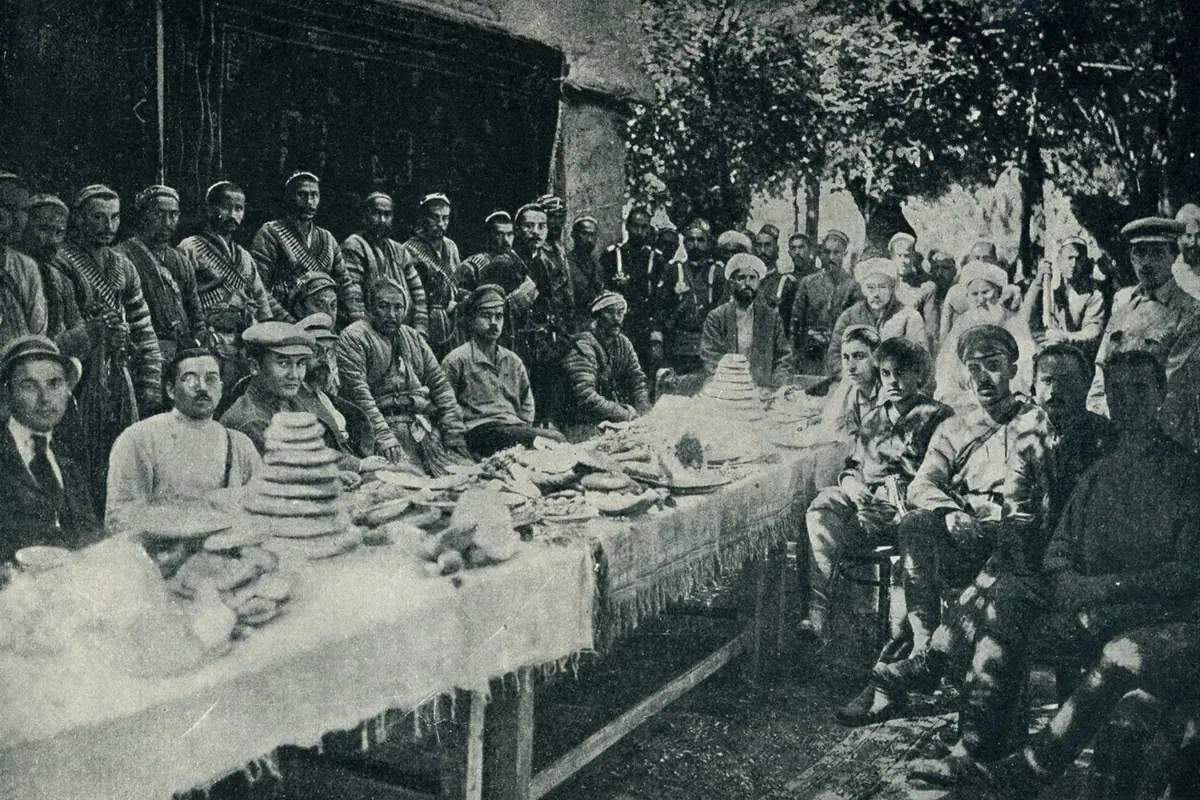
Dushanbe, Khujand and Istaravshan: Bazaars, Poets and Palaces
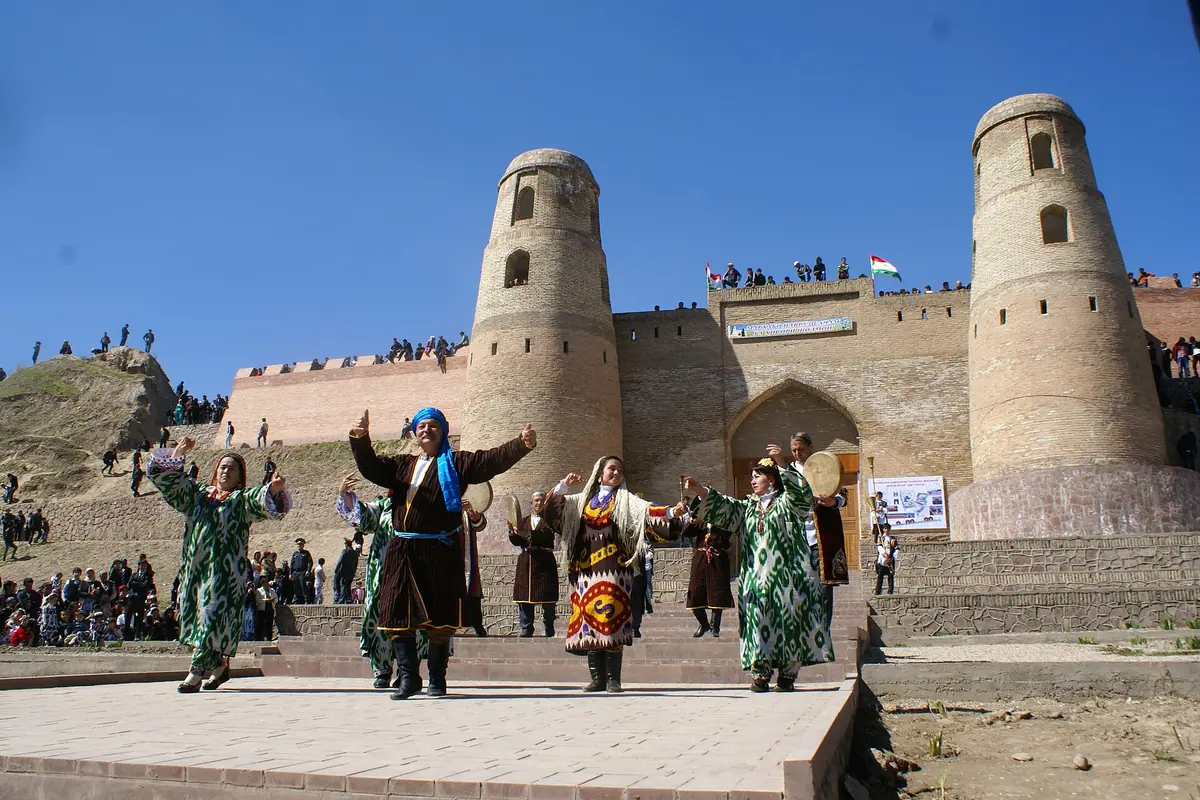
Dushanbe is unhurried for a capital: wide avenues, fountains, mulberry trees and the statue of Rudaki, the tenth-century poet regarded as the father of Persian-Tajik literature. The National Museum of Tajikistan holds a colossal reclining Buddha recovered from the south, alongside displays on Aryan and Islamic heritage, while the Mehrgon bazaar is the place to buy dried apricots, pistachios, non and blocks of halwa. Hissar Fortress, about half an hour away, offers reconstructed gates and a madrasa on a hilltop that once guarded a caravan route.
In the north, Khujand spreads along the Syr Darya and centres on the Panjshanbe Bazaar, one of the largest and most photogenic in Central Asia, its domed hall tiled in blue and thronged with dried fruit, spices, knives and bread straight from the tandoor. Nearby sits the Arbob Palace with its blue-and-white colonnades, and the park around the Kamoli Khujandi mausoleum, where families stroll in the evenings and vendors sell ice cream and sunflower seeds.
South of Khujand, Istaravshan is the quiet connoisseur's stop. The Hazrati Shoh complex combines a mosque, a cemetery and a mausoleum whose carved wooden pillars are centuries old, while the hilltop of Mug Teppe has yielded layers of Achaemenid and later occupation. Add a wander through the town's knife-makers' quarter, where craftsmen still forge and file blades by hand, and you have a half-day that feels genuinely lived-in rather than curated.
Festivals, Crafts and Encounters Beyond the Sights
Navruz, on 21 March, is the year's great celebration: tables laid with sumalak — a sweet wheat-sprout pudding stirred all night by a circle of women — plus green sprouted wheat, dried fruits and coloured eggs. Villages hold buzkashi-style horse games, wrestling and music; cities stage concerts of Shashmaqom, the classical suite tradition shared with Uzbekistan, and Falak, the plaintive mountain song of the Pamirs. If you can time a tour around Navruz, do it — you will be invited into things no itinerary can arrange.
Craft is a living economy here rather than a souvenir aisle. In the Pamirs you will see women spinning yak and goat wool into socks, gloves and the long patterned shawls that keep out the wind. In the lowlands, atlases and adras — the shimmering ikat silks cut for dresses and chapans — are sold by the metre in bazaars, while suzani embroidery, embroidered skullcaps called toqi and hand-forged knives make the best gifts. Buying directly from a workshop, or from a women's cooperative, keeps the money where the skill is.
For a different angle, the Yaghnob Valley east of Dushanbe hides villages whose residents still speak Yaghnobi, a descendant of ancient Sogdian, and where life follows terraced fields and herding rather than any road schedule. Elsewhere, a night in a Pamiri house teaches you to read the room: five pillars, each named for a figure or element, a central hearth under a stepped wooden ceiling, and a layout that doubles as a calendar and a cosmology. Ask before photographing people, accept the bread, and let the trip run at the pace of tea rather than the pace of a checklist.
Frequently asked questions
When is the best time to tour Tajikistan?
Late May to early June and September to mid-October are ideal for the lowlands and the Fann Mountains, with mild days and busy bazaars. The Pamir Highway and Wakhan Valley are realistically accessible only from late June to September, when the high passes are clear; Karakul Lake and the yurt camps operate in that same window. Winter is for lowland cities and skiing above Dushanbe.
Do I need a special permit for the Pamirs?
Yes. Travel into the Gorno-Badakhshan Autonomous Region, which covers Khorog, Murghab, Karakul and the Wakhan Valley, requires a GBAO permit on top of your visa, usually arranged in Dushanbe a few working days ahead. Registration with the authorities may also be needed depending on your length of stay, and reputable tour operators handle both as a matter of routine.
What should I eat and drink in Tajikistan?
Prioritise osh (rice plov), qurutob with torn fatir bread, sambusa from a tandoor, shurbo broth, manti, and Pamiri chakka with bread and apricots. Non is served with everything and should never be placed face-down. Drink green tea, shirchoy with milk and salt, or yak-milk tea in the high Pamirs; tap water is best avoided outside the cities.
How long does a typical Tajikistan tour take?
A focused Fann Mountains and Penjikent loop can be done in four to five days from Dushanbe. The classic Pamir Highway crossing, Dushanbe to Khorog and on to Murghab and the Kyrgyz border, needs eight to twelve days to be enjoyable rather than punishing. Adding the Wakhan Valley, Istaravshan and the northern cities comfortably fills two to three weeks.
How do I travel respectfully in rural Tajikistan?
Dress modestly, especially in villages and around mosques, and ask before photographing people, homes or shrines. Remove shoes when entering a house, accept the offered tea, and use your right hand for food and greetings. Learn a few words of Tajik or Russian, carry small notes for markets, and choose homestays and local guides where possible — the money stays in the valley that way.
Sort the rest of your trip
Everything for Tajikistan, in one place
Stay in Tajikistan
Hotels, guesthouses and apartments — compared in one search.
Search hotels
Transfer in Tajikistan
Private driver waiting on arrival — no queues, no surprises.
Book a transfer
Stay online in Tajikistan
Travel eSIM — data the moment you land, no roaming bills.
Get an eSIM