Tajikistan is the kind of destination that rewrites your sense of scale: 93 percent of it is mountain, and the roads that thread those peaks are among the highest and most spectacular on earth. Here is where to go first, whether you have ten days or a full month.
Dushanbe and the Hisor Valley: The Gentle Introduction
Most journeys begin in Dushanbe, a low-slung capital of tree-lined avenues and pale government buildings sitting at roughly 700 metres. It is a relaxed, walkable city by regional standards, and the ceremonial core is easy to cover in a day: Rudaki Avenue runs from the opera house down to Dusti Square, where the flagpole soars above fountains and flowerbeds that fill with families after sunset. The National Museum of Tajikistan is the one indoor sight worth clearing time for, largely because of a 13-metre reclining Buddha in clay and plaster, recovered from the ruins of a Buddhist monastery and displayed in a dim, hushed hall that makes it feel genuinely sacred.
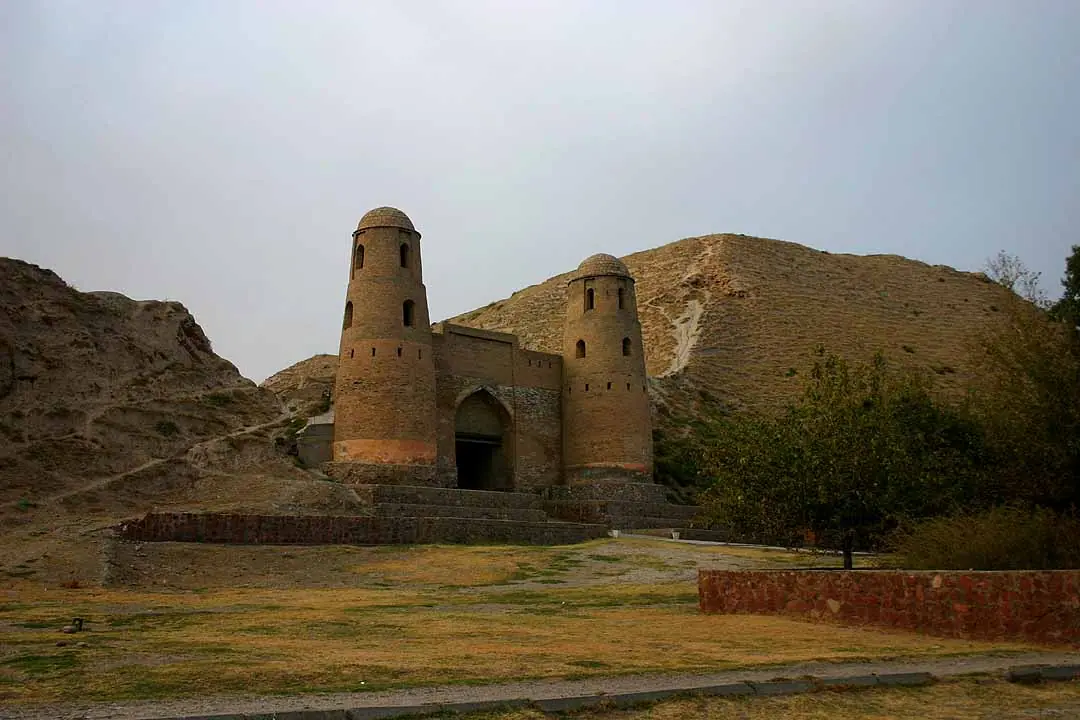
For atmosphere rather than architecture, head to Mehrgon Bazaar, where pyramids of dried apricots, fat sacks of pistachios and slabs of halva are sold beneath a domed roof. Thirty minutes southwest by road, the Hisor Valley holds one of the country's most accessible historic sites: the Hisor Fortress, a rebuilt gateway and citadel hill flanked by a 16th-century stone madrasa and a carved mausoleum. It is modest in scale but beautiful in late afternoon light, and the drive there passes mulberry orchards and tea houses where you can stop for non and green tea.
If you have a spare day, use it for the Varzob or Romit gorges north of the city, where cold rivers cut through walnut and poplar, or continue south to the craggy reservoir at Nurek. These are not headline attractions, but they show you the Tajik rhythm — mountain water, fruit trees, long leisurely meals — before the serious altitudes begin.
The Fann Mountains: Turquoise Lakes and Sogdian Ruins
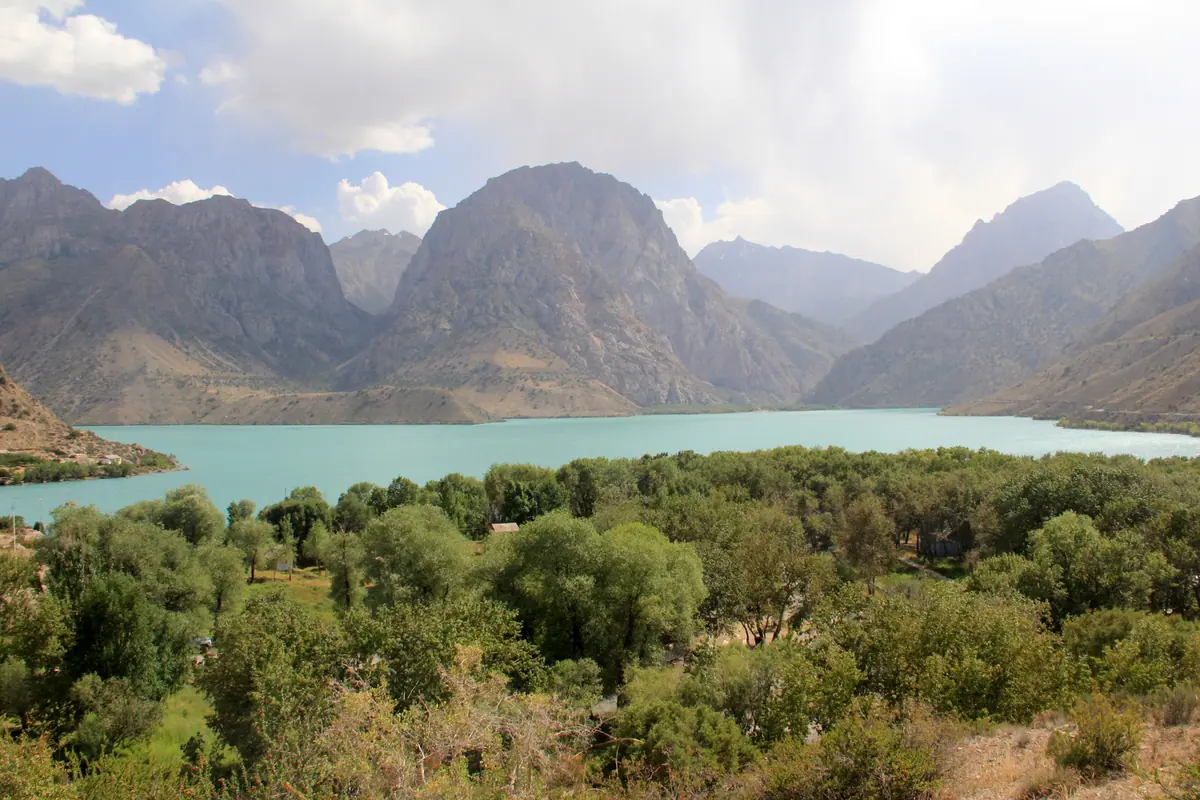
The Fann Mountains, west of Dushanbe, are the country's most rewarding short-range trekking country — a compact knot of 5,000-metre peaks, glacier-fed lakes and shepherd paths that can be sampled in three days or strung into a fortnight. Iskanderkul, named for Alexander the Great, is the classic first stop: a startling blue lake at around 2,200 metres with a thundering waterfall a short walk from the shore and easy guesthouse beds nearby. Deeper in, the Haft Kul — the Seven Lakes — staircase up a narrow valley, each lake a different shade from milky jade to near-black, with homestays in the tiny villages along the way.
Serious walkers aim for the Alauddin and Kulikalon lake basins, where the trail climbs past moraine walls beneath the granite bulk of Chimtarga, the range's highest summit. The season is narrow: snow usually clears the lower valleys in late June and the passes stay open until mid-September, with July and August the safest window for high routes.
Base yourself in Penjikent, a cheerful market town that doubles as the gateway to two extraordinary ancient sites. The Panjakent ruins are the remains of a 5th-to-8th-century Sogdian city, with frescoes so vivid they are often compared to Pompeii. Just outside town, Sarazm is a UNESCO-listed settlement occupied more than five thousand years ago, one of the oldest traces of urban life in Central Asia — a low, fenced expanse of mudbrick walls that rewards a guide's explanation.
The Pamir Highway and the Wakhan Valley: The Great Road Trip
The M41 — universally known as the Pamir Highway — is the reason many travellers come to Tajikistan at all. The classic route runs from Dushanbe south to Khorog and then east across the plateau to Murghab and the Kyrgyz border, climbing from river gorges to a high, treeless world of yaks, salt flats and 7,000-metre peaks. The drive to Khorog takes roughly a day and a half with a stop, past the Anzob Tunnel and along the churning Panj River, which forms the border with Afghanistan for hundreds of kilometres.
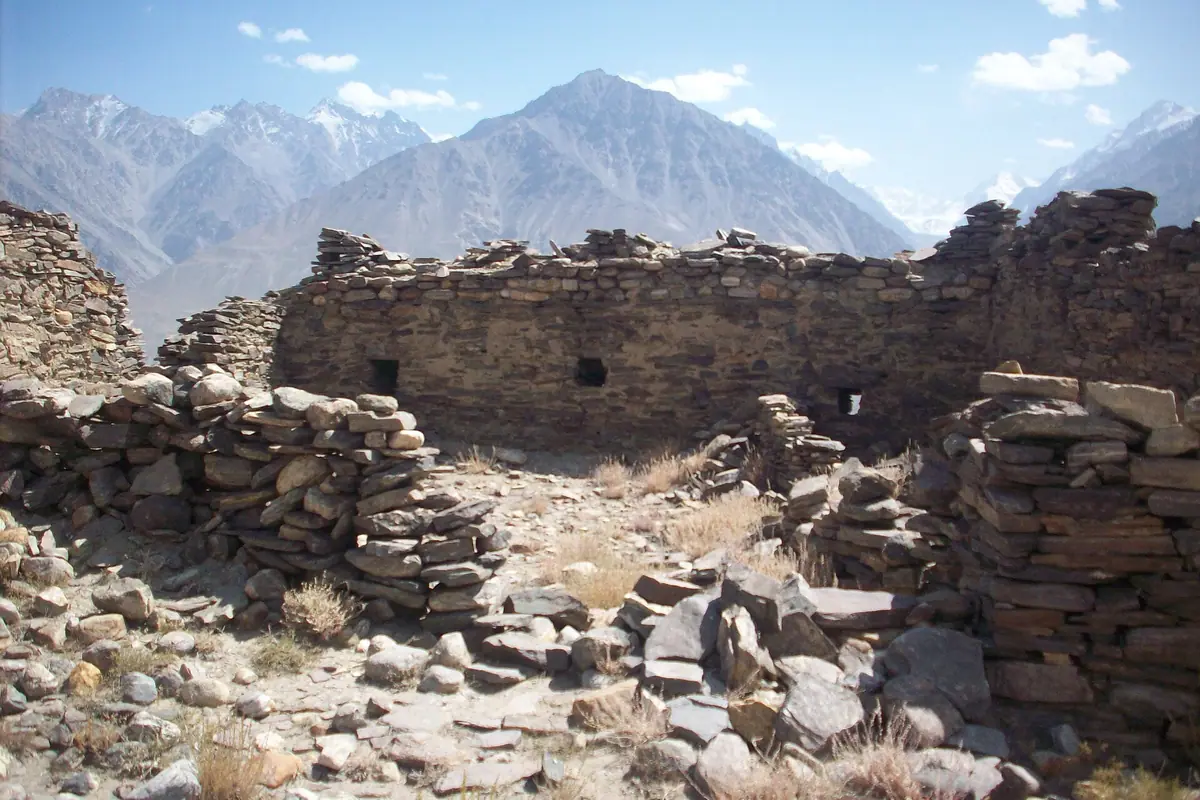
Khorog, the region's easy-going capital, makes a good rest stop: there is a bazaar, a hillside botanical garden and a cluster of guesthouses. From there, the road east becomes the main event. The Wakhan Valley detour is worth every extra day — this is where the Panj widens and the Hindu Kush rises on the far bank, and where you can walk to the ruins of Yamchun Fortress, a 3rd-century-BCE citadel perched on a ridge with a view that justifies the whole journey. Below it, the Bibi Fatima hot springs spill scalding mineral water into stone pools, and further along lies the small Buddhist stupa at Vrang.
Beyond Khorog the land flattens into the Eastern Pamir. Murghab, at around 3,650 metres, is a frontier town of Chinese trucks and sheepskin coats, and Karakul Lake — often described as sitting in a meteorite crater — is a cold, luminous expanse at nearly 3,900 metres. Continue to the Kyzyl Art pass if you are heading onward, but turn back if you are not: the return leg through the same valleys looks entirely different in reverse. Note that the whole Gorno-Badakhshan region requires a permit, obtained in Dushanbe before departure, and that the highway is only reliably passable from roughly June to early October.
Khujand and the North: Bazaars, Fortresses and the Kayrakkum Shore
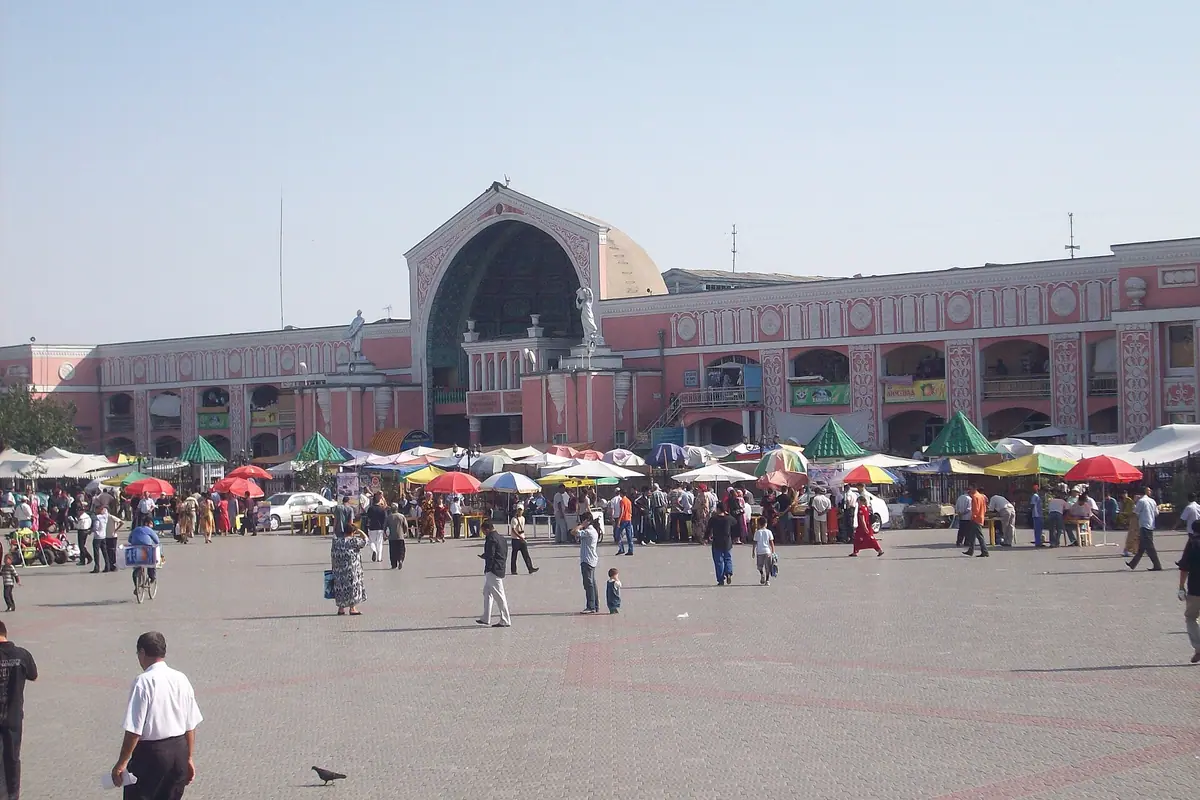
The northern Fergana-edge city of Khujand feels like a different country from the Pamirs: hot, low, green and mercantile, sitting beside the Syr Darya river. Its centrepiece is the Panjshanbe Bazaar, one of the largest and most photogenic in Central Asia, a colonnaded hall where vendors stack pomegranates, dried barberries and saffron. Nearby, the reconstructed Khujand Fortress and the mausoleum and madrasa complex of Sheikh Muslihiddin anchor the old town, while a pleasant riverside promenade and the Kayrakkum Reservoir to the east offer swimming and beach cafés in summer.
An hour south, Istaravshan is the connoisseur's stop — a quiet town with a hilltop fort, the Mugh Teppe archaeological site, and the Hazrati Shoh complex of mosque and mausoleums. Its craft workshops still turn out carved doors and embroidered suzani.
Northern Tajikistan is best visited in spring and autumn; July and August can push past 40°C, which makes early mornings and evening strolls the sensible plan. If you are flying in or out via Khujand rather than Dushanbe, this leg fits neatly into a loop with Penjikent and the Fann Mountains.
High Peaks: Trekking and Mountaineering Bases
For climbers and long-distance trekkers, Tajikistan's signature objective is Pik Lenin at 7,134 metres, reached from the Pamir Highway via the meadow camp at Achik-Tash. It is one of the most attainable 7,000-metre summits in the world, but it is still a serious undertaking requiring roughly three weeks, full glacier equipment and careful acclimatisation.
Less committing but equally beautiful is the trekking around the Fann and the upper Zeravshan, where the so-called Aksu Wall presents a dramatic granite barrier and multi-day routes link village homestays. On the plateau, shorter walks radiate from Murghab and Karakul — to mineral springs, petroglyph fields and the lakes that dot the plateau.
Whatever you choose, altitude is the organising principle of any Tajik itinerary. Build in a rest day every few days above 3,000 metres, drink more water than you think you need, and remember that distances here are measured in hours, not kilometres. Guesthouses and homestays are the norm outside Dushanbe and Khujand, and they are usually the highlight of the trip: plov, apricot jam, and a host who insists you eat more.
When to Go, and How to Move Around
Timing matters more in Tajikistan than in almost any destination. May, June, September and October are ideal for the lowlands, the Fann Mountains and the northern cities — warm days, cool nights, clear views. The Pamir Highway is a July-to-September proposition at best; high passes close with snow from late October and often do not reopen until June. Winter travel is limited to Dushanbe, Khujand and a handful of low valleys.
Shared taxis and minivans connect the main towns, but for the Pamir and the Fann you will want a private vehicle with a driver who knows the road, or a spot on an organised 4x4 departure. Roads are slow, sometimes unpaved and occasionally dramatic; a 400-kilometre day can easily take ten hours. Domestic flights occasionally link Dushanbe with Khujand and the Pamir, but schedules are unreliable, so plan around the ground route.
Finally, paperwork: many nationalities can enter visa-free for a limited stay, but a separate Gorno-Badakhshan permit is mandatory for the Pamir and is easiest to arrange in Dushanbe a few days ahead. Carry cash, since card payment outside the capital is rare, and register your stay if you plan to remain beyond the standard short-stay window. Do that, and Tajikistan rewards you with mountains that most of the world has never seen.
Frequently asked questions
What is the single must-see place in Tajikistan?
The Pamir Highway, and specifically the Wakhan Valley stretch between Khorog and Murghab, where the Panj River runs beside Afghanistan and the Hindu Kush fills the horizon. If you have less time, Iskanderkul Lake in the Fann Mountains delivers a big scenic payoff in a single day from Dushanbe.
Do I need a special permit for the Pamirs?
Yes. Gorno-Badakhshan, which covers Khorog, Murghab, Karakul and the Wakhan Valley, requires a permit that is separate from your visa or visa-free entry. It is usually arranged in Dushanbe a few days before you travel, and you should carry several copies with your passport.
What is the best time of year to visit Tajikistan?
May, June, September and October for Dushanbe, Khujand, Istaravshan and the Fann Mountains. For the Pamir Highway and Pik Lenin, plan for July through early September when the high passes are clear. Northern cities get very hot in July and August.
How long do I need to see the country properly?
Ten days to two weeks covers Dushanbe, the Fann Mountains and a one-way crossing of the Pamir Highway. Allow three to four weeks if you want the Wakhan Valley, northern cities such as Khujand and Istaravshan, and any trekking or a Pik Lenin attempt.
Is travel in Tajikistan difficult?
The roads are slow, infrastructure is basic outside the main cities, and English is not widely spoken, so independent travel takes patience. Homestays and guesthouses are plentiful and inexpensive, shared transport exists but is cramped, and most travellers find a driver-guide for the mountain regions makes the trip far smoother.
Plan it — experiences in Tajikistan
Live search, booked directly with trusted providers.
Sort the rest of your trip
Everything for Tajikistan, in one place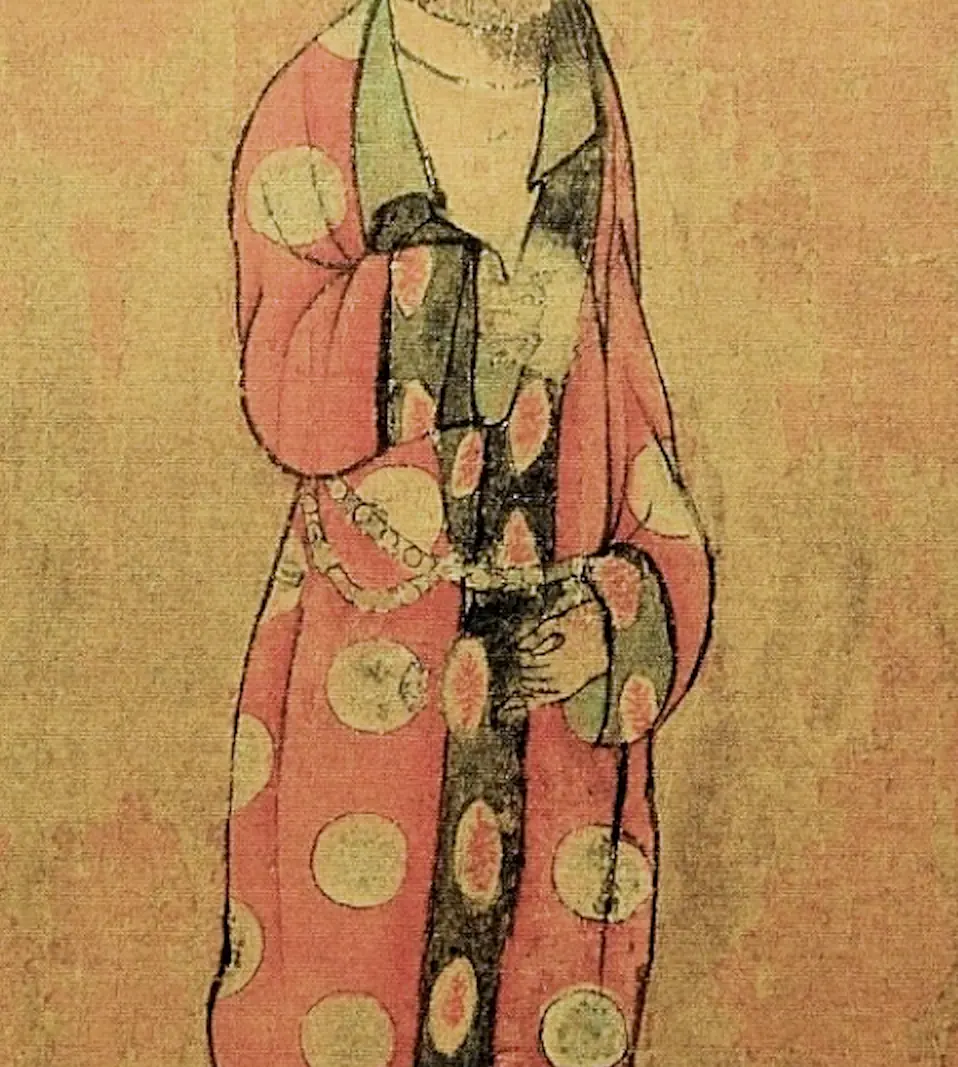
Stay in Tajikistan
Hotels, guesthouses and apartments — compared in one search.
Search hotels
Transfer in Tajikistan
Private driver waiting on arrival — no queues, no surprises.
Book a transfer
Stay online in Tajikistan
Travel eSIM — data the moment you land, no roaming bills.
Get an eSIM