Nicaragua rarely offers you a polished museum version of itself. It hands you a plate of gallo pinto before seven in the morning, a hammock strung between two posts in Masaya, the smell of woodsmoke drifting off a roadside grill, and a cathedral rooftop that opens onto an unbroken line of volcanoes. Travel here is measured in long lunches, slow lake crossings and conversations with people who are genuinely pleased you came.
Gallo Pinto at Dawn: How Nicaragua Eats
Breakfast is the anchor of the day. Gallo pinto — rice and red beans fried together, ideally in the same pan with onion and a little fat — arrives with a slab of fried cheese, sweet fried plantain, a spoon of sour cream and often an egg. You will find it in family kitchens, in simple comedores with plastic chairs, and in market stalls where the griddle has been going since dawn. It is cheap, filling and eaten by everyone, from farmers heading to the fields to office workers in Managua.
Lunch and dinner follow their own geography. In Granada, order vigorón: soft yucca, crisp chicharrón and a bright cabbage-and-tomato salad, served on a banana leaf and eaten with your fingers. In Masaya, weekend mornings belong to baho, beef steamed for hours with plantain and yucca in banana leaves. Indio viejo, a thick corn-and-shredded-beef stew, shows up on home tables, and on Saturdays and Sundays the whole country seems to be eating nacatamal — corn masa filled with pork, potato, rice and mint, wrapped and steamed until it sets, sold from doorways and passed through car windows. After dark, look for a fritanga: a family grill with meat, tajadas, maduro con queso and a queue of neighbours.
Drinks and street sweets are worth chasing too. Pinolillo, a roasted corn and cacao drink, and tiste, made from toasted corn and cacao, are the classic thirst-quenchers. Coffee from the cool highlands around Matagalpa and Jinotega is excellent and often served as a potent little cup. On the Caribbean side, the cooking changes completely: rondón, a coconut-milk stew of seafood, breadfruit and green plantain, plus patí and coconut bread, eaten to the rhythm of Creole English. For snacks, hunt down the crisp rosquillas of Somoto and the milk cajeta of Masaya. If you want to cook any of it yourself, a half-day market tour and cooking class in Granada is one of the best-value cultural experiences in the country.
Granada and the Islets of Lake Nicaragua
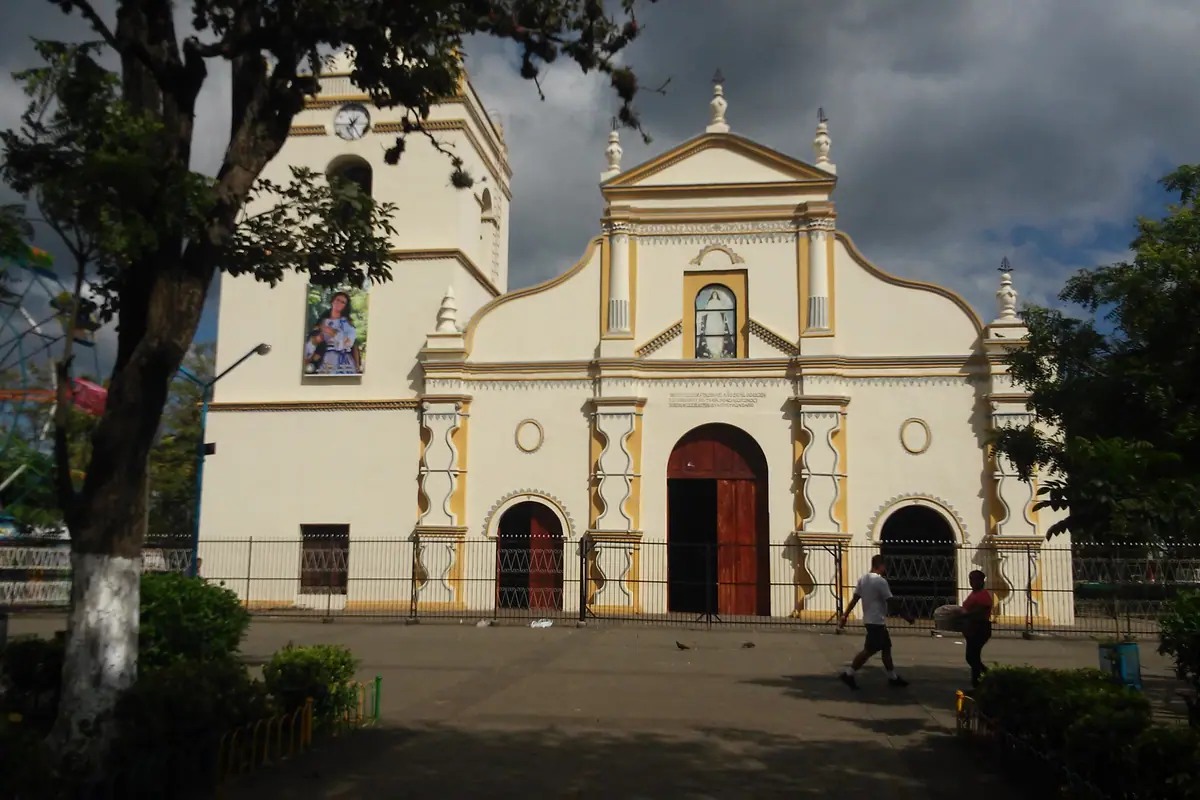
Granada is the country's showpiece, and it knows it. Founded in the 1520s, it is one of the oldest colonial cities in the Americas, with a grid of pastel facades, carved doors and courtyards that open onto sudden gardens. Start at Parque Central beside the yellow-trimmed cathedral, walk the pedestrian buzz of Calle La Calzada toward the water, and climb the bell tower of La Merced for the classic view: terracotta roofs falling away to Lake Nicaragua and the green bulk of Mombacho behind you. Horse-drawn carriages still creak past the plaza in the late afternoon, and the hammock workshops on the edge of town will sell you the chair you suddenly cannot live without.
From the lakeshore, small boats run out to the Islets of Granada, an archipelago of more than 350 wooded islands scattered across the water. Some hold grand weekend houses, others are pure bird habitat, and one carries the squat stone remains of Fort San Pablo. The circuit takes around an hour and is best in the softer light of early morning or late afternoon, when herons, kingfishers and the occasional monkey are active. Combine it with a half-day on Mombacho Volcano above the city, where a cloud-forest trail, a canopy ride and coffee grown on the slopes make a cool contrast to the humid lowlands.
Just beyond Granada lies a cluster of easy excursions. The Apoyo Lagoon, a warm crater lake ringed by forest, is ideal for swimming and kayaking. The white towns between Granada and Masaya are a craft trail in themselves: Catarina has a viewpoint over the lagoon and plant nurseries spilling down the hillside, while San Juan de Oriente is famous for its pottery, where you can watch a lump of local clay become a burnished, geometrically painted vessel. Finish at Masaya Volcano, where a road climbs to the rim of the active Santiago crater; evening tours are popular because the glow deepens after dark. Be flexible with your timing — the park closes without warning when gas activity picks up.
Leon: Cathedral Rooftops, Murals and Volcano Boarding
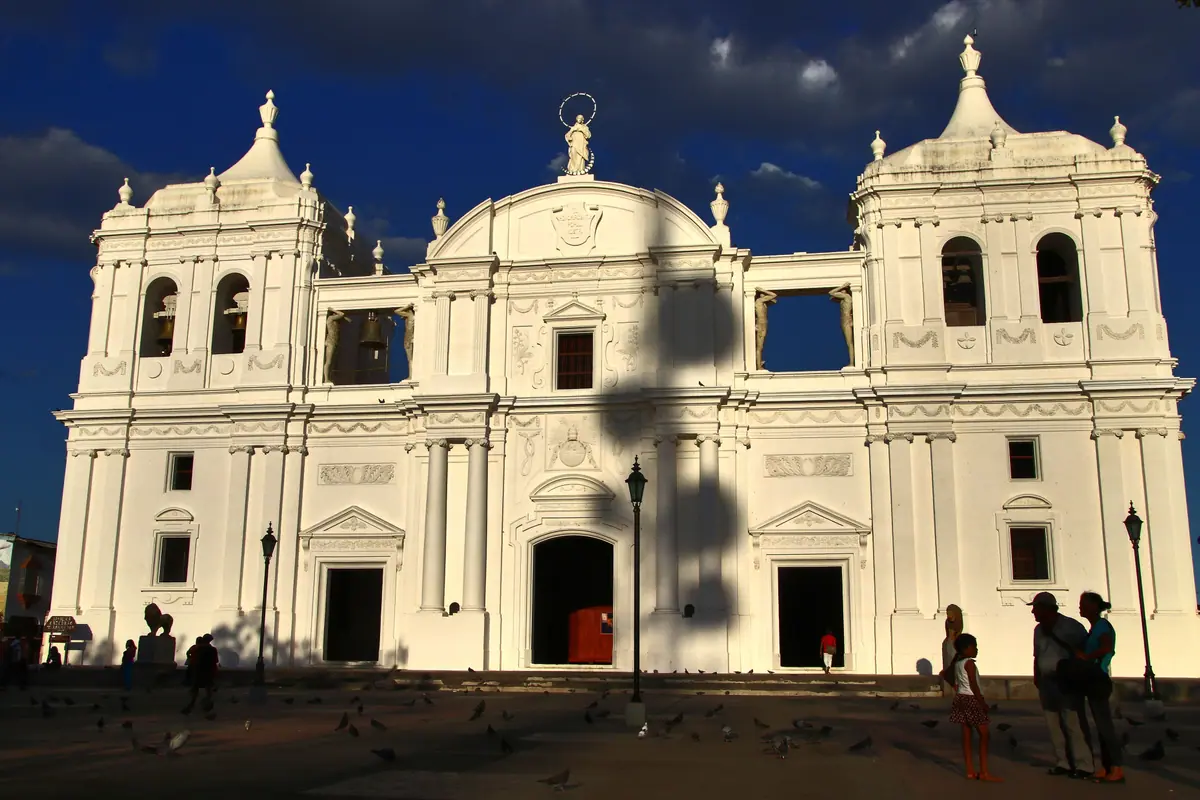
Leon is Granada's opposite: hotter, more political, more student-filled, and louder after dark. Its cathedral is the largest in Central America and a recognised World Heritage site, a white wedding-cake of a building whose roof you can walk across — a field of domes and towers with views to the volcanic chain on the horizon. The poet Ruben Dario is buried beneath a lion statue inside, and his childhood home a few blocks away is now a small museum of manuscripts and furniture. Wander north into the indigenous Sutiaba quarter for a quieter, older side of the city and its church, and spend an hour with the murals and monuments around the university, which tell the story of the revolutionary years with real local feeling.
Art lovers should not miss the foundation tucked into a restored mansion near the centre, which holds a serious collection of Latin American painting and sculpture, plus temporary shows by Nicaraguan artists. It is a cool, quiet counterpoint to the city's heat and a good place to slow down in the middle of the day.
The reason many travellers come, though, is the black cone of Cerro Negro, about 45 minutes out of town. You hike up a cinder slope for somewhere between 30 and 60 minutes, carrying a wooden board, then sit down and slide the ash descent in a matter of seconds — messy, fast and genuinely fun, with operators supplying coveralls and goggles. Afterwards, cool off at the Pacific beaches of Las Penitas and Poneloya, and take a small boat through the mangroves of the Juan Venado reserve, where the light through the roots is worth the mosquito repellent. Fresh seafood and a sunset over the water make a natural end to the day.
Ometepe Island and the Pacific Surf Coast
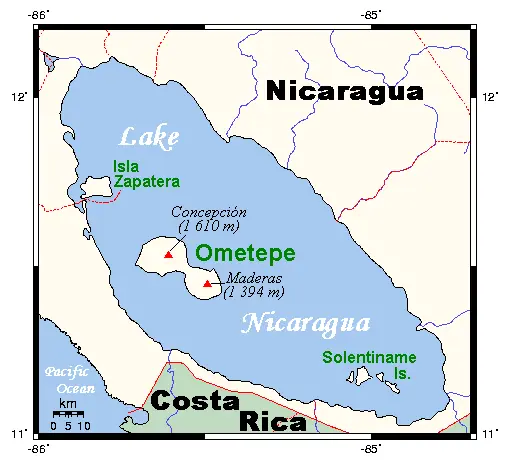
Ometepe rises out of Lake Nicaragua as two volcanoes joined by a low isthmus: Concepcion, a near-perfect cone, and the older, greener Maderas. Ferries cross from San Jorge near Rivas in roughly an hour, and the island rewards at least two or three nights. Roads are rough and slow, so rent a scooter if you are confident, or hire a driver for the day. Walk to the San Ramon waterfall on Maderas through cloud forest, swim in the spring-fed pools of Ojo de Agua, paddle a kayak on the quiet side of the island, and look for petroglyphs near the small towns of Moyogalpa, Altagracia and Balgue. Howler monkeys will wake you before your alarm does.
Back on the mainland, San Juan del Sur is the country's surf capital, a curved bay of bars and board shops with a Christ statue on the ridge above it and a string of breaks within easy reach. Playa Maderas and Playa Hermosa draw beginners and intermediates, while the coast further north around Popoyo and the Tola shoreline offers emptier sand and steadier swell. Even if you never stand on a board, a sunset sail, a yoga class or simply a grilled fish on the sand justifies the detour.
Between roughly December and March, humpbacks move along this coast, and a handful of boats run whale-watching trips from San Juan del Sur. The other great wildlife experience is the olive ridley turtle. At the La Flor and Chacocente refuges, females come ashore in mass nestings known as arribadas, when thousands of turtles arrive over a few nights. Access is controlled and only with licensed local guides, usually after dark; wear dark clothing, leave the flash off and follow instructions. The largest arrivals tend to cluster in the later wet season, but the timing shifts year to year, so ask locally before planning your trip around it.
The Caribbean Coast and the Rio San Juan
Nicaragua's eastern half feels like a different country, and in many ways it is. A short flight from Managua lands you on Big Corn Island, where Creole English, coconut palms and lobster dinners set the tone. From there a panga bounces across to Little Corn Island, a car-free speck of sand paths, guesthouses and some of the best snorkelling and diving in the region — reef sharks, rays, turtles and clear, warm water. The islands are driest and calmest in the first half of the year and again around September and October, with heavy rain possible in between.
On the mainland coast, Bluefields and Pearl Lagoon are the heart of a Miskito, Creole and Garifuna cultural mix that has little in common with the Pacific cities. May brings Palo de Mayo, a month of dance, drums and street celebration rooted in the region's Afro-Caribbean heritage. Eat rondón by the water, take a boat out through the lagoons and mangroves, and accept that timetables here are more suggestion than schedule.
Further south, the Rio San Juan is a slow, hot, bird-filled journey that rewards travellers who like boats. From San Carlos, launches head downstream to El Castillo, a river village beneath the stone fortress of the Immaculate Conception, built centuries ago to guard the route against pirates and rival empires. The Solentiname Islands nearby are known for a tradition of vivid naive painting, and the surrounding wetlands and the vast Indio Maiz reserve are among the most biodiverse corners of Central America. Getting there takes effort — a domestic flight or a long bus ride to San Carlos — but the pace of the river makes the journey the point.
Festivals, Crafts and Coffee: Local Life Beyond the Sights
Nicaraguan celebrations are community events, not staged shows. On 7 December, La Purisima fills homes with flower-decked altars to the Virgin, and the evening Griteria erupts in fireworks, singing and the trading of sweets and small gifts; Leon and Managua are especially lively. Semana Santa brings solemn processions and elaborate sawdust carpets laid in the streets of Leon and Granada, only to be walked over and swept away. In January, the San Sebastian festivities in Diriamba include performances of the Gueguense, a masked, satirical dance drama with colonial-era roots that is recognised as intangible cultural heritage — a rare, funny, thoroughly local art form worth planning around.
Craft traditions are easy to visit and easy to buy. Masaya's market is the place for woven hammocks, leather and carved wooden rocking chairs, and the surrounding villages specialise in pottery, textiles and ceramics. In the northern highlands, the hills around Esteli and the Miraflor reserve are tobacco country, where you can tour a farm and a rolling room and see why the region's cigars are prized; Somoto, further north, is known for its honey-sweet rosquillas and for the dramatic canyon nearby, where you can swim and float through a sandstone gorge on a half-day trip.
Coffee is the other great northern story. The shaded slopes around Matagalpa and Jinotega, and the smallholder plots of Dipilto in Nueva Segovia, produce beans that regularly earn international attention, and many farms welcome visitors for a walk through the rows, a look at the wet mill and a tasting. Practical notes for planning: the dry season from December to April is the most comfortable time for travel, the wet months from May to October bring green hills, lower rates and reliable afternoon downpours, and the Pacific coast often enjoys a short dry spell in July and August. The currency is the cordoba, though US dollars are widely accepted in tourist areas, and getting around usually means shuttles, microbuses and the famous converted school buses known as chicken buses. Two weeks covers Granada, Masaya, Leon, Ometepe and a stretch of coast at a relaxed pace; add a week if the Caribbean is calling.
Frequently asked questions
When is the best time to visit Nicaragua?
The dry season, roughly December to April, is the most comfortable period for the Pacific lowlands, with clear skies and easy road travel, though it is also the busiest and priciest. May to October is greener, quieter and cheaper, with heavy but usually short afternoon rain; the Pacific often gets a brief dry spell in July and August. The Caribbean islands follow a slightly different pattern, tending driest from February to May and again in September and October.
How many days do you need for a tour of Nicaragua?
Ten to fourteen days is a realistic minimum for Granada, Masaya, Leon, Ometepe and a beach or two without constant rushing. Add four or five days if you want the Corn Islands, the Rio San Juan or proper time in the coffee and tobacco highlands around Matagalpa, Jinotega and Esteli. Long distances and slow roads mean fewer stops than the map suggests.
What food should I try first in Nicaragua?
Start with gallo pinto at breakfast, then work through vigoron in Granada, a quesillo bought at a roadside stand outside Nagarote, a weekend nacatamal, baho in Masaya and indio viejo. On the Caribbean coast, rondón is essential, along with coconut bread and patí. For sweets and drinks, look for Somoto rosquillas, Masaya cajeta, and pinolillo or tiste alongside locally grown coffee.
Is Nicaragua easy and safe to travel around?
Most visitors travel without trouble using ordinary precautions: use licensed guides for volcano hikes and turtle night visits, avoid isolated beaches after dark, keep valuables out of sight and use registered taxis or hotel-arranged transfers at night. Chicken buses are incredibly cheap but slow and crowded; shuttles and private drivers cost more and save time. Spanish helps enormously outside tourist areas, and a few polite phrases go a long way.
Which experiences should I book ahead?
Reserve the Cerro Negro volcano boarding trip, Ometepe ferry or vehicle space, domestic flights to the Corn Islands and the Little Corn panga during high season, especially around Christmas, New Year and Easter. Masaya Volcano night tours can be cancelled at short notice if gas activity rises, so keep a spare evening in your plan. For peak turtle nesting nights at La Flor and Chacocente, arrange guides a few days in advance through local operators.
Sort the rest of your trip
Everything for Nicaragua, in one place
Stay in Nicaragua
Hotels, guesthouses and apartments — compared in one search.
Search hotels
Transfer in Nicaragua
Private driver waiting on arrival — no queues, no surprises.
Book a transfer
Stay online in Nicaragua
Travel eSIM — data the moment you land, no roaming bills.
Get an eSIM