Guatemala is a country you taste as much as you see — woodsmoke and toasted chilli in a highland market, sweet coffee on a colonial plaza, copal incense drifting down the steps of a Maya church. Travel between its volcano-ringed lake, its jungle temples and its weaving villages, and every leg of the journey comes with a meal, a festival or a conversation attached.
Antigua Guatemala: The Colonial Launchpad for Any Tour
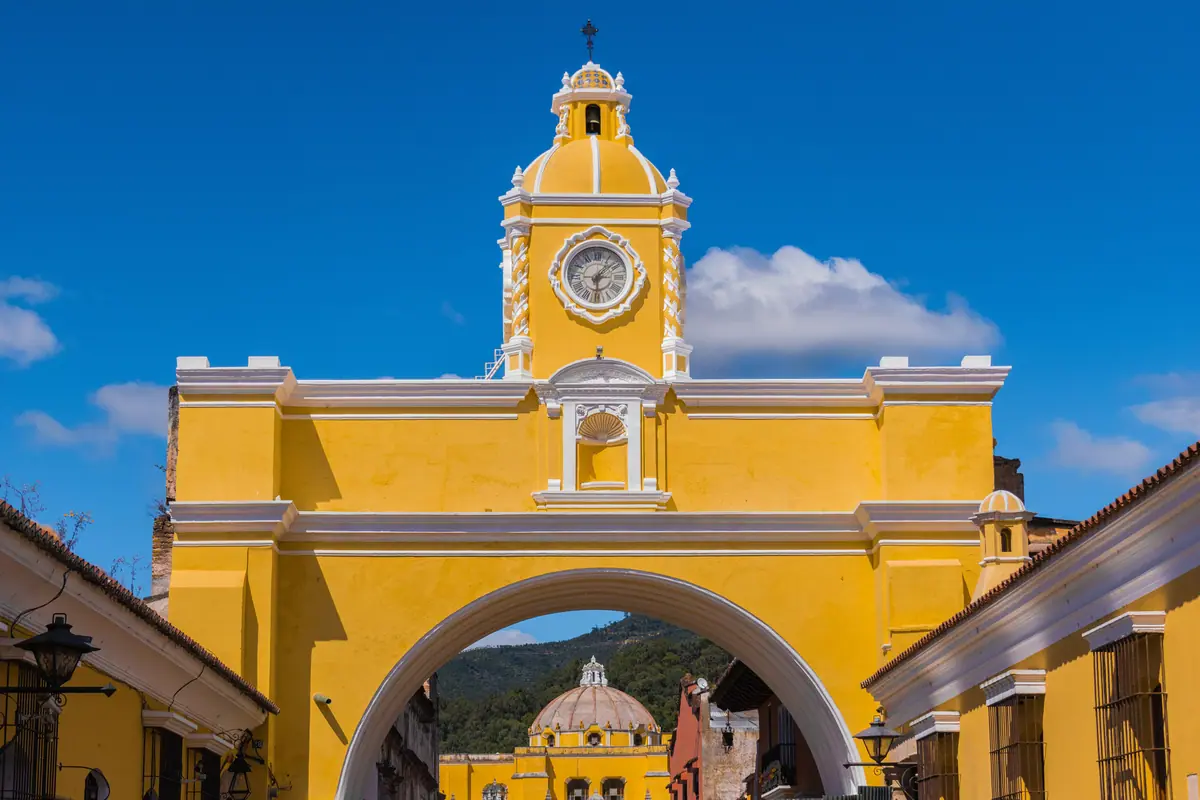
Almost every itinerary begins in Antigua Guatemala, a grid of cobblestones and pastel facades laid out beneath the bulk of Volcán de Agua, with Fuego smoking quietly to the west. The Plaza Mayor is the natural first stop, flanked by the weathered arcades of the Palacio de los Capitanes and the ruins of the Cathedral of San José, where services still take place beside collapsed naves. Walk north to the Santa Catalina Arch, the yellow landmark that once let nuns cross the street unseen, and climb to Cerro de la Cruz for the postcard view over the whole town. The convents are the quiet highlights — Las Capuchinas with its circular cloister, La Merced with its frosted yellow facade — and they are best seen in the soft light of early morning, before the day tours arrive.
Antigua is also the practical base for the rest of the country. Volcano hikes, coffee fincas, shuttle vans to Lake Atitlán and the long road to Petén all start here, which means two nights is the bare minimum and three is far kinder. It sits roughly an hour from the capital's airport, so most travellers land, transfer straight through and wake up to church bells. If your dates are flexible, aim for Semana Santa: during Holy Week the streets fill with purple-robed processions and intricate alfombras, carpets of dyed sawdust and flowers laid down overnight and swept away by the feet that walk over them. Lodging sells out months ahead, so plan that trip early.
Coffee is the other reason to linger. The slopes of Agua and Acatenango produce some of the country's most celebrated beans, and several working fincas open their gates for half-day visits during the harvest, roughly December through March. You will walk the drying patios, watch women sort defects by hand and finish with a cupping session that will ruin supermarket coffee for you forever.
Maya Markets and the Living Textile Tradition
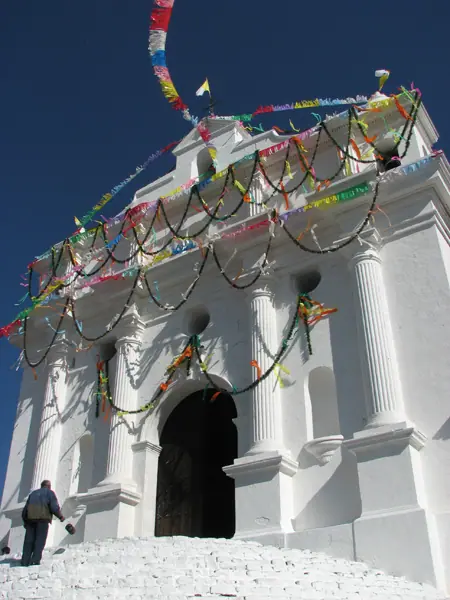
The highland markets are not performances for visitors; they are where people actually shop, gossip and trade, and that is exactly what makes them extraordinary. Chichicastenango, about two to three hours from Antigua or Panajachel, holds its main market on Thursdays and Sundays. The plaza in front of the whitewashed church of Santo Tomás fills with stalls of huipiles, carved masks, jade and black pottery, while inside the church steps are swept with copal smoke and prayers are murmured in K'iche'. Arrive by seven in the morning for the good light and the real trading; by eleven it is a crush.
Further west, San Francisco El Alto runs the biggest market in the highlands on Fridays, with a livestock section that is genuinely agricultural rather than ornamental, and Sololá holds a sprawling Tuesday market that most visitors never reach. At Lake Atitlán, the village of San Juan La Laguna has organised itself around weaving cooperatives where you can watch backstrap looms being worked and see natural dyes — cochineal, indigo, avocado seed — being cooked in open pots. Buying directly from the maker is both cheaper and more meaningful than buying from a middleman in a city shop.
A few manners go a long way. Ask before photographing people, especially in church, and expect a polite refusal sometimes. Bargaining is normal but should be gentle and cheerful, and buying two or three small items earns a better price than haggling hard over one. The textiles are not souvenirs in the throwaway sense: a handwoven huipil can take a month of spare hours, and each village has its own patterns, colours and symbols. Learning to recognise a few of them turns shopping into something closer to reading.
Lake Atitlán: A Caldera Ringed by Volcanoes
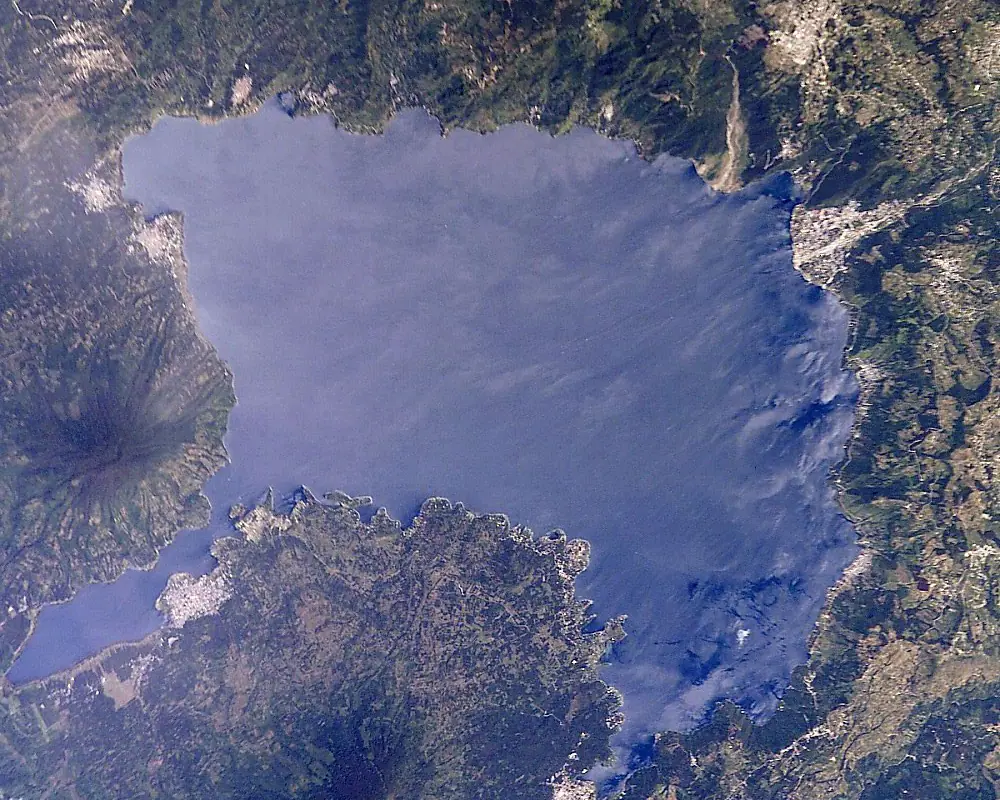
Lake Atitlán sits in a collapsed volcanic caldera at around 1,500 metres, ringed by three cones — San Pedro, Tolimán and Atitlán — that turn pink at dawn and vanish into cloud by mid-afternoon. Panajachel is the transport hub and the busiest shore, but the lake rewards those who keep moving by boat. Santa Cruz la Laguna is quiet and walkable only by trail or water taxi; San Marcos attracts long-stay travellers with its meditation and yoga scene; San Pedro La Laguna has the best-value guesthouses and a steep, shambling grid of lanes. Boats link the villages through the day and stop early in the evening, so plan your last crossing before dark.
Two villages deserve a dedicated day. Santiago Atitlán is the largest Maya town on the lake, and its parish church holds a shrine to Maximón, a cigar-smoking folk saint attended by a rotating brotherhood who keep him in a different house each year — a local guide will know where, and small offerings of tobacco or sugarcane spirit are the custom. San Juan La Laguna, just along the shore, is full of mural-painted walls, women-run weaving workshops and small galleries of naïf painting that grew out of the lake's own art movement.
For the classic sunrise, hike the ridge known as the Indian Nose before first light — a steep but short climb from the road above San Pedro that ends with the volcanoes emerging from the mist below you. Give the lake at least two or three nights. Kayaks, cliff jumping at San Marcos and simple lakeside comedores serving fresh-caught black bass fill the hours between boats, and the weather is mildest from November through April, when mornings are clear and rain comes rarely.
Tikal, Petén and the Caribbean Edge
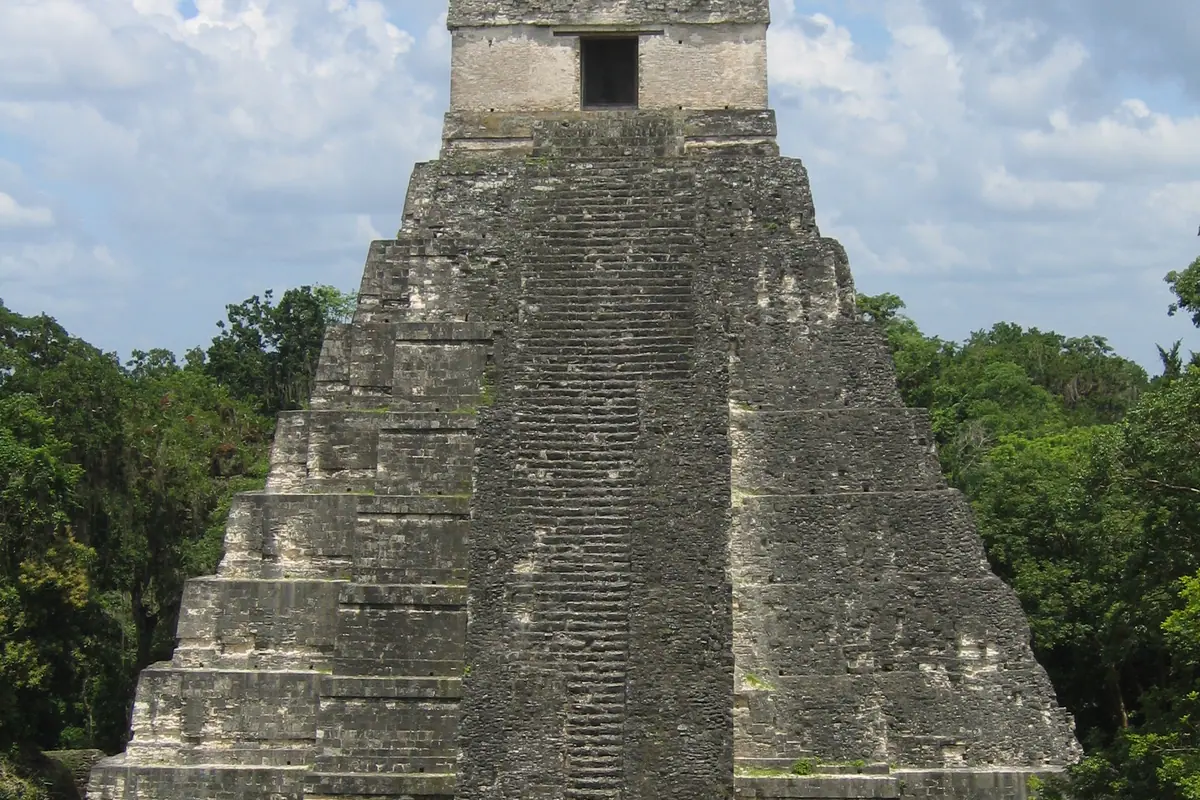
No tour of Guatemala is complete without Tikal, the Maya city that rises out of the rainforest of Petén. The Gran Plaza holds Temple I, the tomb-pyramid of a ruler, facing Temple II across an expanse of grass where ocellated turkeys strut and coatis raid backpacks. Climb the wooden staircase of Temple IV — the tallest structure in the complex, rising roughly seventy metres — and you look out over a green ocean of canopy with the tops of three other temples breaking through. Howler monkeys roar at first light, toucans call from the ceiba trees, and the earlier you enter the park the more wildlife you see and the fewer people you share it with. Sunrise and sunset tours are worth the early alarm.
Getting there usually means flying from Guatemala City to Flores, about an hour in the air, or taking an overnight bus if you are patient and budget-minded. Stay on the island town of Flores itself, a pastel-coloured speck on Lake Petén Itzá, and use it as a base — boats and bridges connect it to the mainland. Nearby Yaxhá is smaller, quieter and offers a sunset from the top of its pyramids that many travellers rate above Tikal's. With more days, the road east leads to Río Dulce, where a boat ride down the gorge brings you to Livingston on the Caribbean coast.
Livingston is Garifuna country: Afro-Caribbean, English- and Garifuna-speaking, reachable only by boat, and famous for tapado, a coconut-milk seafood soup with plantain and whole crab that is worth the journey on its own. Drumming and punta music drift out of yards on November 26 for Garifuna Settlement Day, one of the most joyful celebrations in the country.
Volcanoes, Cloud Forest and Highland Towns
The overnight hike up Acatenango is the experience most visitors remember longest. From a trailhead near Antigua you climb through farmland and cloud forest to a camp around 3,600 metres, where tents face the neighbouring cone of Fuego. After dark, Fuego erupts every few minutes — a low rumble, then orange light spilling down the flanks — while you sit with a mug of hot chocolate wrapped in every layer you own. It is genuinely cold and genuinely steep, so bring proper boots and a headlamp, and choose an operator who carries enough water and offers a porter option. Pacaya is the gentler alternative: a half-day climb where you can still feel warmth through the rock and toast marshmallows on a volcanic vent.
For cloud forest, head to the Biotopo del Quetzal in Baja Verapaz, where a loop trail through dripping moss and tree ferns offers the country's best chance of spotting the resplendent quetzal. Go at first light between December and April, walk slowly and quietly, and listen for the two-note whistle rather than scanning the canopy blindly. Further north, near Lanquín, Semuc Champey is a natural limestone bridge topped by a series of turquoise pools you can swim between; climb to the El Mirador viewpoint above them for the view that explains the place, and pair it with a candle-lit wade through the Kanba caves nearby.
In the western highlands, Quetzaltenango — universally called Xela — sits at 2,330 metres among colonial arcades and student cafés, and makes a good base for Laguna Chicabal, a crater lake sacred to local Maya communities. Further out, Todos Santos Cuchumatán stages a wild horse race every November 1 and 2, when riders in striped red trousers gallop a course that has been run for generations. Altitude is real here: give yourself a day to adjust before committing to any climb.
What to Eat in Guatemala — and Where to Find It
Guatemalan cooking is built on corn, chilli and patience. Pepián is the flagship: a thick, dark stew of toasted pumpkin and sesame seeds, dried chillies, tomato and spices, simmered for hours with chicken and served with rice and hand-made tortillas. Kak'ik, a turkey soup stained red with achiote and perfumed with coriander and mint, comes from the Cobán area; jocon is its green cousin, tangy with tomatillo. Order a desayuno típico for breakfast and you get eggs, black beans, fried plantain, thick cream and a stack of tortillas cooked on a comal while you wait. Look for the small family-run comedores rather than the places with picture menus — a set lunch of soup, main and drink is the standard and always good value.
Street food is where the snacking happens. Shucos are grilled sausage or hot dog rolls piled with guacamole, cabbage and hot sauce; tostadas come loaded with beans, cheese and salsa; rellenitos are sweet fried plantains stuffed with black bean paste and rolled in sugar, sold from carts in the evening. In the markets, try chuchitos and paches, and drink atol — a warm, thick corn drink in flavours like vanilla, chocolate or blackberry. If you are anywhere near Antigua, drink the coffee where it grows, and pick up a bag of roasted beans for home.
Two dishes are tied to the calendar. On November 1 and 2, families eat fiambre, a cold salad of dozens of ingredients — cured meats, cheeses, pickled vegetables, beets, olives — that takes days to assemble and is rarely found the rest of the year. On the Caribbean coast around Livingston, tapado is served year-round but tastes best beside the water it came from. Wash it all down with a cold local lager, fresh limeade or licuados of tropical fruit, and finish with champurradas for dipping.
Frequently asked questions
What is the best time of year to tour Guatemala?
The dry season from November to April brings clear mornings and reliable travel, and is the best window for volcano hikes, Tikal and Lake Atitlán. May to October is the green season: rain usually falls in the afternoon, prices and crowds drop, and mornings are often still bright. Semana Santa in Antigua and the Day of the Dead kite festivals on November 1 are spectacular but need booking months in advance.
How many days do you need to see Guatemala properly?
Seven days covers Antigua, Lake Atitlán and a rushed Tikal trip. Ten to fourteen days lets you slow down: three nights in Antigua, three at the lake, two in Petén, and time left over for Semuc Champey, the western highlands around Xela or the Caribbean coast at Livingston. Internal flights make the jungle leg much easier than the long overland haul.
Which local foods should I try first?
Start with pepián, kak'ik and jocon, then branch out to tamales, chuchitos and paches from market stalls. Snack on shucos and rellenitos, drink atol and locally grown coffee, and if you reach the Caribbean coast, order tapado. In early November, seek out fiambre — it is only made for the Day of the Dead season.
Is Guatemala easy to travel around without speaking Spanish?
It is entirely possible on the main tourist route, where shuttles, hotels and guides operate in English. Outside those areas, a few words of Spanish transform the experience — many people in the highlands speak K'iche', Kaqchikel or Mam as a first language and Spanish as a second, so simple greetings are appreciated. Learn the basics for ordering food, asking prices and saying thank you.
What should I pack for volcano hikes and the highlands?
Nights at altitude on Acatenango drop close to freezing, so bring a warm layer, hat, gloves, sturdy broken-in boots and a headlamp; most operators supply tents and sleeping bags but check first. For Petén and Río Dulce, pack light long sleeves, insect repellent and a rain shell, since humidity and mosquitoes are part of the deal. A refillable water bottle and small bills for markets and boats will serve you well everywhere.
Sort the rest of your trip
Everything for Guatemala, in one place
Stay in Guatemala
Hotels, guesthouses and apartments — compared in one search.
Search hotels
Transfer in Guatemala
Private driver waiting on arrival — no queues, no surprises.
Book a transfer
Stay online in Guatemala
Travel eSIM — data the moment you land, no roaming bills.
Get an eSIMMore guides in Guatemala
Where to Stay in Guatemala: Best Areas, Hotels and Must-See Sights
Best Time to Visit Guatemala: Seasons, Festivals and When to Book Your Hotel
Guatemala in One Week: A 7-Day Itinerary from Antigua to Tikal
Top Things to Do in Guatemala: Maya Ruins, Volcanoes and Colonial Streets