El Salvador is Central America's smallest country and its most underestimated — a place where a volcano crater still steams beside a colonial plaza, where Mayan villages sleep under volcanic ash, and where the smell of maize dough hitting a hot comal follows you from market to mountain town. Travel here is measured in short drives and long conversations, and a good tour turns those drives into a crash course in food, faith, craft and history.
Why El Salvador Rewards the Curious Traveller
It takes roughly eight hours to drive the entire length of the country, which is precisely the point. From the capital, San Salvador, you can be eating fresh ceviche on the Pacific coast in 45 minutes, climbing toward the coffee terraces of Santa Ana in an hour, or wandering the cobbled, indigo-washed lanes of Suchitoto in 90 minutes. That compression is why tours here work so well: instead of spending your holiday in transit, you spend it in markets, crater rims and courtyard kitchens, stacking very different experiences into a single day.
The country runs on two seasons rather than four. The dry months from November to April — locals call it verano — bring clear volcano views, firm surf and dusty, sun-bleached roads. May to October is invierno, when afternoon downpours turn the hills a violent green, waterfalls run full and prices on lodging soften. Coffee harvest falls in the dry season's first half, December through February, when the slopes of the Apaneca-Ilamatepec range hum with pickers and the mills smell of fermenting fruit.
Tours range from a single guided day in the capital to week-long loops that stitch the Mayan west, the flower route and the surf coast together. Independent travel is perfectly doable using the country's famously colourful repurposed school buses, but a guide pays for itself in the archaeological parks and artisan villages, where context — and a few words of Nahuat and Spanish — transforms a pile of stones or a market stall into a story.
Pupusas, Comales and the Everyday Feast
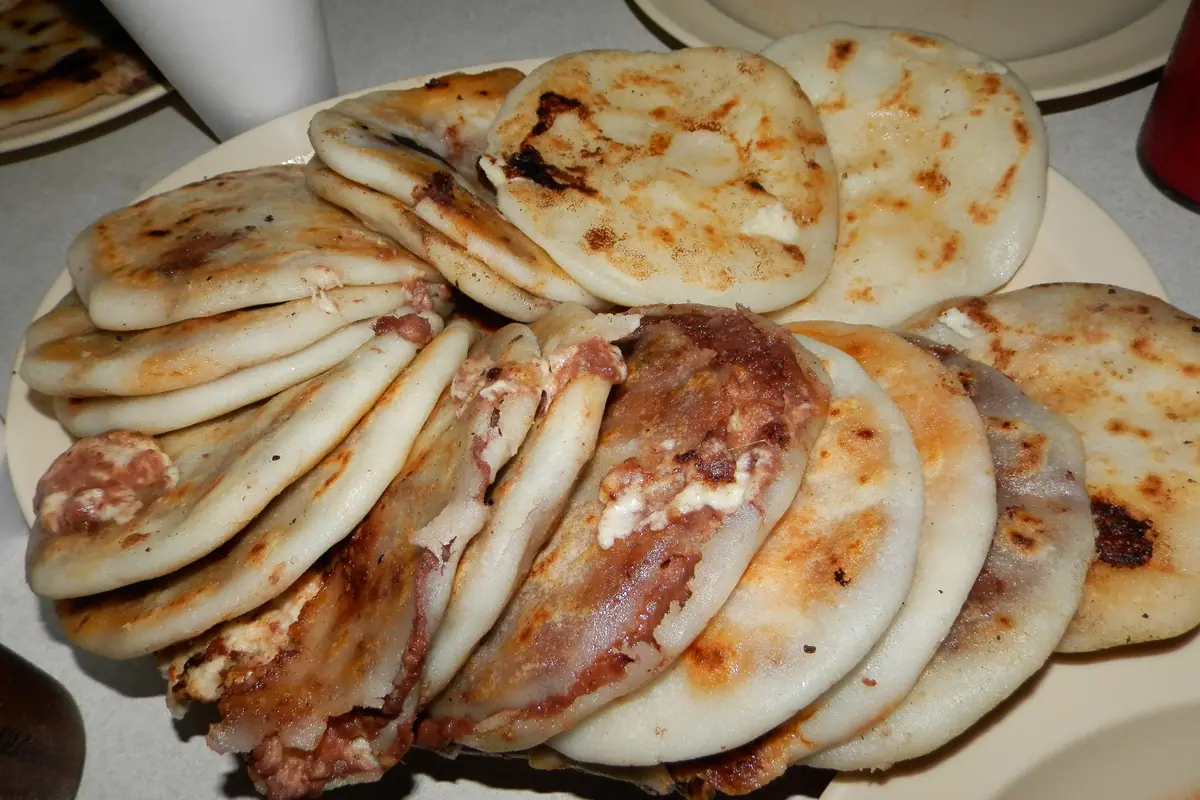
Everything begins with the pupusa. A puck of corn masa, patted flat by hand, stuffed with quesillo cheese, refried beans, chicharrón or the fragrant green loroco flower, then griddled until it blisters and sighs. It arrives with curtido — a tart slaw of cabbage, carrot and oregano — and a thin, sharp tomato salsa, and it is eaten with the fingers, no cutlery, no ceremony. The country celebrates its signature dish on the second Sunday of November, when towns set up comales in the street and the queue is part of the pleasure.
The wider repertoire is more varied than most visitors expect. Seek out yuca frita con chicharrón, boiled then fried cassava piled with crackling and curtido; riguas, sweet corn and cheese cakes wrapped in husk; elote loco, a street corn smothered in mayonnaise, cheese and hot sauce; and tamales de elote, made from tender young corn rather than the denser nixtamalised masa. Drinks are their own education: horchata de morro, jicao, cebada, atol de elote served steaming in the cool highlands, and minutas, shaved ice drenched in fruit syrup, which everyone eats in the hot lowlands regardless of age.
For seafood, head to the working port at La Libertad, where the malecón fills with stalls selling coctel de conchas, ceviche and whole fried fish pulled off the boats the same morning. In Suchitoto, order gallo en chicha, a rooster braised in fermented corn liquor, dark and faintly sweet and almost impossible to find outside the region. And leave room for the sweets: quesadilla salvadoreña, a dense cheese pound cake, plus torrejas and canoas de plátano sold from bakery windows and school gates.
Mayan Ash, Colonial Plazas: The Landmarks You Must See
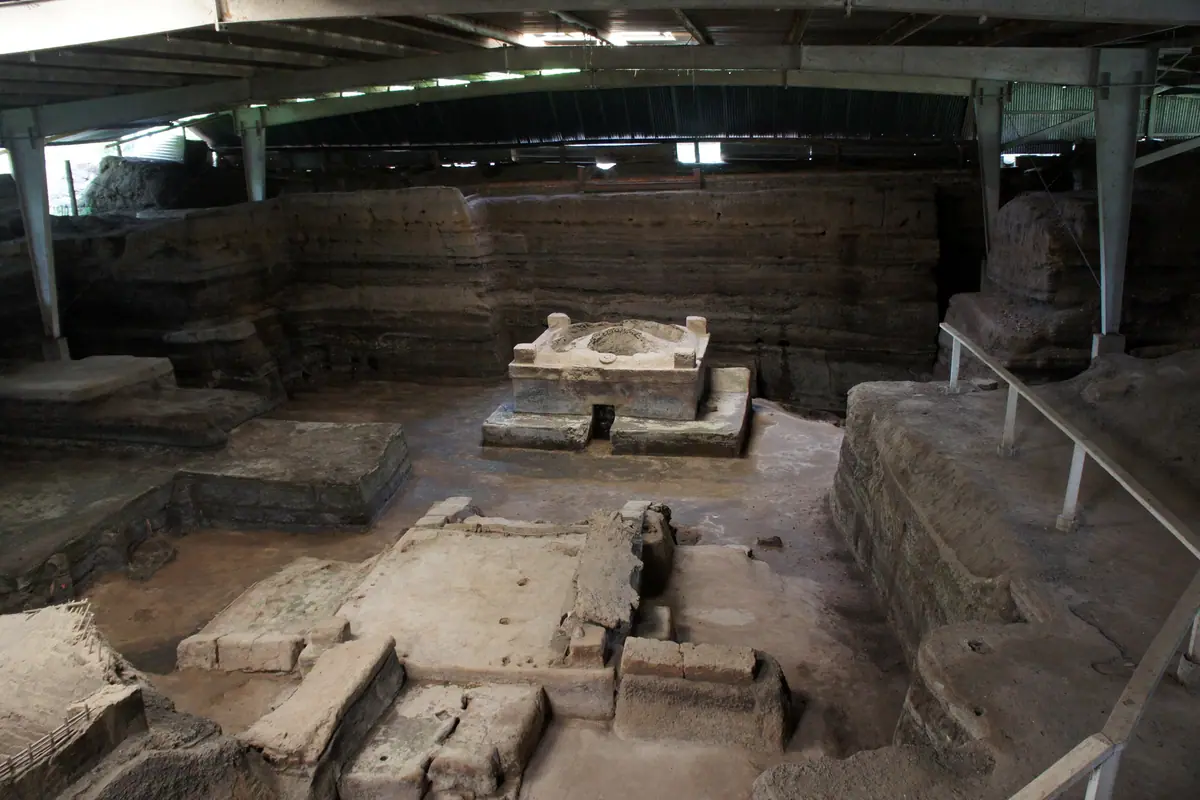
El Salvador's headline archaeological site is Joya de Cerén, a farming village buried by volcanic ash around 600 AD and preserved so completely that it is often called the Pompeii of the Americas. You walk between the foundations of kitchens, storehouses and sleeping quarters, past beds of maize and agave still in place, and the intimacy of it is what stays with you. Pair it with San Andrés in the Zapotitán valley, a large ceremonial centre with pyramids and a ball court, and with Tazumal in Chalchuapa, whose stepped stone pyramid is the most imposing pre-Hispanic structure in the country.
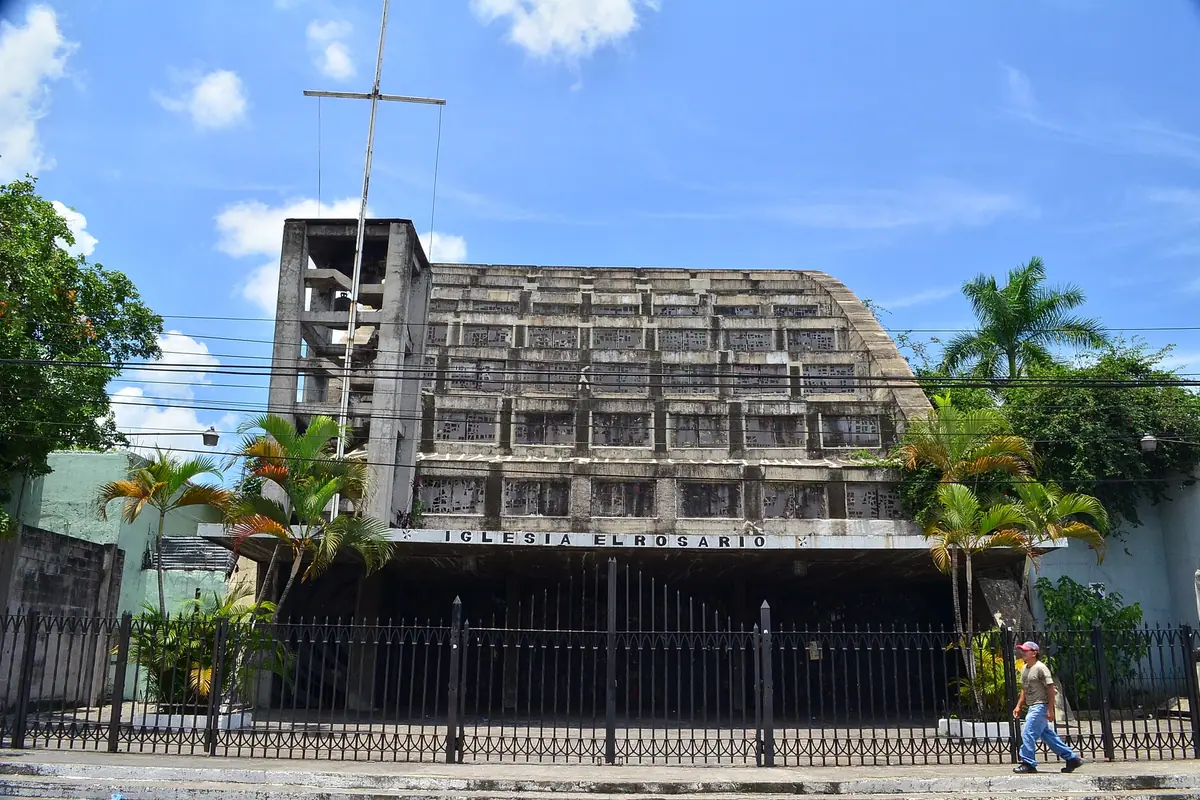
In the west, Santa Ana rewards a full afternoon: the neo-Gothic Catedral de Santa Ana, with its twin spires and pale interior, faces a plaza that leads on to the ornate Teatro de Santa Ana, a gilded early-20th-century opera house where you can often catch a performance for the price of a coffee. Back in San Salvador, do not skip Iglesia El Rosario, a sculpted concrete landmark where coloured glass turns the nave into a rainbow, and the Museo Nacional de Antropología for the pre-Columbian collection that gives all those ruined sites their meaning.
Suchitoto is the country's most photogenic colonial town, all whitewashed walls, indigo dye workshops and the bell tower of Santa Lucía church above a cobbled square. Below it, Lake Suchitlán spreads out with bird-filled islets reachable by small boat, and the centre's art and peace spaces explain a great deal about how this town rebuilt itself after the civil war. Nearby, the crater lake at Coatepeque — a deep blue caldera with a small island at its heart — is the classic sunset stop on any western circuit.
The Ruta de las Flores: Coffee Towns and Weekend Market Tables
The Ruta de las Flores threads through a chain of highland towns about an hour west of the capital, and it is the single best introduction to Salvadoran small-town life. Juayúa is the anchor, famous for its weekend food festival where the plaza fills with grills, pupusa comales and stands selling rabbit, iguana and sweet corn dishes; the town's black Christ is the focus of a lively January fiesta. Concepción de Ataco is the prettiest of the group, its walls painted with murals, its lanes stacked with coffee shops, weaving cooperatives and galleries.
Apaneca sits highest, surrounded by coffee farms that produce the Bourbon, Pacas and Pacamara varietals the country is quietly proud of; a tour of a beneficio, where the cherries are washed and dried, usually ends with a cupping session and a view down to the sea. Smaller stops matter just as much: Salcoatitán for its ceramics and picture-postcard square, Nahuizalco for a night market strong on woven palm and Nahua-Pipil heritage, and Ahuachapán for the steaming vents of Los Ausoles, a geothermal field you can smell long before you see it.
Above all of this rises the Apaneca-Ilamatepec range. From the Cerro Verde viewpoint you look across to Volcán de Izalco, the near-perfect cone once called the Lighthouse of the Pacific because sailors navigated by its glow, and to the crater of Santa Ana, which holds a turquoise sulphur lake. The Santa Ana climb is a half-day outing, four to five hours round trip, best started early before the clouds roll in; the Izalco walk is shorter and easier, and the two together make the definitive volcano day in El Salvador.
Crafts, Markets and Festivals: Culture You Can Carry Home
Artisan traditions here are regional and specific, which makes shopping far more interesting than the usual souvenir hunt. Ilobasco, in Cabañas, is the home of sorpresas — tiny, astonishingly detailed clay miniatures hidden inside larger figures, from nativity scenes to kitchens to football pitches. La Palma, in Chalatenango, is known for brightly painted wooden crosses, animals and boxes in a naive folk style, while Guatajiagua in Morazán keeps alive a Lenca tradition of black pottery, and Nahuizalco weaves palm into baskets, mats and hats.
In San Salvador, the Mercado Central is where locals actually shop — herbs, cheeses, dried shrimp, flowers and atol stands — while the Mercado Ex-Cuartel is the better bet for crafts, hammocks, leather, textiles and embroidered blouses. If you are in the capital at the start of August, Fiestas Agostinas takes over the city for six days of parades, fairground food and religious processions honouring the Divine Saviour of the World; the flower-and-palm festival at Panchimalco in May is smaller, older and more atmospheric.
Two more dates are worth planning around. Semana Santa brings processions and intricate sawdust and flower carpets laid in the streets of towns across the country, best seen in the colonial highland villages. Día de los Difuntos on 2 November is a genuinely local affair: families gather in cemeteries with food, marigolds and music, and visitors are generally welcomed quietly and respectfully. Then there is the pupusa holiday in November, when the whole country seems to be eating in the street at once.
Surf Coast, Cloud Forest and Practical Wisdom
El Salvador's Pacific coastline packs a remarkable range into a short strip. El Tunco and neighbouring El Sunzal are the surf hubs, black-sand coves with point breaks, cheap guesthouses and sunsets that empty the beach — the south swells run strongest from March through October. El Zonte is quieter and rockier, Playa El Cuco and Playa El Espino stretch long and empty in the east, and the Bahía de Jiquilisco, a vast mangrove biosphere reserve, offers kayaking, turtle nesting and crab soups you will not forget. Farther east, the Golfo de Fonseca rewards the climb up Volcán de Conchagua with views across three countries.
Inland, El Boquerón — the crater atop the San Salvador volcano — is an easy half-day with a loop trail and food stalls, and Puerta del Diablo gives a jagged, windy panorama over Lake Ilopango. For something cooler and greener, the Montecristo cloud forest on the Honduran border is a trinational reserve of mossy oaks and orchids where, with luck and an early start, you will hear quetzals.
Practical notes that make a real difference: the country uses the US dollar, so no currency maths is required, though you will want cash for markets and small-town buses. Tap water is not for drinking; bottled or filtered is everywhere. Spanish opens doors, but guides in the main tourist areas speak good English. Build your itinerary around the light — start archaeological sites at opening time, save market towns for late afternoon, and leave the coast for sunset. Five to seven days covers the highlights comfortably; ten days lets you slow down, spend two nights in the Ruta de las Flores and still finish with your feet in black sand.
Frequently asked questions
How many days do I need for a tour of El Salvador?
Five to seven days is enough for the essentials: San Salvador and its museums, Joya de Cerén with Tazumal, the Ruta de las Flores, Suchitoto and a night or two on the surf coast. Ten days allows a slower pace, a volcano climb, Montecristo cloud forest and time in the eastern beaches around Bahía de Jiquilisco.
When is the best time to visit El Salvador?
November to April is the dry season, with clear volcano views and the coffee harvest running December through February. May to October is greener and quieter, with heavy afternoon showers and the strongest surf swells. August brings the capital's Fiestas Agostinas, and the pupusa holiday falls on the second Sunday of November.
What food should I try first in El Salvador?
A pupusa de quesillo con loroco, eaten by hand with curtido and salsa roja. From there, work through yuca frita con chicharrón, riguas, tamales de elote, atol de elote and minutas, then look for gallo en chicha in Suchitoto and ceviche at the port in La Libertad.
Are the archaeological sites worth visiting without a guide?
You can visit Joya de Cerén, San Andrés and Tazumal independently, and each has on-site interpretation. A local guide adds a great deal, though, especially at Joya de Cerén, where the buried village comes alive when someone explains the houses, the fields and the ash layer that froze it in time.
Is it easy to get around El Salvador and what should I carry?
Distances are short, so day trips by private car or tour van are simple, and the colourful repurposed buses cover most routes cheaply. Carry US dollars in cash for markets and small towns, drink bottled water, pack a light rain shell from May to October, and bring a layer for highland towns like Apaneca and Juayúa, which get cool after dark.
Plan it — tours in El Salvador
Live search, booked directly with trusted providers.
Sort the rest of your trip
Everything for El Salvador, in one place
Stay in El Salvador
Hotels, guesthouses and apartments — compared in one search.
Search hotels
Transfer in El Salvador
Private driver waiting on arrival — no queues, no surprises.
Book a transfer
Stay online in El Salvador
Travel eSIM — data the moment you land, no roaming bills.
Get an eSIM