The Democratic Republic of the Congo is not a place you stumble into — it is a place you plan for, and that is exactly what makes it unforgettable. The Congo River curls through rainforest the size of Western Europe, volcanoes smoke above gorilla forests, and in Kinshasa the rumba rarely stops. Come for the wildness, stay for the food, music and hospitality that hold it all together.
Why the DRC Rewards the Patient Traveller
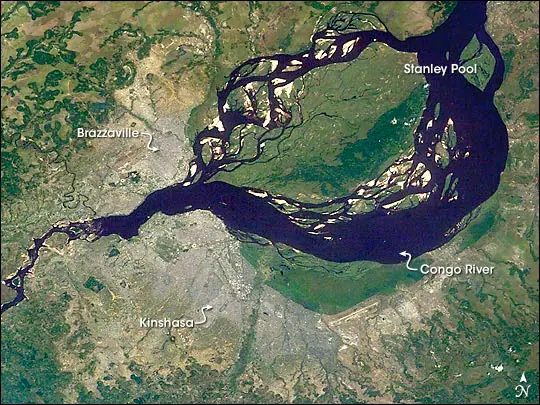
This is Africa's second-largest country by land area, and the honest truth is that only a fraction of it can be visited comfortably. Roads vanish into laterite, flights are few, and distances are measured in days rather than kilometres. That scarcity is the point: the places you do reach — a lava lake at dusk, a family of gorillas in bamboo, a river market piled with smoked fish — feel earned rather than packaged. Kinshasa and Brazzaville stare at each other across the wide, slow expanse of Malebo Pool, and everything downstream is river, forest and sky.
Timing matters more here than almost anywhere. The south and centre, Kinshasa included, are driest from roughly mid-May to September and again from December to February; the volcanic northeast around Goma and the gorilla forests are most workable from late December through February and from June to August. Those dry windows mean firmer tracks, easier trekking and fewer cancelled internal flights. The rains do not make travel impossible, but they make it slow — and mud in the rainforest is a serious negotiator.
Practicalities first: most visitors need a visa arranged before arrival, and a yellow fever vaccination certificate is required to enter. Independent travel is possible but rarely wise outside the capital — a licensed local operator, a sturdy 4x4 with a driver-guide and a flexible schedule will transform your trip. If your time is limited, ten days to two weeks covers Kinshasa plus one eastern park well; three weeks lets you add a second park or a river journey. Bring cash in clean, newer notes, a headlamp, and more patience than you think you need.
Kinshasa: Rumba, Painting and the Grand Marché
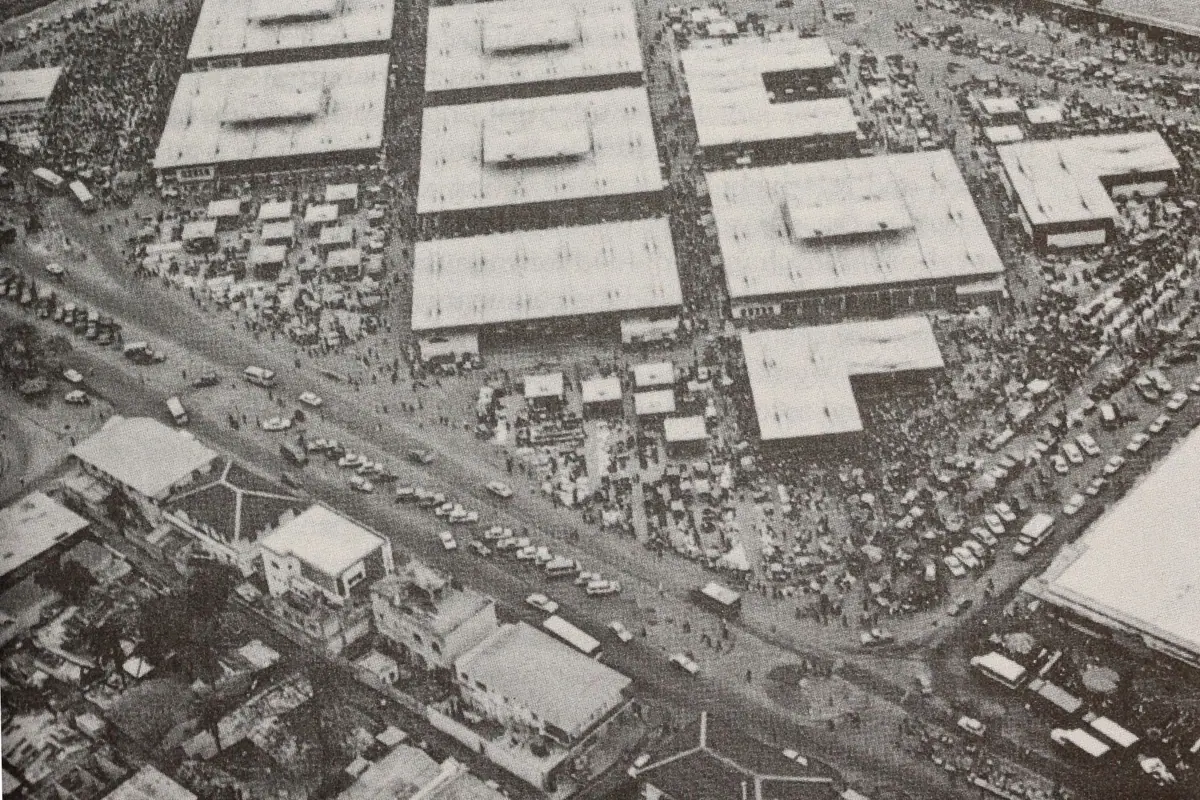
Kinshasa is a sprawling, noisy, endlessly inventive capital, and its commercial heart is the Marché Central in Gombe, a few minutes from the river. Come in the morning when the aisles are still navigable: bolts of wax print and pagne, pyramids of cassava and chilli, smoked river fish, second-hand clothing, hardware, and vendors who will happily explain what you are looking at. On the skyline nearby, the concrete tower at the Limete interchange stands as a landmark you will use to orient yourself more than once.
For art, head to the Académie des Beaux-Arts, where the city's popular painting tradition — vivid, narrative, often sharply political — is taught and sold in open studios. The national museum, reopened in a striking modern building, gathers masks, sculpture and regalia from across the country's many cultures: Kuba textiles, Pende masks, Luba objects and royal insignia. On the edge of the city, the Lola ya Bonobo sanctuary cares for orphaned bonobos, a species found nowhere else on earth, in a green valley above the Lukaya river.
After dark, Kinshasa belongs to music. Rumba and soukous pour out of nganda bars — the informal, open-front drinking spots where grilled meat, cold beer and a live band share the same space — and the neighbourhood of Matonge in the Kalamu commune is the classic place to hear it. This is the city of Franco Luambo and Papa Wemba, of sharp-suited sapeurs who treat dressing well as a form of philosophy. Go with a local, keep your phone out of sight, and let the evening run long.
Virunga: Volcanoes, Mountain Gorillas and Lake Kivu
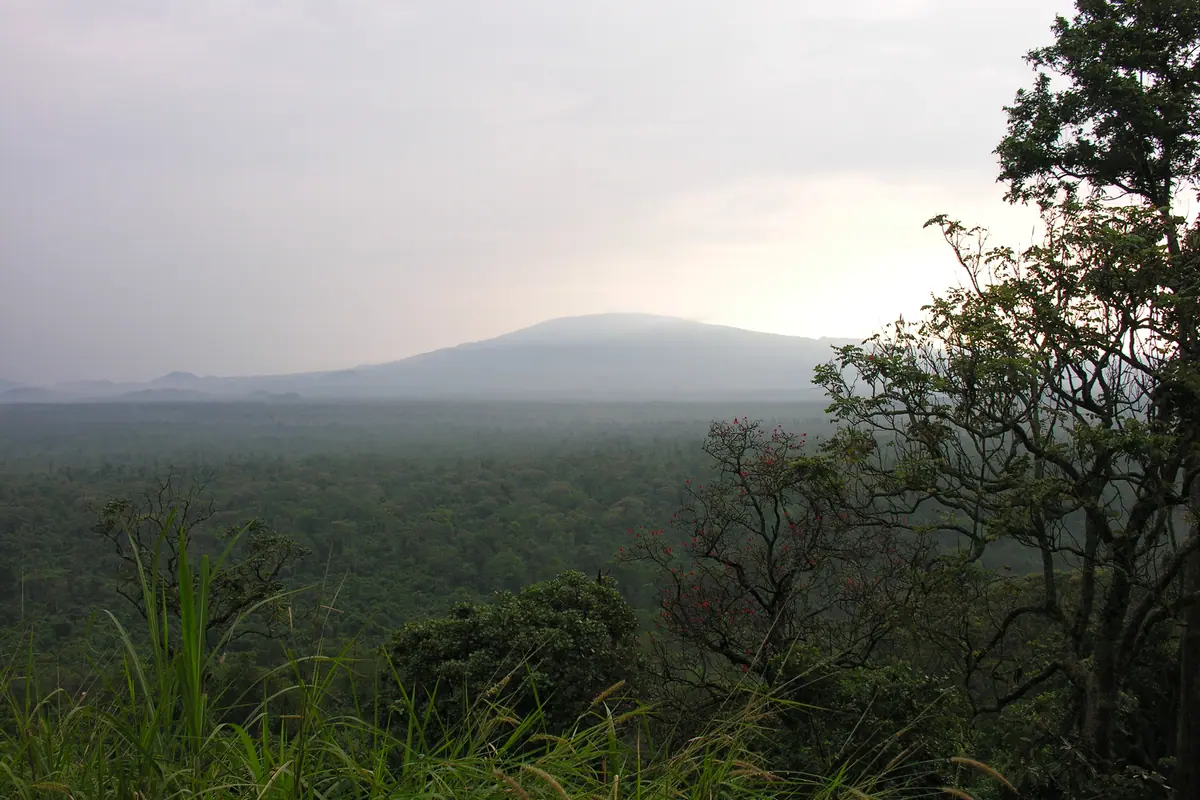
Virunga National Park, Africa's oldest, stretches along the eastern border and holds an almost absurd range of landscapes: glacier-capped peaks, savanna plains patrolled by elephants and buffalo, hippo-filled rivers and the misty forests of the Mikeno sector, where mountain gorillas are tracked by small groups each morning. Further north, the Rwindi plains and the shores of Lake Edward offer some of the finest big-mammal viewing in Central Africa when conditions allow.
The signature experience is Nyiragongo, the volcano that rises behind Goma. The climb starts at the Kibati ranger post and takes most walkers four to six hours up through forest and then bare volcanic rock, with porters carrying gear for a modest fee. You sleep in basic shelters on the rim, at around 3,470 metres, above one of the world's most active lava lakes — a shifting red pool that glows through the night and throws heat at your face. Descend the following morning; near-freezing temperatures at the top make a proper jacket essential.
After the mountain, Lake Kivu is the decompression chamber. The lakeside towns of Goma and Bukavu, the quiet shores of Idjwi Island and tiny Tchegera Island all offer swimming, boat trips and evenings of grilled fish. Treat the region as guided territory: security in the eastern provinces can shift quickly, so travel with established operators, follow local advice and build slack into your itinerary.
Kahuzi-Biega and the Eastern Lowland Gorillas
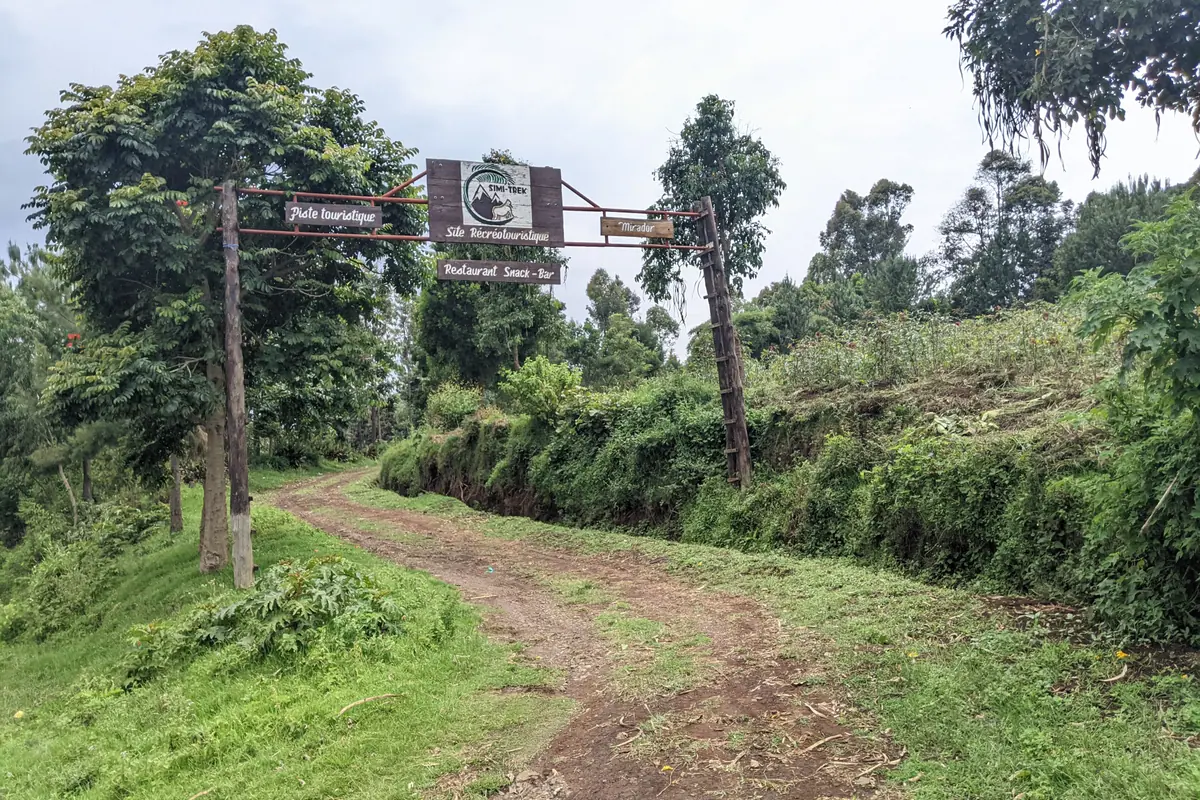
South of Lake Kivu, Kahuzi-Biega National Park protects the last substantial population of Grauer's gorillas — eastern lowland gorillas, bigger and darker than their mountain cousins. Trekking here happens in montane and bamboo forest between roughly 2,000 and 2,600 metres, usually in small parties with a maximum of eight visitors spending an hour with a habituated family. The walk can be steep and muddy, but the reward is time with animals that are far less accustomed to crowds than elsewhere.
The park takes its name from two dormant volcanoes, Mount Kahuzi and Mount Biega, both climbable on longer hikes that pass crater lakes and dense, dripping forest. The surrounding highlands brim with waterfalls and small tea and coffee plots. Permits are limited — particularly in the December to February and June to August dry windows — so arrange them well ahead through a local operator, who will also handle the paperwork that visitors cannot do alone.
Nearby Bukavu is the natural base: a hilly lakeside city of colonial-era avenues, busy markets and views across the water to Rwanda. Just outside town, the Lwiro primate rehabilitation centre rescues and cares for chimpanzees and other primates, and it is worth a half-day visit. If you have time, take a boat to Idjwi Island, where things slow down to the pace of coffee drying on a mat and fishermen heading out at dusk.
Rainforest, Rivers and Waterfalls of the Interior
Deep in the Ituri Forest, the Okapi Wildlife Reserve at Epulu is one of the few places on earth where you can see the okapi — the shy, striped forest giraffe that became a national symbol — in its native habitat. The reserve is also home to Mbuti and Efe communities whose knowledge of the forest is extraordinary, and to forest elephants and thirteen primate species. It is remote, logistically demanding and, at times, subject to security concerns, so visit only with operators who know the area well.
Salonga National Park is the country's other great wilderness: Africa's largest tropical rainforest reserve, split into two blocks and reachable only by river or light aircraft. Bonobos, forest elephants, slender-snouted crocodiles and the Congo peafowl live here, and the sheer scale of it — more than 36,000 square kilometres — is the attraction as much as any single species. Elsewhere, at Kisangani, the Boyoma Falls mark seven cataracts along a bend of the Congo River, and the surrounding markets are among the most atmospheric in the interior.
Closer to the capital, the province of Kongo Central delivers landscapes that surprise first-time visitors. The twin-drop Zongo Falls thunders into a rainforest gorge a few hours from the city, the Kisantu Botanical Garden displays an exceptional collection of tropical plants laid out in the late nineteenth century, and the caves at Mbanza-Ngungu burrow for kilometres underground. Down on the Atlantic coast, near Muanda close to the river's mouth, mangroves and long empty beaches complete a very different side of the country.
Congo on a Plate: Moambe, Pondu and Malewa Culture
Congolese cooking is built around the cassava plant, the palm tree and the river. The dish most people call the national one is moambe — chicken or fish simmered in rich palm-nut sauce — served with rice or with kwanga, the fermented cassava bread steamed in leaves and sliced like a dense, slightly sour loaf. Alongside it comes pondu, also called saka-saka: pounded cassava leaves slow-cooked with palm oil, groundnut, chilli and smoked fish until they turn deep green and silky. Fumbwa, a wild forest spinach, is prepared in much the same way.
In Kinshasa, the everyday eating happens at malewa — informal street kitchens with plastic chairs and a handful of pots — and at nganda bars, where grilled chicken, goat, pork and brochettes come with plantain, chilli sauce and cold drinks. Look for liboke, fish or meat wrapped and steamed inside banana leaves so it arrives fragrant and steaming; makayabu, salted and dried river fish; madesu, a slow-cooked bean stew; and makemba, fried sweet plantain. Grilled tilapia from the Congo River, eaten with the fingers and a squeeze of lime, is the meal most travellers remember longest.
Eat with your right hand, accept the shared plate, and wash your hands when the bowl is passed around the table. Market snacks are excellent and cheap: mikate, little fried dough balls, roasted maize, groundnuts, sugarcane, mangoes in season and safou, the oily purple African plum. To drink, there are local lagers, malafu — palm wine tapped fresh and best the same day — and lotoko, a strong distilled spirit made from maize or cassava that should be approached politely and cautiously. Refusing food outright can read as rejection; a small taste and a compliment will carry you far.
Frequently asked questions
When is the best time of year to visit the Democratic Republic of the Congo?
Aim for the dry seasons. The south and centre, including Kinshasa, are driest from roughly mid-May to September and again from December to February. In the east, around Virunga, Kahuzi-Biega and Goma, the most reliable windows are late December to February and June to August, when trekking trails are firmer and internal flights are less likely to be delayed by weather.
Do I need a visa and any vaccinations to enter the DRC?
Most nationalities need a visa arranged in advance, and the country has been expanding its electronic visa system, so check current requirements with the nearest embassy or consulate well before you travel. A yellow fever vaccination certificate is required for entry, and malaria prophylaxis, typhoid and hepatitis A protection are strongly recommended. Carry your certificate with your passport at all times.
Is it safe to travel in the DRC, and can I go independently?
Some regions are stable and rewarding for visitors; others, particularly parts of North Kivu, South Kivu and Ituri, see periodic conflict and should be visited only with experienced operators who monitor conditions daily. Kinshasa is manageable with local guidance. Always check your government's current travel advice, avoid travelling after dark outside cities, and never trek or drive into remote areas without a licensed guide and a reliable vehicle.
How much time do I need, and what should I book first?
Ten days to two weeks is enough for Kinshasa plus one eastern park, such as Virunga or Kahuzi-Biega. Three weeks lets you add a second park or a river journey. Book gorilla and volcano permits first, since numbers are strictly capped and the dry-season slots fill months ahead; permits, internal flights and park logistics are usually the largest costs of a Congolese trip, so plan your budget around them.
What languages are spoken, and how do I get around the country?
French is the official language, while Lingala dominates Kinshasa and the northwest, Swahili the east, and Tshiluba and Kikongo in the centre and southwest. English is not widely spoken, so a few phrases of French or Lingala go a long way. Between cities, most travellers fly on domestic carriers or travel in a hired 4x4 with a driver-guide; river boats are slower but unforgettable, and public buses and shared taxis are best left to those who know the routes.
Plan it — tours in Democratic Republic of the Congo
Live search, booked directly with trusted providers.
Sort the rest of your trip
Everything for Democratic Republic of the Congo, in one place
Stay in Democratic Republic of the Congo
Hotels, guesthouses and apartments — compared in one search.
Search hotels
Transfer in Democratic Republic of the Congo
Private driver waiting on arrival — no queues, no surprises.
Book a transfer
Stay online in Democratic Republic of the Congo
Travel eSIM — data the moment you land, no roaming bills.
Get an eSIM