The Democratic Republic of the Congo is a country of impossible distances — a place where the Congo River bends for thousands of kilometres and the road between two neighbouring cities can swallow three days. Flying is not a luxury here; it is the only honest way to see the country in a week. This route strings together the capital's music and markets, a lava lake that glows at midnight, gorillas in the mist of the Virunga volcanoes, and the waterfalls of the far south-east.
Why Congo Rewards Travellers Who Fly
Almost everything that makes the DRC unforgettable is scattered across a landmass the size of a continent's worth of countries. Kinshasa sits in the west on the Malebo Pool; the volcanoes and rainforest parks lie in the east along the Rwandan and Ugandan borders; the copper belt and its strange, mineral-rich plateaus stretch down towards Zambia. Overland travel between these worlds is slow, unpredictable and sometimes impossible, so a week-long trip only works if you build it around short domestic hops of one to three hours.
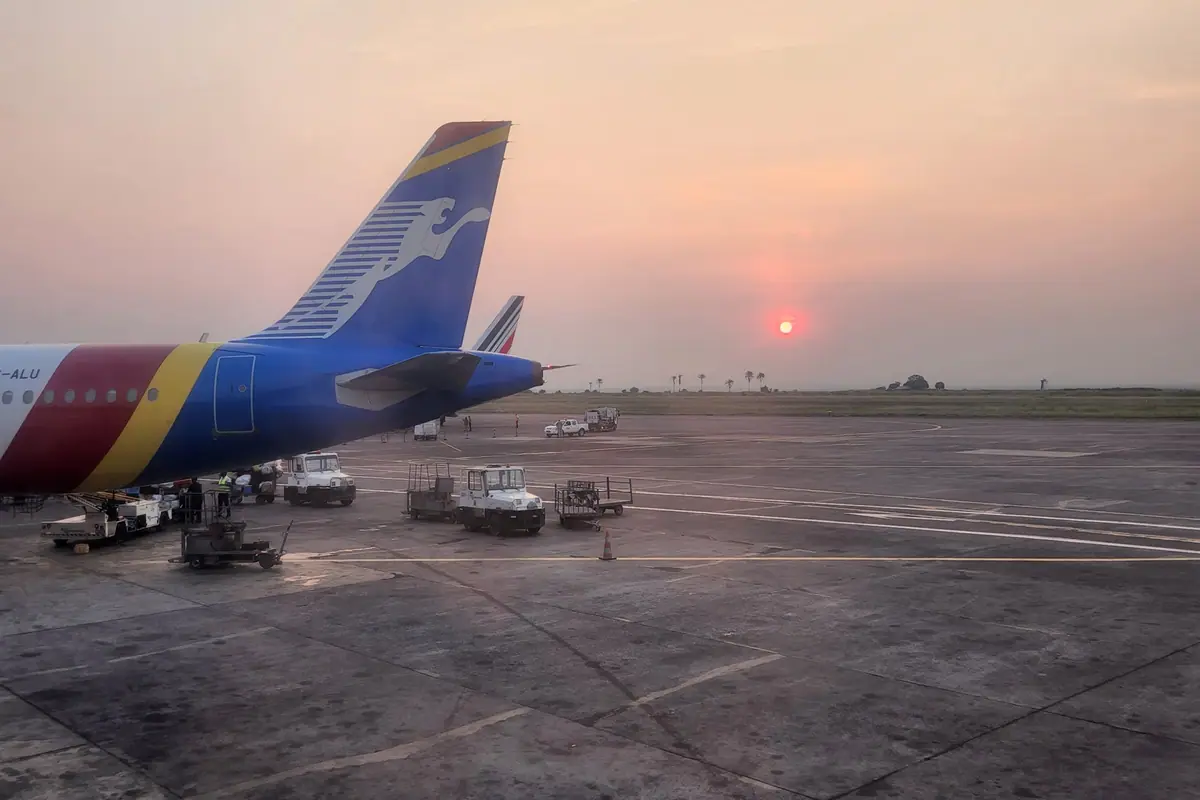
Practically, that means embracing the rhythm of small-aircraft travel. Domestic operators and charter companies connect Kinshasa's N'djili airport with Goma, Bukavu, Kisangani, Lubumbashi and a handful of airstrips beside the national parks. Schedules are thin, aircraft are small, and the useful departures almost always leave in the morning before afternoon storms build. Keep baggage light — a soft bag under about 15 kilograms is the usual expectation — and treat every flight as movable, because weather, fuel and demand can shift a departure by hours.
Build in slack. If you have seven days on the ground, spend no more than four of them in transit-heavy mode, and always keep one buffer day before your international departure from Kinshasa. The dry seasons, roughly mid-May to September and December to February, give the most reliable flying weather; the long rains from March to May and the short rains in October and November bring mud, cloud and cancelled hops.
Days 1–2: Kinshasa, the River Capital
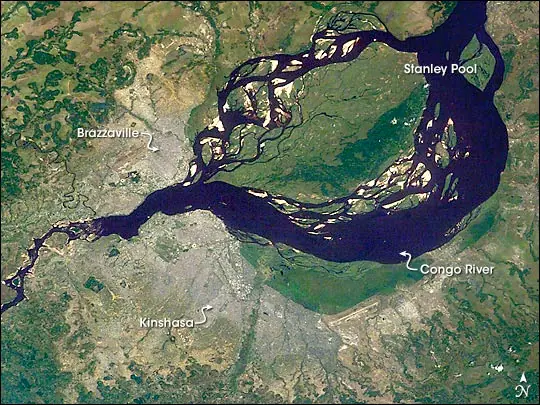
Start where the country's pulse is loudest. Kinshasa is a city of ten million conversations, and the best introduction is a slow drift along Boulevard du 30 Juin, past the monumental Stade des Martyrs and the concrete tower at Limete, which locals treat as a landmark the way other cities treat a cathedral. The National Museum of the DRC holds masks, drums and ceremonial objects that make sense of the cultures you will meet later in the interior, while the Marché des Valeurs in Gombe is the place to bargain for raffia cloth, malachite and hand-carved figures.
Give your second day to the living Congo. The Congo River itself is the star: at the rapids near Kinsuka, the water that has crossed the entire country finally tears itself apart over black rock, and fishermen balance on the stones with nets that have not changed in centuries. Further out of town, the Nsele Valley park and the forested edges of Lac Ma Vallée offer a softer, greener face of the capital, and the bonobo sanctuary on the city's outskirts is the most humane place in the world to meet our closest living relative. End the night with live rumba — the Congolese guitar sound that has travelled everywhere and belongs here.
Keep the evening free to repack and confirm tomorrow's flight; you will want to be at the domestic terminal early, before the morning haze thickens.
Day 3: The Flight East to Goma and Lake Kivu
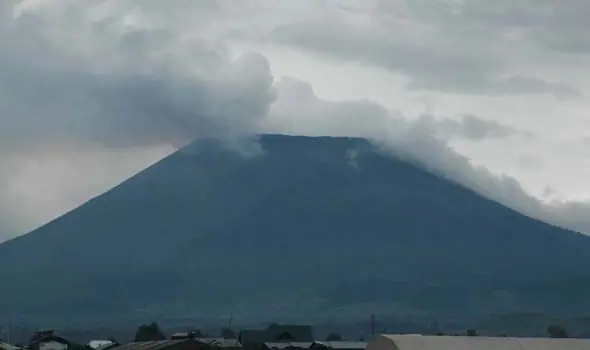
The flight east is the hinge of the whole trip: two to three hours in a small plane that lifts you out of the humid basin and sets you down on the edge of a volcanic field. Goma announces itself from the air, a grid of dark stone streets squeezed between Lake Kivu and the perfect cone of Nyiragongo. The city is built on old lava, and locals will tell you exactly which flow swallowed which neighbourhood and when.
Spend the afternoon recovering and acclimatising. Lake Kivu is one of Africa's great inland seas, warm and strangely clear, with fishing canoes paddling out at dusk in formations that look choreographed. Sip locally grown coffee on a lakeside terrace and watch the light change on the water, or take a short drive north towards Sake for views back across the bay to the volcanoes. Goma sits at around 1,500 metres, so the evenings are cool — a welcome change from Kinshasa's heat.
This is also the moment to double-check your arrangements for the days ahead. Permits for gorilla trekking and the volcano climb are limited, must be arranged well in advance, and are usually tied to specific dates. Before travelling to this part of the country, confirm current security conditions with your ground operator; access in North and South Kivu can change quickly, and flexibility is part of the deal.
Days 4–5: Virunga National Park, Gorillas and the Nyiragongo Crater
Virunga National Park is Africa's oldest and most extraordinary protected area, a chain of volcanoes, savannah and glacier-topped peaks running along the western arm of the Great Rift Valley. The headline experience is the mountain gorillas of the Virunga Massif, tracked on foot from the forested slopes around Bukima. You hike in the cool of the early morning with rangers and trackers who know individual families by name, and after one to four hours of walking through nettles and bamboo you spend a strictly limited hour in their presence. Nothing prepares you for it.
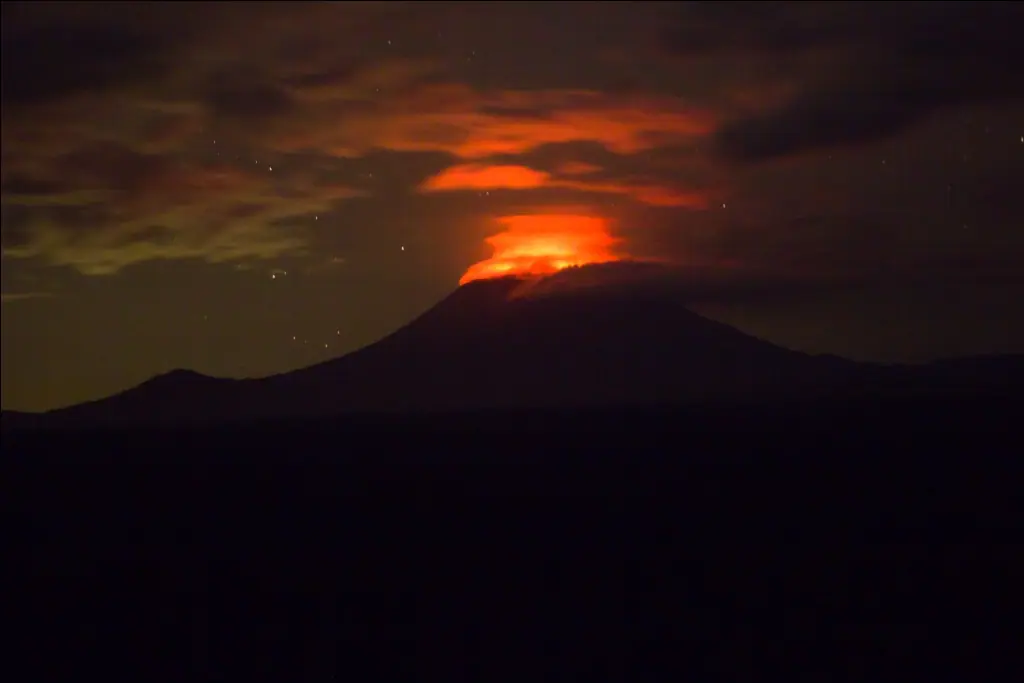
The second great set piece is Nyiragongo, whose summit holds one of the world's largest lava lakes. The climb usually starts in the afternoon, takes most walkers five to six hours up through forest and then bare volcanic rock, and ends at a rim camp where you sleep in a shelter and watch the crater boil orange through the night. Nights at altitude are genuinely cold — bring a fleece, a hat and a decent sleeping bag. The descent the next morning takes three to four hours and is hard on the knees.
If time allows, add the savannah sector around Rwindi and Lake Edward, where hippos line the shallows in astonishing numbers and elephants move through the acacia. Do remember that trekking and climbing here depend on ranger availability and park conditions; itineraries are confirmed close to the date, not months ahead.
Day 6: Bukavu and the Gorillas of Kahuzi-Biega
From Goma, a short flight or a slow but beautiful road along the lake brings you to Bukavu, a town draped over five peninsulas on Kivu's southern shore. Its mood is gentler than Goma's: colonial-era avenues, a busy market at Nyawera, and views across to Idjwi Island, one of the largest inland islands in Africa. This is the gateway to Kahuzi-Biega National Park, the only place on earth where you can track eastern lowland gorillas — bigger, darker-furred and far less visited than their mountain cousins.
The trek here usually begins in the highlands around Tshivanga and takes you through bamboo and montane forest beneath the twin dormant peaks of Mount Kahuzi and Mount Biega. Groups are small and permits scarce, so this is one of the most intimate wildlife encounters left in Central Africa. Nearby, a primate rehabilitation centre at Lwiro cares for confiscated animals and offers a sobering counterpoint to the forest.
Keep the late afternoon for the Tshibati waterfalls or a boat trip on the lake, then eat grilled tilapia by the water. Bukavu is the right place to slow down before the last leg of the journey.
Day 7: Lubumbashi, Kisangani and the Flight Home
Your final day depends on which thread of the country you want to pull. A flight south to Lubumbashi drops you into the copper belt, a city of wide boulevards, mineral wealth and a fine regional museum celebrating the cultures of the south-east. From here, Kundelungu National Park and the Lofoi Falls — a sheer cascade plunging hundreds of metres off the Kundelungu plateau — make a dramatic last excursion, while Upemba National Park offers lakes, wetlands and a deep history of iron-working kingdoms.
Alternatively, fly north-west to Kisangani, the river port where the Congo becomes navigable. The Boyoma Falls, a seven-stage series of rapids just downstream, are best seen from the Wagenia fishing scaffolds that have leaned over the water for generations, and the old riverside streets carry the memory of a very different era of trade. Either way, you finish with an evening flight back to Kinshasa — or, if the airline gods are unkind, an extra night there before your international connection.
Give yourself that cushion. A week of flying in the DRC is a negotiation with weather, aircraft and paperwork, and the travellers who enjoy it most are the ones who plan the big sights and leave the small logistics to chance.
Frequently asked questions
Can I realistically see both the mountain gorillas and climb Nyiragongo in one week?
Yes, if you fly between the key stops and start in Kinshasa with your permits already arranged. A workable shape is two days in Kinshasa, a flight east, one full day of gorilla trekking, an overnight climb on Nyiragongo, then a hop south to Bukavu or a return flight to the capital. It is tiring but it fits inside seven days, provided you keep one spare day for delays.
How light do I need to pack for domestic flights in the DRC?
Very light. Small aircraft used on internal routes typically allow around 15 kilograms in a soft-sided bag, and hard cases are awkward to stow. Bring layers rather than bulk: cool evenings in Goma and Bukavu and genuinely cold nights on the volcano rim mean a fleece, a light waterproof and a hat matter more than a second pair of shoes.
When is the best time of year to visit?
The drier months from mid-May to September and the shorter dry window around December to February give the most dependable flying weather and the best trekking conditions. The rains of March to May and October to November bring cloud, mud and a higher chance of cancelled flights — though the forests are lush and visitor numbers drop.
What paperwork and health precautions do I need?
Most visitors need a visa arranged before arrival, either through the official e-visa system or at an embassy, plus a passport with at least six months' validity. A yellow fever vaccination certificate is required for entry. Malaria prophylaxis is strongly advised, and travel insurance that covers remote medical evacuation is worth the cost given how far some of these destinations are from major hospitals.
Is it safe to travel independently on these flights?
Domestic flying is a normal part of life in the DRC and the practical risks are mostly delays and rescheduling rather than drama. Security in the eastern provinces, particularly around North and South Kivu, can change quickly and independently of the parks themselves, so check current conditions and travel with a reputable local ground operator who handles permits, transfers and park access.
Plan it — flights in Democratic Republic of the Congo
Live search, booked directly with trusted providers.
Sort the rest of your trip
Everything for Democratic Republic of the Congo, in one place
Stay in Democratic Republic of the Congo
Hotels, guesthouses and apartments — compared in one search.
Search hotels
Transfer in Democratic Republic of the Congo
Private driver waiting on arrival — no queues, no surprises.
Book a transfer
Travel insurance
Medical cover, delays and lost baggage — sorted before you go.
Get covered