Cameroon squeezes a whole continent into one border: Saharan dust in the far north, black volcanic sand in the south-west, rainforest older than the ice ages, and highland kingdoms where a sultan still holds court. What ties it together is the table — a pot of ndolé simmering with bitterleaf and groundnuts, a shared bowl of achu passed around a Grassfields courtyard. This guide is for travellers who want to eat, listen and walk their way through it.
Eating Cameroon: Bitterleaf, Palm Oil and the Country's Great Shared Bowl
Cameroonian cooking is regional to its bones. In Douala and the coastal south, order ndolé — bitterleaf and groundnuts pounded into a dark, faintly bitter stew with fish, prawns or beef, served with fried plantain or miondo, the sour cassava sticks wrapped in leaf. Alongside it comes eru, shredded wild leaves cooked down with waterleaf and red palm oil, scooped up with a ball of water fufu. In Kribi, the same palm oil runs through ndomba: fresh fish steamed inside banana leaves with pepper and spices, eaten on the sand within sight of the boats that landed it.
Head into the Grassfields and the cooking changes again. Achu — a yellow soup built from taro and palm oil, poured over pounded cocoyam — is the ceremonial dish of the north-west, traditionally eaten from one bowl with the right hand, fingers rolling the cocoyam through the soup. In towns you will also meet poulet DG, a rich braised chicken with fried plantains and vegetables, and near Bafoussam the Sunday staple of koki, black-eyed peas steamed into a dense, orange-yellow cake inside banana leaves.
Between meals, Cameroonians snack constantly and well. Soya brochettes — skewers of grilled beef rubbed with peanut and spice — smoke on roadside grills from Yaoundé to Maroua, and beignets (puff-puff) are sold in paper cones by the dozen, sometimes with roasted maize and coconut. For drinks, look for folere, an iced deep-red hibiscus infusion, cold baobab juice in the north, matango palm wine in the south-west, and bilbil, the millet beer poured from calabashes around Maroua. If you want to understand the country's ingredients in one morning, walk Marché Mokolo in Yaoundé or the Marché des Fleurs in Douala and follow your nose.
Yaoundé and Douala: Museums, Markets and the Sawa Beat
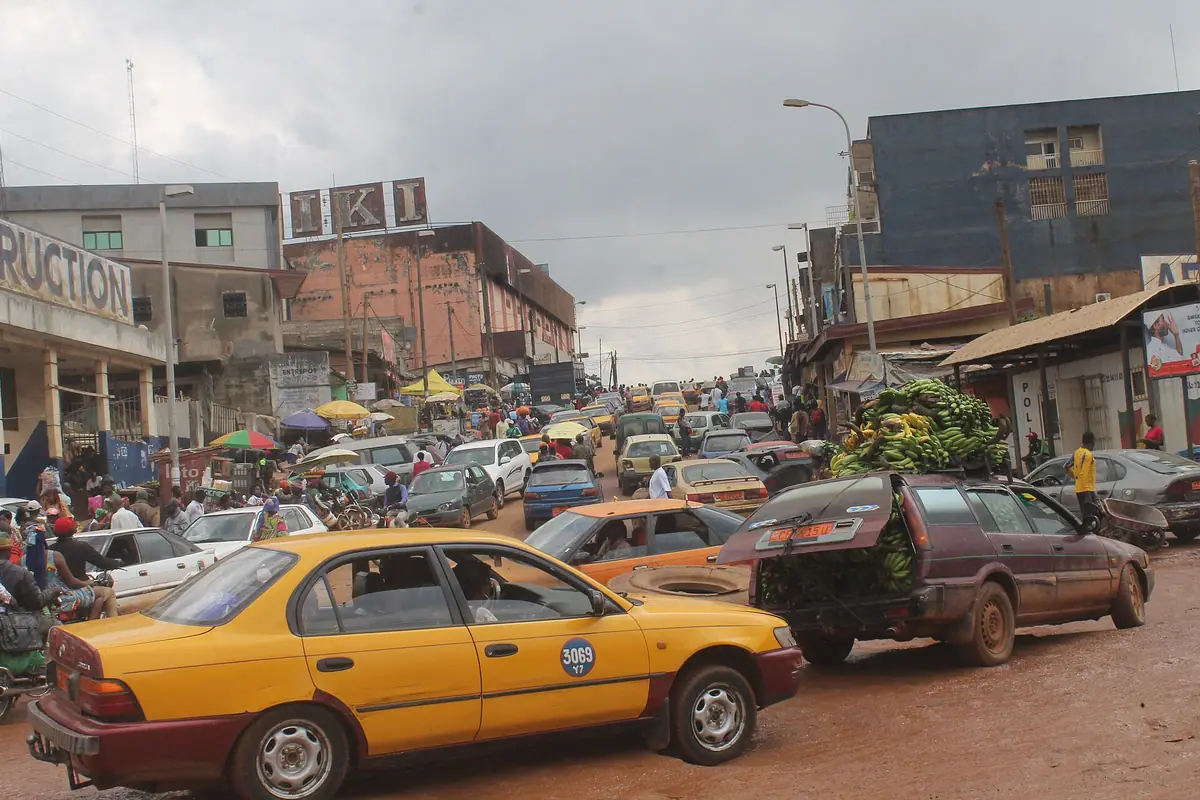
Yaoundé, the political capital, spreads over seven hills and rewards slow wandering. The Musée National du Cameroun, housed in a former presidential palace, gives the clearest single introduction to the country's kingdoms, masks and instruments, while the Basilique Marie-Reine-des-Apôtres dominates the skyline from its hilltop. Climb or drive up Mont Fébé for the classic view over the city's rooftops, then spend the evening at Bois Sainte-Anastasie, where open-air grills turn out grilled fish and brochettes until late. The Cathédrale Notre-Dame-des-Victoires and the bustling Marché Central are easy add-ons on foot.
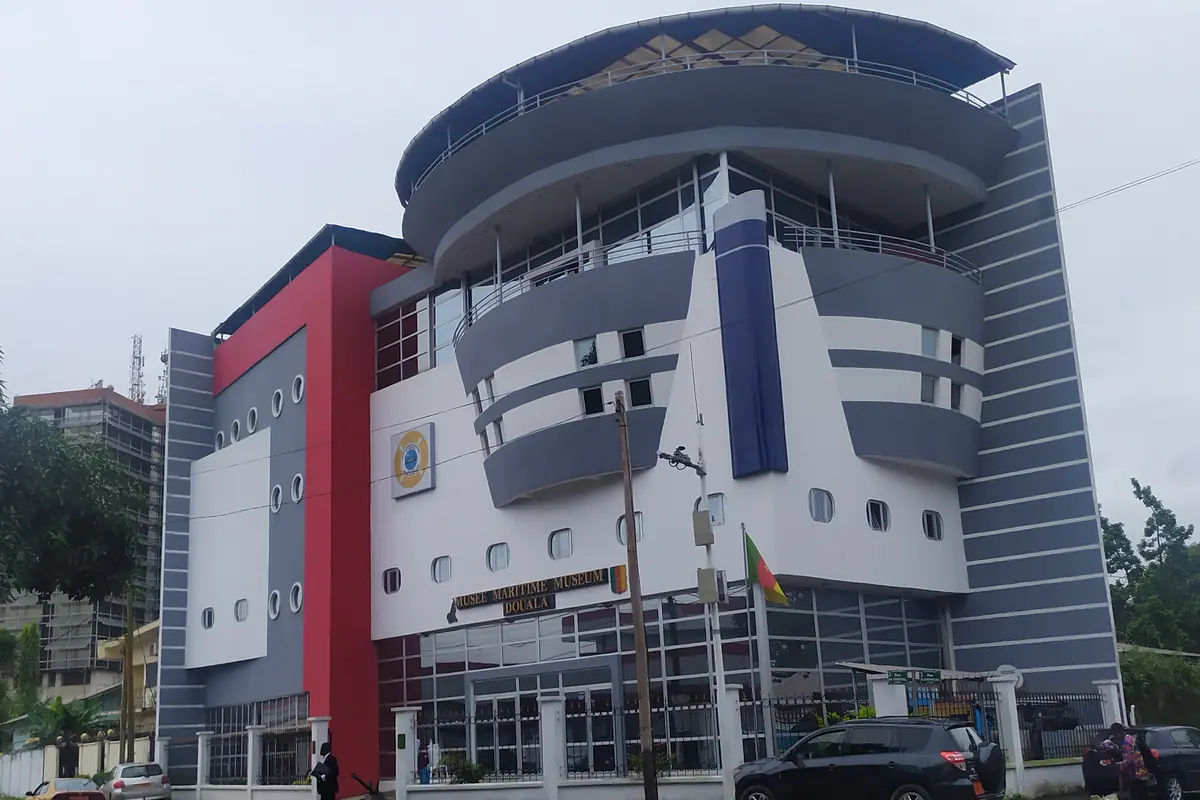
Douala, the economic capital and almost every visitor's entry point, wears its history in the Bonanjo district: colonial-era buildings, the Douala Maritime Museum, and streets that remember the city's role in the transatlantic trade. The Wouri Bridge links the centre to Bonabéri across the estuary, and Akwa is where the city eats at midnight — grilled fish, pepper soup, and music that spills onto the pavement. The Marché des Fleurs is the best single stop for fabric, spices and baskets before you leave the coast.
Time your trip to early December and you may catch the Ngondo, the Sawa water festival on the Wouri, when traditional chiefs and teams of paddlers race wooden pirogues and the riverbanks fill with drumming. It is one of the most vivid cultural events in Central Africa and, unlike staged performances, it belongs entirely to the people who live there. Dry-season days from November to February are the most comfortable for both cities; the rains that fall from June to October are heavy and persistent, especially near the coast.
The Grassfields: Palaces, Bronze and Mountain Tea in Bamenda and Foumban
The highlands of the north-west and west are Cameroon's cultural heartland, a landscape of eucalyptus groves, crater lakes and fondoms that have governed themselves for centuries. Bamenda is the natural base. From here, day trips reach Bafut Palace, a vast traditional compound with a sacred forest and a living ruler, and Menchum Falls, a thundering cascade near Wum. Life slows down for 'African tea' — milky, spiced tea sold in small shops — and the markets of the Ring Road, at Bali, Ndop and Kumbo, where you can buy raffia wine, clay pipes and hand-woven cloth.
Foumban, the seat of the Bamoun kingdom, is the single most rewarding stop in the region. The Sultan's Palace is a monument in itself, combining Islamic and local architectural ideas, and its adjoining museum holds an extraordinary collection of royal thrones, pipes, robes and bronze work. Foumban is also a craft town: bronze casters use the lost-wax method in open workshops, and embroidered tunics, brass jewellery and beaded calabashes are sold in the streets around the palace. If your visit coincides with the Nguon festival, held roughly every two years, you will see the kingdom's ceremonial parades and the public appearance of the sultan.
Further south-west, the Musée de Bandjoun and the chief's compound at Bandjoun continue the theme of royal art, while the Ndop plain around Bamenda fills with vegetables and coffee farms. The dry season from November to February is the best window: roads in the highlands are slowly improving but still rough after rain, and a four-wheel-drive vehicle with a local driver turns a punishing day into a comfortable one. Nights at altitude are genuinely cold, so pack a fleece even though you are close to the equator.
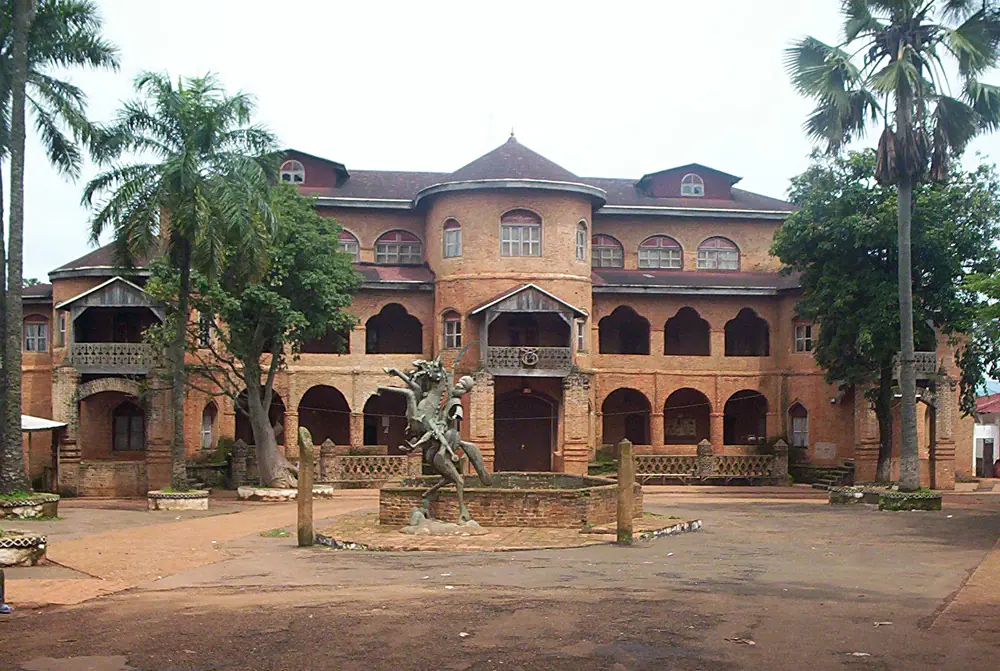
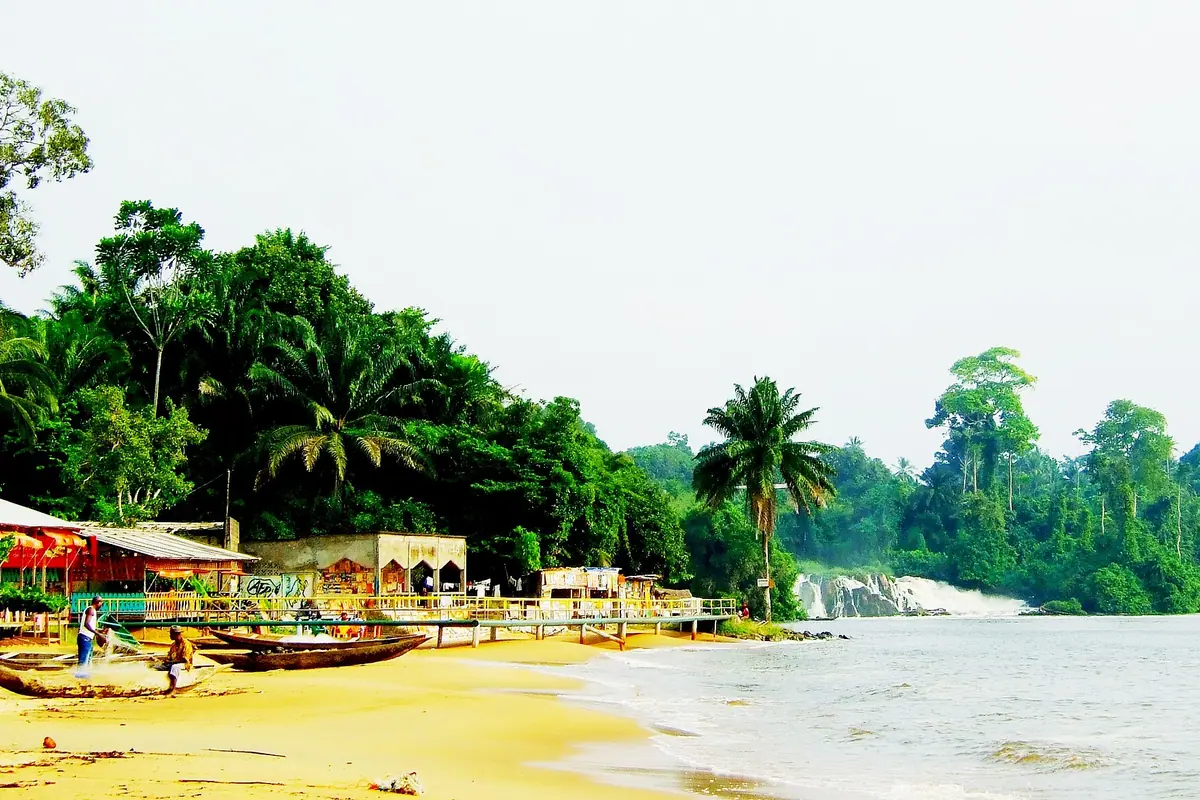
The Southern Coast: Kribi's Falls, Limbe's Black Sand and Campo's Forest
Kribi is Cameroon's most relaxed beach town, and its signature sight is the Chutes de la Lobé, where a river drops directly into the Atlantic in a series of wide cascades you can reach on foot along the sand. Evenings belong to the beach restaurants, where barracuda and prawns come off the grill with fried plantain and pepper sauce. A short drive south, Grand Batanga and the Campo Ma'an National Park offer a wilder coast — forest elephant, buffalo and lowland gorilla habitat, plus stretches of empty beach where fishing villages still pull in nets by hand.
Limbe, an hour or so from Douala, sits under the bulk of Mount Cameroon and is built on volcanic black sand. Its botanic garden, established in the late nineteenth century, is one of the oldest in the region and a shady place to learn about the country's extraordinary plant life, from orchids to mahogany. Nearby, a wildlife centre cares for rescued chimpanzees, drills and gorillas, and the coastline here — down to Bimbia and the old slave-trade sites — adds a sombre historical layer to the scenery.
Inland from the coast, the Ekom-Nkam falls near Nkongsamba drop roughly eighty metres into the rainforest in two main strands and are an easy half-day stop on the road between Douala and the western highlands. Coastal weather splits sharply: December to February is drier and clearer, while June to October brings torrential rain and muddy roads. Whatever the season, a guide who knows the tracks is worth far more than a rental car.
Mount Cameroon, Korup and Dja: Climbing Fako and Walking Ancient Rainforest
Mount Cameroon, known locally as Fako, rises to 4,095 metres straight from the sea and is the highest peak in West Africa. The standard route starts at Buea, a town of German colonial-era buildings and coffee farms, then climbs through forest, savannah and finally black volcanic ash to the crater rim. Most hikers take two to three days with a guide and porters, sleeping at a hut at Mann's Spring; the payoff is a sunrise over the Gulf of Guinea and, sometimes, the mountain's own smoke on the horizon. December to April is the realistic season, and each February the mountain hosts a famously brutal foot race to the summit.
For rainforest, two reserves stand out. The Dja Faunal Reserve in the south-east is a World Heritage-listed expanse of almost intact Congo Basin forest, home to gorillas, chimpanzees and forest elephants, visited only with a licensed guide and full self-sufficiency. Korup National Park near Mundemba, in the south-west, is one of the oldest rainforests on the planet, with a canopy walkway and trails where you can watch monkeys, hornbills and butterflies in numbers that feel almost implausible.
Neither reserve is a casual outing. Expect long transfers, basic lodging, leeches in the wet months and the constant hum of insects — and expect to remember it for years. Bring boots that drain, long sleeves, a head net and a proper rain shell; the wettest months from June to October can turn trails into streams.
The Far North: Rhumsiki's Peaks, Maroua's Markets and Waza's Elephants
Cameroon's far north looks nothing like the rest of the country. Around Rhumsiki, in the Mandara Mountains, volcanic plugs and spires rise out of a dry, boulder-strewn plain, and the Kapsiki Peak is the picture everyone brings home. Local guides will introduce you to the 'crab sorcerer', a diviner who reads the future by manipulating a crab and a small wooden bowl — a genuine tradition, not a tourist invention, though a small payment is expected. Walks between the villages take you past terraced fields and circular huts that seem to grow from the rock.
Maroua, the regional capital, holds one of the most colourful markets in the country: the Grand Marché, where Fulani traders sell indigo cloth, leatherwork, calabashes and kola nuts, and the smells of grilled meat and spices fill the air. West of here, Waza National Park is Cameroon's classic safari destination, best visited in the dry season from December to April when elephants, giraffes, lions and large antelopes gather around shrinking waterholes. Farther north still, the Logone floodplain and the shores of Lake Chad host huge flocks of waterbirds and a way of life shaped by fishing, cattle and seasonal flooding.
The north is hot, dusty and dry for much of the year, and the best months are November to March, when daytime temperatures drop enough for comfortable walking and night skies are extraordinary. Access is easiest by domestic flight to Garoua or Maroua followed by road transfer with a local operator; distances are long and checkpoints frequent, so allow more time than the map suggests.
Frequently asked questions
When is the best time to take a tour in Cameroon?
The dry season from November to February suits most of the country — the coast, the cities and the Grassfields are at their most comfortable, and roads are passable. The far north is best from November to March, while Mount Cameroon is usually climbed between December and April. Avoid June to October on the coast, when rainfall in Douala and Limbe is extremely heavy.
What food should I try first in Cameroon?
Start with ndolé, a bitterleaf and groundnut stew with fish or beef, and eru with water fufu. In the Grassfields, achu is the ceremonial dish to seek out, while Kribi is the place for fish steamed in banana leaves and grilled prawns on the beach. Wash it down with folere, the iced hibiscus drink, or palm wine in the south-west.
How long do I need to see Cameroon's highlights?
Two weeks is a realistic minimum. Allow three or four days for Douala and Yaoundé, three for the Kribi and Limbe coast, three for the Grassfields around Bamenda and Foumban, and a further four or more for the far north around Rhumsiki, Maroua and Waza. Domestic flights between the south and the north save days of driving.
Do I need a guide or organised tour in Cameroon?
Independent travel is possible in the cities, but a local guide is strongly advised for the highlands, the rainforest reserves of Dja and Korup, the Mount Cameroon climb and the far north. Guides handle permits, translate between French, English, pidgin and local languages, and know which roads are passable. Independent travel to some border regions and the Lake Chad area is best avoided.
What practical things should I sort before travelling to Cameroon?
Check visa requirements in advance, since most visitors need one before arrival, and make sure your yellow fever certificate is up to date — it is routinely checked. The currency is the CFA franc and cash is king outside the main cities, so carry enough for fuel, entry fees and market shopping. English and French are both official, with English widely spoken in the north-west and south-west.
Sort the rest of your trip
Everything for Cameroon, in one place
Stay in Cameroon
Hotels, guesthouses and apartments — compared in one search.
Search hotels
Transfer in Cameroon
Private driver waiting on arrival — no queues, no surprises.
Book a transfer
Stay online in Cameroon
Travel eSIM — data the moment you land, no roaming bills.
Get an eSIM