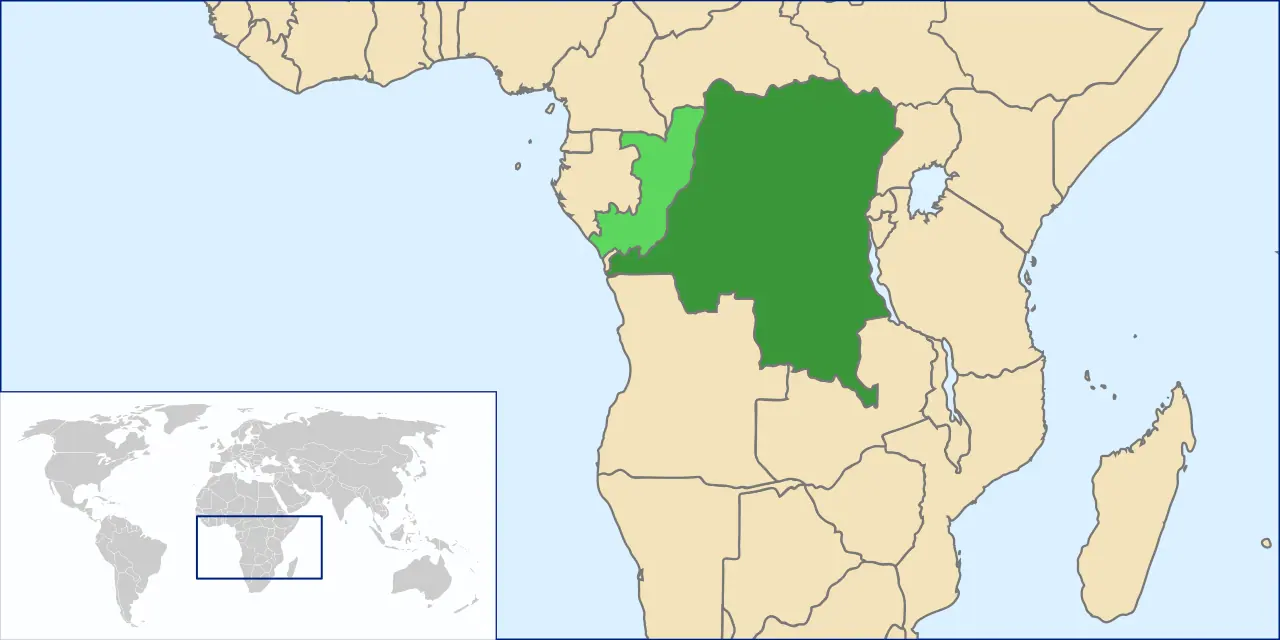
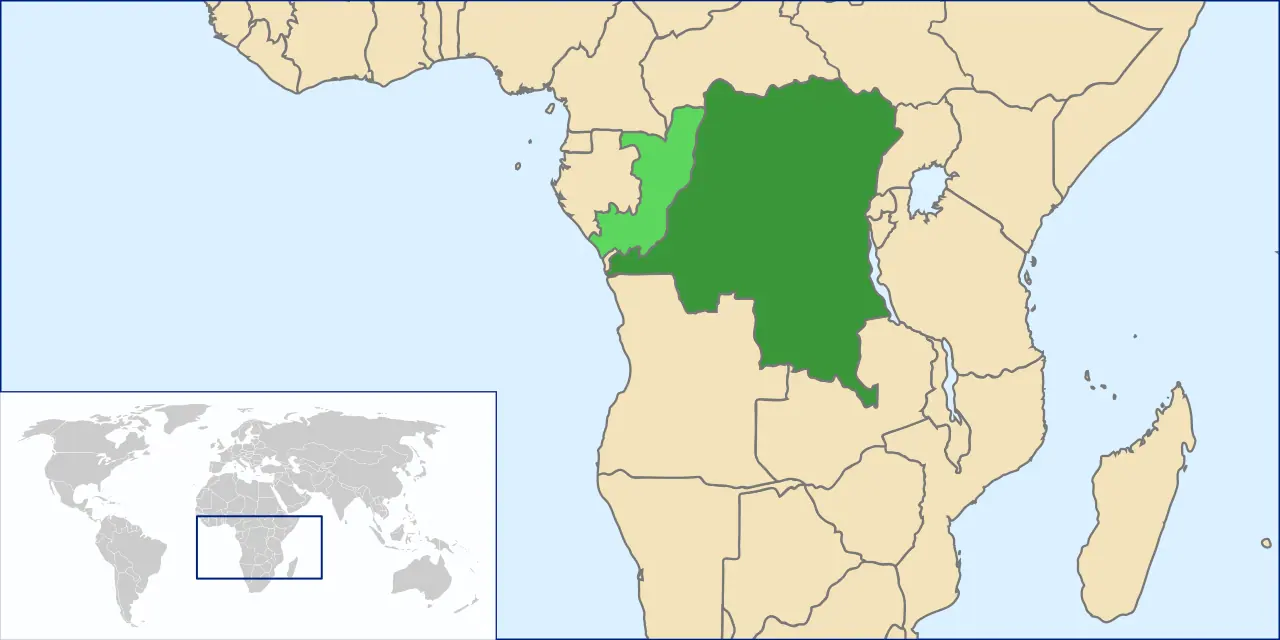
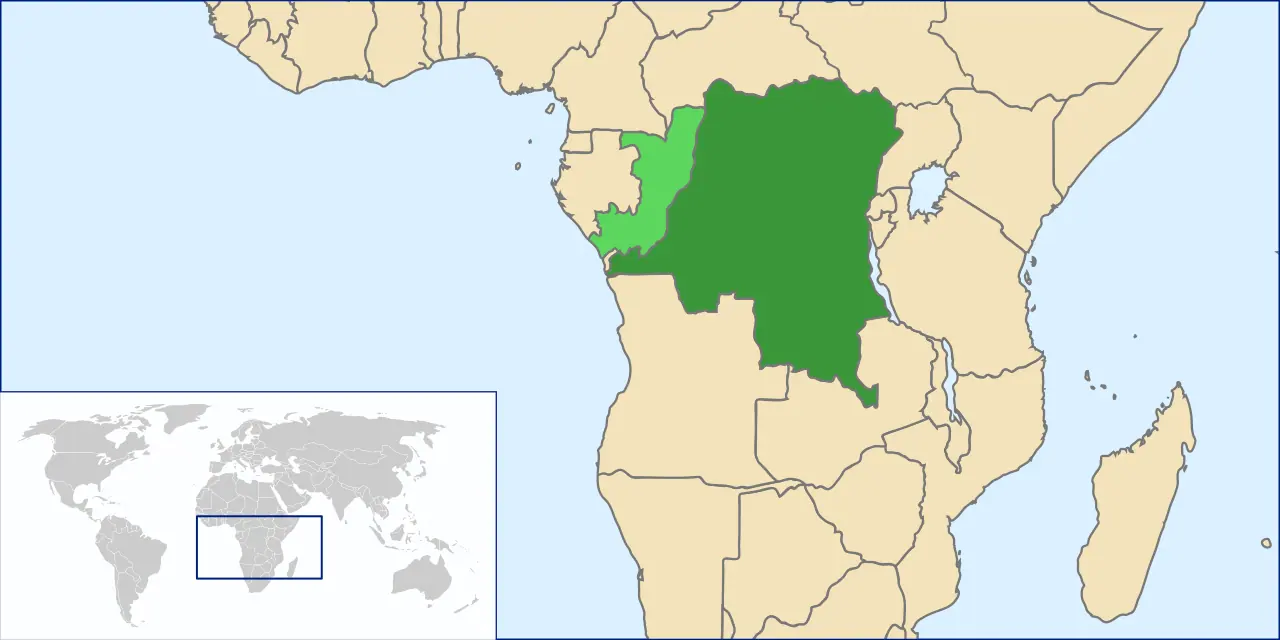
Ask about a hotel in Congo and the first question back is which Congo — the Republic of the Congo on the north bank of the great river, or the sprawling Democratic Republic of the Congo to the south and east. Both offer riverfront cities, rainforest lodges and a welcome that is warm, direct and refreshingly unhurried. This guide maps the neighbourhoods worth booking, the lodges worth the journey, and the landmarks to build a trip around.
Two Congos, One River: How to Think About Where You Stay
The Congo River does more than give the region its name; it organises the whole trip. Brazzaville, capital of the Republic of the Congo, and Kinshasa, capital of the Democratic Republic of the Congo, sit on opposite banks and are the closest pair of capital cities in the world after Rome and the Vatican. A short ferry hop separates them, which means you can genuinely sleep in one country and spend the afternoon in the other — a quirk worth planning a night around.
Accommodation across both countries falls into four rough tiers. In the cities, international-standard business hotels cluster in the administrative and commercial districts, reliable for air conditioning, generators and airport transfers. Alongside them sit mid-range boutique guesthouses, often in converted villas with gardens and a handful of rooms. Mission-run and NGO guesthouses offer simple, well-priced beds, usually booked by email well in advance. And then, far from any tarmac, there are the forest and savannah eco-lodges, where a handful of cabins sit inside or beside a national park.
Because supply is thin outside the capitals, the golden rule of Congolese travel is to book early and confirm twice. Rooms in Brazzaville and Pointe-Noire fill up around regional summits, oil-sector rotations and holidays, while park lodges may sell out months ahead for the short dry-season window. Build flexibility into your dates rather than your expectations.
Brazzaville: Riverfront Hotels and the City's Landmarks
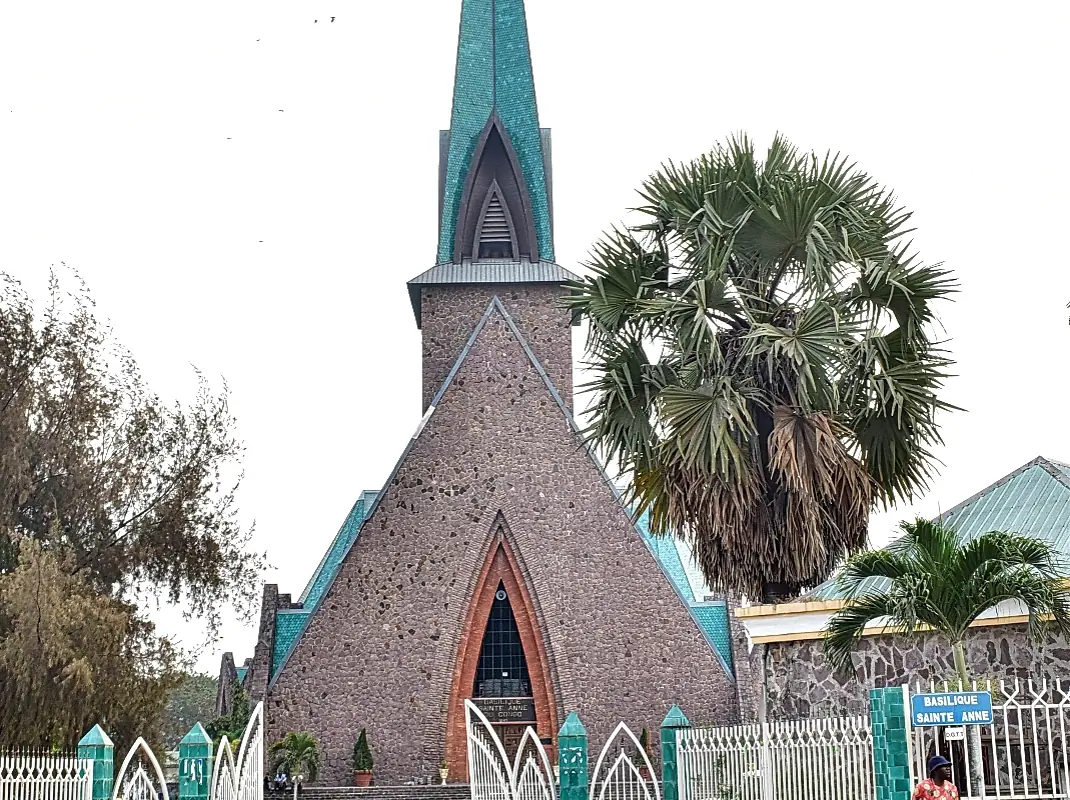
Most visitors base themselves in the Centre-ville, where the commercial towers and government buildings stand within walking distance of the river. It is here that the city's most photogenic landmark rises: the Basilique Sainte-Anne, a 1940s masterpiece with a sweeping green-and-ochre facade and an interior of slender concrete vaults that feels cool even at midday. A few blocks away, the Cathédrale du Sacré-Cœur and the riverside Mémorial Pierre Savorgnan de Brazza anchor a compact historic core that rewards a slow morning on foot.
Cross into the residential quarters and the mood changes. Poto-Poto is the city's artistic heart, known for a painting school whose style — elongated figures, earthy colour, wry social observation — decorates galleries and workshop walls. Bacongo, older and livelier, is where you find markets, bar-restaurants serving grilled fish with cassava and plantain, and the sound of Congolese rumba drifting from courtyards. The Marché Total is the classic stop for fabrics, carvings and a sensory overload of spices.
Leave time for the water itself. West of the centre, the Corniche road follows the Congo River past the Djoué rapids, where the current boils through rock channels in a way that makes the river's scale suddenly obvious. Nearby, the Nabemba Tower — the country's tallest building — and the national museum round out a full day. Sights are spread out, so choose a hotel with easy road access or a driver you trust; taxis are plentiful but negotiating fares takes patience.
Pointe-Noire and the Atlantic Coast
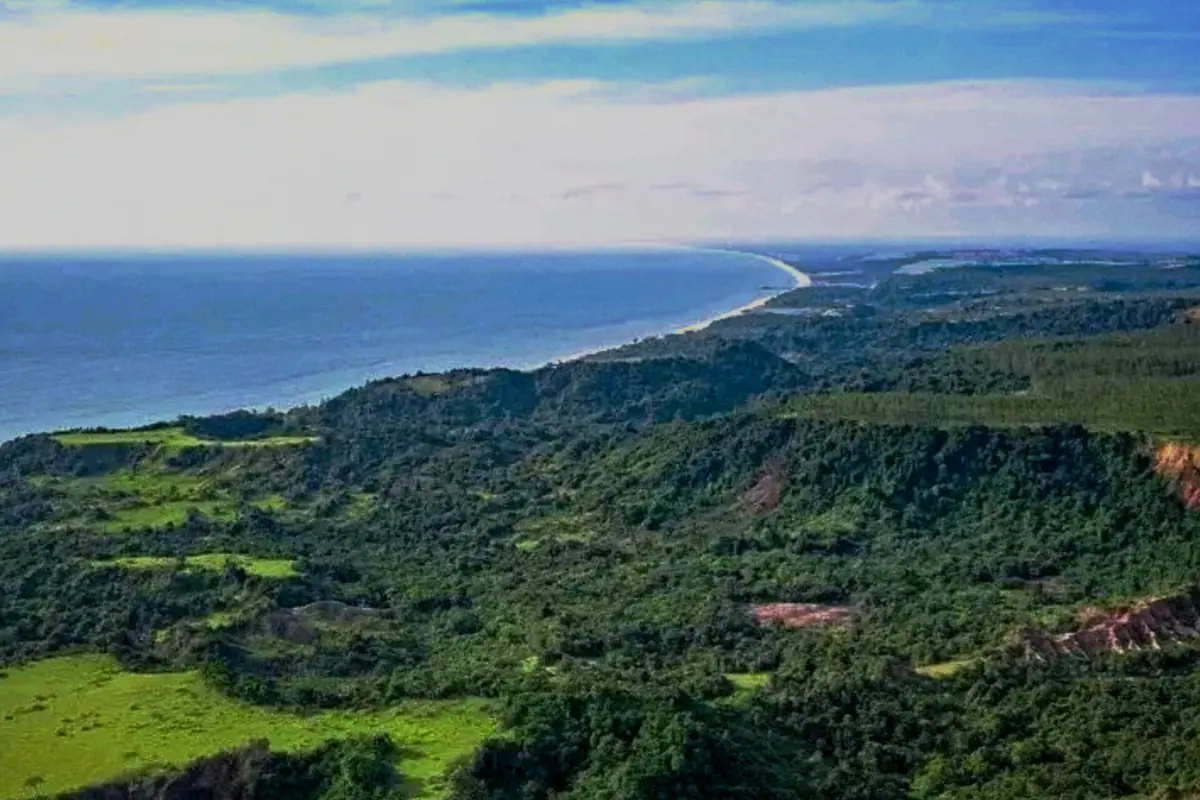
The Republic of the Congo's second city is a port and oil town with an unexpectedly good holiday face. Hotels range from business blocks near the centre to breezy beachside places out towards the Côte Sauvage, the wild stretch of surf-pounded sand where the Atlantic meets the forest. The water here is for looking at rather than swimming in, but the sunsets are the kind people plan evenings around.
The coast's signature excursion is the Gorges de Diosso, a canyon of red laterite and green scrub about half an hour north of town, best visited early before the heat builds. The same road leads to the regional museum at Diosso, housed in a former royal residence and filled with Loango kingdom objects, masks and musical instruments. Further out, Pointe Indienne marks the spit of sand where the coastline turns, and beyond it Conkouati-Douli National Park protects lagoons, mangroves, forest elephants and nesting turtles — a full-day or overnight trip that needs arranging in advance.
Getting here from Brazzaville is part of the experience. The railway that links the two cities is one of the region's great engineering stories, and while the road journey takes the better part of a day, the train offers a slow-moving view of forest, savannah and the Mayombe hills. Flying takes about an hour. Either way, coastal humidity and seasonal rain mean a hotel with working air conditioning and mosquito screens is worth paying extra for.
Kinshasa: Where to Stay in Africa's Vast Capital
Kinshasa is a city of superlatives and of scale, and its hotels reflect that. The Gombe district, close to the river and the main business addresses, holds the greatest concentration of comfortable, internationally run properties, with restaurants, banks and embassies within a few blocks. Ngaliema, further west along the water, trades some convenience for leafy streets and river views, while Limete suits travellers whose business lies inland.
The must-see list is long. Boulevard du 30 Juin is the city's grand artery and a good orientation point; from there you can reach the Cathédrale Notre-Dame du Congo, an imposing modern structure on a hill with commanding views, the Marché Central for fabrics and produce, and the Stade des Martyrs, a monumental landmark of concrete and memory. The Tour de l'Échangeur de Limete, a towering brutalist stack, is visible from much of the city and has become an unlikely emblem.
Two gentler stops deserve a half-day each. Lola ya Bonobo, a sanctuary in forested grounds on the southern edge of the city, cares for rescued bonobos — a species found only in this part of the world — and visits are guided and educational. Further out, Lac de Ma Vallée offers a calm green escape with simple waterside restaurants. Cultural evenings of Congolese rumba and soukous, the music that made this city famous, are the perfect way to end a Kinshasa day.
Forest Lodges and National Parks: Where Congo Gets Wild
The finest accommodation in either Congo is not in a city at all. Odzala-Kokoua National Park, in the northwest of the Republic of the Congo, protects a mosaic of rainforest, bai clearings and savannah where western lowland gorillas, forest elephants and bongos move through deep shade. A small number of eco-camps operate inside and around the park, with guided treks, boat trips and hide-based wildlife watching. The neighbouring Nouabalé-Ndoki National Park, part of a vast transboundary forest landscape, offers an even more remote version of the same experience.
In the Democratic Republic of the Congo, the headliners are the Virunga National Park, Africa's oldest, where the Nyiragongo volcano rises above the forests around Goma, and Kahuzi-Biega National Park near Bukavu, the classic place to track eastern lowland gorillas. Salonga National Park, reachable only by river and light aircraft, is the continent's largest forest reserve and strictly limited in access. Trekking permits and lodge beds for Virunga and Kahuzi-Biega are capped, so book well ahead and travel only when security conditions allow — these regions can close at short notice.
Expect simplicity rather than luxury in the forest: solar power, bucket or gravity-fed showers, early starts, long walks and the constant sound of insects. The reward is access to landscapes and wildlife you will not find anywhere else on the continent. Pack light, quick-drying clothing, a head torch, sturdy boots and more patience than you think you need.
Practical Planning: Seasons, Health and Money
Timing matters more here than in most destinations. The main dry season runs roughly from June to September, and in much of the interior and along the coast a second drier window opens around December to February. These months bring firmer roads, easier forest walking and better wildlife visibility, and they are correspondingly the busiest. The heavy rains of roughly October to November and March to May turn tracks to mud, raise humidity and slow everything down — cheaper and greener, but harder going.
Health preparation is not optional. Yellow fever vaccination is a standard requirement for entry, and malaria is present year-round across both countries, so prophylaxis and bite avoidance are essential. Bring a personal medical kit, drink sealed or treated water, and check the current situation with your own doctor before booking. Travel insurance that explicitly covers remote-area evacuation is worth the cost if you plan to visit any park.
Money and movement take planning. The Republic of the Congo uses the Central African CFA franc and the Democratic Republic of the Congo uses the Congolese franc; both are largely cash economies outside top-end hotels, so carry clean, recent banknotes and expect cards to work only in the biggest establishments. Visas must generally be arranged before arrival. For getting around, short domestic flights beat long road transfers, and a reliable local driver is the single best investment you can make in a city stay. Tipping is appreciated but modest, and a friendly greeting in French, Lingala or Kituba opens doors faster than anything else.
Building an Itinerary That Works
A sensible first trip to the region gives each Congo its own chapter. Start with three or four nights in Brazzaville — Basilique Sainte-Anne, the markets of Poto-Poto and Bacongo, the riverside memorial and the Djoué rapids fill that comfortably. Then fly or ride the railway to Pointe-Noire for two or three nights of coastal air, the Gorges de Diosso and a day in Conkouati-Douli if you have arranged permits.
From Brazzaville, the ferry across to Kinshasa makes an easy contrast: two or three nights in Gombe puts the cathedral, the Marché Central, Lola ya Bonobo and the city's music venues within reach. If wildlife is the point of the trip, flip the structure entirely — fly into a forest airstrip and spend your week at an Odzala-Kokoua or Virunga lodge, then decompress with a single night in the capital before flying home.
Wherever you sleep, adjust your expectations to the setting. City hotels are comfortable and air-conditioned but may lose power briefly; parks lodges are simple by design; guesthouses are warm and personal but short on frills. Plan for slower days, carry small change for tips, and leave at least one afternoon unplanned — the best moments in Congo tend to arrive unannounced.
Frequently asked questions
Which Congo should I visit — Brazzaville or Kinshasa?
Both are rewarding. The Republic of the Congo (capital Brazzaville) is smaller, easier to navigate and pairs neatly with Pointe-Noire and Odzala-Kokoua National Park. The Democratic Republic of the Congo (capital Kinshasa) is far larger, with more intense city life and access to Virunga, Kahuzi-Biega and Salonga. Many travellers combine the two capitals, which sit a short ferry ride apart.
When is the best time to visit Congo?
The main dry season from roughly June to September is the most reliable, with a second drier window around December to February. These months suit forest trekking and road travel. The rainy periods around March to May and October to November bring lower prices, lush scenery and heavier mud.
Do I need a visa and vaccinations?
Most visitors need a visa arranged in advance for both countries; online application systems exist but approval times vary, so apply early. Yellow fever vaccination is a standard entry requirement, and malaria prophylaxis plus a personal medical kit are strongly recommended for the whole region.
Can I travel between Brazzaville and Kinshasa easily?
Yes, a ferry crosses the Congo River between the two capitals in a matter of minutes, though immigration formalities on both sides can take considerably longer. Allow a half-day each way, bring your passport and visa paperwork, and check current crossing hours locally before you set out.
What should I expect from hotels in Congo?
City hotels are generally comfortable, with air conditioning, generators and Wi-Fi in the better properties, though power and water interruptions can still happen. Outside the cities, park lodges and guesthouses are simple, often solar-powered and limited in number, so book months ahead — especially for the dry season.
Sort the rest of your trip
Everything for Congo, in one place
Transfer in Congo
Private driver waiting on arrival — no queues, no surprises.
Book a transfer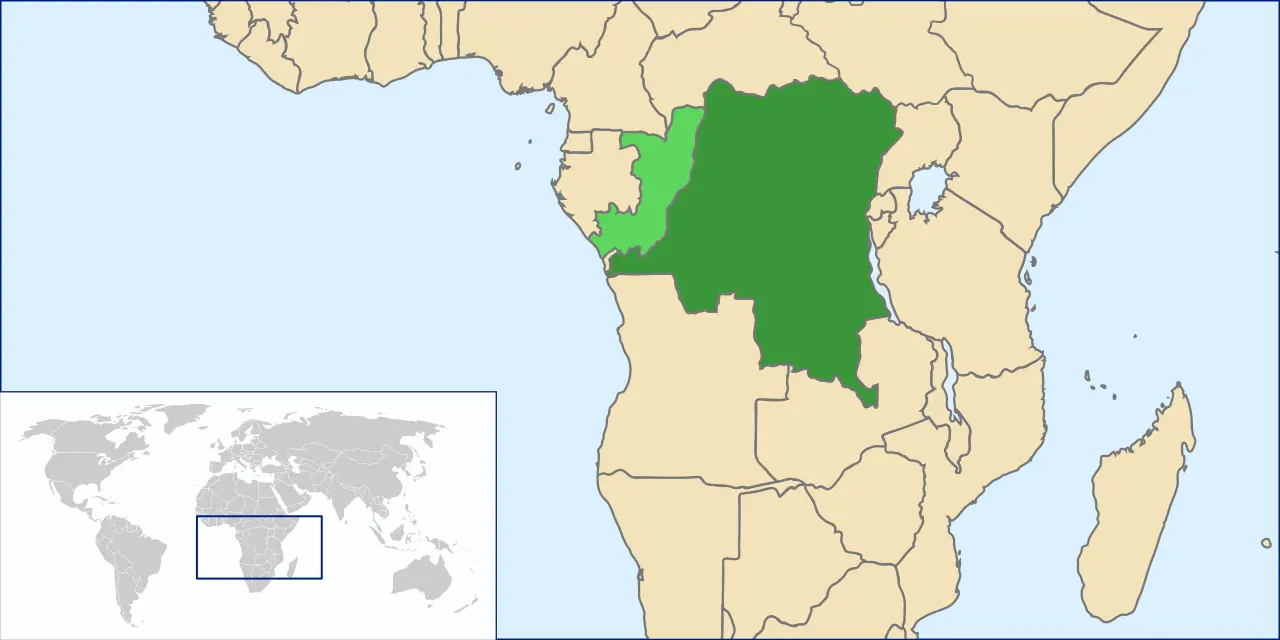
Things to do in Congo
Skip-the-line tickets, guided tours and standout experiences.
See experiences
Stay online in Congo
Travel eSIM — data the moment you land, no roaming bills.
Get an eSIM