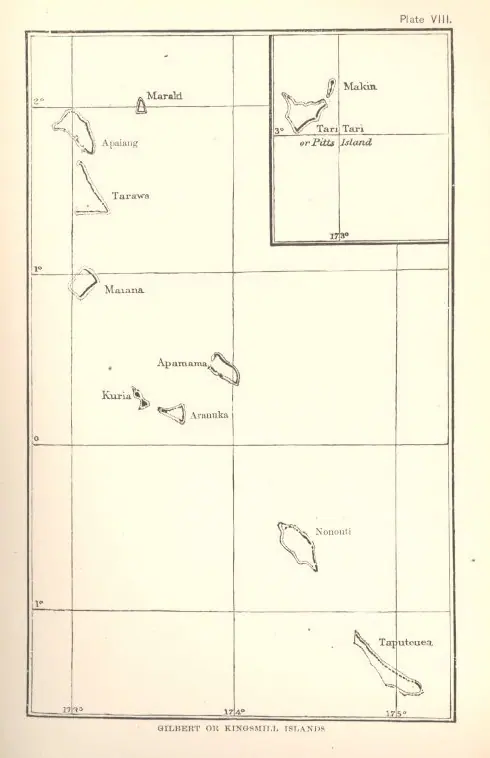
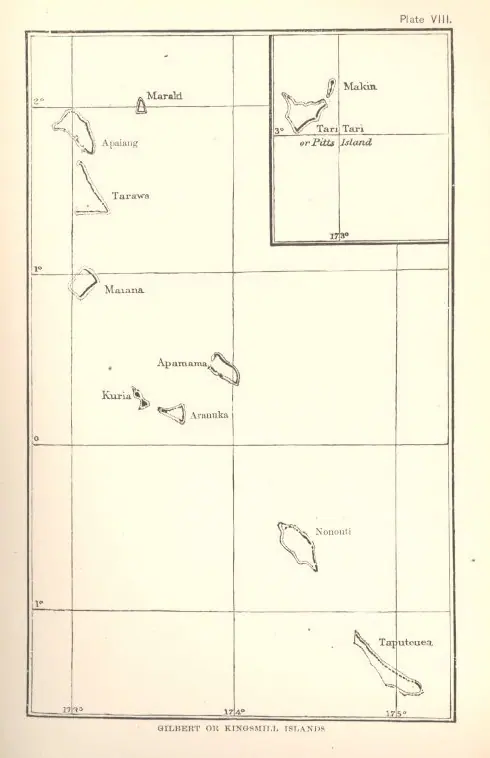
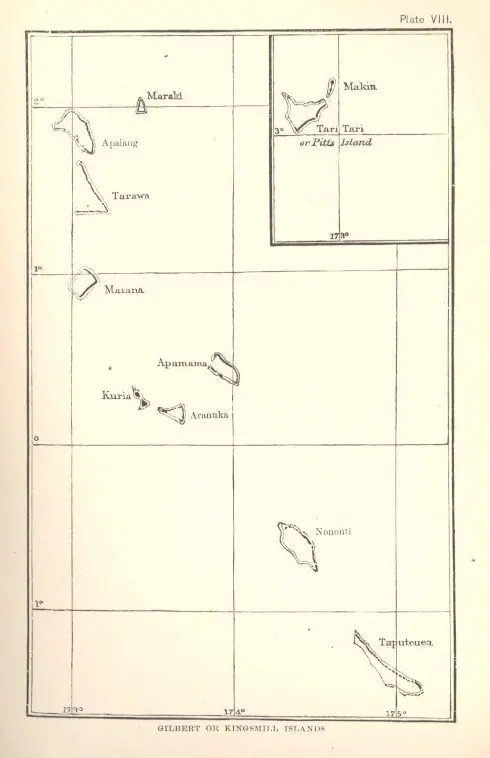
Kiribati — said Kiri-bas — is a nation of 33 atolls sprinkled across an ocean so vast that its islands keep three different clocks, from the Gilbert Islands to the Line Islands and the little speck of land that greets each new year first. There is no cold season here and no single perfect month: what changes is the wind, the rain, and how quickly the handful of small guesthouses and island hotels fill up.
One Long Equatorial Summer: How Kiribati's Seasons Really Work
Kiribati sits astride the equator, and that single fact shapes everything. Daytime temperatures hover between roughly 26°C and 32°C all year, nights drop only a few degrees, and the lagoon water stays at a bath-like 28–30°C whether you swim in January or July. There is no spring, autumn or winter to plan around — humidity is the constant, and the seasons are defined by which way the wind blows.
From around April or May through October, the southeast trade winds push across the Gilbert Islands, bringing steadier breezes, clearer skies and slightly more comfortable evenings on South Tarawa. From roughly November to March, the winds swing round to the west — locally called the westerlies — and with them come heavier downpours, still, muggy air and the kind of rain that turns unpaved ground into red mud. In strong El Niño years those westerlies can turn into prolonged wet spells, and Kiribati has occasionally faced the opposite problem: drought, with household water tanks running low.
Rainfall varies dramatically between island groups. Tarawa is genuinely wet, while Kiritimati in the Line Islands is markedly drier and feels almost desert-like in places. One reassuring detail for nervous travellers: Kiribati lies largely outside the main tropical cyclone belt, so you are unlikely to have a trip wiped out by a named storm, though low-pressure systems can still bring blustery, wet days.
May to October: The Trade-Wind Window on South Tarawa
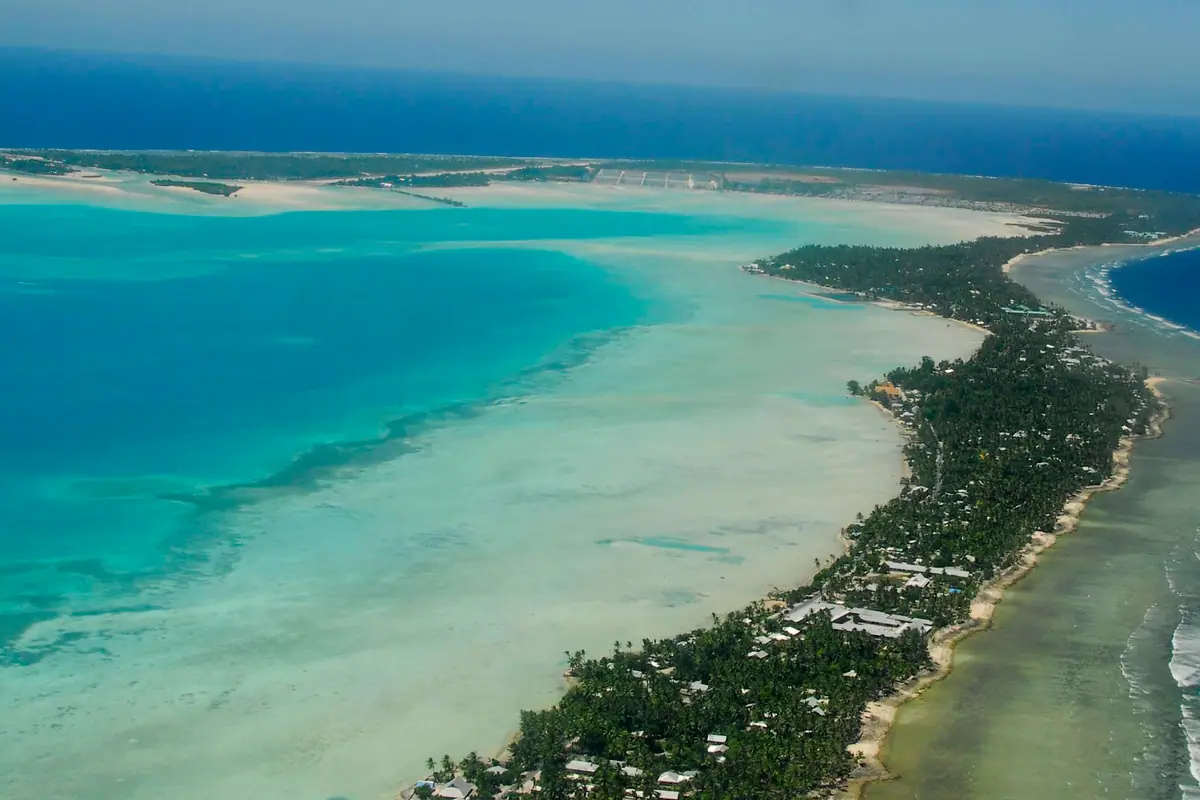
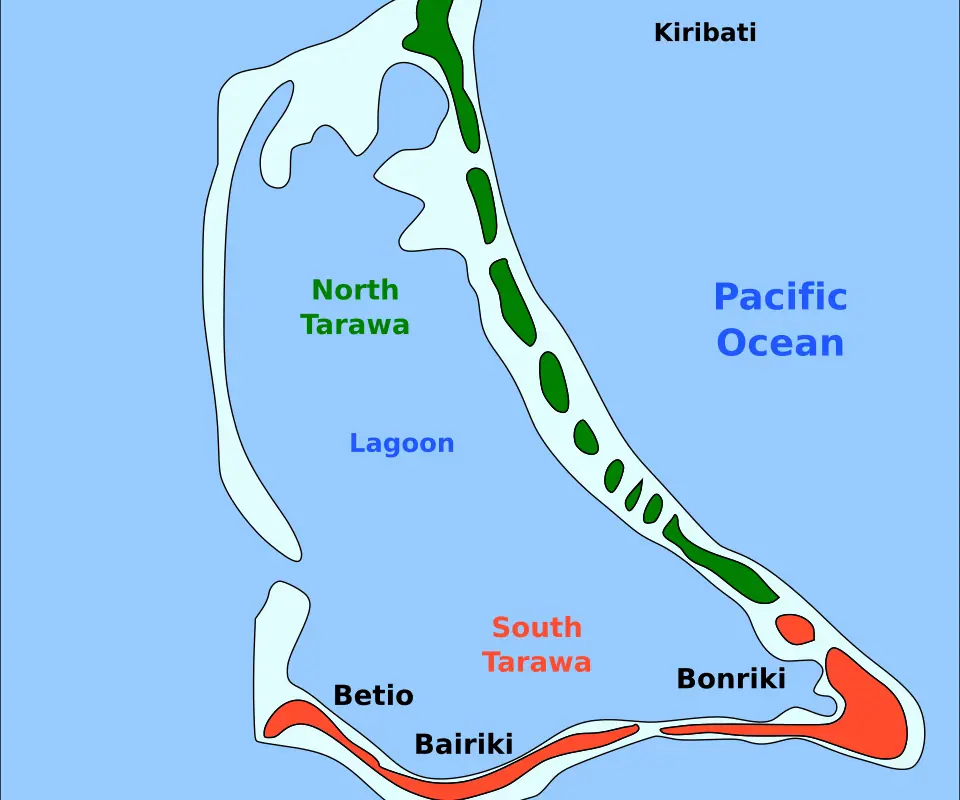
If you want the most reliable weather for sightseeing, aim for the trade-wind months. This is when the ribbon of land that makes up South Tarawa — more than 30 kilometres of villages strung along a strip rarely wider than a few hundred metres — is at its most walkable. Mornings are bright, the lagoon turns glassy, and the causeways that link the islets are pleasant to cross on foot or by the local truck-buses.
This is also the season to see the country's essential sights at their best. Start at Betio, where the Second World War still sits in the ground: the Betio War Memorial, rusting Japanese bunkers, coastal defence guns pointed out to sea and the stretch of sand known as Red Beach, where the 1943 Battle of Tarawa was fought. Cross back towards Bairiki over the Nippon Causeway, then continue east to Bikenibeu for Te Umanibong, the national cultural museum, where woven armour, shark-tooth weapons and model maneaba give context to everything you have seen. Nearby in Ambo stands the Maneaba ni Maungatabu, the national parliament, and Bairiki is the quiet administrative heart of the country.
Timing matters here. Kiribati's Independence Day on 12 July turns South Tarawa into one long festival of te mwaie dancing, canoe races, wrestling and volleyball, and every room in every guesthouse is spoken for weeks ahead. The trade-wind months are also the driest for village visits to outer islands such as Butaritari, the lush, battle-scarred 'garden of Kiribati', or Abemama, where Robert Louis Stevenson once stayed. Book flights and beds well in advance if your dates overlap with any national celebration.
November to April: Westerlies, Downpours and the Quiet Season
The wetter half of the year is not a write-off, but it demands a different attitude. Roads on South Tarawa flood in heavy rain, power cuts are more common, and boats to outer islands are more often delayed. In exchange you get dramatic skies, emptier beaches and a slower rhythm — and if you are here in late November, you can attend the commemorations marking the Battle of Tarawa, when visiting veterans' families, officials and islanders gather at Betio for ceremonies that are moving precisely because they are so small.
This is also the season of the country's most famous calendrical quirk. Millennium Island, also called Caroline, lies at the far eastern edge of the Line Islands on a time zone 14 hours ahead of Greenwich, which makes it the first inhabited-adjacent landmass on Earth to see each new day — and the first place on the planet to welcome the New Year. Christmas and New Year are family seasons across Kiribati, with church services, feasting and dancing, and travel between islands is at its busiest.
Nature lovers should note that seabird activity peaks in these warmer months. The lagoon islets off Kiritimati, such as Motu Tabu and Motu Upua, host nesting sooty terns and the rare Christmas Island frigatebird, while the surrounding ocean fills with migrating tuna and billfish. Just bring proper rain gear, dry bags for electronics and a relaxed attitude towards schedules.
Kiritimati: A Bonefish Calendar That Runs All Year
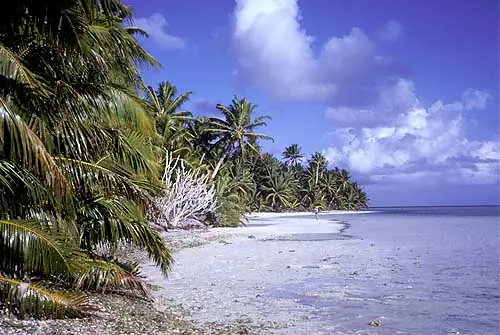
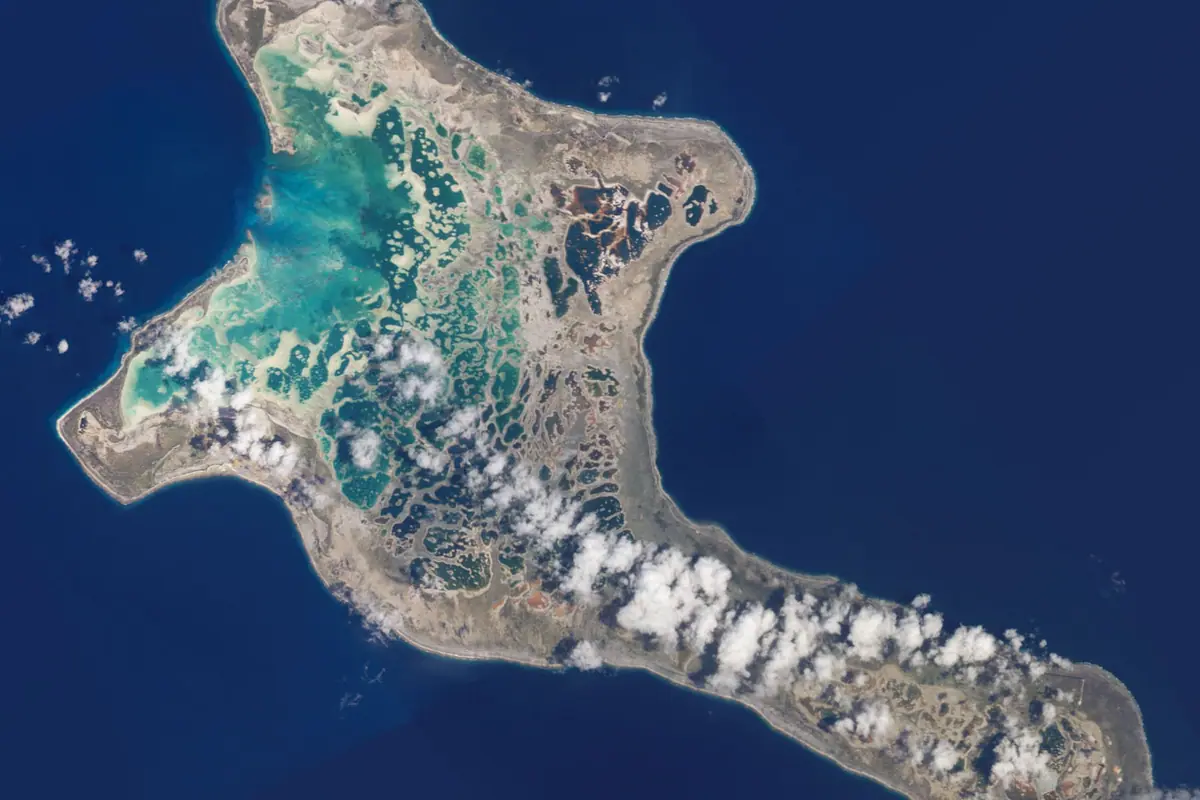
Kiritimati — Christmas Island — is the largest coral atoll on Earth, roughly 3,300 kilometres east of Tarawa and much closer in feel to Hawaii than to the Gilberts. It has its own weather personality: flat, scrubby, sun-bleached and noticeably drier, with villages called London, Banana, Poland and Tabwakea strung along the coast. Because it sits near the equator in the dry belt, you can fish and explore it in any month, though the steadier conditions of the mid-year months make the flats easier to read.
The atoll's defining pilgrimage is to Cook Island, the islet just off London village where Captain Cook's ships anchored on Christmas Eve 1777 — giving the island its name. Further along the coast, the Bay of Wrecks lives up to its title, and the enormous lagoon is dotted with picnic islets and bird colonies that are reachable by small boat. Fishing is the main draw: bonefish on the flats, trevally and tuna offshore, with local guides who pole skiffs across shallow sand. Skilled anglers plan around tides and light, and the best weeks at the handful of small fishing lodges and guesthouses sell out many months ahead.
Accommodation on Kiritimati is limited to a few modest lodges and family-run places, so treat a bed as something to secure before you book flights. Bring your own fly-tying materials, sun protection and patience — supplies on the island are basic, and the nearest well-stocked shops are a long flight away.
The Phoenix Islands, Banaba and the Outer Gilberts
Some of Kiribati's greatest wonders are the hardest to reach, and their visiting season is dictated as much by permits and shipping as by weather. The Phoenix Islands Protected Area, a UNESCO World Heritage Site and one of the largest marine conservation areas on the planet, includes Kanton Island with its airstrip and turquoise lagoon, plus Orona and Nikumaroro, the coral atoll tied to the enduring mystery of Amelia Earhart's disappearance. There are no resorts, no dive shops and no scheduled tourist flights — access is by licensed expedition vessel or research ship, usually in the calmer months, and permission must be arranged in advance.
In the Gilbert Islands, domestic flights and inter-island boats run year-round but are easily disrupted by rain, wind and aircraft availability. The trade-wind months from roughly May to October give the smoothest sea crossings and the best odds of a trouble-free trip to Tabiteuea, the largest atoll in the group, or to Arorae, where a traditional navigational stone speaks to the seafaring skill that settled this ocean. Banaba, a raised coral island rather than an atoll, holds the country's highest ground at about 81 metres, along with the scars of a century of phosphate mining and a diaspora community that keeps its homeland close.
Expect village guesthouses, maneaba-style communal sleeping and meals of rice, fish, breadfruit and giant swamp taro rather than hotel comforts. Etiquette matters: dress modestly away from the beach, ask before photographing people or sacred sites, and treat Sunday as a genuine day of rest, when most shops, buses and activities shut down.
What 'Hotel' Means in Kiribati — and How to Time Your Booking
Kiribati has no international hotel chains and no beach resorts in the conventional sense. What you will find is a small number of modest hotels and guesthouses concentrated on South Tarawa — around Bikenibeu, Ambo, Bairiki and Betio — plus a scattering of family-run lodges on Kiritimati and simple guesthouses on outer islands. Rooms are clean and functional rather than luxurious: expect air conditioning in some, ceiling fans in others, cold-water showers and the occasional power or water interruption.
Because supply is so thin, timing your booking is more important than timing the weather. July, when Independence Day celebrations fill South Tarawa, and late November, when Battle of Tarawa commemorations bring visitors to Betio, are the two crunch periods. Christmas and New Year are busy for family travel, and the top bonefishing weeks on Kiritimati can be reserved up to a year out. For the rest of the year, two to three months' notice is usually enough — but never assume you can simply turn up.
A few practical details will smooth any stay. The currency is the Australian dollar, and ATMs are scarce outside South Tarawa, so carry cash. English is widely spoken alongside Gilbertese, tipping is not expected, and island time is real — domestic flights are frequently rescheduled. Pack reef shoes, strong mosquito repellent, a torch, a reusable water bottle and lightweight rain protection, and you will be comfortable in any month you choose.
Frequently asked questions
What is the best time of year to visit Kiribati?
For the most reliable weather on South Tarawa and the easiest inter-island travel, aim for the trade-wind months from around May to October, when skies are clearer and the breeze makes the heat more bearable. Kiritimati is fishable year-round, so anglers can travel whenever the tides and lodge availability align.
Does Kiribati get hurricanes or cyclones?
Kiribati sits largely outside the main tropical cyclone belt, so direct hits are rare. The bigger climate risks are the westerly wet season from November to March, which can bring heavy rain and flooding on low-lying atolls, and El Niño-driven droughts that leave household water tanks short.
When is the best time to fish for bonefish on Kiritimati?
Bonefish are present on the flats all year, but catches and comfort are most consistent during the drier mid-year months when the light is good and the wind is manageable. The best-guided weeks at the island's small lodges sell out months in advance, so book accommodation before committing to flights.
Are hotels and restaurants open on Sundays in Kiribati?
Sunday is widely observed as a day of rest. Many shops, buses and activities shut down, and some guesthouses run reduced service. Plan your sightseeing, transfers and supplies for other days, and respect local church-going customs if you are near a village.
How far ahead should I book accommodation in Kiribati?
Book two to three months ahead for ordinary dates, and much earlier for Independence Day around 12 July, the Battle of Tarawa commemorations in late November, and Christmas and New Year. Because there are only a handful of hotels and guesthouses on South Tarawa and Kiritimati, last-minute rooms are genuinely hard to find.
Sort the rest of your trip
Everything for Kiribati, in one place
Transfer in Kiribati
Private driver waiting on arrival — no queues, no surprises.
Book a transfer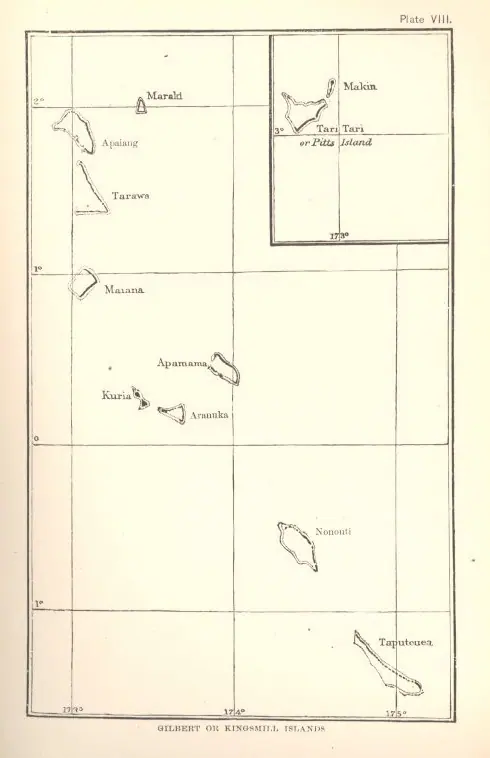
Things to do in Kiribati
Skip-the-line tickets, guided tours and standout experiences.
See experiences
Stay online in Kiribati
Travel eSIM — data the moment you land, no roaming bills.
Get an eSIM