Papua New Guinea is not a country you stumble through on the way somewhere else — it is a place you commit to. Some 800 languages, smoking volcanic cones, coral seas and highland valleys where the next ridge feels like another world make it one of the last genuinely unfamiliar destinations on earth. Plan carefully, travel with local guides, and it hands you encounters you will not find anywhere else.
Port Moresby: Parliament Haus, the National Museum and Varirata
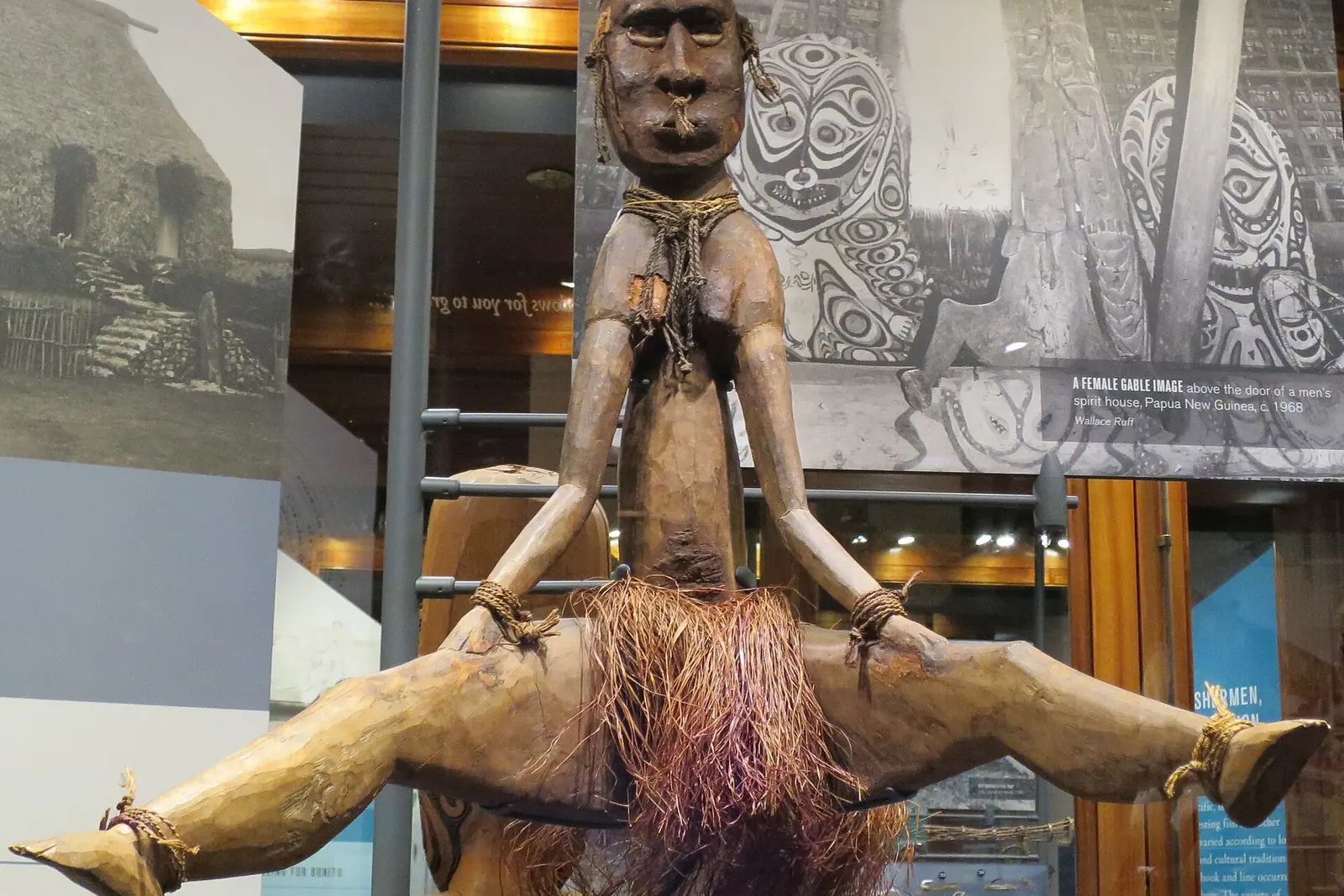
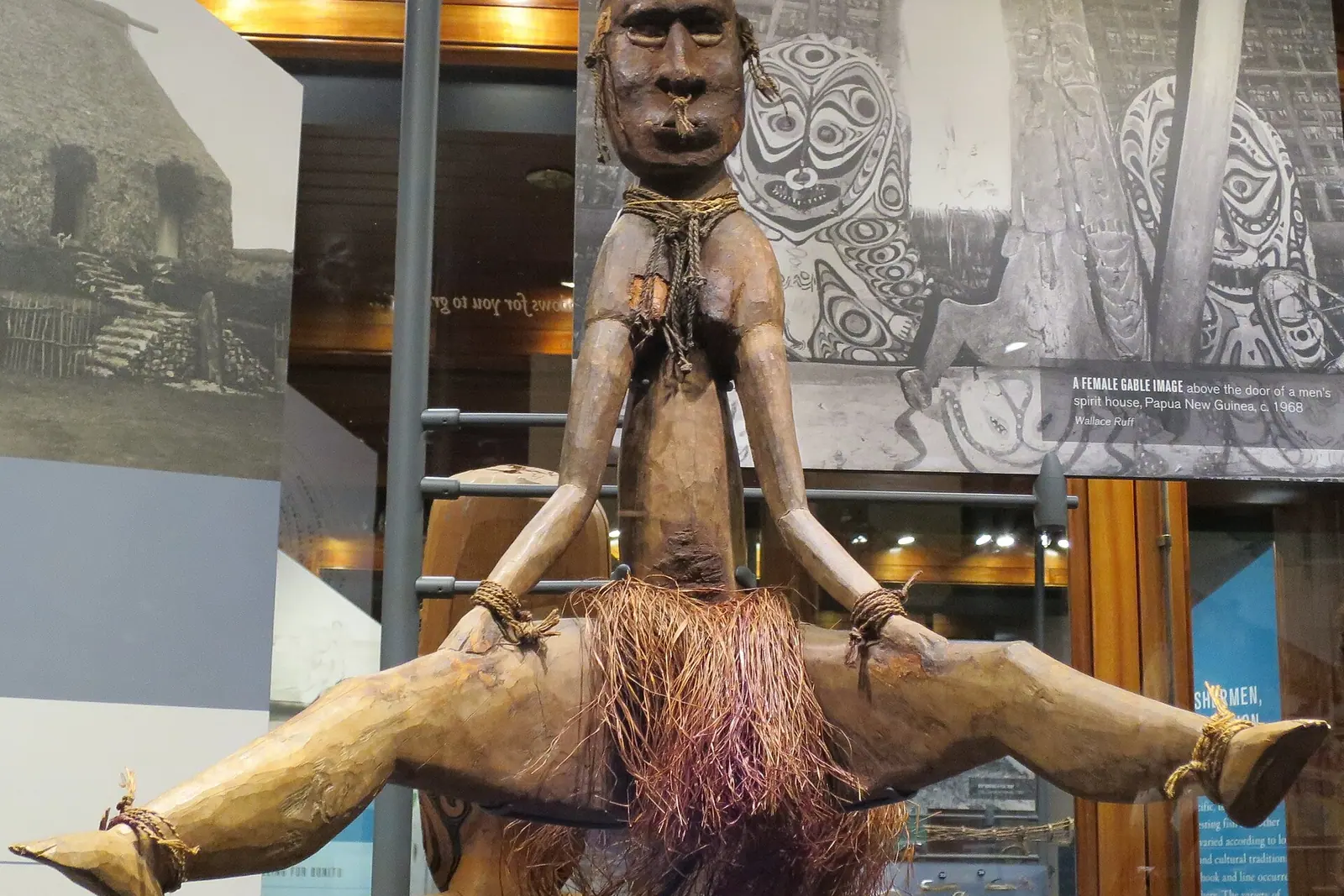
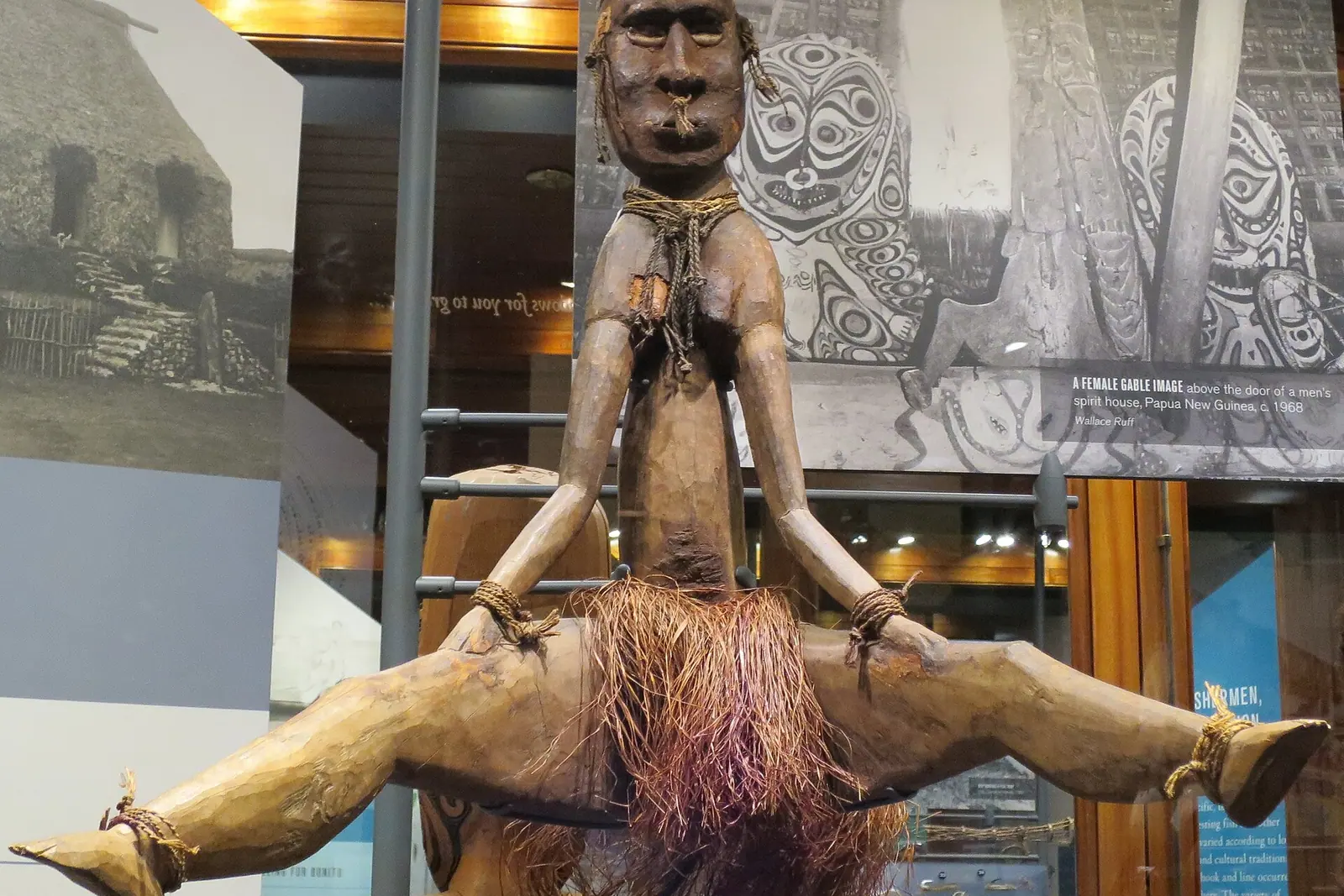
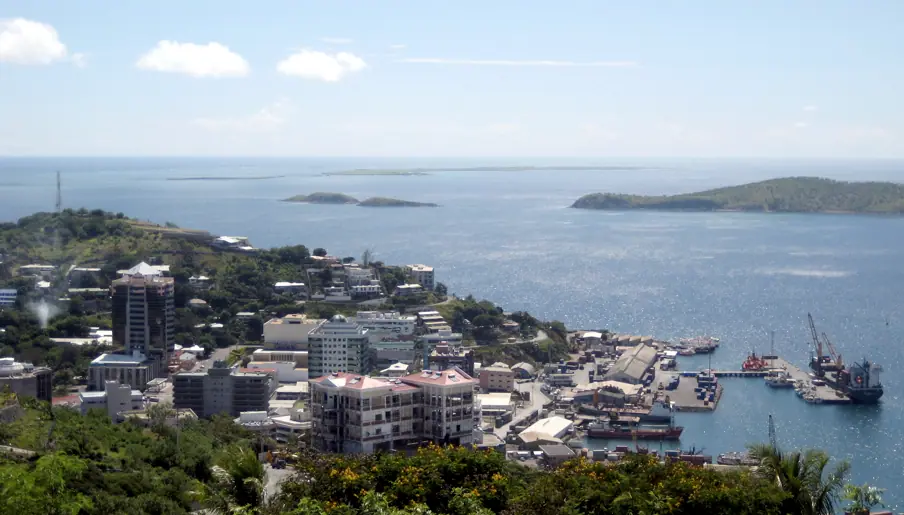
Almost every journey starts in Port Moresby, the capital strung along a dry southern coast. Its most striking building is Parliament Haus, whose facade blends Sepik and Highlands design into a mosaic of patterns beneath a gabled roofline inspired by a spirit house — worth the detour even from the outside. A short drive away, the National Museum and Art Gallery holds carvings, masks, shields and pottery that make sense of the regions you are about to visit, and it is the best single introduction to the country's material culture before you fly onward.
Twenty-odd kilometres out of town on the Sogeri Road, Bomana War Cemetery is the quiet counterpart to the mountains: thousands of headstones arranged on a slope, marking men who died along the Kokoda Track in 1942. Continue up the same road and you reach Varirata National Park, a forested plateau of ridge-top trails where you have a fair chance of spotting the Raggiana bird of paradise, PNG's national emblem, and where a lookout opens over the Sogeri valley toward the coast. Closer to the city, a wildlife park shelters tree kangaroos, cassowaries and birds of paradise, which is a sensible half-day if your domestic flight leaves early.
Two nights is usually enough here. Use arranged transfers rather than walking after dark, keep the capital as a springboard to the domestic network, and treat your first morning as a buffer — internal flights in the highlands and islands are weather-dependent, and schedules shift.
The Highlands: Goroka, Mount Hagen and the Asaro Mudmen
The highlands are the cultural heart of the country, a landscape of coffee-covered valleys, sharp ridges and cool, misty mornings at 1,500 metres and above. If you can time your trip around one of the big gatherings, do it: the Mount Hagen Show in August and the Goroka Show in September, tied to Independence Day, draw hundreds of singsing groups in body paint and bark cloth, drumming on kundu drums and wearing plumes from birds of paradise. Accommodation in both towns fills months ahead, and everything else in the region books out around those dates.
Outside show season the culture does not disappear — it simply moves into the villages. Near Goroka, in the Asaro Valley, the Asaro Mudmen perform their famous act: bodies coated in grey mud, heavy clay masks with elongated, grimacing features, a slow and unnerving approach that ends in laughter. Coffee plantations around the Wahgi Valley welcome visitors for tastings, and local markets on a Saturday morning are the real thing — sweet potato mounds, peanuts, bilum bags and betel nut, no staging involved.
For walkers, Mount Wilhelm is the objective: at 4,509 metres the country's highest peak, usually climbed over three to four days from the village of Keglsugl near Kundiawa. There is no technical climbing, but altitude, rain and slippery rock make the pre-dawn summit push a genuine effort. Acclimatise, carry layers for near-freezing dawn temperatures, and understand that cloud can close the summit view in minutes.
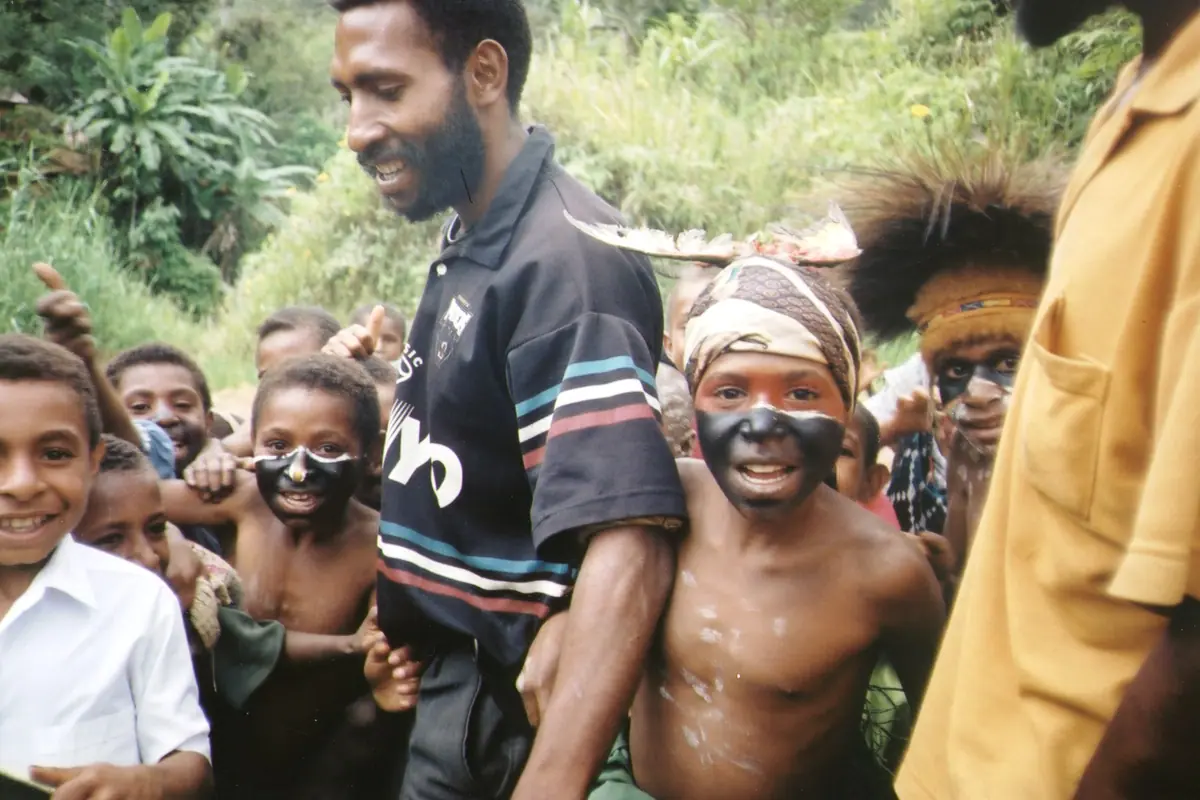
The Sepik River: Dugout Canoes and Spirit Houses
Travelling the Sepik is one of the world's great river journeys. The river coils for over a thousand kilometres from the highlands to the sea, and moving along it by motorised dugout canoe with a local guide is the only sensible way to understand the villages strung along its banks. You pass villages such as Kanganaman, known for its towering haus tambaran — a spirit house with a carved, painted facade and a gable that rises several storeys — and Aibom, where women still make the distinctive sago-storage pottery and fire it in open pits.
Further up, the Chambri Lakes open into a wetland of shallow lagoons and reed islands where birdlife is dense and the light at dawn is extraordinary. Culture here is not a performance: masks, crocodile-initiation scarification among river peoples, and the annual crocodile festival near Wewak in August are living traditions. Ask before photographing anyone, and expect to pay a village fee arranged in advance by your guide.
The dry months, roughly June to October, give lower water, firmer tracks and fewer cancelled boat days, though the Sepik is famously humid year-round. Pack quick-dry clothing, a head torch, mosquito repellent and cash in small notes — there are no ATMs once you leave the towns. Multi-day river trips between the coast and the middle Sepik are the classic format, and four to seven days is the sweet spot.
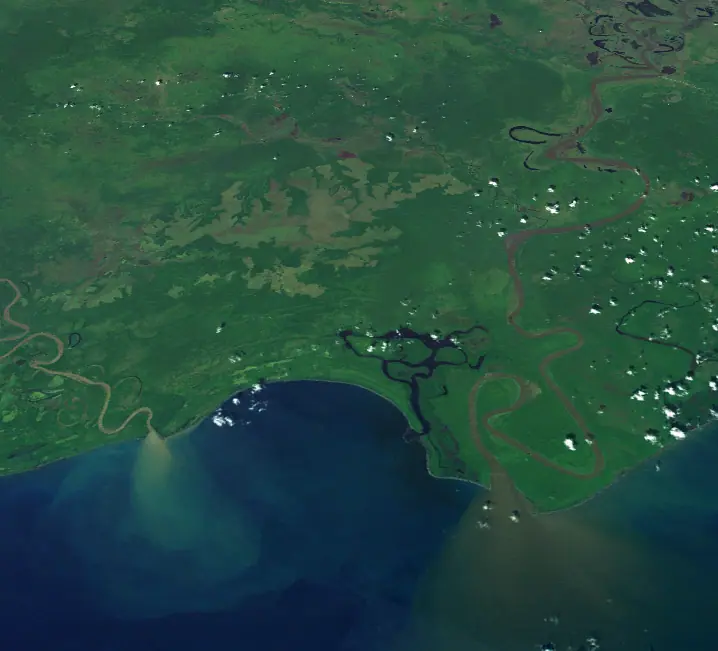
The Tari Valley and the Huli Wigmen
In the Southern Highlands, the Tari Valley is the home of the Huli people, whose men grow and shape elaborate wigs in dedicated wig schools, then paint their faces yellow with clay and decorate the hair with bird-of-paradise plumes and cuscus fur for ceremonies. Visits are arranged through local guesthouses and community guides, which keeps the money in the valley and the experience respectful rather than staged. Come with patience and curiosity: a morning here is a conversation as much as a photograph.
The valley sits at around 1,600 metres, but the road climbs to the Tari Gap at roughly 2,500 metres, where moss forest, orchids and tree ferns make some of the best birdwatching in the country. This is ribbon-tailed astrapia and King of Saxony bird of paradise country, best seen in the first two hours after dawn when the forest is loud and the mist has not yet settled in.
Nearby, Lake Kutubu is a deep crater lake with fish found nowhere else, reached by light aircraft and a short road transfer. This is one of the wettest parts of Papua New Guinea, so bring a proper rain shell, waterproof your camera gear and build a spare day into your itinerary — flights into the highlands are frequently delayed by cloud and soft airstrips.
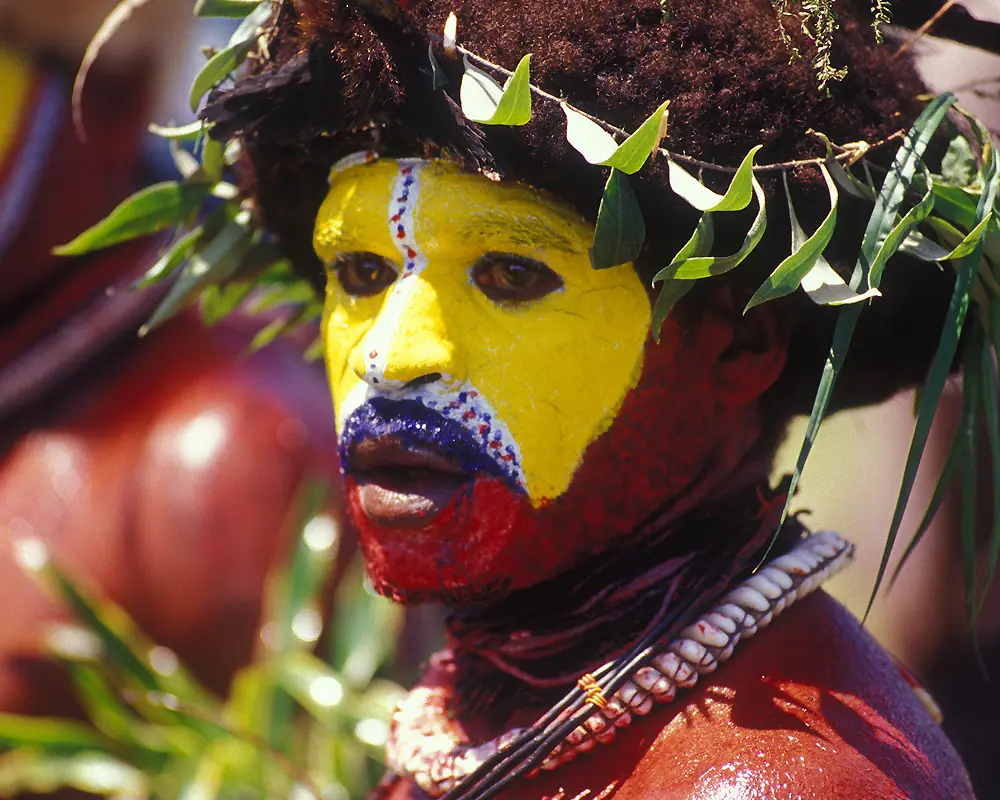
Milne Bay, Tufi and Rabaul: Reefs, Fjords and Live Volcanos
Papua New Guinea sits inside the Coral Triangle, and the diving is the reason many travellers come back a second and third time. Milne Bay, in the far southeast, offers everything from coral gardens off Alotau and the island of Samarai to world-class muck diving, where guides find frogfish, ghost pipefish and blue-ringed octopus on black sand. Visibility is often at its best from October through May, when the seas are calmer and the wet-season runoff has not yet muddied the shallows.
Tufi, on the northeast coast, is a different spectacle entirely: a coastline of drowned river valleys — steep-sided fjords — where you dive against vertical walls draped in soft coral and can snorkel straight off a village beach. Shallow water near the fjord mouths also hides a Second World War bomber wreck, which makes a memorable second dive. Village guesthouses here are simple, welcoming and often the only accommodation for hours in any direction.
Across the Bismarck Sea, Rabaul sits inside a vast flooded caldera ringed by volcanic cones. Tavurvur erupted in 1994 and buried much of the old town in ash, and the volcano still smokes above the water; a walk up to the caldera rim, past a volcanological observatory that monitors the ring of vents, is one of the most dramatic half-days in the Pacific. Nearby Kokopo hosts a mask festival each July, and in villages around the caldera the Baining fire dance — dancers in enormous masks moving through glowing embers at night — is performed on special occasions.
The Kokoda Track and Papua New Guinea's Great Walks
The Kokoda Track is the country's signature trek: roughly 96 kilometres across the Owen Stanley Range from Owers' Corner to the village of Kokoda, usually walked in six to ten days. It follows the route of the 1942 campaign, and the stops along the way — Isurava, Brigade Hill, Efogi, Deniki — carry a weight that surprises many first-time walkers. The terrain is relentless rather than technical: steep climbs, deeper descents, mud that behaves like grease, and humid heat broken by cold rain at altitude.
The dry-season window from April to October gives the firmest trails and the clearest views, though rain is possible in any month. Fitness matters more than experience; train on stairs with a pack for at least two months. Travel with a licensed operator that uses local guides and village porters, respect the village land you cross, and carry a decent first-aid kit — medical evacuation from the track is by helicopter and depends on the weather.
If the Kokoda Track feels like too much, alternatives are plentiful: the Mount Wilhelm climb in the highlands, shorter ridge walks out of Tari, or multi-day Sepik canoe journeys that trade altitude for river life. Whichever you choose, allow two to three weeks in the country to link a trek with the highlands and one island or coastal region — ten days is the realistic minimum for a single focused trip.
Frequently asked questions
When is the best time to visit Papua New Guinea?
The drier months from May to October suit most itineraries, with August and September the peak for the Mount Hagen and Goroka shows. For diving around Milne Bay, Tufi and Kimbe Bay, calmer seas and better visibility generally fall between October and May. The wet season does not shut the country down, but it brings mud on the trails, softer airstrips and more cancelled domestic flights.
How long do I need in Papua New Guinea?
Ten days is a realistic minimum for one region — a trek, or the highlands plus the Sepik. Two to three weeks lets you combine the highlands with a river journey and a coastal or island stay without spending your whole trip in transit. Domestic flights are limited and weather-dependent, so build a spare day around any major connection.
Is Papua New Guinea safe for visitors?
Travel with organised operators and local guides, and you will usually be fine. Port Moresby and Lae have a reputation for opportunistic crime, so avoid walking alone after dark and use arranged transfers. In the highlands, travel between towns by air rather than road, and take local advice on which areas are currently suitable to visit — conditions change from valley to valley.
Do I need a visa for Papua New Guinea?
Many nationalities can obtain a visa on arrival or apply online in advance for an e-visa, and passport validity of at least six months is normally required. Rules and eligible countries change, so check the current requirements with the nearest diplomatic mission well before you book flights.
What should I pack for Papua New Guinea?
Sturdy broken-in boots, quick-dry clothing, a reliable rain shell, reef-safe sunscreen, insect repellent and antimalarial medication if advised by your doctor. Bring a head torch, a power adapter and enough cash in kina — ATMs are scarce outside the main towns and cards are rarely accepted in villages. Modest clothing for village visits and a small dry bag for boat and canoe travel are essential.
Plan it — experiences in Papua New Guinea
Live search, booked directly with trusted providers.
Sort the rest of your trip
Everything for Papua New Guinea, in one place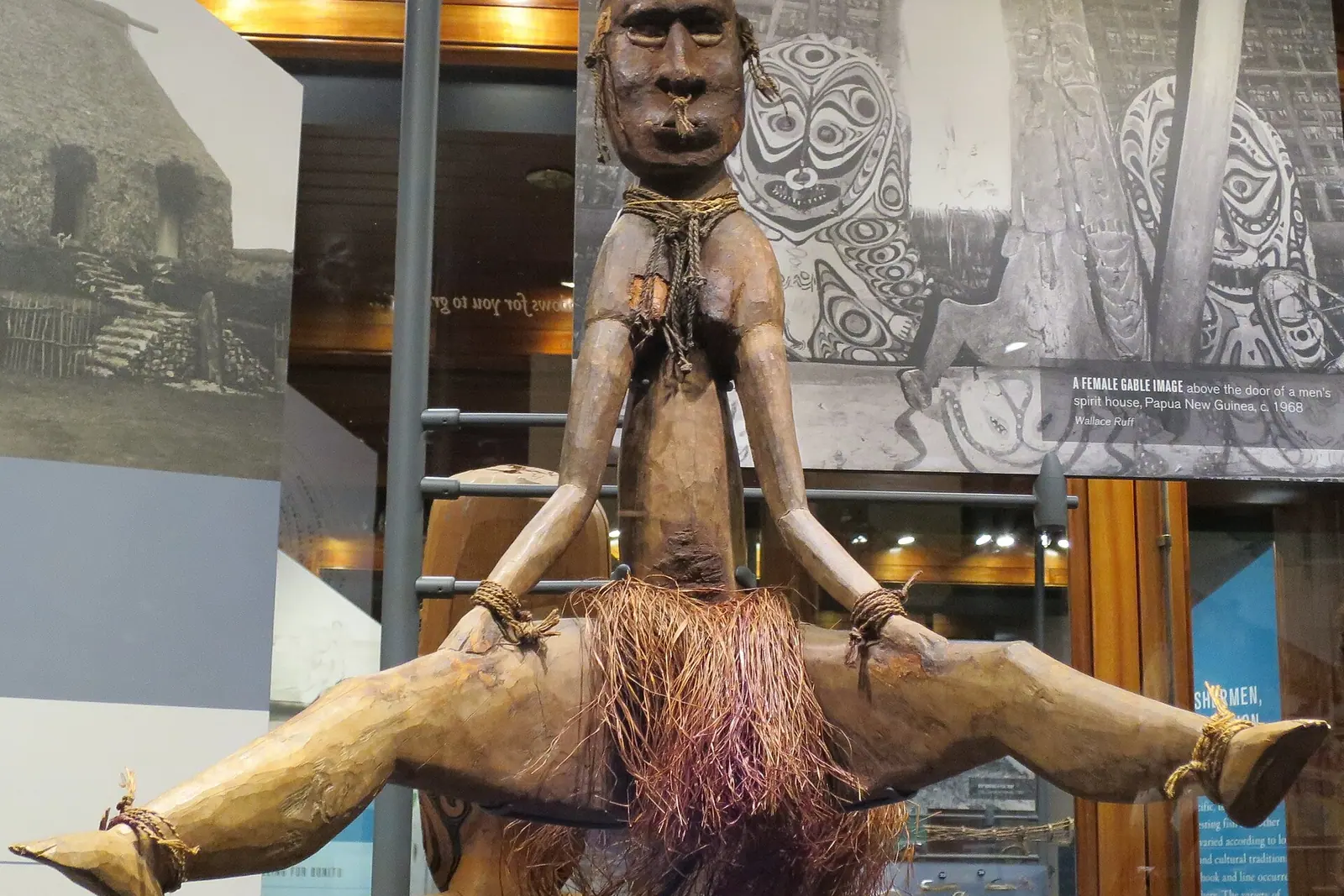
Stay in Papua New Guinea
Hotels, guesthouses and apartments — compared in one search.
Search hotels
Transfer in Papua New Guinea
Private driver waiting on arrival — no queues, no surprises.
Book a transfer
Stay online in Papua New Guinea
Travel eSIM — data the moment you land, no roaming bills.
Get an eSIM