Hungary packs a surprising range of landscapes into a country you can cross by train in a single afternoon: a capital split in two by the Danube, a warm inland sea fringed with vineyards, limestone hills riddled with caves, and a flat grassland where grey cattle graze under endless sky. This is a country built for slow wandering — soak in a thermal bath at dusk, taste a glass of Furmint in a mould-darkened cellar, then watch the sun drop behind a hilltop citadel.
Budapest: A Capital Split by the Danube
Almost every trip to Hungary begins here, and it deserves at least three full days. The Danube divides the city into hilly Buda and flat Pest, and the two banks tell completely different stories. On the Buda side, climb to Buda Castle, wander the cobbled lanes of the Castle District, and stand at Fisherman's Bastion beside Matthias Church, where the white turrets and conical roofs give the best panoramic view of the river and the Parliament below. A short walk further up Gellért Hill leads to the Citadella, a fortress terrace that catches the city at its most photogenic just before sunset.
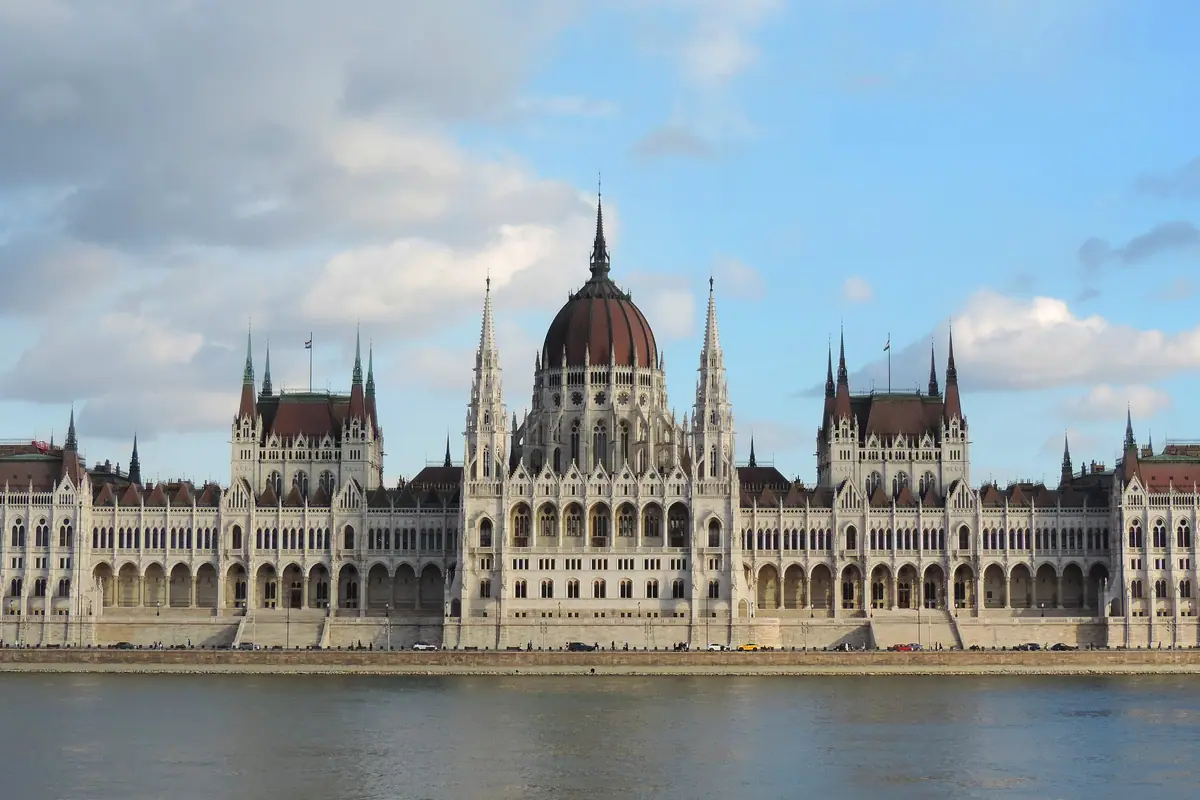
Across the river, Pest is grand, busy and monumental. The Hungarian Parliament Building is the emblem of the whole country — a Gothic Revival fantasy of spires and arcades on the riverbank, best seen from a boat or from Batthyány Square on the opposite side. Behind it, Andrássy Avenue sweeps out to Heroes' Square, flanked by the Museum of Fine Arts and the Palace of Arts, with City Park and its boating lake just beyond. Don't miss St. Stephen's Basilica, the Great Market Hall for paprika and pickles, and the Dohány Street Synagogue, the largest in Europe and the heart of the old Jewish Quarter, now filled with ruin bars and small galleries.
Budapest rewards walking, but the yellow metro line under Andrássy Avenue is an attraction in itself — it opened in 1896 and is recognised as continental Europe's oldest underground railway. Buy a travel card for the duration of your stay and use trams 2 and 4 along the river as a cheap sightseeing route.
Thermal Baths: Hungary's Warmest Ritual
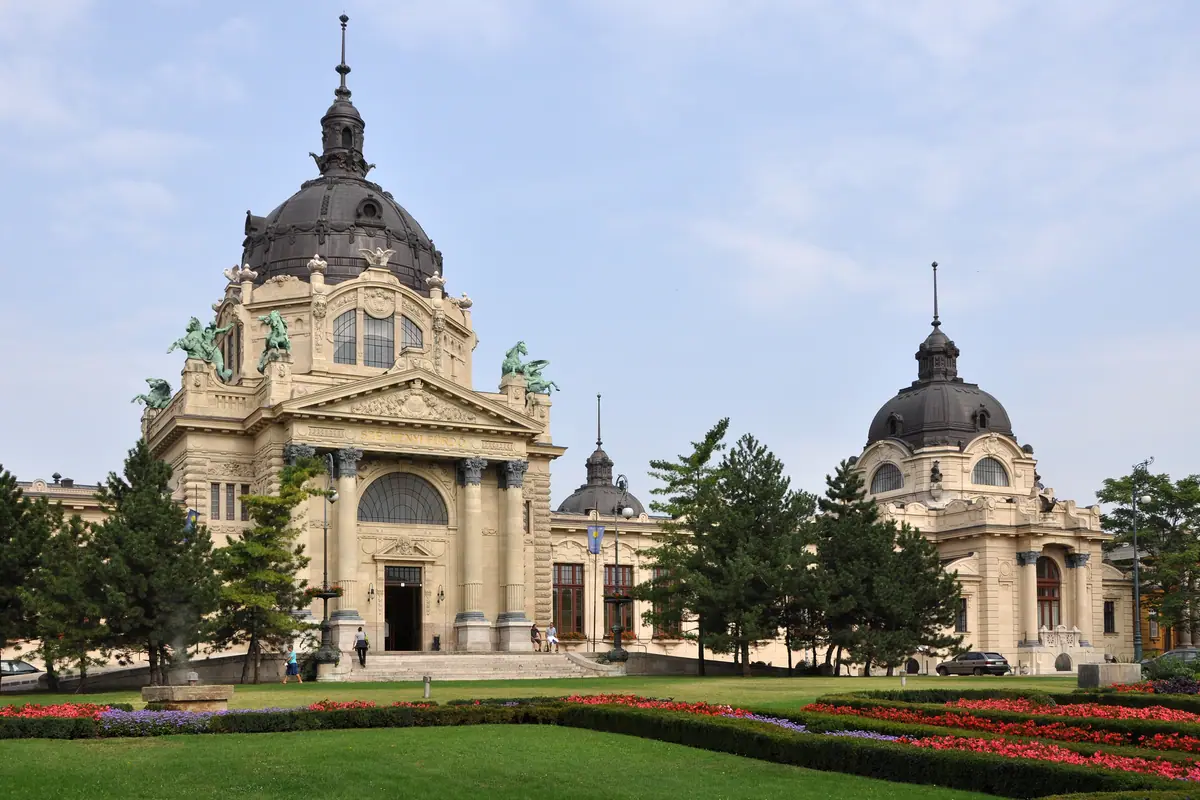
Hungary sits on a fault line of hot springs, and bathing is a national habit rather than a tourist gimmick. Budapest alone has more than a hundred thermal sources. The grandest is the Széchenyi Thermal Bath in City Park, a neo-baroque complex of yellow domes and open-air pools where steam rises off the water even in January and locals play chess on floating boards. The Gellért Baths, tucked into a grand Art Nouveau hotel on the Buda bank, are all mosaic tiles and stained glass, while the Rudas Baths preserve a 16th-century Ottoman octagonal pool under a cupola pierced with star-shaped light wells.
First-timers should know the etiquette before they arrive. You'll be given a wristband that locks your cabin or locker, and you'll want flip-flops, a towel and a swimming cap for the lap pools. Some baths run single-sex days alongside mixed days, so check the schedule if that matters to you. Water temperatures range from a bracing 18°C plunge pool to 40°C mineral soaks, and the custom is to move slowly between them, cooling off in the air or a cold tub in between.
Beyond the capital, the thermal culture continues: the Hévíz thermal lake near Lake Balaton is the largest biologically active natural thermal lake in the world and can be swum in year-round, while Eger, Győr, Szeged and Debrecen all have their own historic bath complexes. A session typically takes two to three hours — enough time for a soak, a steam and a very long, very unhurried conversation.
The Danube Bend: Szentendre, Visegrád and Esztergom
North of Budapest the Danube turns sharply between forested hills, and this curve — the Danube Bend — is the most scenic stretch of river in the country and an easy day trip by train, bus or summer boat. Szentendre is the first stop: a baroque little town of cobbles, Orthodox churches and galleries that has drawn painters for over a century. It's small enough to see in half a day, and the marzipan museum and riverside promenade make it a gentle introduction to the region.
Further along, Visegrád is defined by its hilltop citadel, the Fellegvár, which stares down over the river bend from a rocky peak. Climb up for the classic view of the Danube curling away below, then visit the lower castle and the remains of the royal palace by the water. In summer the hillside hosts medieval jousting demonstrations, and the slopes below produce decent white wines.
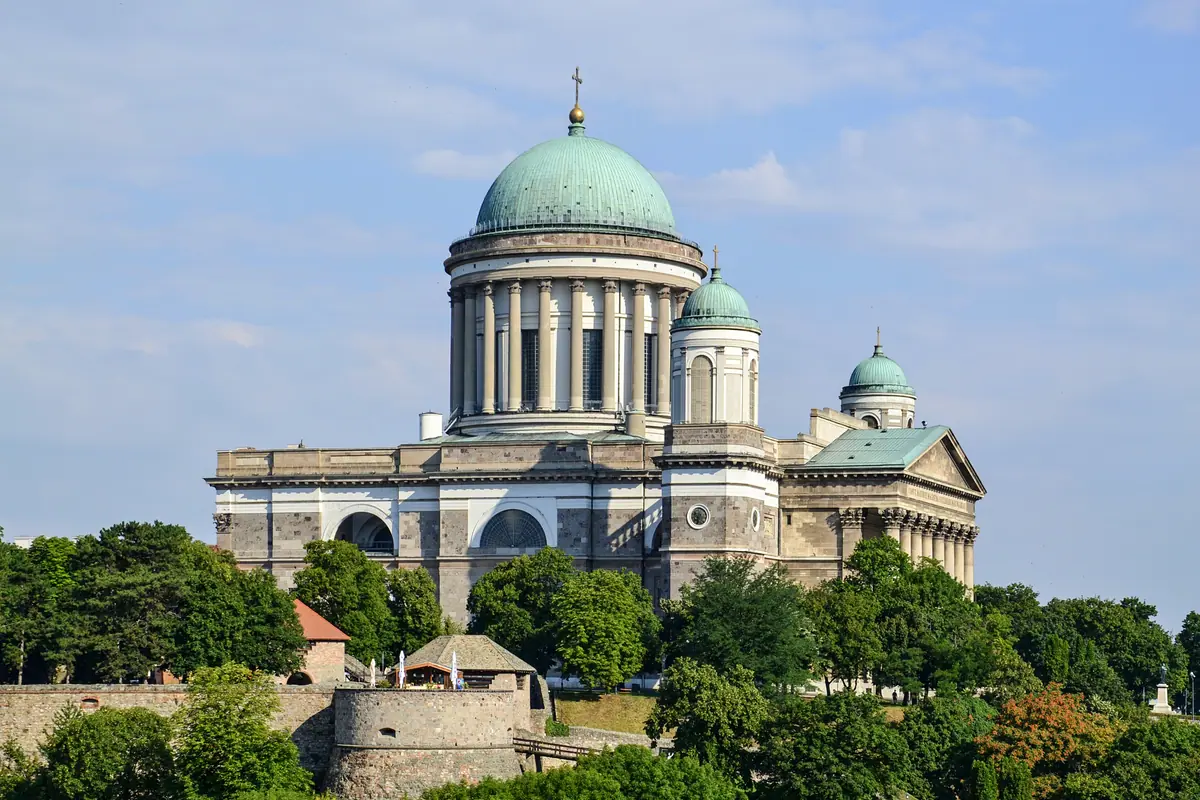
The bend ends at Esztergom, Hungary's former royal capital and the seat of its Catholic Church. The Esztergom Basilica is the largest church in the country and one of the biggest in Europe; its green dome dominates the skyline from kilometres away. Climb or take the lift into the dome for a view that stretches across the river into Slovakia, and take time over the treasury and the vast painted altarpiece inside. It's a full but manageable day combining all three towns.
Lake Balaton and the Tihany Peninsula
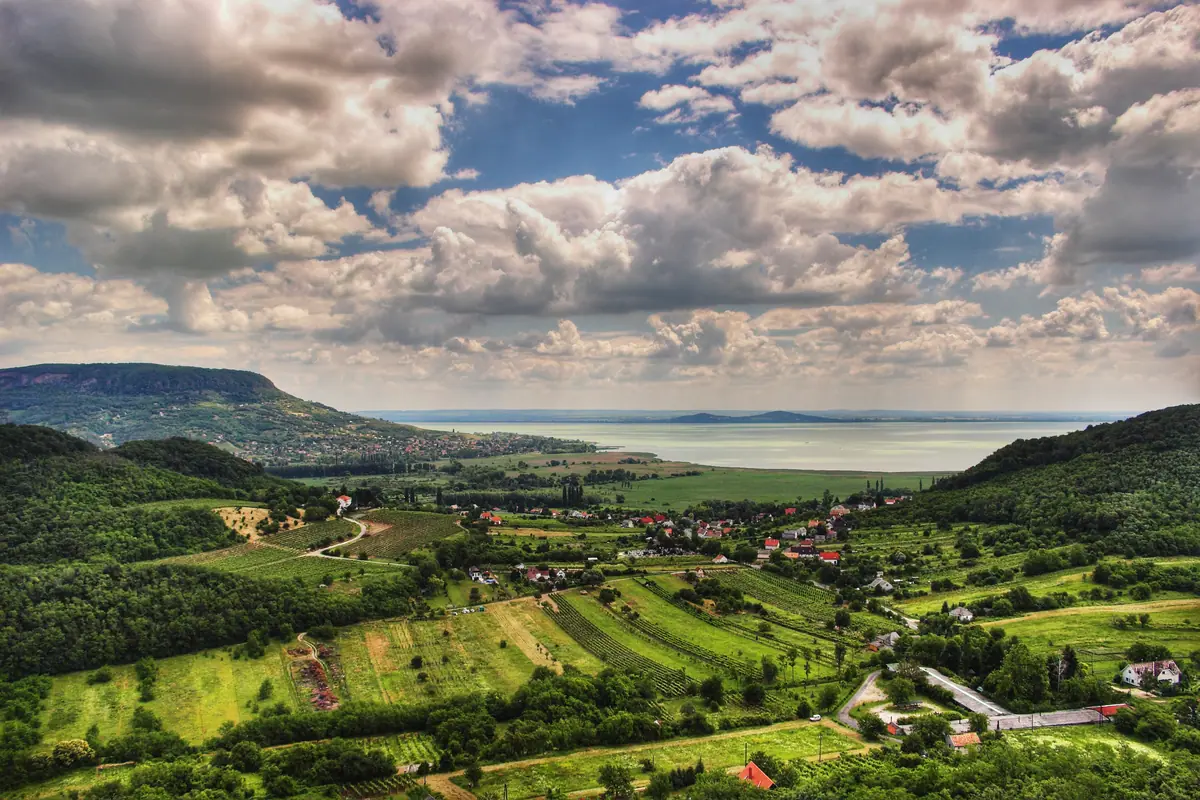
Balaton is Central Europe's largest lake, a shallow, milky-green expanse roughly 77 kilometres long that functions as the country's summer living room. The southern shore is the family side — wide, gently shelving beaches at Siófok, Zamárdi and Balatonfüred, with pedal boats, ice cream stands and a lively festival calendar in July and August. Water temperatures reach a bath-like 25°C by late summer, which is why so many Hungarians refuse to holiday anywhere else.
The northern shore is hillier, prettier and older, given over to vineyards and stone villages. The Tihany Peninsula juts into the lake like a thumb and is crowned by Tihany Abbey, a baroque Benedictine monastery founded in 1055 whose founding charter contains the oldest known written words in the Hungarian language. The view from the abbey terrace over the lake is the single most photographed scene in the region, and the lavender fields on the peninsula bloom in June.
Base yourself in Balatonfüred for easy access to both shores, and don't skip the wine hills of Badacsony, where volcanic soil produces crisp Olaszrizling and Szürkebarát whites, or Keszthely at the western end, home to the palatial Festetics Palace and its elaborate gardens. Balaton is quiet and often shuttered outside June to September, so plan accordingly.
Northern Hungary: Eger, Tokaj and the Aggtelek Caves
Eger is one of Hungary's most appealing small cities, a baroque grid of churches, cafes and a slender 17th-century Ottoman minaret — the northernmost surviving minaret in Europe, with 97 steps to the balcony. Above it all stands Eger Castle, famous for the 1552 siege in which a vastly outnumbered garrison held off an Ottoman army, a story every Hungarian schoolchild knows. Below ground, the town hides a network of cellars; the Valley of the Beautiful Women is a row of family wine cellars where you can taste the local Bull's Blood red straight from the barrel.
North-east of Eger, the Tokaj wine region is a UNESCO-listed cultural landscape and the birthplace of the world's oldest classified vineyard system. Sweet aszú wines made from botrytised Furmint grapes have been produced here for centuries in cellars lined with a distinctive grey-black mould that thrives on the wine vapours. Book a cellar tour in Tokaj, Mád or Tarcal, taste the dry Furmint that has become the region's modern calling card, and linger over a long lunch in a village courtyard.
For something entirely different, the Aggtelek National Park on the Slovak border protects a karst plateau honeycombed with more than 700 caves, also UNESCO-listed. The Baradla Cave is the showpiece — a seven-kilometre guided route through cathedral-sized chambers hung with stalactites and stalagmites, including one formation nicknamed the Giant's Hall. Bring a jacket; the temperature underground sits around 10°C all year. Short tours run daily, longer adventure routes require booking ahead.
The Great Plain and the South: Hortobágy, Szeged and Pécs
East of Budapest, the Great Hungarian Plain stretches flat to the horizon, and its heart is Hortobágy National Park — the country's oldest national park and a UNESCO World Heritage site. This is genuine steppe: alkaline grasslands, reed marshes and a sky so wide it feels theatrical. The Nine-Arch Bridge, built in the 1830s, is the iconic landmark, and a traditional csárda inn nearby serves goulash exactly as it should be served. Autumn brings tens of thousands of migrating cranes, one of Europe's great wildlife spectacles, and the park's stud farm preserves the ancient Nonius horse breed.
Szeged, in the far south, is a sunlit university city on the Tisza river, known for its paprika and its Votive Church, a soaring twin-towered brick basilica facing the vast expanse of Dóm Square. The square hosts open-air opera and theatre in summer, projected against the church façade. Pick up paprika in the central market and try a bowl of halászlé, the fiery fisherman's soup that divides opinion between the Tisza and Danube versions.
West of the Danube, Pécs is a cultured, Mediterranean-feeling city with 2,000 years of layers. Its Early Christian Necropolis — burial chambers with painted frescoes from the 4th century — is UNESCO-listed, the Pécs Cathedral is flanked by four towers, and the Zsolnay Cultural Quarter celebrates the iridescent ceramics made here since the 19th century. Nearby, the mosque-turned-church on the main square shows just how many empires have passed through. Two days is enough to see the essentials; three lets you slow down.
Frequently asked questions
What is the best time of year to visit Hungary?
May, June and September are ideal — warm, bright and less crowded, with comfortable temperatures for walking and cycling. July and August are hot, often above 30°C, but it's peak season at Lake Balaton and festival time in Budapest. Late November through December brings the Christmas markets and a cosy atmosphere, while thermal baths make winter genuinely enjoyable. January and February are cold and grey, though the baths and museums remain fully open.
How many days do you need in Budapest?
Three full days covers the essentials: one day for the Buda Castle District and Gellért Hill, one for the Pest side including Parliament, Heroes' Square and the basilica, and one for a thermal bath plus the Jewish Quarter and Great Market Hall. Add a fourth day if you want a Danube Bend day trip or a deeper look at the museums. Most travellers pair three Budapest days with two or three days in the countryside.
Should I book thermal bath tickets in advance?
For the large Budapest baths it's wise to book online ahead of time, especially at weekends and during Advent and summer. Entry usually includes a locker or cabin, and you'll need your own towel, flip-flops and a swimming cap for any lap pool. Smaller regional baths, like those in Eger or Győr, rarely sell out and can be visited on the day. Arrive early in the morning or after 5pm for the quietest soak.
Is it easy to travel around Hungary without a car?
Yes. Budapest is the rail hub, with frequent trains to Lake Balaton, Szeged, Pécs, Eger, Győr and Debrecen, and regional buses filling the gaps to smaller villages. Journeys between major cities generally take two to four hours. A hire car is helpful only for the most rural areas, such as the Tokaj hills or Hortobágy, where bus services are sparse. Within Budapest, trams, metro lines and river ferries cover almost everything a visitor needs.
What food and drink should I try in Hungary?
Start with goulash — a soup, not a stew — then try pörkölt, lángos topped with sour cream and cheese, halászlé fisherman's soup, and töltött káposzta (stuffed cabbage). Sweet tooths should seek out dobos torta and kürtőskalács. For drinks, look beyond the famous sweet Tokaji aszú to dry Furmint, Kadarka reds from Szekszárd, and Egri Bikavér, the 'Bull's Blood' of Eger. Paprika appears everywhere, so buy a tin from a market rather than a gift shop.
Plan it — experiences in Hungary
Live search, booked directly with trusted providers.
Sort the rest of your trip
Everything for Hungary, in one place
Stay in Hungary
Hotels, guesthouses and apartments — compared in one search.
Search hotels
Transfer in Hungary
Private driver waiting on arrival — no queues, no surprises.
Book a transfer
Stay online in Hungary
Travel eSIM — data the moment you land, no roaming bills.
Get an eSIMMore guides in Hungary
Hungary Food, Culture and Local Experiences: A Tour of Paprika, Thermal Waters and Grand Landmarks
Where to Stay in Hungary: Hotels and Must-See Sights from Budapest to Lake Balaton
Top Things to Do in Hungary: Must-See Landmarks and Sights