Denmark is small enough to cross in a day and rich enough to fill a fortnight: a bicycle-friendly capital of copper spires and harbour baths, royal castles set in beech woods, Viking halls, drifting sand dunes and chalk cliffs that drop straight into a turquoise sea. What surprises first-time visitors is how much of it is reachable without a car, and how quickly the postcard city gives way to empty marshland and wind-bent grass.
Copenhagen: The Sights That Define the City
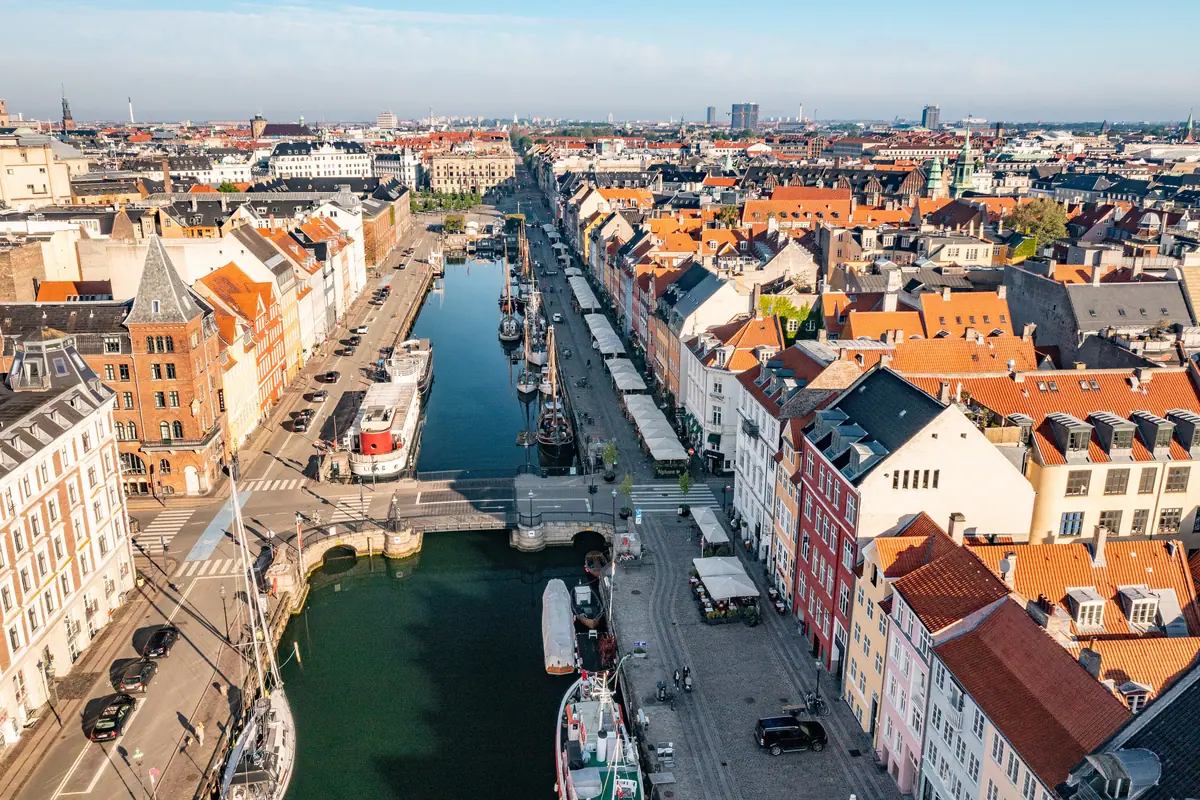
Start where everyone starts, at Nyhavn, the 17th-century canal harbour lined with gabled townhouses in ochre, oxblood and pale blue. It is genuinely as photogenic as its reputation suggests, but the trick is timing: arrive before 9am for empty quays and soft light, or come back after dark when the moored wooden boats glow against the water. From there, a 20-minute walk along the harbour brings you to Amalienborg, the four rococo palaces around an octagonal square where the changing of the royal guard takes place each day at midday — the closest thing Denmark has to a choreographed spectacle.
The iconic figure of The Little Mermaid sits on her boulder at Langelinie, a short walk north of Amalienborg. She is small, photographed to death and often surrounded by a scrum of visitors, so treat her as part of a longer harbour stroll rather than a destination in herself. A better reward for the walk is the Kastellet, the star-shaped 17th-century citadel next door, whose grassy ramparts and red wooden windmill are one of the calmest corners of the city.
Inland, the must-sees cluster tightly. Tivoli Gardens, the 1843 pleasure garden in the middle of the city, still runs its wooden roller coaster, Chinese pagoda and thousands of lanterns — magical in the weeks around Christmas and again from spring to late summer. Rosenborg Castle holds the crown jewels in a Renaissance brick tower surrounded by the King's Garden, while the Round Tower nearby offers the city's easiest climb: a spiral brick ramp that winds up to a 360-degree rooftop view over the old town. Between them runs Strøget, the long pedestrian shopping street, and just across the harbour lies Freetown Christiania, a self-declared free district of murals, workshops and vegetarian kitchens that is fascinating, alternative and worth visiting with respect and without a camera in hand.
Royal North Zealand: Kronborg, Frederiksborg and Modern Art
A 45-minute train ride north of Copenhagen puts you in Helsingør, home of Kronborg Castle, the Renaissance fortress that Shakespeare set Hamlet in. The setting is the draw as much as the building: squat, powerful walls guarding the narrow sound between Denmark and Sweden, with cannons pointing at the ferry traffic and vast casemates beneath where the legendary giant Holger Danske is said to sleep. Budget two to three hours, including the walk along the ramparts and a look at the maritime museum housed in the old dry dock next door.
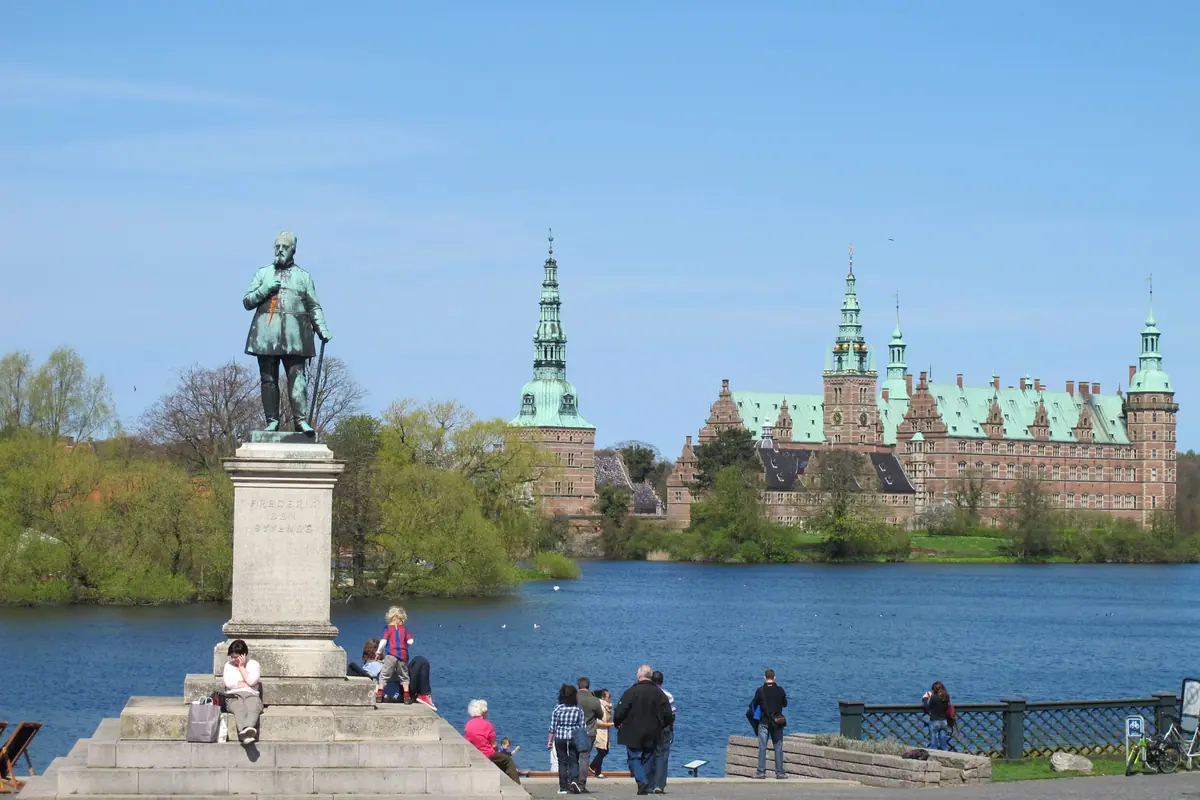
Continue to Hillerød for Frederiksborg Castle, arguably the most beautiful building in the country — a lake-bound Renaissance palace with copper-green towers, a baroque garden and a chapel whoseComp lesser-known galleries hold a sweeping collection of Danish portraiture. The symmetry of the castle reflected in the water is the shot everyone wants, and late afternoon gives the best light.
On the way back, stop at the Louisiana Museum of Modern Art in Humlebæk, where the galleries open onto a sculpture park above the Øresund strait and you can walk from a Giacometti to a view of the Swedish coast in ten steps. If you have time, the Karen Blixen Museum at Rungstedlund, the former home of the author of Out of Africa, sits nearby in a bird-rich garden and makes a quiet counterpoint to the crowds.
Viking Ships, Rune Stones and Fairy-Tale Towns
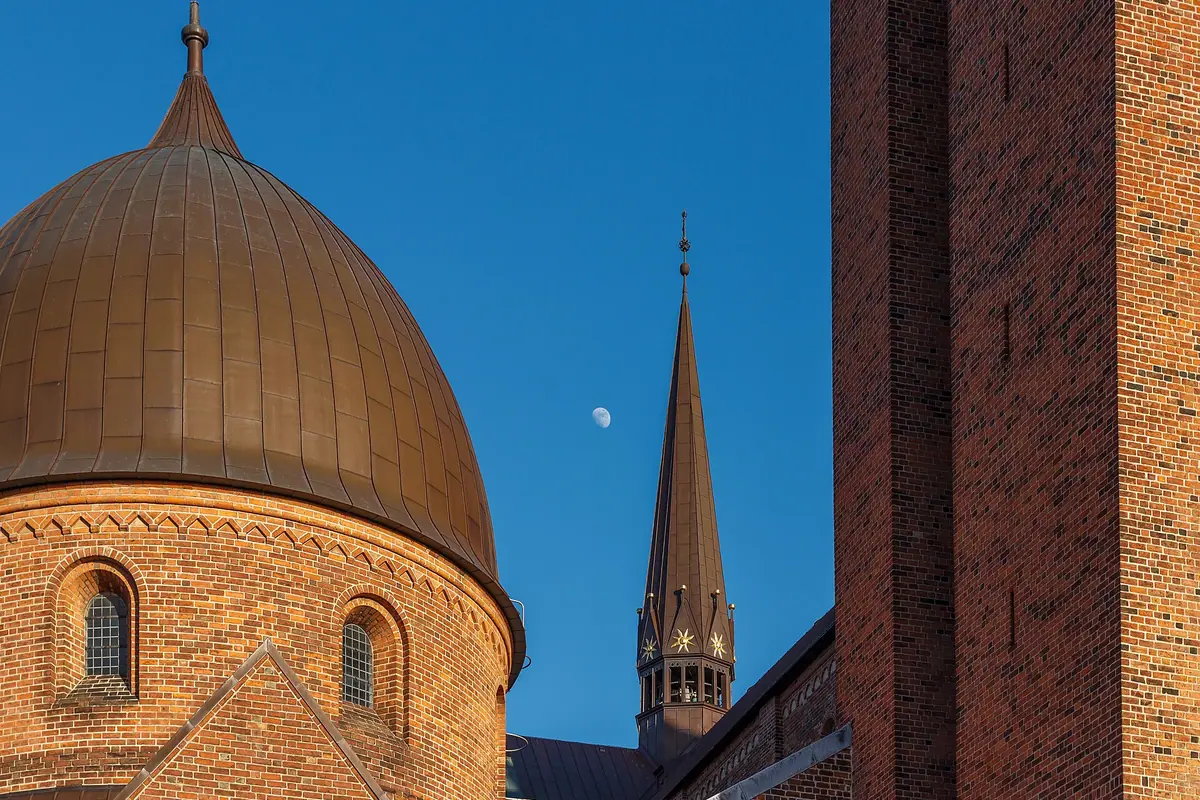
Denmark's prehistory is unusually accessible. In Roskilde, half an hour west of Copenhagen, the Viking Ship Museum displays five vessels deliberately sunk around the year 1070 to block a channel — you can even watch boatbuilders recreate them with axe and adze. Next door, Roskilde Cathedral is a UNESCO-listed brick Gothic masterpiece where nearly every Danish monarch since the 15th century is buried; the twin spires are visible across the whole fjord, and the interior is cool, dark and surprisingly moving.
In Jutland, the Jelling stones mark the spot where Denmark arguably became a nation: two carved rune stones, one raised by Harald Bluetooth in the 10th century, standing between two enormous burial mounds. It is a low-key site that rewards a little context, and a new museum experience on site helps decode the carvings and the archaeology beneath your feet.
Further south, Ribe is the country's oldest town, a maze of cobbled lanes beneath a Romanesque cathedral with a separate 52-metre tower you can climb for a view over the marshes — a staging post on the old North Sea trading routes and a stop on the Wadden Sea coast. On Funen, Odense pairs a medieval street plan with the childhood home of Hans Christian Andersen, now a museum that traces how a cobbler's son invented the modern fairy tale; the town's cobbled lanes and riverside park make it a gentle, half-day or full-day visit.
Aarhus and the Cultural Heart of Jutland
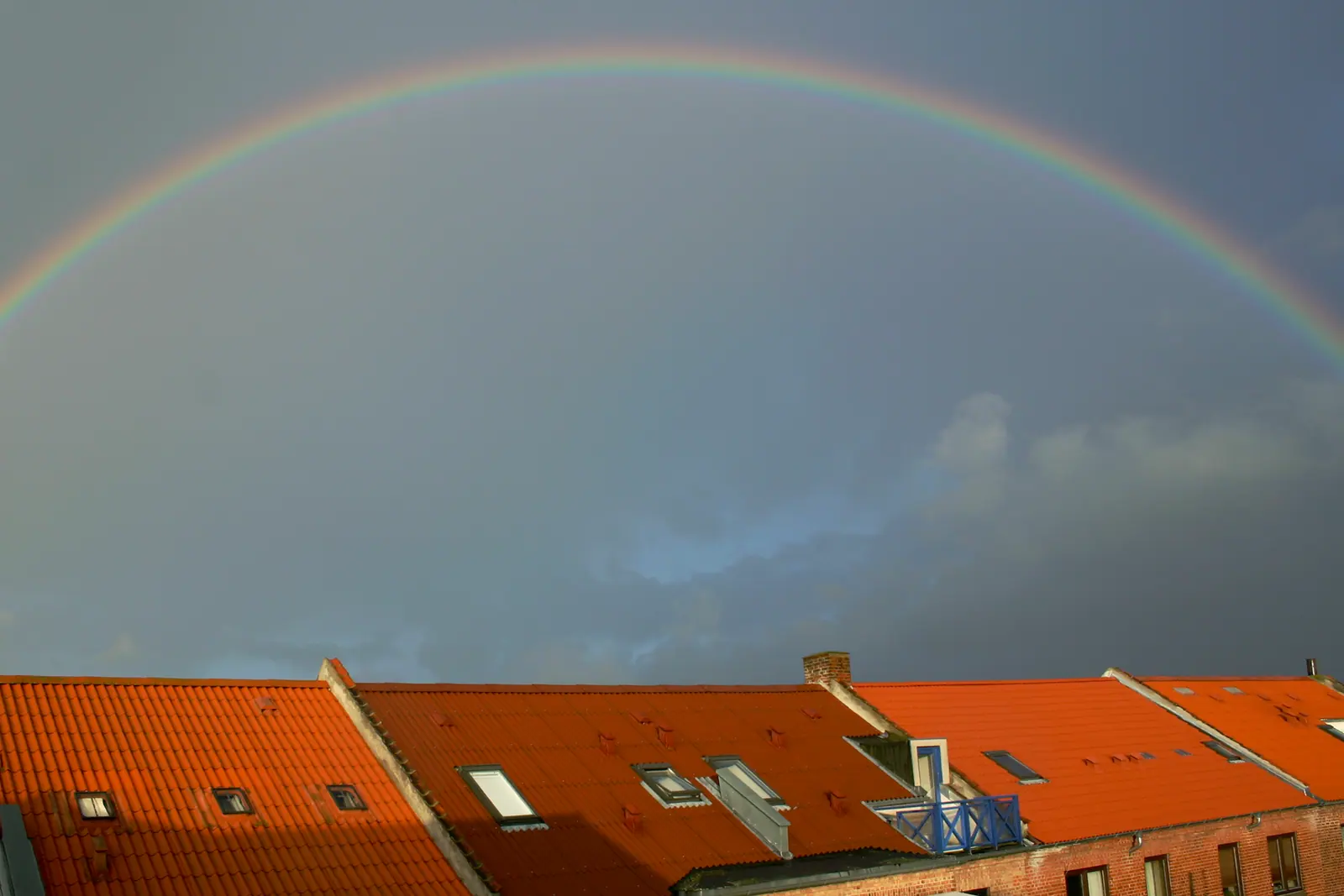
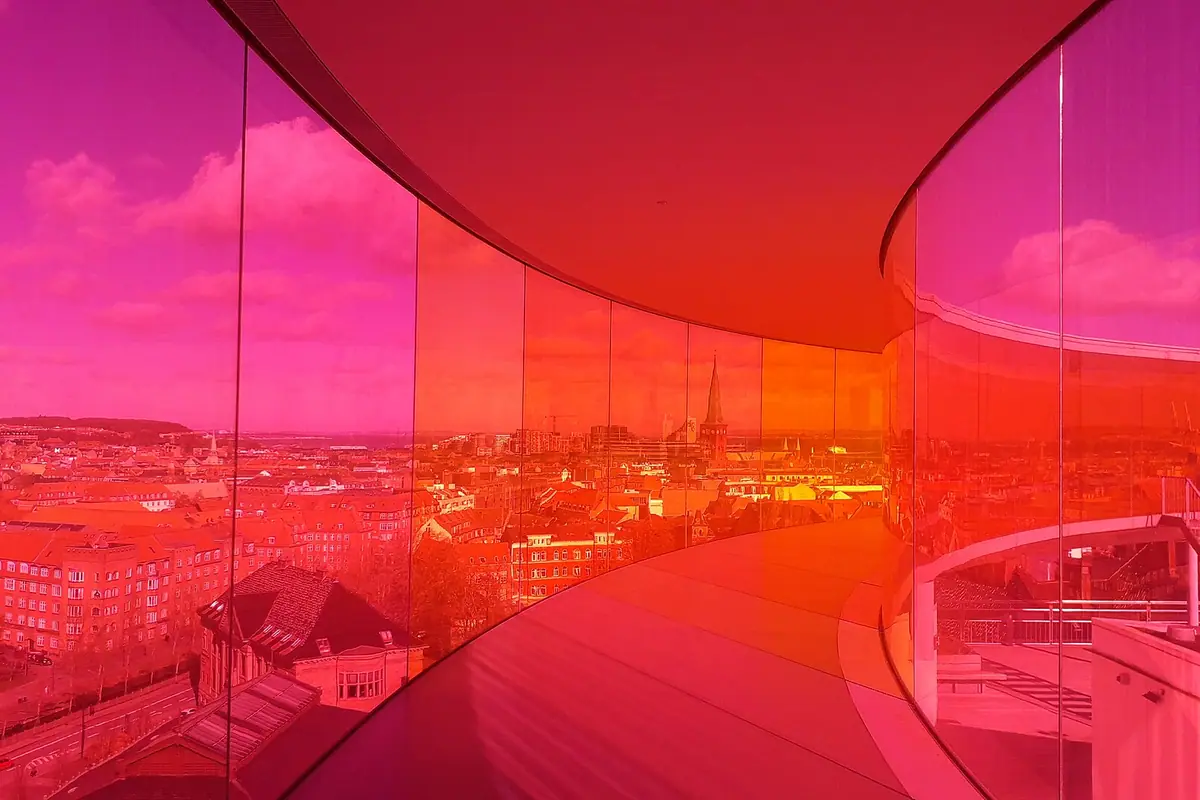
Denmark's second city has quietly become its most rewarding urban stop. The centrepiece is ARoS, where a circular rainbow-coloured walkway sits on the roof and gives you a 360-degree panorama over the bay, the docks and the wooded hills beyond — an artwork you walk through rather than at. Inside, the collection runs from golden-age Danish painting to the nine-metre-tall Boy sculpture in the lobby.
Two more museums are within easy reach and worth half a day each. Den Gamle By is an open-air town of more than 75 relocated historic buildings, with costumed staff, working workshops and a section that jumps forward to the 1970s; Moesgaard Museum, a few kilometres south, is housed in a dramatic sloping building whose roof is a grass meadow you can walk on, and whose centrepiece is the Grauballe Man, a remarkably preserved Iron Age bog body.
Back in the centre, Aarhus Cathedral has the tallest church interior in the country and frescoes that survived the Reformation, while the Latin Quarter's small streets, coffee roasteries and design shops are the best place in Jutland to spend a slow afternoon. Just north of the city, the deer park and beech woods at Marselisborg are a local favourite for a walk or a run, especially in October when the leaves turn.
Wild Coasts and Islands: Skagen, Møns Klint and Bornholm
Denmark's greatest landscapes are at its edges. At Skagen, the country's northern tip, the sands of Grenen stretch into the sea where the Skagerrak and Kattegat meet — you can wade out and stand with one foot in each body of water, though the currents make it a standing-only experience. The town itself is famous for its light, which drew a colony of painters in the late 19th century; the Skagens Museum and the buried church half-swallowed by dunes a few kilometres south complete the picture. Nearby, the Rubjerg Knude lighthouse sits on a cliff that has been eroding for a century, surrounded by migrating dunes.
South of Copenhagen, Møns Klint is the country's most dramatic natural sight: 120-metre chalk cliffs of white and flint dropping into a milky-turquoise Baltic, with wooden staircases down to a pebble beach where fossils can be found. Allow a full day, wear grippy shoes, and combine it with the GeoCenter's exhibitions if it rains. The cliffs are at their best from May to September, when the beech woods on top are in leaf.
Bornholm, an island in the Baltic reached by a short flight or a longer ferry from Copenhagen, feels like a different country — smoked herring, rocky coves, half-timbered round churches from the 12th century and a strong cycling culture. The white-sand beaches at Dueodde in the south and the ruined Hammershus fortress in the north are the two essential stops. In Jutland, the Wadden Sea National Park is a UNESCO-listed tidal flat where you can walk out at low tide with a guide across mudflats that vanish twice a day.
When to Go, How to Move and What to Expect
The best months are May to early September: long days, warm-enough water for a harbour swim, and outdoor cafés in full swing. June and July bring the longest evenings — in Copenhagen it barely gets dark until nearly 11pm — but also the crowds at Tivoli, Nyhavn and Kronborg. If you want the castles and coastlines to yourself, aim for late May, early June or the first half of September, when prices dip and the light stays generous. Winter is dark, damp and short, but it is also when the Christmas markets, candlelit cafés and the concept of hygge — the Danish art of cosy, low-lit togetherness — make the most sense.
Getting around is genuinely easy. Trains connect Copenhagen with Odense, Aarhus and Aalborg at high speed and with little fuss, while a dense network of buses reaches small towns and ferry ports. Renting a bicycle is the fastest way to see any Danish city, and Copenhagen's harbour buses and metro run late. Distances are short: you can cross the country by rail in about five hours, which makes a two-base itinerary — Copenhagen plus Aarhus or Odense — far more enjoyable than a rushed loop.
Two practical notes. Denmark is expensive by most standards, so self-catering breakfasts, supermarket lunches and street food halls stretch a budget considerably; alcohol and restaurant meals are where costs climb fastest. And the weather is changeable in the extreme — a sunny morning can turn into a wet afternoon, so pack layers, a light rain jacket and shoes you can walk in for hours. Almost everywhere takes cards, English is spoken virtually everywhere, and tipping is not expected.
Frequently asked questions
How many days do you need to see Denmark?
Five to seven days covers Copenhagen's main sights plus one or two day trips to Kronborg, Frederiksborg or Roskilde. Ten to fourteen days lets you add Aarhus, Odense, Skagen and Bornholm at a comfortable pace. A two-base itinerary — usually Copenhagen and Aarhus — works better than trying to loop the whole country.
What is the best time of year to visit Denmark?
May to early September offers the longest days and the best weather. Late May and the first half of September are the sweet spots: still warm, still bright, but noticeably quieter than midsummer. Winter is dark and wet, though Copenhagen's Christmas markets and Tivoli's festive season draw their own crowds in November and December.
Do you need a car in Denmark?
No, usually not. Trains link Copenhagen, Odense, Aarhus and Aalborg frequently, buses reach smaller towns, and bicycles are the best way to get around cities. A car helps for remote stretches such as the Wadden Sea marshes, the dunes around Skagen and parts of Bornholm, but it is optional rather than essential.
What are the absolute must-see attractions in Denmark?
Nyhavn and Tivoli Gardens in Copenhagen, Kronborg Castle at Helsingør, Frederiksborg Castle at Hillerød, Roskilde Cathedral and its Viking ships, the Jelling rune stones, ARoS in Aarhus, the cliffs at Møns Klint, and Grenen at Skagen where two seas meet. If you only have three days, do Copenhagen plus one North Zealand castle day.
Is Denmark expensive to visit?
Yes, and food and drink are where it bites hardest. Save by booking accommodation well ahead, eating breakfast and lunch from bakeries and supermarkets, using the excellent street food halls, and swimming at free harbour baths instead of paid pools. Copenhagen's harbour baths and the city's many parks cost nothing.
Plan it — experiences in Denmark
Live search, booked directly with trusted providers.
Sort the rest of your trip
Everything for Denmark, in one place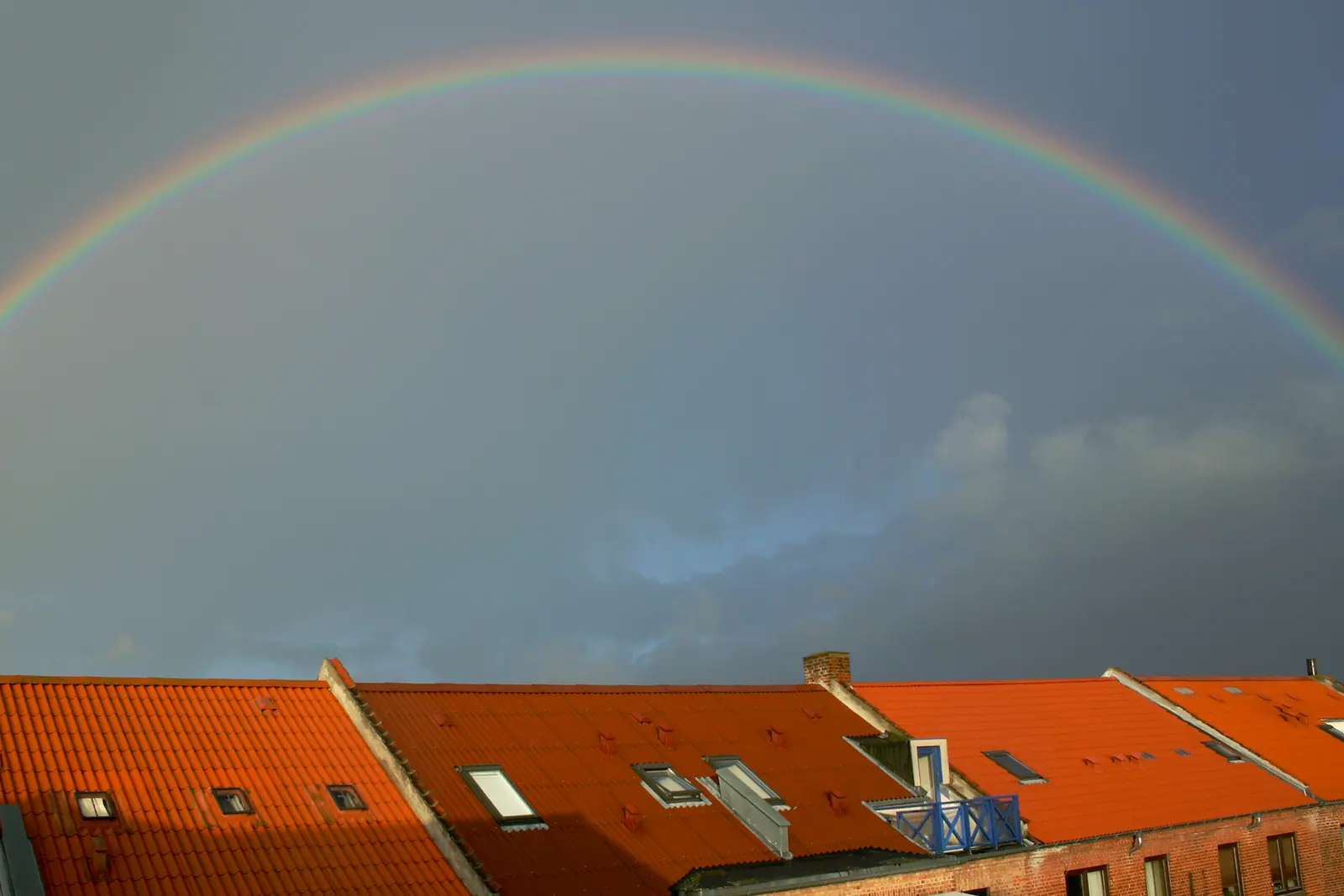
Stay in Denmark
Hotels, guesthouses and apartments — compared in one search.
Search hotels
Transfer in Denmark
Private driver waiting on arrival — no queues, no surprises.
Book a transfer
Stay online in Denmark
Travel eSIM — data the moment you land, no roaming bills.
Get an eSIM